Clifford-deformed zero-rate LDPC codes with 50% biased noise thresholds
Pith reviewed 2026-05-19 15:39 UTC · model grok-4.3
pith:BL4W6TYN Add to your LaTeX paper
What is a Pith Number?\usepackage{pith}
\pithnumber{BL4W6TYN}
Prints a linked pith:BL4W6TYN badge after your title and writes the identifier into PDF metadata. Compiles on arXiv with no extra files. Learn more
The pith
Clifford-deformed zero-rate LDPC codes achieve 50% thresholds under pure dephasing when biased logical operators scale slower than distance.
A machine-rendered reading of the paper's core claim, the machinery that carries it, and where it could break.
Core claim
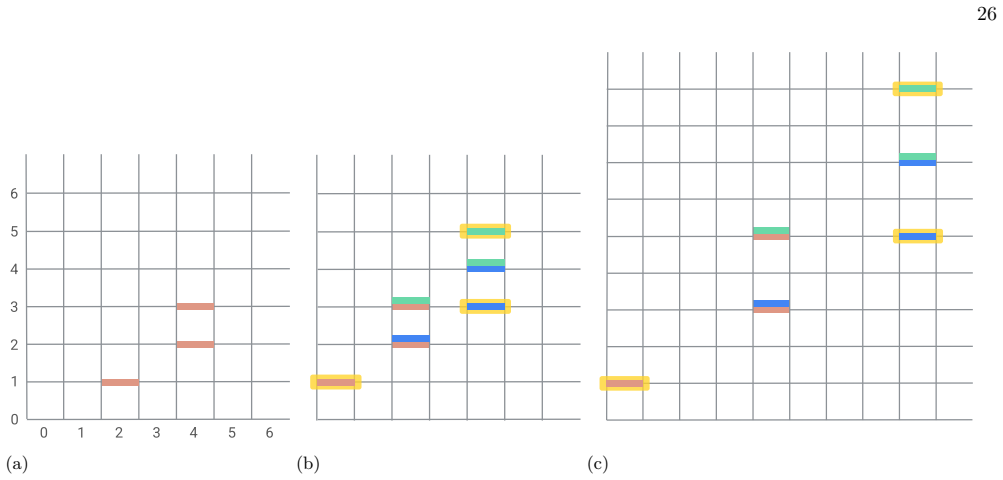
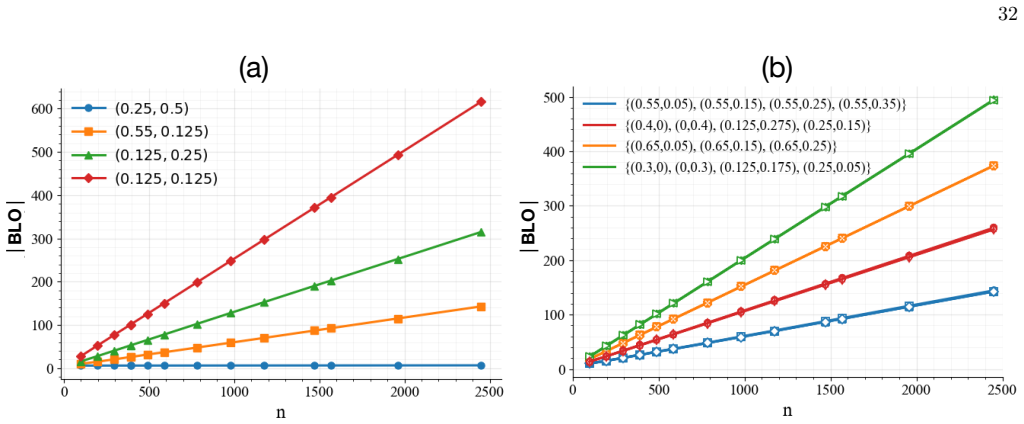
There exist Clifford-deformed variants of zero-rate quantum LDPC codes in which the number of biased logical operators scales slower than the distance, or a basis of logical operators satisfies certain overlap scaling conditions; in this case the code-capacity threshold under i.i.d. pure dephasing noise approaches 50 percent. This property explains the performance of the XY surface code, XZZX surface code, color code, and some 3D Clifford-deformed codes. For the tile codes of Ref. [1] the authors recover a phase diagram similar to that of deformed surface codes and construct several translationally invariant deformations that achieve the 50 percent threshold.
What carries the argument
Clifford deformation of a Pauli stabilizer code, which applies single-qubit Clifford unitaries to rotate local Pauli axes while leaving the stabilizers as Pauli operators, together with the scaling condition on the number or overlaps of biased logical operators.
If this is right
- The code-capacity threshold under i.i.d. pure dephasing noise approaches 50 percent whenever the scaling condition on biased logical operators holds.
- Clifford-deformed tile codes exhibit a phase diagram of 50 percent thresholds analogous to that of deformed surface codes.
- Several translationally invariant Clifford deformations of the tile code achieve the 50 percent threshold.
- Circuit-level performance of these codes is governed by the residual bias that remains after one full syndrome-extraction cycle.
- Numerical simulations show improved logical error rates at finite bias and under circuit noise for the deformed tile codes.
Where Pith is reading between the lines
- The same deformation strategy could be tested on other families of zero-rate or finite-rate LDPC codes to see whether 50 percent thresholds become generic.
- Hardware-specific modeling of residual bias after syndrome extraction may let experimenters choose platforms that best preserve the high threshold.
- If overlap scaling can be engineered without lowering the code rate, the construction may extend beyond zero-rate examples.
- The link to phenomenological models suggests a systematic way to map circuit-level bias into effective code-capacity problems.
Load-bearing premise
A Clifford deformation must exist that preserves the Pauli form of the stabilizers while enforcing the required slower-than-distance scaling or overlap conditions on the logical operators.
What would settle it
A concrete counter-example would be a Clifford-deformed zero-rate LDPC code whose biased logical operators scale at least as fast as the distance and violate the overlap conditions, yet whose numerically computed code-capacity threshold under pure dephasing still reaches or exceeds 50 percent.
Figures






read the original abstract
Applying single-qubit Clifford unitaries to a Pauli stabilizer code produces a Clifford-deformed variant whose stabilizers remain Pauli operators, but with locally rotated Pauli axes. Such deformations provide a simple way to tailor a fixed code to anisotropic noise, and have enabled unusually high thresholds under strongly biased dephasing. In this work, we discuss zero-rate quantum low-density parity-check (LDPC) codes, for which there exist Clifford-deformed variants where the number of biased logical operators scales slower than the distance, or there exists a basis of logical operators whose overlap satisfies certain scaling conditions; in this case, the code-capacity threshold for the Clifford-deformed variant under i.i.d. pure dephasing noise approaches 50%. This property provably explains previously known code examples with 50% biased noise thresholds, such as XY surface code, XZZX surface code, color code, as well as some 3D Clifford-deformed codes. As a concrete new example, we study Clifford deformations of the tile codes of Ref. [1]. Similar to the phase diagram of 50% thresholds for random Clifford deformations of the surface code in Ref. [2], we find a similar phase diagram for the tile codes. We also construct several translationally invariant deformations of the tile code with 50% thresholds, and present numerical evidence for improved performance at finite bias and under circuit-level noise. In the circuit-level setting, performance is governed by the residual bias after a full syndrome-extraction cycle, linking our simulations to phenomenological models commonly used to study Clifford-deformed codes. We estimate this residual bias for different qubit platforms by modeling microscopic implementations of tile-code syndrome extraction.
Editorial analysis
A structured set of objections, weighed in public.
Referee Report
Summary. The paper claims that Clifford deformations of zero-rate quantum LDPC codes can achieve code-capacity thresholds approaching 50% under i.i.d. pure dephasing noise when the number of biased logical operators scales slower than the distance or a logical basis satisfies specified overlap scaling conditions. This property is said to provably account for known high-threshold examples (XY surface code, XZZX surface code, color code, and some 3D codes). As a new concrete case, the authors examine Clifford deformations of tile codes, report a phase diagram analogous to that for surface codes, construct several translationally invariant deformations that numerically attain 50% thresholds, and present evidence of improved performance at finite bias and under circuit-level noise, with the latter tied to residual bias after syndrome extraction.
Significance. If the central claims hold, the work supplies a general criterion for engineering high biased-noise thresholds in zero-rate LDPC codes, extending surface-code results to a broader family of codes with potentially better scaling properties. The explicit construction of translationally invariant deformations and the connection between circuit-level simulations and phenomenological residual-bias models are concrete strengths that could guide experimental implementations on different qubit platforms.
major comments (2)
- [§4] §4 (tile-code deformations and numerical results): the reported 50% thresholds and phase diagram are obtained from finite-size simulations, yet the manuscript contains no explicit asymptotic verification that the number of biased logical operators remains o(d) or that a logical basis satisfies the required overlap scaling conditions as n→∞. Because the 50% threshold is derived from precisely these scaling properties, the absence of this check leaves the extrapolation for the new tile-code examples unsupported.
- [§3] Abstract and §3 (theoretical conditions): the statement that the scaling properties 'provably' yield a 50% threshold is asserted without a self-contained derivation or explicit reference to the equations that relate logical-operator weight/overlap statistics to the threshold under pure dephasing; this step is load-bearing for applying the criterion to general zero-rate LDPC codes beyond the previously known surface-code cases.
minor comments (2)
- [Introduction] The overlap scaling conditions are described qualitatively in the abstract and introduction; an explicit mathematical statement (e.g., an equation defining the required decay of pairwise overlaps) would improve clarity.
- Figure captions for the tile-code phase diagrams should state the system sizes used and the fitting procedure for threshold extraction to facilitate reproducibility.
Simulated Author's Rebuttal
We thank the referee for their careful reading, positive assessment of the work's significance, and constructive major comments. We have revised the manuscript to strengthen the theoretical presentation in §3 and to provide additional analysis of the asymptotic scaling properties for the tile-code constructions in §4. Our point-by-point responses follow.
read point-by-point responses
-
Referee: [§4] §4 (tile-code deformations and numerical results): the reported 50% thresholds and phase diagram are obtained from finite-size simulations, yet the manuscript contains no explicit asymptotic verification that the number of biased logical operators remains o(d) or that a logical basis satisfies the required overlap scaling conditions as n→∞. Because the 50% threshold is derived from precisely these scaling properties, the absence of this check leaves the extrapolation for the new tile-code examples unsupported.
Authors: We agree that an explicit check of the scaling conditions strengthens the extrapolation. For the translationally invariant Clifford deformations of the tile codes that we construct and simulate, the underlying lattice structure permits an explicit enumeration of the logical operators. In the revised §4 we now include this enumeration, showing that the biased logical operators have weight linear in the distance d while their number remains o(d) in the large-system limit; the overlap conditions are likewise verified to hold. These analytic properties are consistent with the numerically observed 50% thresholds. For the random deformations we retain the finite-size phase diagram but add a finite-size scaling collapse that demonstrates the threshold approaching 50% with increasing n, again consistent with the o(d) criterion. A fully general proof for arbitrary random deformations lies outside the present scope, but the concrete constructions now satisfy the referee's request for verification. revision: yes
-
Referee: [§3] Abstract and §3 (theoretical conditions): the statement that the scaling properties 'provably' yield a 50% threshold is asserted without a self-contained derivation or explicit reference to the equations that relate logical-operator weight/overlap statistics to the threshold under pure dephasing; this step is load-bearing for applying the criterion to general zero-rate LDPC codes beyond the previously known surface-code cases.
Authors: We accept that the link between the scaling conditions and the 50% threshold should be derived explicitly rather than asserted. In the revised §3 we have inserted a self-contained derivation. Under i.i.d. pure dephasing, a Clifford deformation maps the noise to an effective Pauli channel whose bias is determined by the logical-operator weights. When the number of biased logical operators is o(d) (or a logical basis satisfies the stated overlap scaling), the minimum-weight decoding problem reduces to a classical biased repetition code whose error probability vanishes for physical dephasing rates below 50%. The key steps are now written out with explicit reference to the weight-distribution equations (newly numbered (3)–(5)) that connect the logical-operator statistics to the code-capacity threshold. This derivation is independent of the surface-code examples and applies directly to any zero-rate LDPC code satisfying the scaling hypotheses. revision: yes
Circularity Check
No significant circularity; sufficient condition stated independently of numerical results
full rationale
The paper explicitly states a sufficient condition (number of biased logical operators scaling slower than distance, or overlap scaling on a logical basis) under which the code-capacity threshold approaches 50% for Clifford-deformed zero-rate LDPC codes. This condition is presented as explaining known examples like the XY surface code and is then applied to tile-code deformations via separate numerical phase diagrams and simulations. No equation or claim reduces the threshold result to a fitted parameter or self-citation by construction; the numerical evidence for tile codes stands as an independent check rather than a redefinition of the scaling property. The derivation chain remains self-contained against external benchmarks.
Axiom & Free-Parameter Ledger
Lean theorems connected to this paper
-
IndisputableMonolith/Foundation/AbsoluteFloorClosure.leanreality_from_one_distinction unclear?
unclearRelation between the paper passage and the cited Recognition theorem.
Theorem 1 (Threshold bound from the growth rate of pure-Z logicals): every non-trivial pure-Z logical operator L satisfies |L| ≥ K n^α ... |LZ| ≤ exp(o(n^α)) ... Pfail(n) ≤ exp(−Ω(n^α))
-
IndisputableMonolith/Foundation/AlexanderDuality.leanalexander_duality_circle_linking unclear?
unclearRelation between the paper passage and the cited Recognition theorem.
Theorem 2 (Reduction to a non-overlapping BLO) ... supp(L ∩ L′) = ∅ ... |BZ(n)| ≤ O(n^{1−α})
What do these tags mean?
- matches
- The paper's claim is directly supported by a theorem in the formal canon.
- supports
- The theorem supports part of the paper's argument, but the paper may add assumptions or extra steps.
- extends
- The paper goes beyond the formal theorem; the theorem is a base layer rather than the whole result.
- uses
- The paper appears to rely on the theorem as machinery.
- contradicts
- The paper's claim conflicts with a theorem or certificate in the canon.
- unclear
- Pith found a possible connection, but the passage is too broad, indirect, or ambiguous to say the theorem truly supports the claim.
Reference graph
Works this paper leans on
-
[1]
Breuckmann, Francisco Revson Fernandes Pereira, and Jens Niklas Eberhardt
Vincent Steffan, Shin Ho Choe, Nikolas P. Breuckmann, Francisco Revson Fernandes Pereira, and Jens Niklas Eberhardt. Tile codes: High-efficiency quantum codes on a lattice with boundary. Phys. Rev. Lett., 135: 170601, Oct 2025. doi:10.1103/l4mx-l3xx. URLhttps: //link.aps.org/doi/10.1103/l4mx-l3xx
-
[2]
Arpit Dua, Aleksander Kubica, Liang Jiang, Steven T. Flammia, and Michael J. Gullans. Clifford-deformed sur- face codes. PRX Quantum, 5:010347, Mar 2024. doi: 10.1103/PRXQuantum.5.010347. URLhttps://link. aps.org/doi/10.1103/PRXQuantum.5.010347. 17
-
[3]
Fault-tolerant computing with biased- noise superconducting qubits: a case study
P Aliferis, F Brito, D P DiVincenzo, J Preskill, M Steffen, and B M Terhal. Fault-tolerant computing with biased- noise superconducting qubits: a case study. New Journal of Physics, 11(1):013061, Jan 2009. ISSN 1367-2630. doi: 10.1088/1367-2630/11/1/013061. URLhttp://dx.doi. org/10.1088/1367-2630/11/1/013061
-
[4]
D. Nigg, M. Muller, E. A. Martinez, P. Schindler, M. Hennrich, T. Monz, M. A. Martin-Delgado, and R. Blatt. Quantum computations on a topologically encoded qubit. Science, 345(6194):302–305, Jun 2014. ISSN 1095-9203. doi:10.1126/science.1253742. URL http://dx.doi.org/10.1126/science.1253742
-
[5]
M. D. Shulman, O. E. Dial, S. P. Harvey, H. Bluhm, V. Umansky, and A. Yacoby. Demonstration of entan- glement of electrostatically coupled singlet-triplet qubits. Science, 336(6078):202–205, Apr 2012. ISSN 1095-9203. doi:10.1126/science.1217692. URLhttp://dx.doi.org/ 10.1126/science.1217692
-
[6]
Yue Wu, Shimon Kolkowitz, Shruti Puri, and Jeff D. Thompson. Erasure conversion for fault-tolerant quan- tum computing in alkaline earth rydberg atom arrays. Nature Communications, 13(1), August 2022. ISSN 2041-1723. doi:10.1038/s41467-022-32094-6. URLhttp: //dx.doi.org/10.1038/s41467-022-32094-6
-
[7]
Peter W. Shor. Fault-tolerant quantum computa- tion, 1997. URLhttps://arxiv.org/abs/quant-ph/ 9605011
work page 1997
-
[8]
Peter W. Shor. Scheme for reducing decoherence in quan- tum computer memory. Phys. Rev. A, 52:R2493–R2496, Oct 1995. doi:10.1103/PhysRevA.52.R2493. URLhttps: //link.aps.org/doi/10.1103/PhysRevA.52.R2493
-
[9]
Multiple-particle interference and quan- tum error correction
Andrew Steane. Multiple-particle interference and quan- tum error correction. Proceedings of the Royal Society A: Mathematical, Physical and Engineering Sciences, 452(1954):2551–2577, 11 1996. ISSN 1364-5021. doi: 10.1098/rspa.1996.0136. URLhttps://doi.org/10. 1098/rspa.1996.0136
-
[10]
Fault-tolerant quantum compu- tation by anyons
A Y Kitaev. Fault-tolerant quantum compu- tation by anyons. Annals Phys., 303:2–30,
-
[11]
URL http://www.sciencedirect.com/science/article/ pii/S0003491602000180
doi:10.1016/S0003-4916(02)00018-0. URL http://www.sciencedirect.com/science/article/ pii/S0003491602000180
work page internal anchor Pith review doi:10.1016/s0003-4916(02)00018-0
-
[12]
Fault-tolerant quan- tum computation against biased noise
Panos Aliferis and John Preskill. Fault-tolerant quan- tum computation against biased noise. Phys. Rev. A, 78:052331, Nov 2008. doi:10.1103/PhysRevA.78.052331. URLhttps://link.aps.org/doi/10.1103/PhysRevA. 78.052331
-
[13]
Paul Webster, Stephen D. Bartlett, and David Poulin. Reducing the overhead for quantum computation when noise is biased. Phys. Rev. A, 92:062309, Dec 2015. doi: 10.1103/PhysRevA.92.062309. URLhttps://link.aps. org/doi/10.1103/PhysRevA.92.062309
-
[14]
Fault-tolerant quantum computation with asymmetric bacon-shor codes
Peter Brooks and John Preskill. Fault-tolerant quantum computation with asymmetric bacon-shor codes. Phys. Rev. A, 87:032310, Mar 2013. doi: 10.1103/PhysRevA.87.032310. URLhttps://link.aps. org/doi/10.1103/PhysRevA.87.032310
-
[15]
David K. Tuckett, Stephen D. Bartlett, and Steven T. Flammia. Ultrahigh error threshold for surface codes with biased noise. Physical Review Letters, 120(5):050505, Jan 2018. ISSN 1079-7114. doi: 10.1103/physrevlett.120.050505. URLhttp://dx.doi. org/10.1103/PhysRevLett.120.050505
-
[16]
Pablo Bonilla Ataides, David K
J. Pablo Bonilla Ataides, David K. Tuckett, Stephen D. Bartlett, Steven T. Flammia, and Benjamin J. Brown. The XZZX surface code. Nature Communications, 12(1):2172, Apr 2021. ISSN 2041-1723. doi: 10.1038/s41467-021-22274-1. URLhttp://dx.doi.org/ 10.1038/s41467-021-22274-1
-
[17]
David K. Tuckett, Stephen D. Bartlett, Steven T. Flam- mia, and Benjamin J. Brown. Fault-tolerant thresh- olds for the surface code in excess of 5 Physical Review Letters, 124(13):130501, Mar 2020. ISSN 1079-7114. doi: 10.1103/physrevlett.124.130501
-
[18]
The XYZ 2 hexagonal stabilizer code
Basudha Srivastava, Anton Frisk Kockum, and Mats Granath. The XYZ 2 hexagonal stabilizer code. Quantum, 6:698, April 2022. ISSN 2521-327X. doi: 10.22331/q-2022-04-27-698. URLhttps://doi.org/10. 22331/q-2022-04-27-698
-
[19]
A cellular automaton decoder for a noise- bias tailored color code
Jonathan F San Miguel, Dominic J Williamson, and Ben- jamin J Brown. A cellular automaton decoder for a noise- bias tailored color code. Quantum, 7:940, 2023
work page 2023
-
[20]
Joschka Roffe, Lawrence Z. Cohen, Armanda O. Quin- tavalle, Daryus Chandra, and Earl T. Campbell. Bias- tailored quantum LDPC codes. Quantum, 7:1005, May
-
[21]
doi:10.22331/q-2023-05-15-1005
ISSN 2521-327X. doi:10.22331/q-2023-05-15-1005. URLhttps://doi.org/10.22331/q-2023-05-15-1005
-
[22]
Konstantin Tiurev, Arthur Pesah, Peter-Jan H. S. Derks, Joschka Roffe, Jens Eisert, Markus S. Kessel- ring, and Jan-Michael Reiner. Domain wall color code. Phys. Rev. Lett., 133:110601, Sep 2024. doi: 10.1103/PhysRevLett.133.110601. URLhttps://link. aps.org/doi/10.1103/PhysRevLett.133.110601
-
[23]
Setiawan and Campbell McLauchlan
F. Setiawan and Campbell McLauchlan. Tailoring dy- namical codes for biased noise: the x3z3 floquet code. npj Quantum Information, 11(1):149, 9 2025. doi: 10.1038/s41534-025-01074-1. URLhttps://doi.org/ 10.1038/s41534-025-01074-1
-
[24]
Gross, Alexander Grimm, Nicholas E
Shruti Puri, Lucas St-Jean, Jonathan A. Gross, Alexander Grimm, Nicholas E. Frattini, Pavithran S. Iyer, Anirudh Krishna, Steven Touzard, Liang Jiang, Alexandre Blais, Steven T. Flammia, and S. M. Girvin. Bias-preserving gates with stabilized cat qubits. Science Advances, 6(34):eaay5901, 2020. doi: 10.1126/sciadv.aay5901. URLhttps://www.science. org/doi/a...
-
[25]
Tailoring fusion-based error correction for high thresholds to biased fusion failures
Kaavya Sahay, Jahan Claes, and Shruti Puri. Tailoring fusion-based error correction for high thresholds to biased fusion failures. Phys. Rev. Lett., 131:120604, Sep 2023. doi:10.1103/PhysRevLett.131.120604. URLhttps:// link.aps.org/doi/10.1103/PhysRevLett.131.120604
-
[26]
Kaavya Sahay, Junlan Jin, Jahan Claes, Jeff D. Thompson, and Shruti Puri. High-threshold codes for neutral-atom qubits with biased erasure er- rors. Phys. Rev. X, 13:041013, Oct 2023. doi: 10.1103/PhysRevX.13.041013. URLhttps://link.aps. org/doi/10.1103/PhysRevX.13.041013
-
[27]
Jahan Claes, J. Eli Bourassa, and Shruti Puri. Tai- lored cluster states with high threshold under biased noise. npj Quantum Information, 9(1):9, Jan 2023. ISSN 2056-6387. doi:10.1038/s41534-023-00677-w. URL https://doi.org/10.1038/s41534-023-00677-w
-
[28]
Qian Xu, Nam Mannucci, Alireza Seif, Aleksander Kubica, Steven T. Flammia, and Liang Jiang. Tailored xzzx codes for biased noise. Phys. Rev. Res., 5:013035, Jan 2023. doi:10.1103/PhysRevResearch.5.013035. URLhttps://link.aps.org/doi/10.1103/ 18 PhysRevResearch.5.013035
-
[29]
Nicholas Fazio, Robin Harper, and Stephen D. Bartlett. Logical Noise Bias in Magic State Injection. Quantum, 9:1779, June 2025. ISSN 2521-327X. doi:10.22331/q- 2025-06-24-1779. URLhttps://doi.org/10.22331/ q-2025-06-24-1779
work page doi:10.22331/q- 2025
-
[30]
Scal- able noisy quantum circuits for biased-noise qubits
Marco Fellous-Asiani, Moein Naseri, Chandan Datta, Alexander Streltsov, and Micha l Oszmaniec. Scal- able noisy quantum circuits for biased-noise qubits. npj Quantum Information, 11(1):145, 8 2025. doi: 10.1038/s41534-025-01054-5. URLhttps://doi.org/ 10.1038/s41534-025-01054-5
-
[31]
Spin-cat qubit with biased noise in an optical tweezer array, 2026
Toshi Kusano, Kosuke Shibata, Chih-Han Yeh, Keito Saito, Yuma Nakamura, Rei Yokoyama, Takumi Kashimoto, Tetsushi Takano, Yosuke Takasu, Ryuji Tak- agi, and Yoshiro Takahashi. Spin-cat qubit with biased noise in an optical tweezer array, 2026. URLhttps: //arxiv.org/abs/2602.22883
-
[32]
Bias in error-corrected quantum sensing
Ivan Rojkov, David Layden, Paola Cappellaro, Jonathan Home, and Florentin Reiter. Bias in error-corrected quantum sensing. Phys. Rev. Lett., 128:140503, Apr
-
[33]
URL https://link.aps.org/doi/10.1103/PhysRevLett
doi:10.1103/PhysRevLett.128.140503. URL https://link.aps.org/doi/10.1103/PhysRevLett. 128.140503
-
[34]
C. E. Shannon. A mathematical theory of communica- tion. The Bell System Technical Journal, 27(3):379–423,
-
[35]
doi:10.1002/j.1538-7305.1948.tb01338.x
-
[36]
David K. Tuckett, Andrew S. Darmawan, Christo- pher T. Chubb, Sergey Bravyi, Stephen D. Bartlett, and Steven T. Flammia. Tailoring surface codes for highly biased noise. Physical Review X, 9(4):041031, Nov 2019. ISSN 2160-3308. doi:10.1103/physrevx.9.041031. URL http://dx.doi.org/10.1103/PhysRevX.9.041031
-
[37]
Chubb, Michael Vasmer, and Arpit Dua
Eric Huang, Arthur Pesah, Christopher T. Chubb, Michael Vasmer, and Arpit Dua. Tailoring three- dimensional topological codes for biased noise. PRX Quantum, 4(3), September 2023. ISSN 2691-3399. doi: 10.1103/prxquantum.4.030338. URLhttp://dx.doi. org/10.1103/PRXQuantum.4.030338
- [38]
-
[39]
Good quantum ldpc codes with linear time decoders, 2022
Irit Dinur, Min-Hsiu Hsieh, Ting-Chun Lin, and Thomas Vidick. Good quantum ldpc codes with linear time decoders, 2022. URLhttps://arxiv.org/abs/2206. 07750
work page 2022
-
[40]
Degenerate Quan- tum LDPC Codes With Good Finite Length Perfor- mance
Pavel Panteleev and Gleb Kalachev. Degenerate Quan- tum LDPC Codes With Good Finite Length Perfor- mance. Quantum, 5:585, November 2021. ISSN 2521- 327X. doi:10.22331/q-2021-11-22-585. URLhttps:// doi.org/10.22331/q-2021-11-22-585
-
[41]
Asymptotically good quantum and locally testable classical ldpc codes,
Pavel Panteleev and Gleb Kalachev. Asymptotically good quantum and locally testable classical ldpc codes,
- [42]
-
[43]
Anthony Leverrier and Gilles Z´ emor. Quantum tanner codes, 2022. URLhttps://arxiv.org/abs/2202.13641
-
[44]
Gen- eralized toric codes on twisted tori for quantum error correction
Zijian Liang, Ke Liu, Hao Song, and Yu-An Chen. Gen- eralized toric codes on twisted tori for quantum error correction. PRX Quantum, 6:020357, Jun 2025. doi: 10.1103/rmy6-9n89. URLhttps://link.aps.org/doi/ 10.1103/rmy6-9n89
-
[45]
Planar quantum low-density parity-check codes with open boundaries
Zijian Liang, Jens Niklas Eberhardt, and Yu-An Chen. Planar quantum low-density parity-check codes with open boundaries. PRX Quantum, 6:040330, Nov 2025. doi:10.1103/qv65-vmzr. URLhttps://link.aps.org/ doi/10.1103/qv65-vmzr
-
[46]
Nikolas P. Breuckmann, Shin Ho Choe, Jens Niklas Eber- hardt, Francisco Revson Fernandes Pereira, and Vincent Steffan. Logical operators and derived automorphisms of tile codes, 2025. URLhttps://arxiv.org/abs/2511. 14589
work page 2025
-
[47]
On the iterative decod- ing of sparse quantum codes
David Poulin and Yeojin Chung. On the iterative decod- ing of sparse quantum codes. Quantum Info. Comput., 8 (10):987–1000, November 2008. ISSN 1533-7146
work page 2008
-
[48]
White, Simon Burton, and Earl Campbell
Joschka Roffe, David R. White, Simon Burton, and Earl Campbell. Decoding across the quantum low- density parity-check code landscape. Physical Review Research, 2(4), Dec 2020. ISSN 2643-1564. doi: 10.1103/physrevresearch.2.043423. URLhttp://dx. doi.org/10.1103/PhysRevResearch.2.043423
-
[49]
LDPC: Python tools for low density parity check codes, 2022
Joschka Roffe. LDPC: Python tools for low density parity check codes, 2022. URLhttps://pypi.org/project/ ldpc/
work page 2022
-
[50]
Stim: a fast stabilizer circuit simulator
Craig Gidney. Stim: a fast stabilizer circuit simulator. Quantum, 5:497, 2021
work page 2021
-
[51]
stimbposd: A bp+osd decoder for stim circuits.https://github.com/oscarhiggott/ stimbposd, 2024
Oscar Higgott. stimbposd: A bp+osd decoder for stim circuits.https://github.com/oscarhiggott/ stimbposd, 2024. Accessed: 2025-12-02
work page 2024
-
[52]
Distance-finding algorithms for quantum codes and cir- cuits, 2026
Mark Webster, Abraham Jacob, and Oscar Higgott. Distance-finding algorithms for quantum codes and cir- cuits, 2026. URLhttps://arxiv.org/abs/2603.22532
-
[53]
Mark A. Webster and Dan E. Browne. Engineering quantum error correction codes using evolutionary algo- rithms. IEEE Transactions on Quantum Engineering, 6: 1–14, 2025. doi:10.1109/TQE.2025.3538934
-
[54]
J´ er´ emie Guillaud and Mazyar Mirrahimi. Repeti- tion cat qubits for fault-tolerant quantum computa- tion. Phys. Rev. X, 9:041053, Dec 2019. doi: 10.1103/PhysRevX.9.041053. URLhttps://link.aps. org/doi/10.1103/PhysRevX.9.041053
-
[55]
See the Supplemental Material for all plots associated with the Phase Diagram and MWBLO Results subsec- tions, as well as selected plots from the subsection Stim- based Circuit-Level Simulations and Generalization to Tile Codes in the Appendix
-
[56]
D. Jonathan, M. B. Plenio, and P. L. Knight. Fast quantum gates for cold trapped ions. Phys. Rev. A, 62:042307, Sep 2000. doi:10.1103/PhysRevA.62.042307. URLhttps://link.aps.org/doi/10.1103/PhysRevA. 62.042307
-
[57]
G.J. Milburn, S. Schneider, and D.F.V. James. Ion trap quantum computing with warm ions. Fortschritte der Physik, 48(9-11):801– 810, 2000. doi:https://doi.org/10.1002/1521- 3978(200009)48:9/11¡801::AID-PROP801¿3.0.CO;2-1. URLhttps://onlinelibrary.wiley.com/doi/abs/10. 1002/1521-3978%28200009%2948%3A9/11%3C801%3A% 3AAID-PROP801%3E3.0.CO%3B2-1
-
[58]
D. Leibfried, B. DeMarco, V. Meyer, D. Lucas, M. Bar- rett, J. Britton, W. M. Itano, B. Jelenkovi´ c, C. Langer, T. Rosenband, and D. J. Wineland. Experimental demonstration of a robust, high-fidelity geometric two ion-qubit phase gate. Nature, 422(6930):412–415, Mar
-
[59]
ISSN 1476-4687. doi:10.1038/nature01492. URL https://doi.org/10.1038/nature01492
-
[60]
Chad Rigetti and Michel Devoret. Fully microwave- tunable universal gates in superconducting qubits with linear couplings and fixed transition frequen- 19 cies. Phys. Rev. B, 81:134507, Apr 2010. doi: 10.1103/PhysRevB.81.134507. URLhttps://link.aps. org/doi/10.1103/PhysRevB.81.134507
-
[61]
D. Jaksch, J. I. Cirac, P. Zoller, S. L. Rolston, R. Cˆ ot´ e, and M. D. Lukin. Fast quantum gates for neutral atoms. Phys. Rev. Lett., 85:2208–2211, Sep 2000. doi: 10.1103/PhysRevLett.85.2208. URLhttps://link.aps. org/doi/10.1103/PhysRevLett.85.2208
-
[62]
M. D. Lukin, M. Fleischhauer, R. Cote, L. M. Duan, D. Jaksch, J. I. Cirac, and P. Zoller. Dipole blockade and quantum information processing in mesoscopic atomic ensembles. Phys. Rev. Lett., 87:037901, Jun 2001. doi: 10.1103/PhysRevLett.87.037901. URLhttps://link. aps.org/doi/10.1103/PhysRevLett.87.037901
-
[63]
M. Saffman, T. G. Walker, and K. Mølmer. Quantum information with rydberg atoms. Rev. Mod. Phys., 82:2313–2363, Aug 2010. doi: 10.1103/RevModPhys.82.2313. URLhttps: //link.aps.org/doi/10.1103/RevModPhys.82.2313
-
[64]
J.R. Johansson, P.D. Nation, and Franco Nori. Qutip: An open-source python framework for the dynam- ics of open quantum systems. Computer Physics Communications, 183(8):1760–1772, 2012. ISSN 0010-
work page 2012
-
[65]
URLhttps://www.sciencedirect.com/science/ article/pii/S0010465512000835
doi:https://doi.org/10.1016/j.cpc.2012.02.021. URLhttps://www.sciencedirect.com/science/ article/pii/S0010465512000835. 20 IX. APPENDIX A. Threshold bound for the case of overlapping BLO via assigned overlap loads In Section II, we proved two sufficient conditions for a 50% infinite-bias threshold: a union bound over all pure-Z logical operators, and a sh...
-
[66]
Assigned overlap loads and basis bad events When BLO elements overlap, products of basis logicals can cancel on overlap qubits and produce logical operators supported on symmetric differences. Consequently, an error pattern can be uncorrectable for a product logical even when no single basis element satisfies the naive half-weight condition on its full su...
-
[67]
A covering lemma for products of overlapping basis logicals We now state the key combinatorial lemma. It shows that if a product logical has at least half its support in error, and if the shifted thresholds on its BLO factors sum to at most half the support of the product, then at least one basis bad event must occur. Lemma 1(General covering lemma).LetL∈...
-
[68]
Threshold bound with assigned overlap loads We can now derive the asymptotic failure bound from the bad-event reduction. Theorem 3(Threshold bound with assigned overlap loads).Consider a family of zero-rate LDPC codes together with a fixed Clifford deformation. Assume that for each blocklengthnthere exists a BLOB Z(n) ={L 1, . . . , Ln(n) B } and an assig...
-
[69]
Detector error models. Stim exposes the full space–time structure of a stabilizer circuit via theDETECTOR,SHIFT COORDS, and OBSERVABLE INCLUDEinstructions. Adetectorspecifies a parity constraint on a set of measurement outcomes and fireswhenever that parity flips. From a detector-annotated circuit, Stim’s compiler produces adetector error model (DEM): a h...
-
[70]
Baseline generator. Our circuit generator follows the “head–body–tail” structure used in Stim’s built-in surface-code templates: Head:initializes data qubits and ancillas, assigns planar coordinates viaQUBIT COORDS, and defines the first layer of detectors; Body:repeats the stabilizer-measurement cycle consisting of (i) ordered CNOT/CZ sub-rounds and (ii)...
-
[71]
Generalization to CSS tile codes. To extend the surface-code generator to the Clifford-deformed tile code, we retain the same head–body–tail archi- tecture but replace the geometry layer. Data-qubit graph.For a tile code of size (l, m) with block parameterB= 3, we enumerate horizontal and vertical edges of the underlying square lattice, keep only those pa...
-
[72]
Stim supports biased Pauli noise throughPAULI CHANNEL 1
Finite-bias noise and Clifford deformation. Stim supports biased Pauli noise throughPAULI CHANNEL 1. For a total error ratepand Z-biasη, we use the decomposition pZ =p η η+ 2 , p X =p Y =p 1 η+ 2 ,(81) consistent with the biased-Pauli model used in the main text. Noise can be inserted before measurement, after reset, after Clifford gates, or at the end of...
-
[73]
Results From the circuit-level simulations, we extract the thresholds from thep L vspcurves for the tile codes under four different Clifford variants. The codes in descending order of their thresholds are the Linear, TI (0.25, 0.5), TI-XY, and CSS variants, with corresponding thresholds of 1.5%, 1.04%, 0.814%, and 0.634%, respectively, as shown in Fig. 16...
-
[74]
Trapped-ion qubits: native CX from a Mølmer–Sørensen interaction A commonly used entangling interaction in trapped ions is the Mølmer–Sørensen (MS) gate, which arises from driving excitations on two ions with two lasers of different frequency, but near the atomic energy gap [51]. In an appropriate interaction picture and for suitable drive phases, the MS ...
-
[75]
Trapped-ion qubits: native CZ from a Liebfried–Sørensen interaction Trapped ions can also realize an entangling phase gate via the Liebfried–Sørensen (LS) interaction [52], which implements aZZphase up to localZrotations. The LS gate can be represented by an effective Ising interaction of the form ˆHZZ = ℏχ 2 ˆZ⊗ ˆZ,(85) whereχdepends on parameters such a...
-
[76]
A minimal model is ˆHXY = ℏJ 2 ˆX⊗ ˆX+ ˆY⊗ ˆY ,(86) whereJdepends on the coupling capacitance
Superconducting qubits: native iSWAP (XYexchange interaction) and compilation to CX For capacitively coupled superconducting qubits, an effective exchange (“XY”) interaction is commonly engineered. A minimal model is ˆHXY = ℏJ 2 ˆX⊗ ˆX+ ˆY⊗ ˆY ,(86) whereJdepends on the coupling capacitance. This model generates an iSWAP gate at a fixed interaction time, ...
-
[77]
Neutral-atom qubits: native CZ from Rydberg blockade Neutral-atom platforms can implement a CZ gate using the Rydberg blockade mechanism: excitation of the control atom to a Rydberg level shifts the doubly excited state|rr⟩by a large interaction energy, suppressing resonant excitation of the target atom and thereby producing a conditional phase [55, 56]. ...
discussion (0)
Sign in with ORCID, Apple, or X to comment. Anyone can read and Pith papers without signing in.