Multi-particle states investigation with tensor renormalization group method
Pith reviewed 2026-06-26 09:42 UTC · model grok-4.3
The pith
Tensor renormalization group identifies multi-particle states and phase shifts in the Ising model.
A machine-rendered reading of the paper's core claim, the machinery that carries it, and where it could break.
Core claim
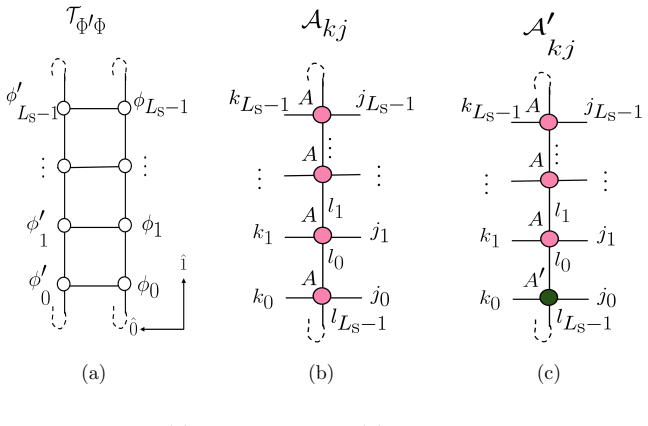
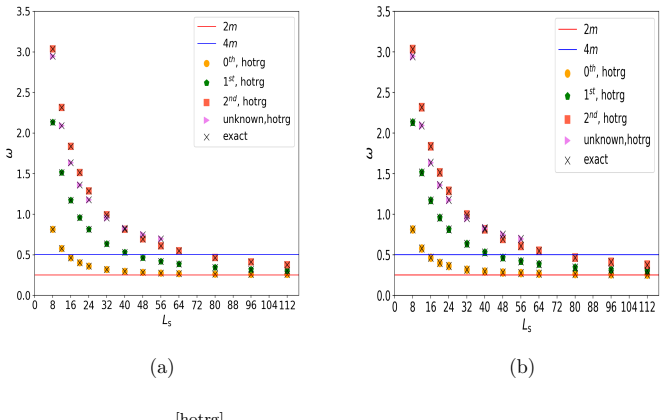
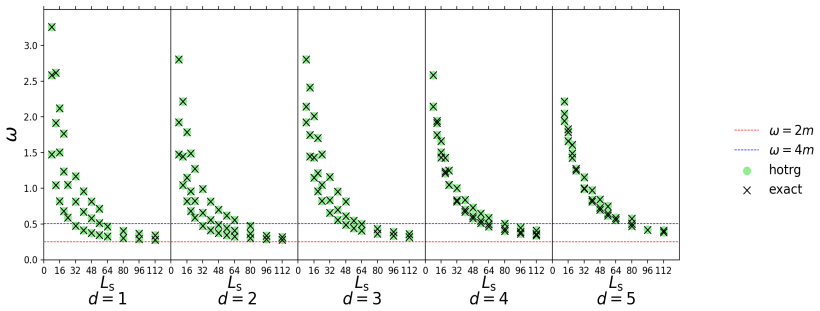
Using a transfer matrix estimated by coarse-grained tensor networks and matrix elements from impurity tensor networks, the method identifies energy eigenstates' quantum numbers and momenta, distinguishes particle numbers by finite-size scaling, and computes two-particle scattering phase shifts that agree with theory in the (1+1)d Ising model.
What carries the argument
Spectroscopy scheme using transfer matrix from tensor renormalization group and impurity tensor network for matrix elements to assign quantum numbers and momenta.
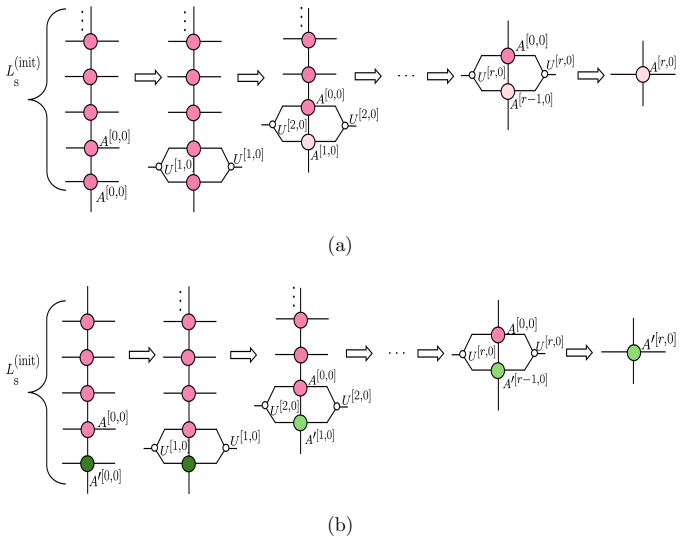
Load-bearing premise
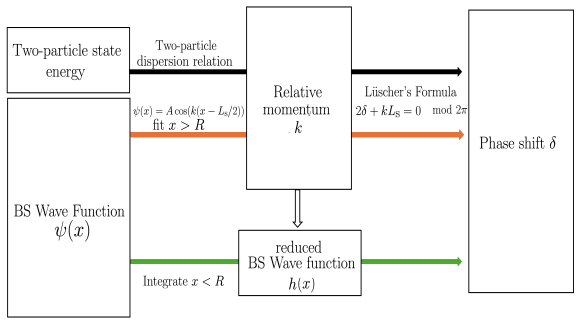
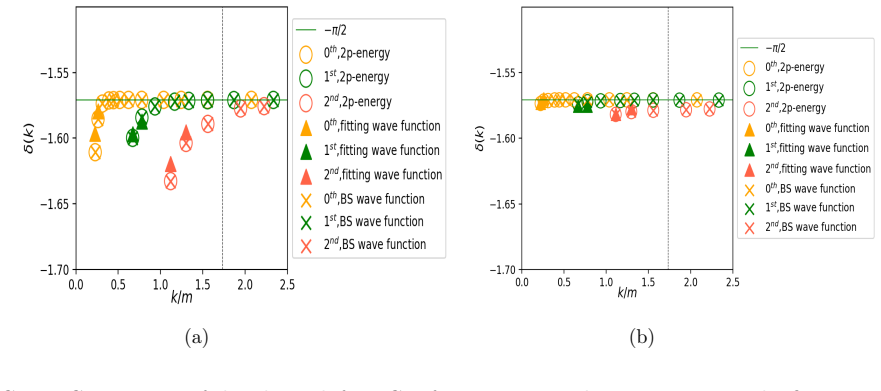
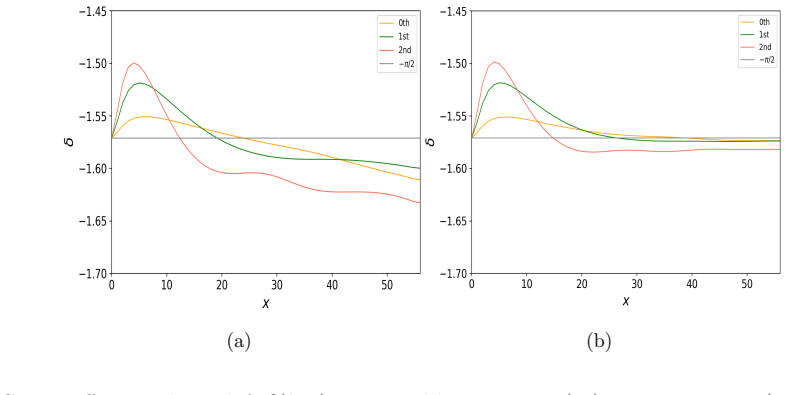
The coarse-grained tensor network sufficiently approximates the transfer matrix eigenvalues and the impurity tensor network accurately computes the matrix elements for quantum number and momentum assignment.
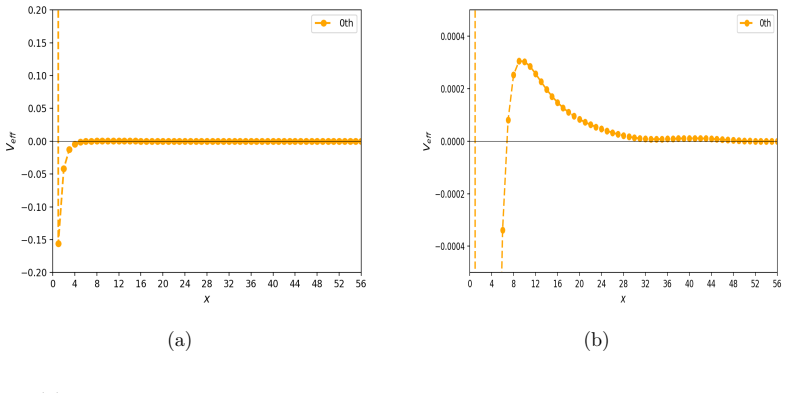
What would settle it
Observing a significant mismatch between the extracted scattering phase shift and the known theoretical value for the Ising model at the studied volumes would indicate the method fails to capture the states correctly.
Figures
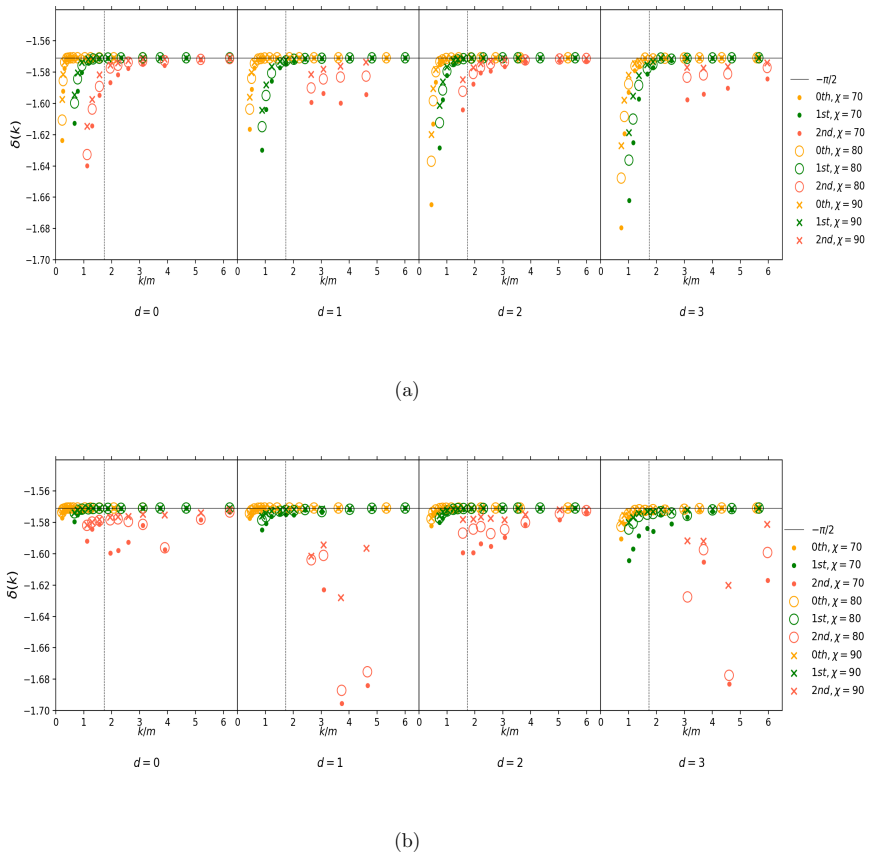
read the original abstract
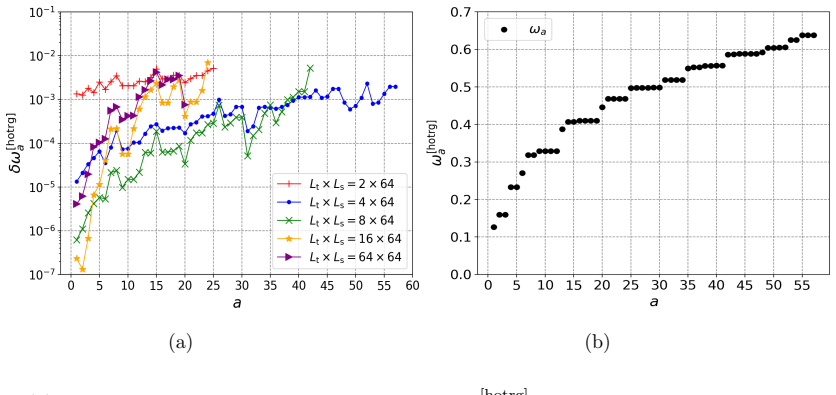
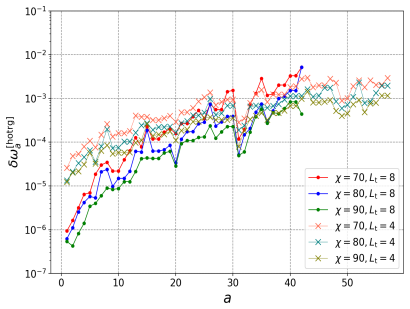
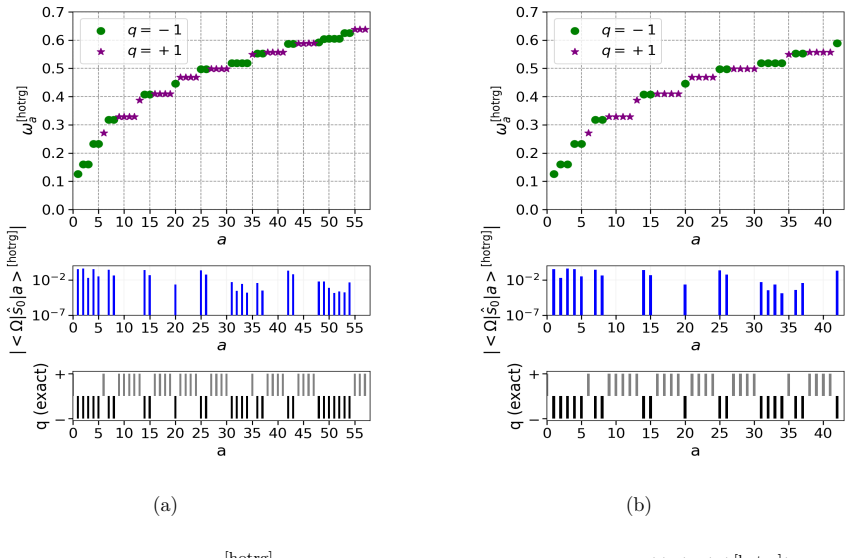
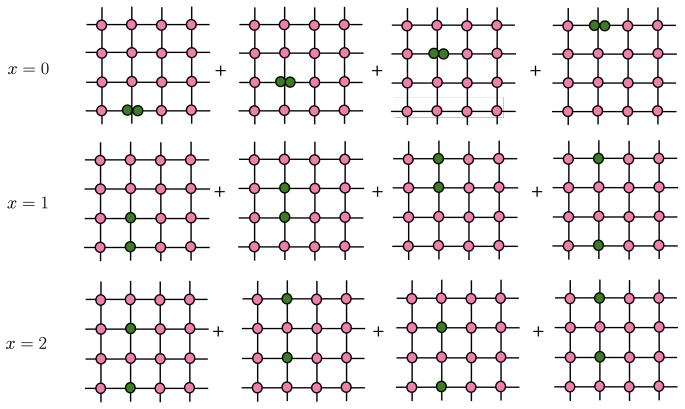
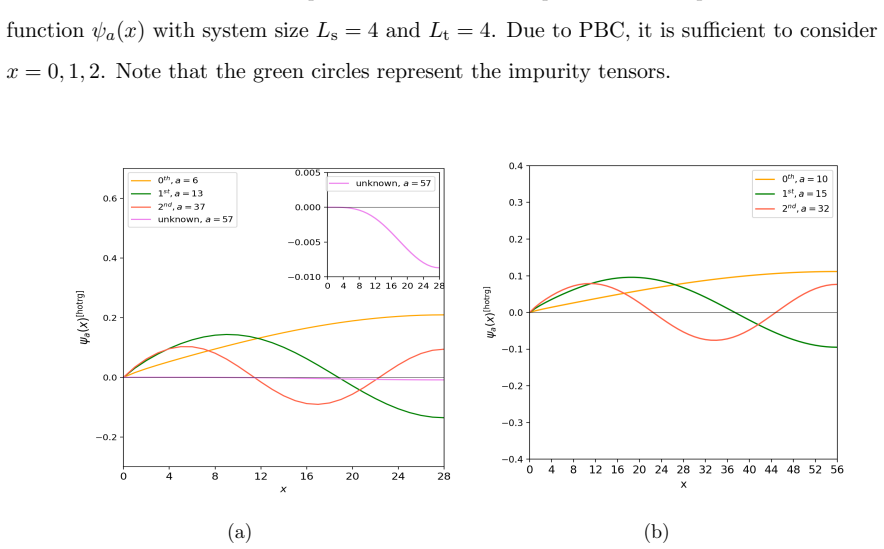
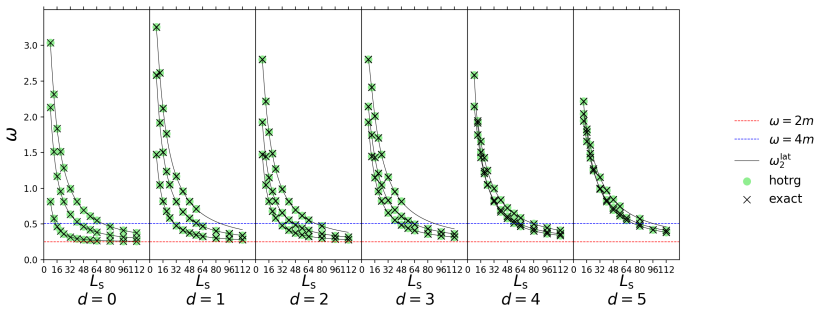
We investigate multi-particle states of the (1+1)d Ising Model using a spectroscopy scheme based on transfer matrix and tensor renormalization group method. The scheme begins with computing the energy spectrum of the system from the transfer matrix estimated by the coarse-grained tensor network. The quantum number and momentum of these energy eigenstates are not a priori known, thus we identify them using matrix elements of an interpolating operator that is numerically computed with an impurity tensor network. Furthermore, by observing the dependence of the energy as a function of system size, we identify the number of particles of the eigenstates and obtain one-, two-, and three-particle states for a specific quantum number and momentum. From the two-particle state sector, we compute the scattering phase shift using L\"uscher's formula and wave function approach, and observe their consistency with theoretical prediction. Using the information of the two-particle scattering phase shift, we investigate the degeneracy of the two-particle states, the theoretical prediction of the three-particle finite volume energy and also the degeneracy in the three-particle states.
Editorial analysis
A structured set of objections, weighed in public.
Referee Report
Summary. The manuscript introduces a spectroscopy scheme using the transfer matrix and tensor renormalization group (TRG) method to investigate multi-particle states in the (1+1)-dimensional Ising model. The approach computes the energy spectrum from the coarse-grained tensor network, identifies quantum numbers and momenta via matrix elements from an impurity tensor network, determines particle numbers from system-size dependence of energies, extracts one- to three-particle states, and computes scattering phase shifts from two-particle states using Lüscher's formula and wave-function methods, showing consistency with theoretical predictions. It further analyzes degeneracies in two- and three-particle sectors and three-particle finite-volume energies.
Significance. If the TRG approximation accuracy and state identification hold as described, the work demonstrates a viable tensor-network route to multi-particle spectroscopy and phase-shift extraction in a solvable lattice model. The direct comparison to exact Ising-model predictions supplies a falsifiable validation that strengthens the case for applying similar methods to theories where Monte Carlo or exact diagonalization become prohibitive.
minor comments (3)
- [Method description] The abstract states that quantum numbers and momenta are identified from matrix elements of an interpolating operator computed with the impurity tensor network, but the main text should include an explicit example (e.g., a table of operator matrix elements for the lowest few states) showing how the assignment is performed unambiguously.
- [Results on particle-number identification] Finite-volume scaling is used to assign particle number; the manuscript should report the range of volumes studied and the functional form assumed for the extrapolation (e.g., exponential corrections) so that readers can judge the robustness of the one-, two-, and three-particle classifications.
- [Scattering phase shift section] The phase-shift extraction via both Lüscher's formula and the wave-function approach is reported to agree with theory; a quantitative table or plot of the difference (with bond-dimension dependence) would make the level of numerical agreement explicit rather than qualitative.
Simulated Author's Rebuttal
We thank the referee for the positive assessment of our work on multi-particle spectroscopy using TRG in the 1+1d Ising model and for recommending minor revision. No specific major comments appear in the provided report, so we offer no point-by-point responses below.
Circularity Check
No significant circularity; derivation relies on standard TRG numerics validated against external Ising theory
full rationale
The paper computes the transfer-matrix spectrum via coarse-grained TRG tensors, assigns quantum numbers/momenta via impurity-tensor matrix elements, identifies particle number from finite-volume energy scaling, and extracts two-particle phase shifts via Lüscher's formula and wave-function methods before comparing the results to independent theoretical predictions for the (1+1)d Ising model. None of these steps reduce by construction to fitted parameters or self-citations; the central claims are externally falsifiable against known exact results and the numerical implementation is self-contained with stated bond-dimension choices and consistency checks.
Axiom & Free-Parameter Ledger
Reference graph
Works this paper leans on
-
[1]
Phase shift from the energy spectrum 32
-
[2]
Phase shift from the wave function outside interaction range 34
-
[3]
Phase shift from the wave function inside interaction range 36
-
[4]
Three-particle states analysis 40
Degeneracy of two-particle states 38 G. Three-particle states analysis 40
-
[5]
Three-particle states energy momentum relation 40
-
[6]
Summary 43 ACKNOWLEDGEMENTS 44 A
Degeneracy of three-particle states 42 IV. Summary 43 ACKNOWLEDGEMENTS 44 A. L ¨USCHER’S FORMULA FROM BETHE SALPETER WAVE FUNCTION 45 References 45 2 I. INTRODUCTION The study on multi-particle state is important for modern physics, particularly for system that involves strong interaction such as nuclear and high energy physics. In nuclear physics, the fo...
-
[7]
= .(26) Applying EVD and truncating the eigenvalues ofM [s,0] (k0k1,k′ 0k′
-
[8]
yield M [s,0] (k0k1,k′ 0k′
-
[9]
See [51] for a complete description of the isometry
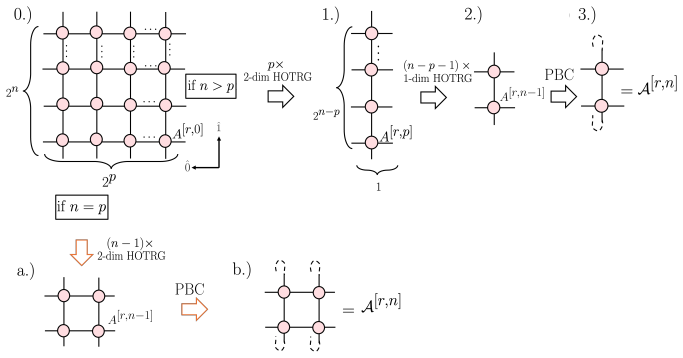
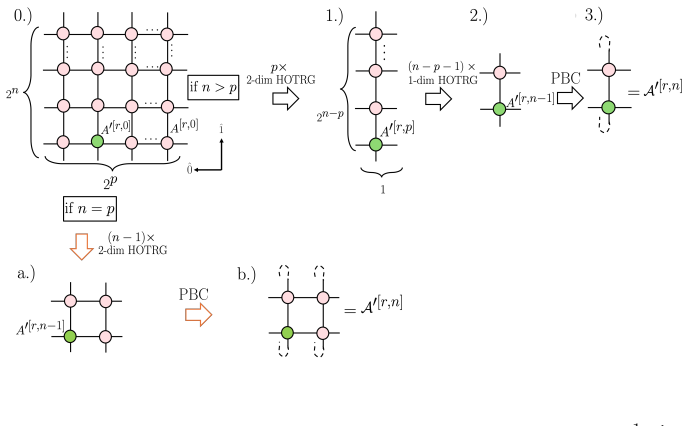
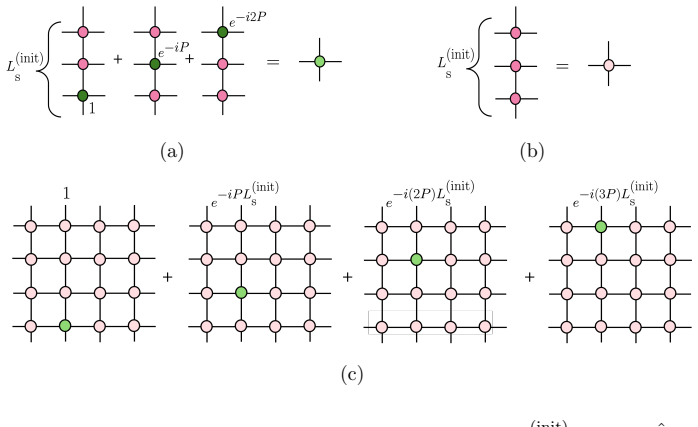
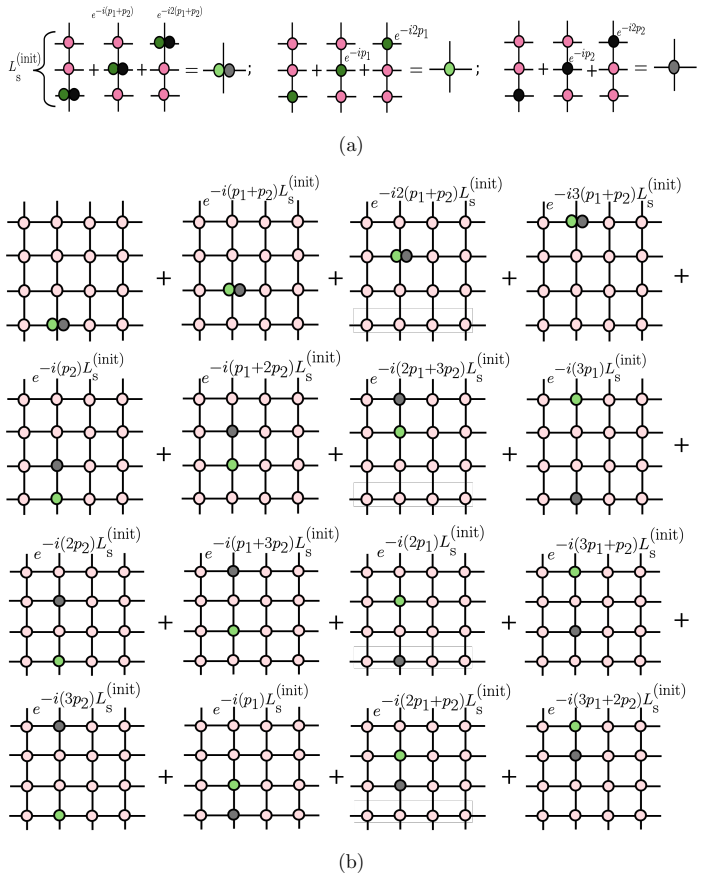
≈ χX c0=0 (27) whereU [s,0] is the isometry andσ c0 are the eigenvalues ofMthat are truncated up to the cut-off bond dimensionχ. See [51] for a complete description of the isometry. After completing the coarse-graining of the initial tensor network with sizeL(init) s , we obtain the tensorA [r,0]. As mentioned earlier, we embed this tensor into the main t...
-
[10]
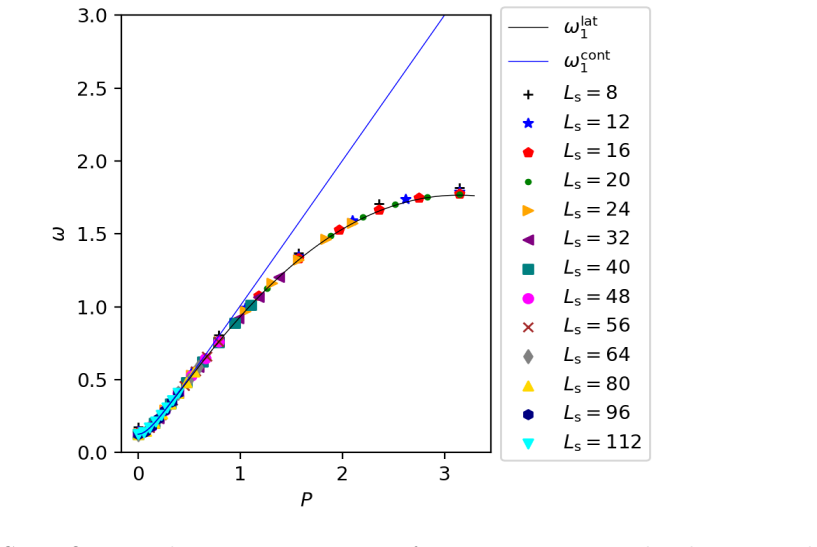
Phase shift from the energy spectrum The scattering phase shift can be extracted from the finite volume two-particle state energy spectrum in the CM frame (P= 0) as well as in the moving frame (P̸= 0). To this end, we compute the relative momentumpusing two-particle lattice dispersion relation [74] ω(d) 2 = cosh−1 cosh(m) + 1−cos π Ls d+p + cosh−1 cosh(m)...
-
[11]
Phase shift from the wave function outside interaction range As previously mentioned, the phase shift can be extracted directly from the two-particle state wave function in theP= 0 sector, which is numerically computed by following the procedure described in Sec. III E. To extract the phase shift, we first compute the effective potentialV eff(x) of the sc...
-
[12]
Phase shift from the wave function inside interaction range In contrast to the fitting procedure, which is evaluated outside interaction range, we show the extraction of phase shift from the inside of the interaction range by employing the Bethe- Salpeter (BS) wave function method [70–72]. For this purpose, first we recall scattering amplitude for (1+1)d ...
-
[13]
Degeneracy of two-particle states From Secs. III F, III F 2, and III F 3, we observe that the two-particle scattering phase shift of the (1+1)-dimensional Ising model is always−π/2 for anyk/m, both inside and outside the elastic region 0≤k/m < √
-
[14]
III D, which can be understood as follows
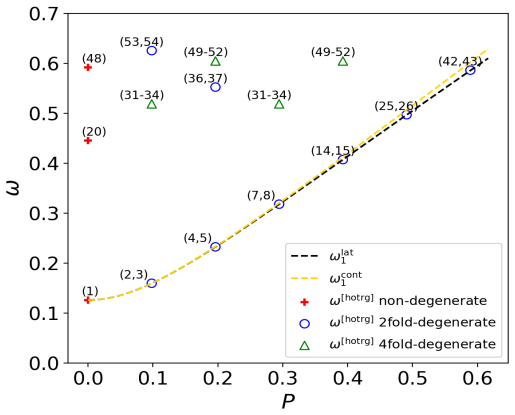
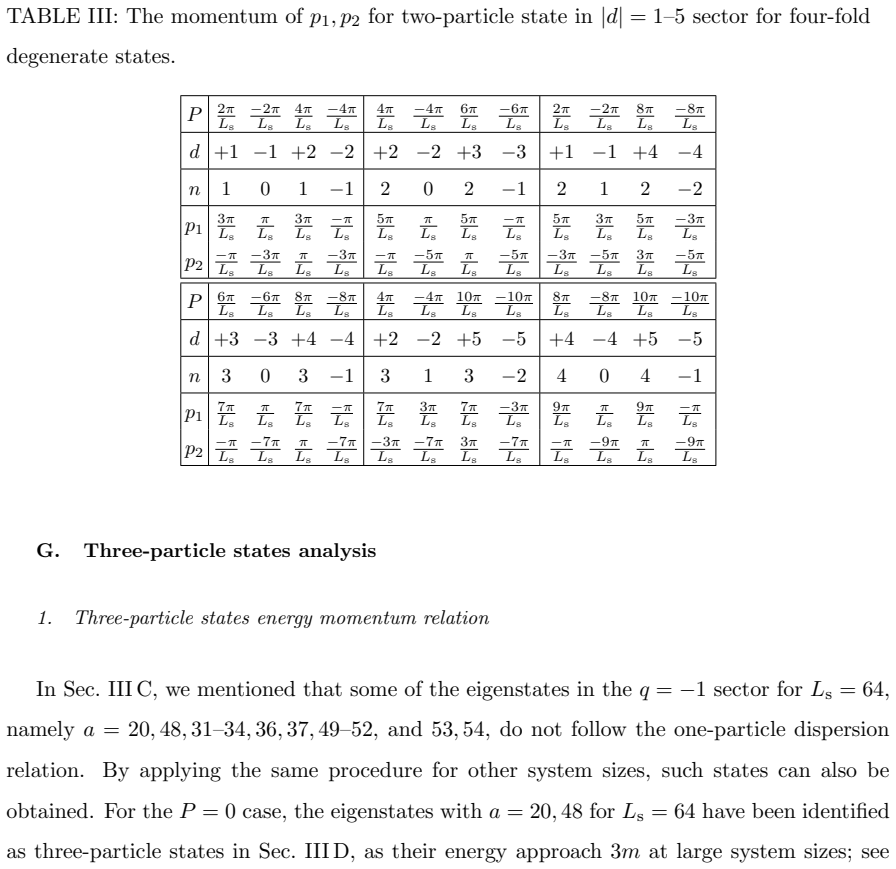
This feature leads to four-fold degeneracies in the energy spectrum in the moving frame as shown in Sec. III D, which can be understood as follows. First, inserting Eq. (61) into Eq. (59) makes the allowed relative momentum p= π Ls (1−d+ 2n), n∈Z.(76) Using Eq. (51) andP=p 1 +p 2, thep 1 andp 2 are given by p1 = (2n+ 1)π Ls , p 2 = (2d−2n−1)π Ls .(77) 38 ...
-
[15]
III C, we mentioned that some of the eigenstates in theq=−1 sector forL s = 64, namelya= 20,48,31–34,36,37,49–52, and 53,54, do not follow the one-particle dispersion relation
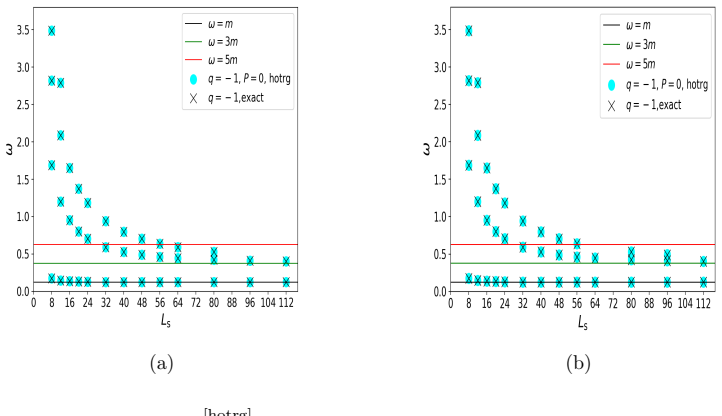
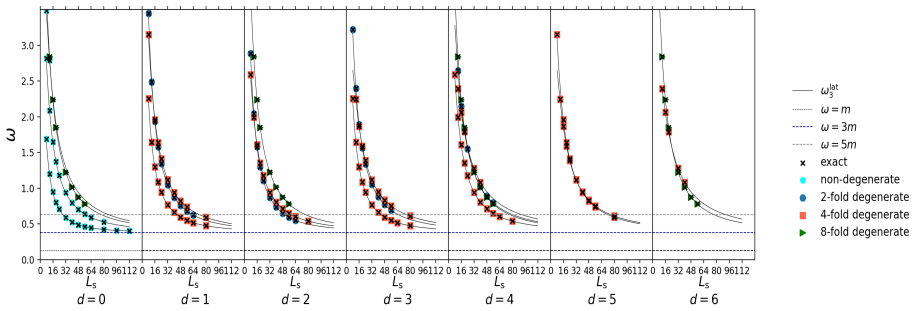
Three-particle states energy momentum relation In Sec. III C, we mentioned that some of the eigenstates in theq=−1 sector forL s = 64, namelya= 20,48,31–34,36,37,49–52, and 53,54, do not follow the one-particle dispersion relation. By applying the same procedure for other system sizes, such states can also be obtained. For theP= 0 case, the eigenstates wi...
-
[16]
Program for Promoting Researchers on the Supercomputer Fugaku
Degeneracy of three-particle states The degeneracy structure in three-particle sector of (1+1)d Ising model is more varied than one- or two-particle state. ForP= 0, the three-particle states are non-degenerate. In contrast, forP̸= 0, as a consequence of the value of the phase shift in Eq. (61) being unchanged for any kinematics region, the spectrum exhibi...
-
[17]
Yamazaki, K.-i
T. Yamazaki, K.-i. Ishikawa, Y. Kuramashi, and A. Ukawa, Phys. Rev. D92, 014501 (2015). 45
2015
-
[18]
D. Guo, A. Alexandru, R. Molina, and M. D¨ oring, Phys. Rev. D94, 034501 (2016)
2016
-
[19]
H. Yan, M. Mai, M. Garofalo, U.-G. Meißner, C. Liu, L. Liu, and C. Urbach, Phys. Rev. Lett. 133, 211906 (2024)
2024
-
[20]
H. Yan, M. Mai, M. Garofalo, Y. Feng, M. D¨ oring, C. Liu, L. Liu, U.-G. Meißner, and C. Urbach, Phys. Rev. Lett.136, 141901 (2026)
2026
-
[21]
S. R. White, Phys. Rev. Lett.69, 2863 (1992)
1992
-
[22]
¨Ostlund and S
S. ¨Ostlund and S. Rommer, Phys. Rev. Lett.75, 3537 (1995)
1995
-
[23]
F. Verstraete and J. I. Cirac, arXiv 0407066 arXiv:cond-mat/0407066
-
[24]
M. C. Ba˜ nuls, K. Cichy, J. I. Cirac, K. Jansen, and S. K¨ uhn, Phys. Rev. Lett.118, 071601 (2017), arXiv:1611.00705 [hep-lat]
Pith/arXiv arXiv 2017
-
[25]
M. C. Ba˜ nulset al., Eur. Phys. J. D74, 165 (2020), arXiv:1911.00003 [quant-ph]
arXiv 2020
-
[26]
M. C. Ba˜ nuls, K. Cichy, Y.-J. Kao, C. J. D. Lin, Y.-P. Lin, and D. T. L. Tan, Phys. Rev. D100, 094504 (2019), arXiv:1908.04536 [hep-lat]
arXiv 2019
-
[27]
Schneider,The Hubbard model on a honeycomb lattice with fermionic tensor networks, Ph.D
M. Schneider,The Hubbard model on a honeycomb lattice with fermionic tensor networks, Ph.D. thesis, Humboldt U., Berlin (2022)
2022
-
[28]
Shimizu, Chin
Y. Shimizu, Chin. J. Phys.50, 749 (2012)
2012
-
[29]
Shimizu, Mod
Y. Shimizu, Mod. Phys. Lett. A27, 1250035 (2012)
2012
-
[30]
J. F. Yu, Z. Y. Xie, Y. Meurice, Y. Liu, A. Denbleyker, H. Zou, M. P. Qin, and J. Chen, Phys. Rev. E89, 013308 (2014), arXiv:1309.4963 [cond-mat.stat-mech]
Pith/arXiv arXiv 2014
-
[31]
H. Zou, Y. Liu, C.-Y. Lai, J. Unmuth-Yockey, A. Bazavov, Z. Y. Xie, T. Xiang, S. Chandrasekha- ran, S. W. Tsai, and Y. Meurice, Phys. Rev. A90, 063603 (2014), arXiv:1403.5238 [hep-lat]
Pith/arXiv arXiv 2014
-
[32]
Y. Shimizu and Y. Kuramashi, Phys. Rev. D90, 014508 (2014), arXiv:1403.0642 [hep-lat]
Pith/arXiv arXiv 2014
-
[33]
Y. Shimizu and Y. Kuramashi, Phys. Rev. D90, 074503 (2014), arXiv:1408.0897 [hep-lat]
Pith/arXiv arXiv 2014
-
[34]
S. Takeda and Y. Yoshimura, PTEP2015, 043B01 (2015), arXiv:1412.7855 [hep-lat]
Pith/arXiv arXiv 2015
-
[35]
L.-P. Yang, Y. Liu, H. Zou, Z. Y. Xie, and Y. Meurice, Phys. Rev. E93, 012138 (2016), arXiv:1507.01471 [cond-mat.stat-mech]
Pith/arXiv arXiv 2016
-
[36]
H. Kawauchi and S. Takeda, Phys. Rev. D93, 114503 (2016), arXiv:1603.09455 [hep-lat]
Pith/arXiv arXiv 2016
-
[37]
Y. Shimizu and Y. Kuramashi, Phys. Rev. D97, 034502 (2018), arXiv:1712.07808 [hep-lat]
Pith/arXiv arXiv 2018
-
[38]
D. Kadoh, Y. Kuramashi, Y. Nakamura, R. Sakai, S. Takeda, and Y. Yoshimura, JHEP03, 141 (2018), arXiv:1801.04183 [hep-lat]
Pith/arXiv arXiv 2018
-
[39]
D. Kadoh, Y. Kuramashi, Y. Nakamura, R. Sakai, S. Takeda, and Y. Yoshimura, JHEP05, 184 (2019), arXiv:1811.12376 [hep-lat]
Pith/arXiv arXiv 2019
-
[40]
Y. Kuramashi and Y. Yoshimura, JHEP08, 023 (2019), arXiv:1808.08025 [hep-lat]
arXiv 2019
-
[41]
Y. Kuramashi and Y. Yoshimura, JHEP04, 089 (2020), arXiv:1911.06480 [hep-lat]. 46
arXiv 2020
-
[42]
A. Bazavov, S. Catterall, R. G. Jha, and J. Unmuth-Yockey, Phys. Rev. D99, 114507 (2019), arXiv:1901.11443 [hep-lat]
Pith/arXiv arXiv 2019
-
[43]
S. Akiyama, Y. Kuramashi, T. Yamashita, and Y. Yoshimura, Phys. Rev. D100, 054510 (2019), arXiv:1906.06060 [hep-lat]
arXiv 2019
-
[44]
S. Akiyama, D. Kadoh, Y. Kuramashi, T. Yamashita, and Y. Yoshimura, JHEP09, 177 (2020), arXiv:2005.04645 [hep-lat]
arXiv 2020
-
[45]
S. Akiyama, Y. Kuramashi, T. Yamashita, and Y. Yoshimura, JHEP01, 121 (2021), arXiv:2009.11583 [hep-lat]
arXiv 2021
-
[46]
S. Akiyama, Y. Kuramashi, and Y. Yoshimura, Phys. Rev. D104, 034507 (2021), arXiv:2101.06953 [hep-lat]
arXiv 2021
-
[47]
S. Akiyama and Y. Kuramashi, Phys. Rev. D104, 014504 (2021), arXiv:2105.00372 [hep-lat]
arXiv 2021
-
[48]
S. Akiyama, Y. Kuramashi, and T. Yamashita, PTEP2022, 023I01 (2022), arXiv:2109.14149 [cond-mat.str-el]
arXiv 2022
-
[49]
K. Nakayama, L. Funcke, K. Jansen, Y.-J. Kao, and S. K¨ uhn, Phys. Rev. D105, 054507 (2022), arXiv:2107.14220 [hep-lat]
arXiv 2022
-
[50]
S. Akiyama and Y. Kuramashi, JHEP05, 102 (2022), arXiv:2202.10051 [hep-lat]
arXiv 2022
-
[51]
S. Akiyama and Y. Kuramashi, JHEP10, 077 (2023), arXiv:2304.07934 [hep-lat]
arXiv 2023
-
[52]
T. Kuwahara and A. Tsuchiya, PTEP2022, 093B02 (2022), arXiv:2205.08883 [hep-lat]
arXiv 2022
-
[53]
M. Hirasawa, A. Matsumoto, J. Nishimura, and A. Yosprakob, JHEP12, 011 (2021), arXiv:2110.05800 [hep-lat]
arXiv 2021
- [54]
- [55]
- [56]
-
[57]
J. Bloch and R. Lohmayer, Nucl. Phys. B986, 116032 (2023), arXiv:2206.00545 [hep-lat]
arXiv 2023
-
[58]
R. G. Jha, arXiv 2201.01789 arXiv:2201.01789 [hep-lat]
-
[59]
T. Samberger, J. Bloch, R. Lohmayer, and T. Wettig, (2026), arXiv:2603.24487 [hep-lat]
arXiv 2026
-
[60]
Tensor renormalization group study of cold and dense qcd in the strong coupling limit,
Y. Sugimoto, S. Akiyama, and Y. Kuramashi, “Tensor renormalization group study of cold and dense qcd in the strong coupling limit,” (2026), arXiv:2601.20690 [hep-lat]
Pith/arXiv arXiv 2026
-
[61]
E. Itou, A. Matsumoto, and Y. Tanizaki, JHEP11, 231 (2023), arXiv:2307.16655 [hep-lat]
arXiv 2023
-
[62]
E. Itou, A. Matsumoto, and Y. Tanizaki, JHEP09, 155 (2024), arXiv:2407.11391 [hep-lat]
arXiv 2024
-
[63]
A. Matsumoto, E. Itou, and Y. Tanizaki, in41st International Symposium on Lattice Field Theory (2025) arXiv:2501.18960 [hep-lat]. 47
arXiv 2025
-
[64]
F. I. Az-zahra, S. Takeda, and T. Yamazaki, Phys. Rev. D110, 034514 (2024)
2024
-
[65]
F. I. Az-zahra, S. Takeda, and T. Yamazaki, PoSLA TTICE2024, 356 (2025), arXiv:2411.19437 [hep-lat]
arXiv 2025
-
[66]
Levin and C
M. Levin and C. P. Nave, Phys. Rev. Lett.99, 120601 (2007)
2007
-
[67]
Z. Y. Xie, J. Chen, M. P. Qin, J. W. Zhu, L. P. Yang, and T. Xiang, Phys. Rev. B86, 045139 (2012)
2012
-
[68]
Z. Y. Xie, H. C. Jiang, Q. N. Chen, Z. Y. Weng, and T. Xiang, Phys. Rev. Lett.103, 160601 (2009)
2009
-
[69]
Evenbly and G
G. Evenbly and G. Vidal, Phys. Rev. Lett.115, 180405 (2015)
2015
-
[70]
Yang, Z.-C
S. Yang, Z.-C. Gu, and X.-. Wen, Phys. Rev. Lett.118, 110504 (2017)
2017
-
[71]
M. Hauru, C. Delcamp, and S. Mizera, Phys. Rev. B97, 045111 (2018), arXiv:1709.07460 [cond- mat.str-el]
Pith/arXiv arXiv 2018
-
[72]
Morita, R
S. Morita, R. Igarashi, H.-H. Zhao, and N. Kawashima, Phys. Rev. E97, 033310 (2018)
2018
-
[73]
Harada, Phys
K. Harada, Phys. Rev. B97, 045124 (2018)
2018
-
[74]
Nakamura, H
Y. Nakamura, H. Oba, and S. Takeda, Phys. Rev. B99, 155101 (2019)
2019
-
[75]
Adachi, T
D. Adachi, T. Okubo, and S. Todo, Phys. Rev. B102, 054432 (2020)
2020
- [76]
- [77]
-
[78]
E. Arai, H. Ohki, S. Takeda, and M. Tomii, Phys. Rev. D107, 114515 (2023), arXiv:2211.13107 [hep-lat]
arXiv 2023
-
[79]
Nakayama, arXiv 2307.14191 arXiv:2307.14191 [cond-mat.stat-mech]
K. Nakayama, arXiv 2307.14191 arXiv:2307.14191 [cond-mat.stat-mech]
- [80]
discussion (0)
Sign in with ORCID, Apple, or X to comment. Anyone can read and Pith papers without signing in.