pith. sign in

arxiv: 2604.15365 · v2 · pith:NT5ZMH2Rnew · submitted 2026-04-14 · ⚛️ physics.ins-det · physics.plasm-ph

Simultaneous PW-scale laser driven MeV X-ray and neutron beam characterization for dual radiography capability

Pith reviewed 2026-05-10 13:49 UTC · model grok-4.3

classification ⚛️ physics.ins-det physics.plasm-ph
keywords laser-driven sourcesMeV X-raysMeV neutronspetawatt laserdual radiographyresonance transmissionmaterial identificationphoton spectra
0
0 comments X

The pith

A single petawatt laser shot produces simultaneous MeV X-ray and neutron beams with first quantitative spectra in this regime.

A machine-rendered reading of the paper's core claim, the machinery that carries it, and where it could break.

The paper shows that an ultra-intense, ultra-short petawatt laser pulse generates both high-energy photons from 0.1 to 100 MeV and MeV neutrons in one interaction. It provides the first measured photon spectra and angular distributions under these conditions, together with neutron characterization. Moderated neutrons then support resonance transmission analysis for identifying materials inside dense objects. This setup allows multiplexed probing from a compact source in a single shot.

Core claim

In the petawatt interaction regime, an ultra-intense laser pulse exceeding 10^21 W/cm^{2} with 24 fs duration produces simultaneous MeV X-ray and neutron beams from a single target. The work reports the first quantitative photon spectra across 0.1-100 MeV and their angular distributions, complemented by neutron characterization, and shows that moderated neutrons enable in-depth material identification through resonance transmission.

What carries the argument

Laser-driven bremsstrahlung X-rays and neutron-producing nuclear reactions generated together in a single petawatt-scale target interaction.

If this is right

  • Dual neutron and X-ray radiography becomes possible from one laser pulse for dense materials.
  • Resonance transmission with moderated neutrons adds material identification capability to the X-ray imaging.
  • Compact ultrashort-pulse PW lasers can serve as sources for multiplexed probing of high-speed events.
  • Simultaneous generation of multiple secondary particles enables single-shot material analysis without separate accelerators.

Where Pith is reading between the lines

These are editorial extensions of the paper, not claims the author makes directly.

  • The characterized beams could support real-time imaging of dynamic processes in opaque objects.
  • Higher repetition-rate operation would extend the approach toward practical non-destructive testing.
  • The spectra data could test and refine models of laser-plasma photon and neutron production.

Load-bearing premise

The chosen diagnostics and target interaction produce accurate spectra and distributions free from major background or systematic errors.

What would settle it

An independent measurement that finds the photon spectrum outside the reported 0.1-100 MeV range or shows that moderated neutrons fail to produce usable resonance transmission signals for material identification.

Figures
Figures reproduced from arXiv: 2604.15365 by A. Ciardi, D. Sangwan, E. d`Humieres, F. Condamine, F. Trompier, G. Auge, G. Fauvel, G. Giubega, G. Verstraeten, I. Cohen, I. Pomerantz, J. Fuchs, L. Gremillet, L.T. Mix, L. Tudor, M. Gugiu, M. Sheats, N. Mirkovic, O. Tesileanu, P. Antici, P.-G. Bleotu, Q. Ducasse, R. Gambicchia, R. Leli`evre, S. N. Chen, S. Turiel, T. Catabi, T. Vinchon, V. Iancu, W. Yao, Y. Ristic.

Figure 1
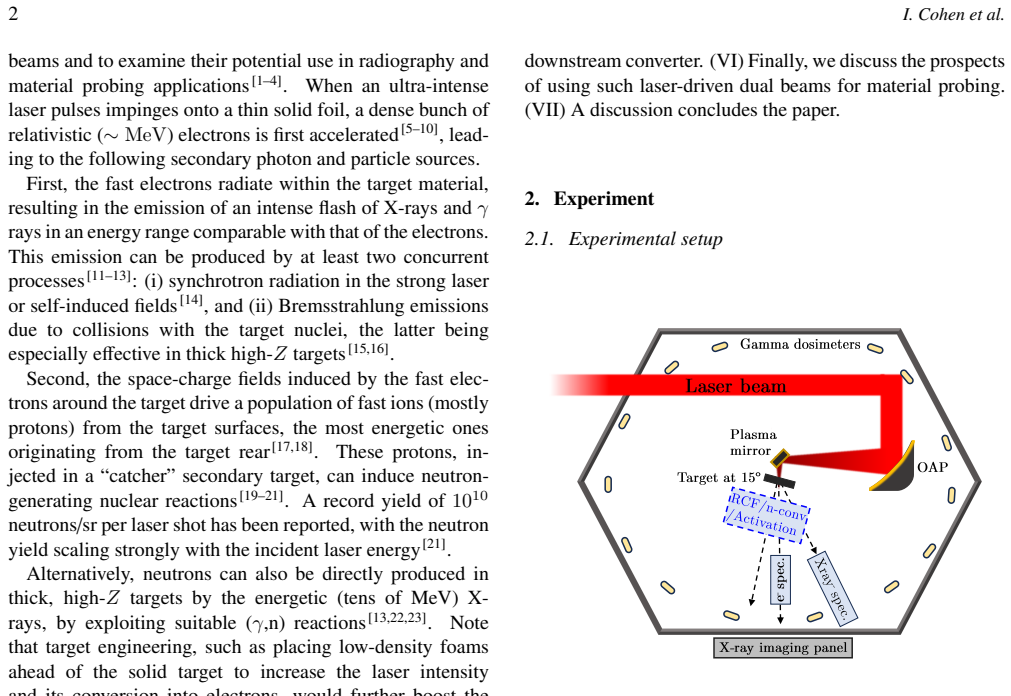
Figure 1. Figure 1: Sketch of the experimental setup and of the arrangement of the diagnostics (top view, see text for details). OAP stands for off-axis-parabola, the focusing optics used to focus the laser onto the target. The target was tilted by 15◦ compared to the laser axis, in order to minimize back-reflection of laser light into the incident laser. Further, a reflective (Au-coated) plasma mirror was used close to the f… view at source ↗
Figure 2
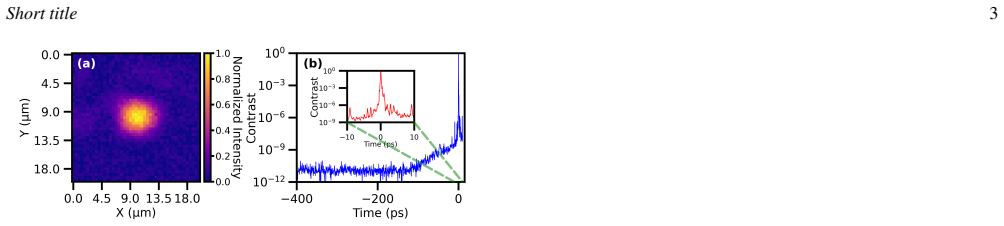
Figure 2. Figure 2: (a) Laser focal spot, as measured at low power by a high￾resolution, high-aperture in-vacuum microscope objective linked to a CCD camera. (b) Laser pulse contrast measurements. Time 0 corresponds to the peak of the laser pulse. The scale starts at -400 ps to show the laser￾prepulse that initiate plasma ablation and expansion prior to the peak of the pulse. The laser temporal shape within ± 10 ps of the pea… view at source ↗
Figure 3
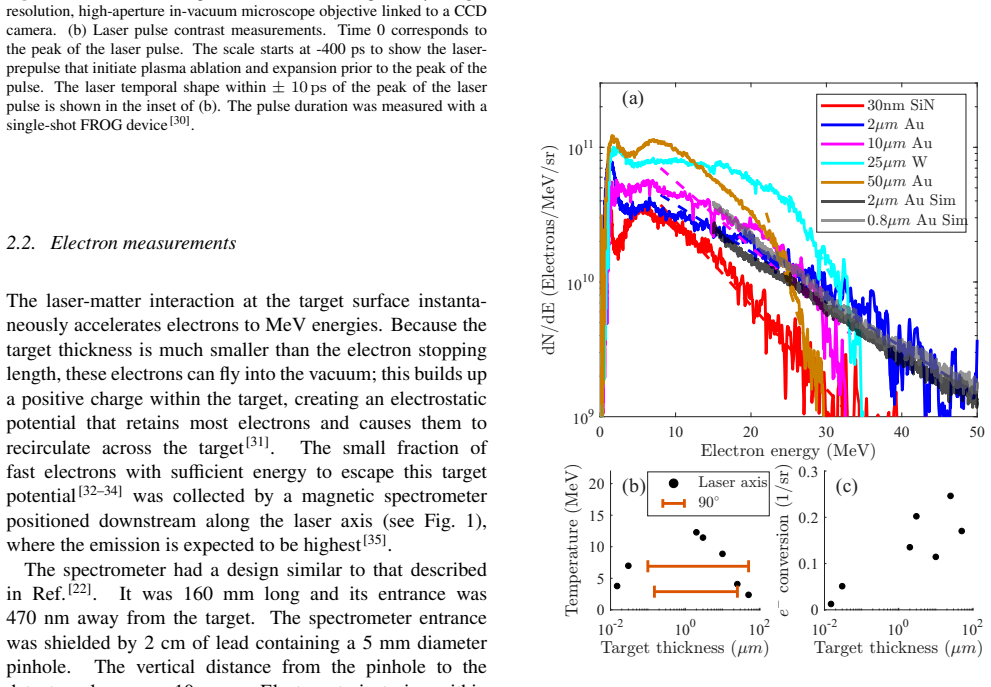
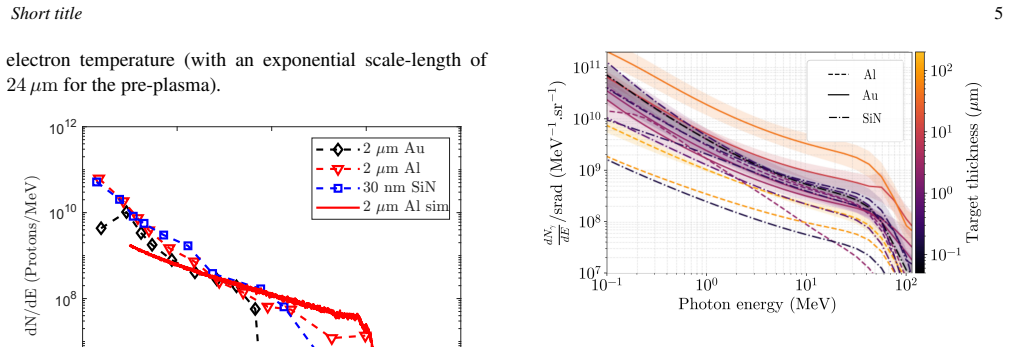
Figure 3. Figure 3: (a) Measured and simulated electron spectra from different solid foil target materials and thicknesses. The electrons are measured using absolutely calibrated TR-type imaging plates[40]. The lower limit of the graph corresponds to the noise level on the detector. For each shot, the temperature inferred from fitting the spectrum tail to an exponential, and the conversion efficiency are calculated, as shown … view at source ↗
Figure 5
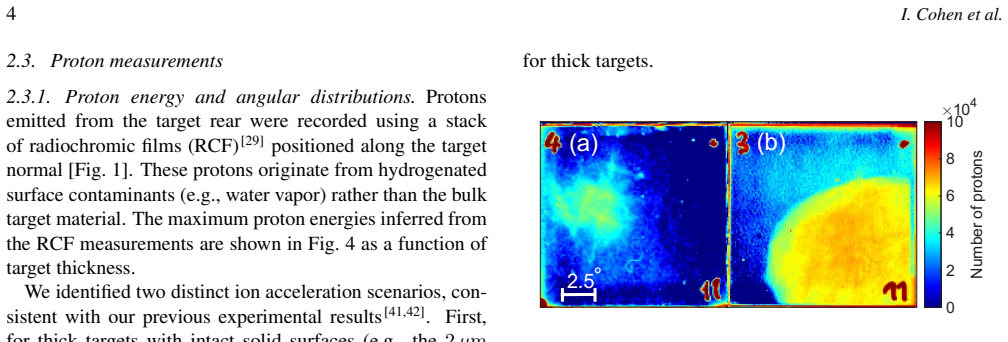
Figure 5. Figure 5: Experimental measurements of proton beam profiles, recorded from (a) a 30 nm SiN target and (b) a 2 µm Al target using RCF films[29] . The films contain a polymer which darkens when ionizing radiation deposits its energy within. It thus allows to obtain a continuous profile of the incoming radiation on the film, as shown. For both of these two shots we show the 11th layer in the RCF stack, which correspond… view at source ↗
Figure 4
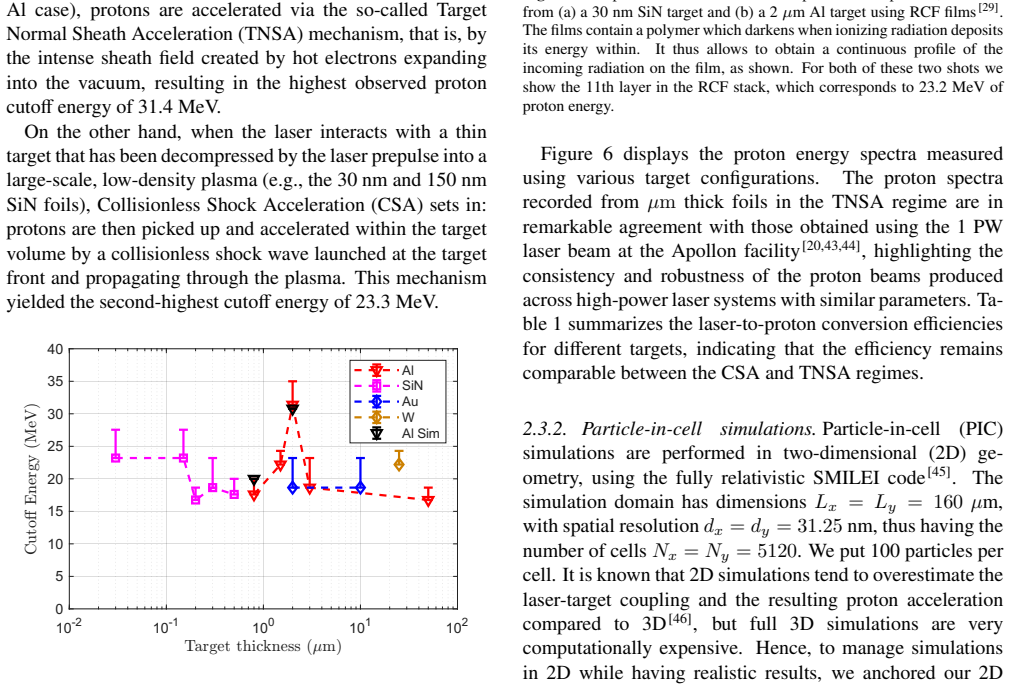
Figure 4. Figure 4: Proton cutoff energy as a function of target thickness (for different target materials, see legend). The data points indicate the last RCF layer with clear proton signal and the upper error bars represent the energy corresponding to the next RCF without proton signals. The two black empty triangles represent the corresponding simulation results. The transition between the two acceleration regimes for nm- a… view at source ↗
Figure 7
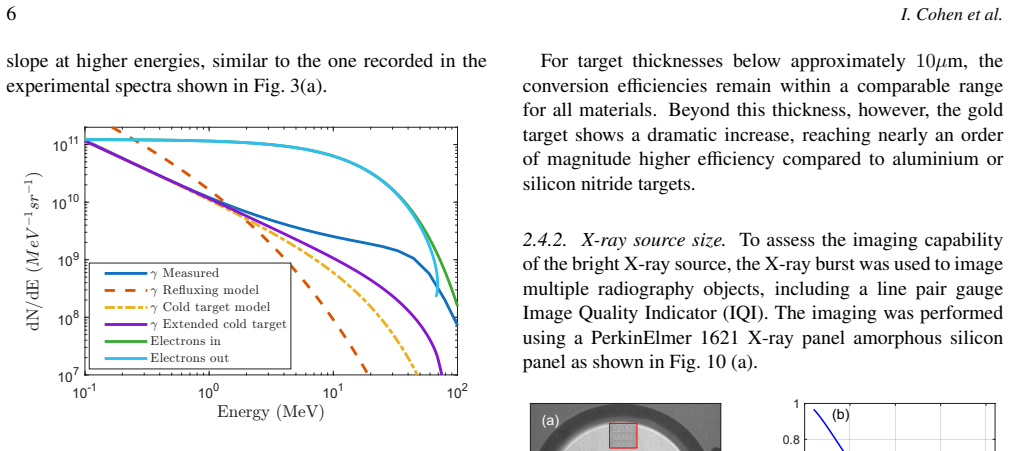
Figure 7. Figure 7: Unfolded photon energy spectra for gold, silicon nitride, and aluminium targets of different thicknesses. Different line styles indicate the target material, while color denotes the target thickness. Tungsten targets are omitted for clarity, as their spectra closely resemble those of gold. Lines represent the mean photon spectra and shaded bands indicate the standard deviation across shots. It is interesti… view at source ↗
Figure 8
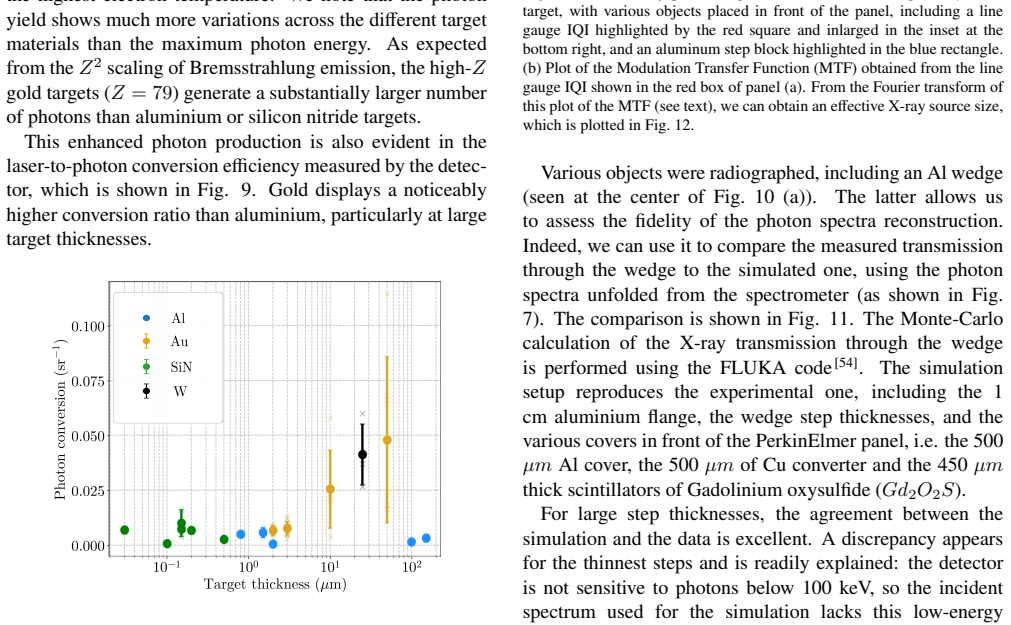
Figure 8. Figure 8: Bremsstrahlung calculations for various models of electrons passing through the target (see text for details). The blue line corresponds to the measured X-ray spectrum generated from targets of 25 µm W. We can observe that the ”extended cold target” model (in violet) is the closest to the actual data (in dark blue). We further observe in the spectra shown in [PITH_FULL_IMAGE:figures/full_fig_p006_8.png] view at source ↗
Figure 10
Figure 10. Figure 10: (a) X-ray panel image recorded when shooting a 25 µm W target, with various objects placed in front of the panel, including a line gauge IQI highlighted by the red square and inlarged in the inset at the bottom right, and an aluminum step block highlighted in the blue rectangle. (b) Plot of the Modulation Transfer Function (MTF) obtained from the line gauge IQI shown in the red box of panel (a). From the … view at source ↗
Figure 9
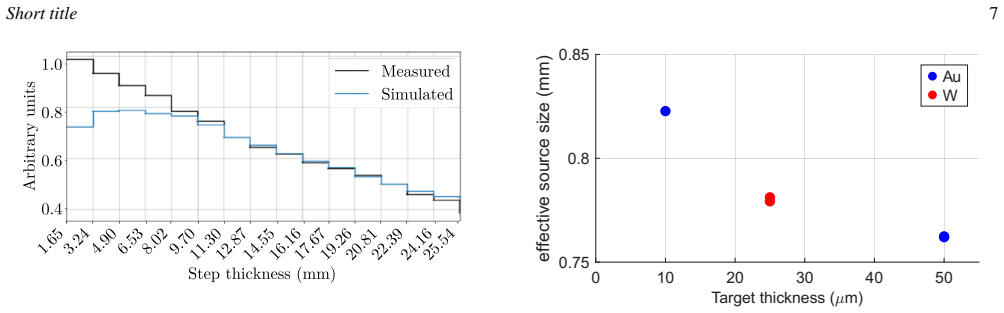
Figure 9. Figure 9: Laser-to-photon conversion efficiency per sr for different materials as a function of target thickness, as measured by the detector positioned at 18◦ from the laser axis. The vertical error bars correspond to the range of measurements over various shots performed with the same target. For target thicknesses below approximately 10µm, the conversion efficiencies remain within a comparable range for all mater… view at source ↗
Figure 11
Figure 11. Figure 11: Comparison between the measured (in black) and simulated (in blue) X-ray transmission through the Al wedge shown at the center of the image shown in [PITH_FULL_IMAGE:figures/full_fig_p007_11.png] view at source ↗
Figure 13
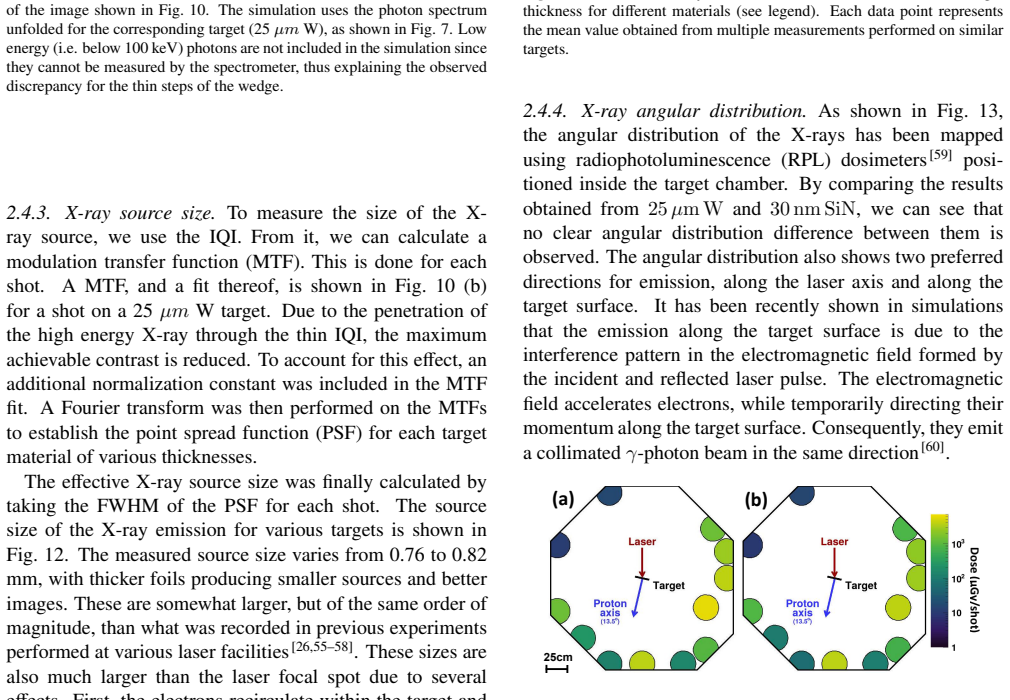
Figure 13. Figure 13: X-ray spatial dose distribution measured inside the interaction chamber, using RPL dosimeters and for shots on (a) 25 µmW and (b) 30 nm SiN. Each circle represents the position of a dosimeter, and its color corresponds to the measured dose. 2.5. Neutron measurements 2.5.1. Neutron energy spectra and modeling. Neutrons were generated via proton interactions, in a pitcher-catcher configuration, with a 4 mm … view at source ↗
Figure 14
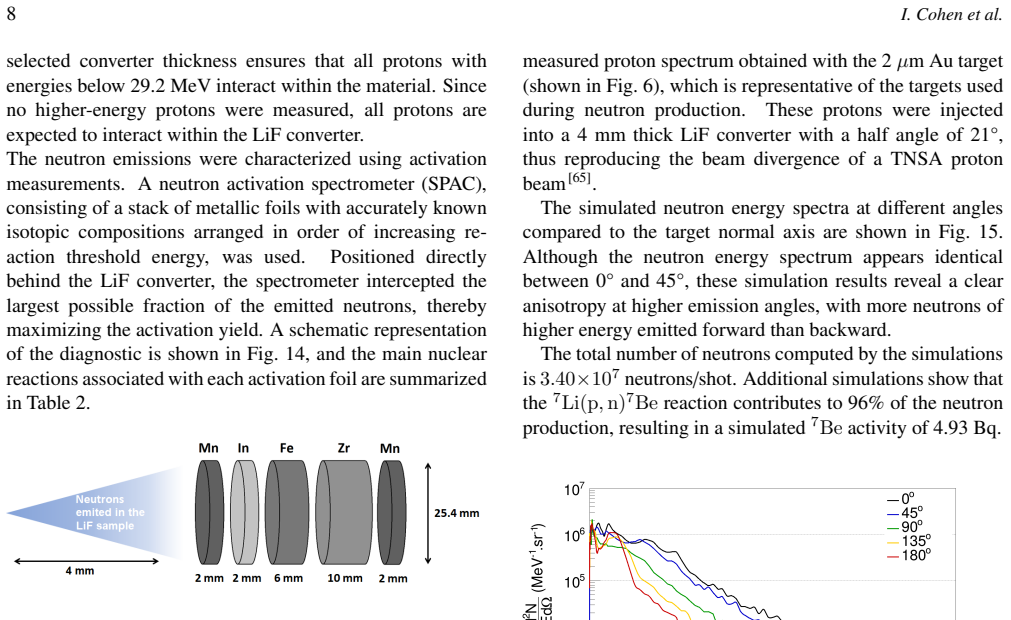
Figure 14. Figure 14: Design of the SPAC activation diagnostic used during the experimental campaign. The elements are chosen to have complementary energy range of activation induced by the incoming neutrons, as well as to minimize activation of each sample by the radiation from the other samples[61] . Since these neutrons are mainly produced through the 7Li(p, n)7Be reaction[20], the total number of emitted neu￾trons can be e… view at source ↗
Figure 17
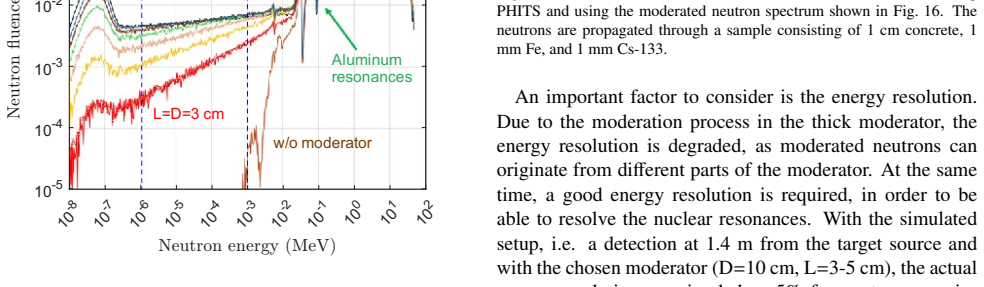
Figure 17. Figure 17: Neutron flux obtained from a Monte-Carlo simulation using PHITS and using the moderated neutron spectrum shown in [PITH_FULL_IMAGE:figures/full_fig_p010_17.png] view at source ↗
Figure 16
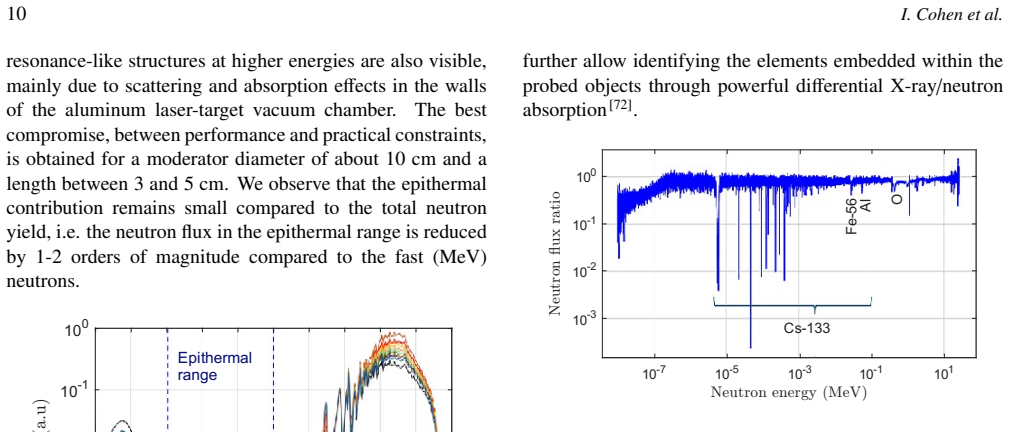
Figure 16. Figure 16: Simulated neutron energy spectra after moderation (see text) and as collected at 1.4 m from the MeV neutron source, for different moderator diameters D and length L. We then simulated the propagation of the moderated neu￾trons into various materials. The simulation was performed using the numerical code Particle and Heavy Ion Transport code System (PHITS)[71] [PITH_FULL_IMAGE:figures/full_fig_p010_16.png] view at source ↗
read the original abstract

Laser-driven, high-brilliance secondary sources (electrons, ions, neutrons, X-rays) open new perspectives for compact material probing and imaging of high-speed events. A key advantage is their ability to perform multiplexed probing, as these sources are generated simultaneously in a single shot using a single laser beam. Here, we report the first quantitative measurements of photon spectra (0.1--100 MeV) and angular distributions in the petawatt interaction regime, using an ultra-intense ($>10^{21}\,\rm W/cm^2$), ultra-short (24~fs) laser pulse. These results are complemented by the characterization of simultaneously produced MeV neutrons. We demonstrate that these neutrons, once moderated, can enable in-depth material identification via resonance transmission analysis. This work highlights the potential of compact, ultrashort-pulse PW lasers for dual neutron and X-ray radiography of dense materials.

Editorial analysis

A structured set of objections, weighed in public.

Desk editor's note, referee report, simulated authors' rebuttal, and a circularity audit. Tearing a paper down is the easy half of reading it; the pith above is the substance, this is the friction.

Referee Report

0 major / 4 minor

Summary. The manuscript describes the simultaneous generation and characterization of MeV X-ray and neutron beams from a petawatt laser-target interaction. It claims the first quantitative photon spectra (0.1-100 MeV) and angular distributions measured with filter-stack spectrometers and image-plate arrays under conditions of >10^{21} W/cm² intensity and 24 fs pulse duration. The neutron characterization uses moderated time-of-flight detectors, and a demonstration of resonance transmission analysis for material identification is provided, suggesting utility for dual radiography.

Significance. If the reported measurements are accurate, this work is significant for the field of laser-driven secondary sources. It fills a gap by providing quantitative data in the petawatt regime, which is essential for optimizing these sources for applications in radiography and imaging. The dual capability in a single shot is a notable advantage for time-resolved studies. The experimental approach with calibrated diagnostics and modeling supports reproducibility. This could impact the development of compact accelerators and radiation sources.

minor comments (4)
  1. The abstract states the measurements occurred but the full details on diagnostics and analysis are only in the body; consider adding a brief mention of the diagnostic methods used.
  2. The photon spectrum plot would benefit from inclusion of the unfolded raw data points or the response matrix to allow readers to assess the unfolding quality.
  3. The resonance transmission results lack a comparison table with expected resonances for the tested materials.
  4. Several key papers on laser-driven X-ray sources from the last 5 years are not cited, which would help contextualize the novelty claim.

Simulated Author's Rebuttal

0 responses · 0 unresolved

We thank the referee for the thorough review and positive assessment of our work on simultaneous petawatt laser-driven MeV X-ray and neutron beams. The recommendation for minor revision is appreciated. No specific major comments were raised in the report, so we have no point-by-point responses to provide at this stage. We will incorporate any minor suggestions during revision to further strengthen the manuscript.

Circularity Check

0 steps flagged

No circularity: purely experimental report of measurements

full rationale

The manuscript is a direct experimental report of laser-driven X-ray and neutron source characterization. It describes diagnostic setups (filter-stack spectrometers, image-plate arrays, moderated neutron time-of-flight detectors), response-function calibrations, background subtraction, and Monte Carlo unfolding, with all quantitative claims resting on observed data rather than any derivation chain, fitted prediction, or self-referential model. No equations, ansatzes, uniqueness theorems, or predictions are invoked that could reduce to inputs by construction. Self-citations, if present, are not load-bearing for the central claims.

Axiom & Free-Parameter Ledger

0 free parameters · 0 axioms · 0 invented entities

Experimental characterization paper; abstract introduces no free parameters, axioms, or invented entities. All content rests on reported laser-plasma measurements.

pith-pipeline@v0.9.0 · 5608 in / 1058 out tokens · 52368 ms · 2026-05-10T13:49:14.740778+00:00 · methodology

discussion (0)

Sign in with ORCID, Apple, or X to comment. Anyone can read and Pith papers without signing in.