Searching for the pseudoscalar partner of G(3900) via radiative Y(4230) decays
Pith reviewed 2026-06-27 16:04 UTC · model grok-4.3
The pith
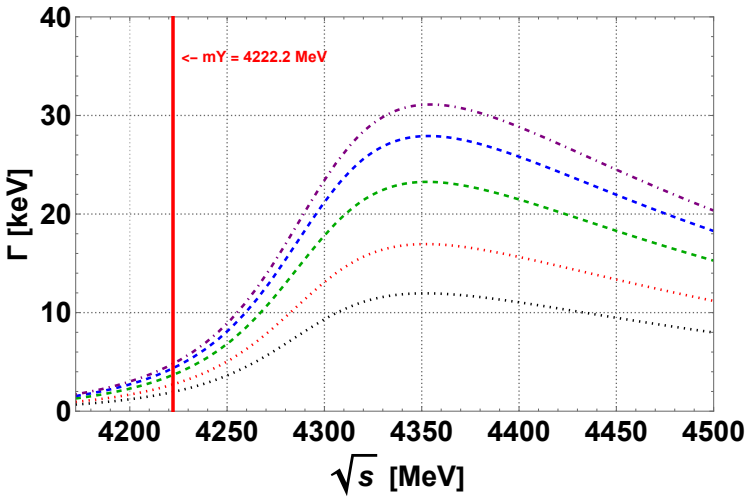
Radiative decay Y(4230) to gamma G0(3900) produces branching fractions between 3.8 times 10 to the minus 5 and 3.3 times 10 to the minus 4 when G0 is a P-wave molecular state.
A machine-rendered reading of the paper's core claim, the machinery that carries it, and where it could break.
Core claim
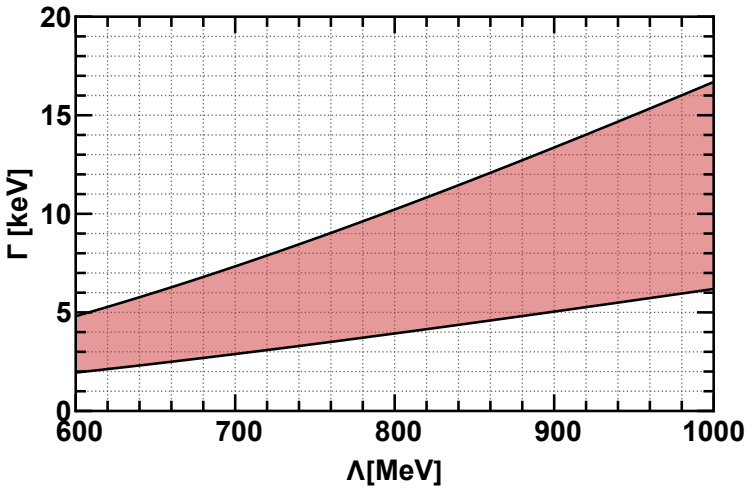
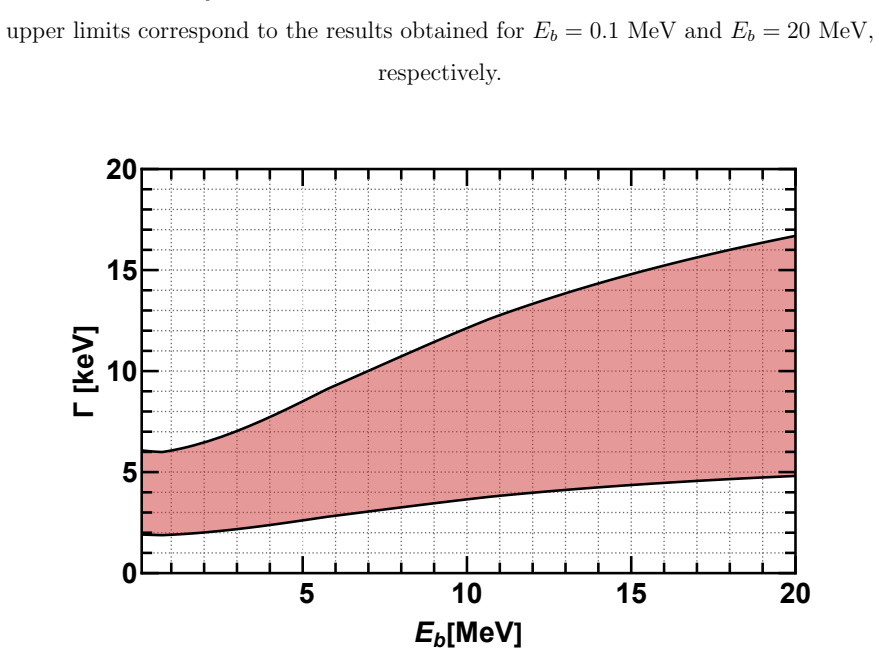
Assuming the triangle mechanism and the P-wave molecular interpretation of G0(3900) with J to the PC equal to 0 to the minus plus, the branching fraction B of Y(4230) to gamma G0(3900) lies between 3.8 times 10 to the minus 5 and 3.3 times 10 to the minus 4, depending on model parameters and the binding energy of G0(3900).
What carries the argument
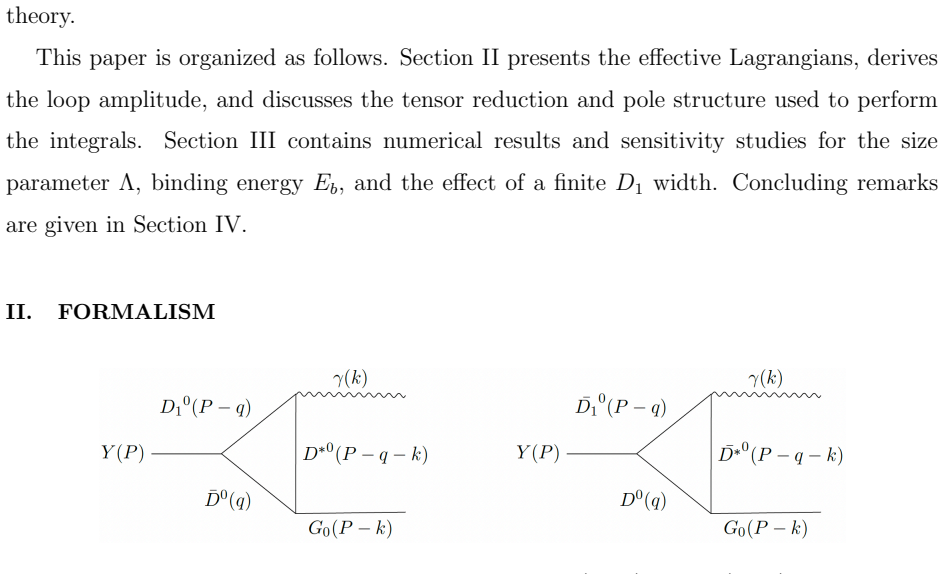
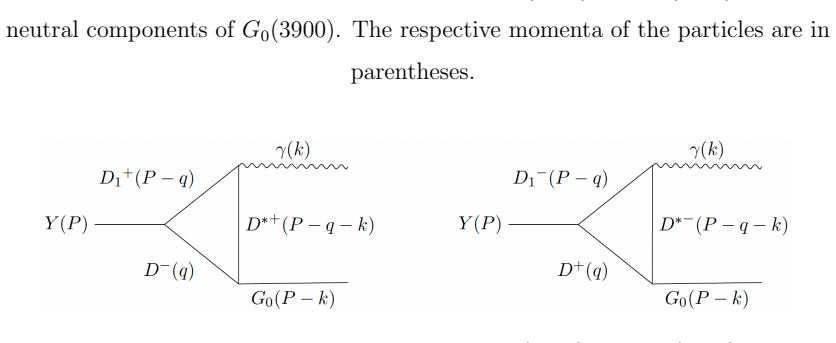
Triangle mechanism, a loop diagram in which intermediate charmed-meson lines connect the initial Y(4230), the emitted photon, and the final G0(3900) state.
If this is right
- Signatures of the G0(3900) state become accessible in radiative channels at current and future e-plus e-minus facilities.
- The molecular description of the Y(4230) can be tested through the consistency of its loop-mediated radiative decays.
- The calculated range supplies a quantitative target for dedicated searches in data samples already collected or planned.
- Observation within the predicted window would link the vector G(3900) and its pseudoscalar partner through the same molecular components.
Where Pith is reading between the lines
- Confirmation would favor molecular assignments over compact tetraquark or hybrid interpretations for this mass region.
- Analogous triangle calculations could be applied to other radiative or hidden-charm decays of nearby exotic candidates.
- The result connects to broader questions of how molecular binding energies influence electromagnetic transition rates in heavy-quark systems.
Load-bearing premise
The decay is assumed to proceed through a triangle mechanism with G0(3900) interpreted as a P-wave molecular state dominated by D D-bar star over D-bar D star components.
What would settle it
An experimental upper limit on the branching fraction below 3.8 times 10 to the minus 5, or a measured value significantly above 3.3 times 10 to the minus 4, in the mass region near the D D-bar star threshold.
Figures
read the original abstract
Inspired by the $P$-wave molecular interpretation of the recently observed vector state $G(3900)$, we analyze the production of its possible pseudoscalar partner, denoted here as $G_0(3900)$, via the radiative decay $Y(4230) \to \gamma G_0(3900)$. The $G_0(3900)$ is interpreted as a $P$-wave molecular state with quantum numbers $J^{PC}=0^{-+}$, dominated by the $D\bar{D}^{\ast}/\bar{D}D^{\ast}$ components. Although not yet experimentally established, such a structure is expected to appear near the $D\bar{D}^*$ threshold and to exhibit characteristic production patterns. The decay is assumed to proceed through a triangle mechanism. Depending on the model parameters and the binding energy of $G_0(3900)$, the resulting branching fraction lies in the range $\mathcal{B}(Y(4230) \to \gamma G_0(3900)) = 3.8 \times 10^{-5} - 3.3 \times 10^{-4}$. Our results offer a pathway to search for signatures of $G_0(3900)$ in radiative channels and also provide a test of the consistency of loop-mediated radiative decays with a molecular description of the $Y(4230)$.
Editorial analysis
A structured set of objections, weighed in public.
Referee Report
Summary. The manuscript analyzes the radiative decay Y(4230) → γ G₀(3900) under the assumption that G₀(3900) is a P-wave molecular state (J^{PC}=0^{-+}) dominated by D D-bar*/D-bar D* components. The decay is modeled via a triangle-loop mechanism, and the resulting branching fraction is reported to lie in the range 3.8 × 10^{-5} – 3.3 × 10^{-4} when model parameters and the binding energy of G₀(3900) are varied. The work positions this range as a guide for experimental searches and a consistency test of the molecular picture for both Y(4230) and G(3900).
Significance. If the central numerical range holds under the stated assumptions, the paper supplies a concrete, falsifiable target for radiative searches that can directly probe the molecular interpretation and the viability of triangle mechanisms in these states. The explicit dependence on binding energy and model parameters is transparently presented rather than hidden, which strengthens the result as a consistency check rather than an unconditional prediction. The stress-test concern on circularity does not land: the manuscript already frames the output as a scan over chosen inputs and does not claim parameter independence.
minor comments (2)
- Abstract: the final branching-fraction range is stated without any indication of the key loop integral, form-factor choice, or cutoff scheme used to generate it. Adding one sentence referencing the central formula would improve readability without altering the result.
- The manuscript would benefit from an explicit statement (perhaps in the introduction or conclusions) of how the quoted range maps onto specific variations in binding energy versus other model parameters, to allow readers to assess sensitivity.
Simulated Author's Rebuttal
We thank the referee for the positive summary and significance assessment of our manuscript, as well as the recommendation for minor revision. No specific major comments were provided in the report.
Circularity Check
No significant circularity detected
full rationale
The paper computes a model-dependent range for the branching fraction B(Y(4230) → γ G0(3900)) by varying parameters and binding energy inside an explicit triangle-loop mechanism and P-wave molecular ansatz for G0(3900). The abstract states the assumptions upfront and frames the output as a consistency test rather than an unconditional prediction. No equations, self-citations, or fitted inputs are shown to reduce the result to its inputs by construction; the range simply encodes the stated parameter variation. This is a standard model scan with transparent inputs, not a circular derivation.
Axiom & Free-Parameter Ledger
free parameters (2)
- binding energy of G0(3900)
- model parameters
axioms (2)
- domain assumption Decay proceeds via triangle mechanism
- domain assumption G0(3900) is P-wave molecular state with J^{PC}=0^{-+}
invented entities (1)
-
G0(3900)
no independent evidence
Reference graph
Works this paper leans on
-
[1]
S. K. Choiet al.(Belle), Phys. Rev. Lett.91, 262001 (2003), arXiv:hep-ex/0309032
Pith/arXiv arXiv 2003
-
[2]
Navaset al.(Particle Data Group), Phys
S. Navaset al.(Particle Data Group), Phys. Rev. D110, 030001 (2024)
2024
-
[3]
F.-K. Guo, C. Hanhart, U.-G. Meißner, Q. Wang, Q. Zhao, and B.-S. Zou, Rev. Mod. Phys. 90, 015004 (2018), [Erratum: Rev.Mod.Phys. 94, 029901 (2022)], arXiv:1705.00141 [hep-ph]
Pith/arXiv arXiv 2018
- [4]
-
[5]
B. Aubertet al.(BaBar), Phys. Rev. D76, 111105 (2007), arXiv:hep-ex/0607083
Pith/arXiv arXiv 2007
-
[6]
P. Pakhlovet al.(Belle), Phys. Rev. Lett.100, 202001 (2008), arXiv:0712.0324 [hep-ex]
Pith/arXiv arXiv 2008
-
[7]
Y. Huang and X. Chen, Direct Evidence for the ¯DD∗/D ¯D∗ Molecular Nature ofG(3900) Through Triangular Singularity Mechanisms (2025), arXiv:2501.10992 [hep-ph]
arXiv 2025
-
[8]
M. Ablikimet al.(BESIII), Phys. Rev. Lett.133, 081901 (2024), arXiv:2402.03829 [hep-ex]
arXiv 2024
-
[9]
X.-X. Chen, Z.-M. Ding, and J. He, Phys. Rev. D111, 114008 (2025), arXiv:2504.15534 [hep-ph]
arXiv 2025
- [10]
-
[11]
Q. Ye, Z. Zhang, M.-L. Du, U.-G. Meißner, P.-Y. Niu, and Q. Wang, Phys. Rev. D112, 016015 (2025), arXiv:2504.17431 [hep-ph]
arXiv 2025
-
[12]
S.-D. Liu, Q. Wu, and G. Li, Phys. Rev. D112, 074002 (2025), arXiv:2506.18273 [hep-ph]
arXiv 2025
-
[13]
G.-J. Ding, Phys. Rev. D79, 014001 (2009), arXiv:0809.4818 [hep-ph]
Pith/arXiv arXiv 2009
-
[14]
A. Martinez Torres, K. P. Khemchandani, D. Gamermann, and E. Oset, Phys. Rev. D80, 094012 (2009), arXiv:0906.5333 [nucl-th]
Pith/arXiv arXiv 2009
-
[15]
Q. Wang, C. Hanhart, and Q. Zhao, Phys. Rev. Lett.111, 132003 (2013), arXiv:1303.6355 [hep-ph]. 15
Pith/arXiv arXiv 2013
-
[16]
M. Cleven, Q. Wang, F.-K. Guo, C. Hanhart, U.-G. Meißner, and Q. Zhao, Phys. Rev. D90, 074039 (2014), arXiv:1310.2190 [hep-ph]
Pith/arXiv arXiv 2014
-
[17]
X. Li and M. B. Voloshin, Mod. Phys. Lett. A29, 1450060 (2014), arXiv:1309.1681 [hep-ph]
Pith/arXiv arXiv 2014
-
[18]
Q. Wang, M. Cleven, F.-K. Guo, C. Hanhart, U.-G. Meißner, X.-G. Wu, and Q. Zhao, Phys. Rev. D89, 034001 (2014), arXiv:1309.4303 [hep-ph]
Pith/arXiv arXiv 2014
-
[19]
L. Maiani, F. Piccinini, A. D. Polosa, and V. Riquer, Phys. Rev. D89, 114010 (2014), arXiv:1405.1551 [hep-ph]
Pith/arXiv arXiv 2014
-
[20]
Y.-H. Chen, L.-Y. Dai, F.-K. Guo, and B. Kubis, Phys. Rev. D99, 074016 (2019), arXiv:1902.10957 [hep-ph]
Pith/arXiv arXiv 2019
-
[21]
A. L. M. Britto and L. M. Abreu, Phys. Rev. D110, 056008 (2024), arXiv:2406.03289 [hep-ph]
arXiv 2024
- [22]
-
[23]
Weinberg, Phys
S. Weinberg, Phys. Rev.137, B672 (1965)
1965
-
[24]
D. Gamermann, J. Nieves, E. Oset, and E. Ruiz Arriola, Phys. Rev. D81, 014029 (2010), arXiv:0911.4407 [hep-ph]
Pith/arXiv arXiv 2010
-
[25]
Chen, C.-J
D.-Y. Chen, C.-J. Xiao, and J. He, Phys. Rev. D96, 054017 (2017)
2017
- [26]
-
[27]
Passarino and M
G. Passarino and M. J. G. Veltman, Nucl. Phys. B160, 151 (1979)
1979
-
[28]
P. C. S. Brand˜ ao, J. Song, L. M. Abreu, and E. Oset, Phys. Rev. D108, 054004 (2023), arXiv:2307.05351 [hep-ph]
arXiv 2023
-
[29]
L. M. Abreu, Phys. Rev. D112, 096002 (2025), arXiv:2508.21223 [hep-ph]
arXiv 2025
- [30]
-
[31]
Brand˜ ao, B
P. Brand˜ ao, B. Agat˜ ao, L. M. Abreu, K. P. Khemchandani, and A. Mart´ ınez Torres, Physics Letters B878, 140527 (2026)
2026
-
[32]
Y. Dong, A. Faessler, T. Gutsche, and V. E. Lyubovitskij, Phys. Rev. D90, 074032 (2014), arXiv:1404.6161 [hep-ph]
Pith/arXiv arXiv 2014
-
[33]
J. M. Gens, J. F. Giron, and R. F. Lebed, Phys. Rev. D103, 094024 (2021)
2021
-
[34]
L. D. Landau, Zh. Eksp. Teor. Fiz.37, 62 (1960)
1960
-
[35]
Coleman and R
S. Coleman and R. E. Norton, Nuovo Cim.38, 438 (1965)
1965
- [36]
-
[37]
L. M. Abreu and F. J. Llanes-Estrada, Eur. Phys. J. C81, 430 (2021), arXiv:2008.12031 [hep-ph]
arXiv 2021
-
[38]
F. J. Llanes-Estrada and L. M. Abreu, PoSP ANIC2021, 181 (2022), arXiv:2110.14707 [hep- ph]
arXiv 2022
-
[39]
L. M. Abreu and F. J. Llanes-Estrada, Nucl. Part. Phys. Proc.318-323, 32 (2022), arXiv:2109.01015 [hep-ph]
arXiv 2022
-
[40]
M. Ablikimet al.(BESIII), Phys. Rev. D106, 072001 (2022), arXiv:2206.08554 [hep-ex]
arXiv 2022
-
[41]
Y. Dong, A. Faessler, T. Gutsche, and V. E. Lyubovitskij, J. Phys. G38, 015001 (2011), arXiv:0909.0380 [hep-ph]
Pith/arXiv arXiv 2011
-
[42]
Y. Dong, A. Faessler, T. Gutsche, S. Kovalenko, and V. E. Lyubovitskij, Phys. Rev. D79, 094013 (2009), arXiv:0903.5416 [hep-ph]. 17
Pith/arXiv arXiv 2009
discussion (0)
Sign in with ORCID, Apple, or X to comment. Anyone can read and Pith papers without signing in.