Utility-aware and privacy-preserving mobile query services
Pith reviewed 2026-05-24 21:05 UTC · model grok-4.3
The pith
StarCloak uses stars and cloaking graphs to deliver utility-aware location privacy with higher query success and attack resistance on road networks.
A machine-rendered reading of the paper's core claim, the machinery that carries it, and where it could break.
Core claim
StarCloak supports k-user anonymity and l-segment indistinguishability with spatial and temporal utility constraints. It employs cloaking graphs and randomized star selection and pruning to achieve attack resilience against replay and query injection, while making cost-aware decisions for scalability. On two real-world datasets, it yields higher success rates, throughput, lower times and usage, and better resilience than XStar.
What carries the argument
Cloaking graphs formed from stars in the road network, with randomized selection and pruning to enforce anonymity and resist attacks.
If this is right
- Users can specify k-anonymity and l-indistinguishability along with spatial and temporal utility limits for personalized privacy.
- Cost-aware star selection reduces anonymization time and network usage while supporting high query throughput.
- The approach outperforms XStar on real road network data under varied privacy and utility settings.
- Randomized selection adds resilience specifically against replay and query injection attacks.
Where Pith is reading between the lines
- If attackers obtain movement pattern data, the randomization alone may not suffice and supplementary defenses could be required.
- The star-based cloaking structure might extend to privacy mechanisms for non-road spatial networks such as urban sensor grids.
- Client-side or proxy-based deployment could allow integration with existing location services with limited changes to the provider side.
Load-bearing premise
Randomized star selection and pruning on cloaking graphs will reliably resist replay and query injection attacks even if the adversary lacks side information on user movement patterns or road topology.
What would settle it
An experiment showing that an adversary using known road topology and typical user paths can link queries to individuals despite the randomized cloaking and pruning.
Figures




read the original abstract
Location-based queries enable fundamental services for mobile road network travelers. While the benefits of location-based services (LBS) are numerous, exposure of mobile travelers' location information to untrusted LBS providers may lead to privacy breaches. In this paper, we propose StarCloak, a utility-aware and attack-resilient approach to building a privacy-preserving query system for mobile users traveling on road networks. StarCloak has several desirable properties. First, StarCloak supports user-defined k-user anonymity and l-segment indistinguishability, along with user-specified spatial and temporal utility constraints, for utility-aware and personalized location privacy. Second, unlike conventional solutions which are indifferent to underlying road network structure, StarCloak uses the concept of stars and proposes cloaking graphs for effective location cloaking on road networks. Third, StarCloak achieves strong attack-resilience against replay and query injection-based attacks through randomized star selection and pruning. Finally, to enable scalable query processing with high throughput, StarCloak makes cost-aware star selection decisions by considering query evaluation and network communication costs. We evaluate StarCloak on two real-world road network datasets under various privacy and utility constraints. Results show that StarCloak achieves improved query success rate and throughput, reduced anonymization time and network usage, and higher attack-resilience in comparison to XStar, its most relevant competitor.
Editorial analysis
A structured set of objections, weighed in public.
Referee Report
Summary. The manuscript proposes StarCloak, a utility-aware privacy-preserving query system for mobile users on road networks. It supports user-specified k-user anonymity and l-segment indistinguishability together with spatial/temporal utility constraints, employs stars and cloaking graphs that respect road-network topology, uses randomized star selection plus pruning to achieve resilience against replay and query-injection attacks, and incorporates cost-aware selection for query throughput. Empirical evaluation on two real-world road-network datasets reports higher query success rate and throughput, lower anonymization time and network usage, and greater attack resilience relative to the XStar baseline under varying privacy and utility settings.
Significance. If the attack-resilience properties hold, the work would offer a practical advance for location-based services by explicitly incorporating road-network structure and utility constraints into cloaking, with the reported throughput and cost improvements indicating deployability. The empirical comparisons supply concrete evidence of performance gains over a relevant competitor.
major comments (2)
- [Attack-resilience description and evaluation] Attack model and resilience claims: the manuscript asserts that randomized star selection and pruning on cloaking graphs deliver 'strong attack-resilience' against replay and query-injection attacks, yet supplies no game-based security definition, indistinguishability game, or reduction that bounds an adversary's advantage when the adversary possesses side information about the underlying road-network topology or movement patterns. The empirical attack simulations appear to employ only the uninformed baseline adversary model, which is load-bearing for the central resilience claim.
- [Evaluation section] Evaluation methodology: the reported improvements in success rate, throughput, and attack resilience versus XStar rest on comparative experiments, but the manuscript provides insufficient detail on parameter selection procedures, whether baselines were tuned equivalently, or raw data that would allow verification that the gains persist under the exact attack models stated in the abstract.
minor comments (2)
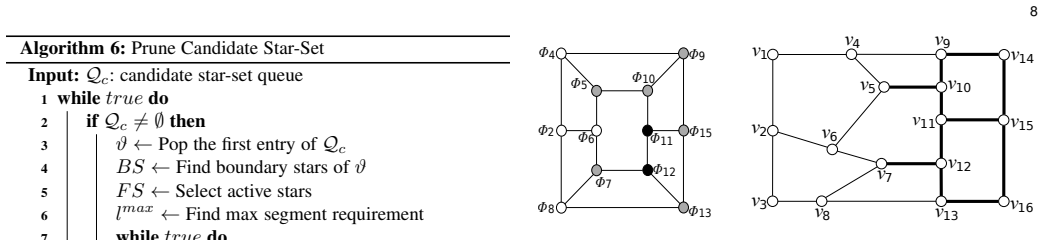
- [System model] Notation for cloaking graphs and star centers could be introduced with a small illustrative figure early in the system model to improve readability.
- [Abstract] The abstract states 'higher attack-resilience' without quantifying the metric; a brief definition of the resilience measure used in the experiments would help.
Simulated Author's Rebuttal
We thank the referee for the constructive feedback. We address each major comment below, indicating planned revisions where appropriate.
read point-by-point responses
-
Referee: [Attack-resilience description and evaluation] Attack model and resilience claims: the manuscript asserts that randomized star selection and pruning on cloaking graphs deliver 'strong attack-resilience' against replay and query-injection attacks, yet supplies no game-based security definition, indistinguishability game, or reduction that bounds an adversary's advantage when the adversary possesses side information about the underlying road-network topology or movement patterns. The empirical attack simulations appear to employ only the uninformed baseline adversary model, which is load-bearing for the central resilience claim.
Authors: We agree that the manuscript does not supply a formal game-based security definition or reduction. The attack-resilience claims are grounded in the concrete mechanisms of randomized star selection and pruning on the cloaking graph, which are designed to disrupt linkage under replay and query-injection attacks when the adversary knows the road-network topology but lacks additional user-specific side information. The empirical simulations follow the attack models described in the paper. We will revise the text to explicitly delineate the assumed adversary capabilities, note the empirical rather than provable nature of the resilience, and augment the evaluation with additional simulations that incorporate partial movement-pattern side information. revision: partial
-
Referee: [Evaluation section] Evaluation methodology: the reported improvements in success rate, throughput, and attack resilience versus XStar rest on comparative experiments, but the manuscript provides insufficient detail on parameter selection procedures, whether baselines were tuned equivalently, or raw data that would allow verification that the gains persist under the exact attack models stated in the abstract.
Authors: We will expand the evaluation section to document the exact parameter-selection procedures, including the ranges tested for k, l, spatial and temporal utility bounds, and the criteria used to choose operating points. We will also clarify that XStar was re-implemented and tuned to its best performance under identical privacy and utility constraints. A statement will be added that the experimental code and scripts are available upon request to support independent verification of the reported gains. revision: yes
Circularity Check
Empirical algorithmic proposal with no self-referential derivation chain
full rationale
The paper presents StarCloak as an algorithmic construction for location cloaking on road networks, relying on randomized star selection, pruning on cloaking graphs, and cost-aware decisions to meet k-user anonymity, l-segment indistinguishability, and utility constraints. All performance and resilience claims are supported by direct empirical comparison against XStar on two external real-world road network datasets under varied privacy/utility settings. No equations, fitted parameters, or predictions are defined in terms of the target metrics; no self-citation chain is invoked to establish uniqueness or force the design; and the attack model is stated explicitly rather than derived from prior author work. The derivation is therefore self-contained against external benchmarks.
Axiom & Free-Parameter Ledger
Reference graph
Works this paper leans on
-
[1]
Juniper research: Mobile context and location ser- vices,
“Juniper research: Mobile context and location ser- vices,” http://www.juniperresearch.com/press-release/ context-and-location-based-services-pr2, 2014
work page 2014
-
[2]
P. R. Center, “Location-based Services,” http://www.pewinternet.org/ 2013/09/12/location-based-services, 2013
work page 2013
-
[3]
Road network-aware spatial alarms,
K. Lee, L. Liu, B. Palanisamy, and E. Yigitoglu, “Road network-aware spatial alarms,” IEEE Transactions on Mobile Computing, vol. 15, no. 1, pp. 188–201, 2016. 14
work page 2016
-
[4]
On efficiently monitoring continuous aggregate k nearest neighbors in road networks,
X. Miao, Y . Gao, G. Mai, G. Chen, and Q. Li, “On efficiently monitoring continuous aggregate k nearest neighbors in road networks,” IEEE Transactions on Mobile Computing, 2019
work page 2019
-
[5]
On efficiently answering why- not range-based skyline queries in road networks,
X. Miao, Y . Gao, S. Guo, and G. Chen, “On efficiently answering why- not range-based skyline queries in road networks,” IEEE Transactions on Knowledge and Data Engineering, vol. 30, no. 9, pp. 1697–1711, 2018
work page 2018
-
[6]
Toain: a throughput optimizing adaptive index for answering dynamic k nn queries on road networks,
S. Luo, B. Kao, G. Li, J. Hu, R. Cheng, and Y . Zheng, “Toain: a throughput optimizing adaptive index for answering dynamic k nn queries on road networks,”Proceedings of the VLDB Endowment, vol. 11, no. 5, pp. 594–606, 2018
work page 2018
-
[7]
Privacy-aware mobile services over road networks,
T. Wang and L. Liu, “Privacy-aware mobile services over road networks,” VLDB, vol. 2, pp. 1042–1053, 2009
work page 2009
-
[8]
Anonymous usage of location-based services through spatial and temporal cloaking,
M. Gruteser and D. Grunwald, “Anonymous usage of location-based services through spatial and temporal cloaking,” inProceedings of the 1st International Conference on Mobile Systems, Applications and Services . ACM, 2003, pp. 31–42
work page 2003
-
[9]
Protecting location privacy with personalized k- anonymity: Architecture and algorithms,
B. Gedik and L. Liu, “Protecting location privacy with personalized k- anonymity: Architecture and algorithms,” IEEE Transactions on Mobile Computing, vol. 7, pp. 1–18, 2008
work page 2008
-
[10]
C. D ´ıaz, S. Seys, J. Claessens, and B. Preneel, “Towards measuring anonymity,” in PET, 2003, pp. 54–68
work page 2003
-
[11]
Geo-indistinguishability: Differential privacy for location-based sys- tems,
M. E. Andr ´es, N. E. Bordenabe, K. Chatzikokolakis, and C. Palamidessi, “Geo-indistinguishability: Differential privacy for location-based sys- tems,” in Proceedings of the 2013 ACM SIGSAC Conference on Com- puter and Communications Security. ACM, 2013, pp. 901–914
work page 2013
-
[12]
Protecting location privacy: optimal strategy against localization attacks,
R. Shokri, G. Theodorakopoulos, C. Troncoso, J.-P. Hubaux, and J.- Y . Le Boudec, “Protecting location privacy: optimal strategy against localization attacks,” in Proceedings of the 2012 ACM Conference on Computer and Communications Security. ACM, 2012, pp. 617–627
work page 2012
-
[13]
Optimal geo- indistinguishable mechanisms for location privacy,
N. E. Bordenabe, K. Chatzikokolakis, and C. Palamidessi, “Optimal geo- indistinguishable mechanisms for location privacy,” in Proceedings of the 2014 ACM SIGSAC Conference on Computer and Communications Security. ACM, 2014, pp. 251–262
work page 2014
-
[14]
Privacy games: Optimal user-centric data obfuscation,
R. Shokri, “Privacy games: Optimal user-centric data obfuscation,” Proceedings on Privacy Enhancing Technologies , vol. 2015, no. 2, pp. 299–315, 2015
work page 2015
-
[15]
Differentially private and utility preserving publication of trajectory data,
M. E. Gursoy, L. Liu, S. Truex, and L. Yu, “Differentially private and utility preserving publication of trajectory data,” IEEE Transactions on Mobile Computing, 2018
work page 2018
-
[16]
Utility-aware synthesis of differentially private and attack-resilient location traces,
M. E. Gursoy, L. Liu, S. Truex, L. Yu, and W. Wei, “Utility-aware synthesis of differentially private and attack-resilient location traces,” in Proceedings of the 2018 ACM SIGSAC Conference on Computer and Communications Security. ACM, 2018, pp. 196–211
work page 2018
-
[17]
Smarper: Context-aware and automatic runtime-permissions for mobile devices,
K. Olejnik, I. I. Dacosta Petrocelli, J. C. Soares Machado, K. Huguenin, M. E. Khan, and J.-P. Hubaux, “Smarper: Context-aware and automatic runtime-permissions for mobile devices,” in Proceedings of the 38th IEEE Symposium on Security and Privacy (S&P) . IEEE, 2017
work page 2017
-
[18]
Privacyzone: A novel approach to protecting location privacy of mobile users,
E. Yigitoglu, M. E. Gursoy, L. Liu, M. Loper, B. Bamba, and K. Lee, “Privacyzone: A novel approach to protecting location privacy of mobile users,” in 2018 IEEE International Conference on Big Data (Big Data) . IEEE, 2018, pp. 1238–1247
work page 2018
-
[19]
Mobimix: Protecting location privacy with mix-zones over road networks,
B. Palanisamy and L. Liu, “Mobimix: Protecting location privacy with mix-zones over road networks,” in 27th IEEE International Conference on Data Engineering (ICDE), 2011
work page 2011
-
[20]
Attack-resilient mix-zones over road networks: architecture and algorithms,
——, “Attack-resilient mix-zones over road networks: architecture and algorithms,” IEEE Transactions on Mobile Computing, vol. 14, no. 3, pp. 495–508, 2014
work page 2014
-
[21]
Effective mix-zone anonymization techniques for mobile travel- ers,
——, “Effective mix-zone anonymization techniques for mobile travel- ers,” Geoinformatica, vol. 18, no. 1, pp. 135–164, 2014
work page 2014
-
[22]
L. Zhang, “Otibaagka: a new security tool for cryptographic mix-zone establishment in vehicular ad hoc networks,” IEEE Transactions on Information Forensics and Security, vol. 12, no. 12, pp. 2998–3010, 2017
work page 2017
-
[23]
Nowhere to hide? mix-zones for private pseudonym change using chaff vehicles,
C. Vaas, M. Khodaei, P. Papadimitratos, and I. Martinovic, “Nowhere to hide? mix-zones for private pseudonym change using chaff vehicles,” in 2018 IEEE Vehicular Networking Conference (VNC). IEEE, 2018
work page 2018
-
[24]
Anonymous query processing in road networks,
K. Mouratidis and M. L. Yiu, “Anonymous query processing in road networks,” IEEE Transactions on Knowledge and Data Engineering , vol. 22, no. 1, pp. 2–15, 2009
work page 2009
-
[25]
Query-aware location anonymization for road networks,
C.-Y . Chow, M. F. Mokbel, J. Bao, and X. Liu, “Query-aware location anonymization for road networks,” GeoInformatica, vol. 15, no. 3, pp. 571–607, 2011
work page 2011
-
[26]
Reversecloak: Protecting multi-level location privacy over road networks,
C. Li and B. Palanisamy, “Reversecloak: Protecting multi-level location privacy over road networks,” in Proceedings of the 24th ACM Inter- national on Conference on Information and Knowledge Management . ACM, 2015, pp. 673–682
work page 2015
-
[27]
Path privacy protection in continuous location-based services over road networks,
K.-T. Yang, G.-M. Chiu, H.-J. Lyu, D.-J. Huang, and W.-C. Teng, “Path privacy protection in continuous location-based services over road networks,” in 2012 IEEE 8th International Conference on Wireless and Mobile Computing, Networking and Communications (WiMob) . IEEE, 2012, pp. 435–442
work page 2012
-
[28]
Dynamic path privacy protection framework for continuous query service over road networks,
I. Memon and Q. A. Arain, “Dynamic path privacy protection framework for continuous query service over road networks,” World Wide Web , vol. 20, no. 4, pp. 639–672, 2017
work page 2017
-
[29]
Privacy- preserving sharing of sensitive semantic locations under road-network constraints,
E. Yigitoglu, M. L. Damiani, O. Abul, and C. Silvestri, “Privacy- preserving sharing of sensitive semantic locations under road-network constraints,” in 2012 IEEE 13th International Conference on Mobile Data Management. IEEE, 2012, pp. 186–195
work page 2012
-
[30]
Semantic-aware location privacy preservation on road networks,
Y . Li, Y . Yuan, G. Wang, L. Chen, and J. Li, “Semantic-aware location privacy preservation on road networks,” in International Conference on Database Systems for Advanced Applications. Springer, 2016. Emre Yigitoglu received his PhD degree in Computer Science from Georgia Institute of Technology, his MS degree in Computer Engineering from TOBB Universit...
work page 2016
discussion (0)
Sign in with ORCID, Apple, or X to comment. Anyone can read and Pith papers without signing in.