Realistic classical charge from an asymmetric wormhole
Pith reviewed 2026-05-17 03:12 UTC · model grok-4.3
The pith
An asymmetric wormhole in Einstein-Dirac-Maxwell theory connects a spacetime with Standard Model particle masses and charges to one with Planck-scale values.
A machine-rendered reading of the paper's core claim, the machinery that carries it, and where it could break.
Core claim
Within Einstein-Dirac-Maxwell theory there exists an asymmetric wormhole solution supported by a complex non-phantom spinor field with bare mass of the order of the Planck mass, an electric field that supplies the charge, and a magnetic field. The solution joins two different asymptotically flat spacetimes in which the observed masses and charges can be adjusted, by choice of the free parameters, to match those of Standard Model particles at one end and Planck values at the other, thereby furnishing a model of classical charge that also possesses intrinsic angular momentum.
What carries the argument
The asymmetric wormhole geometry supported by a complex non-phantom spinor field of Planck-scale bare mass, which supplies both the wormhole topology and intrinsic angular momentum, together with electric and magnetic fields.
If this is right
- Suitable parameter choices make the observed mass and charge at one asymptotic end match values typical of Standard Model particles.
- The same solution simultaneously produces Planck-scale mass and charge at the opposite end.
- The spinor field accounts for the intrinsic angular momentum of the configuration.
- The overall setup supplies a geometric model for a classical charged spinning particle without point sources.
Where Pith is reading between the lines
- If the solution is stable, it offers a route to viewing elementary particles as scale-bridging topological defects rather than localized field excitations.
- Numerical evolution of the solution under small perturbations would test whether the two-scale asymptotics persist dynamically.
- The same construction might be adapted to include additional gauge fields to reproduce further quantum numbers.
Load-bearing premise
A regular solution to the Einstein-Dirac-Maxwell equations exists in which the spinor field threads a wormhole and the free parameters can be chosen to produce different asymptotic masses and charges at the two ends.
What would settle it
An explicit integration of the field equations showing that no real values of the free parameters yield an asymptotically flat solution with unequal masses and charges at the two ends, or that the spinor field develops a singularity, would falsify the existence of the claimed configuration.
Figures

read the original abstract
Within Einstein-Dirac-Maxwell theory, we consider a wormhole solution supported by a complex non-phantom spinor field with a bare mass of the order of the Planck mass (which provides a nontrivial spacetime topology and an intrinsic angular momentum), an electric field (which provides a charge of the system), and a magnetic field. This solution describes an asymmetric wormhole connecting two different asymptotically flat spacetimes (two universes) in which there are in general different observed masses and charges. It is shown that, by suitably adjusting the values of free system parameters, at one end of the wormhole, one can obtain the values of the observed mass and charge typical of the Standard Model particles, whereas at the other end of the wormhole these physical quantities acquire the Planck values. Such a configuration incarnates Wheeler's idea of ``mass without mass'' and ``charge without charge'', and can be thought of as a model of a classical charge possessing a spin.
Editorial analysis
A structured set of objections, weighed in public.
Referee Report
Summary. The paper claims to construct a solution to the Einstein-Dirac-Maxwell equations describing an asymmetric wormhole supported by a complex non-phantom spinor field of Planck-scale bare mass (providing topology and intrinsic angular momentum), together with electric and magnetic fields. This configuration connects two distinct asymptotically flat regions whose observed ADM masses and charges can be independently tuned, via adjustment of free system parameters, to Standard Model particle values at one end and Planck-scale values at the other, thereby realizing Wheeler's 'mass without mass' and 'charge without charge' as a classical model of a spinning charged particle.
Significance. If the central existence claim holds, the work would furnish a concrete geometric model linking elementary-particle scales to wormhole topology and spinor fields, extending classical geometrodynamics in a manner that could motivate further studies of spinor-supported asymmetric wormholes and their stability. The explicit separation of bare and observed quantities at the two ends is a potentially interesting feature, though its broader significance depends on demonstrating that the required solutions are not artifacts of unconstrained parameter fitting.
major comments (2)
- [Abstract] Abstract: the assertion that 'by suitably adjusting the values of free system parameters' one obtains SM-scale mass and charge at one asymptotic end and Planck-scale values at the other does not address the number of independent integration constants remaining after throat regularity and asymptotic flatness are imposed on both sides. The continuity conditions across the throat generically correlate the two asymptotic (M, Q) pairs, so that independent tuning may not be possible while preserving the non-phantom condition.
- [Einstein-Dirac-Maxwell equations and numerical construction] The system of nonlinear ODEs obtained from the Einstein-Dirac-Maxwell equations: no explicit count is given of how many free parameters survive after fixing the bare spinor mass to the Planck scale, enforcing regularity at the throat, and requiring asymptotic flatness with independent (M, Q) at each infinity. Without this accounting, the claim that the observed quantities can be matched to SM and Planck values simultaneously remains unverified.
minor comments (1)
- The distinction between the complex spinor components and the electromagnetic potentials should be made clearer in the notation to avoid ambiguity when discussing the source of intrinsic angular momentum.
Simulated Author's Rebuttal
We thank the referee for the careful reading and constructive comments on our manuscript. We address the major comments point by point below, providing clarifications on the numerical construction and parameter structure. We will revise the manuscript to include an explicit accounting of the surviving free parameters after all constraints are imposed.
read point-by-point responses
-
Referee: [Abstract] Abstract: the assertion that 'by suitably adjusting the values of free system parameters' one obtains SM-scale mass and charge at one asymptotic end and Planck-scale values at the other does not address the number of independent integration constants remaining after throat regularity and asymptotic flatness are imposed on both sides. The continuity conditions across the throat generically correlate the two asymptotic (M, Q) pairs, so that independent tuning may not be possible while preserving the non-phantom condition.
Authors: We thank the referee for this observation. In our construction the coordinate is chosen so that the throat lies at the origin, with metric and field functions required to be even or odd as appropriate to enforce regularity and smoothness. This automatically satisfies continuity across the throat. With the bare spinor mass fixed at the Planck scale, the remaining adjustable quantities are the central amplitude of the complex spinor and the strengths of the electric and magnetic fields. Asymptotic flatness at each end then determines the observed ADM mass and charge from the leading fall-off coefficients. Our numerical integrations demonstrate that these parameters can be varied independently within the range that preserves the non-phantom character of the spinor, yielding solutions in which one asymptotic region exhibits Standard-Model-scale values while the other exhibits Planck-scale values. We will revise the abstract and add a clarifying sentence on this tuning procedure. revision: yes
-
Referee: [Einstein-Dirac-Maxwell equations and numerical construction] The system of nonlinear ODEs obtained from the Einstein-Dirac-Maxwell equations: no explicit count is given of how many free parameters survive after fixing the bare spinor mass to the Planck scale, enforcing regularity at the throat, and requiring asymptotic flatness with independent (M, Q) at each infinity. Without this accounting, the claim that the observed quantities can be matched to SM and Planck values simultaneously remains unverified.
Authors: We agree that an explicit count of degrees of freedom would strengthen the presentation. The Einstein-Dirac-Maxwell system reduces to a set of coupled first-order ODEs. After fixing the bare mass to the Planck scale and imposing regularity at the throat (which sets the first derivatives of the metric functions and relates the spinor components), asymptotic flatness at both ends fixes the integration constants that correspond to the observed masses and charges. This leaves three adjustable parameters: the central value of the spinor amplitude together with the electric and magnetic field strengths at the throat. Within the domain where the spinor remains non-phantom, these parameters can be tuned to produce the desired separation of scales at the two ends, as illustrated by the explicit numerical examples already present in the manuscript. We will add a short subsection enumerating the constraints and the surviving free parameters in the revised version. revision: yes
Circularity Check
Asymptotic masses/charges obtained via free-parameter adjustment rather than independent derivation from equations
specific steps
-
fitted input called prediction
[Abstract]
"It is shown that, by suitably adjusting the values of free system parameters, at one end of the wormhole, one can obtain the values of the observed mass and charge typical of the Standard Model particles, whereas at the other end of the wormhole these physical quantities acquire the Planck values."
The observed mass and charge at each end are produced by choosing the free parameters so that the asymptotic values match the target SM and Planck scales. The 'result' is therefore the input choice itself, not an output computed from the field equations without reference to the desired numbers.
full rationale
The paper constructs explicit solutions to the reduced Einstein-Dirac-Maxwell ODE system for an asymmetric wormhole and demonstrates that suitable choices of the integration constants and bare parameters yield the target ADM mass and charge at each asymptotic end. This is a valid existence proof for a tuned model, but the central claim that one end reproduces Standard-Model values while the other reproduces Planck values is achieved by direct adjustment of those free parameters to the desired asymptotics. No independent, parameter-free prediction or first-principles derivation of the numerical values is provided; the matching is therefore by construction. The remainder of the derivation (regularity through the throat, non-phantom spinor, etc.) does not reduce to self-reference or prior self-citation in the supplied text, so the circularity is partial rather than total.
Axiom & Free-Parameter Ledger
free parameters (1)
- free system parameters
axioms (2)
- domain assumption Einstein-Dirac-Maxwell theory governs the system
- ad hoc to paper The spinor field is complex and non-phantom with bare mass of order Planck mass
invented entities (2)
-
asymmetric wormhole
no independent evidence
-
complex non-phantom spinor field
no independent evidence
Lean theorems connected to this paper
-
IndisputableMonolith/Cost/FunctionalEquation.leanwashburn_uniqueness_aczel contradicts?
contradictsCONTRADICTS: the theorem conflicts with this paper passage, or marks a claim that would need revision before publication.
by suitably adjusting the values of free system parameters... throat parameter x0, the spinor frequency Ω, and the electromagnetic coupling constant e
-
IndisputableMonolith/Foundation/RealityFromDistinction.leanreality_from_one_distinction unclear?
unclearRelation between the paper passage and the cited Recognition theorem.
bare mass of the order of the Planck mass... observed mass... typical of the Standard Model particles
What do these tags mean?
- matches
- The paper's claim is directly supported by a theorem in the formal canon.
- supports
- The theorem supports part of the paper's argument, but the paper may add assumptions or extra steps.
- extends
- The paper goes beyond the formal theorem; the theorem is a base layer rather than the whole result.
- uses
- The paper appears to rely on the theorem as machinery.
- contradicts
- The paper's claim conflicts with a theorem or certificate in the canon.
- unclear
- Pith found a possible connection, but the passage is too broad, indirect, or ambiguous to say the theorem truly supports the claim.
Forward citations
Cited by 1 Pith paper
-
Resonant transmission of scalar waves through rotating traversable wormhole
Rotation enhances Breit-Wigner resonances in scalar wave transmission through Teo wormholes by trapping modes in the throat potential well.
Reference graph
Works this paper leans on
-
[1]
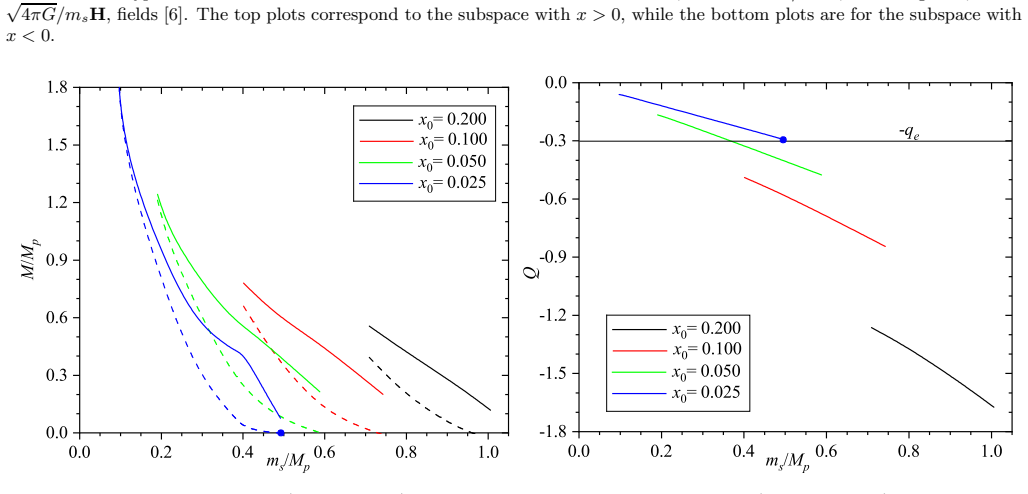
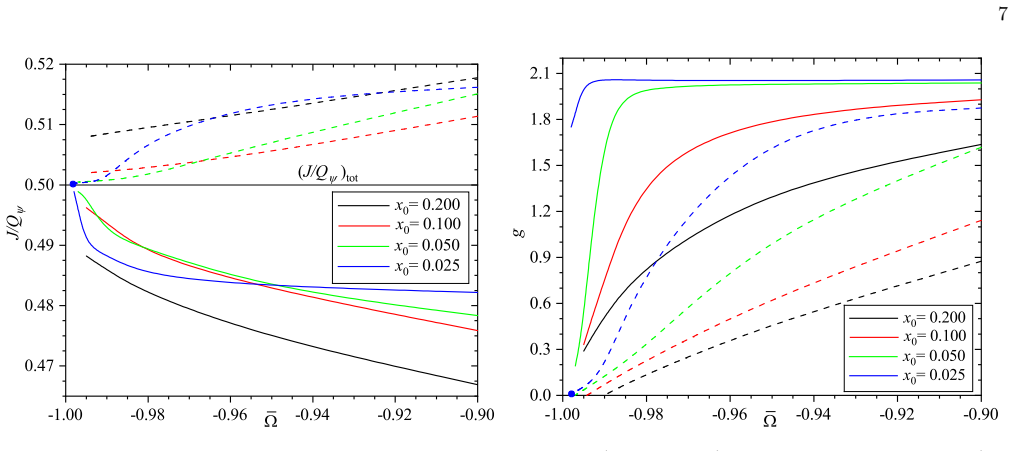
025 ≤ x0 ≤ 0. 2. Note that when ¯Ω → − 1 the accuracy of numerical calculations decreases; therefore, in the figures below we show only solutions that were obtained with the required num erical accuracy, see Ref. [6]. Notice that since here we construct solutions for classical fields, t he Noether charge Qψ calculated using (14) is some arbitrary number who...
-
[2]
J. L. Feng, Ann. Rev. Nucl. Part. Sci. 63, 351 (2013)
work page 2013
-
[3]
B. Bellazzini, C. Cs´ aki, and J. Serra, Eur. Phys. J. C 74, 2766 (2014)
work page 2014
-
[4]
N. Arkani-Hamed, S. Dimopoulos and G. R. Dvali, Phys. Let t. B 429, 263 (1998)
work page 1998
- [5]
-
[6]
G. F. Giudice, PoS EPS-HEP2013, 163 (2013)
work page 2013
-
[7]
Rotating wormholes in Einstein-Dirac-Maxwell theory
V. Dzhunushaliev and V. Folomeev, “Rotating wormholes i n Einstein-Dirac-Maxwell theory,” [arXiv:2511.02431 [gr -qc]]
work page internal anchor Pith review Pith/arXiv arXiv
-
[8]
R. A. Konoplya and A. Zhidenko, Phys. Rev. Lett. 128, 091104 (2022)
work page 2022
-
[9]
Lawrie, A Unified Grand Tour of Theoretical Physics (Institute of Physics Publishing, Bristol, 2002)
I. Lawrie, A Unified Grand Tour of Theoretical Physics (Institute of Physics Publishing, Bristol, 2002)
work page 2002
-
[10]
X. Y. Chew, V. Dzhunushaliev, V. Folomeev, B. Kleihaus, a nd J. Kunz, Phys. Rev. D 100, 044019 (2019)
work page 2019
-
[11]
C. Herdeiro, I. Perapechka, E. Radu, and Y. Shnir, Phys. Lett. B 797, 134845 (2019)
work page 2019
- [12]
-
[13]
Wormholes in Einstein-Dirac-Maxwell theory wi th identical spacetime asymptotics,
V. Dzhunushaliev, V. Folomeev, N. Beissen, and A. Nurmu khamedov, “Wormholes in Einstein-Dirac-Maxwell theory wi th identical spacetime asymptotics,” [arXiv:2510.03656 [gr -qc]]
-
[14]
Wheeler, Geometrodynamics (New York: Academic Press, 1963)
J. Wheeler, Geometrodynamics (New York: Academic Press, 1963)
work page 1963
discussion (0)
Sign in with ORCID, Apple, or X to comment. Anyone can read and Pith papers without signing in.