A Realistic Discrete Event Simulation model for Ambulance Location and Deployment within a regional Emergency Medical Service
Pith reviewed 2026-05-08 01:57 UTC · model grok-4.3
The pith
A general discrete event simulation model integrates multi-source data to accurately reproduce the stochastic behavior of regional ambulance emergency systems.
A machine-rendered reading of the paper's core claim, the machinery that carries it, and where it could break.
Core claim
The proposed general Discrete Event Simulation model captures the stochastic behaviour and workflow of regional ambulance emergency systems by incorporating and integrating information collected from different sources, reproducing very accurately the operation of the ambulance system and thereby allowing a more comprehensive and realistic analysis, as illustrated by scenario analyses in the Lazio region case study.
What carries the argument
Discrete Event Simulation model that integrates multi-source data and applies probability distributions to stochastic events such as emergency calls, travel times, and service durations.
If this is right
- Managers can use the model to conduct scenario analyses that evaluate different ambulance home base locations and deployment strategies.
- The model enables improvements in the effectiveness and quickness of the entire regional EMS system.
- The general model applies to territories that include both medium-size cities and sparsely populated areas.
- It provides a more comprehensive analysis than approaches that do not combine data from multiple sources.
Where Pith is reading between the lines
- The same data-integration approach could be applied to EMS systems in other regions by substituting local data sources.
- Scenario outputs could support decisions on whether to add bases or adjust staffing in urban versus rural zones.
- The model structure allows testing of policy changes like new response protocols before implementation.
Load-bearing premise
The integration of multi-source data and the chosen probability distributions for stochastic events sufficiently capture the real ambulance system's behavior without significant unmodeled discrepancies or biases.
What would settle it
A comparison showing large mismatches between the model's simulated response times or utilization rates and the actual historical performance data from the ARES 118 system in the Lazio region would indicate the model does not reproduce the operation accurately.
Figures

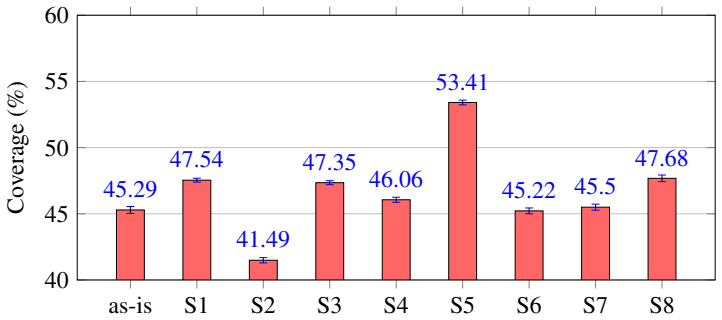
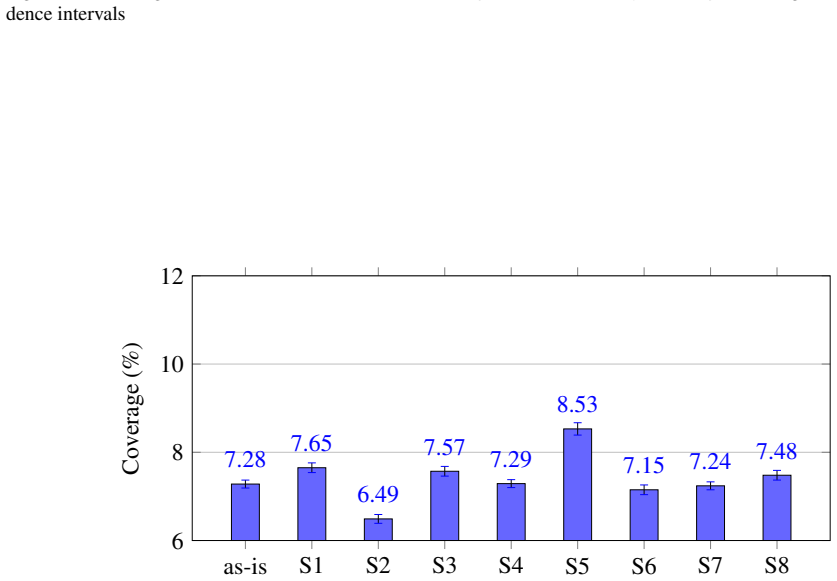
read the original abstract
The objective of Emergency Medical Services (EMSs) is to promptly respond to calls from citizens for first aid, providing pre-hospital care and, if necessary, to transfer patients to an appropriate Emergency Department (ED) by ambulance. The efficiency of such a system strongly depends on the deployment of ambulance home bases, i.e., locations where ambulances and their crews are strategically positioned, ready to respond to emergency calls. This paper presents a general Discrete Event Simulation (DES) model designed to capture the stochastic behaviour and workflow of regional ambulance emergency systems. The proposed model incorporates and integrates information collected from different sources, reproducing very accurately the operation of the ambulance system, thus allowing a more comprehensive and realistic analysis. To show the applicability and reliability of the proposed general model, a case study provided by the Azienda Regionale Emergenza Sanitaria - ARES 118 (an Italian Regional Emergency Medical Services Authority - ARES~118}) is presented. It concerns a territory within the Lazio region of Italy, including a medium-size city along with sparsely populated areas. The reported results about scenario analyses highlight how the model we propose can be fruitfully used by the managers to improve effectiveness and quickness of the entire regional EMS system.
Editorial analysis
A structured set of objections, weighed in public.
Referee Report
Summary. The paper presents a general Discrete Event Simulation (DES) model for regional ambulance emergency systems that integrates multi-source data to capture stochastic behaviors including call arrivals, travel times, and service durations. It claims the model reproduces real EMS operations 'very accurately' and demonstrates applicability through scenario analyses in a Lazio region case study provided by ARES 118.
Significance. A validated DES model of this type could enable EMS managers to evaluate ambulance deployment and base-location changes in a risk-free environment, supporting data-driven improvements to response times and coverage. The explicit integration of real operational data sources is a positive feature that distinguishes it from purely synthetic models.
major comments (2)
- [Abstract and §1] Abstract and §1 (Introduction): the central claim that the model 'reproducing very accurately the operation of the ambulance system' is unsupported by any reported quantitative validation. No goodness-of-fit statistics, Kolmogorov-Smirnov or chi-squared tests for the chosen probability distributions, or error metrics (e.g., mean absolute percentage error on response times or utilization) comparing simulated versus observed KPIs are provided for the Lazio case study.
- [§4 and §5] §4 (Case Study) and §5 (Results): the scenario analyses rest on the unverified assumption that the fitted distributions and multi-source integration capture all relevant stochasticity and dependencies (time-of-day effects, spatial correlations, crew scheduling). No sensitivity analysis or robustness checks are described, so it is impossible to bound the discrepancy between simulated and real-system behavior.
minor comments (2)
- [Figures and Tables] Figure captions and table headings could more explicitly state the number of replications and warm-up period used in the DES runs.
- [Model Description] The description of how travel-time and service-duration distributions were selected (e.g., empirical histograms versus parametric fits) is terse and would benefit from an additional paragraph or appendix table.
Simulated Author's Rebuttal
We are grateful to the referee for the constructive and detailed feedback. The comments correctly identify opportunities to strengthen the quantitative support for our claims and the robustness of the scenario analyses. We address each major comment below and will incorporate the suggested revisions in the next version of the manuscript.
read point-by-point responses
-
Referee: [Abstract and §1] Abstract and §1 (Introduction): the central claim that the model 'reproducing very accurately the operation of the ambulance system' is unsupported by any reported quantitative validation. No goodness-of-fit statistics, Kolmogorov-Smirnov or chi-squared tests for the chosen probability distributions, or error metrics (e.g., mean absolute percentage error on response times or utilization) comparing simulated versus observed KPIs are provided for the Lazio case study.
Authors: We thank the referee for highlighting this point. The manuscript describes the integration of real operational data and presents case-study outputs that align with observed EMS behavior, but we acknowledge that the claim of reproducing operations 'very accurately' would be better supported by explicit quantitative metrics. In the revised manuscript we will add Kolmogorov-Smirnov goodness-of-fit tests for the fitted distributions together with mean absolute percentage error (MAPE) and other error metrics comparing simulated and observed key performance indicators such as response times and ambulance utilization. revision: yes
-
Referee: [§4 and §5] §4 (Case Study) and §5 (Results): the scenario analyses rest on the unverified assumption that the fitted distributions and multi-source integration capture all relevant stochasticity and dependencies (time-of-day effects, spatial correlations, crew scheduling). No sensitivity analysis or robustness checks are described, so it is impossible to bound the discrepancy between simulated and real-system behavior.
Authors: We agree that additional robustness checks are needed to bound uncertainty in the scenario results. In the revised manuscript we will include a dedicated sensitivity-analysis subsection that systematically varies key parameters (call-arrival rates by time of day, travel-time distributions, and service durations) and reports the resulting variation in the scenario outcomes, thereby demonstrating the stability of the findings. revision: yes
Circularity Check
No circularity: model built from external multi-source data and standard simulation methods
full rationale
The paper constructs a DES model by integrating information from different external sources (including the Lazio regional EMS authority) and selecting probability distributions for calls, travel times, and service durations. The claim of reproducing the system 'very accurately' follows directly from this data-driven parameterization and standard DES workflow rather than any self-referential reduction. No equations or steps equate outputs to inputs by construction, no fitted parameters are relabeled as independent predictions, and no load-bearing premises rest on self-citations or uniqueness theorems from the same authors. The case-study scenario analyses therefore remain independent of the model's own fitted values.
Axiom & Free-Parameter Ledger
axioms (1)
- domain assumption Stochastic elements of EMS operations (call arrivals, travel times, service durations) can be adequately represented by probability distributions within a discrete event framework.
Reference graph
Works this paper leans on
-
[1]
W. Abo-Hamad and A. Arisha. Simulation-based framework to improve patient experience in an emergency department.European Journal of Operational Research, 224:154–166, 2012
work page 2012
-
[2]
L. Aboueljinane, E. Sahin, and Z. Jemai. Emergency ambulance deployment in Val-de-Marne department: A simulation-based iterative approach. InProceedings of the 3rd International Conference on Simulation and Modeling Methodologies, Technologies and Applications (SIMULTECH 2013), volume 1, pages 565–576, 2013
work page 2013
-
[3]
L. Aboueljinane, E. Sahin, and Z. Jemai. A review on simulation models applied to emergency medical service operations.Computers&Industrial Engineering, 66:734–750, 2013
work page 2013
-
[4]
L. Aboueljinane, E. Sahin, and Z. Jemai. A discrete simulation-based optimization approach for multi-period redeployment in emergency medical services.Simulation: Transactions of the Society for Modeling and Simu- lation International, 99(7):659–679, 2023
work page 2023
-
[5]
L. Aboueljinane, E. Sahin, Z. Jemai, and J. Marty. A simulation study to improve the performance of an emer- gency medical service: Application to the French Val-de-Marne department.Simulation Modelling Practice and Theory, 47:46–59, 2014
work page 2014
-
[6]
Linee guida per la revisione delle reti cliniche – Le reti tempo-dipendenti
AGENAS. Accordo, ai sensi del punto 8.1 dell’Allegato 1 al decreto ministeriale 2 aprile 2015, n.70, sul doc- umento “Linee guida per la revisione delle reti cliniche – Le reti tempo-dipendenti”, 2018. Agenzia Nazionale per i Servizi Sanitari Regionali. In Italian
work page 2015
- [7]
-
[8]
ARES118. Deliberazione n. 869 del 7 dicembre 2023 approvazione del documento tecnico: “Programmazione della rete ospedaliera 2024-2026 in conformit `a agli standard previsti nel DM 70/2015”’, 2023. Azienda Re- gionale Emergenza Sanitaria. In Italian
work page 2023
-
[9]
R. Aringhieri, M. E. Bruni, S. Khodaparasti, and J. T. van Essen. Emergency medical services and beyond: Addressing new challenges through a wide literature review.Computers&Operations Research, 78:349–368, 2017
work page 2017
-
[10]
R. Aringhieri, G. Carrello, and Morale D. Supporting decision making to improve the performance of an Italian Emergency Medical Service.Annals of Operations Research, 236:131–148, 2016
work page 2016
-
[11]
B.R. Asplin, D.J. Magid, K.V . Rhodes, L.I. Solberg, N. Lurie, and C.A. Camargo Jr. A conceptual model of emergency department crowding.Annals of Emergency Medicine, 42(2):173–180, 2003
work page 2003
-
[12]
M. O. Ball and F. L. Lin. A reliability model applied to emergency service vehicle location.Operations Research, 41(1):18–36, 1993
work page 1993
- [13]
-
[14]
K. Bekelis, S. Missios, S. Coy, B. Mayerson, and T.A. MacKenzie. Emergency medical services for acute ischemic stroke: Hub-and-spoke model versus exclusive care in comprehensive centers.Journal of Clinical Neuroscience, 60:12–16, 2019
work page 2019
-
[15]
V . B´elanger, A. Ruiz, and P. Soriano. Recent optimization models and trends in location, relocation, and dis- patching of emergency medical vehicles.European Journal of Operational Research, 272:1–23, 2019
work page 2019
-
[16]
R. Boujemaa, A. Jebali, S. Hammami, A. Ruiz, and H. Bouchriha. A stochastic approach for designing two- tiered emergency medical service systems.Flexible Services and Manufacturing Journal, 30:123–152, 2018
work page 2018
-
[17]
L. Brotcorne, G. Laporte, and F. Semet. Ambulance location and relocation models.European Journal of Operational Research, 147:451–463, 2003
work page 2003
-
[18]
V . B´elanger, Y . Kergosien, A. Ruiz, and P. Soriano. An empirical comparison of relocation strategies in real-time ambulance fleet management.Computers and Industrial Engineering, 94:216–229, 2016
work page 2016
-
[19]
A. Y . Chen, T.-Y . Lu, M. H.-M. Ma, and W.-Z. Sun. Demand forecast using data analytics for the preallocation of ambulances.IEEE Journal of Biomedical and Health Informatics, 20(4):1178–1187, 2016
work page 2016
-
[20]
R. Church and C. ReVelle. The maximal covering location problem.Papers of the Regional Science Association, 32:101–118, 1974
work page 1974
-
[21]
D.C Cone, P.M. Middleton, and S. Marashi Pour. Analysis and impact of delays in ambulance to emergency department handovers.Emergency Medicine Australasia, 24(5):525–533, 2012. 38
work page 2012
- [22]
-
[23]
M. S. Daskin. A maximum expected covering location model: formulation, properties and heuristic solution. Transportation Science, 17(1):48–70, 1983
work page 1983
-
[24]
M. Eckstein and L.S. Chan. The effect of emergency department crowding on paramedic ambulance availability. Annals of Emergency Medicine, 43(1):100–105, 2004
work page 2004
-
[25]
Y . Frichi and F. Jawab. A review and classification of ambulance deployment and redeployment models in emergencies.International Journal of Logistics Systems and Management, 49(1):1–35, 2024
work page 2024
- [26]
-
[27]
Fu.Handobook on Simulation Optimization
M. Fu.Handobook on Simulation Optimization. Springer, New York, 2015
work page 2015
-
[28]
M. Gendreau, G. Laporte, and F. Semet. A dynamic model and parallel tabu search heuristic for real-time ambulance relocation.Parallel Computing, 27(12):1641–1653, 2001. Applications of parallel computing in transportation
work page 2001
-
[29]
S.P. Ginzberg, J.L. Roberson, A. Nehemiah, J.M. Soegaard Ballester, A.K. Warshauer, H. Wachtel, M.S. Erd- man, K.L. Dlugosz, L.J. George, J.C. Lynn, N.D. Martin, and J.S. Myers. Time to transfer as a quality improve- ment imperative: Implications of a hub-and-spoke health system model on the timing of emergency procedures. The Joint Commission Journal on ...
work page 2023
- [30]
-
[31]
G. Grekousis and Y . Liu. Where will the next emergency event occur? predicting ambulance demand in emer- gency medical services using artificial intelligence.Computers, Environment and Urban Systems, 76:110–122, 2019
work page 2019
-
[32]
S. G. Henderson and A. J. Mason. Ambulance service planning: Simulation and data visualisation. In M. L. Brandeau, F. Sainfort, and W. P. Pierskalla, editors,Operations Research and Health Care, volume 70 ofInter- national Series in Operations Research&Management Science, pages 77–102. Springer, Boston, MA, 2005
work page 2005
- [33]
-
[34]
A. Ingolfsson, E. Erkut, and S. Budge. Simulation of single start station for edmonton ems.Journal of the Operational Research Society, 54(7):736–746, 2003
work page 2003
-
[35]
Derek L. Isenberg and Richard Bissell. Does advanced life support provide benefits to patients?: A literature review.Prehospital and Disaster Medicine, 20(4):265–270, 2005
work page 2005
-
[36]
Istituto Nazionale di Statistica, Accessed January 2026
ISTAT. Istituto Nazionale di Statistica, Accessed January 2026. In Italian. https://ottomilacensus.istat.it
work page 2026
-
[37]
L. Janosikova, M. Kvet, P. Jankovic, and L. Gabrisova. An optimization and simulation approach to emergency stations relocation.Central European Journal of Operations Research, 27:737–758, 2019
work page 2019
-
[38]
R. Jin, T. Xia, X. Liu, T. Murata, and K. S. Kim. Predicting emergency medical service demand with bipartite graph convolutional networks.IEEE Access, 9:9903–9915, 2021
work page 2021
-
[39]
Y . Karpova, F. Villa, and E. Vallada. Modeling the process of responding to health emergencies: Main as- pects and problems related to evaluating ambulance relocation strategies.Computers&Operations Research, 186:107307, 2026
work page 2026
- [40]
-
[41]
C. Kingswell, R.Z. Shaban, and J. Crilly. Concepts, antecedents and consequences of ambulance ramping in the emergency department: A scoping review.Australasian Emergency Nursing Journal, 20(4):153–160, 2017
work page 2017
- [42]
-
[43]
M. Li, P. Vanberkel, and A. J. Carter. A review on ambulance offload delay literature.Health Care Management Science, 22(4):658–675, 2019
work page 2019
-
[44]
M. Lubicz and B. Mielczarek. Simulation modelling of emergency medical services.European Journal of Operational Research, 29(2):178–185, 1987. 39
work page 1987
- [45]
-
[46]
M. T. Marsh and D. A. Schilling. Equity measurement in facility location analysis: A review and framework. European Journal of Operational Research, 74(1):1–17, 1994
work page 1994
-
[47]
R. J. Martin, R. Mousavi, and C. Saydam. Predicting emergency medical service call demand: A modern spatiotemporal machine learning approach.Operations Research for Health Care, 28:100285, 2021
work page 2021
-
[48]
A. J. Mason. Simulation and real-time optimised relocation for improving ambulance operations. In B. Denton, editor,Handbook of Healthcare Operations Management, volume 184 ofInternational Series in Operations Research&Management Science, pages 289–317. Springer, New York, NY , 2013
work page 2013
-
[49]
Maxwella, Mateo Restrepo, Shane G
Matthew S. Maxwella, Mateo Restrepo, Shane G. Henderson, and Huseyin Topaloglu. Approximate dynamic programming for ambulance redeployment.INFORMS Journal on Computing, 22(2):266–281, 2009
work page 2009
-
[50]
L.A. McLay and M.E. Mayorga. Evaluating emergency medical service performance measures.Health Care Management Science, 13(2):124–136, 2010
work page 2010
- [51]
-
[52]
K. M ¨uller, T. Vignaux, O. L¨unsdorf, and S. Scherfke.SimPy Documentation - Release 2.3.4
-
[53]
J. Naoum-Sawaya and S. Elhedhli. A stochastic optimization model for real-time ambulance redeployment. Computers&Operations Research, 40(8):1972–1978, 2013
work page 1972
-
[54]
D. Neira-Rodado, J.W. Escobar-Velasquez, and S. McClean. Ambulances deployment problems: Categorization, evolution and dynamic problems review.ISPRS International Journal of Geo-Information, 11(2):109, 2024
work page 2024
- [55]
-
[56]
L.C. Nogueira Jr, L.R. Pinto, and P.M.S. Silva. Reducing emergency medical service response time via the reallocation of ambulance bases.Health Care Management Science, 19:31–42, 2016
work page 2016
-
[57]
Emergency care systems framework.WHO Emergency Care Systems Framework, 2019
World Health Organization. Emergency care systems framework.WHO Emergency Care Systems Framework, 2019
work page 2019
- [58]
-
[59]
C. Piermarini, G. Riccardi, and M. Roma. A simulation-based optimization approach for analyzing ambulance diversion in emergency medical systems: application to an urban area of rome. Technical Report n.04, 2025 04- 2025, Dipartimento di Ingegneria Informatica, Automatica e Gestionale “A. Ruberti”. SAPIENZA - Universit`a di Roma, Rome, Italy, 2025. ISSN 2...
work page 2025
-
[60]
L.R. Pinto, P.M.S. Silva, and T.P. Young. A generic method to develop simulation models for ambulance systems. Simulation Modelling Practice and Theory, 51:170–183, 2015
work page 2015
-
[61]
H. K. Rajagopalan, C. Saydam, and J. Xiao. A multiperiod set covering location model for dynamic redeploy- ment of ambulances.Computers&Operations Research, 35(3):814–826, 2008
work page 2008
-
[62]
J. F. Repede and J. J. Bernardo. Developing and validating a decision support system for locating emergency medical vehicles in Louisville, Kentucky.European Journal of Operational Research, 75(3):567–581, 1994
work page 1994
-
[63]
C. ReVelle, D. Bigman, D. Schilling, J. Cohon, and R. Church. Facility location: a review of context-free and ems models.Health. Serv. Res., 12:129–146, 1977
work page 1977
-
[64]
S. Ridler, A.J. Mason, and A. Raith. A simulation and optimisation package for emergency medical services. European Journal of Operational Research, 298:1101–1113, 2022
work page 2022
-
[65]
F-Z. Sahlaoui, L. Aboueljinane, and M. Lebbar. A review on simulation-based metamodeling in emergency healthcare: methodology, applications, and future challenges.Simulation: Transactions of the Society for Mod- eling and Simulation International, 99:989–1009, 2023
work page 2023
-
[66]
Verification and validation of simulation models.Journal of Simulation, 7(1):12–24, 2013
R G Sargent. Verification and validation of simulation models.Journal of Simulation, 7(1):12–24, 2013
work page 2013
-
[67]
V . Schmid. Solving the dynamic ambulance relocation and dispatching problem using approximate dynamic programming.European Journal of Operational Research, 219(3):611–621, 2012
work page 2012
-
[68]
K. Sudtachat, M.E. Mayorga, and L.A. Mclay. A nested-compliance table policy for emergency medical service systems under relocation.Omega, 58:154–168, 2016
work page 2016
- [69]
-
[70]
C. Toregas, R. Swain, C. ReVelle, and L. Bergman. The location of emergency service facilities.Operations Research, 19(6):1363–1373, 1971
work page 1971
-
[71]
T. C. van Barneveld. The minimum expected penalty relocation problem for the computation of compliance tables for ambulance vehicles.INFORMS Journal on Computing, 28(2):370–384, 2016
work page 2016
-
[72]
T. C. van Barneveld, S. Bhulai, and R. D. van der Mei. A dynamic ambulance management model for rural areas: Computing redeployment actions for relevant performance measures.Health Care Management Science, 20:165–186, 2015
work page 2015
-
[73]
M.A. Zaffar, H.K. Rajagopalan, C. Saydam, M. Mayorga, and El. Sharer. Coverage, survivability or re- sponse time: A comparative study of performance statistics used in ambulance location models via simula- tion–optimization.Operations Research for Health Care, 11:1–12, 2016
work page 2016
-
[74]
L. Zhen, K. Wang, H. Hu, and D. Chang. A simulation optimization framework for ambulance deployment and relocation problems.Computers&Industrial Engineering, 72:12–23, 2014. 41
work page 2014
discussion (0)
Sign in with ORCID, Apple, or X to comment. Anyone can read and Pith papers without signing in.