pith.machine review for the scientific record.sign in
eess.SY
Systems and Control
This section includes theoretical and experimental research covering all facets of automatic control systems. The section is focused on methods of control system analysis and design using tools of modeling, simulation and optimization. Specific areas of research include nonlinear, distributed, adaptive, stochastic and robust control in addition to hybrid and discrete event systems. Application areas include automotive and aerospace control systems, network control, biological systems, multiagent and cooperative control, robotics, reinforcement learning, sensor networks, control of cyber-physical and energy-related systems, and control of computing systems.
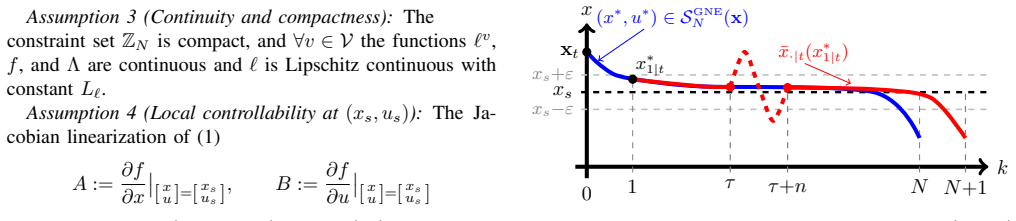
We analyze Receding Horizon Games without any MPC-like terminal ingredients. We show that recursive feasibility can be inferred from the turnpike phenomenon under mild assumptions. Moreover, we prove sufficient conditions for practical asymptotic convergence of the closed-loop trajectories, and we discuss how the gap towards practical asymptotic stability may be closed. We use numerical examples to show that the closed-loop region of attraction around the steady-state GNE shrinks exponentially with the horizon length, a behavior previously known only for model predictive control. Further, we apply a linear end penalty and demonstrate in numerical simulations that it suppresses the leaving arc and ensures asymptotic convergence to the steady-state GNE.
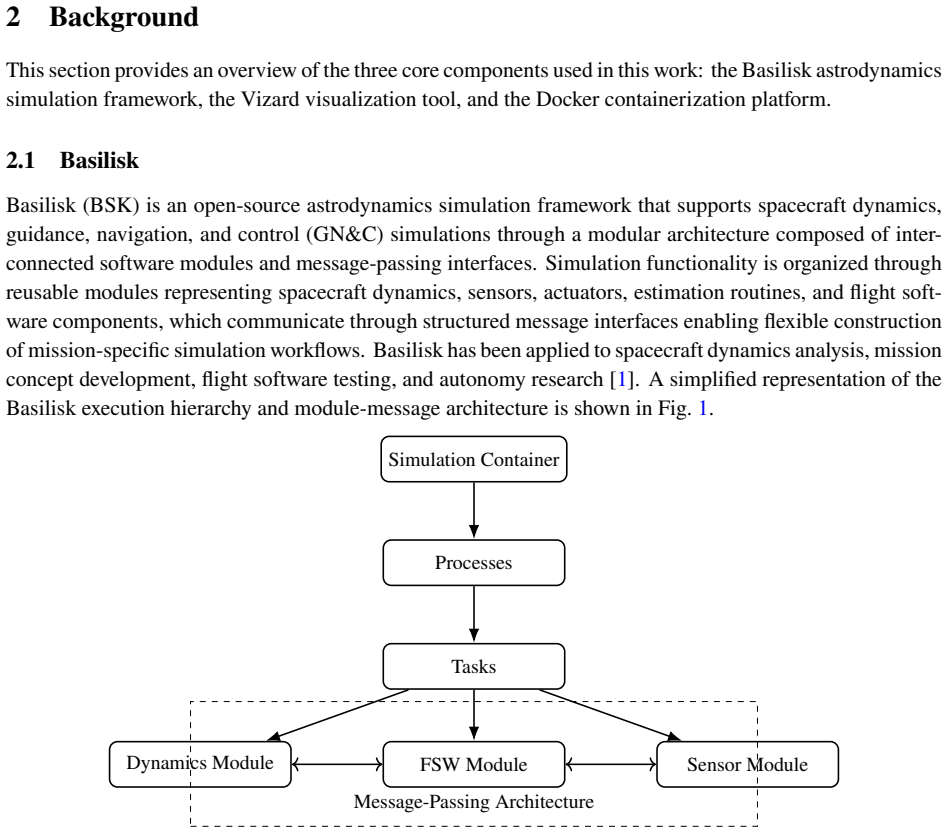
Basilisk is an open-source astrodynamics simulation framework widely used for spacecraft guidance, navigation, and control (GN&C) research and development. Despite its flexibility and computational capabilities, configuring Basilisk consistently across heterogeneous development environments presents practical challenges due to dependency management, operating system compatibility, and software configuration requirements. This paper presents a Docker-based containerization workflow for Basilisk that encapsulates the complete build environment, dependencies, and simulation infrastructure within a portable container image. The workflow is demonstrated through a progression of simulation scenarios of increasing complexity, from standalone orbital dynamics scripts to BSKSim-based attitude dynamics and control simulations with Monte Carlo analysis. The BSKSim class hierarchy, dynamics model architecture, flight software implementation, and scenario execution patterns are described in detail. The presented workflow provides a self-contained implementation reference for GN&C engineers and researchers seeking reproducible and portable Basilisk simulation environments. This work expands upon a workshop presentation delivered at the 46th Rocky Mountain AAS GN&C Conference, February 2024, available at https://doi.org/10.5281/zenodo.15008785.
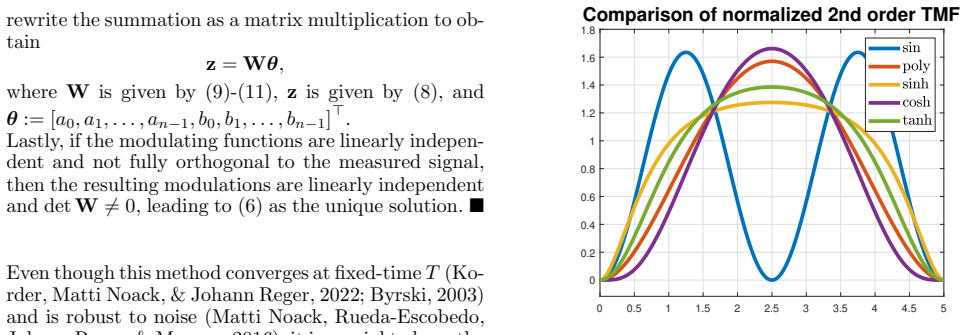
State and parameter estimation, along with fault detection, are three crucial estimation problems within the control systems community. Although different approaches have been proposed for each type of problem, the modulating function method proposes a more unified approach to all three problem classes, being used for state and parameter estimation of lumped systems, fault detection, and estimation of distributed and fractional systems. At the core of the method is the modulating function: a function that evaluates to 0 at the left or right boundaries up to a certain order of derivatives. By selecting the modulating functions, one directly determines the filter characteristics, and, for that reason, different function families have been proposed over the years. Nevertheless, many families of modulating functions are given in a rather similar mathematical structure. In light of these structures, this paper formally discusses the algebraic properties of modulating functions, and, after formalizing the closedness and group properties of modulating functions, a simple algorithm to construct new modulating functions is proposed, discussed, and illustrated with the construction of the newly introduced logarithmic modulating function families and 3 non-analytic modulating function families. Moreover, the fact that total modulating functions form a vector space and an algebra is exploited to construct orthonormal modulating functions, which are then used for the parameter estimation of a boat's roll dynamics, effectively avoiding matrix inversion issues.
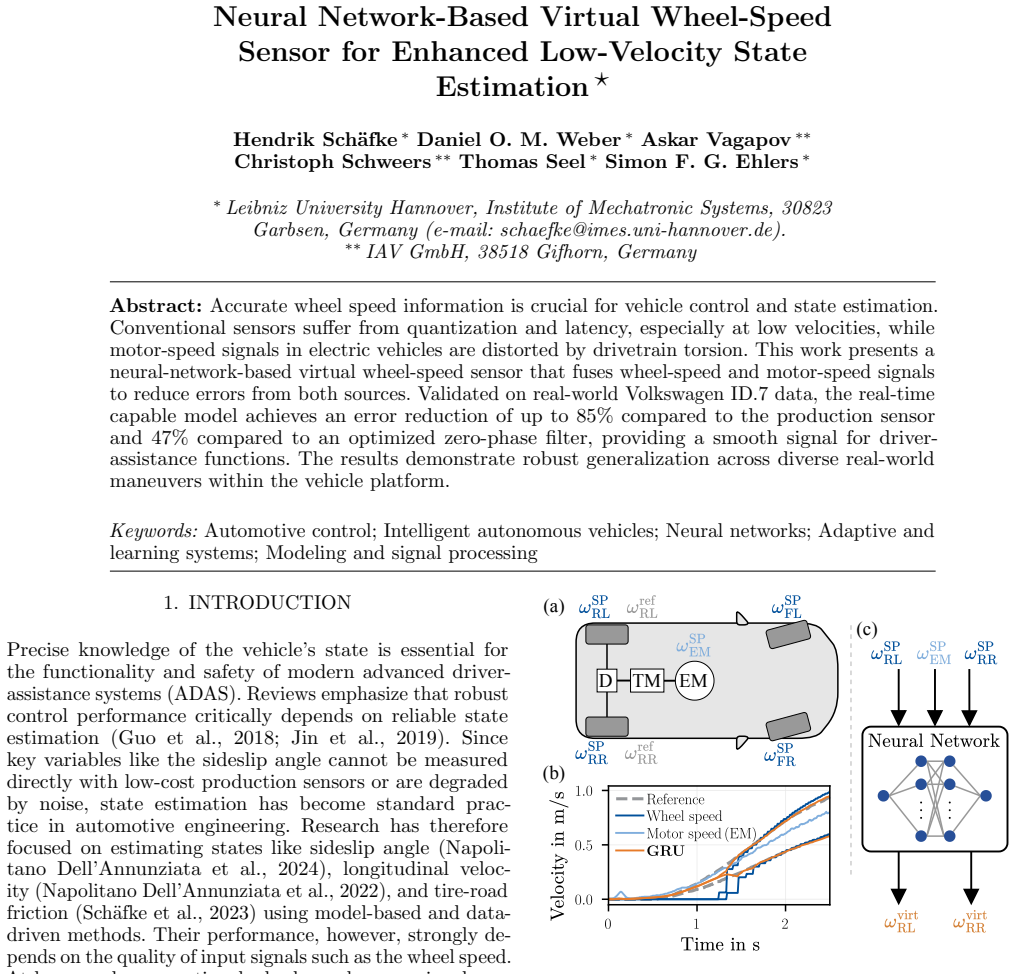
Accurate wheel speed information is crucial for vehicle control and state estimation. Conventional sensors suffer from quantization and latency, especially at low velocities, while motor-speed signals in electric vehicles are distorted by drivetrain torsion. This work presents a neural-network-based virtual wheel-speed sensor that fuses wheel-speed and motor-speed signals to reduce errors from both sources. Validated on real-world Volkswagen ID.7 data, the real-time capable model achieves an error reduction of up to 85% compared to the production sensor and 47% compared to an optimized zero-phase filter, providing a smooth signal for driver-assistance functions. The results demonstrate robust generalization across diverse real-world maneuvers within the vehicle platform.
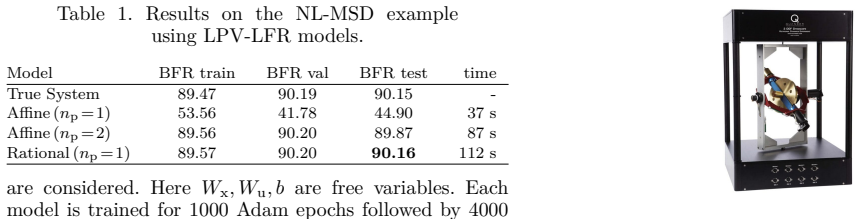
Identifying control-friendly models of nonlinear systems remains one of the major challenges at the intersection of system identification and control. The Linear Parameter-Varying (LPV) framework offers a promising solution, but existing identification methods often rely on model structures with affine scheduling dependency. Instead, this work proposes the use of LPV models with Linear Fractional Representation (LFR) admitting a rational scheduling-dependency, capable of modelling complex nonlinear systems with fewer scheduling variables compared to affine models. This work introduces a direct parameterization to ensure well-posedness of rational LPV-LFR models, which by joint-estimation of an LPV plant and scheduling map, using only input-output data, is capable of modelling complex nonlinear systems. Accuracy of the proposed approach is shown on two simulation examples.
Superconducting radio frequency cavities with a high quality factor enable energy-efficient accelerator operation but are very sensitive to mechanical disturbances that detune their resonance. Accurate detuning estimation is therefore essential for efficient resonance control and stable beam conditions. This paper introduces Kalman-Inspired Neural Decomposition (KIND), a data-driven estimator that fuses a Dynamic Mode Decomposition model for stationary modal behavior with a Transformer-based predictor for transient dynamics. KIND further outputs learned uncertainty signals that indicate regime changes, enabling anomaly detection. Using operational cavity data, we compare KIND with a classical Kalman filtering baseline and discuss its potential as a foundation for future uncertainty-aware, forecast-based control.
Fine-tuned LA-GAT reaches 0.865 m ADE at 1 s and 2.518 m at 3 s on held-out drone data while lowering safety violations.
abstractclick to expand
Accurate multi-vehicle trajectory prediction in expressway merge and diverge areas is fundamental to the decision-making frameworks of autonomous vehicle systems. However, the majority of existing graph-based prediction models are developed and validated on mainline freeway segments and do not address the geometrically distinct interaction structures that characterize merge zones. Furthermore, standard evaluation protocols rely exclusively on displacement error metrics, leaving the safety consequences of predicted trajectories unquantified. This paper proposes a Lane-Aware Graph Attention Network (LA-GAT) that encodes vehicle interaction within dynamic scene graphs, augmented with a trainable lane-relationship attention bias that prioritizes merge-conflict interactions from the outset of training. The model is pre-trained on the raw NGSIM US-101 and I-80 datasets and subsequently fine-tuned on UAV-captured UTE SQM-W-1 trajectory data from a Chinese expressway merge area, with final evaluation on the held-out SQM-W-2 dataset. Evaluation spans both displacement metrics (ADE, FDE at 1s, 3s, 5s horizons) and surrogate safety measures (TTC violation rate, DRAC exceedance rate, collision rate). Fine-tuned results on SQM-W-2 yield ADE of 0.865 m at 1s and 2.518 m at 3s, demonstrating that drone-informed fine-tuning substantially reduces the cross-dataset transfer gap. The deliberate use of unfiltered NGSIM data is shown to characterize raw-condition generalization limits, with the performance degradation attributed to the well-documented measurement errors in that dataset.
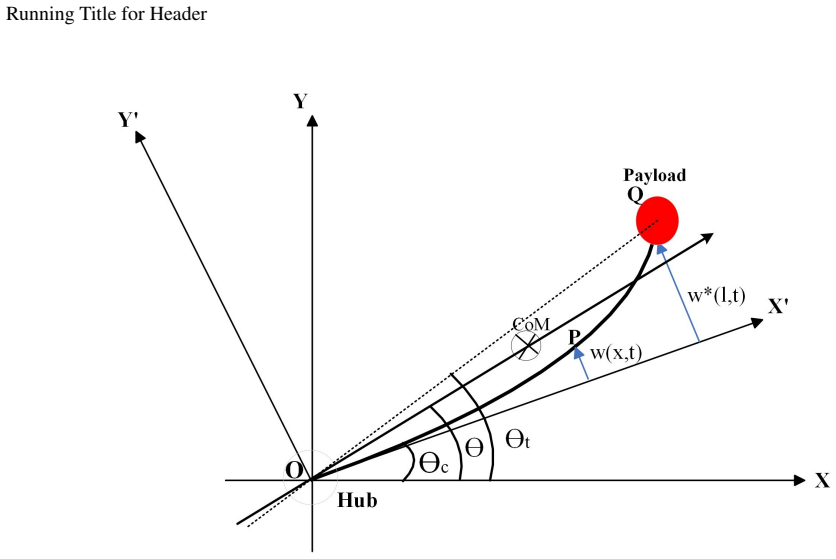
This paper presents a novel position control strategy for a single-link flexible manipulator, tailored for applications where precise position must be achieved within strict time constraints. To accomplish this objective, firstly, a nested non-singular terminal sliding mode controller is designed for the system, enabling precise and robust control. Furthermore, a fixed-time sliding mode observer is designed to estimate unmeasured system states accurately in a fixed time, thereby enabling closed-loop control implementation. A stability analysis is presented to guarantee the robustness and efficacy of the proposed composite control algorithm. The effectiveness of the proposed fixed-time controller is demonstrated through numerical simulation on accuracy, stability, and convergence speed. The proposed controller's performance is also compared with that of other state-of-the-art control schemes. The proposed controller is further validated through experiments conducted on a real hardware setup.
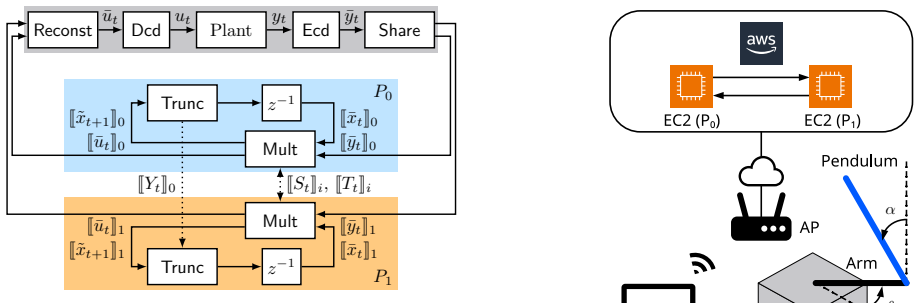
A secure two-party computation protocol for running dynamic controllers over secret sharing has recently been proposed. Unlike encrypted control schemes based on homomorphic encryption, this protocol enables operating dynamic controllers for an infinite time horizon without controller-state decryption, controller-state reset, or input re-encryption. However, the two-party setting introduces additional online communication between the computing parties, which may hinder real-time feasibility. In this study, we demonstrate the feasibility of the protocol through implementation on a commercial cloud platform with an inverted pendulum testbed. Experimental results show that the proposed protocol successfully stabilized the pendulum despite the online communication overhead.
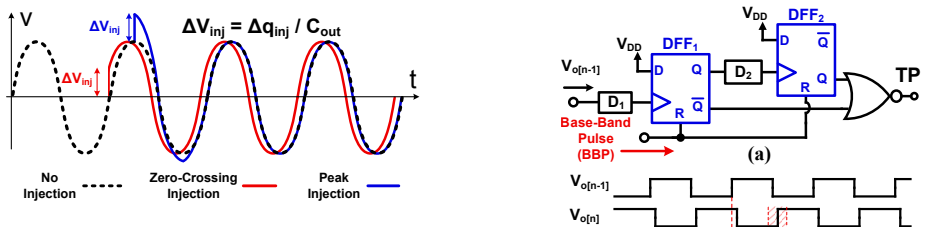
This paper presents a compact, low-power, direct RF multi-phase-shift keying (PSK) transmitter (TX) that eliminates the need for a phase-locked loop (PLL) by performing phase modulation directly within a ring oscillator. The proposed architecture exploits synchronized charge extraction at the oscillator's transition points to induce controlled phase shifts while maintaining constant amplitude and frequency. A time-domain multi-triggering technique is introduced to enable reconfigurable multi-mode modulation, supporting 16-PSK, 8-PSK, QPSK, and BPSK within a unified hardware structure. The TX circuit is fabricated in a 22-nm FD-SOI process and operates in the ISM band at 2.4 GHz. Measurement results indicate a symbol rate of 2 MSps with a maximum error vector magnitude (EVM) of 5.13% rms. The core TX occupies 23 {\times} 17.6 {\mu}m2 and consumes 236 {\mu}W, excluding the output driver, which delivers -10 dBm output power over a 60 MHz bandwidth. The proposed design achieves a favorable trade-off between power consumption, circuit complexity, and modulation flexibility, making it well-suited for low-power wireless applications.
Local interaction laws governing multi-agent systems can be difficult to recover from trajectory data, even when the dynamics are observed faithfully. In systems governed by a nonlinear sheaf Laplacian -- a generalization of the graph Laplacian accommodating heterogeneous state spaces and asymmetric communication channels -- the coordination law is encoded by edge potential functions whose gradients produce the inter-agent forces. Because trajectory observations record node-state evolution, they expose only the aggregate effect of the edge forces at each node: distinct interaction laws that agree at the node level are indistinguishable from trajectory data alone. We show that the fundamental obstruction to recovery is topological, measured by sheaf cohomology, and that unique recovery from an unconstrained function class is possible if and only if this cohomology vanishes. When the obstruction is nontrivial, we show that recovery within a finite-dimensional parameterized class is possible precisely when a data-dependent information matrix is positive definite. Experiments validate the theory and illustrate that accurate trajectory reproduction need not certify recovery of the underlying interaction law.
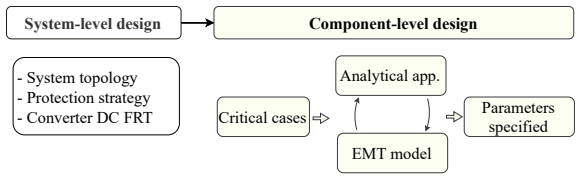
Protection system design for multi-terminal HVDC grids is challenging due to the complexity of the system and the often conflicting design requirements. Effective specification of protection component parameters (e.g., DC circuit breakers and series DC inductors) during component-level design is crucial due to interdependencies among components, the need for detailed modeling, and the complex interactions between the protection system and converter control systems. Both analytical and simulation-based approaches have been proposed as solutions for component-level design. However, analytical methods may not accurately represent system behavior given that approximation is necessary, and simulation-based approaches often require extensive computational effort and time. Therefore, this paper presents an efficient systematic design method, combining both approaches. First, a fundamental analytical solution is derived to consider the protection system requirements. Then, a hybrid analytical--EMT methodology is proposed to accelerate convergence toward the required design parameters, after which detailed models are applied to ensure accuracy in design and validation. The approach is applicable to component-level design for both fully and partially selective protection strategies in HVDC grids.
Modern power systems increasingly rely on power electronic converters, yet many of these devices are provided as black-box models, limiting the applicability of conventional small-signal analysis (SSA) tools. This work presents a unified multi-variable fitted state-space (SSA-FITSS) methodology that enables accurate small-signal modeling of black-box Voltage Source Converters (VSCs) using frequency-domain (FD) identification, adaptive pole-expansion, and reduced-order realization. The method includes an automated state-interpretation strategy that assigns fitted states to representative control-loop categories based on their dominant frequency ranges, providing an approximate but meaningful physical interpretation of the identified dynamics. This capability allows extensive modal analysis, including eigenvalue sensitivities and participation factors, in systems where internal converter details are unavailable. The methodology is validated on a grid-following (GFL) VSC and applied to the New England system, which contains multiple black-box converters operating in both GFL and grid-forming (GFM) modes. Results show that the SSA-FITSS models accurately reproduce converter and system dynamics, support full eigenvalue-based analysis, and reveal stability limits under varying synchronous generation and GFL penetration levels. The approach overcomes key limitations of existing identification-based techniques by enabling scalable, interpretable, and system-wide stability assessment.
The paper presents a sensitivity analysis of the factors affecting the optimal partitioning of a district heating network for distributed control. Leveraging a physics-based, distributed model predictive control framework and a performance-based partitioning method, this work studies the relationship between variations in system parameters and the resulting optimal partition, providing insight into the robustness of a nominally designed partition to perturbed operating conditions. The enabling methodology is a learning-enhanced branch and bound method that culls the search space, reducing the number of partitions evaluated for each case. The sensitivity of the nominally optimal partition is characterized across twelve parameter variations, including supply temperature, operating season, building flexibility, pipe characteristics, and building type. This simulation study shows that a well-designed nominal partition exhibits an average cost increase of only 2.8% relative to centralized control across eleven of the twelve cases, with three cases identifying the nominal partition as globally optimal under the perturbed conditions. The robustness study is followed by an analysis of the sensitivity of the optimality loss metric (OLM), revealing that, in five of twelve cases, the case-specific OLM-minimizing partitions underperform the nominally optimal one due to shifts in the relative magnitude of heat loss versus flexibility costs. This indicates that proper tuning of cost function weights and initial conditions for the performance optimization problem is essential for reliable partition selection, and that seasonal repartitioning is warranted when demand profiles deviate substantially from the nominal, as observed in the November operating case.
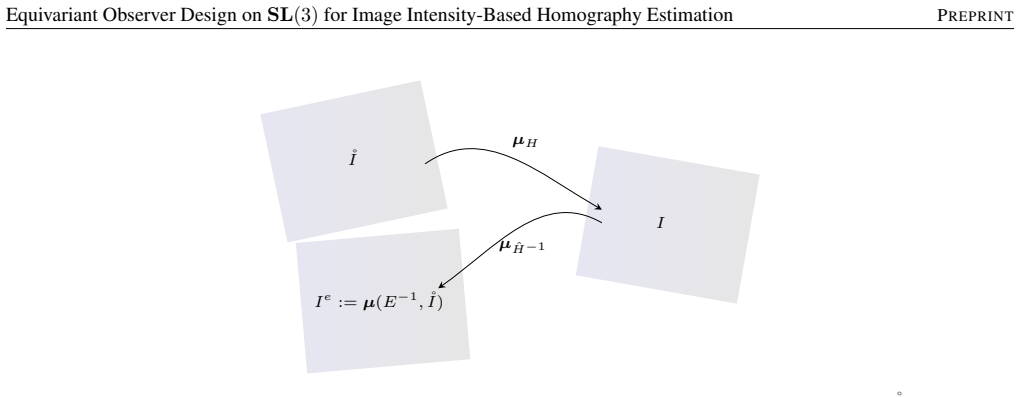
This paper addresses the problem of homography estimation using a nonlinear observer designed on the Lie group $\mathbf{SL}(3)$ that exploits the full image information through direct image registration. Unlike traditional feature-based methods, which rely on extensive feature extraction and matching, the proposed approach formulates an observer that minimises a cost function defined directly in terms of image pixel intensities. Explicit conditions ensuring the non-degeneracy of the cost function are derived, and a comprehensive analysis is conducted to characterise and generate degenerate (unobservable) image configurations. Theoretical results demonstrate local exponential convergence of the observer. To improve local convergence properties, a second-order observer variant is introduced by incorporating the Hessian of the cost function into the correction term. Simulation results demonstrate the performance of the proposed solutions on real images.
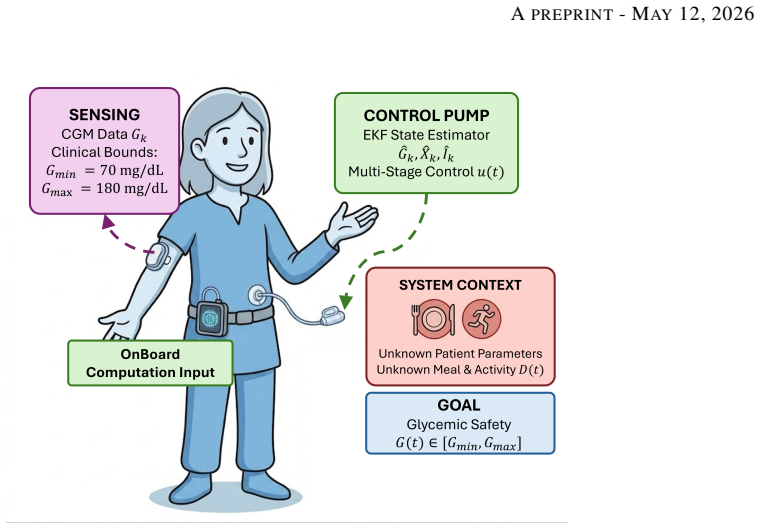
Type 1 diabetes eliminates the body's ability to produce insulin, making glucose regulation entirely dependent on external insulin delivery and the control algorithm. Existing closed-loop methods either rely on accurate patient-specific models or do not provide formal safety guarantees, and are often computationally demanding for wearable devices. This paper proposes Glycemic Safety Tube Control (GSTC), a model-free and computationally efficient control framework for automated insulin delivery. The method enforces clinically relevant safety bounds on glucose levels by design, ensuring that glucose remains within a prescribed safe range. We also derive feasibility conditions that guarantee safety and input constraint satisfaction under bounded meal disturbances and estimation errors. The performance of GSTC is evaluated against state-of-the-art methods, including linear and nonlinear model predictive control and sliding mode control. The results demonstrate that GSTC maintains safety under varying meal patterns and patient conditions, highlighting its robustness and computational efficiency. Overall, GSTC provides a safe, efficient, and patient-independent approach for next-generation artificial pancreas systems.
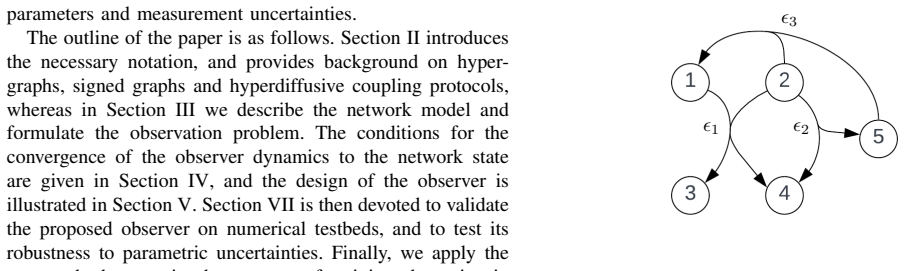
We consider the problem of reconstructing the state of a network of nonlinear dynamical systems in the presence of directed higher-order interactions. Grounded on analytical convergence results, we propose an algorithmic observer design procedure that simultaneously selects the nodes to be measured and the observer gains. We complement the theoretical analysis with an exhaustive numerical investigation campaign that showcases the performance and robustness of the designed observer. Finally, the algorithmic procedure is used to fully reconstruct the opinions of a group of agents.
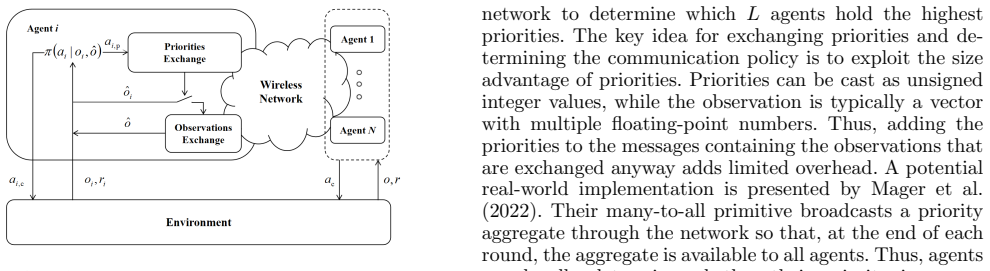
Event-triggered control provides a mechanism for avoiding excessive use of constrained communication bandwidth in networked multi-agent systems. However, most existing methods rely on accurate system models, which may be unavailable in practice. In this work, we propose a model-free, priority-driven reinforcement learning algorithm that learns communication priorities and control policies jointly from data in decentralized multi-agent systems. By learning communication priorities, we circumvent the hybrid action space typical in event-triggered control with binary communication decisions. We evaluate our algorithm on benchmark tasks and demonstrate that it outperforms the baseline method.
A hierarchical 2DOF (2-degree-of-freedom) structure combining Youla-Kucera (YK) parameterization and model predictive control (MPC) is presented in this paper. The YK parameterization employs the coprime factorization of the nominal system and controller, thereby introducing an auxiliary feedforward channel dedicated to system optimization and a controller parameterization channel. The feedforward channel is utilized to implement cascaded MPC for system optimization. The controller parameterization channel is utilized to achieve offset-free MPC by designing an appropriate YK parameter through the H2 optimal controller design.
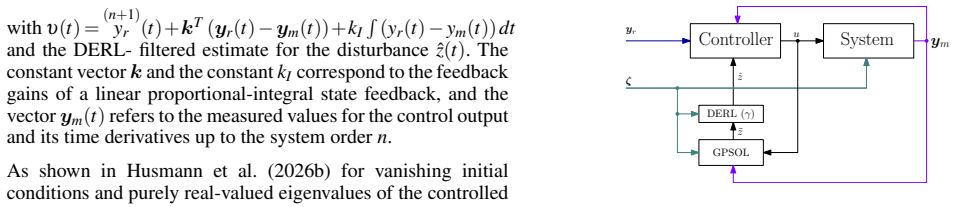
In this paper, we present a learning-based control for a class of nonlinear systems that guarantees exponential stability as well as bounded output errors. The control is based on the Gaussian Process Submodel Online Learning (GPSOL) algorithm and the Disturbance Error Rate Limiting (DERL) algorithm, both of which were developed in previous work. The GPSOL algorithm provides a method to learn Gaussian Process (GP) models for subsystems online, whereas the DERL algorithm allows to limit the rate of the prediction error of these GP models. The focus of this paper is the utilization of the GP model within an adaptive controller and the derivation of corresponding stability conditions and system peak-to-peak gains by means of linear matrix inequalities (LMIs). These peak-to-peak gains are then used to prescribe a desired prediction error rate for the DERL algorithm to achieve user-defined output error bounds. The gains and the related bounds were successfully verified using a simulation model. Furthermore, results form a successful experimental validation of the bounds and the overall control structure on a pneumatic test rig are presented. While the control scheme and error bounds proposed in this paper are limited to first-order single-input-single-output systems, an extension to certain classes of higher-order and multiple-input-multiple-output systems is expected to be forthcoming.
Transmission Topology Optimization has great potential to improve efficiency and flexibility of grid operations through non-costly switching actions, but previous approaches struggle with runtime performance and scalability. In this work, we present an optimization approach that leverages GPU acceleration to speed up computations. In a genetic algorithm setting, topologies are randomly mutated and evaluated in parallel for multiple optimization criteria. Combined with a fully GPU-native DC loadflow solver, there is no CPU-GPU data transfer required in the DC optimization loop. Using a variant of the illumination algorithm MapElites, we efficiently generate a set of diverse candidate solutions on the pareto front. Together with an importing and AC validation step, we present an end-to-end optimization solution that runs in under 15 minutes. The approach is currently under evaluation by operational planning operators in two European TSOs. We furthermore open-source our code at github.com/eliagroup/ToOp.
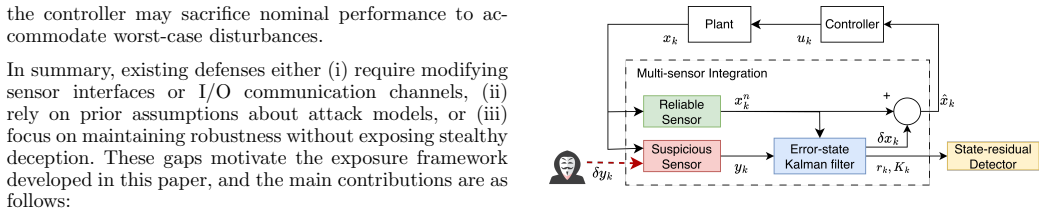
Multi-sensor integration via error-state Kalman filter (KF) is widely employed for precise state estimation in cyber-physical systems (CPSs). However, this integration exposes the system to stealthy deception attacks that render conventional detection mechanisms ineffective. We propose an exposure framework to actively reveal such stealthy attacks without modifying sensor interfaces. The framework introduces a suspect mode in which the defender injects random exposure shakes into the nominal control inputs, thus creating a discrepancy between the defender's true state estimates and the attacker's manipulated state estimates, preventing the attack from remaining stealthy. We further derive an explicit exposure condition that characterizes the minimum shake magnitude to guarantee the finite-time exposure and a compensable condition that ensures the shakes do not degrade closed-loop performance. Simulation results based on a GNSS/INS-integrated UAV system verify the effectiveness of the proposed framework.
This paper studies secondary frequency control in transmission networks subject to communication delays at the cyber-physical interface and limited per-update computation at the control center. The regulation objective is formulated as a constrained economic dispatch problem incorporating generation capacity constraints, nodal power balance, transmission-flow limits, and scheduled tie-line power exchanges. Based on this formulation, we develop a passivity-based control framework in which an augmented projected primal-dual controller restores nominal frequency and drives the closed-loop system to the solution set of the constrained economic dispatch problem. Two-way communication delays between the physical network and the control center are modeled as scattering-based passive channels for the measurement uplink and the control-command downlink. This construction preserves the target equilibrium and enables a delay-robust passivity analysis of the delayed closed loop. To reduce the computational burden at the control center, we develop a randomized block-coordinate implementation of the augmented projected primal-dual controller. The resulting sampled-data closed loop preserves the target solution set and achieves local mean-square geometric convergence under suitable step-size and regularity conditions. Finally, a multivariable wave-domain interface filter is introduced to inject additional dissipation and improve the damping of the delayed interface without altering the steady-state interconnection. Simulations on the IEEE 14-bus system indicate that the proposed digital implementation accurately reproduces the delayed closed-loop behavior while reducing the per-update computational cost.
This paper proposes a framework for secure and resilient controller design for positive systems against cyber-attacks. In particular, we consider a network-controlled system where an adversary injects false data into the actuator channels to increase the control cost (performance measure) while penalizing the attack effort and subject to state-dependent constraints. Using a minimax formulation, we analyze the worst-case performance loss caused by such adversaries, which is given by the solution of a difference equation, and an algebraic equation when the time horizon is infinite. We show that the optimal attack policy, among possible nonlinear policies, is linear. Despite the lack of explicit stealthiness constraints, we also show that when the measured output has an unstable zero which is not an unstable zero of the performance measure, the attacks can induce unbounded performance degradation. The proposed framework is also extended to systems with model uncertainty. Numerical examples illustrate the results and demonstrate how tools from positive systems and linear regulator theory can be used to mitigate cyber-attacks with low computational effort.
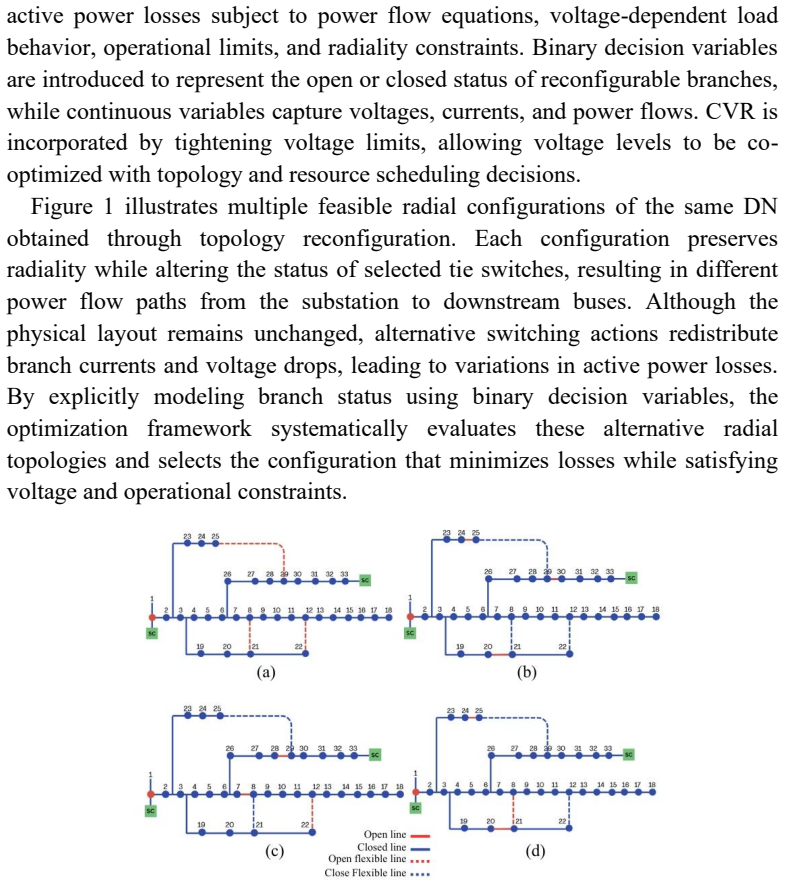
Conservation voltage reduction (CVR) and network topology reconfiguration (NTR) are widely employed to improve distribution system performance; however, existing approaches largely treat them independently, overlooking their coupled impact on load demand, voltage profiles, and power flow distribution, thereby limiting their overall effectiveness. This paper proposes a coordinated optimization framework for day-ahead operational planning of distribution networks, integrating CVR and NTR to enhance overall network efficiency and reduce active power losses in radial distribution networks. The problem is formulated as a mixed-integer conic programming model incorporating AC power flow constraints, voltage-dependent load representation, and radiality constraints. CVR is implemented to achieve load reduction through coordinated voltage control, while NTR redistributes line loading via optimal switching of controllable branches. The proposed framework is validated on the IEEE 33 and 123-bus distribution systems under varying load conditions. Results demonstrate that the coordinated approach consistently outperforms independent strategies, achieving up to 20.6% reduction in active power losses while maintaining voltage compliance and improving branch loading uniformity. These findings confirm that coordinated optimization provides an effective and scalable solution for enhancing efficiency in modern distribution networks.
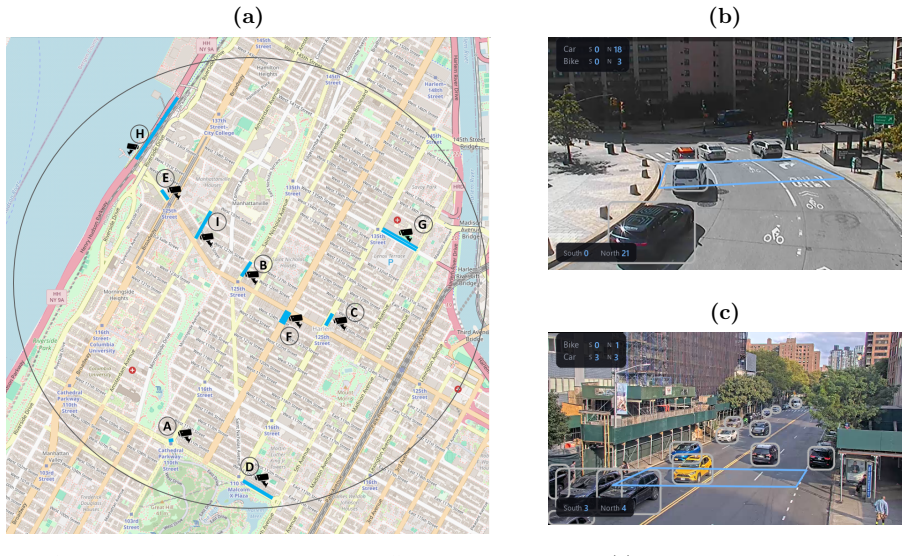
Cities increasingly rely on vehicle trajectory data to monitor traffic conditions; however, such data offer only a partial and spatially heterogeneous view of network dynamics and exhibit systematic biases across corridors and time periods. In contrast, surveillance cameras can provide high-fidelity traffic information, but only at a limited set of locations, typically sparsely distributed across the road network. We present a hybrid modeling and calibration framework that fuses these complementary data sources to produce physically consistent, network-wide estimates and short-horizon forecasts of traffic volumes. The framework leverages kinematic features derived from the Cell Transmission Model (CTM) formulation within a graph neural network (GNN). By enforcing traffic-flow conservation, capacity limits, and spillback dynamics, the CTM provides a physically grounded representation of traffic flow, while the GNN learns the spatiotemporal evolution of traffic states over the entire road network. To calibrate the model predictions on traffic camera observations, we use a progressive data-assimilation scheme based on an Ensemble Square-Root Kalman filter (EnSRF). A topology-informed flow-weighted transition matrix is further employed to propagate camera-driven corrections to unobserved road segments, enabling real-time, network-wide traffic state and volume estimation. The approach is demonstrated using probe-vehicle trajectory data and municipal traffic cameras in Manhattan, New York City, where it achieves improved accuracy relative to trajectory-based estimates while maintaining physically plausible and network-consistent traffic flows. The proposed framework accommodates varying sensor availability and produces calibrated traffic volumes with uncertainty estimates, supporting operational monitoring and evaluation of transportation policies in data-constrained urban environments.
We propose Geometric Pareto Control (GPC), a framework overcoming barriers of reinforcement learning in cyber-physical systems where governing physics is known. Reinforcement learning confronts barriers in safety-critical applications: sample complexity grows with action-space dimension, retraining is required when objectives or conditions shift, goals such as safety recovery and economic dispatch demand brittle switching logic, and unsafe exploration persists under constrained RL formulations. GPC resolves these barriers through a two-stage geometric approach. Offline, the supported family of Pareto-optimal solutions (i.e., solutions recoverable by weighted scalarization) is embedded as a submanifold within a Lie group. Exponential map closure preserves membership in the ambient Lie group; drift and reset assumptions keep online latent states within a bounded neighbourhood of the Pareto submanifold, and a training-time feasibility margin guarantees decoded actions remain feasible without post-hoc projection, constructing a "map" of the solution landscape. Online, a closed-form proximal navigator traverses this submanifold via a unified Riemannian gradient flow driven by a singular perturbation potential field, inducing dual-timescale dynamics that prioritize constraint restoration over performance optimization. The homeomorphic structure of the submanifold guarantees that varying system parameters and objective weights produce continuous control actions, enabling deployment under unseen conditions without retraining. Validated on a nonconvex control task and real-time multi-objective optimal power flow, GPC achieves 100% feasibility, 0.30% oracle suboptimality, and 12.3 ms decisions while shifting from constraint recovery to economic dispatch. Under branch-admittance uncertainty, it remains 100% feasible without retraining, whereas model-free baselines produce no feasible dispatches.
Simulation-based diffusion method yields policies matching or exceeding benchmarks in high-dimensional systems.
abstractclick to expand
A key operational challenge for call centers is to decide, in real time, which waiting customer should be served by which available agent. This is known as skill-based routing, and the decision becomes especially difficult in large systems with many customer classes, where standard dynamic programming methods can be computationally intractable. Focusing on the Halfin-Whitt heavy-traffic regime and an infinite-horizon discounted cost criterion, we develop a computational method that scales to high-dimensional settings with many customer classes. Our approach begins by deriving an approximating diffusion control problem in the heavy traffic limiting regime. Building on earlier work by Han et al. (2018), we develop a simulation-based method to solve this problem, relying heavily on deep neural network techniques. Using this framework, we construct a policy for the original (prelimit) call center scheduling problem. To evaluate performance, we adopt a data-driven approach. Using call center data from a large U.S. bank, we calibrate the model and construct realistic test instances. We then compare the resulting policy with benchmark policies drawn from the literature. Across all test problems considered so far, our policy performs at least as well as or better than the best benchmark identified. Moreover, the method remains computationally feasible in dimensions up to 100, corresponding to call centers with 100 or more distinct customer classes.
Designers solve a sequence of linear programs from the end to keep obedience rational at every step.
abstractclick to expand
We consider a finite-horizon discrete-time dynamic system that is jointly controlled by two strategic agents. There is a system designer that has its own reward function but does not have direct control over the agents' actions. We consider an information structure where the current state and all past history are equally accessible by the designer and the agents. The designer sends action recommendations to the agents at each time step. Each agent can use the received recommendation and the available information to choose its action. We are interested in the setting where the designer would like to send recommendations in a way that incentivizes the agents to adopt obedient strategies, i.e., to take the action recommended by the designer. Our goal is to find an optimal action recommendation strategy for the designer that maximizes the designer's objective while ensuring that obedient strategies are \emph{sequentially rational} for the agents. We provide an algorithm for the designer's problem that involves solving a family of linear programs in a backward inductive manner.
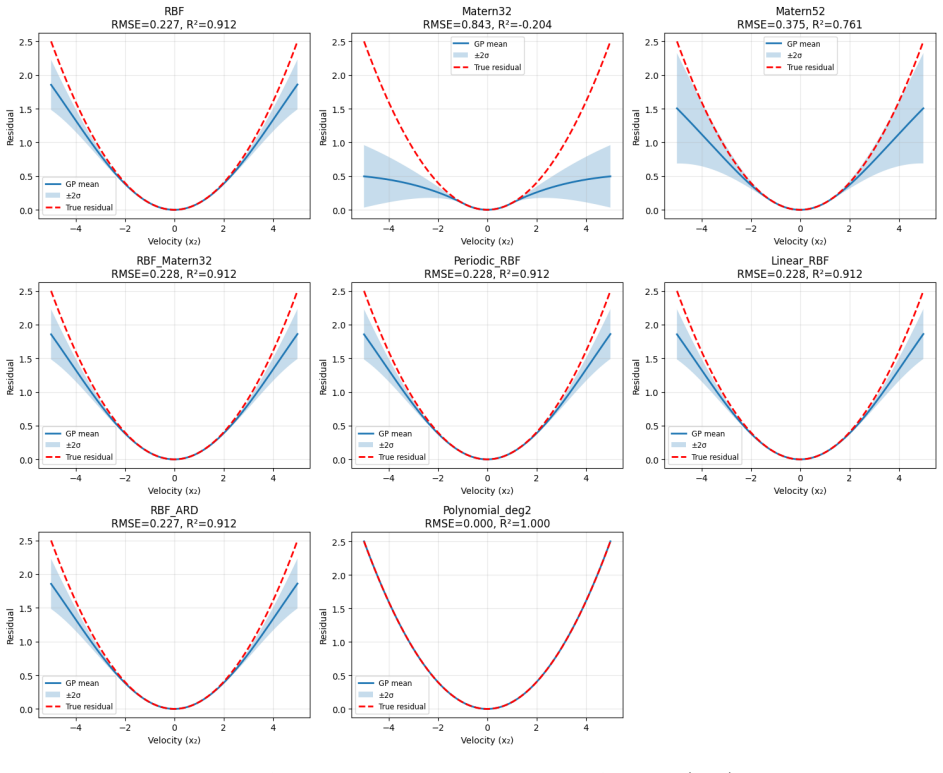
This paper proposes a safe data-driven control framework for nonlinear systems with partially known dynamics. The method ensures stability and constraint satisfaction during online learning, assuming only a stabilizable linear approximation of the process is available. Unmodeled nonlinear dynamics are captured by a Gaussian process residual learned in real time. Safety is enforced through a probabilistic control-invariant set derived from Lyapunov theory, guaranteeing high-probability stability. A convex quadratic program computes control inputs that maximize information gain while respecting probabilistic safety constraints. The framework provides finite-sample safety guarantees and allows adaptive expansion of the invariant set as uncertainty decreases. Numerical results validate the approach, demonstrating safe and informative exploration under model uncertainty: the safe set expands by about 30% while the Gaussian process root-mean-square error drops from 1.11 to 0.03.
Fault detection and isolation (FDI) systems are critical for modern mechatronic production equipment, as their continuous operation is heavily dependent on the ability to detect and isolate faults in a timely and efficient manner. The aim of this paper is to address closed-loop aspects for linear systems and enable the application of well-known nullspace-based FDI synthesis conditions to mechatronic systems subject to actuator and sensor faults. These tailored FDI synthesis conditions are applied to a large-scale prototype wafer stage, showcasing the proposed approach through real experiments, thereby underlining the usefulness of the derived synthesis conditions for a wide range of production machines and scientific instruments.
Learning control strategies with provable stability guarantees continues to be a challenging problem. In this work, we examine a family of training-time behaviors exhibited by existing neural Lyapunov control methods under specific conditions, which can hinder the synthesis of a provably stable controller. We identify the root cause as the lack of neural network architectural guarantees on the learned Lyapunov function, and propose PolarNet, a network architecture that provably addresses these issues by structurally guarantee to have a single critical point. We provide theoretical guarantee regarding the properness and universality of PolarNet for modeling Lyapunov functions, and show that using it as a drop-in replacement in existing neural Lyapunov control methods can effectively circumvent particular difficulties in training. We conduct a set of numerical experiments to verify that PolarNet consistently maintains a single critical point and, when used as a drop-in replacement in existing neural Lyapunov control methods, successfully avoids training failures caused by the lack of architectural guarantees. The code of this paper is available at https://github.com/23-zy/PolarNet.
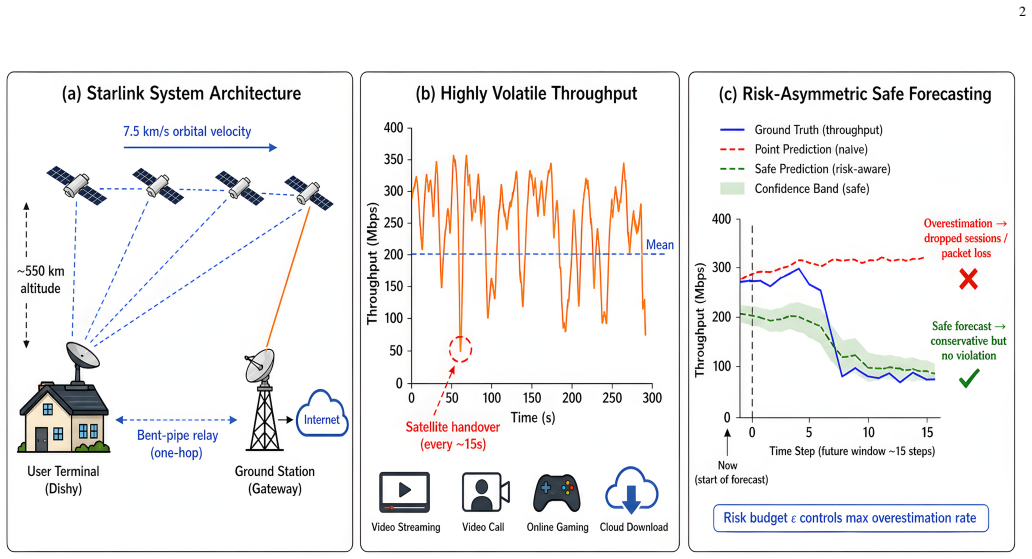
As a representative low Earth orbit (LEO) broadband system, Starlink exhibits highly variable access throughput, making short-term forecasting essential for network resource management. Existing forecasting methods mainly optimize symmetric point-prediction metrics such as MAE and RMSE, but they do not explicitly control the asymmetric risk of overestimating future throughput, which can cause over-admission, bandwidth overbooking, and service violations. This paper formulates Starlink throughput prediction as a risk-budgeted safe forecasting problem, where the predictor must satisfy a prescribed overestimation budget while maintaining competitive accuracy. We propose Budget-Guided Coarse-to-Fine Quantile Selection (BG-CFQS), a data-driven framework that trains a family of lower-quantile predictors, locates the quantile boundary satisfying the risk budget, and refines the boundary region to select the most accurate feasible predictor. Experiments on three real-world Starlink throughput datasets show that BG-CFQS satisfies the risk budget on all datasets and achieves the lowest average MAE, mean positive error, and tail positive error among budget-feasible methods. In high-risk and severe-risk low-throughput regimes, BG-CFQS reduces harmful positive errors by 11.0% and 12.6%, respectively. An admission-control evaluation further shows that the proposed safe forecasts reduce dropped sessions, demonstrating that risk-aware forecasting can translate prediction safety into application-level benefits.
Smartphone time-to-empty (TTE) is difficult to predict because shutdown is governed not only by remaining charge, but also by instantaneous power capability under temperature-, aging-, and load-dependent voltage sag. We develop a stochastic hybrid automaton for smartphone battery dynamics that couples a first-order Thevenin equivalent-circuit model with a lumped thermal model and a stochastic user-activity process. The continuous state includes state of charge, polarization voltage, and battery temperature; user behavior is represented as a piecewise deterministic Markov process switching among idle, social/web, video, gaming, and weak-signal modes. Shutdown is formulated as a first-passage event when terminal voltage crosses a cutoff threshold or when requested power exceeds the instantaneous feasibility envelope.
The model captures a voltage-collapse mechanism that simple Coulomb-counting or linear discharge models miss: cold temperature or battery aging increases internal resistance, so high-power bursts can drive terminal voltage below cutoff even when substantial charge remains. Monte Carlo simulation yields a full TTE distribution rather than a single countdown, allowing lower-tail risk to be quantified by the 5th percentile. Sensitivity analysis identifies ambient temperature, internal resistance, weak-signal radio penalty, and screen brightness as major drivers of premature shutdown risk. These results motivate practical user guidance and an operating-system-level resistance-aware throttling policy that limits peak power in the power-limited regime. The framework provides a physically grounded, risk-aware approach for explaining and extending usable smartphone battery life under real-world uncertainty.
The shift toward sixth-generation (6G) wireless communications demands transceiver architectures that simultaneously support high-data-rate communications, pervasive sensing, and sub-meter-level localization. Beyond these performance targets, 6G systems are also expected to align with long-term societal goals, including sustainability and inclusiveness. Conventional radio designs, however, remain heavily reliant on digital baseband processing, whose cost, power consumption, and computational complexity scale unfavorably with increasing array size and carrier frequency, making them poorly aligned with these emerging requirements. Beyond-diagonal reconfigurable intelligent surfaces (BD-RISs) introduce a new paradigm by enabling direct manipulation of electromagnetic waves in the analog domain. This article presents BD-RIS as a wave-domain analog processing unit embedded within the transceiver aperture. By migrating linear signal processing functions from the digital baseband to the wave domain, BD-RISs significantly reduce computational load and energy consumption, enabling scalable and sustainable operation for extra-large antenna array systems. Owing to their ability to jointly provide high operational flexibility, modularity, and energy-efficient analog processing, transceiver-integrated BD-RISs offer a compelling architectural trade-off and emerge as a strong candidate for next-generation wireless transceivers.
Structural distortions in price signals within the Korean electricity market, governed by a cost-based pool (CBP) and a uniform pricing mechanism, fundamentally undermine the nation's energy transition goals. The current market design fails to reflect transmission constraints, real-time supply and demand dynamics, and generator-specific costs, leading to inefficient resource allocation and hindering long-term investments in renewable energy and grid flexibility. This paper identifies the key drivers of these distortions and proposes a holistic reform package to enhance market efficiency. The package includes four key reforms: \stepcounter{excep}(\roman{excep}) introducing a locational marginal pricing system to manage transmission constraints; \stepcounter{excep}(\roman{excep}) establishing a real-time market to reflect temporal value; \stepcounter{excep}(\roman{excep}) integrating market and system operations to resolve inconsistencies; and \stepcounter{excep}(\roman{excep}) transitioning from CBP to a price-based bidding system. Each reform targets a distinct source of inefficiency. The broader contribution of this study, however, lies in showing that, under the current Korean market design, the market cannot readily provide effective price signals. These reforms therefore need to be implemented jointly to establish a coherent market design in which price signals are aligned with Korea's energy policy objectives.
Inverse reinforcement learning (IRL) for linear systems seeks a cost function whose optimal controller reproduces an expert policy from data. Existing data-driven methods for discrete-time linear systems are largely built on iterative policy/value updates, repeated matrix inversions, and, in some cases, an initial stabilizing controller, which can limit numerical robustness and practical applicability. This paper develops a convex-optimization framework for data-driven inverse reinforcement learning of discrete-time linear systems with model uncertainty. For nominal systems, we derive a semidefinite characterization of inverse optimality and a relaxed formulation that recovers an equivalent state-cost matrix together with a stabilizing controller from expert trajectories. We then obtain a model-free, off-policy reformulation by replacing the unknown system matrices with a regressed kernel matrix identified from local input--state data. For uncertain local systems, we show that a standard LQR cost is generally insufficient to represent every stabilizing target gain and therefore introduce a generalized LQR cost with a state--input cross term. Based on this model, we develop a convex data-driven inverse-RL method and extend it to robust cost design over a population of perturbations via differentiable semidefinite programming and stochastic approximation. Simulations on a discrete-time power-system example show accurate recovery of expert behavior, improved robustness to gain-estimation error and model mismatch, and a simpler computational pipeline than classical iterative inverse-RL schemes.
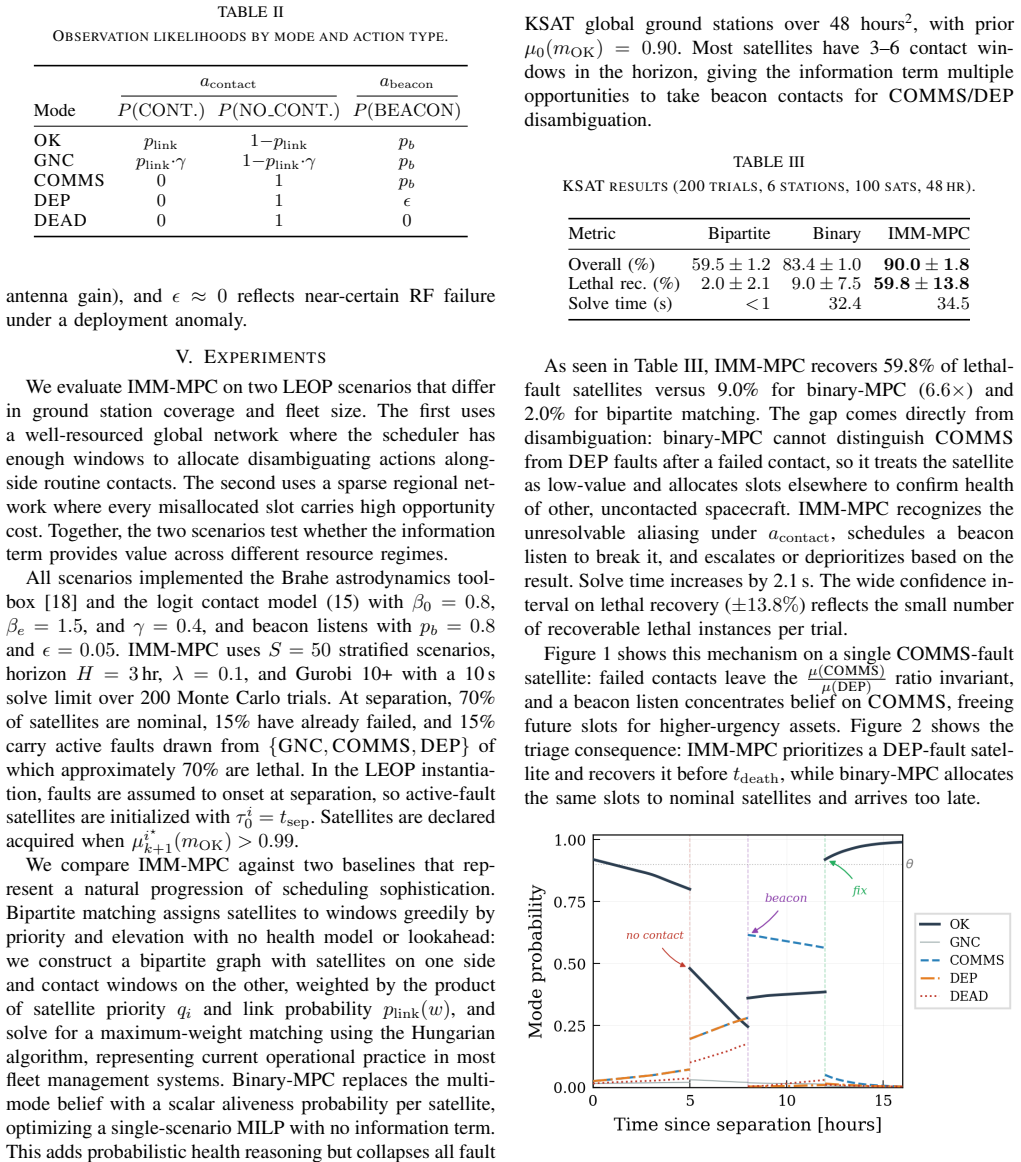
Operating a fleet of remote robotic systems with intermittent communications requires scheduling limited contact opportunities to maintain fleet health awareness, complete mission objectives, and intervene on faulted assets before their permanent loss. This scheduling problem is complicated by observational ambiguity: when an asset fails to check in, the operator cannot distinguish between a lethal hardware fault and a benign communications failure. If the system's failure modes are structured through a fault model, a scheduler can exploit mode-specific lethality, timing, and recoverability properties to prioritize correctly - but only if it can distinguish between modes that produce identical observations under standard actions. We present Interacting Multiple Model Model Predictive Control (IMM-MPC), a receding-horizon framework that maintains a probabilistic belief over discrete fault modes with time-inhomogeneous dynamics and optimizes a two-term objective coupling acquisition value with information gain. We characterize when observationally aliased fault modes can be disambiguated through scheduled actions and when aliasing is permanently unresolvable. Applied to satellite launch and early orbit communications scheduling, IMM-MPC recovers 59.8% of spacecraft experiencing lethal-faults versus 9.0% for binary-MPC and 2.0% for a bipartite graph-based formulation solved through matching. These results hold across 200 randomized trials, while maintaining identical acquisition of healthy satellites and near-identical solve times.
Homotopy in spacecraft mass lets a conditioned diffusion model learn costate distributions that outperform standard indirect optimizers on a
abstractclick to expand
Preliminary low-thrust spacecraft mission design is a global search problem characterized by a complex solution landscape, multiple objectives, and numerous local minima. During this phase, mission parameters are often not yet fully defined, requiring new solutions to be generated at a high cadence across varying parameter values. When combined with the indirect approach to optimal control, diffusion models can accelerate this search by learning distributions that represent high-quality initial costates. However, generating training data remains expensive, and opportunities exist to better exploit past data. We propose a transfer-learning framework that combines homotopy in a mission parameter with Markov chain Monte Carlo (MCMC) to generate training data more efficiently. The approach reformulates a multiobjective optimization problem as sampling from an unnormalized target distribution in costate space. We compare three MCMC algorithms on a planar multi-revolution transfer in the circular restricted three-body problem, with homotopy in the system mass parameter. The results show that gradient-based MCMC variants achieve the best trade-off between sample quality and computational cost. For the test transfer, the proposed framework generates 40 % more feasible solutions and achieves a higher-quality Pareto front than a state-of-the-art indirect approach based on adjoint control transformations and gradient-based optimization. Finally, the MCMC-generated samples are used to fine-tune a diffusion model conditioned on the mass parameter, enabling it to learn a global representation of the underlying solution distribution and efficiently generate new solutions. These findings establish the transfer-learning framework as a practical method for efficiently solving indirect trajectory optimization problems with varying parameters.
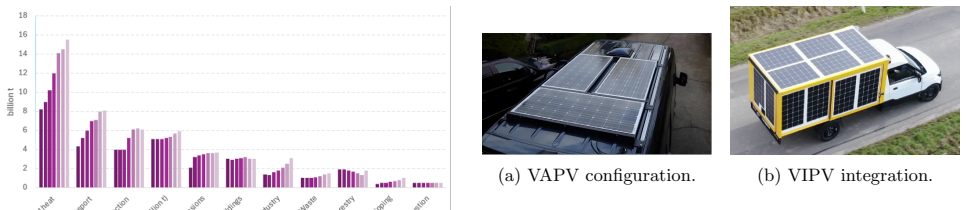
Energy crisis has forced many countries to think of a replacement for energy supply. Renewable energy sources as firendly environment sources play a pivotal role in producing clean energy for various sectors in industry. Gas emissions originating from the transportation industry is another contributing factor to air pollution. Hence, designing and utilizing vehicles that run on renewable energy is crucial, as it provides a dependable energy source that is naturally abundant, leaves nearly no carbon footprint, and is sustainable. Solar powered electric cars make a significant impact on global climate change. To better understand this impact and building upon the plenty of research done on this topic, this paper aims to provide a comprehensive review of the various factors related to solar cars. Specifically, this review will examine the following key factors: Types and sizing of solar cars, solar vehicle power source configurations, leading solar car nations, and solar car challenges.
Safe operation of connected vehicle platoons under stochastic disturbances and time-delayed dynamics requires accurate quantification of rare but dangerous events, such as inter-vehicle collisions. We propose a rigorous framework for quantifying the risk of inter-vehicle collisions in connected vehicle platoons subject to time-delayed stochastic dynamics. We adopt the \emph{entropic value-at-risk} (EVaR) as a conservative metric to capture \emph{risk due to extreme events}, highlighting its advantages over conventional Value-at-Risk (VaR) and Conditional Value-at-Risk (CVaR). By expressing the inter-vehicle distance covariance in terms of the Laplacian eigenvalues of the communication network, we derive \emph{network-and time-delay-induced bounds} on both the minimum inherent risk and the worst-case risk. Specifically, the algebraic connectivity dictates the maximum EVaR, while the largest Laplacian eigenvalue determines the minimum risk inherently induced by the network structure. Numerical simulations illustrate how network topology and time delay shape collision risk, offering actionable insights for the safe design of vehicle platoons operating under stochastic disturbances.
This paper provides an in-depth analysis on how different aspects of the dynamic operating envelope (DOE) formulation impact the computation and allocation of network capacity. We show that the envelopes are significantly affected by the power flow model (non-linear or linear), binding network constraint (thermal or voltage) and by the calculation case (import or export envelope). We also propose a novel DOE algorithm (LACE) that presents transparent and scalable computation that is useful for larger networks or to act in tandem with other optimization engines. We run numerical simulations with different test feeders, including a realistic low-voltage feeder with real-world data from Belgium. This paper provides crucial insights and tools to distribution system operators (DSOs), stakeholders and academics alike to make sure DOE calculation achieves desirable and efficient outcome.
Sampling-based model predictive control (MPC) algorithms, such as model predictive path integral (MPPI), enable approximate, gradient-free solutions to optimal control problems by drawing samples from a proposal distribution, evaluating their trajectory costs, and updating the proposal parameters accordingly. However, these approaches typically rely on heuristics for adjusting hyperparameters, such as temperature or momentum, or manual tuning. We propose a trust region formulation for sampling-based MPC that constrains updates of the proposal distribution via a principled Kullback--Leibler (KL) divergence bound and, optionally, an entropy lower bound. This replaces heuristic hyperparameter adaptation with values that are optimal w.r.t. the underlying Lagrangian. We further improve sample efficiency and convergence by combining the trust region update with deterministic localized cumulative distribution (LCD)-based sampling. Experiments on two benchmark environments demonstrate that the proposed trust region update achieves faster convergence and better sample efficiency in low-sample and low-iteration regimes, especially when paired with deterministic LCD-based sampling.
We investigate interactive trajectory planning subject to uncertainty in the decisions of surrounding agents. To control the ego-agent, we aim to first learn the decision distribution and solve a Stochastic Model Predictive Control (SMPC) problem. To account for errors in the learned distribution, we show that it is possible to utilize Probably Approximately Correct (PAC) learning in combination with Distributionally Robust (DR) optimization to obtain a solution which accounts for the errors induced by the learning model. The results indicate that our PAC learning-based DR-MPC framework provides a method to interpolate between a robust MPC and an omnipotent SMPC, based on the available number of samples.
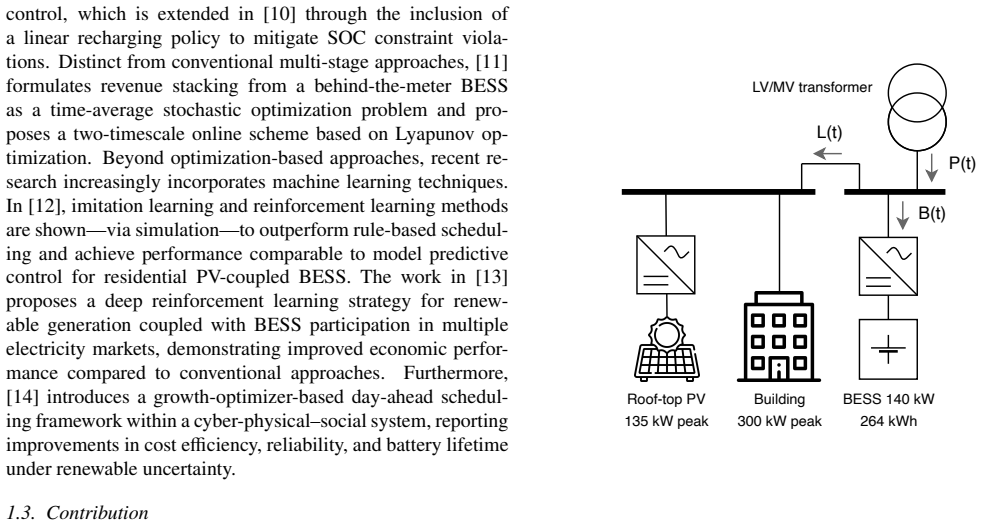
This paper proposes and experimentally validates a two-stage scheduling and control strategy for a behind-the-meter battery energy storage system (BESS) delivering both local and grid services. Considered services are the maximization of PV self-consumption, peak-load reduction, and secondary frequency control (aFRR).The day-ahead stage allocates battery capacity across local and balancing services using a scenario based approach, reflecting potential remuneration from aFRR participation without committing to fixed power availability; in the real-time stage, BESS set-points are computed in a periodic fashion at a high time resolution based on updated information on balancing prices, net load realization and BESS state of charge. The strategy is experimentally validated on a building at the Energypolis Campus of HES-SO Valais (Sion, Switzerland), which exhibits a peak power demand of 300 kW and is equipped with a 264 kWh / 140 kW lithium-ion BESS. The experimental results demonstrate the effectiveness of the proposed framework in scheduling and actuating the provision of both behind-the-meter and front-of-the-meter services.
This paper introduces a novel control strategy to optimize urban network traffic in mixed autonomy settings, featuring Connected and Automated Vehicles (CAVs) alongside Human-Driven Vehicles (HDVs). Unlike previous control strategies, where the impact of driver behaviour of CAVs and HDVs is not explicitly considered, we propose a dynamic, queue-responsive saturation rate to account for autonomy-driven variations in traffic flow characteristics. The proposed method is based on an extended multi-commodity store-and-forward model to a mixed autonomy environment, integrating optimized routing for CAVs via infrastructure-linked connectivity, and signal timings at every signalized intersection. The problem is formulated as a Non-Convex Quadratic Program (NQP), which accounts for queue evolution, spillback, green time allocation, and CAVs routing. To enable computational efficiency for real-time applications, we transform the NQP into a sequence of convex subproblems, leveraging under- and over-estimators to reformulate it as a Mixed Integer Linear Program (MILP). Experimental results via microscopic simulations validate the efficiency and robustness of the proposed methodology. The results reflect that the proposed model outperforms the existing multi-commodity approach, thus demonstrating its potential for real-time traffic optimization in future urban mobility systems.
Simulation and hardware tests show successful balance but reveal shifts in tuning and weaker disturbance handling from noise and friction.
abstractclick to expand
This study investigates the performance of cascade PID control architecture applied to an inverted pendulum on a cart system through both simulation and experimental implementation. A nonlinear model of the system was developed using Simscape Multibody in Simulink, while a physical prototype was constructed using a DC motor-driven cart, pendulum, rotary encoder, ultrasonic sensor, and an Arduino. The cascade PID control structure consists of an inner loop regulating the pendulum angle and an outer loop controlling the cart position. Simulation results demonstrated effective stabilization of the pendulum and satisfactory position tracking under idealized conditions. Experimental results confirmed successful real-time stabilization but revealed notable differences from simulation, particularly in controller gains, transient behavior, and disturbance response due to sensor noise, unmodeled friction, and implementation constraints. The study also highlights the limitations of cascade PID control in disturbance rejection and large position commands, particularly under limited track length. A comparative analysis using an LQR-based inner loop demonstrated better disturbance rejection and reduced overshoot. The results provide practical insights into the applicability and limitations of cascade PID control of the inverted pendulum system.
The successful completion of collaborative tasks relies on the effective selection of trustworthy collaborators. To accurately evaluate the trustworthiness of potential collaborators, it is necessary to combine insights from their past collaborations with assessments of their resource capabilities under specific task contexts. However, the coexistence of diverse trust perspectives, along with complex spatiotemporal dependencies among devices, makes accurate trust evaluation particularly challenging. To address these challenges, we propose a customized Graph Neural Network (GNN)-Mamba (GM) model for trust evaluation and collaborator selection. In this model, the GNN model performs spatial trust fusion by leveraging inter-device spatial dependencies extracted from historical collaborations, while the Mamba-based temporal model captures both short-term fluctuations and long-term evolution of device trust. In addition, task-specific resource trust is incorporated to reflect the practical capabilities of devices under varying task conditions. Experimental results demonstrate that the proposed GM model outperforms baseline approaches in terms of the accuracy and stability of trust evaluation.
Direct electric drivelines without power-split open new design freedom for frame and suspension design, along with often lower energy losses. This paper focuses on self-propelled agricultural machinery (combine and forage harvest-ers, root crop harvesters), equipment carriers, propelled trailers and field robots. For a typical vehicle with four driven wheels, the electric motors can be packaged as two axle modules or four wheel modules, both defined herein as self-contained mechatronic units with integrated power electronics, distributed control intelligence and steering. Axle module and wheel module concepts are compared in detail against engineering requirements including loads, effi-ciency, steerability, controllability, braking, suspension, structural load support, asymmetric wheel loading and manu-facturing cost. The wheel module offers maximum design freedom, redundancy and controllability, while the axle module provides lower cost, structural rigidity, automatic load sharing through the differential and the ability to be used in existing vehicle structures. Both concepts are defined such that distributed control intelligence and steering are integral to each unit, requiring only a DC power bus and communication interface from the vehicle.
We propose a distributionally robust data-driven predictive control framework for stochastic linear time-invariant systems with unknown dynamics and disturbance distributions. We use an offline trajectory to fit the subspace predictive control (SPC) predictor via least squares and construct an empirical distribution of the prediction residuals as a proxy for the unknown disturbance distribution. We then center a Wasserstein ambiguity set around this estimate and minimize the worst-case expected cost while enforcing probabilistic output constraint satisfaction over all distributions in the set. The resulting problem admits a tractable reformulation with an equivalent direct data-driven form, eliminating the need for explicit predictor identification. Using finite-sample concentration results, we provide a data-driven Wasserstein radius such that, with high probability, the true expected cost is bounded above by the tractable objective and output constraints are satisfied with respect to the true disturbance distribution. Numerical simulations validate the framework against existing methods under various disturbance conditions and cost functions.
Falsification of hybrid dynamical systems remains challenging due to mode-dependent dynamics and discrete transitions. In this work, we propose a surrogate-based falsification approach that enables hybrid systems by learning a differentiable hybrid automaton model from data. This extends previous surrogate-based falsification methods, which were limited to purely continuous dynamics. Specifically, we employ neural hybrid automata to learn both a latent mode encoder and the corresponding mode-conditioned vector fields. Once the surrogate has paired each mode with an associated vector field, the transition guards are inferred using existing trajectory data.
The learned surrogate is subsequently subjected to a gradient-based optimal control formulation, which minimizes a smooth approximation of the safety specification to find safety violations. In the last step, an experiment with the optimal control solution is carried out on the original system to ensure soundness.
The proposed method consistently uncovers counterexamples on a majority of evaluated benchmark specifications; on these cases, it achieves competitive or improved sample efficiency than other tools while using a reduced simulation budget.
Joint optimization of controls and gains under belief dynamics exploits how trajectory choice affects navigation accuracy, beating separated
abstractclick to expand
Designing spacecraft trajectories remains challenging in the presence of stochastic effects such as maneuver execution errors and observation uncertainties. Although covariance control and belief-space planning provide useful tools for designing robust control policies and information-aware trajectories under uncertainty, practical methods remain limited for partially observable trajectory optimization problems in which trajectory design, orbit determination, and correction maneuver planning are tightly coupled. This paper presents a stochastic differential dynamic programming algorithm for such coupled problems. The proposed method optimizes the nominal control sequence and feedback gains subject to belief dynamics and general mission constraints, explicitly accounting for the dependence of covariance propagation on the nominal trajectory without relying on the separation principle. Numerical examples demonstrate that the proposed algorithm produces navigation-aware and uncertainty-robust solutions across a range of dynamical systems, observation models, and uncertainty levels. In particular, the circular restricted three-body problem shows that the proposed method can exploit the coupling between trajectory design and orbit determination to obtain navigation-aware solutions with substantially lower fuel consumption than those from deterministic local optimization starting from the same initial guess.
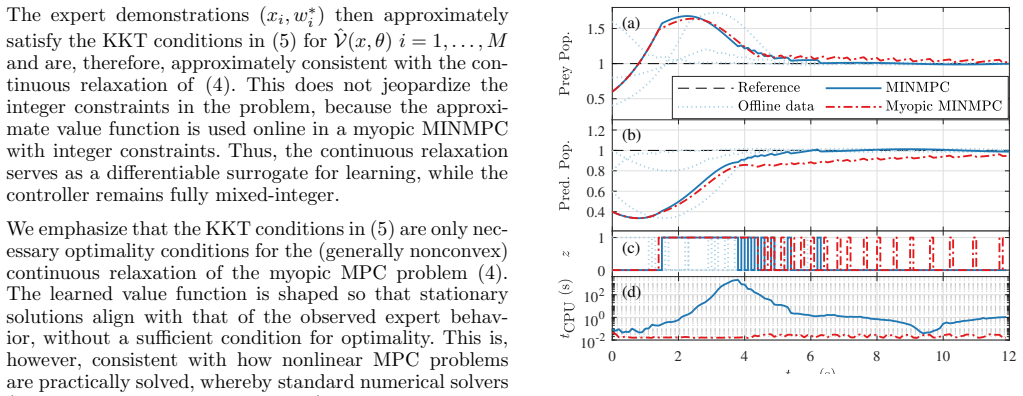
Applying nonlinear model predictive control (NMPC) to systems with hybrid dynamics or discrete actions typically yields mixed-integer nonlinear programs (MINLPs), whose real-time solution remains a major challenge and limits the applicability of mixed-integer NMPC (MINMPC). This paper proposes a myopic MINMPC framework that incorporates value-function approximation to substantially reduce the online computational burden. Using Bellman's principle of optimality, we shorten the prediction horizon and append a value function learned offline from expert state-action demonstrations via inverse optimization with optimality residual minimization. A central feature is the dual treatment of discrete decisions, whereby integer constraints are relaxed during offline learning to enable KKT-residual-based value function synthesis, while the online controller enforces the true integer constraints to ensure feasibility. The learned value function induces a policy that is approximately policy-consistent with the expert demonstrations. The resulting controller achieves high closed-loop performance with a significantly shorter horizon, enabling real-time MINMPC. The effectiveness of the approach is demonstrated on the Lotka-Volterra fishing problem and a satellite attitude control system with discrete actuators.
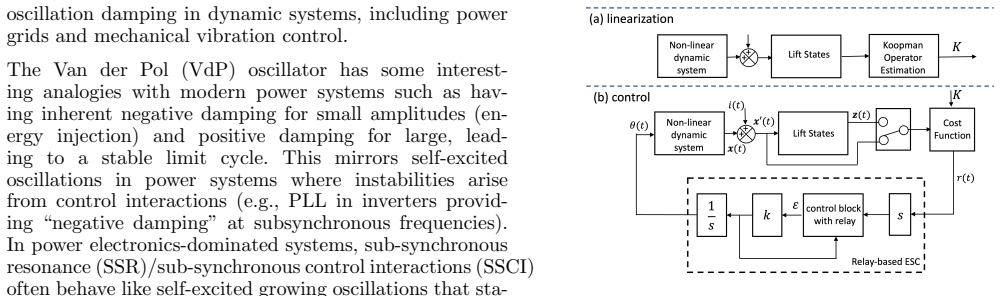
This paper addresses the problem of nonlinear state estimation for dynamical systems whose governing equations are approximated through Koopman operator liftings. While Koopman-based predictors have demonstrated broad approximation capability for nonlinear dynamics, certifying observer convergence under model mismatch and measurement noise has remained a largely open problem. To resolve this, we establish a structural correspondence between the error dynamics of a Koopman latent-space observer and the class of generalized Persidskii systems, which admits diagonal Lyapunov functions and incremental sector characterizations. Exploiting this connection, we design a nonlinear correction term whose gain is computed via a linear matrix inequality (LMI) that simultaneously certifies input-to-state stability (ISS) of the estimation error with respect to both lifting residuals and external disturbances. Exponential convergence in the nominal case and ultimate boundedness under bounded perturbations are established analytically. Numerical validation on the Van~der~Pol oscillator and a nonlinear robotic arm with friction uncertainty demonstrates that the proposed observer substantially outperforms both the Extended Kalman Filter and a linear Koopman observer in terms of estimation accuracy and robustness, achieving up to a 42\% reduction in steady-state RMSE under lifting mismatch.
This paper presents a new derivation of the variational Poisson multi-Bernoulli (V-PMB) filter for multi-target estimation proposed in [#Williams15]. The proposed derivation is based on considering an augmented space that includes the set of target states with their track indices and the global hypothesis variable. Then, we show that the V-PMB projection performs a coordinate descent Kullback-Leibler divergence (KLD) minimisation on this augmented space to fit the best possible PMB density to the Poisson multi-Bernoulli mixture (PMBM) posterior. We also show that this V-PMB projection keeps the probability hypothesis density of the posterior. The paper also includes a comparison with the PMBM filter and other PMB filter variants, including a track-oriented Murty-based implementation, a track-oriented loopy belief propagation implementation and a global nearest neighbour implementation, showing the benefits of the V-PMB filter compared to the other PMB filters when targets get in close proximity and then separate.
Enables direct data-driven simulation and control for Volterra and Hammerstein systems without explicit identification.
abstractclick to expand
We generalize Jan Willems' behavioral approach to a class of discrete-time nonlinear systems in a vector-valued reproducing kernel Hilbert space (RKHS). Apart from linear time-invariant systems, this class covers nonlinear systems modeled by Volterra series and their autoregressive variants, as well as systems admitting Hammerstein-type state-space realizations. We apply the proposed framework to the problem of data-driven modeling of such systems, i.e., when simulation or control objectives for an unknown system are carried out without an explicit system identification step. To that end, we link the behavioral approach to two data-driven modeling methods in a vector-valued RKHS: (1) minimum-norm interpolation and (2) subspace identification.
This paper presents a new stochastic relay-based extremum-seeking controller (ESC) for multi-input-single-output (MISO) systems. The goal of this work was to create an algorithm that is much simpler to configure than alternative approaches making deployment to real-world problems easier. A solution is developed first for a static map and then adapted for a general class of dynamic systems. The number of configurable parameters is one per input channel for the static case and only one additional parameter is needed for the dynamic version. The problem of gradient identification is solved via the use of stochastic relay gains and a simple stability proof for the static case is presented. Simulation tests demonstrate the performance of the strategy for optimizing both static and dynamic systems
Deriving probabilistic conditions for Bayesian updates and resampling lets privacy coexist with stability requirements
abstractclick to expand
Safety-critical autonomy in adversarial settings demands more than Lyapunov stability of tracking error signals. An agent executing a goal-directed trajectory is intrinsically legible to a passive observer running online Bayesian inference, because the contractive dynamics of any Lyapunov basin of attraction concentrates posterior belief over the latent intent parameters. We initiates the study of intent privacy over a continuous state space as a joint control problem on the physical state combined with the latent belief state of a putative observer. With the main challenges concentrated around the analysis of the belief-state dynamics, the agent dynamics is assumed to be simple, modeled by the differential inclusion $\dot{x}\in u+\bar{d}\mathbb{B}$. That is, the agent is fully actuated with bounded unknown disturbance to the control input. The observer's intent inference process is modeled as a discrete-time stochastic dynamical system evolving over the belief state space of a Rao Blackwellized particle filter reasoning over large random samples of possible agent goals. The agent's control input is modeled as a piecewise constant signal, with jumps matching the RBPF update times. Building on a prior intent-inference framework and its KL-based information leakage measurement, a privacy constraint is imposed, which amounts to maintaining information leakage above a prescribed threshold with high probability, using probabilistic discrete-time control barrier functions. A key technical contribution is the derivation of separate PCBF results for the Bayesian update step and the resampling step of the RBPF, enabling a PCBF result for the full update as well as integration of the privacy constraint with the agent's task-side tracking requirement. Finally, a joint feasibility analysis is carried out by examining the interplay between the privacy constraint and the tracking envelope.
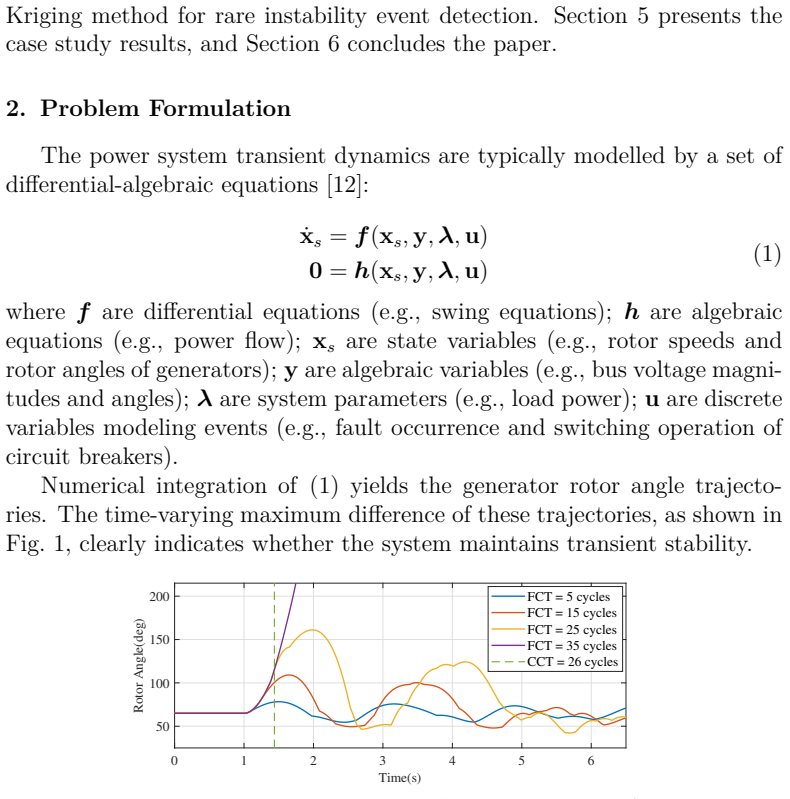
The increasing uncertainty in modern power systems, driven by the integration of intermittent energy sources and variable loads, underscores the need for probabilistic transient stability assessment. However, existing assessment methods primarily focus on average system stability behavior and may struggle or incur high computational cost when identifying rare transient instability events, which in turn are critical for ensuring system resilience. To address this, the paper proposes a Kriging-based active learning framework to accurately characterize rare instability regions within the input uncertainty space and estimate the associated small instability probability, while requiring only a limited number of expensive time-domain simulations. The proposed active learning (AL) framework is tested on a modified IEEE 59-bus system with simulated load and wind uncertainties, and a WECC 240-bus system incorporating real-world wind and solar generation data. Comparative studies with the existing random forest-based active learning method and three non-AL methods demonstrate that the proposed AL framework achieves superior accuracy and computational efficiency.
6G industrial in-X subnetworks are expected to support highly time-critical alarm reporting in large-scale environments characterized by mobility, bursty event-driven traffic, and limited radio resources. In such settings, conventional medium access solutions are ill-suited to guarantee reliable delivery of critical traffic, e.g., emergency alarms, within strict deadlines, especially when multiple subnetworks become simultaneously active after a common alarm event, a scenario widely referred as medium access with a shared message. This paper proposes a distributed deep reinforcement learning (DRL)-based medium access control protocol for timely alarm transmission in time-critical industrial subnetworks. The proposed method enables each local access point (LAP) to learn, in an online manner, to infer contention conditions from a broadcast contention-signature signal and to autonomously select a transmission pattern over the available channels using a lightweight deep neural network and an (ephsilon)-greedy policy. Simulation results demonstrate that the proposed approach consistently achieves a higher probability of in-time alarm delivery than benchmark random-access schemes, while exhibiting better scalability with increasing network density. For instance, the proposed method improves probability of in-time alarm delivery by at least 7% with a network size of 40 subnetworks, while the gain increases to 21% when the number of subnetworks increases to 60.
Accurate terminal-voltage prediction underpins model-based battery management, yet low-order equivalent-circuit models (\ecm{}) lack expressiveness under transient conditions, whereas purely data-driven predictors sacrifice interpretability and may degrade under operating-condition shift. This paper introduces a residual-corrected hybrid formulation in which a first-order Thevenin \ecm{} (\ecmrc{}) provides the dominant voltage structure, and a compact neural network embedded as a universal differential equation (\ude{}) corrects only the latent polarization mismatch. The \ecmrc{} parameters identified by nonlinear least squares warm-start the hybrid model so that the learned component operates in a low-residual regime. Experiments on a public Panasonic 18650PF dataset compare the proposed \ecmude{} with standalone \ecmrc{} and Long Short-Term Memory (\lstm{}) baselines across four axes: matched-condition prediction on UDDS at \SI{25}{\celsius}, inference-time perturbation of the supplied state-of-charge (\SOC{}, denoted $z$) input, zero-shot temperature transfer (\SI{25}{\celsius} to \SI{-20}{\celsius}), and zero-shot drive-cycle transfer to US06, LA92, and HWFET. The proposed \ecmude{} achieves the lowest voltage error in every setting, reducing mean absolute error (\mae{}) by 48\% relative to the \lstm{} under matched conditions and showing an order-of-magnitude lower inter-seed variability (coefficient of variation: 0.44\% vs.\ 6.20\%). Substantial gains persist under challenging distribution shifts, indicating that the physical model anchors prediction where a purely learned model is most vulnerable. These results position residual-corrected \ecmude{} as a lightweight and interpretable enhancement of low-order circuit models for voltage prediction in battery management systems (\bms{}).
This paper introduces a novel method to approximate limit cycles of nonlinear ODEs by use of switching affine dynamics in order to ease data-based modeling and analysis. Previous approaches to approximating limit cycles by switching systems have been largely confined to simple partitions into two-regions or low-dimensional (often planar) settings. In contrast, this study utilizes more general partitions in higher-dimensional state spaces, augmented by external signals, to develop a synthesis scheme that guarantees a globally stable limit cycle. The synthesis task is formulated and solved based on constrained numerical optimization. Starting from sampled data of the nonlinear dynamics, the method minimizes the error between the data and the limit cycle generated by the switching affine model, while employing stability constraints to ensure global stability. Based on the obtained model, the paper tackles the problem of reference tracking for switching affine systems with periodic behavior. While the approximation scheme is based on a common Lyapunov function, the reference tracking approach uses multiple Lyapunov functions to achieve less conservative convergence results. The principle and effectiveness of the proposed methods are illustrated through a set of examples.
This paper establishes absolute stability conditions for nonlinear negative imaginary (NI) systems interconnected with static nonlinear feedback. We first show that the NI property is preserved when the feedback nonlinearity can be expressed as the gradient of a continuously differentiable function, and the composite storage of the resulting system remains positive definite. This condition provides a direct connection between nonlinear static feedback and storage-function shaping along the measured output channels. Building on this result, conditions are derived for absolute stability of the closed-loop system under mild assumptions. The linear specialization of the results strictly generalizes prior absolute stability results for linear NI systems, allowing coupled nonlinearities not covered by existing slope-restricted or sector-bounded frameworks. Finally, the proposed theory is illustrated through a linear example highlighting this generalization and a nonlinear example that shows the utility of the proposed results in potential energy shaping.
Ingestible electronic systems enable non-invasive, in situ sensing within the gastrointestinal (GI) tract, yet clinical translation has been limited by uncontrolled transit, short operational lifetimes, and unreliable wireless communication that prevent continuous monitoring. Here, we present a gastric-resident ingestible robotic platform that achieves week-long operation through integration of a bioinspired, electrically triggered release mechanism with a kirigami-enabled electronic architecture. A kirigami-patterned flexible printed circuit board spans the capsule body and deployable superelastic arms, enabling high-density integration of sensing, power management, and wireless modules within a constrained volume while tolerating large mechanical deformation during gastric residence. Stable retention and on-demand disassembly are achieved using thermally responsive polycaprolactone joints that transition from rigid to compliant states under electrical activation, avoiding dependence on variable chemical triggers. Reliable telemetry in the highly attenuating gastric environment is maintained using a dual-band Bluetooth Low Energy and sub-gigahertz module with RSSI- and throughput-aware adaptive transmission, balancing link robustness and energy consumption. We demonstrate long-term, continuous monitoring of gastric radiation exposure, enabling early detection of dose accumulation and providing a promising in vivo alternative to wearable or handheld dosimeters. Swine studies confirm stable gastric residence, sustained real-time telemetry, and safe gastrointestinal passage following triggered disassembly. This work establishes kirigami-enabled integration as a scalable strategy for long-term gastric-resident robotic systems.
The integration of massive offshore wind into hybrid AC-HVDC grids demands robust DC voltage regulation, yet conventional fixed-gain droop controllers struggle under severe stochastic volatility. This paper bridges the gap between system-level economic dispatch and converter-level control by proposing a novel Stochastic Optimal Power Flow (SOPF)-based adaptive droop framework. Rather than relying on heuristic or reactive tuning, wind forecast uncertainty is modeled using a zone-wise Beta distribution that accurately captures the heteroscedastic nature of wind errors across low, mid, and high power regimes. By leveraging Polynomial Chaos Expansion (PCE) within a chance-constrained SOPF, the system's stochastic states are formulated analytically. Crucially, the optimal adaptive droop gain is extracted directly from the first-order PCE coefficients via a Jacobian-free sensitivity analysis, embedding statistical voltage-security guarantees directly into the local converter control. Validation on a 4-terminal AC-HVDC system demonstrates that scenario-adaptive gains significantly outperform standard fixed-coefficient approaches, effectively minimizing active-power tracking errors during extreme wind disturbances.
The institutional separation between local energy communities and public electric vehicle (EV) charging limits the efficient use of locally generated renewable energy. This paper introduces the concept of community-to-vehicle (C2V) as an institutional design mechanism to bridge this gap by enabling EV charging within the community boundary, where locally generated photovoltaic (PV) surplus is preferentially allocated and offered to external users at a community charging price. Building on the recently introduced local electricity community framework in Switzerland, we design scenarios that capture the transition from full separation to coordinated EV charging and evaluate their impacts on EV users and the community. The results show that C2V significantly improves local PV utilization and enhances economic performance, reducing EV charging costs relative to commercial alternatives while generating additional revenue streams for the community. These findings highlight the potential of C2V as a practical, implementable mechanism for integrating EV charging into local energy communities, providing a clear pathway for adopting coordinated community-EV interaction within existing regulatory frameworks.
Power systems are inherently multi-timescale systems, with different physical phenomena and decision-making processes spanning multiple timescales, time horizons, and geographic scopes. I envision power systems digital twins (DTs) as powerful modeling and simulation tools that can accelerate and improve decision-making across different time scales and geographic scopes. However, until now, research has not delivered such a vision, and power systems DTs remain a concept distant from implementation. This is not a regular research paper. This is a position paper that outlines my vision for developing a new generation of power systems DTs that leverage recent advances in artificial intelligence (AI) and machine learning (ML). I call these Foundation Twins. Foundation Twins combines the generalization features of foundation models with the decision-making capabilities of reinforcement learning (RL) architectures to deliver the envisioned power systems DTs.
Grid-following inverters have been widely adopted as a grid interface for renewable energy, and ensuring their small-signal and large-signal stability is critical to modern power systems. Their large-signal, or transient, stability is a significant challenge to analyze because of the interaction of the phase-locked loop (PLL), which must maintain synchronism with various outer-loop controllers. Simple analysis in which outer-loop controllers are idealized is insufficient, and the interactions between the nonlinear dynamics of the PLL and the dynamics of the DC-link voltage control (DVC), as well as the AC terminal voltage control (TVC) when present, must be considered. An asymptotic analysis approach, termed the bandwidth separation method, is proposed. This method enables simplification and order reduction of the original differential equations when sufficient bandwidth separation exists. Through this method, the interaction between the DVC and PLL is explicitly characterized, revealing that such interaction degrades system stability and shrinks the stability region. The analysis also indicates that voltage instability, rather than PLL loss of synchronization alone, is often the root cause of transient instability. Optimal bandwidth configurations for the PLL and DVC are identified under various grid fault conditions: a larger PLL bandwidth improves resilience to phase-jump faults, while a larger DVC bandwidth enhances tolerance to power fluctuations. In addition, the influence of the TVC loop is analyzed, showing that a high TVC bandwidth can mitigate the destabilizing effects of PLL-DVC interaction and further improve transient stability. All analytical findings are validated through hardware-in-the-loop (HIL) experiments.
This paper investigates the application of soft magnetic composites (SMCs) in the stators of wound field synchronous machines for automotive traction. While SMCs are traditionally employed in axial flux topologies, this study examines their use in radial-flux electrically excited synchronous machines (EESMs). Multiple SMC materials and lamination thicknesses are evaluated, with the optimal configuration combining a SMC material in the stator and 0.35 mm NO35 laminated steel in the rotor. This combination delivers improved torque and efficiency compared to conventional designs. When integrated into a full electric drive unit (EDU), this motor achieves 89.7% efficiency over the WLTP drive cycle, representing a 1.4 percentage point improvement over a reference permanent magnet synchronous machine-based EDU. The proposed solution eliminates rare-earth materials, reduces cost through thicker laminations, and offers environmental benefits through SMC utilization. This novel material combination, previously unexplored for radial EESMs, presents a promising direction for affordable, high-efficiency, rare-earth-free automotive traction machines.
Robust state estimation in coupled dynamical systems depends critically not only on sensor quality but on the structural alignment between observation channels and the system's intrinsic dynamics. This paper develops a rigorous framework for analyzing spatial and temporal diversity in dynamical state estimation on product Lie groups, drawing structural parallels to diversity gains in space-time coding. Three main results are established: (i) coupling-based necessary and sufficient conditions for cross-factor observability, showing that a sensor local to one group factor renders another factor observable if and only if the dynamics propagate error directions across the corresponding Lie algebra components; (ii) a spatial diversity saturation theorem identifying precisely when additional observation channels fail to expand the propagated observation subspace and thus provide no structural benefit; and (iii) a time-space diversity decomposition that exactly separates instantaneous spatial information from accumulated temporal information in the estimation error covariance. The framework is applied to planar SE(2) and spatial SE(3) navigation, yielding exact observability guarantees for redundant and non redundant sensor architectures in modern robotics and autonomous vehicles. These results extend classical observability theory beyond Euclidean state spaces, exposing structural constraints invisible to standard rank-based analysis that fundamentally govern robust inference in coupled dynamical systems.
Simulations show 1.7-2.7 times fewer infeasible points and ability to track inside unsafe CBF regions.
abstractclick to expand
Optimal control for safety-critical systems is often dependent on the conservativeness of constraints. Control Barrier Functions (CBFs) serve as a medium to represent such constraints, but constructing a minimally conservative CBF is a computationally intractable problem. Therefore, approaches that can guarantee safety while reducing conservatism will help improve the optimality of the system under consideration. Here, we present a Model Predictive Control (MPC) formulation using CBF as a terminal constraint, which is proven to improve feasibility and reachable sets with increasing prediction horizon. The constructive nature of the proofs allows for warm-starting the nonlinear optimization problem, thereby reducing the computational time substantially. Simulations are set up for a simple nonholonomic system to numerically validate the results, and it is observed that the number of infeasible points decreased by a factor of 1.7 to 2.7. The increase in reachable state space was demonstrated by the ability of the system to track trajectories that are entirely inside the unsafe region of the control barrier function.
This paper proposes dynamic stability and performance conditions for grid-connected inverter-based resources (IBRs). To this end, we extend the notion of steady-state droop coefficients to dynamic droop coefficients to capture the small-signal dynamics of IBRs and synchronous generators (SGs). Notably, the dynamic droop coefficients can be obtained from input-output data collected at the unit's (e.g., IBR or SG) point of interconnection without requiring prior knowledge of IBR internals or controls structure. To obtain frequency stability conditions, this IBR model is combined with a lightweight dynamic transmission network model that accounts for uncertainty of line dynamics. The resulting stability conditions are highly scalable and, given a few key network parameters, can be verified at the unit level. To make the conditions practical and offer intuitive and illustrative interpretations, we map the frequency stability conditions to bounds on the Bode plot of the dynamic droop coefficient for two broad types of IBR responses. Moreover, our specifications on the dynamic droop coefficient (i) translate basic frequency control ancillary services into verifiable requirements, and (ii) provide insights into the much-debated question of how to certify an IBR as grid-forming (GFM). The results are illustrated using dynamic droop coefficients obtained using detailed simulations of GFM and GFL IBRs as well as SGs.
The reliable operation of large-scale electric power networks is increasingly challenging, particularly with the integration of stochastic renewable generation. In this work, we address the problem of minimizing network transients by optimally modifying the underlying network. We formulate the problem in terms of graph Laplacian matrices and show that, under certain assumptions, the problem is convex. We derive a linear matrix inequality whose feasibility guarantees the existence and uniqueness of phase cohesive steady-state angles; this condition can be directly incorporated as a convex constraint in the optimization framework and we provide several geometric interpretations of the optimization problem. The proposed method is validated on the IEEE 30-bus test system, where results demonstrate that our approach effectively identifies critical links on the network. Dynamic simulations show a significant reduction in network transients and overall improvements across several performance metrics. We explore the sparsity-optimality trade-off using a reweighted $\ell_1$ heuristic.
NGSIM analysis finds gap-closing rate dominates hard braking while visual looming dominates moderate braking; spacing headway adds almost no
abstractclick to expand
Gap-closing rate and visual looming swap discriminative dominance depending on deceleration intensity - a finding that reconciles a long-standing conflict in the car-following literature and challenges spacing-centered assumptions in traditional driver behavior models. This study presents a two-stage analytical framework that distinguishes between information availability (kinematic variables measurable in the environment) and information utilization (variables that demonstrably separate driver behavioral patterns), applied to 1,060,119 valid car-following observations from the NGSIM trajectory dataset (2,932 vehicles). Six kinematic features are extracted, and deceleration events are detected under two threshold conditions (-0.5 m/s^2 and -0.3 m/s^2). K-means clustering identifies behavioral modes, and one-way ANOVA with eta-squared effect sizes ranks each feature's discriminative power. Three key findings emerge: (1) threshold selection fundamentally shapes behavioral inference - the stricter threshold yields three interpretable modes while the permissive threshold collapses these to two; (2) hard braking prioritizes gap-closing rate (eta^2 = 0.715) while moderate braking emphasizes visual looming (eta^2 = 0.574); and (3) spacing headway is negligible (eta^2 <= 0.014) across both thresholds. These findings provide empirically grounded candidates for perceptual cue prioritization and have direct implications for ADAS warning system design and autonomous vehicle control.
Deploying large artificial intelligence (AI) models in power electronics often demands high computational resources. Driven by the quantization paradigm, this digest proposes a quantization-aware training (QAT) principle to substantially minimize the number of bits required and simultaneously maximize the accuracy of computations in pre-trained AI models. Considering a pre-trained probabilistic Bayesian Neural Network (BNN) for gear fault diagnosis in motor drives as an example, we quantize its weights and activation functions from floating-point FP32 to low-precision INT8 values, which enhances the computational efficiency by a significant margin of 30-45% (for different model versions) without any compromise in the accuracy and uncertainty estimates. This substantiates a sustainable mechanism of deploying most quantized light-weight AI models into low-cost edge processors for power electronic applications.
Artificial intelligence (AI)-driven fault diagnosis in motor drives often requires significant computational efforts and time for re-training, in addition to the limited knowledge behind the model and suitability of training and learning mechanisms. This work bridges this gap by proposing a structured mechanism of transforming untapped labeled fault data into AI parameters to leverage probabilistic data-driven learning. This novel AI reservoir modeling framework for power electronics not only eliminates exogenous efforts behind learning data patterns and its optimization, but also provides intuitive guidelines for power electronics engineers behind sizing of AI models. This alignment between data and system physics makes the proposed model transparent and interpretable, bridging practical understanding with data-driven learning. Its computational efficiency is demonstrated using experimental data that structured, physics-aware reservoirs achieve higher diagnostic accuracy and clearer explanations than conventional black-box AI methods.
Ambient Internet of Things (A-IoT) targets energy harvesting (EH), battery-less devices as a simple connectivity solution for extensive ultra-low-power deployments. These devices typically face intermittent energy availability, making uplink reports increasingly susceptible to access collisions and energy outages. In this paper, we build upon the cellular standardization of A-IoT and examine the paging-triggered contention-based random access (CBRA) framework for uplink reporting. We analyze the effects of energy availability and collisions on these systems and introduce an EH-aware access control mechanism. In this mechanism, the reader broadcasts an access probability in the paging message, which helps regulate the number of devices attempting random access. Results show that, unlike the baselines, the proposed method scales well under dense deployments by keeping collisions nearly constant, improving access efficiency, and substantially reducing the number of paging rounds required for successful reporting. These results highlight the importance of lightweight reader-side access control for reliable and resource-efficient reporting in A-IoT environments.
ADMM on structured completely positive models yields stronger dual bounds and lower computation time than LP relaxations for welfare maximiz
abstractclick to expand
The day-ahead electricity market clearing with nonconvex order types can be formulated as a mixed-integer linear program (MILP), but its LP relaxation may provide weak bounds, and exact solutions can become computationally intractable in large-scale or extended market settings. We study a welfare-maximizing clearing model with elementary hourly orders, block orders with logical acceptance constraints, and flexible hourly orders. Starting from a compact MILP formulation, we derive an equivalent completely positive programming (CPP) reformulation via matrix lifting and propose relaxed CPP variants that further reduce the modeling burden while maintaining strong bounds. We then develop tractable doubly nonnegative (DNN) relaxations, including decomposed formulations that exploit the problem structure by using smaller positive semidefinite matrices. To further strengthen these bounds, we introduce reformulation-linearization technique (RLT) inequalities tailored to the decomposed structure. To tackle the challenge of large-scale DNNs, we design an alternating direction method of multipliers (ADMM) with adaptive penalty updates and rigorous dual lower bounds, enabling certified early termination. Computational experiments on synthetic instances show that the proposed DNN+RLT relaxations substantially tighten LP bounds, while decomposition and first-order methods significantly reduce computational effort.