Material- and geometry-independent multishell cloaking device
Pith reviewed 2026-06-26 12:08 UTC · model grok-4.3
The pith
Multi-shell structures can cloak objects of arbitrary material and shape by enforcing a transparency condition that depends only on the shells themselves.
A machine-rendered reading of the paper's core claim, the machinery that carries it, and where it could break.
Core claim
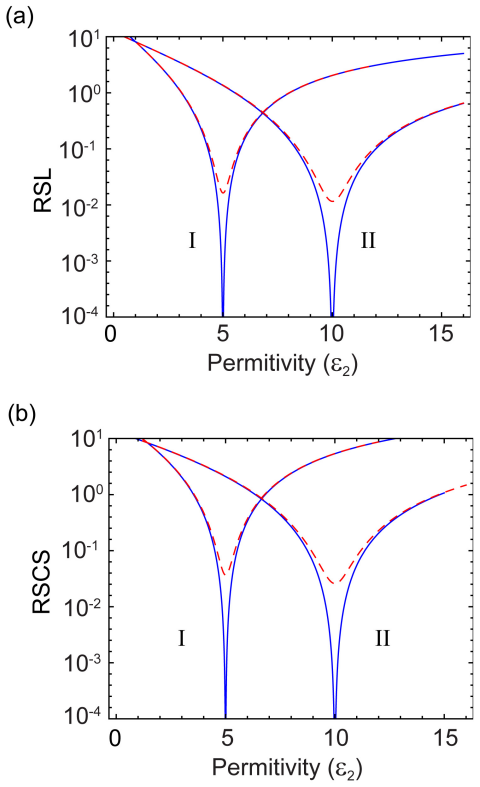
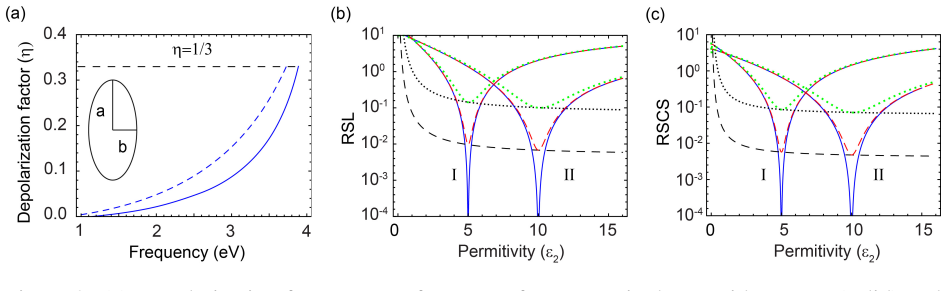
A transparency condition independent of the object's optical and geometrical properties is proposed in the quasi-static regime of operation. The suppression of dipolar scattering is demonstrated in both cylindrically and spherically symmetric systems. A realistic tunable-low loss shell design is proposed based on composite metal-dielectric shell. It is shown that a strong reduction of scattering by a factor of up to 10^3 can be achieved across the entire optical spectrum. Full wave numerical simulations for complex shape particle are performed validating the analytical theory. The proposed design does not require optical magnetism and is generic in the sense that it is independent of the obj
What carries the argument
The multishell transparency condition, which sets the effective polarizability of the entire coated object to zero by tuning only the shells.
If this is right
- Scattering cross-section reductions of up to 1000 times are obtained for both cylindrical and spherical objects.
- The cloaking remains effective when the enclosed object has arbitrary material properties and irregular shape.
- Composite metal-dielectric shells provide the required tunability while keeping dissipation low enough for broadband operation.
- No magnetic response is needed to achieve the transparency condition.
Where Pith is reading between the lines
- If the shells can be fabricated at larger scales, the same transparency condition might apply to microwave or acoustic cloaking.
- The approach could be tested by measuring the far-field scattering pattern of a coated dielectric sphere at optical frequencies where dispersion is minimal.
- Combining the multishell condition with active gain layers might extend performance beyond the quasi-static limit.
Load-bearing premise
The quasi-static approximation remains valid while the composite shells can be tuned without introducing significant higher-order scattering or excessive losses across the optical spectrum.
What would settle it
A full-wave calculation or measurement in which the total scattering cross-section of a coated object fails to drop by orders of magnitude once the object size approaches the operating wavelength.
Figures



read the original abstract
In this paper we proposed a multi-shell generic cloaking system. A transparency condition independent of the object's optical and geometrical properties is proposed in the quasi-static regime of operation. The suppression of dipolar scattering is demonstrated in both cylindrically and spherically symmetric systems. A realistic tunable-low loss shell design is proposed based on composite metal-dielectric shell. The effects due to dissipation and dispersion on the overall scattering cross-section are thoroughly evaluated. It is shown that a strong reduction of scattering by a factor of up to 10^3 can be achieved across the entire optical spectrum. Full wave numerical simulations for complex shape particle are performed validating the analytical theory. The proposed design does not require optical magnetism and is generic in the sense that it is independent of the object's material and geometrical properties.
Editorial analysis
A structured set of objections, weighed in public.
Referee Report
Summary. The paper proposes a multi-shell generic cloaking system achieving a transparency condition independent of the object's optical and geometrical properties in the quasi-static regime. It demonstrates suppression of dipolar scattering in cylindrically and spherically symmetric systems, proposes a realistic tunable low-loss composite metal-dielectric shell design, evaluates dissipation and dispersion effects, claims scattering reduction by up to a factor of 10^3 across the optical spectrum, and validates the approach with full-wave numerical simulations for complex-shaped particles. The design requires no optical magnetism.
Significance. If the material- and geometry-independence of the transparency condition can be rigorously established without reducing to a parameter fit by construction, the result would be significant for practical electromagnetic cloaking, enabling application to arbitrary objects. The proposal of composite metal-dielectric shells for tunability and the full-wave validation for non-symmetric particles are strengths that support potential impact if the quasi-static assumptions hold under realistic conditions.
major comments (2)
- [Abstract and transparency condition section] Abstract and transparency condition section: the central claim of a transparency condition independent of object permittivity and geometry must be supported by an explicit derivation showing that the multi-shell polarizability expression is identically zero for arbitrary core ε_c and radius ratios; standard quasi-static coated-sphere formulas indicate the zero-scattering root depends explicitly on these quantities, so the manuscript needs to demonstrate how the multi-shell construction eliminates this dependence (e.g., via an internal-field constraint) rather than canceling a single term.
- [Sections on design, dissipation/dispersion evaluation, and full-wave simulations] Sections on design, dissipation/dispersion evaluation, and full-wave simulations: the claimed factor-of-10^3 broadband reduction across the optical spectrum with realistic lossy dispersive composites requires quantitative bounds on the quasi-static approximation's validity (typically ka ≲ 0.3); when Im(ε) > 0 and dispersion are included, shell parameters shift and higher-order multipoles emerge, so the manuscript should provide error analysis or ka-range limits showing that the independence and suppression survive these effects for the reported performance.
minor comments (1)
- Figure captions and legends should explicitly label the scattering cross-section normalization and the frequency range over which the 10^3 reduction is demonstrated.
Simulated Author's Rebuttal
We thank the referee for the constructive comments and detailed review. We address each major comment below and will revise the manuscript accordingly to strengthen the presentation of the transparency condition and the validity of the quasi-static results.
read point-by-point responses
-
Referee: [Abstract and transparency condition section] Abstract and transparency condition section: the central claim of a transparency condition independent of object permittivity and geometry must be supported by an explicit derivation showing that the multi-shell polarizability expression is identically zero for arbitrary core ε_c and radius ratios; standard quasi-static coated-sphere formulas indicate the zero-scattering root depends explicitly on these quantities, so the manuscript needs to demonstrate how the multi-shell construction eliminates this dependence (e.g., via an internal-field constraint) rather than canceling a single term.
Authors: We agree that an explicit derivation is required to rigorously demonstrate the claimed independence. In the revised manuscript we will add a dedicated subsection deriving the multi-shell polarizability from first principles. The derivation will show that the transparency condition imposes an internal-field constraint across the shells that sets the total induced dipole moment to zero for arbitrary core permittivity ε_c and arbitrary radius ratios, rather than relying on cancellation of a single term as in the standard coated-sphere case. This establishes the material- and geometry-independence directly from the multi-shell structure. revision: yes
-
Referee: [Sections on design, dissipation/dispersion evaluation, and full-wave simulations] Sections on design, dissipation/dispersion evaluation, and full-wave simulations: the claimed factor-of-10^3 broadband reduction across the optical spectrum with realistic lossy dispersive composites requires quantitative bounds on the quasi-static approximation's validity (typically ka ≲ 0.3); when Im(ε) > 0 and dispersion are included, shell parameters shift and higher-order multipoles emerge, so the manuscript should provide error analysis or ka-range limits showing that the independence and suppression survive these effects for the reported performance.
Authors: We acknowledge that quantitative bounds on the quasi-static regime are needed when losses and dispersion are present. The revised manuscript will include an additional analysis section that (i) states the validity criterion ka ≲ 0.3, (ii) provides an error analysis comparing quasi-static predictions against full-wave simulations for increasing ka values, and (iii) quantifies the residual contribution of higher-order multipoles and parameter shifts due to Im(ε) > 0. This will confirm that the reported scattering reduction remains valid within the stated limits. revision: yes
Circularity Check
No circularity: transparency condition derived from standard quasi-static scattering without reduction to inputs
full rationale
The abstract proposes a multi-shell transparency condition in the quasi-static limit that suppresses dipolar scattering independently of core properties, with full-wave validation and composite-shell design. No equations, fitted parameters renamed as predictions, or self-citation chains appear in the provided text that would make the claimed independence equivalent to the inputs by construction. The derivation relies on standard electrostatic coated-sphere/cylinder formulas and numerical checks rather than self-definitional steps or load-bearing self-citations, making the result self-contained against external benchmarks.
Axiom & Free-Parameter Ledger
Reference graph
Works this paper leans on
-
[1]
Alu and N
A. Alu and N. Engheta. Achieving transparency with plasmonic and metamaterial coatings. Physical Review E, 72:016623, 2005
2005
-
[2]
D. J. Bergman and D. Stroud. Physical properties of macroscopically inhomogeneous media. InSolid State Physics, volume 46, pages 147–269. Academic Press, 1992
1992
-
[3]
C. F. Bohren and D. R. Huffman.Absorption and Scattering of Light by Small Particles. Wiley, New York, 1998
1998
-
[4]
W. Cai, U. K. Chettiar, A. V . Kildishev, and V . M. Shalaev. Optical cloaking with metamate- rials.Nature Photonics, 1:224–227, 2007
2007
-
[5]
H. Chen, C. T. Chan, and P. Sheng. Transformation optics and metamaterials.Nature Mate- rials, 9:387–396, 2010
2010
-
[6]
S. A. Cummer, B. I. Popa, D. Schurig, D. R. Smith, and J. B. Pendry. Full-wave simulations of electromagnetic cloaking structures.Physical Review E, 74:036621, 2006
2006
-
[7]
N. Fang, H. Lee, C. Sun, and X. Zhang. Sub-diffraction-limited optical imaging with a silver superlens.Science, 308:534–537, 2005
2005
-
[8]
Garcia, E
N. Garcia, E. V . Ponizovskaya, and J. Q. Xiao. Zero refractive index in nanostructured mate- rials.Applied Physics Letters, 80:1120–1122, 2002
2002
-
[9]
D. A. Genov, A. K. Sarychev, and V . M. Shalaev. Metal-dielectric composite materials. Journal of Nonlinear Optical Physics and Materials, 12:419–428, 2003
2003
-
[10]
D. A. Genov, S. Zhang, and X. Zhang. Mimicking celestial mechanics in metamaterials. Nature Physics, 5:687–692, 2009
2009
-
[11]
M. Kerker. Invisible bodies.Journal of the Optical Society of America, 65:376, 1975
1975
-
[12]
Kerker and E
M. Kerker and E. Matijevic. Scattering of light by colloidal particles.Journal of the Optical Society of America, 51:506–508, 1961
1961
-
[13]
Y . Lai, H. Chen, Z.-Q. Zhang, and C. T. Chan. Complementary media invisibility cloak that cloaks objects at a distance outside the cloaking shell.Physical Review Letters, 102:093901, 2009
2009
-
[14]
Y . Lai, J. Ng, H.-Y . Chen, D. Han, J. Xiao, Z.-Q. Zhang, and C. T. Chan. Illusion optics: The optical transformation of an object into another object.Physical Review Letters, 102:253902, 2009
2009
-
[15]
Leonhardt
U. Leonhardt. Optical conformal mapping.Science, 312:1777–1780, 2006
2006
-
[16]
Leonhardt and T
U. Leonhardt and T. Philbin. General relativity in electrical engineering.New Journal of Physics, 8:247, 2006. 10
2006
-
[17]
J. C. Maxwell Garnett. Colours in metal glasses and metallic films.Philosophical Transac- tions of the Royal Society of London A, 203:385–420, 1904
1904
-
[18]
M. W. McCall, A. Favaro, P. Kinsler, and A. Boardman. A spacetime cloak, or a history editor.Journal of Optics, 13:024003, 2011
2011
-
[19]
G. Mie. Beitr ¨age zur optik tr¨uber medien.Annalen der Physik, 330:377–445, 1908
1908
-
[20]
G. W. Milton and N.-A. P. Nicorovici. On the cloaking effects associated with anomalous localized resonance.Proceedings of the Royal Society A, 462:3027–3059, 2006
2006
-
[21]
J. B. Pendry, D. Schurig, and D. R. Smith. Controlling electromagnetic fields.Science, 312:1780–1782, 2006
2006
-
[22]
Polder and J
D. Polder and J. H. Van Santen. The effective permeability of mixtures of solids.Physica, 12:257–271, 1946
1946
-
[23]
Schurig, J
D. Schurig, J. J. Mock, B. J. Justice, S. A. Cummer, J. B. Pendry, A. F. Starr, and D. R. Smith. Metamaterial electromagnetic cloak at microwave frequencies.Science, 314:977–980, 2006
2006
-
[24]
Valentine, S
J. Valentine, S. Zhang, T. Zentgraf, E. Ulin-Avila, D. A. Genov, G. Bartal, and X. Zhang. Three-dimensional optical metamaterial with a negative refractive index.Nature, 455:376– 379, 2008
2008
-
[25]
Zhou and G
X. Zhou and G. Hu. Design for electromagnetic wave transparency with metamaterials. Physical Review E, 74:026607, 2006. 11 Figure 1: (a) Generic multi-shell cloaking system with shell radiir i and permittivityε i, a two shell (b) cylindrically symmetric cloaking system and (c) spherically symmetric cloaking system. 12 Figure 2: Relative scattering length ...
2006
discussion (0)
Sign in with ORCID, Apple, or X to comment. Anyone can read and Pith papers without signing in.