REVIEW 5 major objections 5 minor 12 references
Draw an Ugly Person An Exploration of Generative AIs Perceptions of Ugliness
T0 review · 5 major / 5 minor · reviewed 2026-08-06 · deepseek-v4-flash
Pith's one-line read This paper claims that four commercial generative AI models, prompted to draw an ugly person, disproportionately produce old white male figures, and that the models then verbally disclaim responsibility for that aesthetic judgment.
desk verdict Genuinely new exploratory study of a negative aesthetic category, but the headline intersectional claim outruns the marginal coding and lacks a neutral baseline. read the letter →
The pith
A machine-rendered reading of the paper's core claim, the machinery that carries it, and where it could break.
The reading
What carries the argument
The experimental design is the machinery: 13 ugliness-associated adjectives were extracted by repeatedly prompting ChatGPT for values associated with ugly, selecting words that appeared at least four times across 12 iterations. Each adjective was run through three prompt conditions—direct, antonym, and ugliness-context—across four models, producing 624 images. Perceived gender, age, ethnicity, hygiene, and clothing were manually coded by the four authors, and the text explanations for the ugliness-context condition were thematically coded. The contrast between the ugliness-associated and antonym-associated images carries the argument: demographic differences between the two conditions operationalize what the models consider ugly versus not ugly.
What would settle it
Show the same 624 images to a large independent crowd or to pre-registered coders with a formal inter-rater reliability protocol and check whether the perceived-demographic skew, predominantly white, male, and senior figures under the ugliness-associated prompts, reproduces. If independent coding finds no such skew, or attributes it to coder expectation rather than image content, the paper's central demographic claim fails. A second check would run the same prompt battery on a fine-tuned model with alignment layers removed; if the white-male skew persists unchanged, the paradoxical-bias explanation is unnecessary.
Extended reading notes
Core claim
The study's central discovery is that when four generative AI models are asked to draw a person described by adjectives associated with ugliness, the resulting images skew heavily toward figures perceived as white, male, and older; this skew intensifies when the prompt adds explicit ugliness context, and reverses noticeably for antonym prompts. The authors interpret this as evidence both of inherited dataset bias and of a paradoxical alignment effect: models trained to avoid negative stereotyping of marginalized groups end up projecting the negative category onto majority-group figures. The text explanations accompanying the images typically refuse to own the judgment, blaming training data, a separate image-generation model, or the viewer. A qualitative reading finds that despite this verbal distancing, conventional physical markers—aging, asymmetry, and rough skin texture—remain the core visual vocabulary of ugliness.
Load-bearing premise
The central demographic findings depend on the four authors' own visual coding of perceived gender, age, ethnicity, hygiene, and clothing from single images, and no inter-coder reliability statistic is reported, so an idiosyncratic or expectation-driven reading of the images could produce the reported skew.
Editorial extensions
If this is right
- If the demographic skew is real, current commercial text-to-image services will keep rendering ugliness with old white male faces unless training or filtering changes.
- The age shift between the direct and ugliness-context prompts means adding explicit ugliness context makes models draw older figures, suggesting age itself functions as a proxy for ugliness.
- Because antonym prompts produce younger, more female, and more diverse images, the same models encode positive and negative aesthetic valence along demographic axes.
- The verbal avoidance pattern—blaming data, separate models, or the viewer—means asking an LLM to explain its image choices will not surface the actual aesthetic criteria it used.
- Developers seeking inclusive AI need to treat negative aesthetic categories as an explicit bias target, not just balance positive attributes.
Reading between the lines
- A direct extension would compare ugly-person prompts with beautiful-person prompts at scale; if beauty skews young, female, and nonwhite while ugliness skews old, white, and male, the alignment-based reverse-discrimination account is strongly supported, and if not, the explanation needs revision.
- The authors' Korean and Spanish follow-up trials reportedly matched the English outputs; a systematic multilingual study could separate model-training influence from prompt-language influence, since language models are known to inherit different stereotypes in different languages.
- The same methodology applied to other negatively valenced categories, such as poor person, criminal, or disabled person, could reveal whether the paradoxical bias is specific to aesthetic judgment or a general alignment artifact.
- The lack of an inter-coder reliability statistic could be remedied by publishing the coding rubric and running a paid crowd re-coding, which would also test whether the skew is robust to the cultural background of the coder.
Editorial analysis
A structured set of objections, weighed in public.
Referee Report
Summary. This paper studies how four commercial text-to-image models (ChatGPT, Grok, Midjourney, Gemini) visualize and verbally justify the concept of "ugliness." The authors extract 13 adjectives from iterative ChatGPT prompting, use them to generate 624 images under three prompt conditions, manually code the images for perceived gender, age, ethnicity, hygiene, and clothing, and thematically analyze the models' textual explanations. The paper claims that AI models disproportionately associate ugliness with old white male figures, that they reproduce conventional physical markers such as aging and asymmetry, and that their verbal explanations exhibit avoidance of accountability. The central quantitative claim is presented as a finding about entrenched and paradoxical biases.
Significance. The manuscript addresses an underexplored negative aesthetic category and has several concrete strengths: it uses four commercial systems, generates a sizable corpus of 624 images, provides a public link to the full image set, and offers well-illustrated qualitative observations about how models disclaim responsibility for their own depictions. If the central demographic claim were adequately supported, the paper would make a useful contribution to the algorithmic-bias literature by extending it beyond positive aesthetic attributes. However, the headline finding is currently under-supported by the reported analyses: the intersectional claim is not directly tested, the reference condition is not neutral, and the coding procedure lacks reliability evidence. The paper's significance is therefore conditional on the additional analyses detailed below.
major comments (5)
- [§3.1, abstract] The abstract's central claim that "AI models disproportionately associate ugliness with old white male figures" is not established by the reported analysis. Section 3.1 reports gender, age, and ethnicity only as separate marginal distributions, and it never presents the joint distribution of these attributes; the reader therefore cannot verify that the modal ugly figure is old, white, and male. Moreover, "disproportionately" requires a reference condition, but the only comparison is Prompt B, which uses positive antonyms rather than a neutral "draw a person" baseline. The section also reports raw counts without confidence intervals or statistical tests, leaving the headline quantitative result under-supported.
- [§2.2.1] The attribute coding that underpins the demographic analysis is reported as having been done by the four authors "based on the authors' interpretations," but no inter-coder reliability statistic such as Cohen's kappa and no reconciliation protocol are provided. This matters because perceived age, ethnicity, hygiene, and gender are precisely the variables that can be read through the coders' own cultural schemas. Without an agreement measure or a blindly double-coded subsample, the central quantitative claim is vulnerable to idiosyncratic judgment. The same limitation applies to the qualitative thematic coding in §2.2.2, which is described as manual and iterative but is not audited.
- [§2.1.1, §2.1.2] The stimulus adjectives were themselves extracted from ChatGPT through iterative prompting, so the study partly measures models responding to their own vocabulary; this circularity is not addressed. Because the adjective set is unvalidated and mixes moral traits such as "arrogant" with physical descriptors such as "decaying," the generalization from "these 13 adjectives" to "ugliness" in the abstract is not supported. The data-collection change for "distort," whose antonym was shifted from "clear" to "perfect," is also not analyzed as a sensitivity check. A human-generated adjective list or an ablation of the changed pair would clarify whether the demographic result is a property of "ugliness" or an artifact of the specific words used.
- [§3.1] The quantitative results pool all four generative models despite the fact that the models differ in safety alignment, demographic priors, and rendering tendencies. The paper does not report per-model joint distributions or model-level comparisons, so the plural claim about "AI models" may conceal that the effect is driven by a single model. Presenting per-model cross-tabulations would strengthen the contribution and is necessary to support the paper's framing.
- [§4.1] The "paradoxical bias" interpretation—that the model "intentionally avoided negative portrayals" of minority groups and "excessively attributing negative traits" to majority groups—is presented in the discussion with hedges such as "could potentially be attributed" and "there's a possibility," yet the abstract and conclusion restate it as a finding. No training-data composition, alignment experiment, or controlled manipulation is provided that could distinguish this explanation from the alternative that the skew simply reflects priors in the training data or prompt mechanics. The interpretation should be explicitly labeled a hypothesis, or supported with additional evidence.
minor comments (5)
- [§2.2.2] The word "recorruing" should be "recurring."
- [References] References [1] and [2] are the same paper and should be merged to avoid duplication.
- [§2.1.2] The phrase "antonyms of ugly adjective2" is missing an article and should read "the antonym of the ugly adjective."
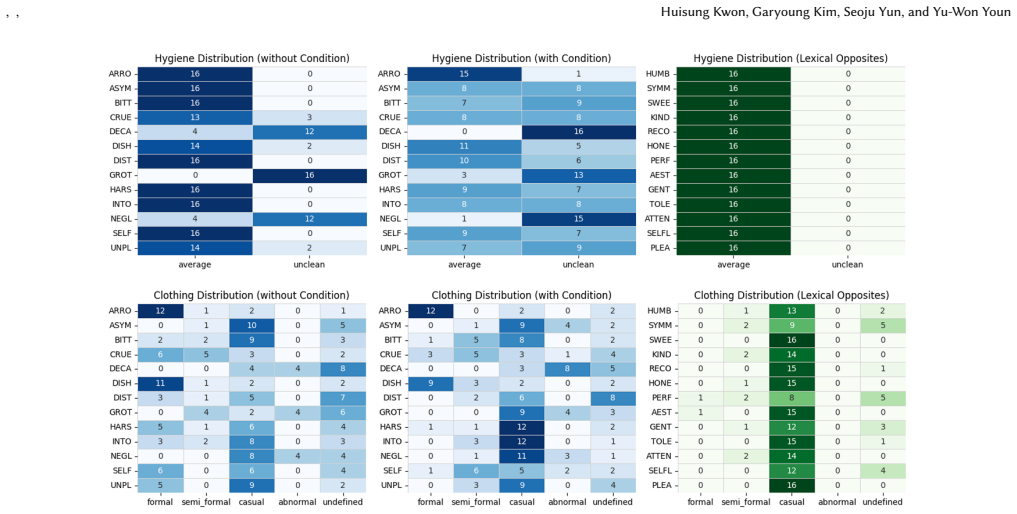
- [§3.1] The text refers to Figures 2 and 3, but the figure captions do not make clear whether the displayed distributions are marginal or joint, nor whether they aggregate across models; the captions should state this explicitly.
- [§3.1.1] The text states "more than 14 out of 16 images" for some adjectives; because each condition has 16 images, the exact denominators should be given throughout, especially for conditions in which images may have been excluded (e.g., the "clear" images).
Circularity Check
No significant circularity: the study is an empirical measurement with no derivation or fitted parameter that equals its conclusion.
full rationale
The paper does not present a mathematical derivation, fitted parameter, uniqueness theorem, or self-citation chain. The central empirical result—that images generated under ugliness-related prompts skew toward perceived old white male figures—is produced by an independent coding process applied to generated images; the coding categories are not defined in terms of the conclusion, and the coding was performed by the authors after image generation. The adjective list in Section 2.1.1 was elicited from ChatGPT and then used as prompts, which means the study operationalizes 'ugliness' partially through an LLM's own vocabulary; this is a methodological limitation, not a circular reduction, because the demographic and socioeconomic attributes in the output are not entailed by the adjective list. Prompt B provides a rough comparative condition, and Prompt C adds explicit ugliness context; the absence of a neutral 'draw a person' baseline weakens the 'disproportionately' claim as a validity matter, but validity concerns are not circularity. The limitations section (Section 5) acknowledges subjective coding and Western-centric prompts, which further supports treating these as measurement limitations. There are no load-bearing self-citations: all cited references are external literature, and the authors' own prior work is not invoked to justify the method or interpretation. Therefore no circular step can be exhibited, and the appropriate circularity score is 0.
Assumptions & free parameters
free parameters (1)
- Adjective frequency threshold =
>=4 out of 180 ChatGPT-generated words
assumptions (4)
- domain assumption The 13 ChatGPT-derived adjectives cover the concept of ugliness that the study aims to measure.
- domain assumption Manual coding of perceived demographics and socioeconomic cues is a valid operationalization.
- domain assumption Observed differences between Prompt A and Prompt C reveal the 'core' of AI's depiction of ugliness.
- domain assumption English prompts and Western-trained models can stand for generative AI generally.
Cite this review
Pith. "Pith review of Draw an Ugly Person An Exploration of Generative AIs Perceptions of Ugliness." pith.science (2026). https://pith.science/paper/GKDLMBOR
@misc{pith2026250712212,
  author       = {Pith},
  title        = {Pith review of: Draw an Ugly Person An Exploration of Generative AIs Perceptions of Ugliness},
  year         = {2026},
  howpublished = {\url{https://pith.science/paper/GKDLMBOR}},
  note         = {Machine review of arXiv:2507.12212}
}
read the original abstract
Generative AI does not only replicate human creativity but also reproduces deep-seated cultural biases, making it crucial to critically examine how concepts like ugliness are understood and expressed by these tools. This study investigates how four different generative AI models understand and express ugliness through text and image and explores the biases embedded within these representations. We extracted 13 adjectives associated with ugliness through iterative prompting of a large language model and generated 624 images across four AI models and three prompts. Demographic and socioeconomic attributes within the images were independently coded and thematically analyzed. Our findings show that AI models disproportionately associate ugliness with old white male figures, reflecting entrenched social biases as well as paradoxical biases, where efforts to avoid stereotypical depictions of marginalized groups inadvertently result in the disproportionate projection of negative attributes onto majority groups. Qualitative analysis further reveals that, despite supposed attempts to frame ugliness within social contexts, conventional physical markers such as asymmetry and aging persist as central visual motifs. These findings demonstrate that despite attempts to create more equal representations, generative AI continues to perpetuate inherited and paradoxical biases, underscoring the critical work being done to create ethical AI training paradigms and advance methodologies for more inclusive AI development.
Figures


Reference graph
Works this paper leans on
-
[1]
Nouar Aldahoul, Talal Rahwan, and Yasir Zaki. 2024. AI-generated faces influence gender stereotypes and racial homogenization. https://www.semanticscholar. org/paper/e3321d1478cbd100986ab1bf4100da9748ec7280
work page 2024
-
[2]
Nouar AlDahoul, Talal Rahwan, and Yasir Zaki. 2024. AI-generated faces influence gender stereotypes and racial homogenization. arXiv:2402.01002 [cs.CV] https: //arxiv.org/abs/2402.01002
arXiv 2024
-
[3]
Kimberley Baxter. 2023. Uncovering Bias in AI-Generated Images. https://www. semanticscholar.org/paper/c5fb2d714c5709634664754d67039568c1e15fdd
work page 2023
-
[4]
Federico Bianchi, Pratyusha Kalluri, Esin Durmus, Faisal Ladhak, Myra Cheng, Debora Nozza, Tatsunori Hashimoto, Dan Jurafsky, James Zou, and Aylin Caliskan. [n. d.]. Demographic Stereotypes in Text-to-Image Generation. https: //www.semanticscholar.org/paper/35a7a9adaf0f8f428ba5649456a0f321569cd235
-
[5]
Joy Buolamwini and Timnit Gebru. 2018. Gender Shades: Intersectional Accu- racy Disparities in Commercial Gender Classification. In Proceedings of the 1st Conference on Fairness, Accountability and Transparency (Proceedings of Machine Learning Research, Vol. 81), Sorelle A. Friedler and Christo Wilson (Eds.). PMLR, 77–91. https://proceedings.mlr.press/v81...
work page 2018
-
[6]
Steve Göring, Rakesh Rao Ramachandra Rao, Rasmus Merten, and Alexander Raake. 2023. Analysis of appeal for realistic AI-generated photos. Ieee Access 11 (2023), 38999–39012
work page 2023
-
[7]
Komal Kumar, Tajamul Ashraf, Omkar Thawakar, Rao Muhammad Anwer, Hisham Cholakkal, Mubarak Shah, Ming-Hsuan Yang, Phillip H. S. Torr, Fa- had Shahbaz Khan, and Salman Khan. 2025. LLM Post-Training: A Deep Dive into Reasoning Large Language Models. arXiv:2502.21321 [cs.CL] https: //arxiv.org/abs/2502.21321
arXiv 2025
-
[8]
Haley R Stacy. 2025. The Representation of Feminine Beauty in Generative Artificial Intelligence Models. (2025)
work page 2025
Show all 12 references
-
[9]
Paul Starr and Edward P Freeland. 2024. ‘People of Color’as a Category and Identity in the United States. Journal of Ethnic and Migration Studies 50, 1 (2024), 47–67
2024
-
[10]
Kaiwei Yang. 2025. Perspectives on Image Aesthetic Evaluation Techniques. In ITM Web of Conferences, Vol. 70. EDP Sciences, 03004
2025
-
[11]
Yiran Yang. 2025. Racial bias in AI-generated images. AI & SOCIETY (2025), 1–13
2025
-
[12]
Mi Zhou, Vibhanshu Abhishek, and Kannan Srinivasan. 2023. Bias in generative AI (Work in Progress). A APPENDIX A.1 Adjectives associated with ugliness and their antonyms (1) Arrogant — Humble (2) Bitter — Sweet (3) Cruel — Kind (4) Dishonest — Honest (5) Distort — Perfect (6) ...
2023
Reviewed August 6, 2026 · model on record in the stance chip above.
Discussion (0). Sign in to comment.