Control strategies for magnetized plasma: a polar coordinates framework
Pith reviewed 2026-05-17 22:49 UTC · model grok-4.3
The pith
Control strategies steer magnetized plasma to desired states using instantaneous feedback predictions in polar coordinates.
A machine-rendered reading of the paper's core claim, the machinery that carries it, and where it could break.
Core claim
The central claim is that feedback control strategies, built on instantaneous predictions of the discretized Vlasov system in a polar coordinate framework, can direct magnetized plasma to desired configurations when an external magnetic field is applied, as confirmed by numerical experiments conducted in the two-dimensional polar setting.
What carries the argument
The feedback mechanism based on an instantaneous prediction of the discretized Vlasov system in polar coordinates, which supplies real-time adjustments to the external magnetic field.
If this is right
- The control methods reach desired plasma states when the external magnetic field is adjusted according to the instantaneous predictions.
- The approaches account for both the self-induced electric field and the strong external magnetic field in the Vlasov model.
- Numerical experiments in two dimensions confirm that the feedback controls work as intended.
- The polar coordinate representation supports simulation of plasma in bounded domains under strong magnetic fields.
Where Pith is reading between the lines
- The same prediction-based feedback could be adapted to other coordinate systems or higher-dimensional models for plasma.
- The approach might support real-time adjustments in settings where computational speed matters for ongoing control.
- Similar discretization and feedback ideas could apply to related kinetic models that include magnetic fields.
Load-bearing premise
Polar coordinates provide a suitable framework for modeling plasma dynamics in toroidal devices.
What would settle it
Numerical experiments in the two-dimensional polar setting that fail to steer the plasma to the target configurations under the proposed feedback controls would show the strategies are not effective.
Figures



read the original abstract
In this work, we provide an overview of various control strategies aimed at steering plasma toward desired configurations using an external magnetic field. From a modeling perspective, we focus on the Vlasov equation in a two-dimensional bounded domain, accounting for both a self-induced electric field and a strong external magnetic field. The results are presented in a polar coordinate framework, which is particularly well-suited for simulating toroidal devices such as Tokamaks and Stellarators. A key feature of the proposed control strategies is their feedback mechanism, which is based on an instantaneous prediction of the discretized system. Finally, different numerical experiments in the two-dimensional polar coordinate setting demonstrate the effectiveness of the approaches.
Editorial analysis
A structured set of objections, weighed in public.
Referee Report
Summary. The manuscript presents control strategies for steering magnetized plasma toward desired states via an external magnetic field. It models the problem using the two-dimensional Vlasov equation in a bounded domain that includes both a self-induced electric field and a strong external magnetic field. Results are developed in polar coordinates, which the authors argue are well-suited to toroidal devices such as Tokamaks and Stellarators. A distinctive feature is the feedback mechanism that relies on an instantaneous prediction step performed on the discretized system. Effectiveness is asserted on the basis of several numerical experiments conducted in the two-dimensional polar setting.
Significance. If the numerical experiments can be shown to deliver quantitatively convincing control performance with appropriate error metrics and baselines, the work would offer a geometrically natural framework for plasma control in fusion-relevant geometries together with a prediction-based feedback construction that may be computationally attractive for real-time applications.
major comments (1)
- [Abstract / Numerical Experiments] Abstract and Numerical Experiments section: the central claim that the proposed strategies are effective rests on numerical experiments, yet the abstract (and available description) supplies no quantitative error measures, convergence rates, comparison against open-loop or alternative controllers, or baseline performance data. Without these, the support for the effectiveness assertion cannot be evaluated.
minor comments (1)
- [Introduction] The statement that the polar-coordinate framework is 'particularly well-suited' for toroidal devices would benefit from a short supporting sentence or reference to existing literature on coordinate choices in tokamak modeling.
Simulated Author's Rebuttal
We thank the referee for their careful reading of the manuscript and for highlighting the need for stronger quantitative support. We address the major comment below and will revise the manuscript to incorporate the suggested improvements.
read point-by-point responses
-
Referee: [Abstract / Numerical Experiments] Abstract and Numerical Experiments section: the central claim that the proposed strategies are effective rests on numerical experiments, yet the abstract (and available description) supplies no quantitative error measures, convergence rates, comparison against open-loop or alternative controllers, or baseline performance data. Without these, the support for the effectiveness assertion cannot be evaluated.
Authors: We agree that the current presentation would benefit from explicit quantitative metrics to substantiate the effectiveness claims. While the numerical experiments section contains visual demonstrations of the control performance in the 2D polar setting, we acknowledge that error norms, rates, and baseline comparisons are not reported in sufficient detail. In the revised manuscript we will add L2-norm error measures between the controlled state and the target configuration, report observed convergence behavior of the feedback loop, and include direct comparisons against open-loop evolution and at least one alternative controller (e.g., a simple proportional feedback). These additions will appear both in an expanded abstract and in a new quantitative subsection of the Numerical Experiments section, accompanied by tables or plots. revision: yes
Circularity Check
No significant circularity in derivation or control construction
full rationale
The manuscript introduces control strategies for the 2D Vlasov equation with self-induced E and external B fields in polar coordinates, emphasizing a feedback mechanism that uses instantaneous prediction on the discretized system. Effectiveness is shown through numerical experiments. No load-bearing step reduces by construction to fitted inputs, self-citations, or renamed known results; the central claims rest on independent discretization, prediction, and validation steps that do not presuppose the target outcomes.
Axiom & Free-Parameter Ledger
Lean theorems connected to this paper
-
IndisputableMonolith/Cost/FunctionalEquation.leanwashburn_uniqueness_aczel unclear?
unclearRelation between the paper passage and the cited Recognition theorem.
min Bext J(Bext;f0;f) subject to Vlasov-Poisson with self-induced E and external B; feedback via instantaneous prediction of discretized system; PIC scheme (2.11) with cell-wise constant Bk
-
IndisputableMonolith/Foundation/AlexanderDuality.leanalexander_duality_circle_linking unclear?
unclearRelation between the paper passage and the cited Recognition theorem.
polar coordinate Vlasov-Poisson (2.4) for toroidal devices; control strategies one and two yielding explicit feedback laws (3.9),(3.17)
What do these tags mean?
- matches
- The paper's claim is directly supported by a theorem in the formal canon.
- supports
- The theorem supports part of the paper's argument, but the paper may add assumptions or extra steps.
- extends
- The paper goes beyond the formal theorem; the theorem is a base layer rather than the whole result.
- uses
- The paper appears to rely on the theorem as machinery.
- contradicts
- The paper's claim conflicts with a theorem or certificate in the canon.
- unclear
- Pith found a possible connection, but the passage is too broad, indirect, or ambiguous to say the theorem truly supports the claim.
Reference graph
Works this paper leans on
-
[1]
Instan- taneous control strategies for magnetically confined fusio n plasma,
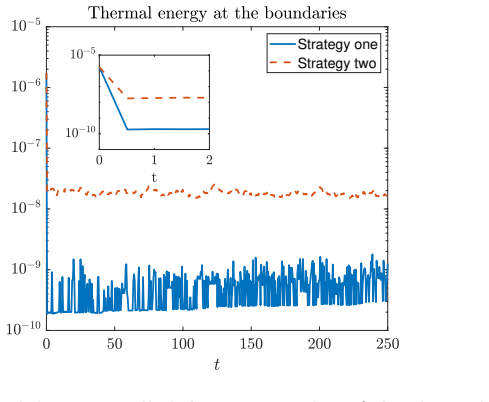
Giacomo Albi, Giacomo Dimarco, Federica Ferrarese, and Lorenzo Pareschi, “Instan- taneous control strategies for magnetically confined fusio n plasma,” Journal of Com- putational Physics , vol. 527, p. 113804, 2025. 15 0 0.2 0.4 0.6 0.8 1 1.2 0 0.2 0.4 0.6 0.8 1 1.2 0 0.2 0.4 0.6 0.8 1 1.2 0 0.2 0.4 0.6 0.8 1 1.2 0 0.2 0.4 0.6 0.8 1 1.2 0 0.2 0.4 0.6 0.8 1...
work page 2025
-
[2]
Robust feedback control of collisional plasma dynamics in presence of uncertainties
Giacomo Albi, Giacomo Dimarco, Federica Ferrarese, and Lorenzo Pareschi, “Robust feedback control of collisional plasma dynamics in presenc e of uncertainties,” accepted in Journal of Computational Physics , arXiv:2505.19992, 2025
-
[3]
Jan Bartsch, Patrik Knopf, Stefania Scheurer, and J¨ org Weber, Controlling a Vlasov–Poisson plasma by a Particle-in-Cell method based o n a Monte Carlo frame- work, SIAM Journal on Control and Optimization , vol. 62, no. 4, pp. 1977–2011, 2024
work page 1977
-
[4]
Radoin Belaouar, Nicolas Crouseilles, Pierre Degond, a nd Eric Sonnendr¨ ucker, An asymptotically stable semi-Lagrangian scheme in the quasi -neutral limit, Journal of Scientific Computing , vol. 41, pp. 341–365, 2009
work page 2009
-
[5]
Stefano Caprino, Giacomo Cavallaro, and Carlo Marchior o, Time evolution of a Vlasov–Poisson plasma with magnetic confinement, Kinetic and Related Models , vol. 5, no. 4, pp. 729–742, 2012. 16 0 0.2 0.4 0.6 0.8 1 1.2 0 0.2 0.4 0.6 0.8 1 1.2 0 0.2 0.4 0.6 0.8 1 1.2 0 0.2 0.4 0.6 0.8 1 1.2 0 0.2 0.4 0.6 0.8 1 1.2 0 0.2 0.4 0.6 0.8 1 1.2 Figure 6: Diocotron i...
work page 2012
-
[6]
The integration of the Vlasov equation in con- figuration space
Chio-Zong Cheng, and Georg Knorr. The integration of the Vlasov equation in con- figuration space. Journal of Computational Physics , vol. 22, no. 3, p. 330-351, 1976
work page 1976
-
[7]
Gamba, Fengyan Li, and Philip J
Yingda Cheng, Irene M. Gamba, Fengyan Li, and Philip J. Mo rrison, Discontinuous Galerkin methods for the Vlasov–Maxwell equations, SIAM Journal on Numerical Analysis, vol. 52, no. 2, pp. 1017–1049, 2014
work page 2014
-
[8]
Eugenio Chac´ on-Golcher, Sorin A. Hirstoaga, and Micha el Lutz, Optimization of Particle-in-Cell simulations for Vlasov–Poisson system w ith strong magnetic field, ESAIM: Proceedings and Surveys , vol. 53, pp. 177–190, 2016
work page 2016
-
[9]
Gang Chen and Luis Chac´ on, An implicit, conservative an d asymptotic-preserving electrostatic Particle-In-Cell algorithm for arbitraril y magnetized plasmas in uniform magnetic fields, Journal of Computational Physics , vol. 487, Paper No. 112160, 16 pp., 2023. 17 Strategy one Strategy two Figure 7: Diocotron instability: controlled dynamics. Val ue of t...
work page 2023
-
[10]
James Coughlin and Jingwei Hu, Efficient dynamical low-r ank approximation for the Vlasov–Amp` ere–Fokker–Planck system, Journal of Computational Physics , vol. 470, p. 111590, 2022
work page 2022
-
[11]
Nicolas Crouseilles and Francis Filbet, Numerical app roximation of collisional plasmas 18 by high order methods, Journal of Computational Physics , vol. 201, no. 2, pp. 546– 572, 2004
work page 2004
-
[12]
Nicolas Crouseilles and Francis Filbet, Numerical app roximation of collisional plasmas by high order methods, Journal of Computational Physics , vol. 201, no. 2, pp. 546– 572, 2004
work page 2004
-
[13]
Nicolas Crouseilles, Michel Mehrenberger, and Eric So nnendr¨ ucker, Conservative semi-Lagrangian schemes for Vlasov equations, Journal of Computational Physics , vol. 229, no. 6, pp. 1927–1953, 2010
work page 1927
-
[14]
Stability analysis and first order schemes, Multiscale Modeling & Simulation , vol
Nicolas Crouseilles, Giacomo Dimarco, and Marie-H´ el ` ene Vignal, Multiscale schemes for the BGK–Vlasov–Poisson system in the quasi-neutral and fluid limits. Stability analysis and first order schemes, Multiscale Modeling & Simulation , vol. 14, no. 1, pp. 65–95, 2016
work page 2016
-
[15]
Nicolas Crouseilles, P. Glanc, S. Hirstoaga, E. Madaul e, M. Mehrenberger, and J. P´ etri, Semi-Lagrangian simulations on polar grids: from d iocotron instability to ITG turbulence test cases, in 4th International Workshop on the Theory and Applications of the Vlasov Equation (VLASOVIA 2013) , 2013
work page 2013
- [16]
-
[17]
Pierre Degond and Franck Deluzet, Asymptotic-preserv ing methods and multiscale models for plasma physics, Journal of Computational Physics , vol. 336, pp. 429–457, 2017
work page 2017
-
[18]
Giacomo Dimarco, Ronald E. Caflisch, and Lorenzo Paresc hi, Direct simulation Monte Carlo schemes for Coulomb interactions in plasmas, Communications in Applied and Industrial Mathematics , vol. 1, no. 1, pp. 1–72, 2010
work page 2010
-
[19]
Giacomo Dimarco, Qin Li, Lorenzo Pareschi, and Bokai Ya n, Numerical methods for plasma physics in collisional regimes, Journal of Plasma Physics , vol. 81, no. 1, 2015
work page 2015
-
[20]
Lukas Einkemmer, Qi Li, Lin Wang, and Yunan Yang, Suppre ssing instability in a Vlasov–Poisson system by an external electric field through constrained optimization, Journal of Computational Physics , vol. 498, p. 112662, 2024
work page 2024
-
[21]
Lukas Einkemmer, Qi Li, Cl´ ement Mouhot, and Yue Yunan, Control of instability in a Vlasov–Poisson system through an external electric field, Journal of Computational Physics, vol. 530, p. 113904, 2025. 19
work page 2025
-
[22]
Ambrogio Fasoli, Stephan Brunner, Wilfred A. Cooper, J ohn P. Graves, Paolo Ricci, Olivier Sauter, and Laurent Villard, Computational challenges in magnetic- confinement fusion physics, Nature Physics , vol. 12, no. 5, pp. 411–423, 2016
work page 2016
-
[23]
Numerical me thods for the Vlasov equation
Francis Filbet, and Eric Sonnendr¨ ucker. Numerical me thods for the Vlasov equation. Numerical Mathematics and Advanced Applications: Proceedings of ENUMATH 2001 the 4th European Conference on Numerical Mathematics and Adv anced Applications Ischia, July 2001 . Milano: Springer Milan, 2003
work page 2001
-
[24]
Francis Filbet and Lu ´ ıs M. Rodrigues, Asymptoticallystable Particle-in-Cell methods for the Vlasov–Poisson system with a strong external magnet ic field, SIAM Journal on Numerical Analysis , vol. 54, no. 2, pp. 1120–1146, 2016
work page 2016
-
[25]
Francis Filbet and Lu ´ ıs M. Rodrigues, Asymptotically preserving Particle-in-Cell methods for inhomogeneous strongly magnetized plasmas, SIAM Journal on Numer- ical Analysis, vol. 55, no. 5, pp. 2416–2443, 2017
work page 2017
-
[26]
Numerical Simulations to the Vlasov-Poisson System with a Strong Magnetic Field
Francis Filbet, and Chang Yang. Numerical Simulations to the Vlasov-Poisson System with a Strong Magnetic Field. HAL, 2018
work page 2018
-
[27]
Paul R. Garabedian, Computational mathematics and phy sics of fusion reactors, Pro- ceedings of the National Academy of Sciences , vol. 100, no. 24, pp. 13741–13745, 2003
work page 2003
-
[28]
Alain Ghizzo, Pierre Bertrand, Magdi Shoucri, Eric Fij alkow, and Marc R. Feix, An Eulerian code for the study of the drift-kinetic Vlasov equa tion, Journal of Compu- tational Physics , vol. 108, no. 1, pp. 105–121, 1993
work page 1993
- [29]
-
[30]
Aiguo Gu, Yu He, and Yu Sun, Hamiltonian Particle-in-Ce ll methods for Vlasov–Poisson equations, Journal of Computational Physics , vol. 467, p. 111472, 2022
work page 2022
-
[31]
Earl Hairer and Christian Lubich, Energy behaviour of t he Boris method for charged- particle dynamics, BIT Numerical Mathematics , vol. 58, pp. 969–979, 2018
work page 2018
-
[32]
Daniel Han-Kwan, On the confinement of a Tokamak plasma, SIAM Journal on Math- ematical Analysis, vol. 42, no. 6, pp. 2337–2367, 2010
work page 2010
-
[33]
Lise-Marie Imbert-G´ erard, Elizabeth J. Paul, and Ade lle M. Wright, An Introduction to Stellarators: From Magnetic Fields to Symmetries and Opt imization, SIAM, 2024
work page 2024
-
[34]
Patrik Knopf and J¨ org Weber, Optimal control of a Vlaso v–Poisson plasma by fixed magnetic field coils, Applied Mathematics & Optimization , vol. 81, pp. 961–988, 2020. 20
work page 2020
-
[35]
Franck Deluzet, Guillaume Fubiani, Lo ¨ ıc Garrigues, C l´ ement Guillet, and J´ erˆ ome Narski, Efficient parallelization for 3D-3V sparse grid Part icle-in-Cell: Shared memory architectures, Journal of Computational Physics , vol. 480, p. 112022, 2023
work page 2023
-
[36]
Giovanni Russo and Francis Filbet, Semilagrangian sch emes applied to moving bound- ary problems for the BGK model of rarefied gas dynamics, Kinetic and Related Models, vol. 2, no. 1, pp. 231–250, 2009
work page 2009
-
[38]
Eric Sonnendr¨ ucker, Jean Roche, Pierre Bertrand, and Alain Ghizzo, The semi- Lagrangian method for the numerical resolution of the Vlaso v equation, Journal of Computational Physics , vol. 149, no. 2, pp. 201–220, 1999
work page 1999
-
[39]
Lyman Spitzer, The stellarator concept, Physics of Fluids , vol. 1, no. 4, p. 253, 1958
work page 1958
-
[40]
William T. Taitano, David A. Knoll, Luis Chac´ on, and Ga ng Chen, Development of a consistent and stable fully implicit moment method for Vla sov–Amp` ere Particle-In- Cell (PIC) system, SIAM Journal on Scientific Computing , vol. 35, no. 5, pp. S126– S149, 2013
work page 2013
-
[41]
J¨ org Weber, Optimal control of the two-dimensional Vlasov–Maxwell system, ESAIM: Control, Optimisation and Calculus of Variations , vol. 27, p. S19, 2021
work page 2021
-
[42]
Cheng Yang and Francis Filbet, Conservative and non-co nservative methods based on Hermite weighted essentially non-oscillatory reconstr uction for Vlasov equations, Journal of Computational Physics , vol. 279, pp. 18–36, 2014
work page 2014
-
[43]
Francesco Valentini, Pierluigi Veltri, and Andr´ e Man geney, A numerical scheme for the integration of the Vlasov–Poisson system of equations, in the magnetized case, Journal of Computational Physics , vol. 210, no. 2, pp. 730–751, 2005. 21
work page 2005
discussion (0)
Sign in with ORCID, Apple, or X to comment. Anyone can read and Pith papers without signing in.