Recognition: 2 theorem links
· Lean TheoremHilbert's Sixth Problem and Soft Logic
Pith reviewed 2026-05-13 23:01 UTC · model grok-4.3
The pith
Soft numbers refine classical probability by assigning infinitesimal values to point events, addressing a barrier in Hilbert's sixth problem.
A machine-rendered reading of the paper's core claim, the machinery that carries it, and where it could break.
Core claim
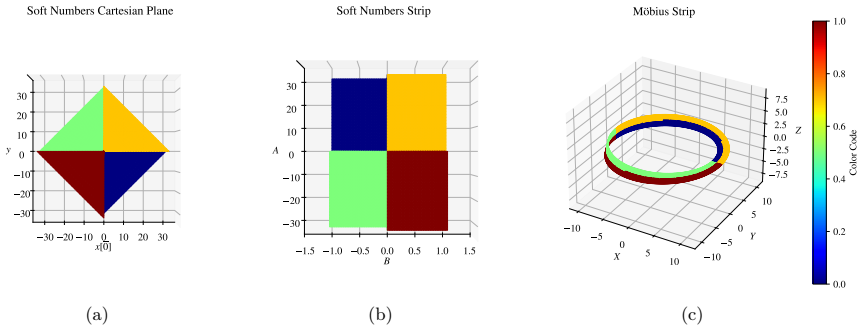
Soft probability, grounded in Soft Numbers, acts as an infinitesimal refinement of classical probability so that point events receive non-zero infinitesimal probabilities rather than zero. This refinement is applied to discuss the derivation of statistical laws from mechanics and to illuminate Hilbert's sixth problem. The paper additionally shows a rigorous construction of a Mobius strip based on soft numbers that provides a topological representation for understanding the character of the axiomatization task.
What carries the argument
Soft Numbers from Soft Logic, which carry infinitesimal probabilities for points and enable the construction of a Mobius strip representation of the axiomatization problem.
If this is right
- Individual microstates in continuous spaces receive positive infinitesimal probability instead of zero.
- Macroscopic statistical laws become derivable from microscopic principles using the refined probability.
- A Mobius strip can be constructed rigorously from soft numbers to represent Hilbert's sixth problem.
- The framework supplies a new representation for the nature of axiomatizing physics.
Where Pith is reading between the lines
- Soft numbers may align with other infinitesimal systems to model probability in physical systems more flexibly.
- The Mobius strip construction hints at possible non-orientable features in probability structures for axiomatized physics.
- Consistency checks against equilibrium distributions in statistical mechanics offer a direct test of the approach.
Load-bearing premise
Soft Logic and Soft Numbers form a consistent extension of classical probability theory that assigns meaningful infinitesimal probabilities to point events without contradictions.
What would settle it
A demonstration that applying soft probabilities to derive a standard result such as the Maxwell-Boltzmann distribution produces inconsistency with known statistical mechanics would falsify the refinement claim.
Figures

read the original abstract
Hilbert's sixth problem calls for the axiomatization of physics, particularly the derivation of macroscopic statistical laws from microscopic mechanical principles. A conceptual difficulty arises in classical probability theory: in continuous spaces every individual microstate has probability zero. In this paper, we introduce a probabilistic framework based on Soft Logic and Soft Numbers in which point events possess infinitesimal Soft probabilities rather than the classical zero. We show that Soft probability can be interpreted as an infinitesimal refinement of classical probability and discuss its implications for statistical mechanics and Hilbert's sixth problem. In addition, we show rigorously how to construct a Mobius strip, based on the soft numbers, and we discuss how this Mobius strip representation with soft numbers allows for a deeper understanding of the nature and character of Hilbert's sixth problem.
Editorial analysis
A structured set of objections, weighed in public.
Referee Report
Summary. The paper introduces Soft Logic and Soft Numbers as a new probabilistic framework in which point events in continuous spaces receive infinitesimal Soft probabilities rather than classical zero. It claims this constitutes an infinitesimal refinement of classical probability with implications for statistical mechanics and Hilbert's sixth problem, and asserts a rigorous construction of a Mobius strip based on soft numbers that yields deeper understanding of the problem.
Significance. If the framework were shown to be consistent and to satisfy the standard axioms of probability while assigning meaningful non-zero values to singletons, it could address a long-standing conceptual issue in the foundations of statistical mechanics and contribute to Hilbert's sixth problem. No such demonstration is present, so the significance cannot be evaluated.
major comments (2)
- Abstract: the claim that 'Soft probability can be interpreted as an infinitesimal refinement of classical probability' is asserted without any definition of Soft Numbers, any statement of the underlying axioms, or any derivation showing preservation of additivity, normalization, or other probability axioms.
- Abstract: the statement 'we show rigorously how to construct a Mobius strip, based on the soft numbers' supplies no construction steps, no topological definitions, and no proof of the claimed rigor, leaving the central technical assertion unsupported.
minor comments (1)
- Abstract: the terms 'Soft Logic' and 'Soft Numbers' are introduced without reference to prior literature or any indication of how they relate to existing non-standard analysis or infinitesimal frameworks.
Simulated Author's Rebuttal
We thank the referee for their review and comments on our manuscript. We address each major comment below, clarifying the role of the abstract as a summary while proposing revisions to improve accessibility.
read point-by-point responses
-
Referee: Abstract: the claim that 'Soft probability can be interpreted as an infinitesimal refinement of classical probability' is asserted without any definition of Soft Numbers, any statement of the underlying axioms, or any derivation showing preservation of additivity, normalization, or other probability axioms.
Authors: We agree that the abstract, as a concise overview, does not contain the definitions or derivations. The full manuscript defines Soft Numbers and the axioms of Soft Logic in the introductory sections and provides a derivation showing preservation of the classical probability axioms (additivity, normalization, and countable additivity) while assigning infinitesimal probabilities to singletons. To address this, we will revise the abstract to include a brief statement referencing these definitions and the axiom preservation. revision: yes
-
Referee: Abstract: the statement 'we show rigorously how to construct a Mobius strip, based on the soft numbers' supplies no construction steps, no topological definitions, and no proof of the claimed rigor, leaving the central technical assertion unsupported.
Authors: We acknowledge that the abstract summarizes the result without technical details. The manuscript contains the rigorous construction in a dedicated section, including the topological definitions of the soft-number-based Mobius strip and the proof of its properties. We will revise the abstract to provide a high-level outline of the key construction steps and topological elements to better support the claim. revision: yes
Circularity Check
No circularity detectable from available text
full rationale
The abstract introduces Soft Logic and Soft Numbers as a novel framework that assigns infinitesimal probabilities to point events and claims this constitutes an infinitesimal refinement of classical probability, with further claims of a rigorous Mobius-strip construction and implications for Hilbert's sixth problem. No equations, derivations, self-citations, or load-bearing steps appear in the provided text, so no specific reduction of a claimed result to its own inputs by construction can be exhibited. The central claims rest on the definitions of the newly introduced concepts, but absent any further paper content, the derivation chain cannot be walked and no circularity is identifiable under the required criteria of explicit quotes and reductions.
Axiom & Free-Parameter Ledger
axioms (1)
- ad hoc to paper Soft Logic and Soft Numbers form a consistent extension of classical probability that assigns meaningful infinitesimal values to point events.
invented entities (1)
-
Soft Numbers
no independent evidence
Lean theorems connected to this paper
-
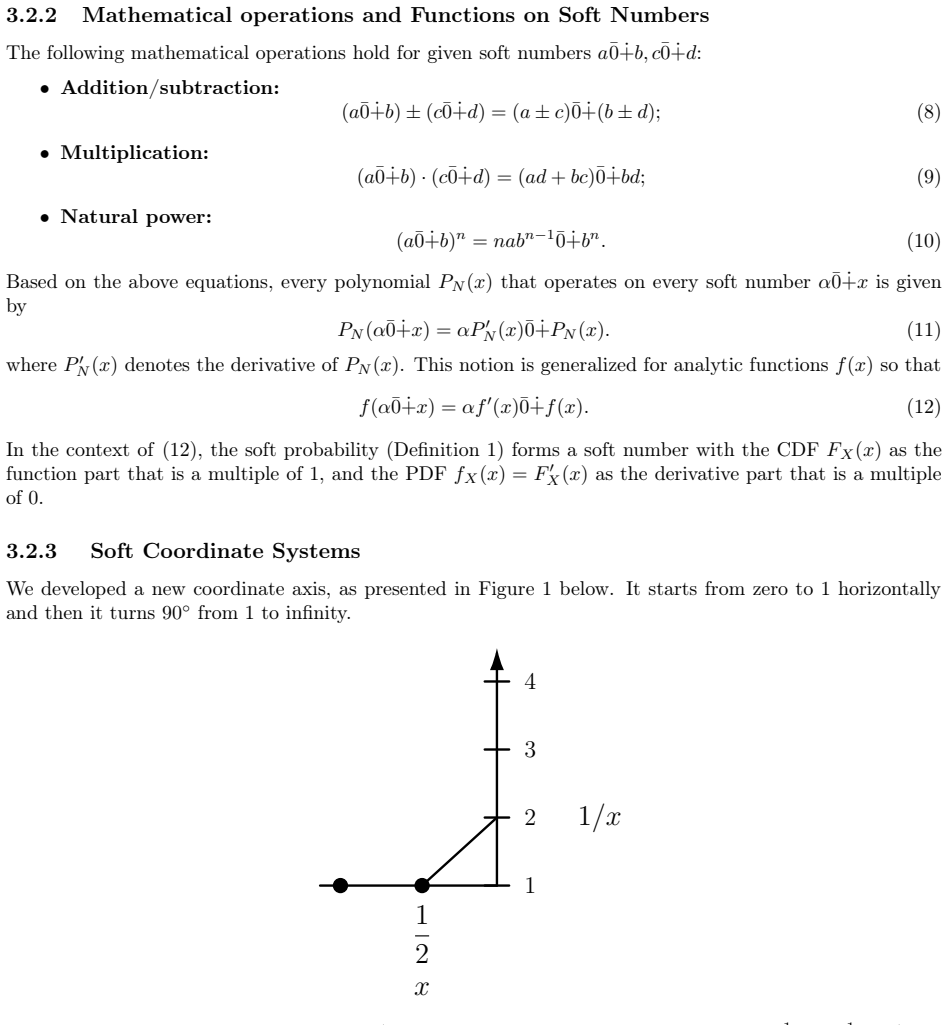
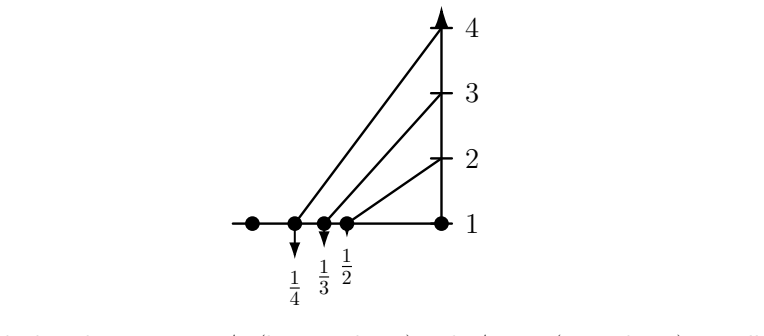
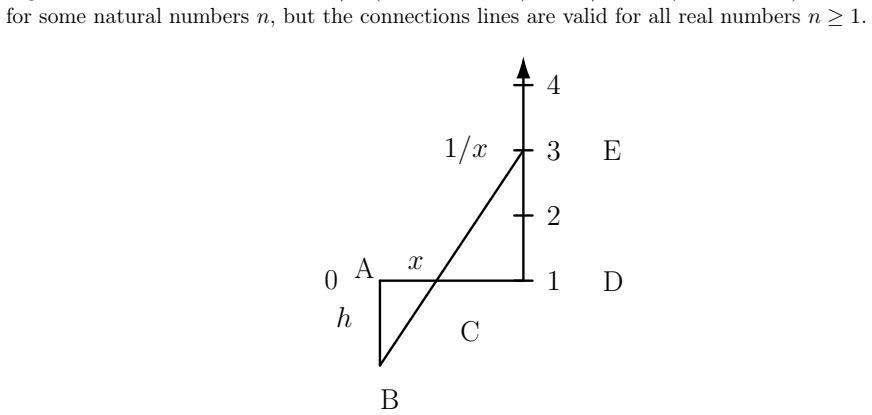
IndisputableMonolith/Cost/FunctionalEquation.lean; IndisputableMonolith/Foundation/AbsoluteFloorClosure.leanwashburn_uniqueness_aczel; absolute_floor_iff_bare_distinguishability echoesSoft number a¯0 ˙+b={a¯0⊥b; b⊥a¯0}; lines connecting x to 1/x intersect at absolute zero h=1; Ps(X≤x)=fX(x)¯0 ˙+FX(x)
-
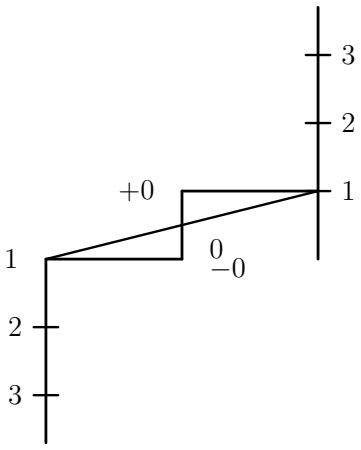
IndisputableMonolith/Foundation/AlexanderDuality.leanalexander_duality_circle_linking unclearMöbius-strip construction from bounded SNS with A=ϕR, B∈[−1,1] via equations (20)
Reference graph
Works this paper leans on
-
[1]
D. Hilbert, "Mathematical Problems,"Bull. Amer. Math. Soc., vol. 8, no. 10, pp. 437–479, 1902. https://doi.org/10.1090/S0002-9904-1902-00923-3
-
[2]
Kolmogorov,Grundbegriffe der Wahrscheinlichkeitsrechnung
A. Kolmogorov,Grundbegriffe der Wahrscheinlichkeitsrechnung. Springer Berlin Heidelberg, 1933. https://doi.org/10.1007/978-3-642-49888-6
-
[3]
Kolmogorov,Foundations of the Theory of ProbabilityTransl
A. Kolmogorov,Foundations of the Theory of ProbabilityTransl. Ed. by Nathan Morrison. With an Added Bibliography by AT Bharucha-reid. 2d English Ed. Chelsea Pub., 1956
work page 1956
-
[4]
Hilbert’s sixth problem: derivation of fluid equations via Boltzmann’s kinetic theory,
Y. Deng, Z. Hani, and X. Ma, “Hilbert’s sixth problem: derivation of fluid equations via Boltzmann’s kinetic theory,”arXiv preprint arXiv:2503.01800, 2025.https://doi.org/10.48550/arXiv.2503. 01800
-
[5]
Quantum probability and Hilbert’s sixth problem,
L. Accardi, “Quantum probability and Hilbert’s sixth problem,”Philos. Trans. A Math. Phys. Eng. Sci., vol. 376, no. 2118, p. 20180030, 2018.https://doi.org/10.1098/rsta.2018.0030
-
[6]
The mathematics of Soft logic,
M. Klein and O. Maimon, "The mathematics of Soft logic," inIOP Conference Series: Materials Science and Engineering, vol. 157, p. 012025, 2016.http://dx.doi.org/10.1088/1757-899x/157/1/012025
-
[7]
M. Klein and O. Maimon, "Soft logic and numbers,"Pragmatics and Cognition, vol. 23, no. 3, pp. 473-484, 2016.http://dx.doi.org/10.1075/pc.23.3.09kle
-
[8]
M. Klein and O. Maimon, "Axioms of Soft Logic,"p-Adic Numbers, Ultrametric Analysis and Applica- tions, vol. 11, no. 3, pp. 205-215, 2019.https://doi.org/10.1134/S2070046619030038
-
[9]
TheDynamicsintheSoftNumbersCoordinateSystem,
M.KleinandO.Maimon, "TheDynamicsintheSoftNumbersCoordinateSystem,”Journal of Advances in Mathematics, vol. 18, pp.1-17, 2020.https://doi.org/10.24297/jam.v18i.8531
-
[10]
M. Klein and O. Maimon, "Fundamentals of Soft Logic,"New Mathematics and Natural Computation, vol. 17, no. 03, pp. 703-737, 2021.https://doi.org/10.1142/S1793005721500356
-
[11]
Soft logic as an extension of pascal’s work,
M. Klein and O. Maimon, "Soft logic as an extension of pascal’s work,"p-Adic Numbers, Ultrametric Analysis and Applications, vol. 15, pp. 119-132 2023.https://doi.org/10.1134/S207004662302005X
-
[12]
M. Klein and O. Maimon,Foundations of Soft Logic. Cham, Switzerland: Springer, 2024.https: //doi.org/10.1007/978-3-031-58233-2
-
[13]
Decision Trees with Soft Numbers
O. Fivel, M. Klein, and O. Maimon, "Decision Trees with Soft Numbers",International Journal of Circuits, Systems and Signal Processing, vol. 15, pp. 1803-1816, 2021.https://dx.doi.org/10.46300/ 9106.2021.15.194
-
[14]
O. Fivel, M. Klein, and O. Maimon, “Soft decision trees,” inMachine Learning for Data Science Hand- book, L. Rokach, O. Maimon, and E. Shmueli, Eds. Cham: Springer International Publishing, 2023, pp. 143–170.https://doi.org/10.1007/978-3-031-24628-9_8
-
[15]
Preliminary Sketch of Bi-Quaternions,
W. K. Clifford, "Preliminary Sketch of Bi-Quaternions,"Proc. Lond. Math. Soc. (3), vol. s1-4, no. 1, pp. 381–395, 1871.https://doi.org/10.1112/plms/s1-4.1.381 11
discussion (0)
Sign in with ORCID, Apple, or X to comment. Anyone can read and Pith papers without signing in.