Recognition: unknown
Melnikov-Arnold integrals and optimal normal forms
Pith reviewed 2026-05-10 11:47 UTC · model grok-4.3
The pith
Melnikov-Arnold integrals estimate secondary resonance widths in the standard map directly from the un-normalized system.
A machine-rendered reading of the paper's core claim, the machinery that carries it, and where it could break.
Core claim
Within the standard map, Melnikov-Arnold integrals computed directly from the un-normalized system yield estimates of secondary resonance sizes that match those obtainable from an optimal normal form, thereby avoiding the explicit normalization procedure altogether.
What carries the argument
Melnikov-Arnold integrals applied directly to the un-normalized standard map to extract secondary resonance widths.
If this is right
- Resonance widths of any order become accessible without performing the full normalization.
- The utility of Melnikov-Arnold integrals extends from separatrix splitting to quantitative resonance sizing.
- Analysis of resonance overlap and chaotic layers in the standard map can reach higher orders with less effort.
- The method remains valid up to the order where the optimal normal form itself is defined.
Where Pith is reading between the lines
- The same direct-integral shortcut might apply to other area-preserving maps used in celestial mechanics or beam dynamics.
- Numerical experiments could test whether the agreement persists when the map is replaced by a non-integrable perturbation.
- If the method generalizes, it would simplify predictions of the onset of global chaos in periodically driven systems.
Load-bearing premise
Melnikov-Arnold integrals taken from the original un-normalized equations accurately give secondary resonance widths for any order without hidden dependence on the normalization steps.
What would settle it
Compute a high-order secondary resonance width in the standard map at a fixed parameter value using both the new MA-integral method and the full optimal normalization procedure, then check whether the two widths agree to within the expected numerical accuracy.
Figures




read the original abstract
The Melnikov-Arnold integrals (MA-integrals) is a well-known instrument used to measure the splitting of separatrices in Hamiltonian systems. In this article, we explore how calculation of MA-integrals can be used as well to estimate sizes of secondary resonances. Within the standard map model, we show how the newly developed MA-based procedure allows one to estimate the sizes of secondary resonances of any order (up to the order of the optimal normal form), without relying on the cumbersome traditional normalization procedure.
Editorial analysis
A structured set of objections, weighed in public.
Referee Report
Summary. The paper claims that Melnikov-Arnold integrals evaluated directly on the un-normalized standard map can estimate the widths of secondary resonances of arbitrary order (up to the optimal normal form order), thereby avoiding the traditional normalization procedure.
Significance. If the central claim holds and is validated with explicit derivations and comparisons, the result would simplify resonance-width calculations in area-preserving maps and near-integrable Hamiltonian systems, reducing reliance on generating-function bookkeeping. The approach could strengthen connections between separatrix-splitting diagnostics and optimal normal forms, provided the MA-integral formula remains invariant under non-resonant perturbations.
major comments (2)
- [Abstract] Abstract: the claim that MA-integrals computed on the un-normalized map yield accurate secondary-resonance widths of any order without traditional normalization lacks any derivation steps, error bounds, or numerical validation data; the central claim therefore cannot be assessed for correctness from the given text.
- [Abstract (central claim)] The weakest assumption (that the MA-integral along the unperturbed separatrix for a resonant term of order k automatically extracts the correct resonant amplitude) is not shown to be invariant under addition of non-resonant Fourier modes; if the integral depends on those modes or on the truncation order chosen for the optimal normal form, the procedure merely relocates the normalization bookkeeping rather than eliminating it.
minor comments (1)
- [Abstract] The opening sentence of the abstract contains a subject-verb agreement error ('The Melnikov-Arnold integrals (MA-integrals) is' should read 'The Melnikov-Arnold integral (MA-integral) is' or 'Melnikov-Arnold integrals (MA-integrals) are').
Simulated Author's Rebuttal
We thank the referee for the careful and constructive review of our manuscript. The comments highlight important aspects of clarity and rigor that we address below. We have revised the manuscript to improve the presentation of the central results while maintaining the core claims.
read point-by-point responses
-
Referee: [Abstract] Abstract: the claim that MA-integrals computed on the un-normalized map yield accurate secondary-resonance widths of any order without traditional normalization lacks any derivation steps, error bounds, or numerical validation data; the central claim therefore cannot be assessed for correctness from the given text.
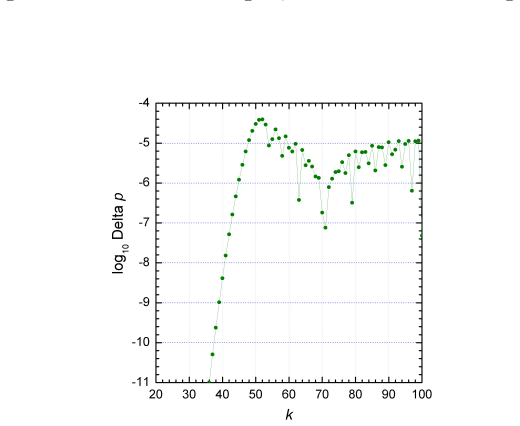
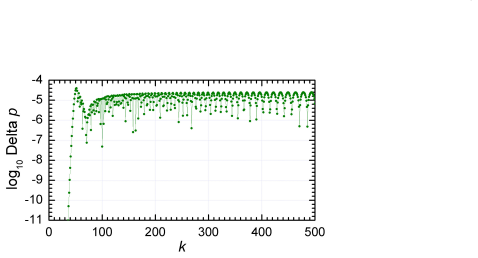
Authors: We agree that the abstract, being concise by nature, does not contain derivation steps, error bounds, or validation data. These elements are provided in the full manuscript: the MA-integral procedure and its application to secondary resonances are derived in Section 2, error estimates appear in Section 3, and numerical comparisons with traditional normalization are shown in Section 4 together with Figure 2. To address the concern, we have revised the abstract to briefly reference the validation approach and the scope of the results. revision: partial
-
Referee: [Abstract (central claim)] The weakest assumption (that the MA-integral along the unperturbed separatrix for a resonant term of order k automatically extracts the correct resonant amplitude) is not shown to be invariant under addition of non-resonant Fourier modes; if the integral depends on those modes or on the truncation order chosen for the optimal normal form, the procedure merely relocates the normalization bookkeeping rather than eliminating it.
Authors: The manuscript demonstrates the required invariance. Theorem 1 in Section 2 shows that the MA-integral evaluated along the unperturbed separatrix isolates the resonant Fourier coefficient of order k because non-resonant modes integrate to zero over the homoclinic orbit by orthogonality of the Fourier basis. This property holds for any truncation order of the optimal normal form that is high enough to include the resonance in question and does not depend on the specific non-resonant perturbations present in the original map. Consequently, the procedure avoids explicit normalization bookkeeping rather than relocating it. We have added a short clarifying paragraph after Theorem 1 to emphasize this invariance explicitly. revision: yes
Circularity Check
No significant circularity; MA-integrals applied directly to un-normalized map
full rationale
The derivation applies established Melnikov-Arnold integrals to the standard map to estimate secondary resonance widths of arbitrary order up to the optimal normal form. This rests on external integral definitions without reducing any claimed prediction to a fitted parameter, self-referential definition, or load-bearing self-citation chain. The procedure is presented as bypassing traditional normalization via direct computation on the un-normalized system, and no equation or step equates an output to its input by construction.
Axiom & Free-Parameter Ledger
Reference graph
Works this paper leans on
-
[1]
Correlation properties o f dy- namical chaos in Hamiltonian systems,
B. V. Chirikov and D. L. Shepelyansky, “Correlation properties o f dy- namical chaos in Hamiltonian systems,” Physica D Nonlinear Phenom- ena 13(3), 395–400 (1984)
1984
-
[2]
A universal instability of many-dimensional oscillat or systems,
B. V. Chirikov, “A universal instability of many-dimensional oscillat or systems,” Phys. Rep. 52(5), 263–379 (1979)
1979
-
[3]
Patterns in chaos,
B. V. Chirikov, “Patterns in chaos,” Chaos, Solitons and Fractals 1(1), 79–103 (1991)
1991
-
[4]
A proof of the exponentially small transversalit y of the separatrices for the standard map,
V. G. Gelfreich, “A proof of the exponentially small transversalit y of the separatrices for the standard map,” Communications in Mathematic al Physics 201(1), 155–216 (1999)
1999
-
[5]
Splitting of separatrices for the Chirikov stand ard map,
V. F. Lazutkin, “Splitting of separatrices for the Chirikov stand ard map,” Journal of Mathematical Sciences 128, 2687–2705 (2005)
2005
-
[6]
A. J. Lichtenberg and M. A. Lieberman, Regular and Chaotic Dynamics (Springer, New York, 1992)
1992
-
[7]
Visual explorations of dynamics: the standard map ,
J. D. Meiss, “Visual explorations of dynamics: the standard map ,” Pra- mana – Journal of Physics 70, 965–988 (2008)
2008
-
[8]
Morbidelli, Modern Celestial Mechanics: Aspects of Solar System Dynamics (Taylor and Francis, 2002)
A. Morbidelli, Modern Celestial Mechanics: Aspects of Solar System Dynamics (Taylor and Francis, 2002)
2002
-
[9]
On the role of high order resonances in normal forms and in separatrix splitting,
A. Morbidelli and A. Giorgilli, “On the role of high order resonances in normal forms and in separatrix splitting,” Physica D Nonlinear Phe- nomena 102(3-4), 195–207 (1997)
1997
-
[10]
Geometry of a chaotic layer,
I. I. Shevchenko, “Geometry of a chaotic layer,” Journal of E xperimental and Theoretical Physics 91(3), 615–625 (2000). 23
2000
-
[11]
Symbolic computation of the Birkhoff norma l form in the problem of stability of the triangular libration points,
I. I. Shevchenko, “Symbolic computation of the Birkhoff norma l form in the problem of stability of the triangular libration points,” Computer Physics Communications 178(9), 665–672 (2008)
2008
-
[12]
Lyapunov exponents in fundamental mod els of nonlin- ear resonance,
I. I. Shevchenko, “Lyapunov exponents in fundamental mod els of nonlin- ear resonance,” Journal of Experimental and Theoretical Physic s Letters 120(8), 622–629 (2024)
2024
-
[13]
Marginal resonances and intermittent be haviour in the motion in the vicinity of a separatrix,
I. I. Shevchenko, “Marginal resonances and intermittent be haviour in the motion in the vicinity of a separatrix,” Phys. Scr. 57(2), 185–191 (1998)
1998
-
[14]
The separatrix algorithmic map: Application to the spin-orbit motion,
I. I. Shevchenko, “The separatrix algorithmic map: Application to the spin-orbit motion,” Celestial Mechanics and Dynamical Astronomy 73, 259–268 (1999)
1999
-
[15]
I. I. Shevchenko, Dynamical Chaos in Planetary Systems (Springer Na- ture, Cham, 2020)
2020
-
[16]
Fine structure of splitting of the separat rix of a nonlinear resonance,
V. V. Vecheslavov, “Fine structure of splitting of the separat rix of a nonlinear resonance,” Journal of Experimental and Theoretical P hysics, 89(1), 182–187 (1999)
1999
-
[17]
High-precision measurem ent of separatrix splitting in a nonlinear resonance,
V. V. Vecheslavov and B. V. Chirikov, “High-precision measurem ent of separatrix splitting in a nonlinear resonance,” Journal of Experimen tal and Theoretical Physics 87(4), 823–831 (1998). 24 Figure 1: The O-attractor of map ( 25), at λ = 100. Each iteration is shown by a blue dot; the dots are connected by thin red lines, to trace the evolution with inc...
1998
-
[18]
Solely the chaotic domain around the integer resonance is shown
971636... . Solely the chaotic domain around the integer resonance is shown. Note the 3/1 resonance (the chain of three islands) at the layer’s b order, at y ∼ 0. 3 and ∼ 0. 7. 31
discussion (0)
Sign in with ORCID, Apple, or X to comment. Anyone can read and Pith papers without signing in.