Billiards tables - a minimal model for particles moving in a confined region - are known to present classical (and quantum) different features according to their shape, ranging from strongly chaotic to integrable dynamics. Here we consider the role of a stochastic perturbation of the elastic reflection law, and show that while chaotic billiards maintain their key statistical feature, the behaviour for integrable billiard tables is completely different: it can be linked, for tiny perturbations, to Evans stochastic billiard, where at each collision the reflected angle is a uniformly distributed stochastic variable on $(-\pi/2,\pi/2$). The resulting spatial stationary measure has peculiar aspects, like being typically non uniform along the boundary, differently from any chaotic billiard table.
We present a method for reconstructing resonant interactions in weakly coupled phase oscillator systems from noisy time series. Instead of attempting to recover the full phase equations, which may be non-identifiable in the presence of bounded observational uncertainty, the method reconstructs the resonant normal form terms that determine the leading-order drift dynamics. We develop first-order and second-order reconstruction procedures based on finite libraries of resonant Fourier modes and least-squares estimation. We prove error bounds for the reconstructed coefficients under natural assumptions on the observation noise and the distribution of initial conditions. The second-order method detects effective resonant interactions generated by the interplay of nonresonant first-order couplings. Numerical examples illustrate the reconstruction of resonant subnetworks and emergent higher-order interactions.
Transformer architectures have recently surged as promising solutions for nonlinear dynamical systems, proposed as foundation models capable of zero-shot dynamics reconstruction and forecasting. Despite this success, it remains unclear whether they can truly serve as reliable digital twins of dynamical systems, i.e., whether they capture the underlying physical dynamics in distinct parameter regimes, especially in parameter regimes from which no training data is taken. For parameter-space extrapolation in nonlinear dynamical systems, reservoir computing has demonstrated broad success, as proper training can turn it into an intrinsic dynamical system capable of capturing not only the dynamical climate of the target system but more importantly, how the climate changes with parameter. Transformers, in contrast, rely on permutation-invariant attention mechanisms that can limit their ability to capture how temporal structure changes with parameter. To determine if Transformers have the capability of dynamics extrapolation, we take predicting catastrophic collapse, which occurs when a bifurcation parameter crosses a critical threshold, as a benchmark task. Models are trained on trajectories in normal parameter regimes and then tested on parameters in an unseen regime with system collapse. Our results show that Transformers, across configurations, consistently fail to capture collapse, while reservoir computing reliably predicts the transitions. This surprising finding raises questions about the generalization ability of Transformers to dynamical systems, a topic warranting future research.
We investigate the dynamical and analytical consequences of truncating the Gr\"unwald--Letnikov memory term in a fractional Duffing oscillator. The truncated memory is treated not merely as a computational approximation, but as a finite-memory modification of the underlying dynamical system. We define a coherence-loss time from direct comparisons between full-memory and truncated-memory trajectories, and use it to extract critical truncation thresholds in parameter planes involving the forcing amplitude and the fractional order. The results reveal strongly non-monotonic memory thresholds, showing that the retained memory required to preserve coherence depends on the forcing regime, the fractional order, and the nonlinear sensitivity of the dynamics.
We also derive a local characteristic equation for the truncated GL kernel. A minimal one-delay approximation produces a formal negative delay, indicating that a single causal delay is structurally insufficient. This motivates a positive-delay exponential representation of the finite-memory kernel. The minimum number of positive-delay modes required to reach a prescribed spectral accuracy defines an operational delay-complexity measure, $r_{\min}$. Overall, the truncated GL kernel emerges as an intermediate object between distributed fractional memory and delay-type dynamics, with a local spectral structure that controls both coherence loss and effective delay complexity.
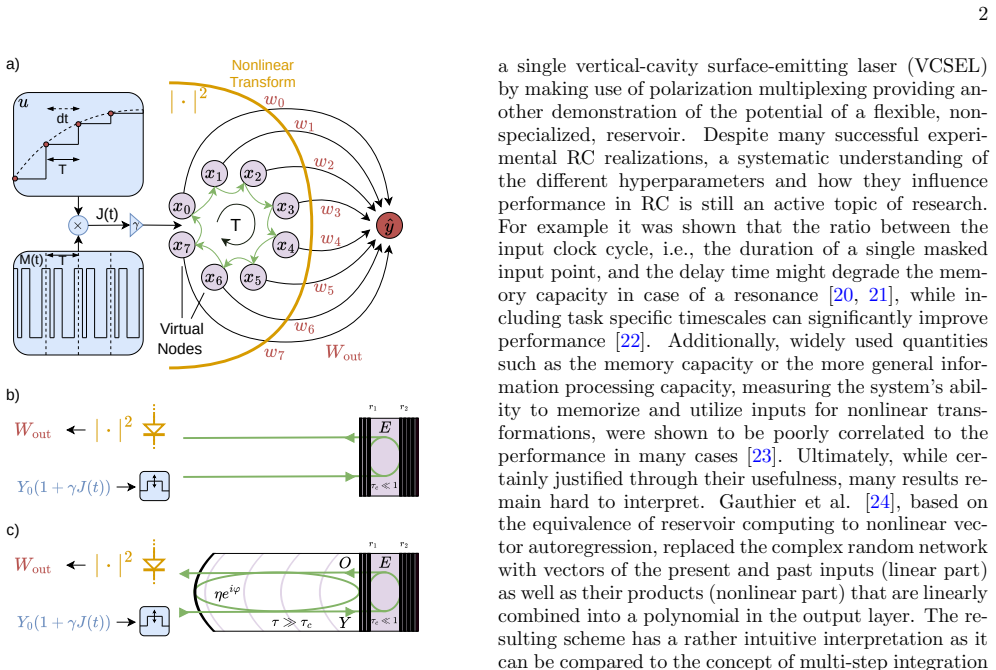
We investigate the computational potential and limitations of a passive linear optical reservoir with a photodetector at the optical-to-electrical interface as the sole source of nonlinearity. In contrast to conventional nonlinear reservoirs, where transient dynamics and delay jointly enhance complexity and distribute nonlinear responses, the proposed linear architecture isolates these contributions, as intrinsic nonlinear spreading is absent. We thus provide a framework that enables the independent and systematic analysis of key factors, including nonlinear transformations, transient dynamics, and time-delay effects, as well as their interactions. By explicitly identifying the contributing monomials for different tasks, we establish the relationship between task requirements and the nonlinearity provided by the system. Incorporating transient coupling and delayed feedback is shown to significantly enhance performance and attractor reconstruction capabilities by compensating for missing higher-order nonlinearities through access to multi-step integration schemes. This improvement, however, comes at the cost of requiring a larger number of virtual nodes.
Chaos is the spontaneous breaking of topological supersymmetry inherent to continuous-time dynamical systems, manifesting as hiddenβ¦
abstractclick to expand
Dynamical chaos is a term that encompasses a wide range of nonlinear phenomena such as turbulence, neuronal avalanches, weather patterns, and many others. However, despite much work in the field of chaos, its fundamental physical origin still remains not fully understood. In this perspective we report on recent studies showing that chaos is the realization of one of the most fundamental principles in physics: spontaneous symmetry breaking also known as spontaneous ordering. In the present context, the symmetry involved is a topological supersymmetry inherent to all continuous-time (stochastic) dynamical systems. Chaos is then truly a manifestation of order of topological origin potentially encoding a sort of long-range information hidden beneath its apparent unpredictability. We finally argue that this point of view may have far-reaching implications well beyond chaotic dynamics.
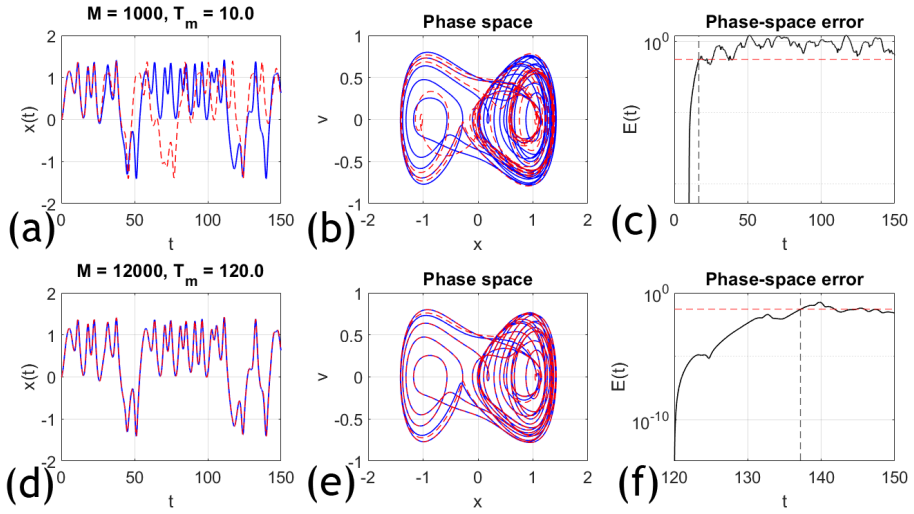
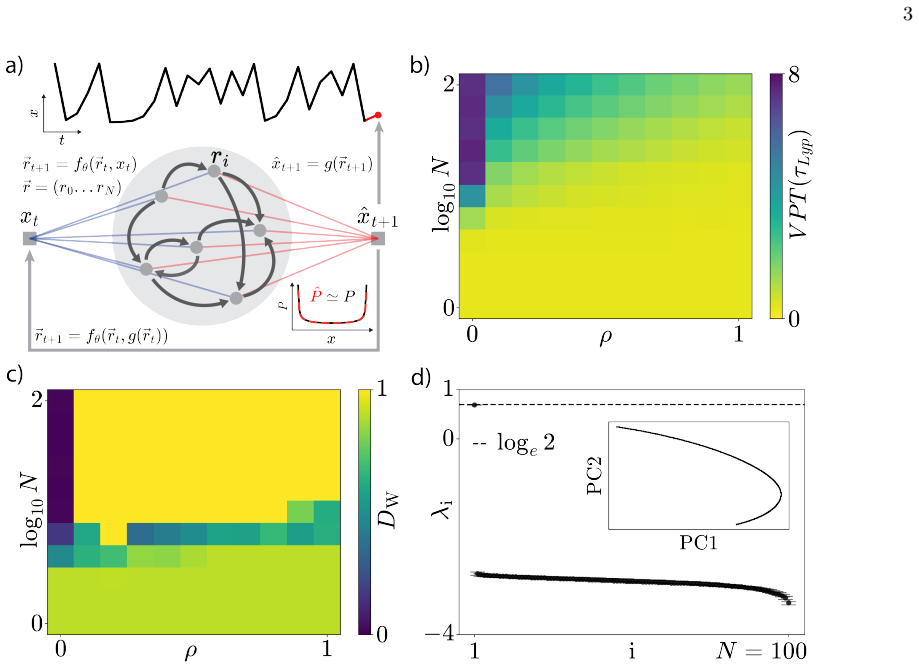
Reservoir computing is a powerful framework for modeling dynamical systems due to its universality and computational efficiency. However, a major challenge is achieving a forecast with accurate long-time statistics, or climate, which is essential for inferring ergodic properties such as Lyapunov exponents. A common approach is to optimize the reservoir's macroscopic parameters, such as the spectral radius, by maximizing prediction time. But here we show that even predictions accurate over multiple Lyapunov times do not guarantee the correct long-time statistics. Instead, we choose reservoir properties by minimizing the error in the reconstructed invariant distribution (or its projections), which is easily available from data. We demonstrate that this approach reproduces the Lyapunov exponents of model dynamical systems, including the logistic and standard maps, as well as the double pendulum, even with partial observations. We further show that recurrent connections, and resulting reservoir memory, are only required in the partially-observed case. We introduce a temporal scaling which reliably separates system and reservoir dynamics. In the posture time series of the nematode C. elegans we show that our approach quantitatively reproduces a chaotic behavioral attractor, but this requires a further constraint on the maximal conditional Lyapunov exponent to ensure the reservoir remains consistently synchronized to the complex biological input.
Spectral bifurcation diagrams (SBDs) have recently emerged as an efficient tool for identifying dynamical transitions in nonlinear systems through frequency-domain analysis. Previous studies have been limited to numerical investigations, and the experimental realization of SBDs has remained unexplored. In this work, we develop an automated framework using analog electronic circuits and data acquisition (DAQ) systems to obtain SBDs from real-time measurements. The method enables controlled parameter variation and simultaneous acquisition of time-series data for spectral analysis. Using this approach, we experimentally capture characteristic spectral signatures of dynamical bifurcations, such as period-doubling, quasiperiodicity (two- and three-frequency), and torus length-doubling. The experimental results show strong qualitative agreement with the numerical predictions, despite noise and parameter mismatches. This study establishes SBD as an effective tool for the experimental analysis of nonlinear dynamical systems.
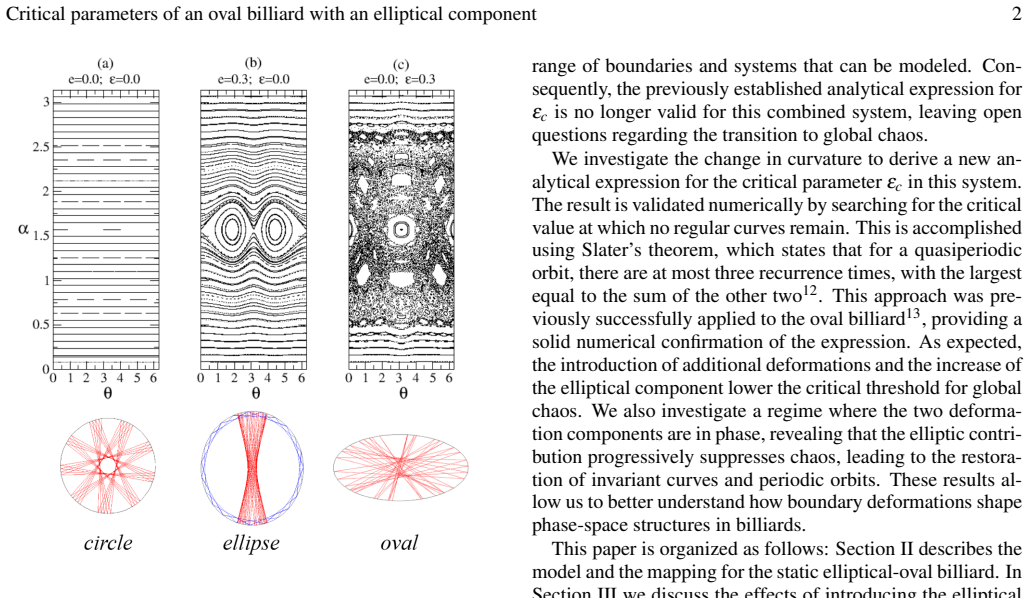
We explore the critical parameters responsible for the transition from integrability to chaos in a family of billiards combining elliptical and oval deformations. Unlike standard oval billiards, where a known critical parameter governs the destruction of the last invariant curve, the introduction of an integrable elliptic component yields a second deformation axis. We derive an analytical expression for the critical parameter in this combined system and validate it numerically using Slater's theorem, showing that increasing the elliptical component lowers the critical threshold for global chaos. Moreover, we uncover a previously unexplored regime: when the two deformation components are in phase, the elliptic contribution progressively suppresses chaos, leading to the restoration of invariant curves and periodic orbits. A first-order analytical approximation confirms this behavior, supported by numerical validation. Our results reveal how the interplay between distinct boundary deformations enriches phase-space organization and offers enhanced controllability of chaotic dynamics in billiard systems.
We discovered generalized structures, named astrocytes due to their shape, that constitute a defined region characterizing regular behavior within the parameter plane (PP) of dynamical systems (DSs). Morphologically, they are characterized by a branch and a soma with several vertices (arms) and sometimes with multiple periodicities. A bunch of infinite astrocytes emerge through their branches from a region, in general, of low periodicity. Astrocytes are embedded in a quasiperiodic-chaotic scenario. The soma complexity (number of vertices) determines a kind of hierarchy of the astrocytes; moreover, bunches of subsequent structures from the astrocyte have been emphasized, revealing a self-similarity property. We conducted a detailed analysis in a Zeeman laser model, but we also observed astrocytes in many other DSs. The multiperiodicity exhibited by the astrocytes in their soma gives rise to harlequin dress-like patterns and tri-, quad-, and quint-critical points, which indicate the coexistence of different higher-order periodicities. In the concave borders of the soma, a doubling cascade of quint-points emerges as a bifurcation in the PP, defining regions of ordered sequences of higher periodicity in the route to chaos.
We propose a dual-channel reservoir-computing scheme for inferring the dynamics of two distinct chaotic systems with a single machine. By augmenting a standard reservoir with a system-label channel and a parameter-control channel, the machine can be trained from time series collected from a few sampled states of the two systems. We show that the trained machine not only predicts the short-time evolution of the sampled states, but also reproduces the long-term statistical properties of unseen states, thereby enabling reconstruction of the bifurcation diagrams of both systems from partial observations. The effectiveness of the scheme is demonstrated for the Lorenz and R\"ossler systems in numerical simulations and for the Chua and Rossler circuits in experiments. Functional-network analysis further shows that the two target systems are encoded by distinct dynamical patterns in the reservoir. These results extend multifunctional and parameter-aware reservoir computing, and provide a route to data-driven inference of multiple nonlinear systems using a single machine.
This paper investigates resonance transmission in two unidirectionally coupled Duffing oscillators with fractional damping, where the driver is harmonically forced and the receiver is connected through a linear coupling spring. Particular attention is paid to how fractional damping in the receiver modifies amplitude amplification, energy redistribution, and the structure of the coupled response. The numerical results reveal a clear distinction between transmitted resonance, associated with a coupling-power balance consistent with direct energy transfer through the coupling spring, and storage-dominated resonance, in which the receiver still exhibits a pronounced oscillatory response while the time-averaged coupling power becomes negative under the adopted convention. In this latter regime, fractional memory promotes temporary energy accumulation within the receiver--coupling subsystem, followed by partial release through the coupling spring without any feedback on the driver dynamics. We further show that detuning the receiver natural frequency enhances the interaction between the lower-frequency transmitted response and the higher-frequency coupled response, leading to a superposed resonance regime with increased receiver amplitude, stronger localization, and sharper response. The roles of the fractional order, coupling strength, and receiver natural frequency are systematically analyzed through frequency-response curves and parametric maps. Overall, the results show how fractional memory can be used to tune resonance transmission, energy localization, and amplified response in coupled nonlinear oscillators.
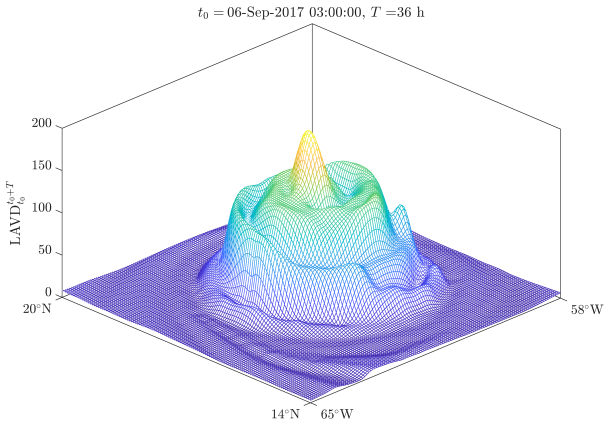
We identify materially defined regions in unsteady two-dimensional flows that combine finite-time contraction with elevated accumulated intrinsic rotation along trajectories, which we term \emph{Lagrangian rotating contracting structures} (LRCS). These regions are detected using existing objective diagnostics -- the Lagrangian-averaged vorticity deviation (LAVD) together with direct tests of material contraction -- without relying on the geometry of LAVD level sets.
In strongly deforming flows, LAVD maxima need not correspond to vortical regions or be enclosed by regular level sets, rendering geometry-based identification unreliable. Nevertheless, regions exhibiting inward spiraling motion and contraction can be extracted by combining LAVD with a contraction criterion.
Applications to atmospheric and oceanic flows show that such behavior arises both in twisted LAVD fields generated at submesoscales and in mesoscale flows where it is enhanced by inertial effects, with finite-time contraction providing the dynamical constraint that isolates materially organized regions with elevated intrinsic rotation.
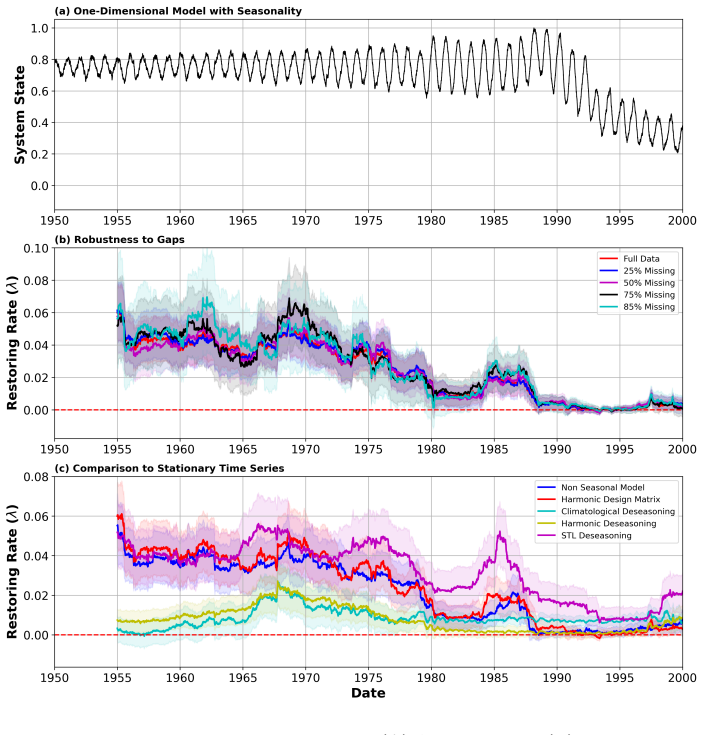
A wide body of work has applied the concept of critical slowing down to estimate the stability of different Earth system components. Most of them -- such as global vegetation -- are inherently non-stationary, for example due to strong seasonal forcing, which complicates the estimation of their resilience to external perturbations. Here, we introduce a new method to account for non-stationarity in estimating resilience for diverse synthetic and real-world data sets via a regression-based formulation of the Langevin Equation. Our method does not require extensive data pre-processing, is robust to gaps in the data record, and does not require regular time sampling. We further show that our method can incorporate time-varying data uncertainties, recover uncertainty bounds in stability estimates, and can be natively extended to examine spatial systems. Our method is a drop-in replacement for widely-used autocorrelation-based resilience estimates, and can be widely applied across Earth system components.
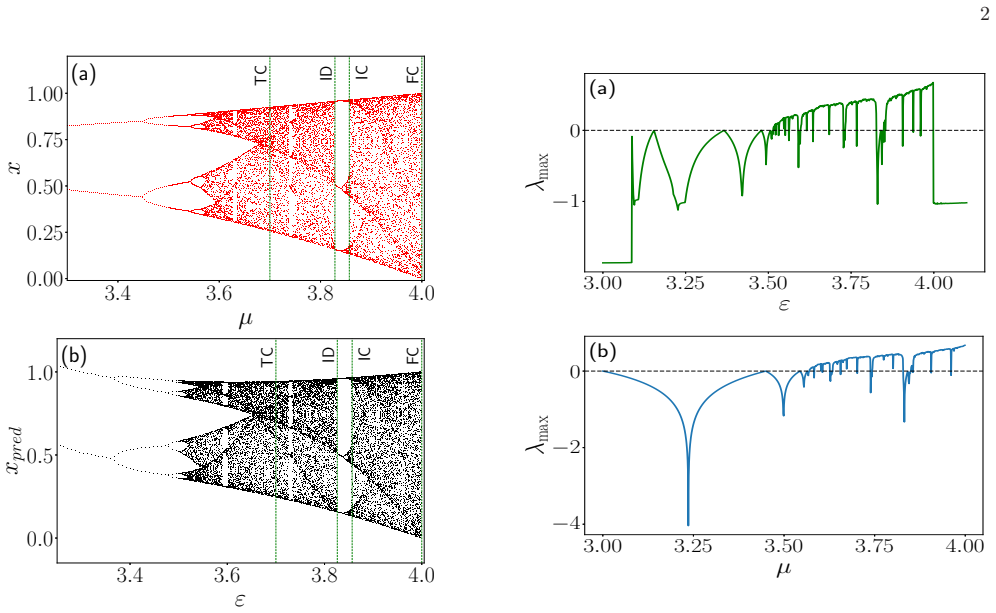
We use finite-time Lyapunov exponent (FTLE) distributions to probe transition mechanisms in high-dimensional reservoir maps trained on low-dimensional chaotic dynamics across multiple regimes. While trained reservoirs accurately predict critical transitions and regime shifts, conventional analyses based on time series or bifurcation structure provide limited mechanistic insight, since distinct pathways in high dimensions can yield similar outputs. We show that FTLE statistics overcome this limitation. This is particularly important for interior crises, where direct identification of unstable periodic orbit collisions in the reservoir space is infeasible. Using the logistic map as a canonical example exhibiting intermittency, fully developed chaos, and crisis-induced transitions, we demonstrate that although such distinct regimes are difficult to characterize within the high dimensional reservoir space, their FTLE distributions are faithfully reproduced. This establishes FTLE analysis as a systematic and reliable framework for uncovering transition mechanisms in learned reservoir dynamics.
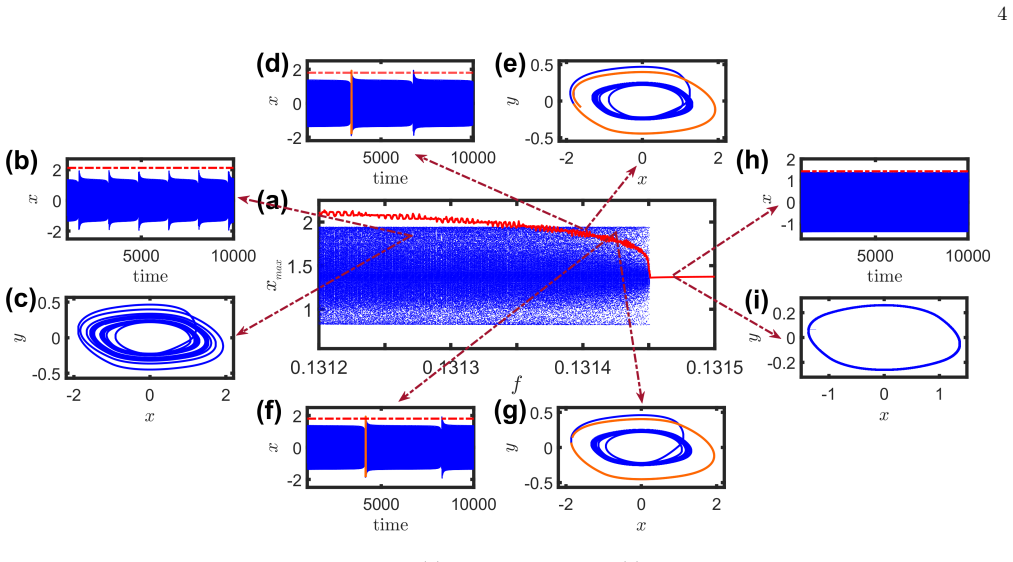
The Murali-Lakshmanan-Chua (MLC) circuit is a well-recognized prominent nonlinear, nonautonomous, and dissipative electronic circuit having a versatile chaotic nature. Unraveling the dynamical synergy responsible for the genesis of extreme events in nonlinear dynamical systems is a prolific and spellbinding research area. The present study unveils the dynamical exposition of emerging extreme events in the MLC circuit concerning two different events being defined in the system. The large expansion of the chaotic attractor following the PM intermittency route plays the crucial role as the precursor behind the emergence of extreme events in the system. Our main finding reveals the prevalence of a force field due to the presence of externally applied periodic force in the system that creates the dynamical synergy that compels the chaotic trajectory traversing in its phase space to be largely deviated from the residing space, and this large deviation shows the signature of extreme events. Apart from the force field explication, we explored another two dynamical aspects that also interpret the mechanism behind the genesis of extreme events as the large deflection of the chaotic trajectory in the system: the decomposition of the phase space in stable and unstable manifolds concerning slow-fast dynamics and using Floquet multipliers. These two different aspects of calculations of the stable and unstable manifolds explicate the large excursion of the chaotic trajectory as extreme events from two different perspectives. We also analyzed the rare occurrences of the extreme events statistically using extreme value theory: the threshold \textit{excess values} follow the generalized Pareto distribution, and the inter-extreme-spike-intervals follow the generalized extreme value distribution.
We present an experimental study of the Duffing--Holmes oscillator with a double-well potential, implemented as an analog electronic circuit under periodic external forcing. By systematically varying the forcing amplitude and frequency, we characterize the full dynamical landscape of the system through bifurcation diagrams, Poincar\'e maps, and maximum Lyapunov exponent calculations. The observed phenomenology includes period-doubling routes to chaos, periodic windows with multistability, dynamical intermittency, and antiperiodic orbits in which the trajectory recovers the global symmetry of the double-well potential. These results are synthesized into a high-resolution two-dimensional phase diagram in parameter space. The close agreement between all experimental diagnostics validates the fidelity of the analog implementation and demonstrates that continuous-time hardware provides a powerful platform for the quantitative study of nonlinear dynamics, free from the discretization artifacts inherent to numerical simulation.
Dissipative structures are open dynamical systems that sustain coherent macroscopic organization by continuously exchanging energy and matter with their environment and generating entropy. A recent thermodynamic analysis of the paradigmatic Malkus--Lorenz waterwheel interpreted the Lorenz system as an engine, deriving an exact formula for its thermodynamic efficiency, and showing that efficiency tends to increase as the system is driven far from equilibrium while displaying sharp drops near the Hopf subcritical bifurcation to chaos. Here, we extend that single-engine framework to coupled dissipative structures. We introduce two canonical couplings -- master-slave coupling (series) and symmetric diffusive coupling (parallel) -- and prove two fundamental association laws allowing us to reduce the composite systems to an equivalent engine with a specified efficiency. We then apply these abstract results to coupled Lorenz waterwheels, deriving efficiency formulas consistent with the underlying power balance. We perform numerical simulations confirming that (a) series coupling induces an increase in thermodynamic efficiency, (b) parallel coupling averages the efficiency of engines and increases total energy flow, (c) synchronization is typically neutral or beneficial for efficiency except in narrow parameter regions, and (d) coupling modifies the curvature of entropy-generation trends. Our theorems suggest a mathematically rigorous and transparent route to define and compute thermodynamic efficiency for generalized flow networks, with potential application to complex systems energetics.
The Melnikov-Arnold integrals (MA-integrals) is a well-known instrument used to measure the splitting of separatrices in Hamiltonian systems. In this article, we explore how calculation of MA-integrals can be used as well to estimate sizes of secondary resonances. Within the standard map model, we show how the newly developed MA-based procedure allows one to estimate the sizes of secondary resonances of any order (up to the order of the optimal normal form), without relying on the cumbersome traditional normalization procedure.
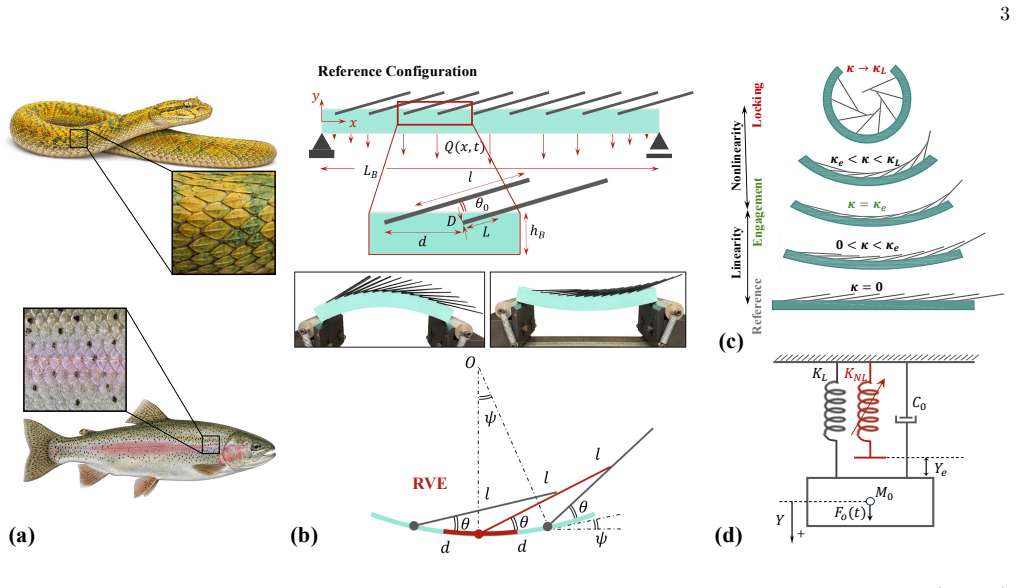
Overlapping fish-scale architectures are among nature's most distinctive surface adaptations, combining protection, contact regulation, hydrodynamics, optical and directional mechanical response within a thin textured integument. Here, we show that their biomimetic structural analogues can host deterministic chaos. Biomimetic scale substrates develop chaotic flexural vibrations at modest amplitudes because bending activates unilateral contact and progressive jamming, while built-in asymmetry from unequal texturing biases the restoring response and shifts the onset of chaos. From continuum mechanics, we derive a singular reduced-order model (sROM) that reduces the scale-covered beam to a nonlinear oscillator whose parameters map directly to overlap, scale inclination, damping, forcing, and substrate stiffness. Finite element (FE) simulations validate the model in quasi-static bending and long-time forced response. Stroboscopic regime maps reveal a period-doubling cascade from period-1 to period-2 and period-4, ultimately chaos. Overlap and inclination determine the strength of post-engagement nonlinearity, whereas damping bounds the chaotic operating window. Unequal top-bottom scale distributions break the antisymmetry of the restoring response, generating offset force-displacement laws. This reduced symmetry does not accelerate instability; instead, it delays the onset of chaos and fragments the response into intermittent periodic windows, whereas restoring symmetry can paradoxically widen the chaotic regime. When the texture is sufficiently sparse or steep on one side, it remains dynamically inactive, and the beam behaves as a fully asymmetric one-sided system. The results identify biomimetic scale substrates as a distinct class of contact-rich architectured metasurfaces in which chaos is programmable through geometry rather than large deflection or constitutive nonlinearity.
Neutrino billiards serve as a model system for the study of aspects of relativistic quantum chaos. These are relativistic quantum billiards consisting of a spin-1/2 particle which is confined to a planar domain by imposing boundary conditions on the spinor components which were proposed in [Berry and Mondragon 1987, {\it Proc. R. Soc.} A {\bf 412} 53) . We review their general features and the properties of neutrino billiards with shapes of billiards with integrable dynamics. Furthermore, we review the features of two neutrino billiards with the shapes of billiards generating a chaotic dynamics, whose nonrelativistic counterpart exhibits particular properties. Finally we briefly discuss possible experimental realizations of relativistic quantium billiards based on graphene billiards, that is, finite size sheets of graphene.
Review clarifies the regimes where chaotic regions increase quantum penetration of phase space barriers and traces the effect to specific me
abstractclick to expand
In generic Hamiltonian systems that are neither completely integrable nor fully chaotic, phase space consists of a mixture of regular and chaotic components. In classical dynamics, transitions between different invariant sets in phase space are strictly forbidden, and these sets act as dynamical barriers to one another. In quantum mechanics, in contrast, wave effects allow transitions through such dynamical barriers. This process, known as dynamical tunneling, refers to penetration through dynamical barriers in phase space and was first recognized in the early 1980s. Since then, various aspects of dynamical tunneling have been elucidated, significantly advancing our understanding of such a novel quantum phenomenon. In this article, we provide an overview of several phenomenological perspectives of dynamical tunneling, including chaos-assisted and resonance-assisted tunneling, and also introduce approaches based on classical mechanics extended into the complex domain. In particular, we seek to clarify what is meant by the common claim that "chaos leads to an enhancement of the tunneling probability", which is often made when dynamical tunneling is dressed. We discuss what regime this refers to and, if such an enhancement occurs, what its likely origin is.
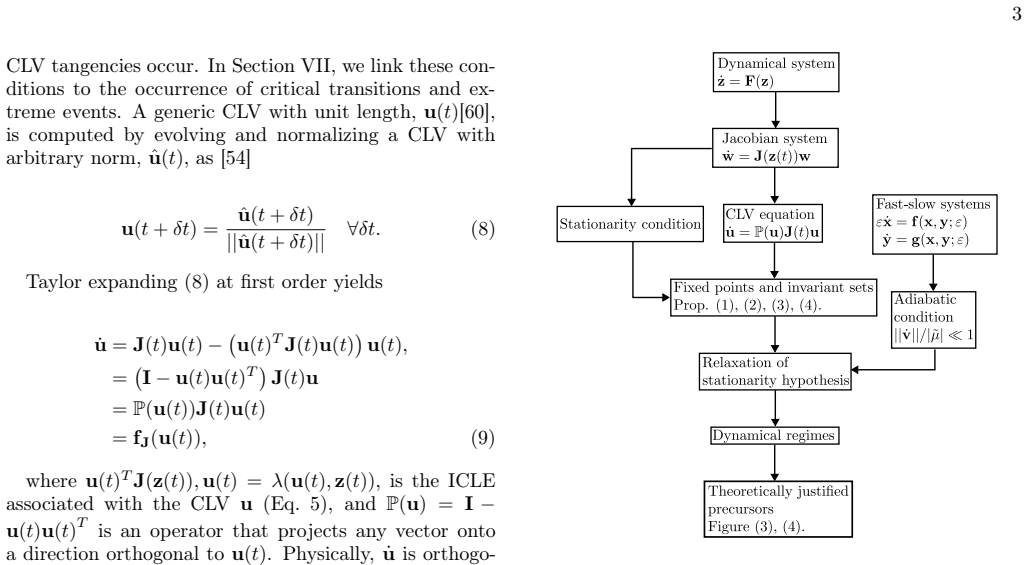
We propose a theory based on dynamical systems to explain and predict the occurrence of extreme events, of which critical transitions form a subset. In fast-slow nonlinear systems, we identify a cascade of events preceding extreme events: (i) a slow regime, in which the fast covariant Lyapunov vectors (CLVs) are both tangent to the fast eigenvectors and remain transversal to the slow subspace; (ii) a transition regime, in which the fast eigenvalues become neutrally stable while the fast CLVs are no longer tangent to the fast eigenvectors; and (iii) a critical regime, in which a strong spectral gap in the eigenvalues causes both fast and slow CLVs to become tangent along the dominant fast direction, breaking the transversality between fast and slow subspaces. Building on this cascade, we propose two precursors to forewarn the occurrence of extreme events. We numerically test the theory and precursors on low- and higher-dimensional systems. The proposed precursors predict extreme events and critical transitions with 100% precision and recall. This work opens opportunities for time-forecasting extreme events using theoretically grounded precursors.
Spatiotemporal chaotic systems are difficult to characterize in a model-free manner because of their high dimensionality, strong nonlinearity, and sensitivity to initial conditions. Coupled map lattices, as a representative class of extended nonlinear systems, exhibit diverse regimes such as frozen random pattern, defect chaotic diffusion, and fully developed turbulence. In this work, we propose an ensemble version of multiplexing local reservoir computing for the data-driven characterization of spatiotemporal chaos. By constructing multiple base learners with randomized hyperparameters and combining their outputs, the method improves prediction robustness and quantifies predictive uncertainty through ensemble spread. More importantly, we show that this uncertainty contains direct dynamical information. It identifies frozen positions in frozen random pattern, supports the estimation of defect diffusion coefficients in defect chaotic diffusion, and provides an effective indicator of chaotic intensity in fully developed turbulence. Analyses of the spatial power spectrum and Lyapunov exponent spectrum further support the consistency between the uncertainty field and the intrinsic dynamical properties of the system. These results show that ensemble reservoir computing can serve not only as a prediction tool but also as a data-driven framework for the dynamical characterization of high-dimensional nonlinear systems.
Review traces the role of chaotic dynamics across 40 years of theory development, from isolated particles to dissipative identical-particle,
abstractclick to expand
This chapter gives an overview of transport problems where chaotic dynamics of the system plays a crucial role. We begin with single-particle transport problems and then come to conservative and then dissipative systems of identical particles, which follows the historical way of developing the theory of Quantum Chaos over the past 40 years. We also include brief descriptions of key laboratory experiments on the discussed transport problems.
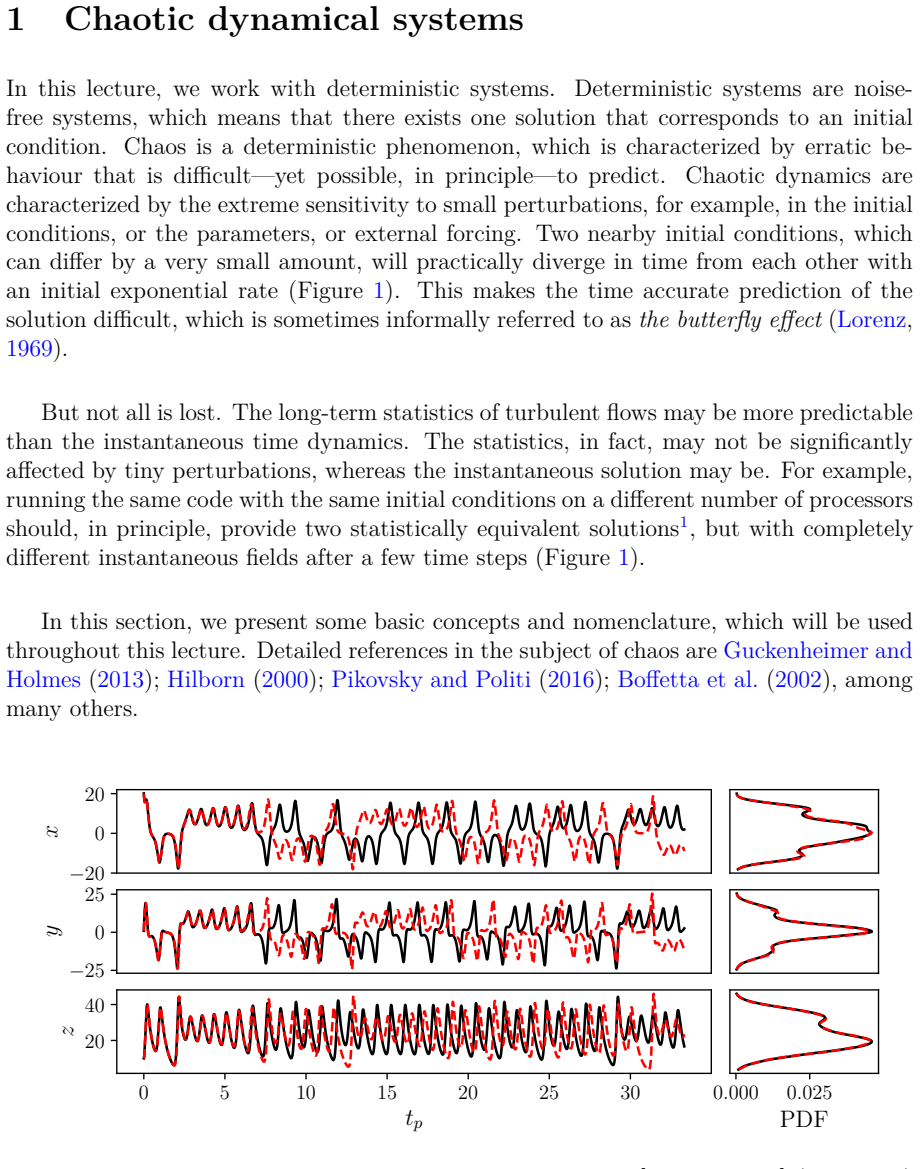
This chapter offers a principled approach to the prediction of chaotic systems from data. First, we introduce some concepts from dynamical systems' theory and chaos theory. Second, we introduce machine learning approaches for time-forecasting chaotic dynamics, such as echo state networks and long-short-term memory networks, whilst keeping a dynamical systems' perspective. Third, the lecture contains informal interpretations and pedagogical examples with prototypical chaotic systems (e.g., the Lorenz system), which elucidate the theory. The chapter is complemented by coding tutorials (online) at https://github.com/MagriLab/Tutorials.
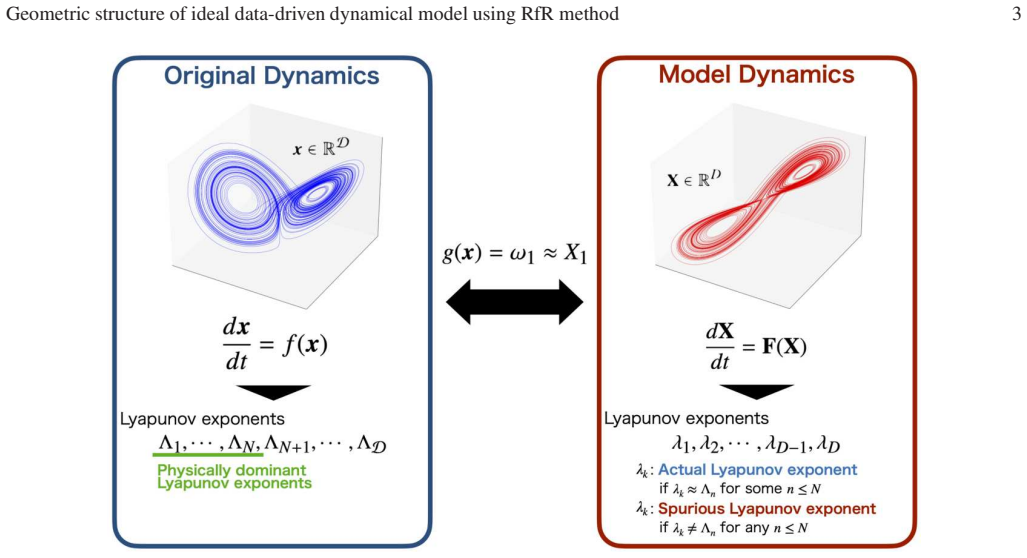
The Gaussian radial function-based Regression (RfR) method is a data-driven modeling approach that utilizes physically understandable variables from scalar time series, constructed using delay coordinates and Gaussian radial basis functions. Even when a model successfully describes an approximate trajectory of the original system, data-driven models rarely reconstruct negative Lyapunov exponents of chaotic dynamics. An ''ideal model'' should reconstruct the dynamical structure, including the negative (physically dominant) Lyapunov exponents. Comparing the ideal model and the non-ideal model, we investigate the geometric structure of the attractor of such models using the Lyapunov exponents and the corresponding Lyapunov vectors. Our investigation suggests that the ideal model reconstructs the original system's attractor as a time-delay embedding. By applying the results, we search for a method to construct an ideal model, which persists against the change in hyperparameters.
Targeted energy transfer (TET) from a Van der Pol oscillator coupled to a nonlinear energy sink (NES) is investigated under the action of a high-frequency external drive, which tunes the effective natural stiffness and promotes resonance capture, facilitating energy transfer. Using \textit{direct partition of motion} with \textit{complexification averaging}, the mechanism of energy flow and instability control through \textit{hopf bifurcation} is characterized. A spectrally evaluated Q-factor, based on FFT at the effective slow frequency, captures the resonance peaks indicating the efficient energy transfer. Finally, the energy-dissipation metric is consistent with these Q-maps and identifies the regions where transient energy pumping is most effective.
This paper presents an improved Matlab routine, FO_LE, for the numerical computation of Lyapunov exponents of fractional-order systems modeled by Caputo's derivative. It is conceived as an enhanced version of the former FO_Lyapunov and FO_NC_Lyapunov codes for commensurate and non-commensurate orders, respectively. The proposed approach replaces the Gram-Schmidt orthogonalization procedure with QR-based reorthonormalization and uses the new quadratic LIL predictor-corrector scheme for the integration of the extended variational system. Compared with the former implementations, the present routine benefits from the higher order of the fractional integrator LIL and applies to both commensurate and non-commensurate models. Like the previous code, FO_LE retains the full memory structure of the underlying Caputo model. The Matlab code for the LIL solver and for the computation of Lyapunov exponents with FO_LE are provided, while a fast implementation of LIL for commensurate and non-commensurate orders, LIL_nc, is available on MathWorks File Exchange. A benchmark problem with exact solution is used to compare the LIL-based solver with ABM-type methods, whereas the Rabinovich-Fabrikant system illustrates the computation of Lyapunov exponents in different dynamical regimes. The results indicate that the proposed implementation is a compact, robust, and efficient tool for the numerical study of stability and chaos in fractional-order systems.
We study the nature of chaos in finite and infinite dimensional systems through a comparison between the Kuramoto Sivashinsky (KS) equation, the Lorenz system, and a Lorenz type reduction of the KS equation proposed by Wilczak. Numerical simulations of the KS equation reveal intrinsic spatio temporal chaos, with disorder evolving simultaneously in space and time. In contrast, the Lorenz system and the Wilczak reduction exhibit low dimensional temporal chaos lacking spatial complexity. Lyapunov exponent analysis highlights the finite-dimensional convergence properties of the reduced systems and underscores the fundamentally different dynamical nature of chaos in the KS equation. In particular, we demonstrate that low-dimensional reductions may reproduce transient chaotic signatures but do not necessarily retain the structural properties of infinite-dimensional dissipative systems.
What dynamical quantity is actually controlled by higher-order interactions in chaotic oscillator networks remains unclear. In amplitude-active systems, chaos is often interpreted through coherence, yet coherence is not the quantity that governs instability. In this work, we study a minimal globally coupled quartet of nonisochronous Stuart-Landau oscillators with pairwise and symmetric three-body interactions. The pairwise baseline already supports a connected chaotic branch, and higher-order coupling reconstructs rather than creates this irregular dynamics. We show that chaos is organized not by phase coherence but by effective-frequency shear: higher-order coupling regulates amplitude heterogeneity, which nonisochronicity converts into shear, and shear controls how chaos is expressed under higher-order coupling. The Lyapunov response collapses onto a reduced shear-based description, revealing an indirect control pathway. These results establish that higher-order interactions control chaos only indirectly, by regulating an amplitude-shear mechanism rather than acting directly on synchrony.
Tunneling rates take an activated form set by effective classical barriers, unifying the two effects.
abstractclick to expand
The interplay between classical chaos and quantum tunneling is examined in driven nonlinear systems, with emphasis on how semi classical phase space structures influence purely quantum transport phenomena. We show that, in the presence of external driving and stochastic perturbations, tunneling rates acquire an activated form determined by effective classical barriers, providing a transparent link between chaotic dynamics and quantum tunneling. Within this framework, chaos assisted tunneling and coherent destruction of tunneling emerge as closely related manifestations of the same underlying phase space restructuring and interference effects induced by driving. The results offer a unified perspective on tunneling control in non integrable systems and remain relevant for modern studies of driven quantum dynamics and decoherence resistant transport.
In nonlinear dynamical systems, tipping refers to a critical transition from one steady state to another, typically catastrophic, steady state, often resulting from a saddle-node bifurcation. Recently, the machine-learning framework of parameter-adaptable reservoir computing has been applied to predict tipping in systems described by low-dimensional stochastic differential equations. However, anticipating tipping in complex spatiotemporal dynamical systems remains a significant open problem. The ability to forecast not only the occurrence but also the precise timing of such tipping events is crucial for providing the actionable lead time necessary for timely mitigation. By utilizing the mathematical approach of non-negative matrix factorization to generate dimensionally reduced spatiotemporal data as input, we exploit parameter-adaptable reservoir computing to accurately anticipate tipping. We demonstrate that the tipping time can be identified within a narrow prediction window across a variety of spatiotemporal dynamical systems, as well as in CMIP5 (Coupled Model Intercomparison Project 5) climate projections. Furthermore, we show that this reservoir-computing framework, utilizing reduced input data, is robust against common forecasting challenges and significantly alleviates the computational overhead associated with processing full spatiotemporal data.
A single parameter for the phase mismatch between forcing and memory sets the scale of particle loop displacements per cycle.
abstractclick to expand
Irreversible transport in time-periodic flows is commonly attributed to vorticity, nonlinear forcing, or symmetry breaking. We show that finite-memory reconstruction of the velocity gradient generates a purely geometric mechanism for transport even when the instantaneous flow remains locally irrotational at all times. Memory promotes the velocity gradient to a history-dependent connection along particle trajectories whose noncommutativity produces a finite curvature over one forcing cycle. The associated holonomy generates a measurable loop displacement controlled solely by the dimensionless parameter {\omega}{\tau}_m, which quantifies the phase mismatch between forcing and reconstruction. The predicted scaling is consistent with independently reported measurements across distinct oscillatory flow configurations, supporting the interpretation of memory-induced curvature as a minimal geometric origin of irreversible transport in periodically driven continua.
In this paper, the Ensemble Kalman Filter is compared with a 4DVAR Data Assimilation System in chaotic dynamics. The Lorenz model is chosen for its simplicity in structure and its dynamical similarities with primitive equation models, such as modern numerical weather forecasting. It was examined whether the Ensemble Kalman Filter and 4DVAR are effective in tracking the control for 10%, 20%, and 40% of error in the initial conditions.
With 10% of noise, the trajectories of both methods are almost perfect. With 20% of noise, the differences between the simulated trajectories and the observations, as well as the true trajectories, are rather small for the Ensemble Kalman Filter but almost perfect for 4DVAR. However, the differences become increasingly significant at the later part of the integration period for the Ensemble Kalman Filter, due to the chaotic behavior of the system. For the case with 40% error in the initial conditions, neither the Ensemble Kalman Filter nor 4DVAR could track the control with only three observations ingested.
To evaluate a more realistic assimilation application, an experiment was created in which the Ensemble Kalman Filter ingested a single observation at the 180th time step in the X, Y, and Z Lorenz variables, and only in the X variable. The results show a perfect fit of 4DVAR and the control during a complete integration period, but the Ensemble Kalman Filter shows disagreement after the 80th time step. On the other hand, a considerable disagreement between the Ensemble Kalman Filter trajectories and the control is observed, as well as a total failure of 4DVAR. Better results were obtained for the case in which observations cover all the components of the model vector.
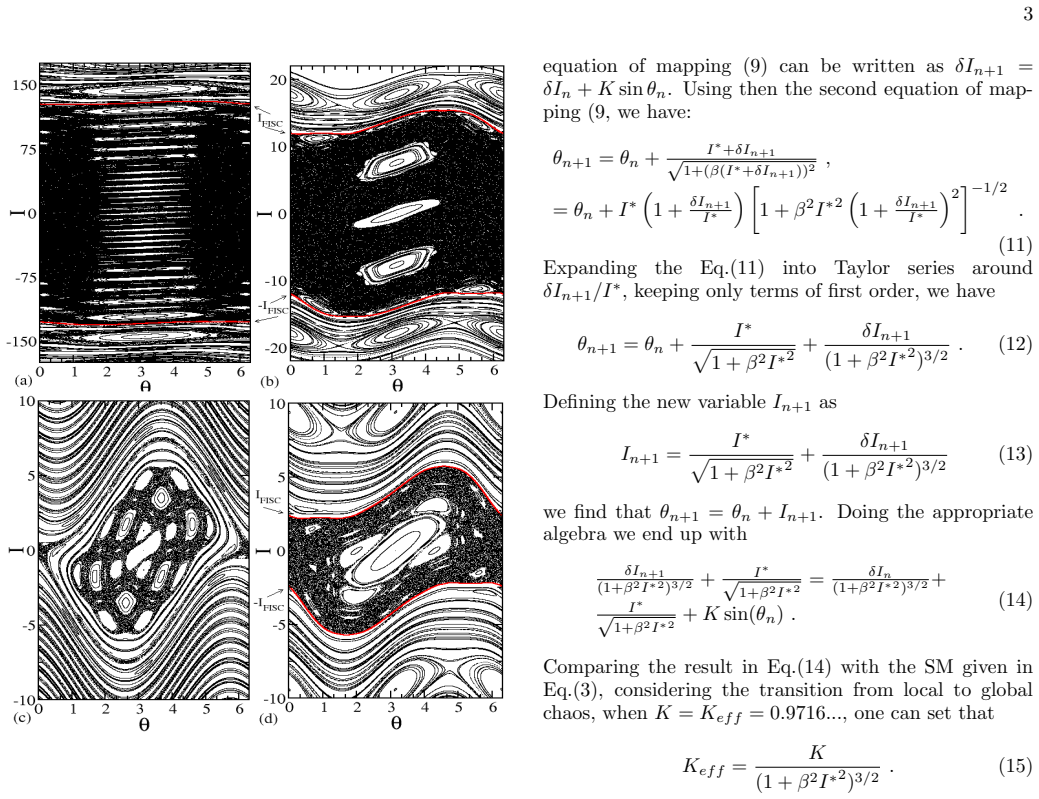
We investigate some statistical and transport properties of the relativistic standard map. Through the Hamiltonian of a wave packet under an electric potential, we are able to obtain a relativistic version of the standard map, where there are two control parameters that rule the dynamics: K, which is the classical intensity parameter, and {\beta}, which controls the relativity. The phase space is mixed and exhibits confined local chaos for {\beta} near unity, approaching integrability. As {\beta} is diminished (entering the semi-classical regime), diffusion in the action variable begins to occur. However, the phase space loses its axial symmetry and an invariant curve appears to limit the diffusion as {\beta} gets smaller. We investigate the diffusion in the action variable as a function of the number of iterations, showing that the root mean square action grows initially and bends towards a saturation regime for long times. Scaling properties were established for this behavior as a function of {\beta}, and a perfect collapse of the curves was obtained, indicating scaling invariance. Additionally, we investigated the transport properties concerning the survival probability of initial conditions. The decay rates of the survival probability are mainly exponential, followed by power-law tails. As we vary the value of {\beta}, the escape rates become slower and also obey a scaling law in their decay.
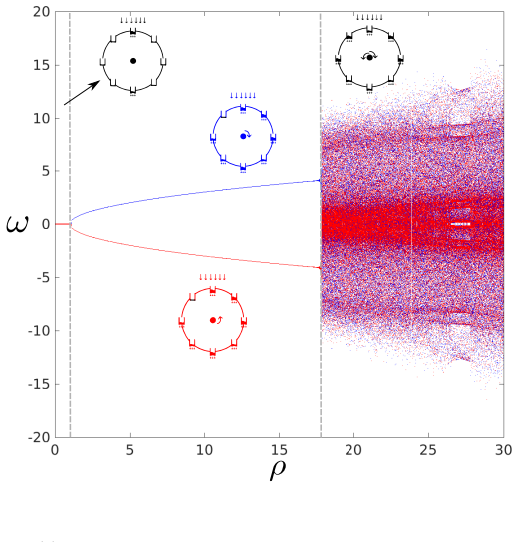
A stability-axis-flipping bifurcation exchanges stable limit cycles between natural modes, so initial conditions alone set the observed long
abstractclick to expand
This study investigates the existence and stability of limit cycles resulting from self-excited oscillations in linear multi-degree-of-freedom systems subjected to discontinuous, state-dependent forcing. Using the method of averaging and slow-flow phase-plane analysis, analytical expressions are derived for the amplitudes and stability boundaries of limit cycles in a two-degree-of-freedom system. The analysis demonstrates that stable limit cycles may exist in all natural modes, with the steady-state response governed by initial conditions in regimes of multistability. A central contribution of this work is the identification and analytical characterization of the stability-axis-flipping (SAF) bifurcation, which serves as the governing mechanism for the exchange of stability between modes. The framework is then systematically extended to systems with higher degrees of freedom, confirming that the SAF bifurcation remains a universal feature, even under varying feedback configurations. The steady-state dynamics, summarized through stability maps and validated by numerical simulations, delineate the existence and stability regions of modal limit cycles as functions of key system parameters. These results provide efficient criteria for guiding optimization studies to mitigate or generate limit cycles at targeted frequencies in flexible mechanical structures.