Recognition: unknown
Biprops
Pith reviewed 2026-05-10 07:13 UTC · model grok-4.3
The pith
Symmetric weak multicategories give rise to biprops via a functor that also maps multifunctors to biprop morphisms.
A machine-rendered reading of the paper's core claim, the machinery that carries it, and where it could break.
Core claim
Biprops are bicategories whose objects form a free monoid and are equipped with structure resembling a symmetric strict tensor product. The paper proves that a symmetric weak multicategory gives rise to a biprop and a symmetric weak multifunctor gives rise to a morphism of biprops. This assignment defines a functor from the category of symmetric weak multicategories to the category of biprops.
What carries the argument
The biprop, a bicategory whose objects form a free monoid equipped with structure resembling a symmetric strict tensor product.
If this is right
- Every symmetric weak multicategory corresponds to a biprop.
- Every symmetric weak multifunctor corresponds to a morphism of biprops.
- The assignment is functorial, preserving identities and composition.
- Biprops serve as a common generalization that includes coloured props as special cases.
Where Pith is reading between the lines
- The functor supplies a concrete way to compare symmetric weak multicategories by comparing their associated biprops.
- Further 2-categorical operations on the biprop side may correspond to operations on the original multicategory that were not previously visible.
- One could check whether the functor is full and faithful or admits an adjoint.
Load-bearing premise
A bicategory whose objects form a free monoid can be equipped with coherent structure resembling a symmetric strict tensor product without inconsistencies in the associators, unitors, or symmetry data.
What would settle it
An explicit symmetric weak multicategory whose induced biprop violates coherence for the tensor product or symmetry data.
Figures


read the original abstract
We define biprops as a generalization of coloured props and of symmetric weak multicategories. These are bicategories whose objects form a free monoid. They are equipped with some structure resembling a symmetric strict tensor product. We prove that a symmetric weak multicategory gives rise to a biprop and a symmetric weak multifunctor gives rise to a morphism of biprops. This is a functor from the category of symmetric weak multicategories to the category of biprops.
Editorial analysis
A structured set of objections, weighed in public.
Referee Report
Summary. The manuscript defines biprops as bicategories whose objects form a free monoid, equipped with additional structure resembling a symmetric strict tensor product that generalizes coloured props and symmetric weak multicategories. It asserts the existence of a functor from the category of symmetric weak multicategories to the category of biprops, constructed by showing that every symmetric weak multicategory induces a biprop and every symmetric weak multifunctor induces a morphism of biprops.
Significance. If the construction is carried through with full verification of all bicategory axioms and tensor coherence diagrams, the result would supply a concrete embedding of symmetric weak multicategories into a bicategorical setting with strict object-level tensor, potentially clarifying relationships between operadic and bicategorical structures. The paper does not supply machine-checked proofs or explicit parameter-free derivations, so the significance remains conditional on the missing technical details.
major comments (3)
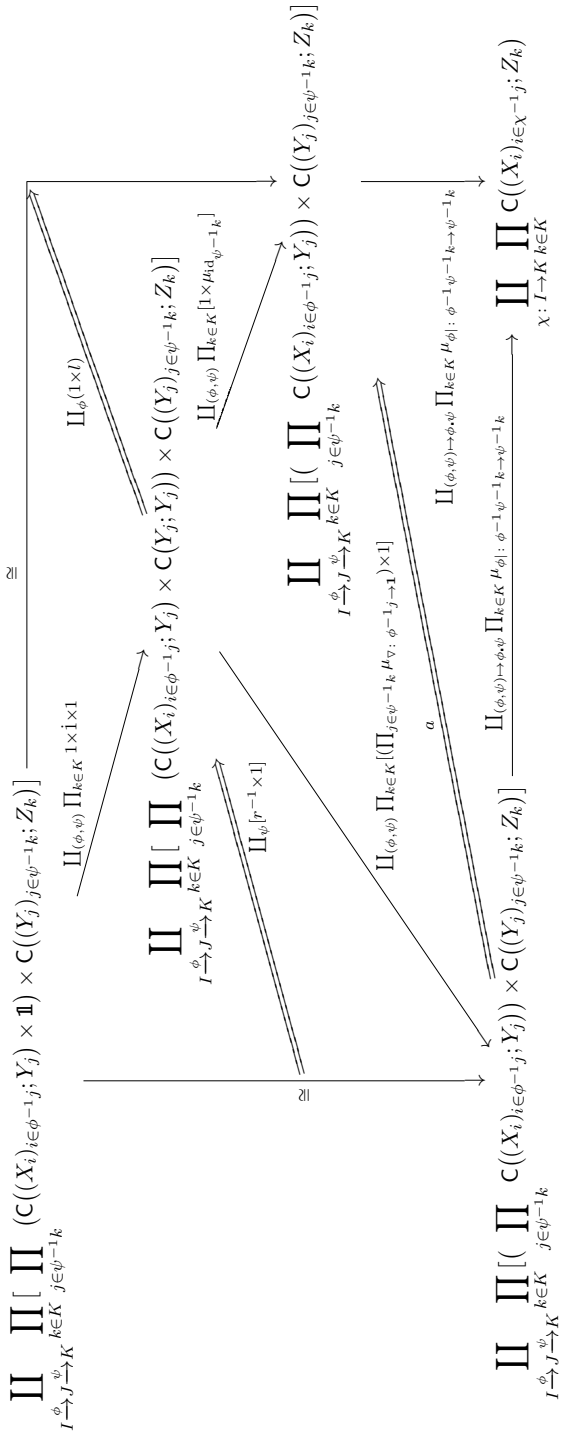
- [Abstract, §2] Abstract and §2 (definition of biprop): the claim that the induced 1-cell and 2-cell data satisfy all bicategory axioms plus the symmetric strict tensor coherence diagrams is asserted without exhibiting the explicit associators, unitors, or braiding 2-cells derived from the weak multicategory composition, nor any check that they obey the pentagon, triangle, or hexagon identities.
- [§3] §3 (functorial construction): the passage from a symmetric weak multicategory to a biprop is described at the level of objects and 1-cells but supplies no verification that the induced symmetry isomorphisms commute with the associators in the required diagrams; any mismatch would render the resulting structure not a biprop.
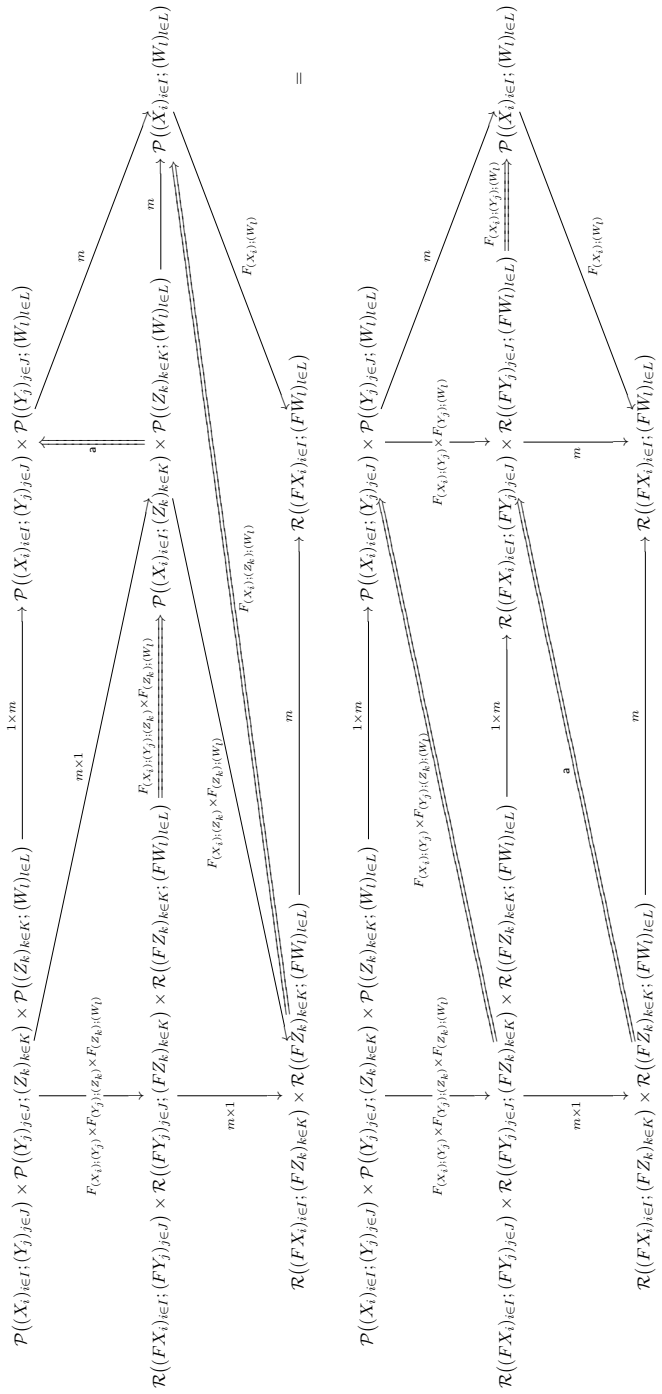
- [§4] §4 (multifunctor case): the claim that symmetric weak multifunctors induce morphisms of biprops likewise lacks an explicit check that the induced 2-cell data preserve the tensor coherence; this step is load-bearing for the functoriality assertion.
minor comments (2)
- [§2] Notation for the free monoid on objects is introduced without a reference to the standard construction in the literature on coloured operads or props.
- [Abstract] The abstract states the main theorem but does not indicate where in the text the coherence verifications appear; a forward reference would improve readability.
Simulated Author's Rebuttal
We thank the referee for their careful reading of the manuscript and for highlighting the need for greater explicitness in the verifications. We have revised the paper to include the requested details on the constructions of the 2-cells and the coherence checks. Our responses to the major comments follow.
read point-by-point responses
-
Referee: [Abstract, §2] Abstract and §2 (definition of biprop): the claim that the induced 1-cell and 2-cell data satisfy all bicategory axioms plus the symmetric strict tensor coherence diagrams is asserted without exhibiting the explicit associators, unitors, or braiding 2-cells derived from the weak multicategory composition, nor any check that they obey the pentagon, triangle, or hexagon identities.
Authors: We agree that the original §2 presented the induced data at a high level. The revised manuscript adds an explicit subsection constructing the associators, unitors, and braiding 2-cells directly from the weak composition and symmetry operations of the multicategory. We then verify the pentagon, triangle, and hexagon identities by reducing them to the corresponding coherence axioms already present in the definition of a symmetric weak multicategory. revision: yes
-
Referee: [§3] §3 (functorial construction): the passage from a symmetric weak multicategory to a biprop is described at the level of objects and 1-cells but supplies no verification that the induced symmetry isomorphisms commute with the associators in the required diagrams; any mismatch would render the resulting structure not a biprop.
Authors: The revised §3 now contains a direct verification that the symmetry isomorphisms commute with the associators. The argument proceeds by chasing the relevant diagrams using the naturality of the symmetry with respect to multicategory composition together with the coherence conditions already satisfied by the weak multicategory. revision: yes
-
Referee: [§4] §4 (multifunctor case): the claim that symmetric weak multifunctors induce morphisms of biprops likewise lacks an explicit check that the induced 2-cell data preserve the tensor coherence; this step is load-bearing for the functoriality assertion.
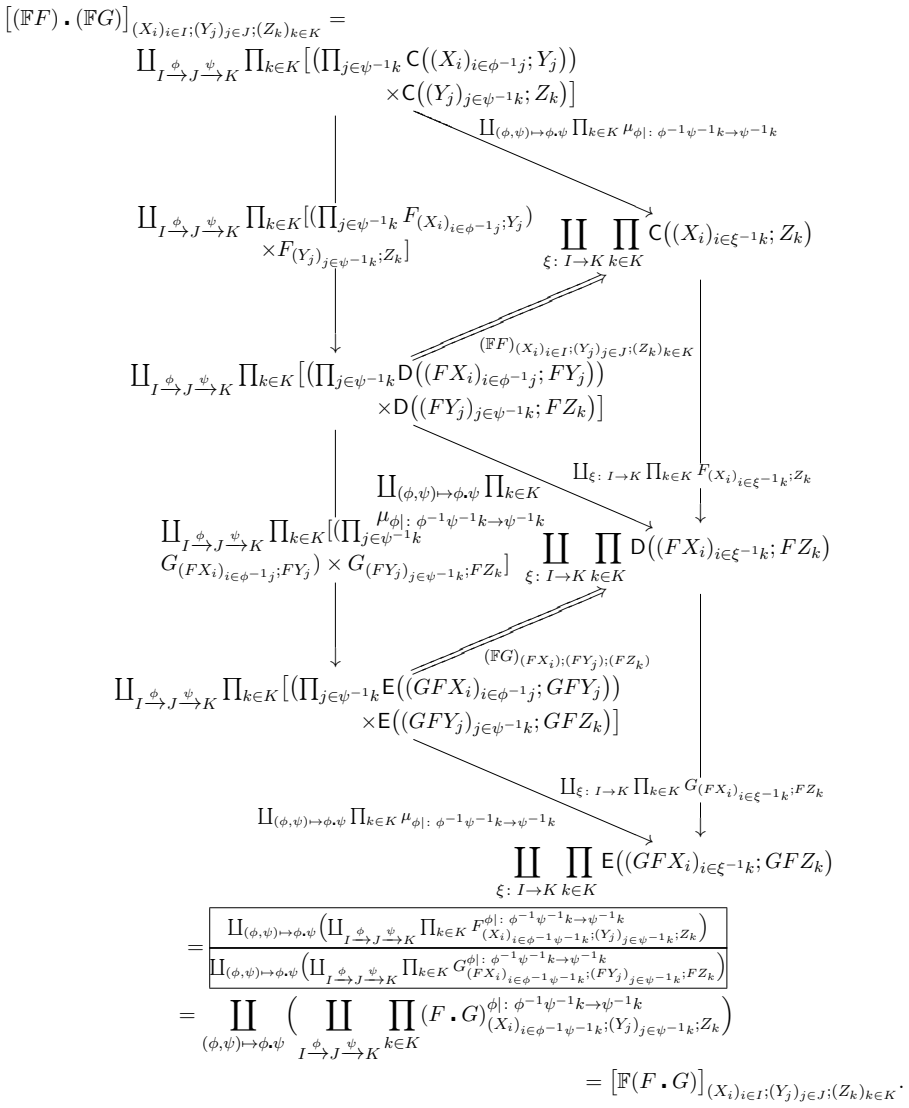
Authors: We have expanded §4 to include the explicit verification that the 2-cells induced by a symmetric weak multifunctor preserve all tensor coherence diagrams. This check uses the preservation properties of the multifunctor with respect to composition and symmetry, thereby confirming that the construction is functorial. revision: yes
Circularity Check
No circularity; explicit construction from weak multicategories to biprops is independent
full rationale
The paper defines biprops as bicategories whose objects form a free monoid equipped with symmetric strict tensor-like structure, then proves an explicit functorial construction sending symmetric weak multicategories to biprops (and multifunctors to morphisms). No equations reduce a derived quantity to a fitted input by construction, no self-definitional loops appear, and no load-bearing self-citations or uniqueness theorems imported from the author's prior work are invoked to force the result. The derivation consists of direct verification of bicategory axioms and coherence diagrams from the given weak multi-composition data, rendering the central claim self-contained.
Axiom & Free-Parameter Ledger
axioms (2)
- standard math Bicategories exist and can have objects forming a free monoid.
- domain assumption A structure resembling a symmetric strict tensor product can be defined coherently on such bicategories.
invented entities (1)
-
biprop
no independent evidence
Reference graph
Works this paper leans on
-
[1]
Bartlett, Quasistrict symmetric monoidal 2-categories via wire diagrams , 2014, arXiv:1409.2148
[Bar14] Bruce H. Bartlett, Quasistrict symmetric monoidal 2-categories via wire diagrams , 2014, arXiv:1409.2148. [B´ en67] Jean B´ enabou,Introduction to bicategories , Lecture Notes in Mathematics, vol. 47,
-
[2]
Springer-Verlag, New York, 1967, pp. 1–77. [HR15] Philip Hackney and Marcy Robertson, On the category of props , Appl. Categ. Struct. 23 (2015), no. 4, 543–573, doi:10.1007/s10485-014-9369-4, arXiv:1207.2773. 38 [JY21] Niles Johnson and Donald Yau, 2-dimensional categories, Oxford University Press, Oxford, 2021, doi:10.1093/oso/9780198871378.001.0001, arX...
discussion (0)
Sign in with ORCID, Apple, or X to comment. Anyone can read and Pith papers without signing in.