Recognition: unknown
Corneal deformation mapping and FE-based strain analysis via digital image correlation: biomechanical changes after CXL and laser refractive surgery
Pith reviewed 2026-05-10 01:15 UTC · model grok-4.3
The pith
An integrated 3D imaging and finite-element protocol maps full-field corneal strains under physiologic pressure and derives anisotropic tissue properties after cross-linking or stromal ablation.
A machine-rendered reading of the paper's core claim, the machinery that carries it, and where it could break.
Core claim
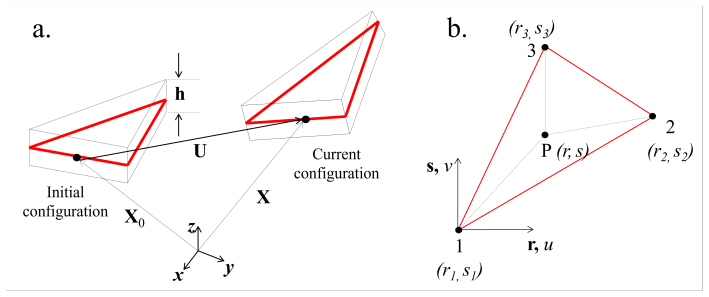
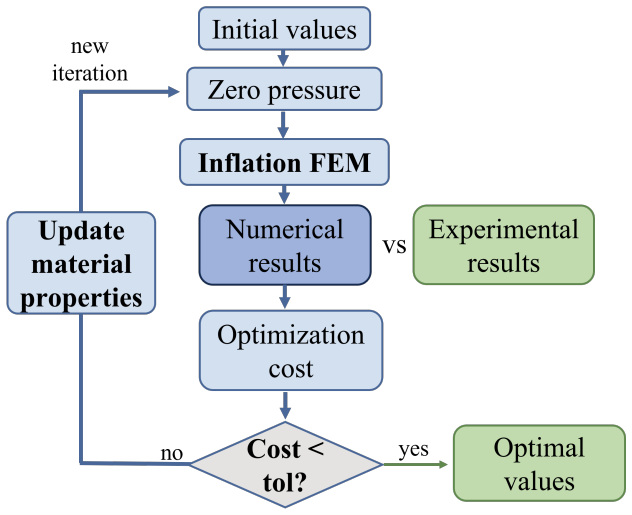
The paper establishes an end-to-end experimental-computational protocol that combines inflation testing of porcine corneas with 3D digital image correlation to obtain full-field displacement and strain maps, integrated into a membrane-theory finite element framework for resolving principal in-plane strains used in inverse modeling to derive anisotropic hyperelastic parameters, thereby enabling quantitative evaluation of biomechanical changes induced by CXL treatment and anterior stromal ablation.
What carries the argument
The 3D digital image correlation system for dense pointwise displacement mapping on the anterior corneal surface, coupled with a membrane-theory finite element model that computes in-plane strains for inverse identification of anisotropic hyperelastic parameters.
Load-bearing premise
The membrane-theory finite-element framework together with the inverse modeling step accurately recovers the true anisotropic hyperelastic parameters without significant bias from unmodeled through-thickness effects, boundary conditions, or DIC measurement noise.
What would settle it
If the hyperelastic parameters identified from one set of pressure steps fail to predict the measured 3D-DIC displacement fields under a new, unused pressure increment on the same cornea, the constitutive description would be shown to be incomplete.
Figures




read the original abstract
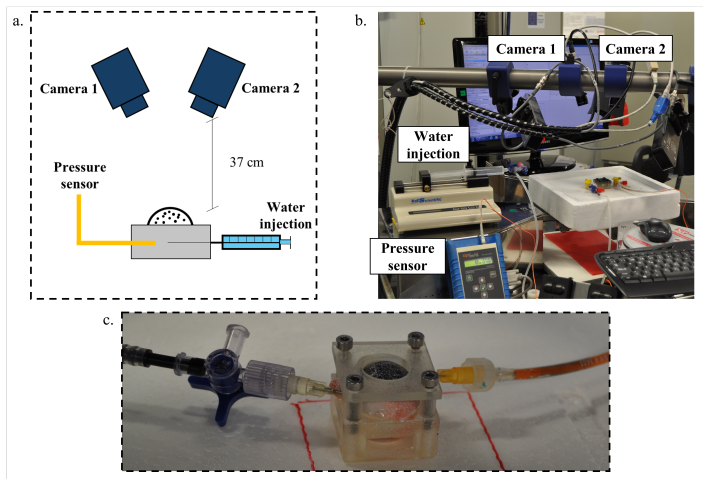
Accurate assessment of corneal mechanical properties is critical for understanding ocular biomechanics, predicting refractive surgery outcomes, and optimizing cross-linking (CXL) treatments. Conventional uniaxial tensile test is limited by non-physiological boundary conditions and simplified stress distributions. Inflation testing more closely reproduces the in vivo stress state but has traditionally lacked full-field deformation mapping. In this work, we present an integrated experimental-computational protocol combining inflation testing of freshly enucleated porcine eyes with high-resolution three-dimensional digital image correlation (3D-DIC). Fifteen corneas were analyzed across three cohorts: (i) de-epithelialized controls, (ii) CXL-treated (standard Dresden protocol), and (iii) anterior stromal ablation via femtosecond laser. Samples were subjected to controlled intraocular pressure (IOP) elevations up to 40 mmHg. The 3D-DIC approach provided dense, pointwise displacement and strain maps across the anterior surface, successfully quantifying the localized stiffening effects of CXL and the increased compliance induced by stromal ablation. These full-field kinematic data were integrated into a membrane-theory finite element framework to resolve principal in-plane strains, that were used for subsequent inverse modeling to derive anisotropic hyperelastic parameters of porcine corneal tissue. Overall, the method establishes an end-to-end route from physiologic loading to full-field strain mapping and constitutive parameter identification, enabling quantitative evaluation of treatment-induced biomechanical changes in the cornea.
Editorial analysis
A structured set of objections, weighed in public.
Referee Report
Summary. The manuscript describes an integrated protocol for inflation testing of porcine corneas combined with 3D digital image correlation (DIC) to obtain full-field anterior-surface displacements and strains up to 40 mmHg IOP. These data are fed into a membrane-theory finite-element model whose principal in-plane strains are used to inversely identify anisotropic hyperelastic constitutive parameters for three cohorts (de-epithelialized controls, Dresden-protocol CXL, and femtosecond anterior stromal ablation). The central claim is that the workflow provides quantitative, treatment-specific biomechanical characterization under physiologic loading.
Significance. If the inverse identification step is shown to be free of systematic bias, the approach would supply a physiologically grounded route to full-field strain mapping and parameter estimation that is more relevant to in-vivo conditions than uniaxial testing. This could support quantitative comparisons of stiffening after CXL versus compliance after ablation and thereby inform surgical planning and treatment optimization.
major comments (2)
- [Methods (FE modeling)] Methods (FE modeling subsection): the manuscript employs a membrane-theory formulation that enforces zero transverse stress and uniform through-thickness strain. Given the reported corneal thickness-to-radius ratio of approximately 0.07, bending moments and transverse shear under 40 mmHg inflation are expected to be non-negligible; no 3D solid-element benchmark, synthetic recovery test, or sensitivity study to through-thickness stiffness gradients (especially post-CXL or ablation) is described. This omission directly affects the reliability of the recovered anisotropic hyperelastic parameters.
- [Results (inverse modeling)] Results (inverse modeling and parameter tables): the anisotropic hyperelastic constants are obtained by fitting to the same DIC-derived strain fields used for the primary analysis. No independent validation (e.g., forward prediction on a held-out pressure step, comparison with literature uniaxial or inflation moduli, or reported parameter uncertainty from DIC noise) is provided. Consequently the quantitative differences reported between cohorts rest on an unverified inverse step.
minor comments (2)
- [Abstract] Abstract: the phrase 'resolve principal in-plane strains, that were used for subsequent inverse modeling' contains a grammatical error; rephrase for clarity.
- [Figure captions] Figure captions and text should explicitly state the number of specimens per cohort and any exclusion criteria to allow assessment of statistical power.
Simulated Author's Rebuttal
We thank the referee for the constructive and detailed comments on our manuscript. We have carefully reviewed the concerns regarding the finite-element modeling assumptions and the validation of the inverse identification procedure. Below we respond point by point and outline the revisions we will incorporate.
read point-by-point responses
-
Referee: Methods (FE modeling subsection): the manuscript employs a membrane-theory formulation that enforces zero transverse stress and uniform through-thickness strain. Given the reported corneal thickness-to-radius ratio of approximately 0.07, bending moments and transverse shear under 40 mmHg inflation are expected to be non-negligible; no 3D solid-element benchmark, synthetic recovery test, or sensitivity study to through-thickness stiffness gradients (especially post-CXL or ablation) is described. This omission directly affects the reliability of the recovered anisotropic hyperelastic parameters.
Authors: We agree that the membrane-theory formulation represents an approximation that neglects bending stiffness and transverse shear. Although the central cornea under inflation is dominated by in-plane membrane stresses, the thickness-to-radius ratio of ~0.07 indicates that bending contributions near the limbus and potential through-thickness gradients (particularly after CXL or ablation) warrant further scrutiny. To address this, we will revise the Methods section to provide a more detailed justification for the membrane model, add a sensitivity study comparing membrane and shell-element formulations on representative datasets, and include a brief discussion of possible limitations arising from through-thickness property variations. These changes will be incorporated in the revised manuscript. revision: yes
-
Referee: Results (inverse modeling and parameter tables): the anisotropic hyperelastic constants are obtained by fitting to the same DIC-derived strain fields used for the primary analysis. No independent validation (e.g., forward prediction on a held-out pressure step, comparison with literature uniaxial or inflation moduli, or reported parameter uncertainty from DIC noise) is provided. Consequently the quantitative differences reported between cohorts rest on an unverified inverse step.
Authors: We recognize that fitting the constitutive parameters to the full strain dataset without independent validation limits the strength of the quantitative claims. While the recovered parameters align with expected trends (increased stiffness after CXL, increased compliance after ablation) and are broadly consistent with published porcine corneal data, we did not perform held-out forward predictions or explicit uncertainty quantification in the submitted version. In the revision we will add forward predictions on pressure steps withheld from the fitting process, propagate DIC noise to obtain parameter uncertainties, and include direct comparisons with literature values for uniaxial and inflation-derived moduli. These additions will appear in the revised Results and Discussion sections. revision: yes
Circularity Check
No significant circularity; standard inverse identification from measured data
full rationale
The paper's chain is: 3D-DIC measures full-field displacements and strains under controlled IOP inflation; these kinematic data are fed into a membrane-theory FE model whose outputs (principal in-plane strains) are then used to inversely identify anisotropic hyperelastic parameters for each cohort. This is ordinary parameter fitting to experimental observations, not a claim that the parameters are independently predicted or that any quantity is recovered by construction from itself. No equations are shown that equate a derived result to its own input, no fitted quantity is relabeled as a prediction, and no load-bearing premise rests on a self-citation whose content is unverified. The central claim (quantitative comparison of treatment effects via identified parameters) therefore contains independent empirical content and does not reduce to tautology.
Axiom & Free-Parameter Ledger
free parameters (1)
- anisotropic hyperelastic parameters
axioms (1)
- domain assumption membrane-theory finite element framework accurately resolves principal in-plane strains from surface displacements
Reference graph
Works this paper leans on
-
[1]
Journal of the Royal Society Interface 1, 3–15
Application of structural analysis to the mechanical behaviour of the cornea. Journal of the Royal Society Interface 1, 3–15. doi:10.1098/rsif.2004.0002. Ariza-Gracia, M.A., Ortillés, Á., Cristóbal, J.A., Rodríguez Matas, J.F., Calvo, B.,
-
[2]
Jour- nal of the Mechanical Behavior of Biomedical Materials 74, 304–314
A numerical-experimental protocol to characterize corneal tissue with an application to predict astigmatic keratotomy surgery. Jour- nal of the Mechanical Behavior of Biomedical Materials 74, 304–314. doi:10.1016/j.jmbbm.2017.06.017. Ariza-Gracia, M.A., Wu, W., Calvo, B., Malvè, M., Büchler, P., Ro- driguez Matas, J.F.,
-
[3]
Fluid–structure simulation of a general non- contact tonometry: a required complexity? Computer Methods in Applied Mechanics and Engineering 340, 202–215. doi:10.1016/j.cma.2018.05.031. Boschetti, F., Triacca, V., Spinelli, L., Pandolfi, A.,
-
[4]
Journal of Biomechanical Engineering 134, 031003
Mechanical char- acterization of porcine corneas. Journal of Biomechanical Engineering 134, 031003. doi:10.1115/1.4006089. Boyce, B.L., Grazier, J.M., Jones, R.E., Nguyen, T.D.,
-
[5]
Full-field de- formation of bovine cornea under constrained inflation conditions. Bioma- terials 29, 3896–3904. doi:10.1016/j.biomaterials.2008.06.011. Cabeza-Gil, I., Frechilla, J., Calvo, B.,
-
[6]
32 Chang, S.H., Zhou, D., Eliasy, A., Li, Y.C., Elsheikh, A.,
doi:10.1038/s41598-023-36694-0. 32 Chang, S.H., Zhou, D., Eliasy, A., Li, Y.C., Elsheikh, A.,
-
[7]
Experi- mental evaluation of stiffening effect induced by UVA/riboflavin corneal cross-linking using intact porcine eye globes. PLOS ONE 15, e0240724. doi:10.1371/journal.pone.0240724. Elsheikh, A., Alhasso, D., Rama, P.,
-
[8]
Experimental Eye Research 86, 783–790
Biomechanical properties of human and porcine corneas. Experimental Eye Research 86, 783–790. doi:10.1016/j.exer.2008.02.006. Elsheikh, A., Wang, D.,
-
[9]
Computer Methods in Biomechanics and Biomedical Engineer- ing 10, 85–95
Numerical modelling of corneal biomechanical behaviour. Computer Methods in Biomechanics and Biomedical Engineer- ing 10, 85–95. doi:10.1080/10255840600976013. Elsheikh, A., Wang, D., Pye, D.,
-
[10]
Journal of Refractive Surgery 23, 808–818
Determination of the modulus of elasticity of the human cornea. Journal of Refractive Surgery 23, 808–818. doi:10.3928/1081-597X-20071001-11. Elsheikh, A., Whitford, C., Hamarashid, R., Kassem, W., Joda, A., Büchler, P.,
-
[11]
Medical Engineering & Physics 35, 211–216
Stress free configuration of the human eye. Medical Engineering & Physics 35, 211–216. doi:10.1016/j.medengphy.2012.09.006. Eltony, A.M., Shao, P., Yun, S.H.,
-
[12]
doi:10.1038/s41467-022-29038-5. Frigelli, M., Lohmüller, R., Ariza Gracia, M.A., Schlunck, G., Lang, S.J., Torres-Netto, E.A., Hafezi, F., Büchler, P., Kling, S.,
-
[13]
bioRxiv , 2025.09.02.673622doi:10.1101/2025.09.02.673622
Integration of mechanical testing, in vivo optical coherence elastography and person- alized finite element modeling to predict geometrical outcomes of corneal 33 cross-linking. bioRxiv , 2025.09.02.673622doi:10.1101/2025.09.02.673622. preprint. Gasser, T.C., Ogden, R.W., Holzapfel, G.A.,
-
[14]
Journal of the Royal Society Interface 3, 15–35
Hyperelastic modelling of arterial layers with distributed collagen fibre orientations. Journal of the Royal Society Interface 3, 15–35. doi:10.1098/rsif.2005.0073. Hammond, G.M., Young, R.D., Muir, D.D., Quantock, A.J.,
-
[15]
Journal of Biome- chanical Engineering 147, 091003–1–091003–8
Microstructure and in-plane mechan- ical property comparison of human and porcine cornea. Journal of Biome- chanical Engineering 147, 091003–1–091003–8. doi:10.1115/1.4068828. Hayes, S., Boote, C., Lewis, J., Sheppard, J., Abahussin, M., Quantock, A.J., Purslow, C., Votruba, M., Meek, K.M.,
-
[16]
The Anatomical Record 290, 1542–1550
Comparative study of fibril- lar collagen arrangement in the corneas of primates and other mammals. The Anatomical Record 290, 1542–1550. doi:10.1002/ar.20613. Iseli, H.P., Thiel, M.A., Hafezi, F., Kampmeier, J., Seiler, T.,
-
[17]
Ultravio- letA/riboflavincornealcross-linkingforinfectiouskeratitisassociatedwith corneal melts. Cornea 27, 590–594. doi:10.1097/ICO.0b013e318169d698. Meek, K.M., Boote, C.,
-
[18]
Progress in Retinal and Eye Research 28, 369–392
The use of X-ray scattering tech- niques to quantify the orientation and distribution of collagen in the corneal stroma. Progress in Retinal and Eye Research 28, 369–392. doi:10.1016/j.preteyeres.2009.06.005. 34 Meek, K.M., Knupp, C.,
-
[19]
Progress in Retinal and Eye Research 49, 1–16
Corneal structure and trans- parency. Progress in Retinal and Eye Research 49, 1–16. doi:10.1016/j.preteyeres.2015.07.001. Menduni, F., Davies, L.N., Madrid-Costa, D., Fratini, A., Wolffsohn, J.S.,
-
[20]
Contact Lens and Anterior Eye 41, 13–17
Characterisation of the porcine eyeball as an in-vitro model for dry eye. Contact Lens and Anterior Eye 41, 13–17. doi:10.1016/j.clae.2017.09.003. Nambiar, M.H., Liechti, L., Müller, F., Bernau, W., Studer, H., Roy, A.S., Seiler, T.G., Büchler, P.,
-
[21]
Experimental Eye Research 224, 109266
Orientation and depth depen- dent mechanical properties of the porcine cornea: Experiments and parameter identification. Experimental Eye Research 224, 109266. doi:10.1016/j.exer.2022.109266. epub 2022 Sep
-
[22]
Biomechanics and Modeling in Mechanobiology 10, 323–337
An inverse finite element method for determining the anisotropic properties of the cornea. Biomechanics and Modeling in Mechanobiology 10, 323–337. doi:10.1007/s10237-010-0237-3. Nguyen, T.M., Aubry, J.F., Fink, M., Bercoff, J., Tanter, M.,
-
[23]
Investigative Ophthalmology & Visual Science 55, 7545–7552
In vivo evidence of porcine cornea anisotropy using supersonic shear wave imaging. Investigative Ophthalmology & Visual Science 55, 7545–7552. doi:10.1167/iovs.14-15127. Pandolfi, A., Holzapfel, G.A.,
-
[24]
Journal of Biomechanical Engineering 130, 061006
Three-dimensional modeling and com- putational analysis of the human cornea considering distributed collagen fibril orientations. Journal of Biomechanical Engineering 130, 061006. doi:10.1115/1.2982251. 35 Qiao, X., Chen, D., Huo, H., Tang, M., Tang, Z., Dong, Y., Liu, X., Fan, Y.,
-
[25]
Medicine in Novel Technology and Devices 11, 100086
Full-field strain mapping for characterization of structure-related variation in corneal biomechanical properties using digital image correla- tion (DIC) technology. Medicine in Novel Technology and Devices 11, 100086. doi:10.1016/j.medntd.2021.100086. Rama, G., Marinkovic, D., Zehn, M.,
-
[26]
American Journal of Engineering and Applied Sciences 9, 420–431
Efficient co-rotational 3-node shell element. American Journal of Engineering and Applied Sciences 9, 420–431. doi:10.3844/ajeassp.2016.420.431. Wang, J., Liu, X., Bao, F., Lopes, B.T., Wang, L., Eliasy, A., Abass, A., Elsheikh, A.,
-
[27]
Medicine in Novel Technology and Devices 11, 100074
Review of ex-vivo characterisation of corneal biomechanics. Medicine in Novel Technology and Devices 11, 100074. doi:10.1016/j.medntd.2021.100074. Whitford, C., Joda, A., Jones, S., Bao, F., Rama, P., Elsheikh, A.,
-
[28]
doi:10.1186/s40662-016-0052-8. Wilson, A., Marshall, J.,
-
[29]
Indian Journal of Ophthalmology 68, 2679–2690
A review of corneal biomechanics: Mecha- nisms for measurement and the implications for refractive surgery. Indian Journal of Ophthalmology 68, 2679–2690. doi:10.4103/ijo.IJO_2146_20. Wollensak, G., Spoerl, E., Seiler, T.,
-
[30]
American Journal of Ophthalmology 135, 620–627
Riboflavin/ultraviolet-a-induced collagen crosslinking for the treatment of keratoconus. American Journal of Ophthalmology 135, 620–627. doi:10.1016/S0002-9394(02)02220-1. 36 Wu, Q., Giraudet, C., Allain, J.M.,
-
[31]
Jour- nal of the Mechanical Behavior of Biomedical Materials 160, 106770
Mechanical properties of stromal striae, and their impact on corneal tissue behavior. Jour- nal of the Mechanical Behavior of Biomedical Materials 160, 106770. doi:10.1016/j.jmbbm.2024.106770. article 106770; HAL: hal-04794846. Wu, R., Wu, H., Arola, D., Zhang, D.,
-
[32]
JournalofBiomedical Optics 21, 107003
Real-time three-dimensional digitalimagecorrelationforbiomedicalapplications. JournalofBiomedical Optics 21, 107003. doi:10.1117/1.JBO.21.10.107003. Zhang, X., Wang, Q., Wang, L., Xiao, H., Zhang, D., Liao, R., Zheng, Y.,
-
[33]
Optometry and Vision Science 95, 1027–1034
Cornea full-field displacement and strain measurement in vivo using three-dimensional digital image correlation. Optometry and Vision Science 95, 1027–1034. doi:10.1097/OPX.0000000000001292. 37
discussion (0)
Sign in with ORCID, Apple, or X to comment. Anyone can read and Pith papers without signing in.