Laplacian state transfer in graphs with involutions
Pith reviewed 2026-05-10 00:02 UTC · model grok-4.3
The pith
Perfect state transfer between pair states in a graph with involution is equivalent to transfer between vertices in the induced subgraph under the generalized Laplacian.
A machine-rendered reading of the paper's core claim, the machinery that carries it, and where it could break.
Core claim
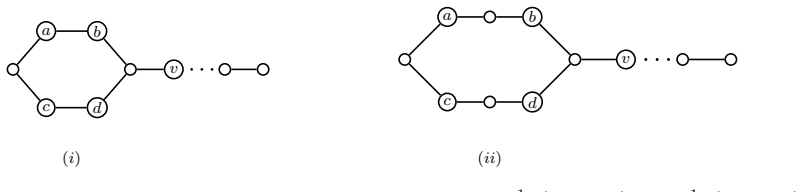
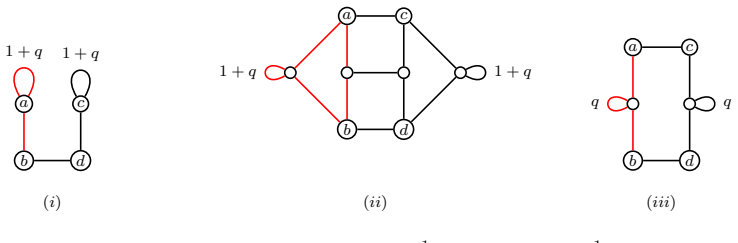
We establish an equivalence between the existence of PST between certain pair (or plus states) in such a graph and PST between vertices in a subgraph induced by the involution. This allows us to prove that for almost all simple unweighted planar graphs (resp., almost all simple unweighted trees), the assignment of loops of weight one to exactly two vertices in the graph produces PST between pair states relative to ℒ. We also show that a path on n vertices admits PST between end vertices relative to ℒ if and only if n=2, or (n,q)=(3,(k²-l²)/8l²) where k>l are integers with k ≢ l mod 2. For cycles, the addition of an extra edge does not yield PST between vertices relative to Laplacian and sign
What carries the argument
The equivalence between PST on pair or plus states in the full graph and vertex PST in the involution-induced subgraph, obtained from the action of the non-trivial involution on the spectrum of the generalized Laplacian ℒ = Δ + qA.
If this is right
- Almost all simple unweighted planar graphs admit PST between pair states after adding two weight-one loops.
- Almost all simple unweighted trees admit PST between pair states after adding two weight-one loops.
- A path on n vertices has PST between its end vertices if and only if n equals 2 or n equals 3 with q equal to (k squared minus l squared) over 8 l squared for integers k greater than l of opposite parity.
- Adding a single extra edge to any cycle fails to produce PST between vertices under either the Laplacian or signless Laplacian.
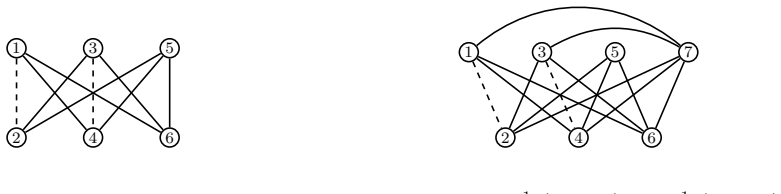
- Suitable additions of edges and loops create PST between pair states in complete bipartite graphs, cycles, and paths.
Where Pith is reading between the lines
- The reduction via involution could be used to search for new families of graphs admitting PST by first solving the problem on smaller symmetric subgraphs.
- The same symmetry argument might apply when the Hamiltonian is replaced by other matrices that commute with the involution action.
- Explicit constructions for paths and trees suggest that most graphs in those classes can be made to support PST with minimal local modifications.
Load-bearing premise
The graphs are simple and unweighted with a non-trivial involution, and the generalized Laplacian serves as the Hamiltonian whose eigenvalues govern the state transfer.
What would settle it
A concrete graph equipped with a non-trivial involution in which pair-state PST occurs under ℒ but vertex PST fails in the induced subgraph (or the converse) would disprove the equivalence.
Figures



read the original abstract
For $q\in\mathbb{R}\backslash\{0\}$, the generalized Laplacian of a graph $X$ is the matrix $\mathscr{L}=\Delta+qA$, where $\Delta$ is the degree matrix and $A$ is the adjacency matrix of $X$. In this paper, we investigate perfect state transfer (PST) on graphs with possible loops equipped with non-trivial involutions, where we take the generalized Laplacian matrix as the Hamiltonian of the underlying spin network. We establish an equivalence between the existence of PST between certain pair (or plus states) in such a graph and PST between vertices in a subgraph induced by the involution. This allows us to prove that for almost all simple unweighted planar graphs (resp., almost all simple unweighted trees), the assignment of loops of weight one to exactly two vertices in the graph produces PST between pair states relative to $\mathscr{L}$. We also show that a path on $n$ vertices admits PST between end vertices relative to $\mathscr{L}$ if and only if $n =2$, or $(n,q)=(3,\frac{k^2-l^2}{8l^2})$ where $k>l$ are integers with $k \not\equiv l \pmod{2}$. For cycles, we show that the addition of an extra edge does not yield PST between vertices relative to Laplacian and signless Laplacian matrices. Furthermore, we show that the addition of a few suitable edges (including loops) in complete bipartite graphs, cycles, and paths yields PST between pair states.
Editorial analysis
A structured set of objections, weighed in public.
Referee Report
Summary. The paper investigates perfect state transfer (PST) on graphs with non-trivial involutions, taking the generalized Laplacian ℒ = Δ + qA (q ≠ 0) as the Hamiltonian. It establishes an equivalence between PST on pair (or plus) states in such a graph and PST between vertices in the subgraph induced by the involution. This reduction is applied to prove that assigning loops of weight one to exactly two vertices produces PST between pair states for almost all simple unweighted planar graphs and almost all simple unweighted trees. Additional results include an if-and-only-if characterization of PST between endpoints of a path on n vertices (n=2 or the specific rational condition on q for n=3), non-existence of PST after adding an edge to cycles for both Laplacian and signless Laplacian, and constructions yielding PST between pair states in complete bipartite graphs, cycles, and paths via added edges or loops.
Significance. If the equivalence holds, the reduction to the quotient graph induced by the involution is a useful structural tool for studying PST in symmetric graphs and could streamline proofs for large families. The application to 'almost all' planar graphs and trees, if the quantification is made precise, would show that simple local modifications suffice to produce PST in a dense class of graphs, which is of interest in algebraic graph theory and quantum information. The explicit path characterization and the negative results for cycles add concrete, checkable statements to the literature on Laplacian-based state transfer.
major comments (2)
- [Abstract] Abstract and the main application section: the claim that adding loops of weight 1 to exactly two vertices yields PST between pair states 'for almost all simple unweighted planar graphs (resp., almost all simple unweighted trees)' is load-bearing but ambiguous. Pair states and the equivalence are defined only once a non-trivial involution σ is fixed, yet the set of planar graphs or trees admitting a non-trivial automorphism has density zero. The manuscript must clarify whether 'almost all' is taken inside the subclass of graphs that already possess such an involution, or whether the two vertices are chosen so as to induce a suitable σ (with an explicit construction).
- [Equivalence theorem] Equivalence theorem (the section establishing the reduction to the induced subgraph on orbits/fixed points): the argument must explicitly verify that the generalized Laplacian with the added loops remains compatible with the involution action, i.e., that the loop weights are placed symmetrically or that the quotient construction accounts for the diagonal perturbation without introducing extra eigenvalues that break the PST equivalence.
minor comments (3)
- [Notation] Notation section: define 'pair states' and 'plus states' explicitly at the first appearance, including their relation to the eigenspaces of the involution operator, rather than assuming familiarity from prior PST literature.
- [Path theorem] Path theorem: the condition '(n,q)=(3,(k²-l²)/(8l²)) with k>l integers, k ≢ l mod 2' should be accompanied by a brief remark on whether this exhausts all real q or only produces PST for those discrete values; also confirm that the spectral argument rules out other n.
- [Constructions for cycles and K_{m,n}] Cycle and complete-bipartite constructions: the added edges/loops are described as 'a few suitable' ones; a table or explicit listing of the minimal number and placement for each family would improve readability.
Simulated Author's Rebuttal
We thank the referee for the careful reading and constructive comments. We address each major comment below.
read point-by-point responses
-
Referee: [Abstract] Abstract and the main application section: the claim that adding loops of weight 1 to exactly two vertices yields PST between pair states 'for almost all simple unweighted planar graphs (resp., almost all simple unweighted trees)' is load-bearing but ambiguous. Pair states and the equivalence are defined only once a non-trivial involution σ is fixed, yet the set of planar graphs or trees admitting a non-trivial automorphism has density zero. The manuscript must clarify whether 'almost all' is taken inside the subclass of graphs that already possess such an involution, or whether the two vertices are chosen so as to induce a suitable σ (with an explicit construction).
Authors: We agree the quantification is ambiguous as written and will revise the abstract and application section for precision. The intended meaning is that the result holds for almost all graphs (in the asymptotic-density sense within the class) that already admit a fixed non-trivial involution σ; the two vertices receiving loops are then chosen symmetrically with respect to that σ (e.g., a swapped pair or a pair of fixed points) so that the modified graph remains σ-invariant. We will add an explicit construction paragraph showing how, given σ, the vertices are selected and why this produces the required pair states. We also note that the absolute density among all planar graphs or trees is indeed zero, and the revised statement will make the relative quantification explicit. revision: yes
-
Referee: [Equivalence theorem] Equivalence theorem (the section establishing the reduction to the induced subgraph on orbits/fixed points): the argument must explicitly verify that the generalized Laplacian with the added loops remains compatible with the involution action, i.e., that the loop weights are placed symmetrically or that the quotient construction accounts for the diagonal perturbation without introducing extra eigenvalues that break the PST equivalence.
Authors: The loops are placed symmetrically by construction: either on a σ-swapped pair (so each receives the same weight) or on fixed points whose loop contributions are absorbed into the orbit degrees. Consequently the modified ℒ commutes with the linear action of σ, the symmetric/antisymmetric decomposition of the space is preserved, and the quotient Laplacian on the orbit graph exactly encodes the diagonal perturbation without extraneous eigenvalues. We will insert a short verification paragraph (or lemma) right after the equivalence theorem statement that spells out this invariance and confirms the PST reduction remains exact. revision: yes
Circularity Check
No significant circularity; derivation is self-contained
full rationale
The paper derives an equivalence between PST on pair/plus states in a graph with involution and PST on the induced subgraph on orbits/fixed points, using the spectral decomposition of the generalized Laplacian ℒ under the involution action. This equivalence is obtained directly from the commutation relations and eigenspace projections of ℒ with the involution operator, without reducing to fitted parameters or self-referential definitions. The subsequent claim about 'almost all' planar graphs and trees follows from applying the equivalence after choosing two vertices to induce loops and an involution, relying on standard density arguments in the space of graphs rather than any input data or prior self-citation that is load-bearing. No ansatz is smuggled, no uniqueness theorem is imported from the authors' prior work, and no known result is merely renamed. The derivation chain remains independent of its target conclusions.
Axiom & Free-Parameter Ledger
free parameters (1)
- q
axioms (2)
- standard math Standard spectral properties of the Laplacian and adjacency matrices under group actions (involutions).
- domain assumption Graphs are finite, simple, and unweighted except for the added loops of weight one.
Reference graph
Works this paper leans on
-
[1]
Q. Chen and C. Godsil. Pair state transfer.Quantum Inf. Process., 19(9):321, 2020
work page 2020
-
[2]
M. Christandl, N. Datta, A. Ekert, and A. J. Landahl. Perfect state transfer in quantum spin networks.Phys. Rev. Lett., 92:187902, May 2004
work page 2004
-
[3]
G. Coutinho, E. Juliano, and T. J. Spier. No perfect state transfer in trees with more than 3 vertices.J. Combin. Theory Ser. B, 168:68–85, 2024
work page 2024
-
[4]
C. Godsil. State transfer on graphs.Discrete Math., 312(1):129–147, 2012
work page 2012
-
[5]
C. Godsil. When can perfect state transfer occur?Electron. J. Linear Algebra, 23:877–890, 2012
work page 2012
- [6]
- [7]
-
[8]
A. Kay. Perfect, efficient, state transfer and its application as a constructive tool. Int. J. Quantum Inf., 8(04):641–676, 2010
work page 2010
-
[9]
M. Kempton, G. Lippner, and S. Yau. Perfect state transfer on graphs with a potential.Quantum Inf. Comput., 17(3):303–327, 2017
work page 2017
-
[10]
M. Kempton, G. Lippner, and S.-T. Yau. Pretty good quantum state transfer in symmetric spin networks via magnetic field.Quantum Inf. Process., 16:1–23, 2017
work page 2017
-
[11]
S. Kim, H. Monterde, B. Ahmadi, A. Chan, S. Kirkland, and S. Plosker. A general- ization of quantum pair state transfer.Quantum Inf. Process., 23(11):369, 2024
work page 2024
-
[12]
S. Kirkland, H. Monterde, and S. Plosker. Quantum state transfer between twins in weighted graphs.J. Algebraic Combin., 58(3):623–649, 2023
work page 2023
- [13]
-
[14]
H. Monterde and H. Pal. Perfect state transfer on graphs with clusters.arXiv preprint arXiv:2505.07982, 2025
- [15]
- [16]
-
[17]
W. So. Rank one perturbation and its application to the laplacian spectrum of a graph.Linear Multilinear Algebra, 46(3):193–198, 1999
work page 1999
-
[18]
L. Vinet and A. Zhedanov. Almost perfect state transfer in quantum spin chains. Phys. Rev. A, 86(5):052319, 2012. 23
work page 2012
discussion (0)
Sign in with ORCID, Apple, or X to comment. Anyone can read and Pith papers without signing in.