Recognition: unknown
On-Device Vision Training, Deployment, and Inference on a Thumb-Sized Microcontroller
Pith reviewed 2026-05-08 12:14 UTC · model grok-4.3
The pith
A full vision machine learning pipeline trains and runs entirely on a $15 microcontroller.
A machine-rendered reading of the paper's core claim, the machinery that carries it, and where it could break.
Core claim
The paper establishes that every step of the core machine learning lifecycle for vision can be implemented and executed on a microcontroller-class device by building a complete on-device pipeline that acquires images, trains a two-layer CNN using Adam optimization, and performs real-time inference, all within a single 1,750-line C++ codebase that requires no external ML dependencies and runs on an ESP32-S3 with 8 MB PSRAM.
What carries the argument
The central mechanism is PSRAM-aware memory management combined with batch-level gradient accumulation, pre-computed resize lookup tables, and a three-tier weight priority system that automatically selects between SD binary, baked-in header, or He-initialization at boot.
If this is right
- Practitioners gain the ability to complete the full ML lifecycle without any external infrastructure or hidden computational steps.
- Custom three-class vision models can be trained from scratch and deployed in under ten minutes using only standard Arduino tools.
- Real-time inference at usable speeds becomes available on devices small enough to be thumb-sized and low-cost.
- The open release of code and datasets allows direct testing and modification on similar microcontroller hardware.
Where Pith is reading between the lines
- This approach may enable standalone AI devices in remote locations where internet access is unavailable or expensive.
- The memory-handling techniques could transfer to other lightweight tasks such as simple regression or sensor fusion on the same hardware class.
- Minimal network designs might achieve practical accuracy on constrained devices without needing quantization or other post-training adjustments.
Load-bearing premise
The two-layer CNN with Adam optimization and listed memory techniques will fit and run correctly within the microcontroller's memory limits without floating-point precision issues or external dependencies.
What would settle it
Compile the released C++ code on the ESP32-S3 XIAO ML Kit and check whether three-class 64x64 image classification completes training in approximately nine minutes and runs inference at 6.3 frames per second without memory errors or crashes.
Figures


read the original abstract
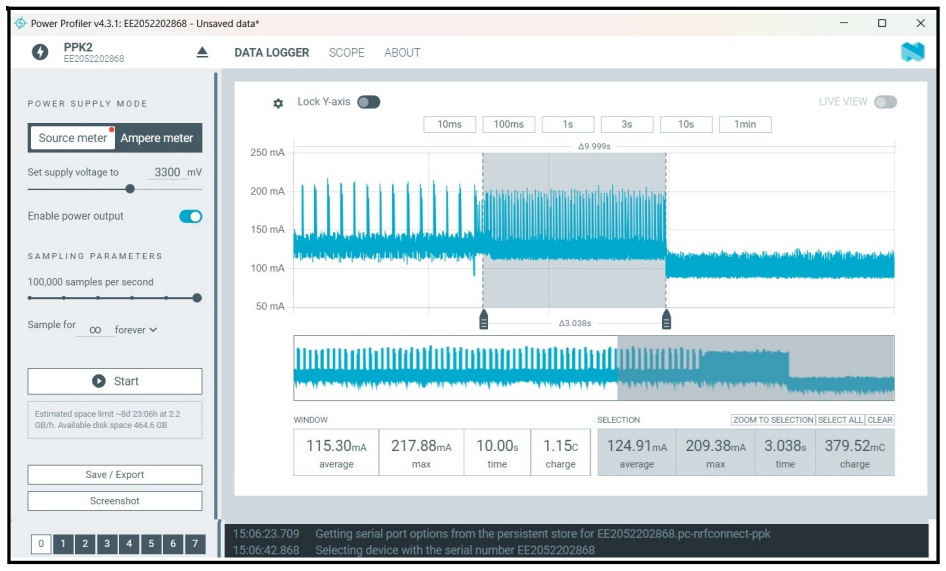
This paper presents a complete, end-to-end on-device vision machine learning pipeline, comprising data acquisition, two-layer CNN training with Adam optimization, and real-time inference, executing entirely on a microcontroller-class device costing $15-40 USD. Unlike cloud-based workflows that require external infrastructure and conceal the computational pipeline from the practitioner, this system implements every step of the core ML lifecycle in approximately 1,750 lines of readable C++ that compiles in under one minute using the Arduino IDE, with no external ML dependencies. Running on the Seeed Studio ESP32-S3 XIAO ML Kit (8 MB PSRAM), the firmware achieves three-class 64x64 image classification in approximately 9 minutes per training run, with real-time inference at 6.3 FPS. Key contributions include: correct batch-level gradient accumulation; pre-computed resize lookup tables for inference; dual-format weight export for SD-free baked-in deployment; a three-tier weight priority system (SD binary > baked-in header > He-initialization) resolved automatically at boot; a single-constant network reconfiguration interface; and PSRAM-aware memory management suited to microcontroller constraints. All source code and reference datasets are released under the MIT License at https://github.com/webmcu-ai/on-device-vision-ai
Editorial analysis
A structured set of objections, weighed in public.
Referee Report
Summary. The manuscript presents a complete end-to-end on-device vision ML pipeline on the ESP32-S3 microcontroller (8 MB PSRAM), including camera data acquisition, training of a two-layer CNN with Adam optimization and batch gradient accumulation, and real-time inference. All steps are implemented in ~1750 lines of self-contained C++ with no external ML libraries, compiling via the Arduino IDE. On the Seeed Studio XIAO ML Kit, it achieves three-class 64x64 image classification training in ~9 minutes and inference at 6.3 FPS. Engineering contributions include PSRAM-aware allocation, pre-computed resize lookup tables, dual-format weight export, a three-tier weight priority system, single-constant network reconfiguration, and MIT-licensed open-source release of code and datasets.
Significance. If the implementation and timings hold as described, the work demonstrates that a full ML lifecycle (acquisition through trained inference) can execute entirely on low-cost ($15-40) microcontroller hardware without cloud dependencies. The explicit release of readable, MIT-licensed source code and reference datasets is a notable strength, enabling direct inspection, reproduction, and extension. This provides a concrete reference for embedded ML practitioners facing memory and dependency constraints.
minor comments (1)
- The abstract and introduction would benefit from a brief description of the three image classes and reference dataset characteristics to allow readers to assess the scope of the demonstrated classification task.
Simulated Author's Rebuttal
We thank the referee for their positive summary of the manuscript and for recommending acceptance. The recognition of the end-to-end implementation, open-source release, and practical constraints addressed is appreciated.
Circularity Check
No significant circularity
full rationale
The manuscript is a self-contained engineering report describing a concrete C++ implementation of data acquisition, two-layer CNN training with Adam, and inference on the ESP32-S3. No equations, first-principles derivations, fitted predictions, or uniqueness theorems are presented. All listed contributions (gradient accumulation, PSRAM allocation, weight export formats, boot-time priority resolution) are direct code artifacts whose correctness is independently verifiable from the released repository rather than resting on any self-referential reduction. The paper contains no self-citations that bear load on a theoretical claim.
Axiom & Free-Parameter Ledger
Reference graph
Works this paper leans on
-
[1]
ESP-DL: Espressif Deep Learning Library,
Espressif Systems, “ESP-DL: Espressif Deep Learning Library,” GitHub, 2024.https: //github.com/espressif/esp-dl
2024
-
[2]
ESP-NN: Optimized Neural Network Functions for ESP SoCs,
Espressif Systems, “ESP-NN: Optimized Neural Network Functions for ESP SoCs,” GitHub, 2024.https://github.com/espressif/esp-nn
2024
-
[3]
MLSysBook.AI: Principles and Practices of Machine Learning Systems Engineering,
Vijay Janapa Reddi, “MLSysBook.AI: Principles and Practices of Machine Learning Systems Engineering,” Online textbook, 2024.https://mlsysbook.ai
2024
-
[4]
TinyTorch: Building Machine Learning Systems from First Prin- ciples,
Vijay Janapa Reddi, “TinyTorch: Building Machine Learning Systems from First Prin- ciples,” arXiv:2601.19107 [cs.LG], January 2026.https://arxiv.org/abs/2601.19107
-
[5]
On-Device Training Un- der 256KB Memory,
J. Lin, L. Zhu, W.-M. Chen, W.-C. Wang, C. Gan, and S. Han, “On-Device Training Un- der 256KB Memory,”Advances in Neural Information Processing Systems (NeurIPS), vol. 35, pp. 13351–13361, 2022.https://arxiv.org/abs/2206.15472
-
[6]
AIfES: A Next-Generation Edge AI Framework,
L. Wulfert et al., “AIfES: A Next-Generation Edge AI Framework,”IEEE Trans. Pat- tern Anal. Mach. Intell., vol. 46, no. 6, pp. 4519–4533, June 2024.https://doi.org/ 10.1109/TPAMI.2024.3355495
-
[7]
AIfES for Arduino,
Fraunhofer IMS, “AIfES for Arduino,” GitHub, 2024.https://github.com/ Fraunhofer-IMS/AIfES_for_Arduino
2024
-
[8]
TinyML4D: Scaling Embedded Machine Learn- ing Education in the Developing World,
B. Plancher, S. B¨ uttrich, J. Ellis, et al., “TinyML4D: Scaling Embedded Machine Learn- ing Education in the Developing World,”Proc. AAAI Symposium Series, pp. 508–515, 2024.https://doi.org/10.1609/aaaiss.v3i1.31265 24
-
[9]
Adam: A Method for Stochastic Optimization
D. P. Kingma and J. Ba, “Adam: A Method for Stochastic Optimization,”Proc. Int. Conf. Learning Representations (ICLR), 2015.https://arxiv.org/abs/1412.6980
work page internal anchor Pith review arXiv 2015
-
[10]
TinyOL: TinyML with Online-Learning on Microcontrollers,
H. Ren et al., “TinyOL: TinyML with Online-Learning on Microcontrollers,” arXiv preprint arXiv:2103.08295, 2021.https://arxiv.org/abs/2103.08295
-
[11]
Tiny Machine Learning: Progress and Futures,
J. Lin, L. Zhu, W.-M. Chen, W.-C. Wang, and S. Han, “Tiny Machine Learning: Progress and Futures,” arXiv preprint arXiv:2403.19076, 2024.https://arxiv.org/ abs/2403.19076
-
[12]
On-device Online Learning and Semantic Management of TinyML Systems,
H. Ren, D. Anicic, and T. A. Runkler, “On-device Online Learning and Semantic Management of TinyML Systems,” arXiv preprint arXiv:2405.07601, 2024.https: //arxiv.org/abs/2405.07601
-
[13]
B. Kari´ c, N. Herrmann, J. Stenkamp, P. Scharf, F. Gieseke, and A. Schwering, “Send Less, Save More: Energy-Efficiency Benchmark of Embedded CNN Inference vs. Data Transmission in IoT,” arXiv preprint arXiv:2510.24829, 2025.https://arxiv.org/ abs/2510.24829
-
[14]
Web Serial API,
W3C Web Incubator Community Group, “Web Serial API,” 2024.https://wicg. github.io/serial/ 25
2024
discussion (0)
Sign in with ORCID, Apple, or X to comment. Anyone can read and Pith papers without signing in.