Recognition: unknown
The R\'{e}nyi entropy and entropic cosmology
Pith reviewed 2026-05-09 20:54 UTC · model grok-4.3
The pith
Rényi entropy for the apparent horizon produces a dark energy model that matches Planck values for present matter density and deceleration.
A machine-rendered reading of the paper's core claim, the machinery that carries it, and where it could break.
Core claim
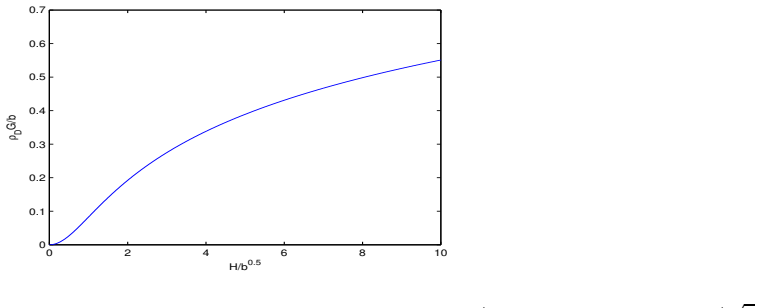
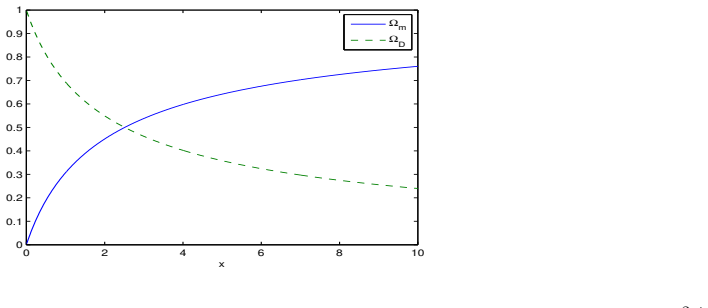
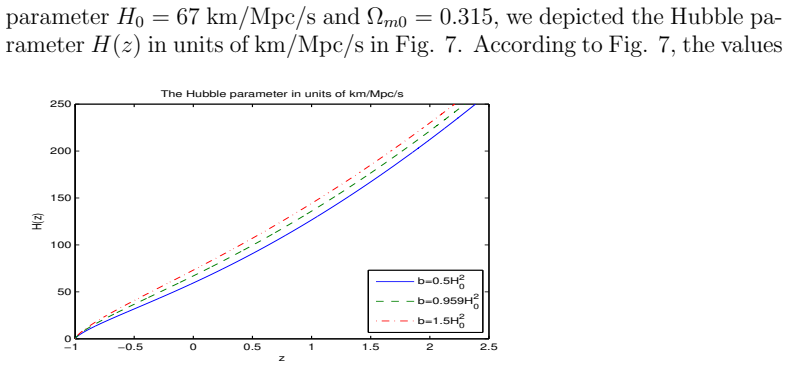
Using the Rényi entropy S_R = (1/α) ln(1 + α S_BH) for the apparent horizon in a flat FLRW universe, the thermodynamics-gravity correspondence yields generalized Friedmann equations. These lead to expressions for dark energy density ρ_D and pressure p_D, from which the deceleration parameter q is computed. For appropriate values of the model parameter α, the current values Ω_m0 ≈ 0.315 and q0 ≈ -0.535 are obtained, consistent with Planck data, and the Hubble parameter agrees with observations within 5% for 0.07 ≤ z ≤ 1.75 at α ≈ 0.305 G H0². The cosmology is equivalent to teleparallel gravity with a specific F(T).
What carries the argument
The thermodynamics-gravity correspondence applied to the Rényi entropy of the apparent horizon, which modifies the first law to derive altered Friedmann equations for the scale factor evolution.
If this is right
- The late-time acceleration arises from the modified entropy without new dynamical fields.
- The cosmology is dual to a specific teleparallel gravity model, allowing geometric reinterpretation.
- The Hubble expansion history is consistent with data over a wide redshift range at a fixed entropy parameter.
- Current cosmological parameters can be reproduced to match observational constraints from Planck.
Where Pith is reading between the lines
- If the Rényi modification reflects underlying quantum corrections to black hole entropy, this model may offer a bridge between quantum gravity and cosmology.
- Similar entropy replacements could be applied to other gravitational contexts such as early-universe inflation.
- The equivalence to teleparallel gravity suggests that entropic modifications might correspond to torsion-based theories more generally.
Load-bearing premise
The thermodynamics-gravity correspondence remains valid when the horizon entropy is replaced by the Rényi form, allowing the direct derivation of generalized Friedmann equations from the modified entropy.
What would settle it
A measurement of the Hubble parameter at redshift z=1.0 that deviates by more than five percent from the model's prediction at α ≈ 0.305 G H0² would falsify the claimed agreement with observational data.
Figures


read the original abstract
Entropic cosmology with the R\'{e}nyi entropy of the apparent horizon $S_R=(1/\alpha)\ln(1+\alpha S_{BH})$, where $S_{BH}$ is the Bekenstein--Hawking entropy, is studied. By virtue of the thermodynamics-gravity correspondence a model of dark energy is investigated. The generalised Friedmann equations for the Friedmann--Lema\^{i}tre--Robertson--Walker spatially flat universe with the barotropic matter fluid are obtained. We compute the dark energy density $\rho_D$, pressure $p_D$ and the deceleration parameter $q$ of the universe. At some model parameters the normalized density parameter of the matter $\Omega_{m0}\approx 0.315$ and the deceleration parameter $q_0\approx -0.535$ for the current epoch, which are in the agreement with the Planck data, are found. Making use of the thermodynamics-gravity correspondence, we describe the late time of the universe acceleration. The entropic cosmology considered is equivalent to cosmology based on the teleparallel gravity with the definite function $F(T)$. The Hubble parameters are in approximate agreement (within $5$ percents) with the observational Hubble data for redshifts $0.07\leq z \leq 1.75$ at the entropy parameter $\alpha\approx 0.305~GH_0^2$.
Editorial analysis
A structured set of objections, weighed in public.
Referee Report
Summary. The manuscript studies entropic cosmology by replacing the Bekenstein-Hawking entropy of the apparent horizon with the Rényi form S_R = (1/α) ln(1 + α S_BH). Via the thermodynamics-gravity correspondence it derives generalized Friedmann equations for a flat FLRW universe containing barotropic matter, computes the resulting dark-energy density ρ_D, pressure p_D and deceleration parameter q, and reports that specific choices of the entropy parameter α and other model parameters yield Ω_m0 ≈ 0.315 and q0 ≈ −0.535, in agreement with Planck values. The model is asserted to be equivalent to teleparallel gravity with a definite F(T) function, and the Hubble parameter is stated to agree with observational data within 5 % for 0.07 ≤ z ≤ 1.75 when α ≈ 0.305 G H0².
Significance. If the substitution of the Rényi entropy into the horizon first law can be shown to produce the modified equations without additional inconsistencies, and if the numerical agreements can be demonstrated to be independent of the fitting procedure, the work would establish a concrete thermodynamic route to a specific late-time acceleration model and a direct dictionary between entropic cosmology and a particular teleparallel F(T) theory. Such a link would be of interest for exploring non-extensive entropies as origins of effective dark energy.
major comments (4)
- [Derivation of generalized Friedmann equations] The derivation of the generalized Friedmann equations (the step that replaces S_BH by S_R inside the first-law relation on the apparent horizon) assumes that the Unruh temperature, apparent-horizon radius and energy flux remain exactly the same as in the Bekenstein-Hawking case and that the non-additive logarithmic form introduces no extra terms. No explicit verification is supplied that the continuity equation is preserved or that the effective ρ_D and p_D follow rigorously from this substitution; this assumption is load-bearing for every subsequent result.
- [Numerical results for Ω_m0 and q0] The reported values Ω_m0 ≈ 0.315 and q0 ≈ −0.535 are obtained by choosing the entropy parameter α together with other model parameters so as to reproduce the observed numbers (as stated in the abstract). Because the agreement is achieved by construction, it does not constitute an independent test of the model and therefore does not strengthen the claim that the Rényi-entropic cosmology matches Planck data.
- [Equivalence to teleparallel gravity] The claimed equivalence to teleparallel gravity with a definite F(T) is asserted but the explicit form of F(T) and the mapping steps that establish the exact correspondence are not provided; without them the equivalence remains a statement rather than a demonstrated result.
- [Hubble-parameter comparison] The approximate 5 % agreement of H(z) with observational Hubble data for 0.07 ≤ z ≤ 1.75 is obtained at the same tuned value α ≈ 0.305 G H0² used for the Ω_m0 and q0 fits. An a-priori choice of α or a demonstration that the agreement persists for a range of α would be required to make this comparison a genuine test.
minor comments (2)
- [Abstract and parameter definitions] The notation 'G H0²' in the abstract and parameter choice should be clarified (is G Newton’s constant?) and used consistently throughout the text and equations.
- [Notation] Ensure that the symbols for the normalized matter density Ω_m0 and the present-day deceleration parameter q0 are defined once and employed uniformly in all equations and numerical statements.
Simulated Author's Rebuttal
We thank the referee for the careful reading and constructive comments on our manuscript. We address each major point below and indicate planned revisions to enhance the rigor and clarity of the presentation.
read point-by-point responses
-
Referee: The derivation of the generalized Friedmann equations (the step that replaces S_BH by S_R inside the first-law relation on the apparent horizon) assumes that the Unruh temperature, apparent-horizon radius and energy flux remain exactly the same as in the Bekenstein-Hawking case and that the non-additive logarithmic form introduces no extra terms. No explicit verification is supplied that the continuity equation is preserved or that the effective ρ_D and p_D follow rigorously from this substitution; this assumption is load-bearing for every subsequent result.
Authors: In the standard entropic cosmology framework, the first law is applied with the modified entropy S_R while retaining the usual Unruh temperature and horizon radius, consistent with the thermodynamics-gravity correspondence. This yields the generalized equations, and the continuity equation follows directly from the definition of the energy flux. We agree an explicit verification is useful. In the revision we will insert a dedicated derivation subsection confirming that the continuity equation is preserved and detailing the steps from the first law with S_R to ρ_D and p_D. revision: yes
-
Referee: The reported values Ω_m0 ≈ 0.315 and q0 ≈ −0.535 are obtained by choosing the entropy parameter α together with other model parameters so as to reproduce the observed numbers (as stated in the abstract). Because the agreement is achieved by construction, it does not constitute an independent test of the model and therefore does not strengthen the claim that the Rényi-entropic cosmology matches Planck data.
Authors: We acknowledge that the quoted values result from parameter selection to match observations, which is standard for models containing free parameters such as α. The demonstration shows that viable choices exist within the Rényi-entropic framework. We will revise the text to describe these explicitly as consistency checks rather than independent predictions and will add a brief exploration of the α interval that permits agreement with Planck data. revision: partial
-
Referee: The claimed equivalence to teleparallel gravity with a definite F(T) is asserted but the explicit form of F(T) and the mapping steps that establish the exact correspondence are not provided; without them the equivalence remains a statement rather than a demonstrated result.
Authors: We thank the referee for highlighting this omission. The equivalence follows from equating the effective dark-energy density and pressure obtained from the Rényi entropy to the corresponding quantities in teleparallel gravity. In the revised manuscript we will supply the explicit F(T) function together with the step-by-step mapping that establishes the exact correspondence. revision: yes
-
Referee: The approximate 5 % agreement of H(z) with observational Hubble data for 0.07 ≤ z ≤ 1.75 is obtained at the same tuned value α ≈ 0.305 G H0² used for the Ω_m0 and q0 fits. An a-priori choice of α or a demonstration that the agreement persists for a range of α would be required to make this comparison a genuine test.
Authors: The value α ≈ 0.305 G H0² is fixed by the present-day parameters Ω_m0 and q0; the H(z) comparison then tests whether the resulting expansion history remains consistent with data at higher redshifts. We will clarify this procedure in the text and add a short robustness check showing H(z) for a narrow interval of α values around the reference choice. revision: partial
Circularity Check
No significant circularity; standard parameter fitting to external data
full rationale
The paper applies the thermodynamics-gravity correspondence to the Rényi entropy form S_R = (1/α) ln(1 + α S_BH) to obtain generalized Friedmann equations, then derives explicit expressions for ρ_D, p_D and q. Numerical values such as Ω_m0 ≈ 0.315, q0 ≈ -0.535 and H(z) agreement within 5 % are obtained by selecting model parameters (including α ≈ 0.305 G H_0²) that reproduce Planck and Hubble data. This is ordinary model calibration against external benchmarks, not a reduction of any claimed result to its own inputs by construction. No self-definitional steps, fitted-input predictions, or load-bearing self-citations appear in the derivation chain.
Axiom & Free-Parameter Ledger
free parameters (1)
- alpha
axioms (1)
- domain assumption thermodynamics-gravity correspondence holds for Rényi entropy of the apparent horizon
Reference graph
Works this paper leans on
-
[1]
Riess et al., Observational Evidence from Supernovae for an Ac- celerating Universe and a Cosmological Constant, Astron
A.G. Riess et al., Observational Evidence from Supernovae for an Ac- celerating Universe and a Cosmological Constant, Astron. J. 116 (1998) 1009–1038
1998
-
[2]
Perlmutter et al., Measurements of Omega and Lambda from 42 High- Redshift Supernovae, Astrophys
S. Perlmutter et al., Measurements of Omega and Lambda from 42 High- Redshift Supernovae, Astrophys. J. 517 (1999) 565–586
1999
-
[3]
Aghanim et al
N. Aghanim et al. [Planck], Cosmological parameters, Astron. Ast ro- phys. 641 (2020), A6; Erratum: ibid, 652(2021) C4
2020
-
[4]
D., Adame, A.G., et al.: Desi 2024 results: Baryon acoustic oscillatio ns from the first two years of desi observations, arXiv:2404.03002 [a stro- ph.CO]
work page internal anchor Pith review arXiv 2024
-
[5]
Lusso, E
E. Lusso, E. Piedipalumbo, G. Risaliti, M. Paolillo, S. Bisogni, Emanuel E. Nardini, Lorenzo Amati, Tension with the flat ΛCDM model from a high-redshift hubble diagram of supernovae, quasars, and gamm a-ray bursts, Astron. Astrophys. 628 (2019) L4. 14
2019
-
[6]
Di Valentino, et.al., Cosmology Intertwined II: The Hubble Cons tant Tension, Astropart
E. Di Valentino, et.al., Cosmology Intertwined II: The Hubble Cons tant Tension, Astropart. Phys. 131 (2021) 102605
2021
-
[7]
A. G. Riess, et. al., Type Ia supernova discoveries at z > 1 from the Hubble space telescope: Evidence for past deceleration and const raints on dark energy evolution, Astrophys. J. 607 (2004) 665
2004
-
[8]
A. G. Riess, S. Casertano, W. Yuan, L. M. Macri, D. Scolnic, Larg e magellanic cloud cepheid standards provide a One percent foundatio n for the determination of the hubble constant and stronger eviden ce for physics beyond ΛCDM, Astrophys. J. 876 (2019) 85
2019
-
[9]
Akbar and R
M. Akbar and R. G. Cai, Thermodynamic Behavior of Friedmann Equ a- tion at Apparent Horizon of FR W Universe, Phys. Rev. D 75 (2007) 084003
2007
-
[10]
R. G. Cai and L. M. Cao, Unified First Law and Thermodynamics of Apparent Horizon in FR W Universe, Phys. Rev. D 75 (2007) 064008
2007
-
[11]
R. G. Cai and S. P. Kim, First Law of Thermodynamics and Fried- mann Equations of Friedmann-Robertson-Walker Universe, JHEP 2005 (2005) 050
2005
-
[12]
Paranjape, S
A. Paranjape, S. Sarkar and T. Padmanabhan, Thermodynam ic route to Field equations in Lanczos-Lovelock Gravity, Phys. Rev. D 74 (2006) 104015
2006
-
[13]
Sheykhi, B
A. Sheykhi, B. Wang and R. G. Cai, Thermodynamical Properties of Ap- parent Horizon in Warped DGP Braneworld, Nucl. Phys. B 779 (2007), 1
2007
-
[14]
R. G. Cai and N. Ohta, Horizon Thermodynamics and Gravitation al Field Equations in Horava-Lifshitz Gravity, Phys. Rev. D 81 (2010) 084061
2010
-
[15]
S. Wang, Y. Wang and M. Li, Holographic Dark Energy, Phys. Rep t. 696 (2017) 1
2017
-
[16]
Jamil, E
M. Jamil, E. N. Saridakis and M. R. Setare, The generalized secon d law of thermodynamics in Horava-Lifshitz cosmology, JCAP 1011 (2010) 032. 15
2010
-
[17]
Y. Gim, W. Kim and S. H. Yi, The first law of thermodynamics in Lifshitz black holes revisited, JHEP 1407 (2014) 002
2014
-
[18]
Z. Y. Fan and H. Lu, Thermodynamical First Laws of Black Holes in Quadratically-Extended Gravities, Phys. Rev. D 91 (2015) 064009
2015
-
[19]
D’Agostino, Holographic dark energy from nonadditive entro py: cos- mological perturbations and observational constraints, Phys
R. D’Agostino, Holographic dark energy from nonadditive entro py: cos- mological perturbations and observational constraints, Phys. R ev. D 99 (2019) 103524
2019
-
[20]
L. M. Sanchez and H. Quevedo, Thermodynamics of the FLR W ap parent horizon, Phys. Lett B 839 (2023) 137778
2023
-
[21]
J. D. Bekenstein, Black Holes and Entropy, Phys. Rev. D 7 (1973) 2333- 2346
1973
-
[22]
S. W. Hawking, Particle creation by black holes, Commun. Math. P hys. 43 (1975), 199-220; Erratum: ibid. 46 (1976), 206
1975
-
[23]
Jacobson, Thermodynamics of Spacetime: The Einstein Equa tion of State, Phys
T. Jacobson, Thermodynamics of Spacetime: The Einstein Equa tion of State, Phys. Rev. Lett. 75 (1995) 1260
1995
-
[24]
Padmanabhan, Gravity and the Thermodynamics of Horizons , Phys
T. Padmanabhan, Gravity and the Thermodynamics of Horizons , Phys. Rept. 406 (2005) 49
2005
-
[25]
Padmanabhan, Thermodynamical Aspects of Gravity: New in sights, Rept
T. Padmanabhan, Thermodynamical Aspects of Gravity: New in sights, Rept. Prog. Phys. 73 (2010) 046901
2010
-
[26]
S. A. Hayward, Unified first law of black-hole dynamics and relativ istic thermodynamics, Class. Quant. Grav. 15 (1998) 3147-3162
1998
-
[27]
S. A. Hayward, S. Mukohyana, M.C. Ashworth, Dynamic black-h ole entropy, Phys. Lett. A 256 (1999) 347
1999
-
[28]
D. Bak, S. J. Rey, Cosmic holography, Class. Quant. Grav. 17 (2000) 83
2000
-
[29]
Tsallis, Possible generalization of Boltzmann-Gibbs statistics, J
C. Tsallis, Possible generalization of Boltzmann-Gibbs statistics, J. Stat. Phys., 52 (1-2) (1988), 479-487; C. Tsallis, The Nonadditive Entropy Sq and Its Applications in Physics and Elsewhere: Some Remarks, Entro py 13 (2011) 1765. 16
1988
-
[30]
J. D. Barrow, The Area of a Rough Black Hole, Phys. Lett. B 808 (2020) 135643
2020
-
[31]
R´ enyi, Proceedings of the Fourth Berkeley Symposium on Ma the- matics, Statistics and Probability, University of California Press (19 60), 547-56
A. R´ enyi, Proceedings of the Fourth Berkeley Symposium on Ma the- matics, Statistics and Probability, University of California Press (19 60), 547-56
-
[32]
Kaniadakis, Statistical mechanics in the context of special r elativity II, Phys
G. Kaniadakis, Statistical mechanics in the context of special r elativity II, Phys. Rev. E 72 (2005) 036108
2005
-
[33]
Marco Masi, A step beyond Tsallis and R´ enyi entropies, Phys. L ett. A 338 (2005), 217-224
2005
-
[34]
V. G. Czinner and H. Iguchi, R´ enyi entropy and the thermody namic stability of black holes, Phys. Lett. B 752 (2016) 306-310
2016
-
[35]
S. I. Kruglov, Cosmology Due to Thermodynamics of Apparent H orizon, Annalen der Phys. 534 (2025) e00204
2025
-
[36]
S. I. Kruglov, Cosmology, new entropy and thermodynamics of apparent horizon, Chin. J. Phys. 98 (2025) 277-286
2025
-
[37]
Sayahian Jahromi, S
A. Sayahian Jahromi, S. A. Moosavi, H. Moradpour, J. P. Morais Graca, I. P. Lobo, I. G. Salako and A. Jawad, Generalized entropy formalis m and a new holographic dark energy model, Phys. Lett. B 780 (2018) 21-24
2018
-
[38]
Ren, Analytic critical points of charged R´ enyi entropies fr om hyper- bolic black holes, JHEP 05 (2021) 080
J. Ren, Analytic critical points of charged R´ enyi entropies fr om hyper- bolic black holes, JHEP 05 (2021) 080
2021
-
[39]
Mejrhit and S
K. Mejrhit and S. E. Ennadifi, Thermodynamics, stability and Haw k- ing–Page transition of black holes from non-extensive statistical m echan- ics in quantum geometry, Phys. Lett. B 794 (2019), 45-49
2019
-
[40]
Majhi, Non-extensive Statistical Mechanics and Black Hole En tropy From Quantum Geometry, Phys
A. Majhi, Non-extensive Statistical Mechanics and Black Hole En tropy From Quantum Geometry, Phys. Lett. B 775 (2017) 32-36
2017
-
[41]
Pavon and W
D. Pavon and W. Zimdahl, Holographic dark energy and cosmic coin ci- dence, Phys. Lett. B 628 (2005) 206
2005
-
[42]
R. C. G. Landim, Holographic dark energy from minimal supergra vity, Int. J. Mod. Phys. D 25 (2016) 1650050. 17
2016
-
[43]
Zeinab Tamri, Ali Aghamohammadi, Tayeb Golanbari, Abdolhosein Khodam-Mohammadi, A new R´ enyi holographic dark energy model and its cosmological implications, Eur. Phys. J. C 96 (2026) 86
2026
-
[44]
Abhay Ashtekar, Edward Wilson-Ewing, The covariant entropy bound and loop quantum cosmology, Phys. Rev. D 78 (2008) 064047
2008
-
[45]
Weitzenb¨ ock R., Invarianten Theorie, (Nordhoff, Groningen, 1923)
1923
-
[46]
J. W. Maluf, Hamiltonian formulation of the teleparallel descriptio n of general relativity, J. Math. Phys. 35 (1994) 335
1994
-
[47]
G. R. Bengochea and R. Ferraro, Dark torsion as the cosmic sp eed-up, Phys. Rev. D 79 (2009) 124019
2009
-
[48]
Wu and H
P. Wu and H. W. Yu, f(T) models with phantom divide line crossing, Eur. Phys. J. C 71 (2011) 1552
2011
-
[49]
Nesseris, S
S. Nesseris, S. Basilakos, E. N. Saridakis and L. Perivolaropoulo s, Viable f(T) models are practically indistinguishable from LCDM, Phys. Rev. D 88 (2013) 103010
2013
-
[50]
Zhang, H
C. Zhang, H. Zhang, S. Yuan et al., Four new observational h(z ) data from luminous red galaxies in the sloan digital sky survey data release seven, Res. Astron. Astrophys. 14(10) (2014) 1221–1233
2014
-
[51]
Moresco, et al., A6 measurement of the Hubble parameter at z ∼
M. Moresco, et al., A6 measurement of the Hubble parameter at z ∼
-
[52]
45: direct evidence of the epoch of cosmic re-acceleration, J. Cos mol. Astropart. Phys. 2016(05) (2016) 014
2016
-
[53]
Simon, L
J. Simon, L. Verde, R. Jimenez, Constraints on the redshift de pendence of the dark energy potential, Phys. Rev. D 71 (2005), 123001
2005
-
[54]
Stern, R
D. Stern, R. Jimenez, L. Verde, M. Kamionkowski, S. A. Stanfo rd, Cos- mic chronometers: constraining the equation of state of dark ene rgy. i: H(z) measurements, J. Cosmol. Astropart. Phys. 2010(02) (2010) 008
2010
-
[55]
S. I. Loubser et al., Cosmic chronometers with bcgs: new measu rements of h(z) using d4000n indices, Mon. Not. R. Astron. Soc. 523(4) (2025) 6171–6186. 18
2025
-
[56]
Moresco, et al., Improved constraints on the expansion rat e of the universe up to z ∼ 1
M. Moresco, et al., Improved constraints on the expansion rat e of the universe up to z ∼ 1. 1 from the spectroscopic evolution of cosmic chronometers, J. Cosmol. Astropart. Phys. 2012(08) (2012) 006
2012
-
[57]
Jimenez, M
R. Jimenez, M. Moresco, L. Verde, B. D. Wandelt, Photometric cos- mic chronometers: a new route to h(z), J. Cosmol. Astropart. Phys. 2023(07) (2023) 013
2023
-
[58]
K. Jiao, N. Borghi, M. Moresco et al., Cosmic chronometers with f ull spectral fitting of passive galaxies in lega-c, Astron. Astrophys. 665 (2022) 101
2022
-
[59]
Tomasetti, M
E. Tomasetti, M. Moresco et al., Extending cosmic chronometer s to high redshift with vandels: New constraints on h(z), Astron. Astrophys. 675 (2023) 74
2023
-
[60]
Moresco, Raising the bar: new constraints on the hubble par ameter with cosmic chronometers at z ∼ 2, Mon
M. Moresco, Raising the bar: new constraints on the hubble par ameter with cosmic chronometers at z ∼ 2, Mon. Not. R. Astron. Soc. 450(1) (2015), 16–20
2015
-
[61]
A. L. Ratsimbazafy et al., Age-dating luminous red galaxies obser ved with the southern african large telescope, Mon. Not. R. Astron. S oc. 467(3) (2017) 3239–3254. 19
2017
discussion (0)
Sign in with ORCID, Apple, or X to comment. Anyone can read and Pith papers without signing in.