Recognition: unknown
More on Classical Stability of Hopf-like Solitons of the Toroidal-Twisted type
Pith reviewed 2026-05-09 19:10 UTC · model grok-4.3
The pith
Large Hopf-like solitons of the toroidal-twisted type exist as local energy minima in the full scalar QED theory.
A machine-rendered reading of the paper's core claim, the machinery that carries it, and where it could break.
Core claim
Numerical analysis confirms that large-size Hopf-like solitons exist as local energy minima in the full QED theory. In the Faddeev-Skyrme model the same configurations become topological solitons that represent the global minima in the given topological sector. This extends prior qualitative and semi-quantitative arguments that relied on the approximation of negligibly small extrinsic curvature and thereby enhances the support for the Faddeev-Noemi hypothesis.
What carries the argument
Numerical energy minimization of the scalar QED Lagrangian for twisted toroidal ansatz configurations.
If this is right
- In the Faddeev-Skyrme limit the configurations become globally stable topological solitons in their sector.
- The Faddeev-Noemi conjecture on twisted toroidal structures holds for large soliton sizes without the small-curvature approximation.
- Previous semi-quantitative arguments receive direct numerical confirmation in the complete theory.
- Stability of the Hopf-like solitons persists as a local minimum in the full QED energy functional.
Where Pith is reading between the lines
- The same numerical approach could be applied to study how the minima evolve when additional fields or couplings are included.
- Quantum corrections around these classical configurations might be calculable once the classical stability is established.
- If stable, such objects could appear as long-lived excitations in analogous condensed-matter systems described by similar effective Lagrangians.
Load-bearing premise
The numerical analysis in the full theory accurately locates a true local energy minimum without significant discretization or boundary artifacts.
What would settle it
A full numerical relaxation of the proposed large twisted toroidal configuration that shows the energy decreasing without bound or the size spreading to infinity without forming a stable minimum would falsify the local stability claim.
Figures




read the original abstract
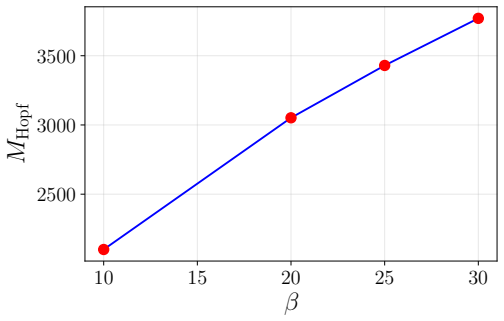
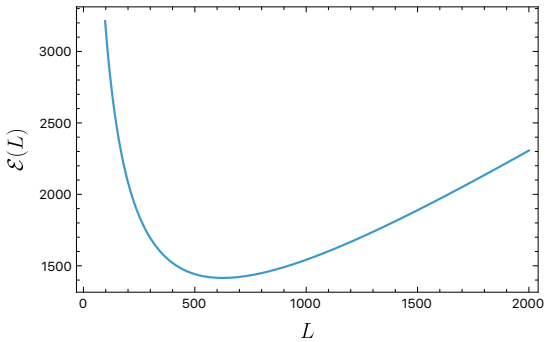
The Faddeev-Hopf model [1] supporting Hopfions was shown to emerge in the low-energy limit of four-dimensional scalar quantum electrodynamics (QED) with two charged scalar fields [2, 3]. Faddeev and Noemi conjectured that the Hopfions and Hopf-like solitons -- vortons -- can be based on a twisted toroidal structure inherent to QED [4-6]. This conjecture was discussed in detail in [2] in the approximation of negligibly small extrinsic curvature. Qualitative and semi-quantitative arguments were used to demonstrate the validity of the Faddeev-Noemi hypothesis. Here we further enhance the proof by applying a numerical analysis which confirms that large-size Hopf-like solitons exist as local energy minima in the full QED theory (in the Faddeev-Skyrme model they become topological solitons representing the global minima in the given topological sector).
Editorial analysis
A structured set of objections, weighed in public.
Referee Report
Summary. The paper builds on prior work showing that the Faddeev-Hopf model arises as the low-energy limit of four-dimensional scalar QED with two charged scalars. It revisits the Faddeev-Noemi conjecture that Hopf-like solitons (vortons) can be realized via twisted toroidal configurations. After qualitative and semi-quantitative arguments in the negligible-extrinsic-curvature approximation, the authors apply numerical energy minimization in the complete scalar QED Lagrangian (including dynamical gauge fields) to argue that large-size Hopf-like solitons exist as local energy minima; in the Faddeev-Skyrme limit these become topological solitons that are global minima in their Hopf sector.
Significance. If the numerical evidence is reliable, the result would strengthen the case that stable Hopf-like configurations can emerge directly from a gauge theory without ad-hoc approximations, lending support to the idea that topological solitons of this type may have a realization in realistic QED-like models. It would also provide a concrete check on the stability of vortons beyond the thin-torus limit.
major comments (1)
- [Numerical analysis (main text)] The central claim of the manuscript is that numerical minimization in the full QED theory confirms local energy minima for large toroidal-twisted configurations. However, the text supplies no information on the discretization method, lattice spacing, simulation volume, boundary conditions, gauge-fixing procedure, minimization algorithm, or residual-energy tolerance. Without these details or any convergence tests, it is impossible to assess whether the reported minima are physical or numerical artifacts; this directly undermines the asserted confirmation.
Simulated Author's Rebuttal
We thank the referee for the detailed review and constructive criticism. The primary concern regarding insufficient documentation of the numerical methods is valid and will be addressed through revision.
read point-by-point responses
-
Referee: [Numerical analysis (main text)] The central claim of the manuscript is that numerical minimization in the full QED theory confirms local energy minima for large toroidal-twisted configurations. However, the text supplies no information on the discretization method, lattice spacing, simulation volume, boundary conditions, gauge-fixing procedure, minimization algorithm, or residual-energy tolerance. Without these details or any convergence tests, it is impossible to assess whether the reported minima are physical or numerical artifacts; this directly undermines the asserted confirmation.
Authors: We agree that the manuscript omits essential technical details on the numerical implementation, which limits the ability to evaluate the results. This was an oversight. In the revised version we will add a dedicated subsection (or appendix) that fully specifies the discretization scheme, lattice spacing and grid dimensions, simulation volume, boundary conditions, gauge-fixing procedure, minimization algorithm, and residual-energy tolerance. We will also include explicit convergence tests with respect to lattice spacing and volume to demonstrate that the reported local minima are not discretization artifacts. These additions will allow independent assessment of the numerical evidence. revision: yes
Circularity Check
No significant circularity; numerical confirmation is independent of prior approximations
full rationale
The paper's derivation chain rests on prior qualitative and semi-quantitative arguments (from refs. [2,3] and [4-6]) in the negligible-extrinsic-curvature limit, followed by a new numerical energy-minimization analysis performed directly in the full scalar QED Lagrangian. This numerical step is presented as an external computational verification that large toroidal configurations are local minima, rather than a re-expression, fit, or renaming of quantities already present in the inputs. No self-definitional loops, fitted parameters relabeled as predictions, or load-bearing self-citations appear in the central claim; the numerics constitute an independent check whose validity can be assessed by standard convergence criteria outside the paper's own equations.
Axiom & Free-Parameter Ledger
Reference graph
Works this paper leans on
-
[1]
First mention of Hopfion see in Sec. 4 of L.D. Faddeev,Quantization of solitons, Preprint IAS Print-75-QS70 (Inst. Advanced Study, Princeton, NJ, 1975), 32 pp.; L. D. Faddeev and A. J. Niemi,Knots and parti- cles,Nature387, 58 (1997) [arXiv:hep-th/9610193 [hep-th]];Toroidal configurations as stable solitons, [arXiv:hep-th/9705176 [hep-th]]
- [2]
-
[3]
Babaev,Non-Meissner electrodynamics and knotted solitons in two-component superconductors,Phys
E. Babaev,Non-Meissner electrodynamics and knotted solitons in two-component superconductors,Phys. Rev. B79, 104506 (2009) [arXiv:0809.4468 [cond-mat.supr-con]]
-
[4]
R. L. Davis and E. P. S. Shellard,The Physics of Vortex Superconduc- tivity,Phys. Lett. B207, 404-410 (1988)
1988
-
[5]
R. L. Davis and E. P. S. Shellard,The Physics of Vortex Superconduc- tivity. 2,Phys. Lett. B209, 485-490 (1988)
1988
-
[6]
E. Radu and M. S. Volkov,Existence of stationary, non-radiating ring solitons in field theory: knots and vortons,Phys. Rept.468, 101-151 (2008) [arXiv:0804.1357 [hep-th]]
-
[7]
Manton and P
N. Manton and P. Sutcliffe,Topological Solitons, (Cambridge University Press, 2004), Sect. 9.11
2004
-
[8]
V. A. Novikov, M. A. Shifman, A. I. Vainshtein and V. I. Zakharov, Two-Dimensional Sigma Models: Modeling Nonperturbative Effects Of Quantum Chromodynamics, Phys. Rept.116, 103 (1984)
1984
-
[9]
Shifman,Advanced Topics in Quantum Field Theory, 2nd Edition, (Cambridge University Press, 2020)
M. Shifman,Advanced Topics in Quantum Field Theory, 2nd Edition, (Cambridge University Press, 2020)
2020
-
[10]
Y. M. Shnir,Topological and Non-Topological Solitons in Scalar Field Theories,(Cambridge University Press, 2018)
2018
-
[11]
J. Jäykkä and J. M. Speight,Supercurrent coupling destabilizes knot solitons,Phys. Rev. D84, 125035 (2011) [arXiv:1106.5679 [math-ph]]. 20
-
[12]
R. Balakrishnan, R. Dandoloff and A. Saxena,Exact hopfion vortices in a 3D Heisenberg ferromagnet,Phys. Lett. A480, 128975 (2023) [arXiv:2202.07195 [nlin.SI]]
- [13]
- [14]
-
[15]
R. H. Hobart,On the Instability of a Class of Unitary Field Models, Proc. Phys. Soc.82, no.2, 201 (1963)
1963
-
[16]
G. H. Derrick,Comments on nonlinear wave equations as models for elementary particles,J. Math. Phys.5, 1252-1254 (1964)
1964
-
[17]
V. A. Fateev, E. Onofri and A. B. Zamolodchikov,Integrable deforma- tions of theO(3)sigma model. The sausage model, Nucl. Phys. B406, 521-565 (1993)
1993
- [18]
-
[19]
O. Gamayun, A. Losev and M. Shifman,Peculiarities of beta functions in sigma models,JHEP10, 097 (2023) [arXiv:2307.04665 [hep-th]]. 21
discussion (0)
Sign in with ORCID, Apple, or X to comment. Anyone can read and Pith papers without signing in.