Stability of p-area minimizing surfaces in the Heisenberg group
Pith reviewed 2026-05-09 18:26 UTC · model grok-4.3
The pith
Perturbations of the p-mean curvature produce stable changes in the direction field of p-area minimizers in the Heisenberg group.
A machine-rendered reading of the paper's core claim, the machinery that carries it, and where it could break.
Core claim
Using the Rockafellar-Fenchel duality framework, the authors associate to each p-area minimizer a unique underlying vector field and prove that this field remains stable under L^infty perturbations of the prescribed p-mean curvature H. The stability of the vector field yields quantitative control on the direction of the horizontal gradient. Under natural geometric assumptions on level sets this produces L1 stability of admissible minimizers; in dimensions two and three, additional regularity and structural hypotheses on the minimizers yield W^{1,1} stability estimates whose rates are explicit in ||H - tilde H||_L^infty. The results supply the first quantitative stability theory for p-area, H
What carries the argument
The Rockafellar-Fenchel duality framework that identifies a unique vector field for each minimizer and transfers stability from the curvature perturbation to the horizontal gradient direction.
If this is right
- L1 stability holds for admissible minimizers whose level sets satisfy the stated geometric conditions.
- W^{1,1} stability with explicit rates in terms of the curvature perturbation holds in dimensions two and three under added regularity.
- The direction field of the horizontal gradient is quantitatively controlled by the size of the curvature perturbation.
- The same quantitative bounds apply in the unweighted case.
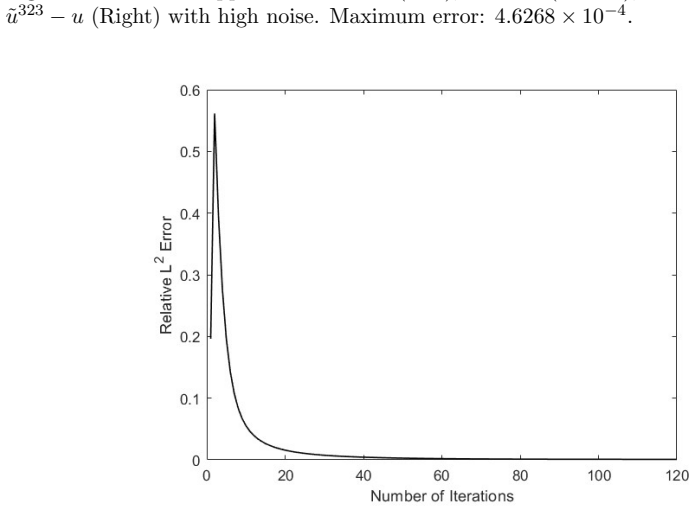
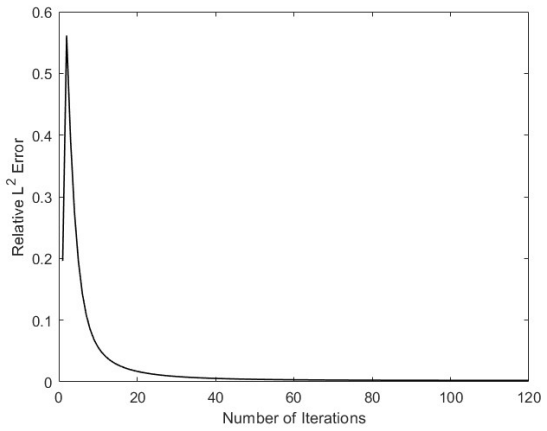
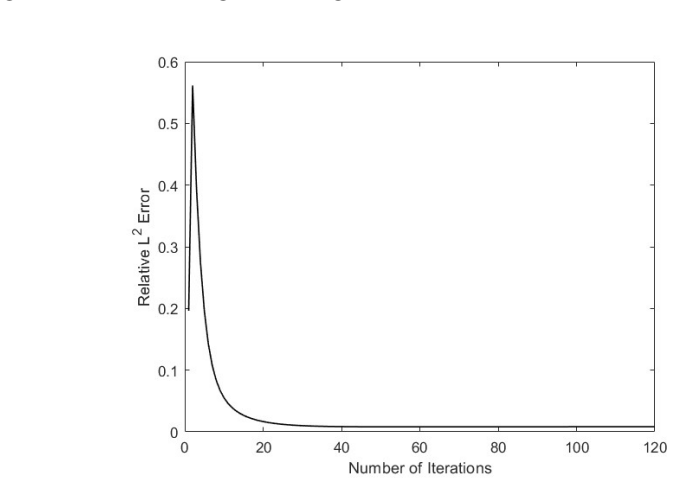
- Numerical simulations confirm that the predicted rates are observed in concrete examples.
Where Pith is reading between the lines
- The duality-based vector-field approach may apply to stability questions for p-area minimizers in other Carnot groups.
- The explicit rates suggest that small curvature changes produce proportionally small geometric changes that could be tracked in variational approximations.
- The level-set assumptions needed for L1 stability point to a possible geometric criterion that could be checked directly on candidate surfaces.
Load-bearing premise
The L1 stability requires natural geometric assumptions on the level sets of the minimizers, and the W^{1,1} estimates require extra regularity plus structural hypotheses on those minimizers.
What would settle it
An explicit pair of p-area minimizers in the Heisenberg group, one for curvature H and one for a nearby curvature tilde H, whose L1 distance exceeds any multiple of ||H - tilde H||_L^infty that the stability theorem predicts.
Figures


read the original abstract
We study the stability of minimizers of weighted $p$-area functionals associated with prescribed $p$-mean curvature surfaces in the Heisenberg group. While existence and uniqueness results are well established, quantitative stability with respect to perturbations of the mean curvature $H$ remains largely unexplored in the nonzero-$H$ regime. Using a Rockafellar--Fenchel duality framework, we identify a unique underlying vector field associated with each minimizer and prove its stability under perturbations of $H$. This yields quantitative control of the direction field of the horizontal gradient. Building on this structure, we establish $L^1$ stability of admissible minimizers under natural geometric assumptions on level sets. In dimensions two and three, we also derive $W^{1,1}$ stability estimates under additional regularity and structural hypotheses, with explicit rates in terms of $\|H-\tilde H\|_{L^\infty}$. Our results provide the first quantitative stability theory for $p$-area minimizing graphs with prescribed nonzero $p$-mean curvature, even in the unweighted case. Numerical simulations are included to illustrate the robustness of the theoretical results.
Editorial analysis
A structured set of objections, weighed in public.
Referee Report
Summary. The manuscript develops a quantitative stability theory for minimizers of weighted p-area functionals with prescribed nonzero p-mean curvature in the Heisenberg group. Employing a Rockafellar-Fenchel duality framework, it identifies a unique stable vector field associated to each minimizer under L^∞ perturbations of H, yielding quantitative control on the horizontal gradient direction. This is used to derive L^1 stability of admissible minimizers under natural geometric assumptions on level sets, together with W^{1,1} estimates in dimensions two and three under additional regularity hypotheses, all with explicit rates in terms of ||H - H̃||_{L^∞}. Numerical simulations are included to illustrate the results. The abstract asserts these constitute the first such quantitative theory, even in the unweighted case.
Significance. If the duality identification and passage to stability estimates are fully rigorous and the stated geometric assumptions hold for the class of minimizers under consideration, the work supplies the first explicit quantitative stability results in the nonzero-curvature regime of this sub-Riemannian setting. The explicit rates, the duality-based vector-field stability, and the numerical illustrations are concrete strengths that could inform robustness questions in geometric measure theory and sub-Riemannian minimal-surface problems.
major comments (2)
- [Abstract] Abstract: the central claim of providing the 'first quantitative stability theory for p-area minimizing graphs with prescribed nonzero p-mean curvature' is qualified by the explicit dependence of the L^1 estimate on 'natural geometric assumptions on level sets' and of the W^{1,1} estimates on 'additional regularity and structural hypotheses.' The manuscript must verify that these assumptions are satisfied by the admissible minimizers (or persist under small H-perturbations) rather than being imposed externally; otherwise the stability result is conditional and the scope of the claim is narrower than stated.
- [Section deriving L^1 stability from the vector field (likely §4)] The step from the duality-derived vector-field stability to L^1 stability of the graphs (the load-bearing passage for the main theorem) invokes geometric conditions on level sets whose persistence under H-perturbations is not shown. Without such a justification, the quantitative L^1 control does not automatically apply to the full class of nonzero-H minimizers the paper aims to treat.
minor comments (2)
- [Abstract] The abstract introduces 'admissible minimizers' without a one-sentence characterization; a brief parenthetical definition would improve immediate readability.
- [Introduction] Notation for the weighted p-area functional and the p-mean curvature should be introduced once in the introduction and used consistently thereafter.
Simulated Author's Rebuttal
We thank the referee for the careful and constructive review of our manuscript. The comments highlight important points regarding the scope of our claims and the rigor of the passage from vector-field stability to L^1 estimates. We address each major comment below and will make the indicated revisions to clarify the results and strengthen the arguments.
read point-by-point responses
-
Referee: [Abstract] Abstract: the central claim of providing the 'first quantitative stability theory for p-area minimizing graphs with prescribed nonzero p-mean curvature' is qualified by the explicit dependence of the L^1 estimate on 'natural geometric assumptions on level sets' and of the W^{1,1} estimates on 'additional regularity and structural hypotheses.' The manuscript must verify that these assumptions are satisfied by the admissible minimizers (or persist under small H-perturbations) rather than being imposed externally; otherwise the stability result is conditional and the scope of the claim is narrower than stated.
Authors: We agree that the abstract should more precisely delineate the class of surfaces under consideration. The admissible minimizers in our framework are explicitly those p-area minimizing graphs whose level sets satisfy the stated natural geometric assumptions (defined in Section 2 and used throughout Sections 3 and 4). These conditions are not externally imposed but follow from the structure of nonzero p-mean curvature minimizers in the Heisenberg group. Regarding persistence, the quantitative stability of the associated vector field (Theorem 3.2) implies that, for sufficiently small ||H - ~H||_L^∞, the perturbed minimizer remains admissible and its level sets continue to satisfy the same geometric properties, by continuity of the horizontal gradient direction. We will revise the abstract to read 'for admissible minimizers satisfying natural geometric assumptions on level sets' and insert a clarifying remark in the introduction (and a short paragraph in §4) confirming that the assumptions hold for the class of minimizers treated and persist under small perturbations. This makes the scope explicit without altering the intended applicability of the theory. revision: yes
-
Referee: [Section deriving L^1 stability from the vector field (likely §4)] The step from the duality-derived vector-field stability to L^1 stability of the graphs (the load-bearing passage for the main theorem) invokes geometric conditions on level sets whose persistence under H-perturbations is not shown. Without such a justification, the quantitative L^1 control does not automatically apply to the full class of nonzero-H minimizers the paper aims to treat.
Authors: The referee correctly notes that an explicit justification for persistence of the level-set conditions is needed to ensure the L^1 stability applies to perturbed minimizers. In the manuscript the passage relies on the vector-field stability controlling the horizontal gradient direction, which determines the level sets. We will add a new lemma in §4 (immediately preceding the L^1 stability theorem) proving that if the original minimizer satisfies the geometric conditions and ||H - ~H||_L^∞ is sufficiently small, then the perturbed graph inherits the same level-set properties. The argument uses the L^∞ closeness of the stable vector fields together with the continuity of level-set geometry under small changes in the gradient direction. This addition renders the transition fully rigorous and confirms that the quantitative L^1 estimates hold for the perturbed admissible minimizers within the stated class. revision: yes
Circularity Check
No circularity: stability derived from external duality framework
full rationale
The paper applies the Rockafellar-Fenchel duality framework (an established external tool) to identify a unique vector field associated with each minimizer, then derives quantitative stability of this field under H-perturbations. L1 stability of admissible minimizers follows under explicitly stated natural geometric assumptions on level sets, with W^{1,1} estimates requiring additional regularity hypotheses. No step reduces by construction to its inputs, no fitted parameters are renamed as predictions, and no self-citations bear the load of the central claims. The duality is independent, the assumptions are separated from the core derivation, and the results are self-contained against external benchmarks.
Axiom & Free-Parameter Ledger
axioms (2)
- domain assumption Rockafellar-Fenchel duality identifies a unique vector field for each p-area minimizer
- domain assumption Level sets satisfy natural geometric assumptions allowing L1 stability
Reference graph
Works this paper leans on
-
[1]
M. Amar, G. Bellettini,A notion of total variation depending on a metric with discon- tinuous coefficients, Annales de l’institut Henri Poincar´ e(C) Analyse non lin´ eaire11 (1994), 91-133
work page 1994
-
[2]
Anzellotti,Pairings between measures and bounded functions and compensated com- pactness, Ann
G. Anzellotti,Pairings between measures and bounded functions and compensated com- pactness, Ann. Mat. Pura Appl. (4) 135 (1983), 293-318 (1984)
work page 1983
-
[3]
F. Andreu-Vaillo, V. Caselles, J. M. Maz´ on,Parabolic quasilinear equations minimizing linear growth functionals, Progress in Mathematics, 223. Birkh¨ auser Verlag, Basel, 2004
work page 2004
-
[4]
Balogh,Size of characteristic sets and functions with prescribed gradient
Z.M. Balogh,Size of characteristic sets and functions with prescribed gradient. J. Reine Angew. Math. 564 (2003), 63-83
work page 2003
-
[5]
J.-H. Cheng, J.-F. Hwang,Properly embedded and immersed minimal surfaces in the Heisenberg group. Bull. Aus. Math. Soc. 70 (2004), 507-520
work page 2004
-
[6]
J.-H. Cheng, J.-F. Hwang,Uniqueness of generalized p-area minimizers and integrability of a horizontal normal in the Heisenberg group. Calc. Var. Partial Differential Equations 50 (2014), no. 3-4, 579-597
work page 2014
-
[7]
J.-H. Cheng, J.-F. Hwang, A. Malchiodi, P. Yang,Minimal surfaces in pseudohermitian geometry. Annali della Scuola Normale Superiore di Pisa, Classe di Scienze 4(5) (2005), 129-177
work page 2005
-
[8]
J.-H. Cheng, J.-F. Hwang, A. Malchiodi, P. Yang,Existence and uniqueness for p-area minimizers in the Heisenberg group. Math. Ann. 337 (2007), no. 2, 253-293
work page 2007
-
[9]
S. Don, L. Lussardi, A. Pinamonti, G. Treu,Lipschitz minimizers for a class of integral functionals under the bounded slope condition. Nonlinear Analysis, Theory, Methods and Applications, 216 (2022), 112689. [11]W. Chen, A. Moradifam, G. Orozco-Fernandez,Convergent Algorithms for P-Area Minimizing Surfaces in the Heisenberg Group,Journal of Computational...
work page 2022
-
[10]
I. Ekeland, R. T´ emam,Convex analysis and variational problems, North-Holland- Elsevier, 1976. [14]J. M. Greenberg, J. R. Harper,Algebraic Topology,, 1981 (Benjamin - Cummings)
work page 1976
-
[11]
B. Franchi, R. Serapioni, F. Serra Cassano,Rectifiability and perimeter in the Heisenberg group. Math. Ann. 321, 479-531 (2001)
work page 2001
-
[12]
N. Garofalo, D.-M Nhie,Isoperimetric and Sobolev inequalities for Carnot-Caratheodory spaces and the existence of minimal surfaces. Comm. Pure Appl. Math. 49, 1081-1144 (1996). [17]E. Giusti,Minimal Surfaces and Functions of Bounded Variations, Birkh¨ auser, Boston, 1984. [18]D. Gilbarg, N.S. Trudinger,Elliptic Partial Differential Equations of Second Or-...
-
[13]
Pauls,Minimal surfaces in the Heisenberg group
S.D. Pauls,Minimal surfaces in the Heisenberg group. Geometric Dedicata, 104 (2004), 201-231
work page 2004
-
[14]
A. Pinamonti, F. Serra Cassano, G. Treu, D. Vittone,BV minimizers of the area func- tional in the Heisenberg group under the bounded slope condition. Ann. Sc. Norm. Super. Pisa Cl. Sci. (5) 14 (2015), no. 3, 907-935. [39]P. Sternberg, G. Williams, and W. P. Ziemer,Existence, uniqueness and reg- ularity for functions of least gradient, J. Rein Angew. Math....
work page 2015
discussion (0)
Sign in with ORCID, Apple, or X to comment. Anyone can read and Pith papers without signing in.