Recognition: unknown
Deep learning-based pavement performance modeling using multiple distress indicators and road work history
Pith reviewed 2026-05-10 15:38 UTC · model grok-4.3
The pith
A CNN trained on 21 pavement distress indicators and maintenance history outperforms standard machine learning models at predicting future pavement conditions.
A machine-rendered reading of the paper's core claim, the machinery that carries it, and where it could break.
Core claim
Using Texas DOT records spanning eighteen years, the authors show that a convolutional neural network supplied with twenty-one flexible-pavement distress indicators and the corresponding maintenance and rehabilitation history yields higher prediction accuracy for future pavement condition values than standard machine-learning baselines in case-study evaluations.
What carries the argument
Convolutional neural network that processes sequences of pavement condition indicators and work-history events to learn deterioration trajectories.
If this is right
- Agencies could shift from reactive to condition-triggered maintenance schedules that extend service life while lowering total spending.
- Coordinated preservation activities across road networks become feasible once future condition values are known with higher certainty.
- Data-collection priorities can be adjusted toward the most predictive distress indicators once their relative contribution is quantified by the model.
- Resource allocation models for pavement management systems can incorporate the CNN forecasts as direct inputs for optimization routines.
Where Pith is reading between the lines
- The same indicator-plus-history framing could be tested on bridge or tunnel asset classes where comparable longitudinal inspection records exist.
- Adding traffic-load or climate time series as extra input channels might further reduce residual error without changing the core architecture.
- If the CNN advantage holds under cross-validation by district, transportation departments could standardize the model as a shared prediction service rather than developing separate regressions for each region.
Load-bearing premise
The twenty-one recorded distress indicators plus maintenance history are enough to represent the dominant drivers of pavement decay, so that unobserved factors do not overwhelm the learned patterns.
What would settle it
On an independent set of pavement sections from a different climate or traffic regime, the CNN model would fail to produce lower prediction error than standard regression or random-forest models when both are given the same twenty-one indicators and work history.
Figures



read the original abstract
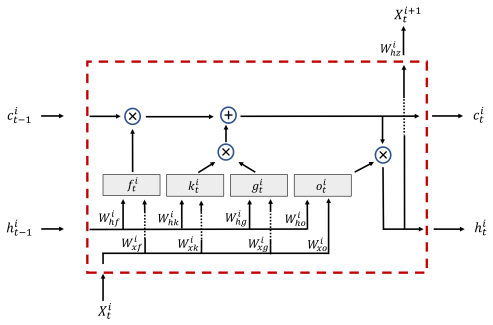
The deterioration of pavement is a complex and dynamic process determined by different factors including material, environment, design, and some other unobserved variables. Accurate predictions of pavement condition can help maximize the use of available resources for pavement management agencies through better coordinated preservation and maintenance activities. This paper uses deep neural networks such as the convolutional neural network (CNN) and the long short-term memory (LSTM) to model the pavement deterioration process. In this paper, pavement condition data and maintenance and rehabilitation history collected by the Texas Department of Transportation over the past 18 years were used. Twenty-one flexible pavement condition indicators, including cracking, rutting, raveling, and roughness, collected from more than 100,000 pavement sections were included in the proposed models. Promising preliminary results were obtained. Case study results show that the proposed CNN model outperforms standard machine learning models in predicting pavement condition values.
Editorial analysis
A structured set of objections, weighed in public.
Referee Report
Summary. The paper proposes using convolutional neural networks (CNN) and long short-term memory (LSTM) models to predict pavement condition deterioration. It uses 21 flexible pavement distress indicators (cracking, rutting, raveling, roughness) plus maintenance and rehabilitation history from Texas DOT data spanning 18 years across more than 100,000 sections. The central empirical claim is that the CNN model outperforms standard machine learning baselines in predicting pavement condition values.
Significance. If the reported outperformance survives a leakage-free temporal validation protocol on the longitudinal data, the work would demonstrate a practical application of deep learning to multi-indicator pavement performance modeling and could support improved preservation scheduling for transportation agencies. The scale of the real-world dataset is a positive feature.
major comments (2)
- [Case study results] The case study results section does not describe the train/test split procedure used for the 18-year longitudinal observations. Because pavement sections are observed repeatedly over time, a non-temporal (e.g., random) split allows future observations to leak into training, which would inflate metrics for all models and render the CNN-vs-baseline comparison uninformative.
- [Case study results] No information is supplied on the CNN or LSTM architectures, hyperparameter choices, loss functions, error metrics (e.g., MAE, RMSE), handling of missing values, or statistical significance testing of the performance differences. These omissions make the outperformance claim impossible to reproduce or assess.
minor comments (1)
- [Abstract] The abstract states that 'promising preliminary results were obtained' without quantifying what 'promising' means or referencing any table or figure.
Simulated Author's Rebuttal
Thank you for the constructive feedback on our manuscript. We appreciate the emphasis on methodological rigor for longitudinal data and reproducibility. We address each major comment below and will incorporate the necessary revisions to strengthen the paper.
read point-by-point responses
-
Referee: [Case study results] The case study results section does not describe the train/test split procedure used for the 18-year longitudinal observations. Because pavement sections are observed repeatedly over time, a non-temporal (e.g., random) split allows future observations to leak into training, which would inflate metrics for all models and render the CNN-vs-baseline comparison uninformative.
Authors: We agree that the train/test split must be explicitly described and that a non-temporal split risks leakage in this repeated-measures setting. The original manuscript reported only preliminary results without detailing the split. In revision we will replace the random split with a temporal protocol (training on the first 12 years and testing on the subsequent 6 years, with no overlap), fully document the procedure, and re-evaluate all models under this leakage-free regime so that the CNN-versus-baseline comparison is informative. revision: yes
-
Referee: [Case study results] No information is supplied on the CNN or LSTM architectures, hyperparameter choices, loss functions, error metrics (e.g., MAE, RMSE), handling of missing values, or statistical significance testing of the performance differences. These omissions make the outperformance claim impossible to reproduce or assess.
Authors: We acknowledge that the lack of implementation details prevents reproduction and assessment. The revised manuscript will add a dedicated subsection that specifies: CNN architecture (layers, filters, kernel sizes, pooling), LSTM architecture (layers, hidden units), hyperparameter selection (grid search with temporal cross-validation), loss function (MSE), evaluation metrics (MAE, RMSE, and R^{2}), missing-value handling (linear interpolation for short gaps, exclusion of sections with >20 % missing), and statistical testing (paired t-tests on per-section errors with Bonferroni correction). These additions will make the outperformance claim fully reproducible and verifiable. revision: yes
Circularity Check
No circularity; empirical DL comparison is self-contained
full rationale
The paper applies standard CNN and LSTM architectures to a longitudinal dataset of 21 pavement distress indicators plus maintenance history to predict condition values, then reports that CNN outperforms baseline ML models on case-study metrics. No equations, ansatzes, or uniqueness theorems are invoked; the performance claim is a direct empirical comparison rather than a derivation that reduces to fitted inputs or self-citations by construction. The modeling chain is a conventional supervised-learning pipeline with no self-definitional steps or load-bearing prior-author results.
Axiom & Free-Parameter Ledger
free parameters (1)
- neural network hyperparameters and architecture
axioms (2)
- domain assumption Pavement deterioration can be adequately captured by the 21 observed distress indicators and maintenance history
- domain assumption Standard machine learning models form a fair and relevant baseline for comparison
Reference graph
Works this paper leans on
-
[1]
Impacts of seasonal and annual weather variations on network-level pavement performance.Infrastructures, 4(2):27, 2019
L Gao, F Hong, and YH Ren. Impacts of seasonal and annual weather variations on network-level pavement performance.Infrastructures, 4(2):27, 2019
2019
-
[2]
Incorporating uncertainties into determination of flexible pavement preventive maintenance interval.Trans- portmetrica A: Transport Science, 15(1):34–54, 2019
Zhe Han, Juan Diego Porras-Alvarado, Cody Stone, and Zhanmin Zhang. Incorporating uncertainties into determination of flexible pavement preventive maintenance interval.Trans- portmetrica A: Transport Science, 15(1):34–54, 2019
2019
-
[3]
Stefanos S Politis, Zhanmin Zhang, Zhe Han, John J Hasenbein, and Miguel Arellano. Stochastic analysis of network-level bridge maintenance needs using latin hypercube sampling.ASCE- ASME Journal of Risk and Uncertainty in Engineering Systems, Part A: Civil Engineering, 7 (1):04020049, 2020
2020
-
[4]
Forensic evaluation of premature failures of texas specific pavement study–1 sections.Journal of performance of constructed facilities, 17(2):67–74, 2003
Dar-Hao Chen, John Bilyeu, Tom Scullion, Deng-Fong Lin, and Fujie Zhou. Forensic evaluation of premature failures of texas specific pavement study–1 sections.Journal of performance of constructed facilities, 17(2):67–74, 2003
2003
-
[5]
Interface condition influence on prediction of flexible pavement life.Journal of Civil Engineering and Management, 13(1):71–76, 2007
Hassan Ziari and Mohammad Mahdi Khabiri. Interface condition influence on prediction of flexible pavement life.Journal of Civil Engineering and Management, 13(1):71–76, 2007
2007
-
[6]
Development of pavement performance models for pavement management incorporating treatment type
H Xu, MY Kim, C Sabillon, L Gao, and JA Prozzi. Development of pavement performance models for pavement management incorporating treatment type. 2021
2021
-
[7]
Missing pavement performance data imputation using graph neural networks.Transportation research record, 2676(12):409–419, 2022
L Gao, K Yu, and P Lu. Missing pavement performance data imputation using graph neural networks.Transportation research record, 2676(12):409–419, 2022
2022
-
[8]
Pavement missing condition data imputation through collective learning-based graph neural networks.International Conference on Transportation and Development, 2023: 416–423, 2023
K Yu and L Gao. Pavement missing condition data imputation through collective learning-based graph neural networks.International Conference on Transportation and Development, 2023: 416–423, 2023
2023
-
[9]
A statewide pavement management system.Interfaces, 12(6):5–21, 1982
Kamal Golabi, Ram B Kulkarni, and George B Way. A statewide pavement management system.Interfaces, 12(6):5–21, 1982
1982
-
[10]
Application of markov process to pavement management systems at network level
Abbas A Butt, MY Shahin, SH Carpenter, and JV Carnahan. Application of markov process to pavement management systems at network level. InProceedings of third international conference on managing pavements, volume 2. Citeseer, 1994
1994
-
[11]
Number 1180
Yi Jiang, Mitsuru Saito, and Kumares C Sinha.Bridge performance prediction model using the Markov chain. Number 1180. 1988
1988
-
[12]
Probabilistic behavior of pavements
Kelvin CP Wang, John Zaniewski, and George Way. Probabilistic behavior of pavements. Journal of transportation Engineering, 120(3):358–375, 1994
1994
-
[13]
Reliability-based processing of markov chains for modeling pavement network deterioration.Transportation research record, 1524(1):203–213, 1996
Ningyuan Li, Wei-Chau Xie, and Ralph Haas. Reliability-based processing of markov chains for modeling pavement network deterioration.Transportation research record, 1524(1):203–213, 1996. 19
1996
-
[14]
Asemi-markovapproachformodellingassetdeterioration
MBlack, ATBrint, andJRBrailsford. Asemi-markovapproachformodellingassetdeterioration. Journal of the Operational Research Society, 56(11):1241–1249, 2005
2005
-
[15]
Derivation of transition proba- bility matrices for pavement deterioration modeling.Journal of Transportation Engineering, 132(2):141–161, 2006
José J Ortiz-García, Seósamh B Costello, and Martin S Snaith. Derivation of transition proba- bility matrices for pavement deterioration modeling.Journal of Transportation Engineering, 132(2):141–161, 2006
2006
-
[16]
Using markov process and method of moments for optimizing management strategies of pavement infrastructure
Lu Gao, Zhanmin Zhang, and Susan Louise Tighe. Using markov process and method of moments for optimizing management strategies of pavement infrastructure. InTransportation Research Board 86th Annual Meeting, number 07-3355, 2007
2007
-
[17]
A statistical deterioration forecasting method using hidden markov model for infrastructure management.Transportation Research Part B: Methodological, 46(4):544–561, 2012
Kiyoshi Kobayashi, Kiyoyuki Kaito, and Nam Lethanh. A statistical deterioration forecasting method using hidden markov model for infrastructure management.Transportation Research Part B: Methodological, 46(4):544–561, 2012
2012
-
[18]
Comparison of markov chain and semi-markov models for crack deterioration on flexible pavements.Journal of Infrastructure Systems, 19(2):186–195, 2013
Omar Thomas and John Sobanjo. Comparison of markov chain and semi-markov models for crack deterioration on flexible pavements.Journal of Infrastructure Systems, 19(2):186–195, 2013
2013
-
[19]
Transition probability matrices for flexible pavement deterioration models with half-year cycle time.International Journal of Civil Engineering, 16(9):1045–1056, 2018
Heriberto Pérez-Acebo, Sergiu Bejan, and Hernán Gonzalo-Orden. Transition probability matrices for flexible pavement deterioration models with half-year cycle time.International Journal of Civil Engineering, 16(9):1045–1056, 2018
2018
-
[20]
Estimating spatial dependence associated with deteriora- tion process of road network.Transportation Research Board 95th Annual MeetingTransportation Research Board, 2016
S Jahanbakhsh, L Gao, and Z Zhang. Estimating spatial dependence associated with deteriora- tion process of road network.Transportation Research Board 95th Annual MeetingTransportation Research Board, 2016
2016
-
[21]
Estimation of infrastructure distress initiation and progression models.Journal of Infrastructure Systems, 1(3):146–150, 1995
Samer Madanat, Srinivas Bulusu, and Amr Mahmoud. Estimation of infrastructure distress initiation and progression models.Journal of Infrastructure Systems, 1(3):146–150, 1995
1995
-
[22]
Samer Madanat and Hee Shin. Development of distress progression models using panel data sets of in-service pavements.Transportation Research Record: Journal of the Transportation Research Board, (1643):20–24, 1998
1998
-
[23]
Using duration models to analyze experimental pavement failure data.Transportation Research Record: Journal of the Transportation Research Board, (1699):87–94, 2000
Jorge Prozzi and Samer Madanat. Using duration models to analyze experimental pavement failure data.Transportation Research Record: Journal of the Transportation Research Board, (1699):87–94, 2000
2000
-
[24]
Development of pavement performance models by combining experimental and field data.Journal of Infrastructure Systems, 10(1):9–22, 2004
JA Prozzi and SM Madanat. Development of pavement performance models by combining experimental and field data.Journal of Infrastructure Systems, 10(1):9–22, 2004
2004
-
[25]
PhD thesis, 2005
Zheng Li.A probabilistic and adaptive approach to modeling performance of pavement infras- tructure. PhD thesis, 2005
2005
-
[26]
Survival analysis of fatigue cracking for flexible pavements based on long-term pavement performance data.Journal of transportation engineering, 131(8):608–616, 2005
Yuhong Wang, Kamyar C Mahboub, and Donn E Hancher. Survival analysis of fatigue cracking for flexible pavements based on long-term pavement performance data.Journal of transportation engineering, 131(8):608–616, 2005
2005
-
[27]
Applying method of moments to model reliability of pavements infrastructure.Journal of Transportation Engineering, 132(5):416–424, 2006
Zhanmin Zhang and Ivan Damnjanović. Applying method of moments to model reliability of pavements infrastructure.Journal of Transportation Engineering, 132(5):416–424, 2006
2006
-
[28]
Dynamic panel data model for predicting performance of asphalt concrete overlay.Journal of Transportation Engineering, 134 (2):86–92, 2008
Yuhong Wang, Kamyar C Mahboub, and Donn E Hancher. Dynamic panel data model for predicting performance of asphalt concrete overlay.Journal of Transportation Engineering, 134 (2):86–92, 2008. 20
2008
-
[29]
Empirical comparison of statistical pavement performance models.Journal of Infrastructure Systems, 14(2):138–149, 2008
Chih-Yuan Chu and Pablo L Durango-Cohen. Empirical comparison of statistical pavement performance models.Journal of Infrastructure Systems, 14(2):138–149, 2008
2008
-
[30]
Roughness model accounting for heterogeneity based on in-service pavement performance data.Journal of Transportation Engineering, 136(3):205–213, 2010
Feng Hong and Jorge A Prozzi. Roughness model accounting for heterogeneity based on in-service pavement performance data.Journal of Transportation Engineering, 136(3):205–213, 2010
2010
-
[31]
Performance modeling of infrastructure condition data with maintenance intervention.Transportation research record, 2225(1):109–116, 2011
L Gao, JP Aguiar-Moya, and Z Zhang. Performance modeling of infrastructure condition data with maintenance intervention.Transportation research record, 2225(1):109–116, 2011
2011
-
[32]
Pavement deterioration model incorporating unobserved heterogeneity for optimal life-cycle rehabilitation policy.Journal of Infrastructure Systems, 21 (1):04014027, 2015
Feng Hong and Jorge A Prozzi. Pavement deterioration model incorporating unobserved heterogeneity for optimal life-cycle rehabilitation policy.Journal of Infrastructure Systems, 21 (1):04014027, 2015
2015
-
[33]
A nested modelling approach to infrastructure performance characterisation.International Journal of Pavement Engineering, pages 1–7, 2016
Zhanmin Zhang and Lu Gao. A nested modelling approach to infrastructure performance characterisation.International Journal of Pavement Engineering, pages 1–7, 2016
2016
-
[34]
Develop- ment of network-level pavement deterioration curves using the linear empirical bayes approach
Antonio Pantuso, Gerardo W Flintsch, Samer W Katicha, and Giuseppe Loprencipe. Develop- ment of network-level pavement deterioration curves using the linear empirical bayes approach. International Journal of Pavement Engineering, pages 1–14, 2019
2019
-
[35]
Predicting roughness progression in flexible pavements using artificial neural networks
Nii O Attoh-Okine. Predicting roughness progression in flexible pavements using artificial neural networks. InTransportation Research Board Conference Proceedings, volume 1, 1994
1994
-
[36]
S Owusu-Ababio. Application of neural networks to modeling thick asphalt pavement per- formance.Artificial Intelligence and Mathematical Methods in Pavement and Geomechanical Systems, pages 23–30, 1998
1998
-
[37]
Nii O Attoh-Okine. Analysis of learning rate and momentum term in backpropagation neural network algorithm trained to predict pavement performance.Advances in Engineering Software, 30(4):291–302, 1999
1999
-
[38]
Pavement roughness modeling using back-propagation neural networks.Computer-Aided Civil and Infrastructure Engineering, 19 (4):295–303, 2004
Jae-Ho Choi, Teresa M Adams, and Hussain U Bahia. Pavement roughness modeling using back-propagation neural networks.Computer-Aided Civil and Infrastructure Engineering, 19 (4):295–303, 2004
2004
-
[39]
Prediction of onset of corrosion in concrete bridge decks using neural networks and case-based reasoning.Computer-Aided Civil and Infrastructure Engineering, 20 (2):108–117, 2005
G Morcous and Z Lounis. Prediction of onset of corrosion in concrete bridge decks using neural networks and case-based reasoning.Computer-Aided Civil and Infrastructure Engineering, 20 (2):108–117, 2005
2005
-
[40]
Automated diagnosis of sewer pipe defects based on machine learning approaches.Expert Systems with Applications, 35(3):1327–1337, 2008
Ming-Der Yang and Tung-Ching Su. Automated diagnosis of sewer pipe defects based on machine learning approaches.Expert Systems with Applications, 35(3):1327–1337, 2008
2008
-
[41]
Artificial neural network (ann) based pavement deterioration models for low volume roads in india.International Journal of Pavement Research & Technology, 5(2), 2012
Dattatraya Tukaram Thube. Artificial neural network (ann) based pavement deterioration models for low volume roads in india.International Journal of Pavement Research & Technology, 5(2), 2012
2012
-
[42]
Two-stage support vector classifier and recurrent neural network predictor for pavement performance modeling.Journal of Infrastructure Systems, 19(3):266–274, 2013
Nader Tabatabaee, Mojtaba Ziyadi, and Yousef Shafahi. Two-stage support vector classifier and recurrent neural network predictor for pavement performance modeling.Journal of Infrastructure Systems, 19(3):266–274, 2013
2013
-
[43]
Jakub Gajewski and Tomasz Sadowski. Sensitivity analysis of crack propagation in pavement bituminous layered structures using a hybrid system integrating artificial neural networks and finite element method.Computational Materials Science, 82:114–117, 2014. 21
2014
-
[44]
Performance models for hot mix asphalt pavements in urban roads.Construction and Building Materials, 116:281–288, 2016
Ufuk Kırbaş and Mustafa Karaşahin. Performance models for hot mix asphalt pavements in urban roads.Construction and Building Materials, 116:281–288, 2016
2016
-
[45]
A gradient boosting approach to understanding airport runway and taxiway pavement deterioration.International Journal of Pavement Engineering, pages 1–15, 2020
Limon Barua, Bo Zou, Mohamadhossein Noruzoliaee, and Sybil Derrible. A gradient boosting approach to understanding airport runway and taxiway pavement deterioration.International Journal of Pavement Engineering, pages 1–15, 2020
2020
-
[46]
Yongjun Lee, Jongwan Sun, and Minjae Lee. Development of deep learning based deterioration prediction model for the maintenance planning of highway pavement.Korean Journal of Construction Engineering and Management, 20(6):34–43, 2019
2019
-
[47]
Development of the road pavement deterioration model based on the deep learning method.Electronics, 9(1):3, 2020
Seunghyun Choi and Myungsik Do. Development of the road pavement deterioration model based on the deep learning method.Electronics, 9(1):3, 2020
2020
-
[48]
Deep learning.nature, 521(7553):436–444, 2015
Yann LeCun, Yoshua Bengio, and Geoffrey Hinton. Deep learning.nature, 521(7553):436–444, 2015
2015
-
[49]
Handwritten digit recognition with a back- propagation network
Yann LeCun, Bernhard E Boser, John S Denker, Donnie Henderson, Richard E Howard, Wayne E Hubbard, and Lawrence D Jackel. Handwritten digit recognition with a back- propagation network. InAdvances in neural information processing systems, pages 396–404, 1990
1990
-
[50]
Neural network model for a mechanism of pattern recognition unaffected by shift in position-neocognitron.IEICE Technical Report, A, 62(10):658–665, 1979
Kunihiko Fukushima. Neural network model for a mechanism of pattern recognition unaffected by shift in position-neocognitron.IEICE Technical Report, A, 62(10):658–665, 1979
1979
-
[51]
Gradient-based learning applied to document recognition.Proceedings of the IEEE, 86(11):2278–2324, 1998
Yann LeCun, Léon Bottou, Yoshua Bengio, and Patrick Haffner. Gradient-based learning applied to document recognition.Proceedings of the IEEE, 86(11):2278–2324, 1998
1998
-
[52]
Imagenet classification with deep convolutional neural networks
Alex Krizhevsky, Ilya Sutskever, and Geoffrey E Hinton. Imagenet classification with deep convolutional neural networks. InAdvances in neural information processing systems, pages 1097–1105, 2012
2012
-
[53]
Zhicheng Cui, Wenlin Chen, and Yixin Chen. Multi-scale convolutional neural networks for time series classification.arXiv preprint arXiv:1603.06995, 2016
-
[54]
Time series classification from scratch with deep neural networks: A strong baseline
Zhiguang Wang, Weizhong Yan, and Tim Oates. Time series classification from scratch with deep neural networks: A strong baseline. In2017 International joint conference on neural networks (IJCNN), pages 1578–1585. IEEE, 2017
2017
-
[55]
A primer on neural network models for natural language processing.Journal of Artificial Intelligence Research, 57:345–420, 2016
Yoav Goldberg. A primer on neural network models for natural language processing.Journal of Artificial Intelligence Research, 57:345–420, 2016
2016
-
[56]
Long short-term memory.Neural computation, 9(8): 1735–1780, 1997
Sepp Hochreiter and Jürgen Schmidhuber. Long short-term memory.Neural computation, 9(8): 1735–1780, 1997
1997
-
[57]
A new boosting algorithm for improved time-series forecasting with recurrent neural networks.Information Fusion, 9(1): 41–55, 2008
Mohammad Assaad, Romuald Boné, and Hubert Cardot. A new boosting algorithm for improved time-series forecasting with recurrent neural networks.Information Fusion, 9(1): 41–55, 2008
2008
-
[58]
Olalekan Ogunmolu, Xuejun Gu, Steve Jiang, and Nicholas Gans. Nonlinear systems identifica- tion using deep dynamic neural networks.arXiv preprint arXiv:1610.01439, 2016
-
[59]
Pavement analyst data dictionary condition summary
TxDOT. Pavement analyst data dictionary condition summary. Technical report, Texas Department of Transportation, 2018. 22
2018
-
[60]
Detection of pavement maintenance treatments using deep-learning network.Transportation Research Record, 2675(9):1434–1443, 2021
L Gao, Y Yu, Y Hao Ren, and P Lu. Detection of pavement maintenance treatments using deep-learning network.Transportation Research Record, 2675(9):1434–1443, 2021
2021
-
[61]
Evaluation and development of pavement scores, performance models and needs estimates for the txdot pavement management information system
Nasir Gharaibeh, Tom Freeman, Siamak Saliminejad, Andrew Wimsatt, Carlos Chang-Albitres, Soheil Nazarian, Imad Abdallah, Jose Weissmann, Angela Jannini Weissmann, Athanassios T Papagiannakis, et al. Evaluation and development of pavement scores, performance models and needs estimates for the txdot pavement management information system. Technical report, ...
2012
discussion (0)
Sign in with ORCID, Apple, or X to comment. Anyone can read and Pith papers without signing in.