Recognition: 2 theorem links
· Lean TheoremExpanding Maps on Flowers, Interval Exchange Transformations, and Ergodic Optimization
Pith reviewed 2026-05-11 01:12 UTC · model grok-4.3
The pith
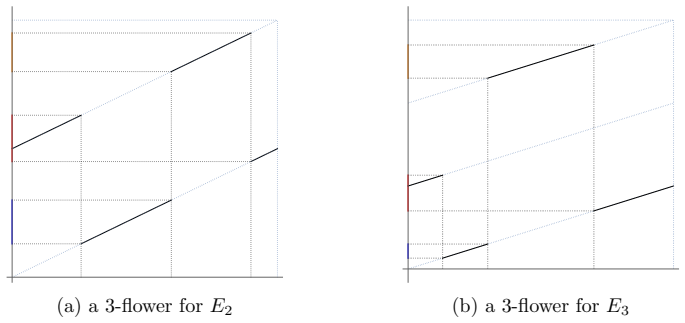
Any set contained in a flower has at most linear complexity, and flowers relate to interval exchange transformations.
A machine-rendered reading of the paper's core claim, the machinery that carries it, and where it could break.
Core claim
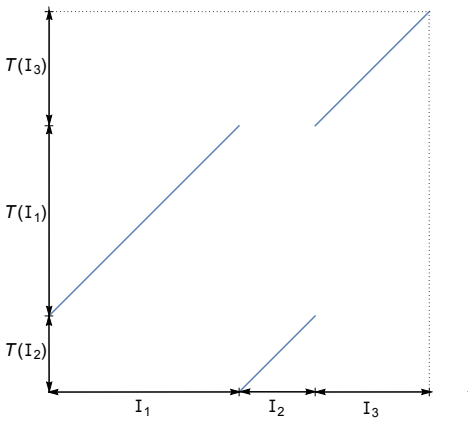
Flowers are invariant sets under expanding maps such that any subset has at most linear complexity and such sets correspond to a special class of interval exchange transformations. The work extends the result that any Sturmian system embeds into the circle as a doubling-invariant subset contained in a half-circle. In ergodic optimization, where flowers were introduced as candidate supports for maximizing measures, numerical computations support the conjecture that trigonometric polynomials attain their maxima on flowers.
What carries the argument
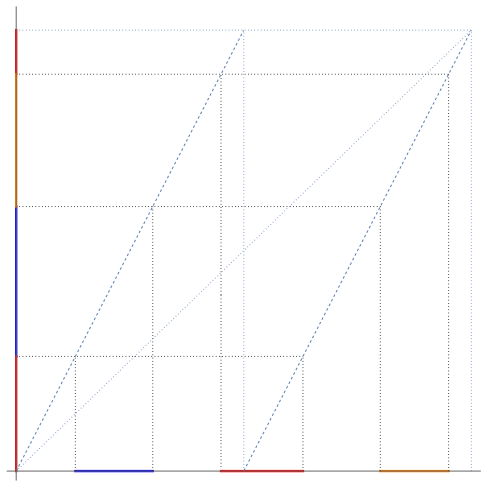
The flower, defined as an invariant set for an expanding map that restricts subset complexity to linear growth and corresponds to interval exchange transformations.
Load-bearing premise
The definitions of flowers from ergodic optimization match those used to prove the linear complexity bound and the interval exchange relationship, and the numerical evidence for trigonometric polynomials generalizes.
What would settle it
Construct a concrete flower that contains a subset whose symbolic complexity grows faster than linearly, or exhibit a trigonometric polynomial whose maximizing measure is supported outside every flower.
Figures
read the original abstract
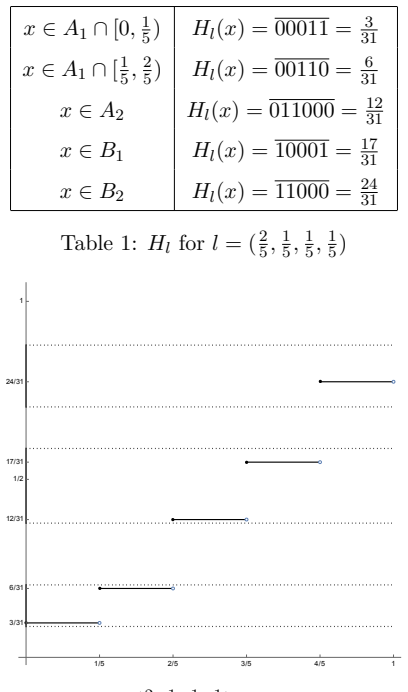
In this paper, we discuss expanding maps on a class of invariant sets called flowers. We show that any set contained in a flower has at most linear complexity, and we present a relationship between flowers and a special class of interval exchange transformations. This extends work of Bullett and Sentenac, who showed that any Sturmian system may be embedded into the circle as a doubling-invariant subset that is contained in a half circle. Flowers were first introduced in the context of ergodic optimization, as candidate sets for supporting maximizing measures. We discuss the relationship to ergodic optimization, and present numerical results that support the conjecture that trigonometric polynomials are maximized on flowers.
Editorial analysis
A structured set of objections, weighed in public.
Referee Report
Summary. The paper studies expanding maps on invariant sets called flowers. It proves that any subset contained in a flower has at most linear complexity and establishes an explicit correspondence between flowers and a special class of interval exchange transformations, extending the embedding result of Bullett and Sentenac for Sturmian systems. In the ergodic optimization setting, flowers are discussed as candidate supports for maximizing measures, and numerical experiments are presented as supporting evidence for the conjecture that trigonometric polynomials attain their maxima on flowers.
Significance. If the claims hold, the work supplies a combinatorial framework linking linear complexity of invariant sets under expanding maps to interval exchange transformations and ergodic optimization. The direct combinatorial argument for linear complexity and the explicit coding that preserves the invariant set and expansion (matching the Bullett-Sentenac construction) are strengths. The numerical results are framed strictly as supporting evidence with discretization details supplied, without overclaiming generality.
minor comments (2)
- [§6] §6 (numerical experiments): the discretization and optimization procedures are described, but adding a short table summarizing the tested trigonometric polynomials, grid sizes, and observed maxima would improve reproducibility and clarity of the supporting evidence.
- [Introduction] Introduction: the extension beyond Bullett-Sentenac is stated clearly, yet a one-sentence comparison table or diagram contrasting the Sturmian half-circle case with the general flower case would aid readers unfamiliar with the prior embedding.
Simulated Author's Rebuttal
We thank the referee for their careful reading of the manuscript and for the positive assessment. We are pleased that the referee recommends acceptance and that the summary accurately reflects the paper's contributions on linear complexity, the correspondence with interval exchange transformations, and the numerical support for the ergodic optimization conjecture.
Circularity Check
No significant circularity; derivation self-contained
full rationale
The paper derives linear complexity for subsets of flowers directly from the combinatorial structure of the expanding map and flower partition, without reducing to fitted parameters or self-definitions. The explicit coding establishing the correspondence to a subclass of interval exchange transformations is constructed to preserve the invariant set and expansion, extending the Bullett-Sentenac embedding for Sturmian systems via independent combinatorial arguments rather than self-citation load-bearing. Numerical results are explicitly framed as supporting evidence for the ergodic-optimization conjecture on trigonometric polynomials, with discretization details provided, and do not serve as load-bearing predictions. No ansatz smuggling, renaming of known results, or uniqueness theorems imported from the authors' prior work appear in the chain.
Axiom & Free-Parameter Ledger
axioms (1)
- domain assumption Flowers are invariant sets under expanding maps that serve as candidate supports for maximizing measures
Reference graph
Works this paper leans on
-
[1]
Le poisson n'a pas d'arêtes , volume=. Annales de l'I.H.P. Probabilités et Statistiques , author=. 2000 , pages=
work page 2000
-
[2]
Bullett, S. and Sentenac, P. , year=. Ordered orbits of the shift, square roots, and the devil's staircase , volume=. doi:10.1017/S0305004100072236 , journal=
-
[3]
Veerman, P. , year=. Symbolic dynamics and rotation numbers , volume=. doi:https://doi.org/10.1016/0378-4371(86)90015-4 , journal=
-
[4]
Veerman, P. , year=. Symbolic dynamics of order-preserving orbits , volume=. doi:https://doi.org/10.1016/0167-2789(87)90055-8 , journal=
-
[5]
Jenkinson, O. , year=. Ergodic optimization in dynamical systems , volume=. doi:https://doi.org/10.1017/etds.2017.142 , journal=
-
[6]
Jenkinson, O. , year=. Ergodic optimization , volume=. doi:10.3934/dcds.2006.15.197 , journal=
-
[7]
Southeast Asian Bulletin of Mathematics , author=
Combinatorial methods for interval exchange transformations , volume=. Southeast Asian Bulletin of Mathematics , author=. 2013 , pages=
work page 2013
-
[8]
Dynamical decomposition of generalized interval exchange transformations , author=
-
[9]
Typicality of periodic optimization over an expanding circle map , author=
-
[10]
doi:https://doi.org/10.1007/s00222-026-01411-x , journal=
Typical periodic optimization for dynamical systems: symbolic dynamics , author=. doi:https://doi.org/10.1007/s00222-026-01411-x , journal=
-
[11]
Harriss, E. and Jenkinson, O. , year=. Flattening functions on flowers , volume=. doi:https://doi.org/10.1017/S0143385707000235 , journal=
-
[12]
Dykstra, A. and Ormes, N and Pavlov, R. , year=. Subsytems of Transitive Subshifts with Linear Complexity , volume=. doi:https://doi.org/10.1017/etds.2021.8 , journal=
-
[13]
Cyr, V. and Kra, B. , year=. Counting generic measures for a subshift of linear growth , volume=. doi:10.4171/JEMS/838 , journal=
-
[14]
Brémont, J. , year=. Dynamics of injective quasi-contractions , volume=. doi:10.1017/S0143385705000386 , journal=
-
[15]
Brémont, J. , year=. Finite flowers and maximizing measures for generic Lipschitz functions on the circle , volume=. doi:10.1088/0951-7715/19/4/003 , journal=
-
[16]
Invariant measures for piecewise continuous maps , volume=. C. R. Acad. Sci. Paris , author=. 2016 , pages=
work page 2016
-
[17]
Optimal periodic orbits of chaotic systems occur at low period , volume=. Physical Review E , author=
-
[18]
Contreras, G. , year=. Ground states are generically a periodic orbit , volume=. doi:https://doi.org/10.1007/s00222-015-0638-0 , journal=
-
[19]
Contreras, G. and Lopes, A. O. and Thieullen, Ph. , year=. Lyapunov minimizing measures for expanding maps of the circle , volume=. doi:https://doi.org/10.1017/S0143385701001663 , journal=
-
[20]
American Journal of Mathematics , author=
Symbolic Dynamics , volume=. American Journal of Mathematics , author=. 1938 , pages=
work page 1938
-
[21]
Ergodic Theory and Dynamical Systems , author=
Regularity of calibrated sub-actions for circle expanding maps and Sturmian optimization , doi=. Ergodic Theory and Dynamical Systems , author=. 2022 , pages=
work page 2022
-
[22]
Gao, R. and Shen, W. , year=. Low complexity of optimizing measures over an expanding circle map , doi=
-
[23]
Veech, W. , year=. Gauss Measures for Transformations on the Space of Interval Exchange Maps , url=. Annals of Mathematics , vol=
-
[24]
Masur, H. , year=. Interval Exchange Transformations and Measured Foliations , url=. Annals of Mathematics , vol=
-
[25]
Mathematische Zeitschrift , author=
Interval Exchange Transformations , url=. Mathematische Zeitschrift , author=. 1975 , pages=
work page 1975
-
[26]
Frontiers in number theory, physics, and geometry I , author=
Continued Fraction Algorithms for Interval Exchange Maps: an Introduction , doi=. Frontiers in number theory, physics, and geometry I , author=. 2006 , pages=
work page 2006
-
[27]
Katok, A. and Hasselblatt, B. , year=. Introduction to the Modern Theory of Dynamical Systems , publisher=
-
[28]
Przytycki, F. and Urbanski, M. , year=. Conformal Fractals: Ergodic Theory Methods , publisher=
-
[29]
Lothaire, M. , year=. Algebraic Combinatorics on Words , publisher=
-
[30]
Allouche, J.-P. , year=. Sur la complexité des suites infinies , volume=. doi:10.36045/bbms/1103408543 , journal=
-
[31]
Fogg, P. N. , year=. Substitutions in Dynamics, Arithmetics and Combinatorics , publisher=
-
[32]
Proceedings of the American Mathematical Society , author=
Prevalent uniqueness in ergodic optimization , doi=. Proceedings of the American Mathematical Society , author=
-
[33]
Bochi, J. , year=. Genericity of periodic maximization: proof of Contreras' theorem following Huang, Lian, Ma, Xu, and Zhang , url=
discussion (0)
Sign in with ORCID, Apple, or X to comment. Anyone can read and Pith papers without signing in.