0
Timed dengue controls suppress transmission risk in seasonal models
Optimal Scheduling of Dengue Vector Control
Miami temperature simulations show that adjoint-optimized schedules of larvicide, adulticide and breeding-site reduction lower the time-var
 full image
abstract click to expand
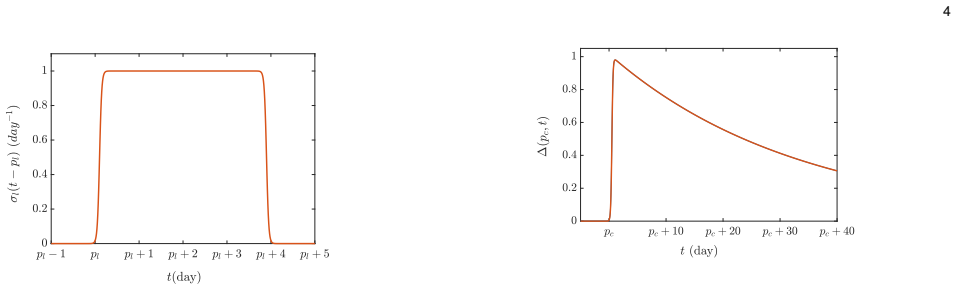
Dengue transmission is shaped by the population dynamics of the Aedes aegypti mosquito, making vector control a central strategy for disease mitigation. The impact of interventions such as larvicide, adulticide, and breeding-site reduction depends critically on their timing under fluctuating environmental conditions. We build on a high-fidelity, non-Markovian mechanistic model of the Aedes life cycle that captures stage-structured, temperature-dependent developmental delays, and mortality, and extend it to incorporate multiple vector control measures. Rather than using continuous abstract control amplitudes as in standard optimal control formulations, we introduce intervention-specific temporal profiles that better reflect operational practice. We then develop an adjoint-based gradient descent framework to compute the optimal timing of a sequence of interventions by minimizing the time-dependent dengue reproduction number, R0. Numerical simulations based on seasonal temperature data from Miami, Florida, show that appropriately timed combinations of interventions can substantially suppress transmission risk, with outcomes strongly influenced by seasonal temperature variation and intervention duration. We further propose embedding the resulting optimization framework within a Model Predictive Control architecture, yielding a closed-loop approach for real-time, surveillance-driven vector management under environmental and operational uncertainty.