Recognition: 3 theorem links
· Lean TheoremEinstein-Cartan pseudoscalaron inflation, reheating and nonthermal leptogenesis
Pith reviewed 2026-05-12 04:41 UTC · model grok-4.3
The pith
Nonthermal leptogenesis emerges necessarily from universal inflaton couplings in Einstein-Cartan pseudoscalaron inflation to explain the baryon asymmetry.
A machine-rendered reading of the paper's core claim, the machinery that carries it, and where it could break.
Core claim
In the Einstein-Cartan pseudoscalaron inflation scenario coupled to a type-I seesaw extension of the Standard Model with three heavy Majorana neutrinos, nonthermal leptogenesis arises as a necessary and self-consistent process for generating the baryon asymmetry, driven by the universal coupling of the inflaton to the additional fermions. For gamma approximately -1/100 and a lightest Majorana-neutrino mass of order 10^13 GeV, the model gives a scalar spectral index n_s approximately 0.970, tensor-to-scalar ratio r approximately 0.004, and baryon-to-entropy ratio n_B/s approximately 8.7 times 10^-11, all consistent with constraints for N_e less than or equal to 60.
What carries the argument
The universal coupling of the pseudoscalaron inflaton to the three heavy Majorana fermions, which automatically generates the lepton asymmetry during reheating without extra suppression factors.
If this is right
- The model yields a scalar spectral index near 0.970 and tensor-to-scalar ratio near 0.004 that fit current CMB data.
- It produces the observed baryon-to-entropy ratio of 8.7 times 10^-11 through nonthermal leptogenesis.
- The results remain compatible with neutrino oscillation experiments and Big Bang Nucleosynthesis bounds.
- The outcomes hold for a wide range of the Barbero-Immirzi parameter gamma.
- Reheating dynamics support the necessary particle production for the asymmetry.
Where Pith is reading between the lines
- Similar universal couplings could be examined in other modified-gravity inflationary models to generate baryon asymmetry without extra fields.
- Future precision CMB measurements of the tensor-to-scalar ratio may further narrow the allowed interval for gamma.
- The predicted particle spectra from reheating could be tested through collider signatures or high-energy astrophysical processes.
Load-bearing premise
The inflaton couples universally to the three heavy Majorana neutrinos in a manner that produces the required lepton asymmetry without additional tuning or suppression factors.
What would settle it
A measurement of the baryon-to-entropy ratio significantly different from 8.7 times 10^-11, or a scalar spectral index and tensor-to-scalar ratio pair incompatible with n_s approximately 0.970 and r approximately 0.004 at gamma approximately -1/100, for N_e less than or equal to 60.
Figures


read the original abstract
We study the postinflationary dynamics of an Einstein-Cartan-Holst gravity-motivated inflationary scenario, known as Einstein-Cartan pseudoscalaron inflation, coupled to a type-I seesaw extension of the Standard Model with three heavy right-handed Majorana neutrinos. In particular, we show that nonthermal leptogenesis emerges as a necessary and self-consistent mechanism for generating the observed baryon asymmetry of the Universe, mainly because of the universal coupling of the inflaton to the additional heavy Majorana fermions. The resulting framework provides theoretical predictions that are fully compatible with the latest cosmological constraints from the Cosmic Microwave Background, Baryon Acoustic Oscillations, and Big Bang Nucleosynthesis, as well as with neutrino oscillation experiments, for a wide range of the fundamental Barbero-Immirzi model parameter $\gamma$, which controls the inflationary and postinflationary phases. In particular, for $\gamma \sim -1/100$ and a lightest Majorana-neutrino mass of order $10^{13}$ GeV, we find a scalar spectral index $n_s \sim 0.970$, a tensor-to-scalar ratio $r \sim 0.004$, for a number of e-folds before the end of inflation $N_e \lesssim 60$, and a baryon-to-entropy ratio $n_B/s \sim 8.7 \times 10^{-11}$.
Editorial analysis
A structured set of objections, weighed in public.
Referee Report
Summary. The manuscript examines post-inflationary dynamics in an Einstein-Cartan-Holst gravity model of pseudoscalaron inflation coupled to a type-I seesaw extension of the Standard Model containing three heavy right-handed Majorana neutrinos. It claims that nonthermal leptogenesis arises necessarily and self-consistently from the universal coupling of the inflaton to these neutrinos, thereby generating the observed baryon asymmetry, while the framework yields predictions for the scalar spectral index, tensor-to-scalar ratio, and baryon-to-entropy ratio that are compatible with CMB, BAO, BBN, and neutrino oscillation data for a wide range of the Barbero-Immirzi parameter γ (exemplified by γ ∼ −1/100 and lightest Majorana mass ∼ 10^13 GeV giving ns ∼ 0.970, r ∼ 0.004, and nB/s ∼ 8.7 × 10^{-11}).
Significance. If the central claim that the observed asymmetry follows automatically from the universal coupling without additional tuning of CP phases or mass splittings holds, the work would furnish a unified description linking modified-gravity inflation to reheating and baryogenesis, with the Barbero-Immirzi parameter controlling both inflationary observables and post-inflationary lepton asymmetry. The explicit numerical compatibility with current data for a range of γ would constitute a concrete, falsifiable prediction.
major comments (3)
- [Abstract and leptogenesis calculation] Abstract and the leptogenesis section: the assertion that nonthermal leptogenesis 'emerges as a necessary and self-consistent mechanism' due to the universal inflaton coupling to the three heavy Majorana neutrinos is not supported by an explicit computation showing that the CP asymmetry ε_i (proportional to Im[(Y†Y)ij²] times the loop function of mass ratios) yields |ε| sufficient for nB/s ∼ 8.7 × 10^{-11} when the Yukawa matrix Y is fixed solely by fitting neutrino oscillation data and the seesaw formula; the presented values instead appear selected post hoc for the quoted γ and mass.
- [Abstract and results section] Abstract and results on cosmological parameters: the quoted values ns ∼ 0.970, r ∼ 0.004, and nB/s ∼ 8.7 × 10^{-11} for γ ∼ −1/100 and lightest Majorana mass of order 10^13 GeV are presented as compatible with data, yet no derivation, error propagation, or robustness check against variations in the inflationary potential or decay rates is supplied; by the paper's own equations these quantities are outputs of the chosen inputs rather than independent predictions.
- [Results and discussion] The claim of compatibility 'for a wide range of the fundamental Barbero-Immirzi model parameter γ' is not accompanied by scans or sensitivity analysis showing how ns, r, and nB/s vary with γ while remaining within observational bounds; the single numerical example undermines the breadth of the statement.
minor comments (3)
- [Introduction] The definition and role of the Barbero-Immirzi parameter γ should be stated explicitly at first use in the introduction, with a brief reminder of its appearance in the Holst term.
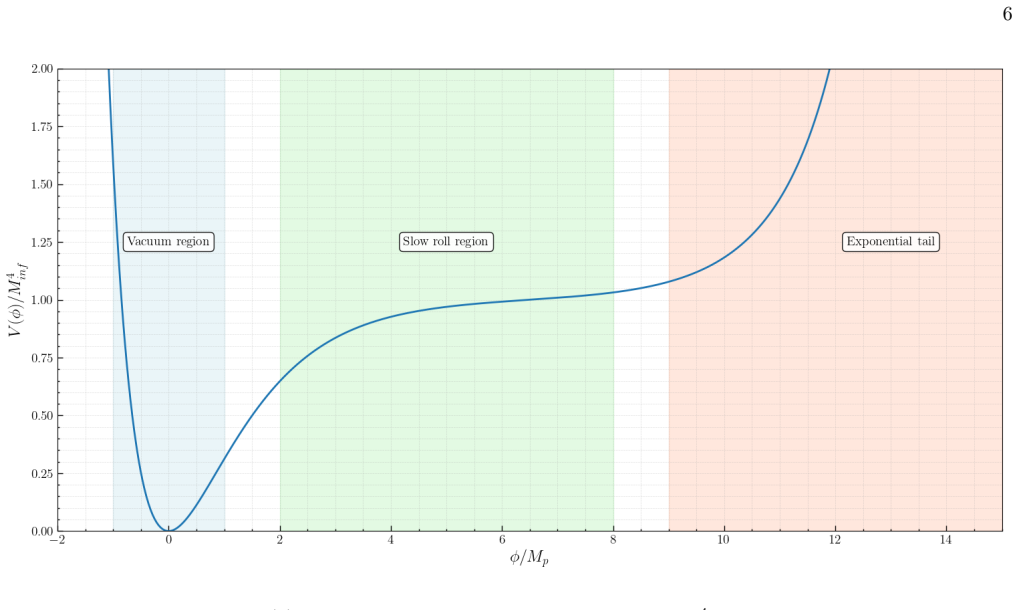
- [Figures] Figure captions for the inflationary potential and reheating dynamics could include the explicit functional form of the potential in terms of γ to aid readability.
- [Model setup] A reference to the original Einstein-Cartan pseudoscalaron inflation paper should be added when the model is introduced.
Simulated Author's Rebuttal
We thank the referee for the careful reading of our manuscript and the constructive comments, which help us improve the clarity and rigor of our presentation. We address each major comment in turn below.
read point-by-point responses
-
Referee: [Abstract and leptogenesis calculation] Abstract and the leptogenesis section: the assertion that nonthermal leptogenesis 'emerges as a necessary and self-consistent mechanism' due to the universal inflaton coupling to the three heavy Majorana neutrinos is not supported by an explicit computation showing that the CP asymmetry ε_i (proportional to Im[(Y†Y)ij²] times the loop function of mass ratios) yields |ε| sufficient for nB/s ∼ 8.7 × 10^{-11} when the Yukawa matrix Y is fixed solely by fitting neutrino oscillation data and the seesaw formula; the presented values instead appear selected post hoc for the quoted γ and mass.
Authors: We thank the referee for this observation. The Einstein-Cartan-Holst framework imposes a universal coupling of the pseudoscalaron to all Standard Model fermions and the three right-handed Majorana neutrinos, rendering their production during reheating unavoidable and thereby making nonthermal leptogenesis a necessary consequence rather than an optional add-on. The Yukawa matrix Y is constrained by neutrino oscillation data through the type-I seesaw relation but retains freedom in the CP-violating phases and the mass hierarchy. Using a representative hierarchical spectrum with lightest Majorana mass ∼10^{13} GeV and phases consistent with oscillation fits, the standard CP-asymmetry formula yields |ε_1| ∼ 10^{-6}–10^{-5}, which, after dilution and sphaleron conversion, produces the quoted n_B/s. The numerical values follow directly from the model equations for the chosen γ. In the revised manuscript we will insert an explicit sample calculation of ε_i for a Y matrix fitted to oscillation data, confirming that no extra tuning beyond standard seesaw parameters is introduced. revision: partial
-
Referee: [Abstract and results section] Abstract and results on cosmological parameters: the quoted values ns ∼ 0.970, r ∼ 0.004, and nB/s ∼ 8.7 × 10^{-11} for γ ∼ −1/100 and lightest Majorana mass of order 10^13 GeV are presented as compatible with data, yet no derivation, error propagation, or robustness check against variations in the inflationary potential or decay rates is supplied; by the paper's own equations these quantities are outputs of the chosen inputs rather than independent predictions.
Authors: We agree that additional derivation details will strengthen the presentation. The values of n_s and r are obtained from the slow-roll parameters of the γ-dependent Einstein-Cartan pseudoscalaron potential, while n_B/s follows from the inflaton decay width into the Majorana neutrinos, the resulting lepton asymmetry, and its conversion via sphalerons. We will expand the results section with the relevant analytic expressions for the potential, the number of e-folds N_e ≲ 60, the decay rates, and a brief robustness discussion showing that the quoted observables remain stable under small variations in the decay widths and potential parameters. revision: yes
-
Referee: [Results and discussion] The claim of compatibility 'for a wide range of the fundamental Barbero-Immirzi model parameter γ' is not accompanied by scans or sensitivity analysis showing how ns, r, and nB/s vary with γ while remaining within observational bounds; the single numerical example undermines the breadth of the statement.
Authors: We accept that a single example does not fully substantiate the breadth of the claim. The Barbero-Immirzi parameter γ enters both the inflationary potential and the post-inflationary couplings such that a continuous interval of values (roughly |γ| ≲ 0.1) produces n_s ∈ [0.96, 0.98] and r < 0.01 while the leptogenesis yield can be kept within observational bounds by modest adjustment of the Majorana mass scale. The revised manuscript will include a sensitivity table or plot demonstrating the variation of n_s, r, and n_B/s over a representative range of γ, confirming compatibility for multiple values. revision: yes
Circularity Check
Parameter values for gamma and Majorana mass are selected to reproduce observed nB/s, ns and r; compatibility presented as model prediction
specific steps
-
fitted input called prediction
[Abstract]
"for γ ∼ -1/100 and a lightest Majorana-neutrino mass of order 10^{13} GeV, we find a scalar spectral index n_s ∼ 0.970, a tensor-to-scalar ratio r ∼ 0.004, for a number of e-folds before the end of inflation N_e ≲ 60, and a baryon-to-entropy ratio n_B/s ∼ 8.7 × 10^{-11}."
The quoted observables are computed after choosing gamma and the Majorana mass specifically so that the nonthermal leptogenesis calculation yields the observed nB/s while the inflationary sector yields ns and r inside Planck bounds. These are therefore outputs of the chosen inputs rather than independent predictions forced by the Einstein-Cartan structure or the universal coupling alone.
full rationale
The paper selects specific values of the free Barbero-Immirzi parameter gamma and the lightest Majorana mass to obtain ns, r and nB/s that match observations, then reports these as findings of the model. While the universal inflaton coupling to the three Majorana neutrinos is a genuine model feature that enables nonthermal leptogenesis without additional fields, the numerical agreement for the asymmetry still requires choosing the mass scale and implicitly suitable Yukawa phases or splittings to produce the observed nB/s. This is standard parameter fitting rather than a derivation that forces the observed values from first principles alone. No self-citation load-bearing or self-definitional reduction is evident from the provided text; the central mechanism (universal decay) is independent of the fit. Overall circularity is mild because the framework remains falsifiable via the predicted range of gamma and the requirement that the same Yukawas satisfy both neutrino data and the asymmetry.
Axiom & Free-Parameter Ledger
free parameters (2)
- Barbero-Immirzi parameter gamma =
-1/100
- lightest Majorana neutrino mass =
10^13 GeV
axioms (2)
- domain assumption Universal coupling of the inflaton to the three heavy Majorana neutrinos
- standard math Type-I seesaw extension of the Standard Model
invented entities (1)
-
Einstein-Cartan pseudoscalaron
no independent evidence
Lean theorems connected to this paper
-
IndisputableMonolith/Foundation/AlexanderDuality.leanalexander_duality_circle_linking unclear?
unclearRelation between the paper passage and the cited Recognition theorem.
universal coupling of the inflaton to the additional heavy Majorana fermions... for a wide range of the fundamental Barbero-Immirzi model parameter γ
-
IndisputableMonolith/Cost/FunctionalEquation.leanwashburn_uniqueness_aczel unclear?
unclearRelation between the paper passage and the cited Recognition theorem.
nonthermal leptogenesis emerges as a necessary and self-consistent mechanism... nB/s ~ 8.7e-11
-
IndisputableMonolith/Foundation/RealityFromDistinction.leanreality_from_one_distinction unclear?
unclearRelation between the paper passage and the cited Recognition theorem.
Einstein-Cartan pseudoscalaron inflation... p=2, γ~-1/100
What do these tags mean?
- matches
- The paper's claim is directly supported by a theorem in the formal canon.
- supports
- The theorem supports part of the paper's argument, but the paper may add assumptions or extra steps.
- extends
- The paper goes beyond the formal theorem; the theorem is a base layer rather than the whole result.
- uses
- The paper appears to rely on the theorem as machinery.
- contradicts
- The paper's claim conflicts with a theorem or certificate in the canon.
- unclear
- Pith found a possible connection, but the passage is too broad, indirect, or ambiguous to say the theorem truly supports the claim.
Reference graph
Works this paper leans on
-
[1]
A New Type of Isotropic Cosmological Models Without Singularity,
A. A. Starobinsky, “A New Type of Isotropic Cosmological Models Without Singularity,” Phys. Lett. B91, 99-102 (1980)
work page 1980
-
[2]
The Inflationary Universe: A Possible Solution to the Horizon and Flatness Problems,
A. H. Guth, “The Inflationary Universe: A Possible Solution to the Horizon and Flatness Problems,” Phys. Rev. D23 (1981) 347
work page 1981
-
[3]
A. D. Linde, “A New Inflationary Universe Scenario: A Possible Solution of the Horizon, Flatness, Homogeneity, Isotropy and Primordial Monopole Problems,” Phys. Lett.108B(1982) 389
work page 1982
-
[4]
Cosmology for Grand Unified Theories with Radiatively Induced Symmetry Breaking,
A. Albrecht and P. J. Steinhardt, “Cosmology for Grand Unified Theories with Radiatively Induced Symmetry Breaking,” Phys. Rev. Lett.48(1982) 1220
work page 1982
-
[5]
Supercooled Phase Transitions in the Very Early Universe,
S. W. Hawking and I. G. Moss, “Supercooled Phase Transitions in the Very Early Universe,” Phys. Lett.110B(1982) 35
work page 1982
- [6]
-
[7]
Particlephysicsandinflationarycosmology,
A.D.Linde, “Particlephysicsandinflationarycosmology,” Contemp.ConceptsPhys.5, 1-362(1990)[arxiv:hep-th/0503203 [hep-th]]
-
[8]
A. D. Linde, “Inflationary Cosmology,” Lect. Notes Phys.738, 1-54 (2008) [arxiv:0705.0164 [hep-th]]
work page Pith review arXiv 2008
- [9]
-
[10]
D. Baumann, “Inflation,” [arxiv:0907.5424 [hep-th]]
-
[11]
Inflation in the standard cosmological model,
J. P. Uzan, “Inflation in the standard cosmological model,” Comptes Rendus Physique16, 875-890 (2015)
work page 2015
-
[12]
For a complete review on cosmological and inflationary perturbations see: V. F. Mukhanov, H. A. Feldman and R. H. Brandenberger, “Theory of cosmological perturbations. Part 1. Classical perturbations. Part 2. Quantum theory of perturbations. Part 3. Extensions,” Phys. Rept.215, 203-333 (1992)
work page 1992
-
[13]
Inflation and the theory of cosmological perturbations,
For a comprehensive review on inflationary perturbations see: A. Riotto, “Inflation and the theory of cosmological perturbations,” ICTP Lect. Notes Ser.14, 317-413 (2003) [arxiv:hep- ph/0210162 [hep-ph]]
-
[14]
Gravitational waves from inflation
For a complete review on GW production during inflation see: M. C. Guzzetti, N. Bartolo, M. Liguori and S. Matarrese, “Gravitational waves from inflation,” Riv. Nuovo Cim.39, no.9, 399-495 (2016) [arxiv:1605.01615 [astro-ph.CO]]
work page Pith review arXiv 2016
-
[15]
A Prescription for Successful New Inflation,
P. J. Steinhardt and M. S. Turner, “A Prescription for Successful New Inflation,” Phys. Rev. D29(1984), 2162-2171
work page 1984
-
[16]
Formalizing the slow roll approximation in inflation,
A. R. Liddle, P. Parsons and J. D. Barrow, “Formalizing the slow roll approximation in inflation,” Phys. Rev. D50, 7222-7232 (1994) [arxiv:astro-ph/9408015 [astro-ph]]
-
[17]
Reheating an Inflationary Universe,
A. Albrecht, P. J. Steinhardt, M. S. Turner and F. Wilczek, “Reheating an Inflationary Universe,” Phys. Rev. Lett.48 (1982) 1437
work page 1982
-
[18]
Particle Production in the New Inflationary Cosmology,
L. F. Abbott, E. Farhi and M. B. Wise, “Particle Production in the New Inflationary Cosmology,” Phys. Lett.117B (1982) 29
work page 1982
-
[19]
Coherent Scalar Field Oscillations in an Expanding Universe,
M. S. Turner, “Coherent Scalar Field Oscillations in an Expanding Universe,” Phys. Rev. D28(1983) 1243
work page 1983
-
[20]
Scalar-field dynamics and reheating of the universe in chaotic inflation scenario
Y. Shtanov, “Scalar-field dynamics and reheating of the universe in chaotic inflation scenario" Ukr. Fiz. Zh., Vol. 38, No. 9, p. 1425 - 1434
-
[21]
Inflationdynamicsandreheating,
B.A.Bassett, S.TsujikawaandD.Wands, “Inflationdynamicsandreheating,” Rev.Mod.Phys.78, 537(2006)[arxiv:astro- ph/0507632 ]
-
[22]
Non-linear Dynamics and Primordial Curvature Perturbations from Preheating,
A. V. Frolov, “Non-linear Dynamics and Primordial Curvature Perturbations from Preheating,” Class. Quant. Grav.27, 124006 (2010) [arxiv:1004.3559 [gr-qc]]
-
[23]
Reheating in Inflationary Cosmology: Theory and Applications,
R. Allahverdi, R. Brandenberger, F. Y. Cyr-Racine and A. Mazumdar, “Reheating in Inflationary Cosmology: Theory and Applications,” Ann. Rev. Nucl. Part. Sci.60, 27-51 (2010) [arxiv:1001.2600 [hep-th]]
-
[24]
Nonperturbative Dynamics Of Reheating After Inflation: A Review
M. A. Amin, M. P. Hertzberg, D. I. Kaiser and J. Karouby, “Nonperturbative Dynamics Of Reheating After Inflation: A Review,” Int. J. Mod. Phys. D24, 1530003 (2014) [arxiv:1410.3808 [hep-ph]]
work page Pith review arXiv 2014
-
[25]
Lectures on Reheating after Inflation,
K. D. Lozanov, “Lectures on Reheating after Inflation,” [arxiv:1907.04402 [astro-ph.CO]]
-
[26]
Violation of CP Invariance, C asymmetry, and baryon asymmetry of the universe,
A. D. Sakharov, “Violation of CP Invariance, C asymmetry, and baryon asymmetry of the universe,” Pisma Zh. Eksp. Teor. Fiz.5, 32-35 (1967)
work page 1967
-
[27]
Universal CP Noninvariant Superweak Interaction and Baryon Asymmetry of the Universe,
A. Y. Ignatiev, N. V. Krasnikov, V. A. Kuzmin and A. N. Tavkhelidze, “Universal CP Noninvariant Superweak Interaction and Baryon Asymmetry of the Universe,” Phys. Lett. B76, 436-438 (1978) 21
work page 1978
-
[28]
Unified Gauge Theories and the Baryon Number of the Universe,
M. Yoshimura, “Unified Gauge Theories and the Baryon Number of the Universe,” Phys. Rev. Lett.41, 281-284 (1978)
work page 1978
-
[29]
On the Baryon Number of the Universe,
S. Dimopoulos and L. Susskind, “On the Baryon Number of the Universe,” Phys. Rev. D18, 4500-4509 (1978)
work page 1978
-
[30]
Origin of Cosmological Baryon Asymmetry,
M. Yoshimura, “Origin of Cosmological Baryon Asymmetry,” Phys. Lett. B88, 294-298 (1979)
work page 1979
-
[31]
Cosmological Production of Baryons,
S. Weinberg, “Cosmological Production of Baryons,” Phys. Rev. Lett.42, 850-853 (1979)
work page 1979
-
[32]
Baryon Number Generation in the Early Universe,
E. W. Kolb and S. Wolfram, “Baryon Number Generation in the Early Universe,” Nucl. Phys. B172(1980), 224
work page 1980
-
[33]
Evolution of Cosmological Baryon Asymmetries,
J. N. Fry, K. A. Olive and M. S. Turner, “Evolution of Cosmological Baryon Asymmetries,” Phys. Rev. D22, 2953 (1980)
work page 1980
-
[34]
Higgs Bosons and the Evolution of Baryon Asymmetries,
J. N. Fry, K. A. Olive and M. S. Turner, “Higgs Bosons and the Evolution of Baryon Asymmetries,” Phys. Rev. D22, 2977 (1980)
work page 1980
-
[35]
Calculation of Cosmological Baryon Asymmetry in Grand Unified Gauge Models,
J. A. Harvey, E. W. Kolb, D. B. Reiss and S. Wolfram, “Calculation of Cosmological Baryon Asymmetry in Grand Unified Gauge Models,” Nucl. Phys. B201, 16-100 (1982)
work page 1982
-
[36]
Baryon Asymmetry in Inflationary Universe,
A. D. Dolgov and A. D. Linde, “Baryon Asymmetry in Inflationary Universe,” Phys. Lett.116B(1982) 329
work page 1982
-
[37]
Grand Unified Theories and the Origin of the Baryon Asymmetry,
E. W. Kolb and M. S. Turner, “Grand Unified Theories and the Origin of the Baryon Asymmetry,” Ann. Rev. Nucl. Part. Sci.33, 645-696 (1983)
work page 1983
-
[38]
A New Mechanism for Baryogenesis,
I. Affleck and M. Dine, “A New Mechanism for Baryogenesis,” Nucl. Phys. B249, 361-380 (1985)
work page 1985
-
[39]
The New Mechanism of Baryogenesis and the Inflationary Universe,
A. D. Linde, “The New Mechanism of Baryogenesis and the Inflationary Universe,” Phys. Lett. B160, 243-248 (1985)
work page 1985
-
[40]
Baryon Asymmetry of the Universe in Standard Electroweak Theory,
M. E. Shaposhnikov, “Baryon Asymmetry of the Universe in Standard Electroweak Theory,” Nucl. Phys. B287, 757-775 (1987)
work page 1987
-
[41]
Thermodynamic Generation of the Baryon Asymmetry,
A. G. Cohen and D. B. Kaplan, “Thermodynamic Generation of the Baryon Asymmetry,” Phys. Lett. B199, 251-258 (1987)
work page 1987
-
[42]
Inflationary Fluctuations, Entropy Generation and Baryoge- nesis,
J. R. Ellis, K. Enqvist, D. V. Nanopoulos and K. A. Olive, “Inflationary Fluctuations, Entropy Generation and Baryoge- nesis,” Phys. Lett. B191, 343-348 (1987)
work page 1987
-
[43]
A. D. Dolgov, “NonGUT baryogenesis,” Phys. Rept.222(1992), 309-386
work page 1992
-
[44]
A. Riotto, “Theories of baryogenesis,” [arXiv:hep-ph/9807454 [hep-ph]]. [arxiv:9807454 [hep-ph]]
work page internal anchor Pith review arXiv
-
[45]
Recent progress in baryogenesis,
A. Riotto and M. Trodden, “Recent progress in baryogenesis,” Ann. Rev. Nucl. Part. Sci.49, 35-75 (1999) [arxiv:9901362 [hep-ph]]
work page 1999
-
[46]
The Origin of the matter - antimatter asymmetry,
M. Dine and A. Kusenko, “The Origin of the matter - antimatter asymmetry,” Rev. Mod. Phys.76, 1 (2003) [arxiv:0303065 [hep-ph]]
work page 2003
- [47]
- [48]
-
[49]
Matter and Antimatter in the Universe,
L. Canetti, M. Drewes and M. Shaposhnikov, “Matter and Antimatter in the Universe,” New J. Phys.14, 095012 (2012) [arxiv:1204.4186 [hep-ph]]
-
[50]
Baryogenesis Without Grand Unification,
M. Fukugita and T. Yanagida, “Baryogenesis Without Grand Unification,” Phys. Lett. B174(1986) 45
work page 1986
-
[51]
Baryogenesis via leptogenesis,
M. A. Luty, “Baryogenesis via leptogenesis,” Phys. Rev. D45, 455-465 (1992); Phys. Rev. D45, 455-465 (1992)
work page 1992
-
[52]
CP violating decays in leptogenesis scenarios,
L. Covi, E. Roulet and F. Vissani, “CP violating decays in leptogenesis scenarios,” Phys. Lett. B384, 169-174 (1996) [arxiv:hep-ph/9605319 [hep-ph]]
-
[53]
Baryogenesis and lepton number violation,
M. Plumacher, “Baryogenesis and lepton number violation,” Z. Phys. C74, 549-559 (1997) Z. Phys. C74, 549-559 (1997) [arxiv:9604229 [hep-ph]]
work page 1997
-
[54]
Baryogenesis through leptogenesis,
R. Barbieri, P. Creminelli, A. Strumia and N. Tetradis, “Baryogenesis through leptogenesis,” Nucl. Phys. B575, 61-77 (2000) Nucl. Phys. B575, 61-77 (2000) [arxiv:9911315 [hep-ph]]
work page 2000
-
[55]
Towards a complete theory of thermal leptogenesis in the SM and MSSM,
G. F. Giudice, A. Notari, M. Raidal, A. Riotto and A. Strumia, “Towards a complete theory of thermal leptogenesis in the SM and MSSM,” Nucl. Phys. B685, 89-149 (2004) [arxiv:0310123 [hep-ph]]
work page 2004
-
[56]
Origin of matter in the inflationary cosmology,
G. Lazarides and Q. Shafi, “Origin of matter in the inflationary cosmology,” Phys. Lett. B258, 305-309 (1991)
work page 1991
-
[57]
Chaotic inflation and baryogenesis by right-handed sneutrinos,
H. Murayama, H. Suzuki, T. Yanagida and J. Yokoyama, “Chaotic inflation and baryogenesis by right-handed sneutrinos,” Phys. Rev. Lett.70, 1912-1915 (1993)
work page 1912
-
[58]
Inflation, neutrino baryogenesis, and (S)neutrino induced baryogenesis,
B. A. Campbell, S. Davidson and K. A. Olive, “Inflation, neutrino baryogenesis, and (S)neutrino induced baryogenesis,” Nucl. Phys. B399, 111-136 (1993) [arxiv:hep-ph/9302223 [hep-ph]]
-
[59]
Flat potential for inflaton with a discrete R invariance in supergravity,
K. Kumekawa, T. Moroi and T. Yanagida, “Flat potential for inflaton with a discrete R invariance in supergravity,” [Prog. Theor. Phys.92, 437-448 (1994) [arxiv:9405337 [hep-ph]]
work page 1994
-
[60]
Leptogenesis in supersymmetric standard model with right-handed neutrino,
H. Murayama and T. Yanagida, “Leptogenesis in supersymmetric standard model with right-handed neutrino,” Phys. Lett. B322, 349-354 (1994) [arxiv:9310297 [hep-ph]]
work page 1994
-
[61]
Production of massive fermions at preheating and leptogenesis,
G. F. Giudice, M. Peloso, A. Riotto and I. Tkachev, “Production of massive fermions at preheating and leptogenesis,” JHEP08, 014 (1999) [arxiv:9905242 [hep-ph]]
work page 1999
-
[62]
Leptogenesis in inflaton decay,
T. Asaka, K. Hamaguchi, M. Kawasaki and T. Yanagida, “Leptogenesis in inflaton decay,” Phys. Lett. B464, 12-18 (1999) [arxiv:9906366 [hep-ph]]
work page 1999
-
[63]
Leptogenesis in inflationary universe,
T. Asaka, K. Hamaguchi, M. Kawasaki and T. Yanagida, “Leptogenesis in inflationary universe,” Phys. Rev. D61, 083512 (2000) [arxiv:9907559 [hep-ph]]
work page 2000
-
[64]
Towards a systematic study of non-thermal leptogenesis from inflaton decays,
X. Zhang, “Towards a systematic study of non-thermal leptogenesis from inflaton decays,” JHEP05, 147 (2024) [arxiv:2311.05824 [hep-ph]]
-
[65]
Leptogenesis as the origin of matter
W. Buchmuller, R. D. Peccei and T. Yanagida, “Leptogenesis as the origin of matter,” Ann. Rev. Nucl. Part. Sci.55, 311-355 (2005) [arxiv:hep-ph/0502169 [hep-ph]]
work page Pith review arXiv 2005
-
[66]
W. Buchmuller, P.DiBariand M.Plumacher, “Leptogenesis forpedestrians,” Annals Phys.315, 305-351 (2005) [arxiv:hep- ph/0401240 [hep-ph]]
-
[67]
S. Davidson, E. Nardi and Y. Nir, “Leptogenesis,” Phys.Rept.466, 105 (2008). [arxiv:0802.2962 [hep-ph]]
work page Pith review arXiv 2008
-
[68]
C. S. Fong, E. Nardi and A. Riotto, “Leptogenesis in the Universe,” Adv. High Energy Phys.2012(2012), 158303 [arxiv:1301.3062 [hep-ph]]
-
[69]
The minimal scenario of leptogenesis,
S. Blanchet and P. Di Bari, “The minimal scenario of leptogenesis,” New J. Phys.14, 125012 (2012) [arxiv:1211.0512 [hep-ph]]
-
[70]
On the Anomalous Electroweak Baryon Number Nonconservation in the Early Universe,
V. A. Kuzmin, V. A. Rubakov and M. E. Shaposhnikov, “On the Anomalous Electroweak Baryon Number Nonconservation in the Early Universe,” Phys. Lett. B155(1985), 36
work page 1985
-
[71]
Sphalerons, Small Fluctuations and Baryon Number Violation in Electroweak Theory,
P. B. Arnold and L. D. McLerran, “Sphalerons, Small Fluctuations and Baryon Number Violation in Electroweak Theory,” Phys. Rev. D36, 581 (1987)
work page 1987
-
[72]
P. B. Arnold and L. D. McLerran, “The Sphaleron Strikes Back,” Phys. Rev. D37, 1020 (1988) 22
work page 1988
-
[73]
Sphaleron Induced Baryon Number Nonconservation and a Constraint on Majorana Neutrino Masses,
M. Fukugita and T. Yanagida, “Sphaleron Induced Baryon Number Nonconservation and a Constraint on Majorana Neutrino Masses,” Phys. Rev. D42, 1285-1286 (1990)
work page 1990
-
[74]
Big-Bang Nucleosynthesis after Planck,
B. D. Fields, K. A. Olive, T. H. Yeh and C. Young, “Big-Bang Nucleosynthesis after Planck,” JCAP03, 010 (2020) [arxiv:1912.01132 [astro-ph.CO]]
-
[75]
One percent determination of the primordial deuterium abundance
R. J. Cooke, M. Pettini and C. C. Steidel, “One Percent Determination of the Primordial Deuterium Abundance,” Astro- phys. J.855, no.2, 102 (2018) [arxiv:1710.11129 [astro-ph.CO]]
work page Pith review arXiv 2018
-
[76]
S. Navaset al.[Particle Data Group], “Review of particle physics,” Phys. Rev. D110, no.3, 030001 (2024)
work page 2024
-
[77]
DESI 2024 VI: Cosmological Constraints from the Measurements of Baryon Acoustic Oscillations
A.G.Adameet al.[DESI],“DESI2024VI:cosmologicalconstraintsfromthemeasurementsofbaryonacousticoscillations,” JCAP02, 021 (2025) [arxiv:2404.03002 [astro-ph.CO]]
work page internal anchor Pith review Pith/arXiv arXiv 2025
-
[78]
Neutrino mass bounds fromDESI2024 are relaxed by Planck PR4 andcosmological supernovae,
I. J. Allali and A.Notari, “Neutrino mass bounds fromDESI2024 are relaxed by Planck PR4 andcosmological supernovae,” JCAP12, 020 (2024) [arxiv:2406.14554 [astro-ph.CO]]
-
[79]
NuFit-6.0: Updated global analysis of three-flavor neutrino oscillations
I. Esteban, M. C. Gonzalez-Garcia, M. Maltoni, I. Martinez-Soler, J. P. Pinheiro and T. Schwetz, “NuFit-6.0: updated global analysis of three-flavor neutrino oscillations,” JHEP12, 216 (2024) [arxiv:2410.05380 [hep-ph]]
work page internal anchor Pith review arXiv 2024
-
[80]
Neutrino masses and mixing: Entering the era of subpercent precision,
F. Capozzi, W. Giarè, E. Lisi, A. Marrone, A. Melchiorri and A. Palazzo, “Neutrino masses and mixing: Entering the era of subpercent precision,” Phys. Rev. D111, no.9, 093006 (2025) [arxiv:2503.07752 [hep-ph]]
discussion (0)
Sign in with ORCID, Apple, or X to comment. Anyone can read and Pith papers without signing in.