Recognition: 2 theorem links
· Lean TheoremLefschetz Fibrations on Knot Traces of Alternating and Extended Alternating Knots
Pith reviewed 2026-05-14 02:04 UTC · model grok-4.3
The pith
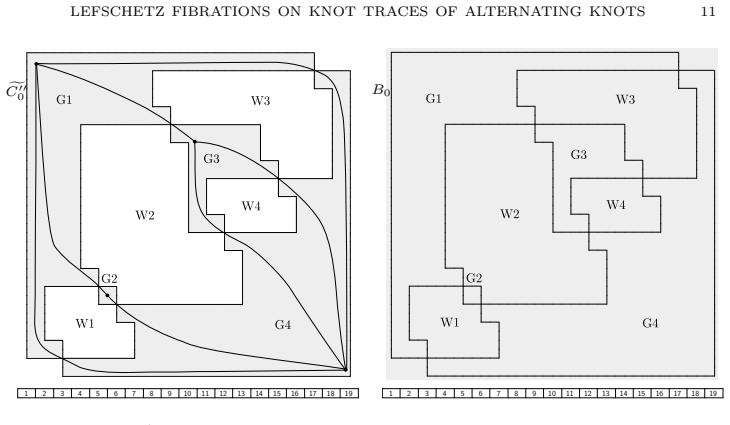
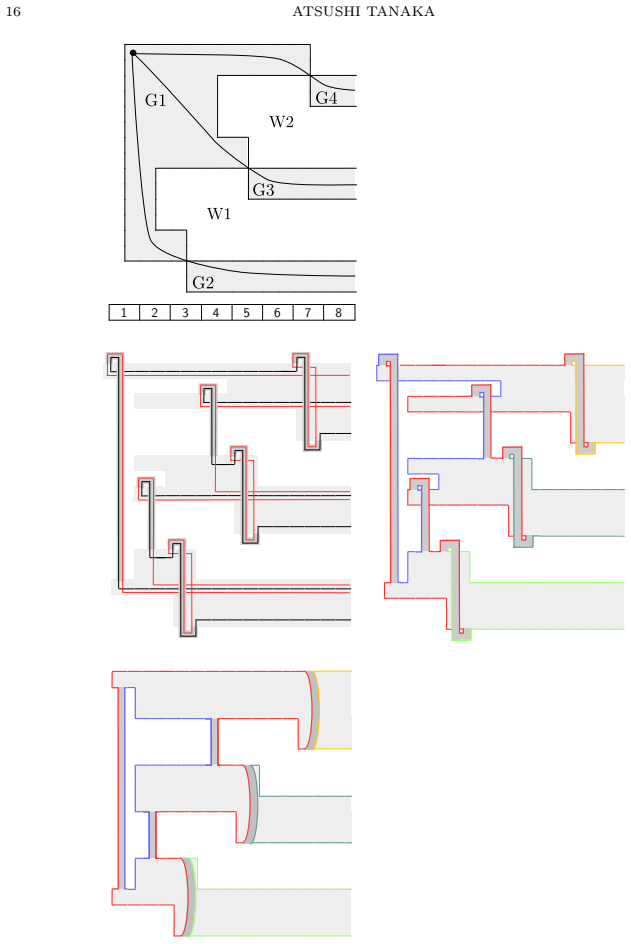
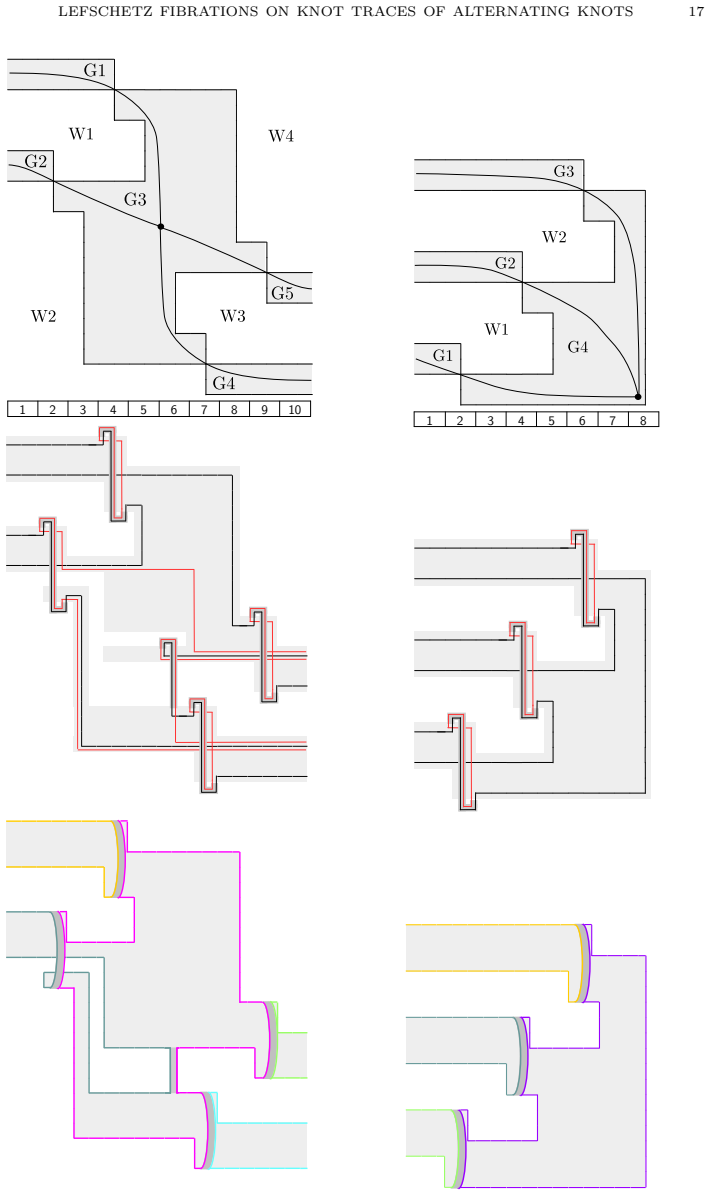
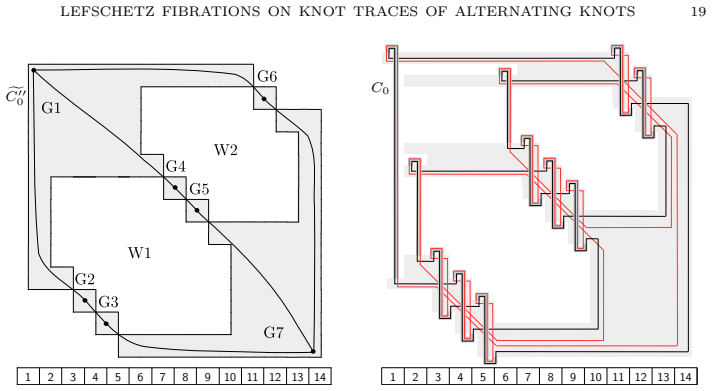
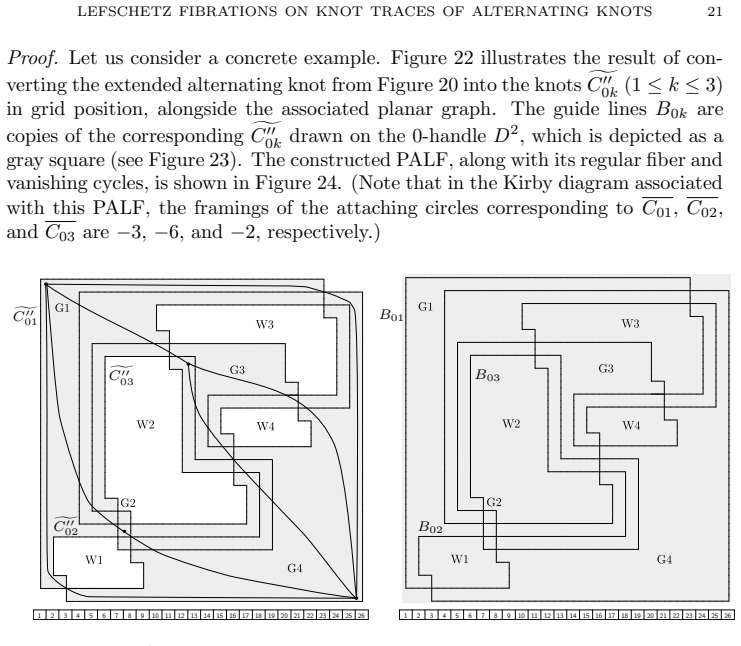
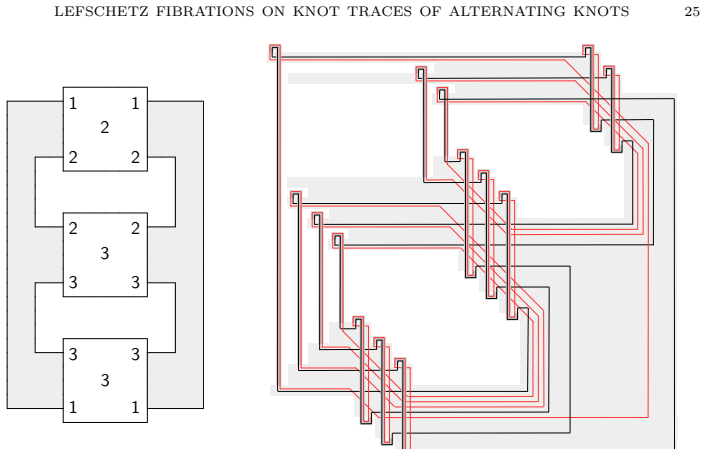
Knot traces of alternating and extended alternating knots admit positive allowable Lefschetz fibrations whose regular fibers have genus equal to the number of white regions in the associated planar graph.
A machine-rendered reading of the paper's core claim, the machinery that carries it, and where it could break.
Core claim
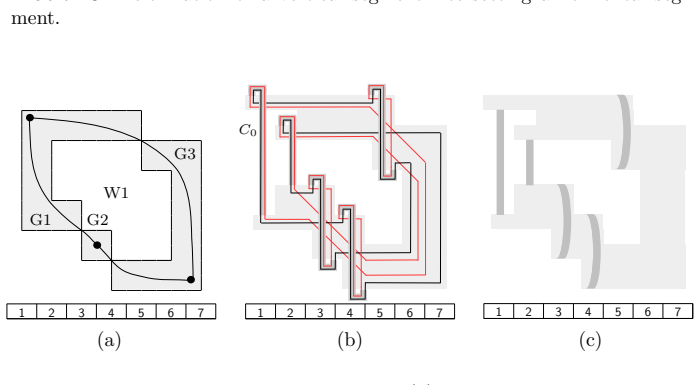
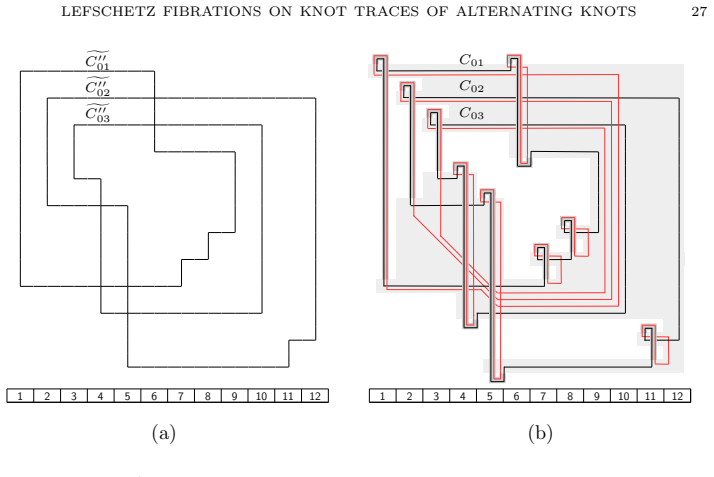
Each knot trace whose attaching circle is an alternating knot or an extended alternating knot carries a positive allowable Lefschetz fibration whose regular fiber has genus exactly equal to the number of white regions in the planar graph coming from the knot diagram. The construction uses the author's prior method for turning any compact Stein surface's 2-handlebody into a PALF without introducing extra obstructions for these diagrams.
What carries the argument
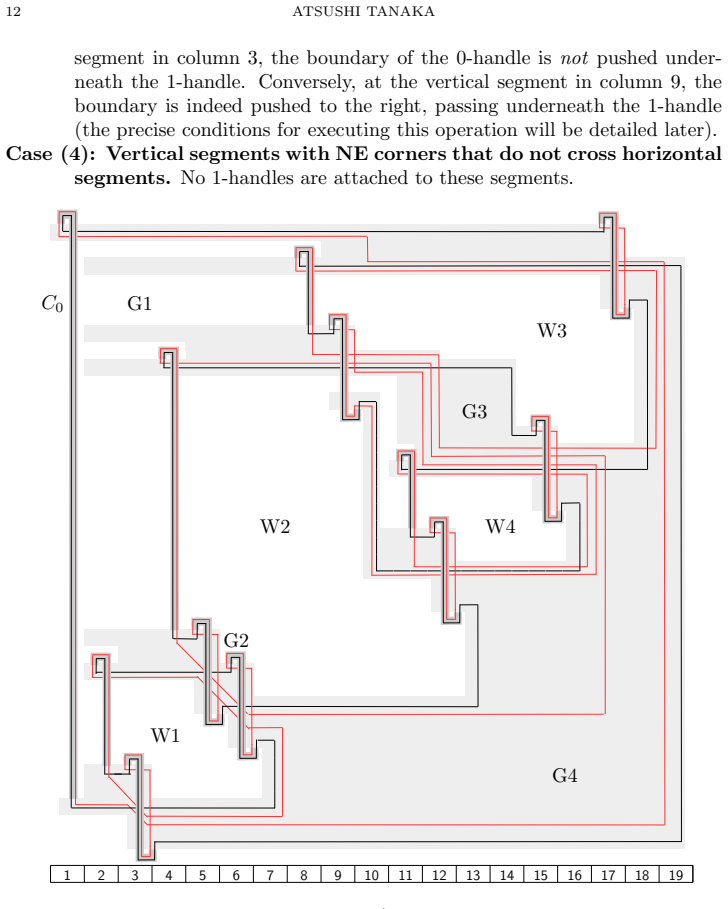
The positive allowable Lefschetz fibration built from the 2-handlebody decomposition of the knot trace, with its regular fiber's genus fixed by the white-region count of the planar graph.
If this is right
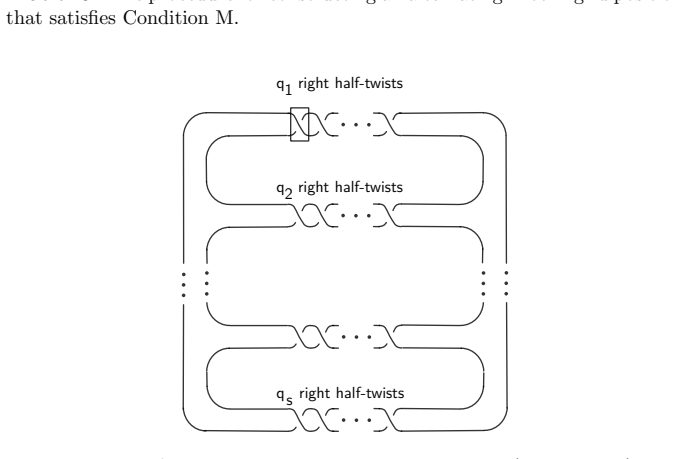
- Positive pretzel knots with s rows admit PALFs whose regular fibers have genus s-1.
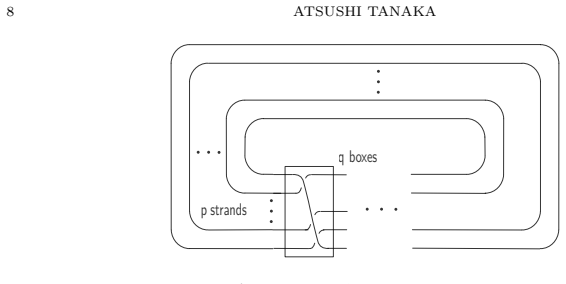
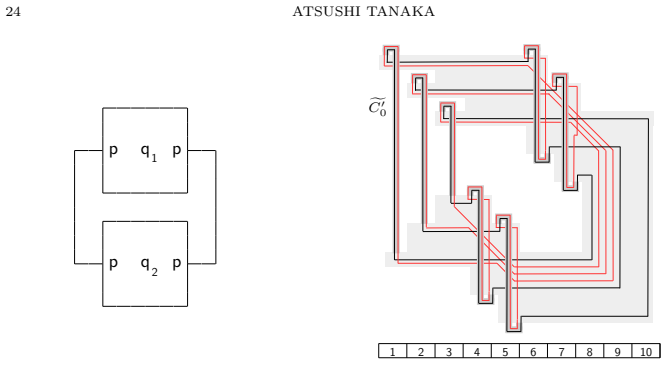
- Positive torus knots admit PALFs whose regular fibers have genus 1.
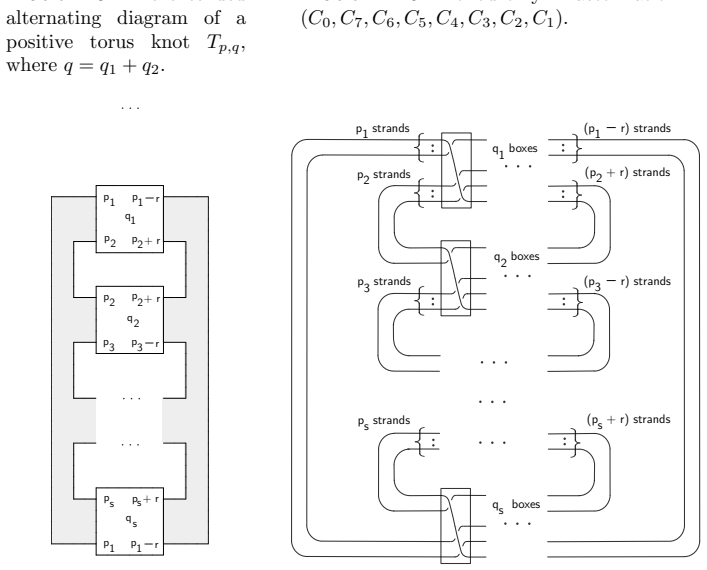
- Positive torus-pretzel knots, formed by replacing each twist block of a positive pretzel knot with positive torus-knot crossings, admit PALFs whose regular fibers have genus s-1.
- The same construction produces PALFs on the knot traces of all extended alternating knots with the stated genus bound.
Where Pith is reading between the lines
- The bound may extend to other classes of knots whose diagrams admit similar planar-graph descriptions if the prior method continues to apply without obstruction.
- These low-genus PALFs could be used to produce Stein fillings of contact 3-manifolds with controlled topological complexity.
- Explicit monodromy factorizations for the constructed fibrations might be extractable from the planar graphs, offering concrete examples for studying Lefschetz fibrations on 4-manifolds.
Load-bearing premise
The earlier construction method applies directly to the 2-handlebody decompositions of these particular knot traces without new obstructions.
What would settle it
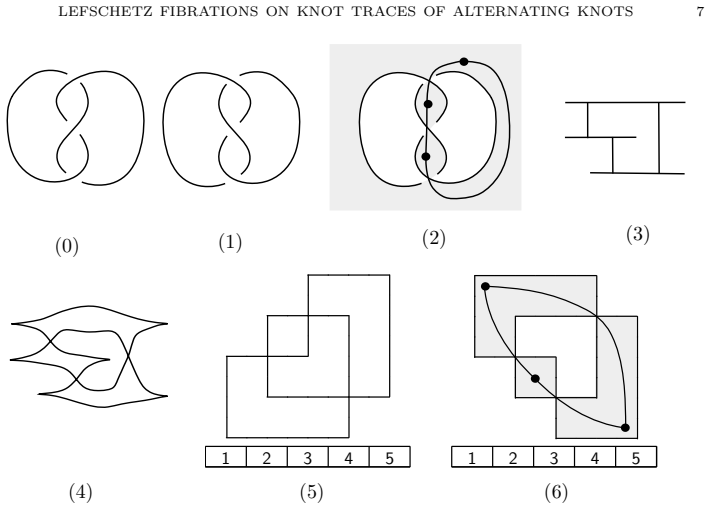
For a concrete alternating knot such as the figure-eight knot, compute the genus of the regular fiber in the constructed PALF and check whether it equals the number of white regions in the standard planar graph of that knot.
Figures





read the original abstract
In our previous work, we introduced a simple and explicit method for constructing a positive allowable Lefschetz fibration (PALF) from a $2$-handlebody decomposition of any given compact Stein surface. In this paper, we apply this construction to knot traces whose attaching circles are either alternating knots or \emph{extended alternating knots} (a generalized class introduced herein). We demonstrate that each such knot trace admits a PALF whose regular fiber has a genus exactly equal to the number of white regions in the associated planar graph, yielding PALFs whose regular fibers have a significantly small genus. As immediate corollaries, we prove that knot traces of positive pretzel knots with $s$ rows admit PALFs with regular fibers of genus $s-1$, and those of positive torus knots admit PALFs with regular fibers of genus $1$. Furthermore, we define \emph{positive torus-pretzel knots} by replacing each twist block of a positive pretzel knot with the crossings of a positive torus knot, and we establish that their knot traces also admit PALFs with regular fibers of genus $s-1$.
Editorial analysis
A structured set of objections, weighed in public.
Referee Report
Summary. The paper applies the authors' prior explicit construction of positive allowable Lefschetz fibrations (PALFs) from 2-handlebody decompositions to the knot traces of alternating knots and a new class of extended alternating knots (defined via a generalized diagram condition). It proves that the resulting PALF has regular fiber genus equal to the number of white regions in the planar graph associated to the diagram. Corollaries give genus s-1 for positive pretzel knots with s rows, genus 1 for positive torus knots, and the same genus s-1 for the newly defined positive torus-pretzel knots.
Significance. If the central construction applies without obstruction, the result supplies an explicit, diagram-based formula for low-genus PALFs on an infinite family of Stein 4-manifolds (knot traces). This strengthens the authors' earlier method by removing the need for ad-hoc handle adjustments in these cases and yields concrete corollaries for well-studied knot families. The work is a direct, verifiable extension rather than a parameter-fitted claim.
major comments (2)
- [§3] §3, construction of extended alternating knots: the definition via diagram moves must be shown to preserve the 2-handlebody decomposition up to isotopy so that the prior PALF construction (cited from the authors' previous paper) applies verbatim; a single counter-example diagram where the extension introduces a non-allowable vanishing cycle would falsify the genus claim.
- [Theorem 1.1] Theorem 1.1 (genus formula): the equality genus = # white regions is asserted to follow directly from counting regions after the PALF construction; the proof sketch must explicitly verify that no extra 1-handles or stabilizations are introduced when the attaching circles are extended alternating, as any such addition would increase the fiber genus beyond the claimed count.
minor comments (3)
- [Definition 2.3] Definition 2.3: the term 'extended alternating' is introduced without a figure showing a non-alternating example; adding one diagram with the white-region count labeled would clarify the generalization.
- [Figure 4] Figure 4 (torus-pretzel example): the planar graph shading is difficult to read in black-and-white; use distinct hatching or labels for white regions.
- [Corollary 1.3] Corollary 1.3: the statement for positive torus knots claims genus 1, but the proof relies on the diagram having exactly two white regions; a brief sentence confirming this count for the standard (p,q)-torus diagram would help readers.
Simulated Author's Rebuttal
We thank the referee for the careful reading and positive assessment of our manuscript. We address each major comment below and will revise the paper accordingly to incorporate the requested clarifications.
read point-by-point responses
-
Referee: [§3] §3, construction of extended alternating knots: the definition via diagram moves must be shown to preserve the 2-handlebody decomposition up to isotopy so that the prior PALF construction (cited from the authors' previous paper) applies verbatim; a single counter-example diagram where the extension introduces a non-allowable vanishing cycle would falsify the genus claim.
Authors: The extended alternating knots are defined in §3 via diagram moves that are explicitly chosen to correspond to isotopies and handle slides of the attaching circles in the boundary 3-sphere. These moves preserve the diffeomorphism type of the 2-handlebody and ensure that the resulting vanishing cycles remain positive and allowable, so that the PALF construction from our prior work applies directly without modification. We will add a short lemma in the revised §3 verifying this preservation and confirming that no non-allowable cycles arise. revision: yes
-
Referee: [Theorem 1.1] Theorem 1.1 (genus formula): the equality genus = # white regions is asserted to follow directly from counting regions after the PALF construction; the proof sketch must explicitly verify that no extra 1-handles or stabilizations are introduced when the attaching circles are extended alternating, as any such addition would increase the fiber genus beyond the claimed count.
Authors: The proof of Theorem 1.1 proceeds by direct application of the PALF construction to the 2-handlebody given by the alternating or extended alternating diagram. Because these diagrams satisfy the conditions of our earlier method, the attaching circles require no additional 1-handles or stabilizations; the regular fiber genus is therefore exactly the number of white regions in the planar graph. We will expand the proof sketch in the revised manuscript with an explicit paragraph confirming the absence of extra handles for these diagram classes. revision: yes
Circularity Check
No significant circularity; derivation applies prior explicit construction to diagram-defined inputs
full rationale
The paper's central result follows from applying the explicit PALF construction introduced in the authors' prior work to 2-handlebody decompositions of knot traces coming from alternating and extended alternating diagrams. The genus equality is obtained by direct counting of white regions in the associated planar graph under this construction, without any fitted parameters, self-definitional loops, or load-bearing self-citations that reduce the claim to its own inputs. The self-citation supplies only the base method; the new content consists of verifying applicability and computing the genus for the specified class, which remains independent and falsifiable against the diagrams. No equations or uniqueness theorems collapse the output to the input by construction.
Axiom & Free-Parameter Ledger
axioms (1)
- domain assumption Every compact Stein surface admits a positive allowable Lefschetz fibration via the authors' prior explicit construction from a 2-handlebody decomposition.
invented entities (1)
-
extended alternating knots
no independent evidence
Lean theorems connected to this paper
-
IndisputableMonolith/Foundation/AlexanderDuality.leanalexander_duality_circle_linking unclearTheorem 3.1 ... genus exactly equal to the number of white regions in the corresponding planar graph
Reference graph
Works this paper leans on
-
[1]
Akbulut, Selman and Arikan, M. Firat , TITLE =. Commun. Contemp. Math. , FJOURNAL =. 2012 , NUMBER =. doi:10.1142/S0219199712500356 , URL =
-
[2]
Akbulut, Selman and Ozbagci, Burak , TITLE =. Geom. Topol. , FJOURNAL =. 2001 , PAGES =. doi:10.2140/gt.2001.5.319 , URL =
-
[3]
Akbulut, Selman and Yasui, Kouichi , TITLE =. J. G\"okova Geom. Topol. GGT , FJOURNAL =. 2008 , PAGES =
work page 2008
- [4]
-
[5]
Avdek, Russell , TITLE =. Algebr. Geom. Topol. , FJOURNAL =. 2013 , NUMBER =. doi:10.2140/agt.2013.13.1613 , URL =
-
[6]
Eliashberg, Yakov , TITLE =. Internat. J. Math. , FJOURNAL =. 1990 , NUMBER =. doi:10.1142/S0129167X90000034 , URL =
-
[7]
Sugaku Expositions , FJOURNAL =
Endo, Hisaaki , TITLE =. Sugaku Expositions , FJOURNAL =. 2021 , NUMBER =. doi:10.1090/suga/462 , URL =
-
[8]
Etnyre, John B. and Fuller, Terry , TITLE =. Int. Math. Res. Not. , FJOURNAL =. 2006 , PAGES =. doi:10.1155/IMRN/2006/70272 , URL =
-
[9]
Gompf, Robert E. , TITLE =. Ann. of Math. (2) , FJOURNAL =. 1998 , NUMBER =. doi:10.2307/121005 , URL =
-
[10]
Gompf, Robert E. and Stipsicz, Andr\'as I. , TITLE =. 1999 , PAGES =. doi:10.1090/gsm/020 , URL =
- [11]
-
[12]
Loi, Andrea and Piergallini, Riccardo , TITLE =. Invent. Math. , FJOURNAL =. 2001 , NUMBER =. doi:10.1007/s002220000106 , URL =
-
[13]
Ng, Lenhard and Thurston, Dylan , TITLE =. Proceedings of. 2009 , ISBN =
work page 2009
-
[14]
Ng, Lenhard , TITLE =. Algebr. Geom. Topol. , FJOURNAL =. 2005 , PAGES =. doi:10.2140/agt.2005.5.1637 , URL =
-
[15]
Ozbagci, Burak and Stipsicz, Andr\'as I. , TITLE =. 2004 , PAGES =. doi:10.1007/978-3-662-10167-4 , URL =
-
[16]
Interactions between low-dimensional topology and mapping class groups , SERIES =
Ozbagci, Burak , TITLE =. Interactions between low-dimensional topology and mapping class groups , SERIES =. 2015 , MRCLASS =. doi:10.2140/gtm.2015.19.73 , URL =
-
[17]
Ozsv\'ath, Peter S. and Stipsicz, Andr\'as I. and Szab\'o, Zolt\'an , TITLE =. 2015 , PAGES =. doi:10.1090/surv/208 , URL =
-
[18]
Ukida, Takuya , TITLE =. Topology Appl. , FJOURNAL =. 2016 , PAGES =. doi:10.1016/j.topol.2016.10.003 , URL =
-
[19]
Ukida, Takuya , TITLE =. Osaka J. Math. , FJOURNAL =. 2022 , NUMBER =
work page 2022
-
[20]
Ukida, Takuya , TITLE =
- [21]
-
[22]
A Simple Construction of Lefschetz Fibrations on Compact Stein Surfaces , author=. 2026 , eprint=
work page 2026
-
[23]
Combinatorial extension of a simple construction of Lefschetz fibrations , author=. 2026 , eprint=
work page 2026
-
[24]
Atsushi Tanaka , title =
discussion (0)
Sign in with ORCID, Apple, or X to comment. Anyone can read and Pith papers without signing in.