Using the Pericentre Precession of LAGEOS II to Constrain Quadratically Coupled Ultralight Dark Matter
Pith reviewed 2026-06-29 11:56 UTC · model grok-4.3
The pith
LAGEOS II pericentre precession data constrains the mass and quadratic couplings of ultralight dark matter scalars.
A machine-rendered reading of the paper's core claim, the machinery that carries it, and where it could break.
Core claim
Quadratically coupled ultralight dark matter scalars acquire an effective mass near Earth and mediate fifth forces that shift the pericentre precession rate of satellite orbits; the observed precession of LAGEOS II therefore bounds the scalar mass and its quadratic couplings to Standard Model fields, with particular power in the strong-coupling region inaccessible to other experiments.
What carries the argument
The fifth force generated by the quadratic scalar coupling, which produces a position-dependent effective potential between test masses and thereby an orbital pericentre precession term.
If this is right
- The same orbital precession effect supplies upper bounds on the scalar mass and its quadratic couplings to photons, electrons, and nucleons.
- The constraints remain valid in the strong-coupling regime where laboratory experiments and other satellite searches lose sensitivity.
- The scalar also induces effective shifts in fundamental constants, although the orbital analysis focuses on the force rather than the shifts.
Where Pith is reading between the lines
- The same fifth-force signature could be searched for in the orbits of other geodetic satellites or in lunar laser ranging if comparable precession precision is available.
- In regions of higher dark-matter density the effective mass of the scalar would change, potentially altering the precession signal for orbits around denser bodies.
Load-bearing premise
The measured pericentre precession of LAGEOS II can be treated as an upper limit on any fifth-force contribution without dominant contamination from other unmodeled effects.
What would settle it
A refined analysis of LAGEOS II data that accounts for all known gravitational and non-gravitational effects and finds a residual pericentre precession rate inconsistent with the range predicted by the quadratic scalar model.
Figures



read the original abstract
It has been proposed that feebly interacting ultralight scalars may constitute the dark matter content of the universe. Models describing the interactions of a dark matter scalar with Standard Model fields may feature quadratic interactions at leading order, such that the scalar acquires an effective mass in the neighbourhood of a classical matter distribution. The effect of their introduction is to provide effective shifts in fundamental constants of physics, as well as to mediate scalar fifth forces between test bodies. We here demonstrate how these fifth forces can result in pericentre precession in the orbital motion of satellites around the Earth. We apply this to the measured pericentre precession of the LAGEOS II experiment, constraining the mass, and couplings to the light Standard Model fields, of a quadratically coupled ultra-light dark matter scalar. We observe such an experiment to be effective in constraining parameter space at strong couplings, where existing constraints from satellite and tabletop level experiments break down.
Editorial analysis
A structured set of objections, weighed in public.
Referee Report
Summary. The manuscript proposes that quadratically coupled ultralight dark matter scalars induce effective fifth forces that lead to pericentre precession in satellite orbits around Earth. It applies this to the measured pericentre precession of LAGEOS II to derive constraints on the scalar mass and its quadratic couplings to Standard Model fields, claiming sensitivity at strong couplings where other experiments are less effective.
Significance. Should the attribution of the LAGEOS II precession residual to the scalar fifth force hold after proper accounting for systematics, this would represent a useful extension of constraints on ultralight dark matter into a new parameter regime. The use of existing precision orbital data is an efficient way to probe these models.
major comments (1)
- [Application to LAGEOS II] The central claim requires that the measured pericentre precession residual is dominated by the fifth force from the quadratic scalar rather than unmodeled effects. The manuscript does not provide a quantified error budget or detailed subtraction procedure for contributions from tides, drag, and higher multipoles, making it impossible to assess whether the bound is robust. This is load-bearing for the constraint.
minor comments (1)
- The abstract mentions 'strong couplings' but a precise definition or comparison to existing bounds would clarify the novelty.
Simulated Author's Rebuttal
We thank the referee for their constructive comments and positive assessment of the work's potential significance. We address the major comment below and will revise the manuscript to incorporate additional discussion of the error budget.
read point-by-point responses
-
Referee: [Application to LAGEOS II] The central claim requires that the measured pericentre precession residual is dominated by the fifth force from the quadratic scalar rather than unmodeled effects. The manuscript does not provide a quantified error budget or detailed subtraction procedure for contributions from tides, drag, and higher multipoles, making it impossible to assess whether the bound is robust. This is load-bearing for the constraint.
Authors: We agree that an explicit quantified error budget strengthens the robustness of the constraint and that the current manuscript would benefit from additional detail on this point. The pericentre precession residual we employ is taken from published LAGEOS II analyses in which known contributions from tides, atmospheric drag, and higher gravitational multipoles have already been modeled and subtracted. In the revised manuscript we will add a dedicated paragraph summarizing the dominant systematic terms, their estimated magnitudes, and the resulting uncertainty on the residual, with references to the original LAGEOS II papers. This addition will make the attribution to a possible fifth force more transparent while leaving the derived bounds unchanged. revision: yes
Circularity Check
No circularity: standard model-to-data constraint using external LAGEOS II measurement
full rationale
The paper derives the fifth-force-induced pericentre precession from the quadratic scalar coupling via the modified effective potential and orbital equations, then compares the resulting precession rate to the independently measured residual from the LAGEOS II experiment to bound the scalar mass and couplings. This is a conventional forward calculation followed by an external-data constraint; no step reduces the output bounds to a fitted parameter by construction, no self-citation chain is load-bearing for the central result, and the derivation does not rename or smuggle in prior ansatze. The abstract and described approach treat the observed precession as an external input, making the analysis self-contained against external benchmarks.
Axiom & Free-Parameter Ledger
axioms (1)
- domain assumption Quadratic interactions of an ultralight scalar with Standard Model fields produce an effective mass near matter and mediate a scalar fifth force
invented entities (1)
-
quadratically coupled ultralight dark matter scalar
no independent evidence
Forward citations
Cited by 2 Pith papers
-
Background-Induced Forces from Quadratically Coupled Ultralight Dark Matter
Earth screening of quadratically coupled ultralight dark matter produces a multi-band frequency structure in the induced force whose sideband amplitudes vary annually, enabling improved constraints from MICROSCOPE and...
-
Macroscopic Quantum Interference in Dark Matter Wave Scattering with MICROSCOPE
Nested cylinders in MICROSCOPE act as a dark-matter-wave interferometer, producing rotation-modulated signals that yield leading constraints on quadratic DM-nucleon couplings for masses 10^{-3}--10^{-2} eV.
Reference graph
Works this paper leans on
-
[1]
Around a Uniform Sphere 8
-
[2]
Solutions in Binary Systems 10 IV
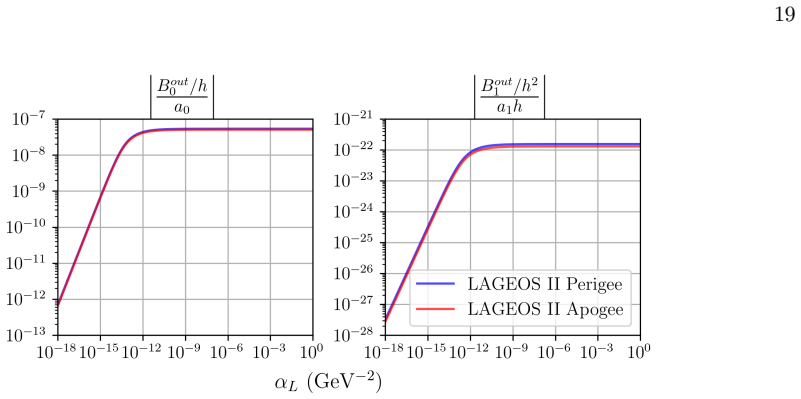
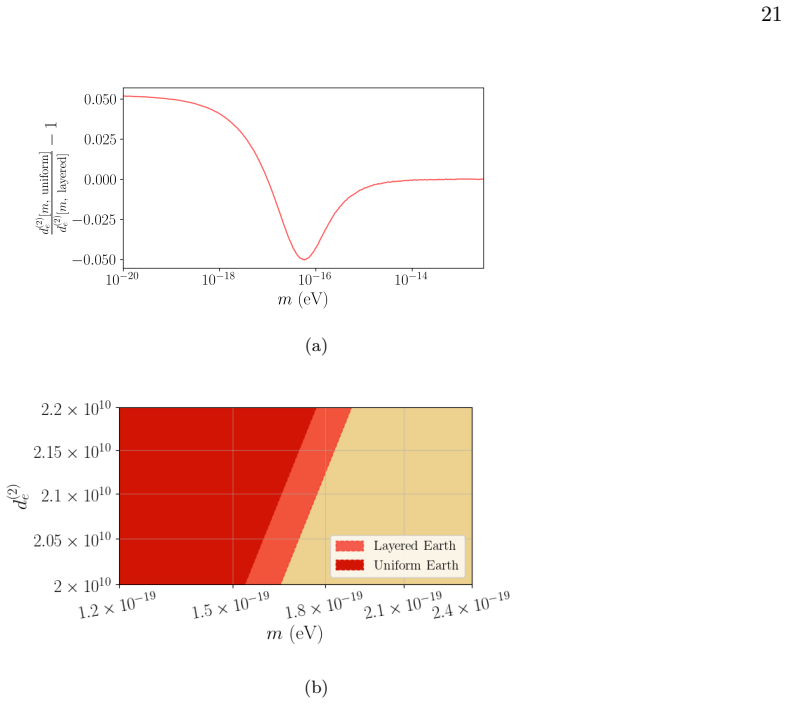
Around a Layered Sphere 9 C. Solutions in Binary Systems 10 IV. Scalar-Induced Orbital Precession in Newtonian Gravity 11 V. Results 13 VI. Approximations 17 A. Modelling LAGEOS II 18 B. Validity of the Linearised Force Approximation 18 C. Earth’s Internal Structure 19 D. Earth’s Oblateness 20
-
[3]
Earth as an oblate spheroid 20
-
[4]
Approximating Solutions for Small Eccentricities 21
-
[5]
Laser Geodynamic Satellite-2
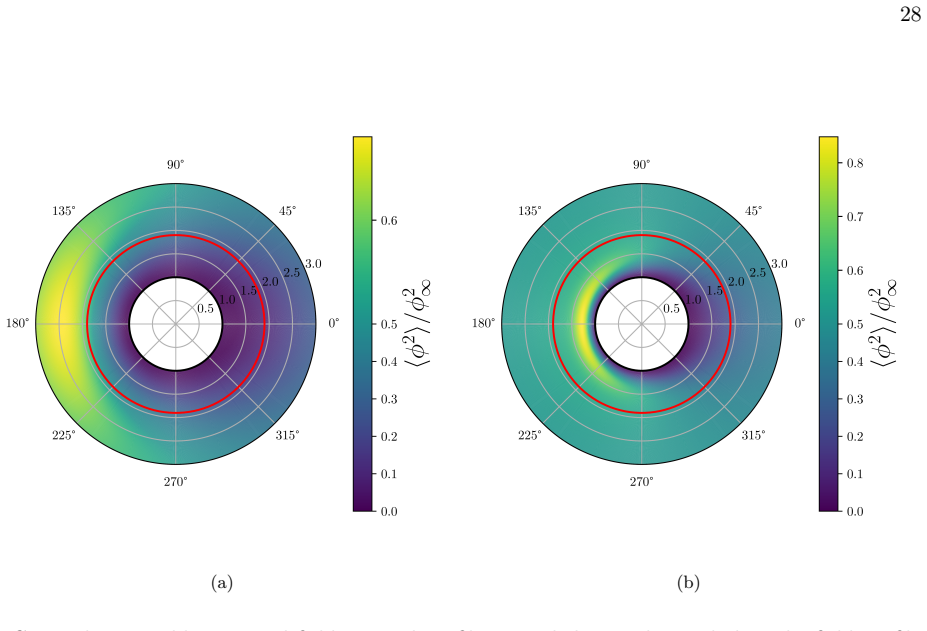
The Impact of Earth’s Non-Sphericity 22 E. Dark Matter Wind 24 VII. Conclusions 27 Acknowledgements 28 Data Availability Statement 29 References 29 A. Linearised Field Coefficients 33 B. Oblate Solutions 34 3 C. Dark Matter Wind Effects: Computation 35 4 I. INTRODUCTION It is currently understood that an undetected Dark Matter constitutes approximately 25...
-
[6]
(7) with this matter density - requiring field continuity and differentiability, and using Eq
Around a Uniform Sphere The simplest body around which we may determine field solutions is a sphere of radiusR S and constant densityρ S, giving a density profile: ρ(x) =ρ SΘ(RS −r).(11) The scalar profile around this source mass is then determined by solving Eq. (7) with this matter density - requiring field continuity and differentiability, and using Eq...
-
[7]
LAGEOS II has a brass core 1 surrounded by an aluminium shell, whilst Earth’s structure may be broadly divided into an iron-dominated core and silicate mantle
Around a Layered Sphere Whilst the simplicity of the preceding solutions may make describing both the Earth and LA- GEOS II as uniform spheres appealing, we can more accurately approximate each as having a layered structure. LAGEOS II has a brass core 1 surrounded by an aluminium shell, whilst Earth’s structure may be broadly divided into an iron-dominate...
-
[8]
21 (a) (b) FIG
Earth as an oblate spheroid Considering a polar co-ordinate system centred on the Earth, we define its surface: R⊕(θ) = a⊕ q 1−e 2 ⊕ q (1−e 2 ⊕) +e 2 ⊕ cos2 θ ,(40) equivalent to tracing an ellipse with semi-major axisa ⊕, eccentricitye ⊕, and semi-minor axis: b⊕ =a ⊕ q 1−e 2 ⊕ .(41) We parameterise the Earth as having an eccentricity:e ⊕ = 0.0818 [57]. 2...
-
[9]
7 must obey: ∇2φ=α ⊕ρ(r, θ)φ(r, θ) (42) 22 whereρ(r, θ) =ρ ⊕Θ(R⊕(θ)−r) defines the density profile for the oblate Earth
Approximating Solutions for Small Eccentricities Splittingϕ(⃗ r, t) =ϕ∞ cos(mt)φ(r, θ), field solutions to Eq. 7 must obey: ∇2φ=α ⊕ρ(r, θ)φ(r, θ) (42) 22 whereρ(r, θ) =ρ ⊕Θ(R⊕(θ)−r) defines the density profile for the oblate Earth. This can be separated into an interior and exterior solution: φ(r, θ) = X n AOb n in(k⊕r)Pn(cosθ)r < R ⊕(θ) 1 + X...
-
[10]
bow-shock
The Impact of Earth’s Non-Sphericity To determine the deviation between the oblate and spherical solutions, we consider the quantity: ϵ(θ) = φ(r= 1.9R ⊕, θ;e=e ⊕) φ(r= 1.9R ⊕, θ;e= 0) −1 (44) Where 1.9R⊕ is the approximate orbital altitude of the LAGEOS II satellite,e=e ⊕ indicates the scalar profile about an oblate spheroid Earth, ande= 0 indicates the p...
2024
-
[11]
Aghanim et al
N. Aghanim et al. Planck 2018 results. VI. Cosmological parameters.Astron. Astrophys., 641:A6, 2020. [Erratum: Astron.Astrophys. 652, C4 (2021)]
2018
-
[12]
Cold and fuzzy dark matter.Phys
Wayne Hu, Rennan Barkana, and Andrei Gruzinov. Cold and fuzzy dark matter.Phys. Rev. Lett., 85:1158–1161, 2000
2000
-
[13]
Wave Dark Matter.Ann
Lam Hui. Wave Dark Matter.Ann. Rev. Astron. Astrophys., 59:247–289, 2021
2021
-
[14]
Antypas et al
D. Antypas et al. New Horizons: Scalar and Vector Ultralight Dark Matter. 3 2022
2022
-
[15]
Problem of StrongPandTInvariance in the Presence of Instantons.Phys
Frank Wilczek. Problem of StrongPandTInvariance in the Presence of Instantons.Phys. Rev. Lett., 40:279–282, 1978
1978
-
[16]
A New Light Boson?Phys
Steven Weinberg. A New Light Boson?Phys. Rev. Lett., 40:223–226, 1978
1978
-
[17]
P. Sikivie. Experimental Tests of the Invisible Axion.Phys. Rev. Lett., 51:1415–1417, 1983. [Erratum: Phys.Rev.Lett. 52, 695 (1984)]
1983
-
[18]
Damour and Alexander M
T. Damour and Alexander M. Polyakov. String theory and gravity.Gen. Rel. Grav., 26:1171–1176, 1994
1994
-
[19]
Damour and Alexander M
T. Damour and Alexander M. Polyakov. The String dilaton and a least coupling principle.Nucl. Phys. B, 423:532–558, 1994
1994
-
[20]
Kaplan and Mark B
David B. Kaplan and Mark B. Wise. Couplings of a light dilaton and violations of the equivalence principle.JHEP, 08:037, 2000
2000
-
[21]
Conlon, Anshuman Maharana, Susha Parameswaran, Fernando Quevedo, and Ivonne Zavala
Michele Cicoli, Joseph P. Conlon, Anshuman Maharana, Susha Parameswaran, Fernando Quevedo, and Ivonne Zavala. String cosmology: From the early universe to today.Phys. Rept., 1059:1–155, 2024
2024
-
[22]
McDonald
J. McDonald. Dark matter from an oscillating Brans-Dicke scalar in the extended inflation model. Phys. Rev. D, 44:2325, 1991. [Erratum: Phys.Rev.D 45, 1433 (1992)]
1991
-
[23]
Can a Brans-Dicke scalar account for dark matter in extended inflation models?Phys
John McDonald. Can a Brans-Dicke scalar account for dark matter in extended inflation models?Phys. Rev. D, 48:2462–2476, 1993
1993
-
[24]
Copeland, Peter Millington, and Michael Spannowsky
Clare Burrage, Edmund J. Copeland, Peter Millington, and Michael Spannowsky. Fifth forces, Higgs portals and broken scale invariance.JCAP, 11:036, 2018. 30
2018
-
[25]
Ferreira, Antonio Padilla, and Constantinos Skordis
Timothy Clifton, Pedro G. Ferreira, Antonio Padilla, and Constantinos Skordis. Modified Gravity and Cosmology.Phys. Rept., 513:1–189, 2012
2012
-
[26]
Beyond the Cosmological Standard Model.Phys
Austin Joyce, Bhuvnesh Jain, Justin Khoury, and Mark Trodden. Beyond the Cosmological Standard Model.Phys. Rept., 568:1–98, 2015
2015
-
[27]
A. K. Drukier, Katherine Freese, and D. N. Spergel. Detecting Cold Dark Matter Candidates.Phys. Rev. D, 33:3495–3508, 1986
1986
-
[28]
Elisa G. M. Ferreira. Ultra-light dark matter.Astron. Astrophys. Rev., 29(1):7, 2021
2021
-
[29]
Donoghue
Thibault Damour and John F. Donoghue. Equivalence Principle Violations and Couplings of a Light Dilaton.Phys. Rev. D, 82:084033, 2010
2010
-
[30]
Donoghue
Thibault Damour and John F. Donoghue. Phenomenology of the Equivalence Principle with Light Scalars.Class. Quant. Grav., 27:202001, 2010
2010
-
[31]
MICROSCOPE Mission: First Results of a Space Test of the Equivalence Principle.Phys
Pierre Touboul et al. MICROSCOPE Mission: First Results of a Space Test of the Equivalence Principle.Phys. Rev. Lett., 119(23):231101, 2017
2017
-
[32]
Space test of the Equivalence Principle: first results of the MICROSCOPE mission.Class
Pierre Touboul et al. Space test of the Equivalence Principle: first results of the MICROSCOPE mission.Class. Quant. Grav., 36(22):225006, 2019
2019
-
[33]
A Nuclear Interferometer for Ultra-Light Dark Matter Detection
Hannah Banks, Elina Fuchs, and Matthew McCullough. A Nuclear Interferometer for Ultra-Light Dark Matter Detection. 7 2024
2024
-
[34]
Searching for Ultralight Scalar Dark Matter with Clocks in Low Earth Orbit
Dawid Brzeminski and Aaron Pierce. Searching for Ultralight Scalar Dark Matter with Clocks in Low Earth Orbit. 1 2026
2026
-
[35]
Caddell, Dhruv Jani, Martin Steinel, Leonardo Giani, Nils Huntemann, and Benjamin M
Melina Filzinger, Ashlee R. Caddell, Dhruv Jani, Martin Steinel, Leonardo Giani, Nils Huntemann, and Benjamin M. Roberts. Ultralight Dark Matter Search with Space-Time Separated Atomic Clocks and Cavities.Phys. Rev. Lett., 134(3):031001, 2025
2025
-
[36]
Derevianko and M
A. Derevianko and M. Pospelov. Hunting for topological dark matter with atomic clocks.Nature Phys., 10:933, 2014
2014
-
[37]
Stephan Schlamminger, K. Y. Choi, T. A. Wagner, J. H. Gundlach, and E. G. Adelberger. Test of the equivalence principle using a rotating torsion balance.Phys. Rev. Lett., 100:041101, 2008
2008
-
[38]
T. A. Wagner, S. Schlamminger, J. H. Gundlach, and E. G. Adelberger. Torsion-balance tests of the weak equivalence principle.Class. Quant. Grav., 29:184002, 2012
2012
-
[39]
Detect- ing meV-scale dark matter via coherent scattering with an asymmetric torsion balance.Phys
Pengshun Luo, Shigeki Matsumoto, Jie Sheng, Chuan-Yang Xing, Lin Zhu, and Zhi-Jie Zhuge. Detect- ing meV-scale dark matter via coherent scattering with an asymmetric torsion balance.Phys. Rev. D, 112(7):075023, 2025
2025
-
[40]
Matter-wave Atomic Gradiometer Interferometric Sensor (MAGIS-100).Quantum Sci
Mahiro Abe et al. Matter-wave Atomic Gradiometer Interferometric Sensor (MAGIS-100).Quantum Sci. Technol., 6(4):044003, 2021
2021
-
[41]
AEDGE: Atomic experiment for dark matter and gravity exploration in space
Andrea Bertoldi et al. AEDGE: Atomic experiment for dark matter and gravity exploration in space. Exper. Astron., 51(3):1417–1426, 2021
2021
-
[42]
AEDGE: Atomic Experiment for Dark Matter and Gravity Exploration in Space.EPJ Quant
Yousef Abou El-Neaj et al. AEDGE: Atomic Experiment for Dark Matter and Gravity Exploration in Space.EPJ Quant. Technol., 7:6, 2020. 31
2020
-
[43]
Terrestrial Very-Long-Baseline Atom Interferometry: Workshop Summary.AVS Quantum Sci., 6(2):024701, 2024
Sven Abend et al. Terrestrial Very-Long-Baseline Atom Interferometry: Workshop Summary.AVS Quantum Sci., 6(2):024701, 2024
2024
-
[44]
Badurina et al
L. Badurina et al. AION: An Atom Interferometer Observatory and Network.JCAP, 05:011, 2020
2020
-
[45]
Antypas, O
D. Antypas, O. Tretiak, A. Garcon, R. Ozeri, G. Perez, and D. Budker. Scalar dark matter in the radio-frequency band: atomic-spectroscopy search results.Phys. Rev. Lett., 123(14):141102, 2019
2019
-
[46]
Constraints on ultralight scalar dark matter with quadratic couplings.JHEP, 03:104, 2023
Thomas Bouley, Philip Sørensen, and Tien-Tien Yu. Constraints on ultralight scalar dark matter with quadratic couplings.JHEP, 03:104, 2023
2023
-
[47]
Stadnik, and Peter Wolf
Aur´ elien Hees, Olivier Minazzoli, Etienne Savalle, Yevgeny V. Stadnik, and Peter Wolf. Violation of the equivalence principle from light scalar dark matter.Phys. Rev. D, 98(6):064051, 2018
2018
-
[48]
BBN constraints on universally-coupled ultra- light scalar dark matter.JHEP, 12:075, 2020
Sergey Sibiryakov, Philip Sørensen, and Tien-Tien Yu. BBN constraints on universally-coupled ultra- light scalar dark matter.JHEP, 12:075, 2020
2020
-
[49]
The phenomenol- ogy of quadratically coupled ultra light dark matter.JHEP, 10:042, 2023
Abhishek Banerjee, Gilad Perez, Marianna Safronova, Inbar Savoray, and Aviv Shalit. The phenomenol- ogy of quadratically coupled ultra light dark matter.JHEP, 10:042, 2023
2023
-
[50]
Fifth Forces from QCD Axions Scale Differently.Phys
Martin Bauer and Guillaume Rostagni. Fifth Forces from QCD Axions Scale Differently.Phys. Rev. Lett., 132(10):101802, 2024
2024
-
[51]
Axion forces in axion backgrounds
Yuval Grossman, Bingrong Yu, and Siyu Zhou. Axion forces in axion backgrounds. 3 2025
2025
-
[52]
Bloch, Quentin Bonnefoy, Sebastian A
Abhishek Banerjee, Itay M. Bloch, Quentin Bonnefoy, Sebastian A. R. Ellis, Gilad Perez, Inbar Savoray, Konstantin Springmann, and Yevgeny V. Stadnik. Momentum and Matter Matter for Axion Dark Matter Matters on Earth. 2 2025
2025
-
[53]
Ramsey-Musolf, and Mark B
Donal O’Connell, Michael J. Ramsey-Musolf, and Mark B. Wise. Minimal Extension of the Standard Model Scalar Sector.Phys. Rev. D, 75:037701, 2007
2007
-
[54]
Higgs-field portal into hidden sectors
Brian Patt and Frank Wilczek. Higgs-field portal into hidden sectors. 5 2006
2006
-
[55]
C. P. Burgess, Maxim Pospelov, and Tonnis ter Veldhuis. The Minimal model of nonbaryonic dark matter: A Singlet scalar.Nucl. Phys. B, 619:709–728, 2001
2001
-
[56]
Dark Matter through the Higgs portal.Phys
Giorgio Arcadi, Abdelhak Djouadi, and Martti Raidal. Dark Matter through the Higgs portal.Phys. Rept., 842:1–180, 2020
2020
-
[57]
Nat- ural Ultralight Dark Matter: The Quadratic Twin
C´ edric Delaunay, Michael Geller, Zamir Heller-Algazi, Gilad Perez, and Konstantin Springmann. Nat- ural Ultralight Dark Matter: The Quadratic Twin. 7 2025
2025
-
[58]
Ross, Gray Rybka, and Elisa Todarello
Clare Burrage, Angus Macdonald, Michael P. Ross, Gray Rybka, and Elisa Todarello. Impact of cavities on the detection of quadratically coupled ultra-light dark matter, 7 2025
2025
-
[59]
Luty, and Yue Zhao
Hannah Day, Da Liu, Markus A. Luty, and Yue Zhao. Blowing in the dark matter wind.JHEP, 07:136, 2024
2024
-
[60]
Lucchesi
David M. Lucchesi. Lageos ii perigee shift and schwarzschild gravitoelectric field.Physics Letters A, 318(3):234–240, 2003
2003
-
[61]
Lucchesi and Roberto Peron
David M. Lucchesi and Roberto Peron. LAGEOS II pericenter general relativistic precession (1993–2005): Error budget and constraints in gravitational physics.Phys. Rev. D, 89(8):082002, 2014. 32
1993
-
[62]
Lucchesi and Roberto Peron
David M. Lucchesi and Roberto Peron. Accurate Measurement in the Field of the Earth of the General- Relativistic Precession of the LAGEOS II Pericenter and New Constraints on Non-Newtonian Gravity. Phys. Rev. Lett., 105:231103, 2010
2010
-
[63]
Lorenzo Iorio, Iguazio Ciufolini, and Erricos C. Pavlis. Measuring the relativistic perigee advanced with satellite laser ranging.Class. Quant. Grav., 19:4301–4309, 2002
2002
-
[64]
Earth-orbit bounds on screened dark energy
Fabiano Feleppa, Welmoed Marit de Graaf, Philippe Brax, and Gaetano Lambiase. Earth-orbit bounds on screened dark energy. 11 2025
2025
-
[65]
Pavlis, Giampiero Sindoni, John Ries, Vahe Gurzadyan, and Rolf Koenig
Ignazio Ciufolini, Richard Matzner, Antonio Paolozzi, Erricos C. Pavlis, Giampiero Sindoni, John Ries, Vahe Gurzadyan, and Rolf Koenig. Satellite Laser-Ranging as a Probe of Fundamental Physics.Sci. Rep., 9(1):15881, 2019
2019
-
[66]
de Salas and Axel Widmark
Pablo F. de Salas and Axel Widmark. Dark matter local density determination: recent observations and future prospects.Rept. Prog. Phys., 84(10):104901, 2021
2021
-
[67]
Department of defense world geodetic system 1984: Its defi- nition and relationships with local geodetic systems
National Imagery and Mapping Agency. Department of defense world geodetic system 1984: Its defi- nition and relationships with local geodetic systems. Technical Report Third Edidtion, Jan 2000
1984
-
[68]
Lageos phase b technical report
NASA. Lageos phase b technical report. Technical Report TMX-64915, Marshall Space Flight Center, Marshall Space Flight Center, Alabama 35812, 2 1975
1975
-
[69]
Minott, Thomas W
Peter O. Minott, Thomas W. Zagwodzki, T. Varghese, and S. Seldon. Prelaunch characterisation of the laser geodynamic satellite (lageos 2). Technical report, National Aeronautics and Space Administration, Washington, D. C. 20546, 9 1993
1993
-
[70]
Dziewonski and Don L
Adam M. Dziewonski and Don L. Anderson. Preliminary reference earth model.Physics of the Earth and Planetary Interiors, 25(4):297–356, 1981
1981
-
[71]
A. Hees, J. Gu´ ena, M. Abgrall, S. Bize, and P. Wolf. Searching for an oscillating massive scalar field as a dark matter candidate using atomic hyperfine frequency comparisons.Phys. Rev. Lett., 117(6):061301, 2016
2016
-
[72]
Search for ultralight scalar dark matter with atomic spectroscopy.Phys
Ken Van Tilburg, Nathan Leefer, Lykourgos Bougas, and Dmitry Budker. Search for ultralight scalar dark matter with atomic spectroscopy.Phys. Rev. Lett., 115(1):011802, 2015
2015
-
[73]
Lucchesi
Massimo Visco and David M. Lucchesi. Review and critical analysis of mass and moments of inertia of the lageos and lageos ii satellites for the larase program.Advances in Space Research, 57(9):1928–1938, 2016
1928
-
[74]
Copeland, and James Stevenson
Clare Burrage, Edmund J. Copeland, and James Stevenson. Ellipticity Weakens Chameleon Screening. Phys. Rev. D, 91:065030, 2015
2015
-
[75]
Landry, and Xinyu Li
Lam Hui, Austin Joyce, Michael J. Landry, and Xinyu Li. Vortices and waves in light dark matter. JCAP, 01:011, 2021
2021
-
[76]
Wake forces in a background of quadratically coupled mediators.Phys
Ken Van Tilburg. Wake forces in a background of quadratically coupled mediators.Phys. Rev. D, 109(9):096036, 2024
2024
-
[77]
AOb n in(kR(0) ⊕ )−B Ob n 1 (R(0) ⊕ )n+1 # Pn(cosθ) +
Xucheng Gan, Da Liu, Di Liu, Xuheng Luo, and Bingrong Yu. Detecting Ultralight Dark Matter with Matter Effect. 4 2025. 33 Appendix A: Linearised Field Coefficients Coefficients for the scalar field profile around a layered spherical body, as discussed in Sec. III B 2, and Sec. III C. Specifically, the coefficients below are those for the case where the sc...
2025
discussion (0)
Sign in with ORCID, Apple, or X to comment. Anyone can read and Pith papers without signing in.