The Via Project: Overview of the Science, Instrument, and Survey
Pith reviewed 2026-06-26 22:24 UTC · model grok-4.3
The pith
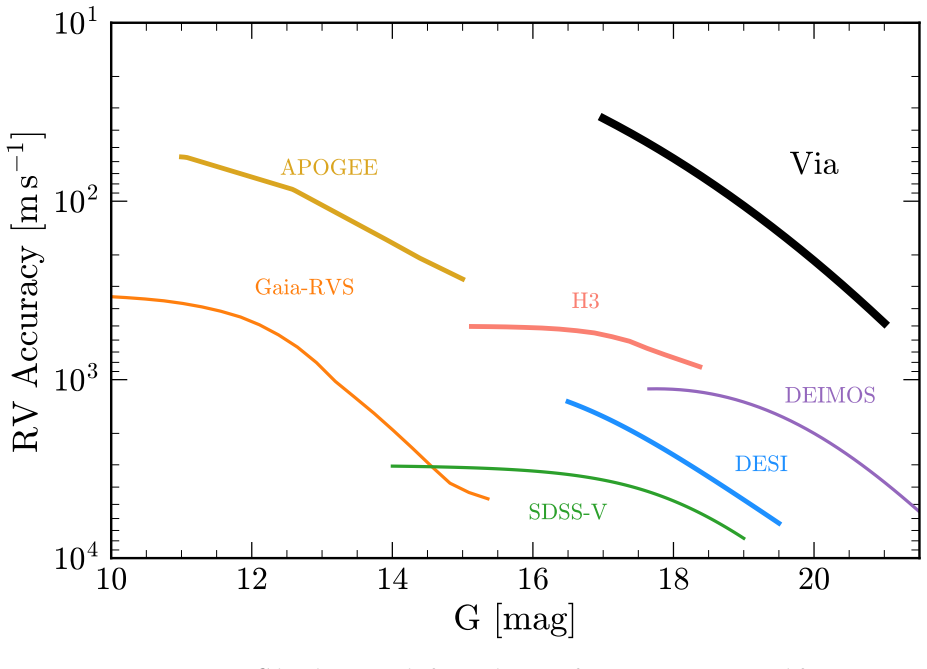
Via will achieve 100 m/s radial velocity stability for millions of faint stars while reaching single-visit depth for transient spectroscopy.
A machine-rendered reading of the paper's core claim, the machinery that carries it, and where it could break.
Core claim
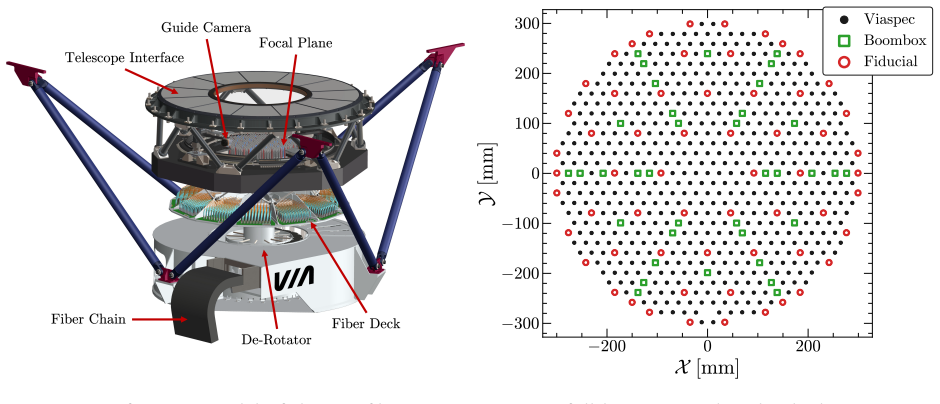
Via will deploy identical fiber-fed multi-object spectrographs on the MMT and Magellan/Clay telescopes for a five-year dual-hemisphere survey of more than two million stars, with each instrument using 576 robotically positioned fibers over a one-degree field to feed Viaspec at R approximately 15,000 and Boombox at R approximately 1,000, achieving 100 m/s radial velocity stability at G less than or equal to 21 and reaching r approximately 24 for transients.
What carries the argument
Robotically positioned fiber systems feeding the dual spectrographs Viaspec (high-resolution) and Boombox (low-resolution) over a one-degree field of view.
If this is right
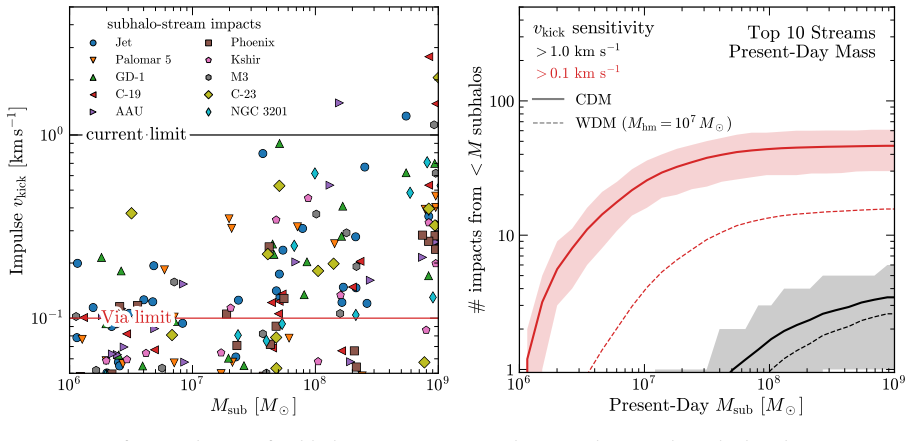
- A comprehensive survey of velocity perturbations in cold stellar streams sensitive to subhalos with mass less than or equal to 10^7 solar masses, testing the particle nature of dark matter.
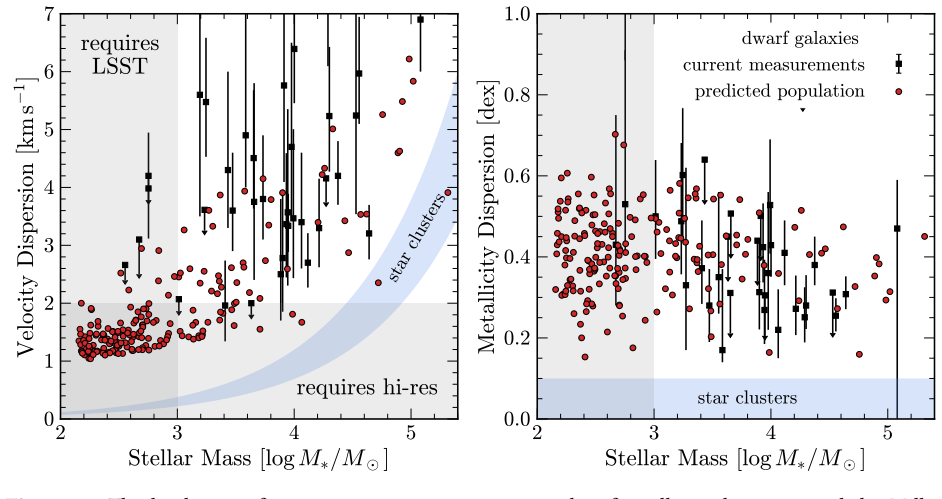
- A chemodynamical census of Milky Way satellite galaxies to understand the formation of the faintest galaxies.
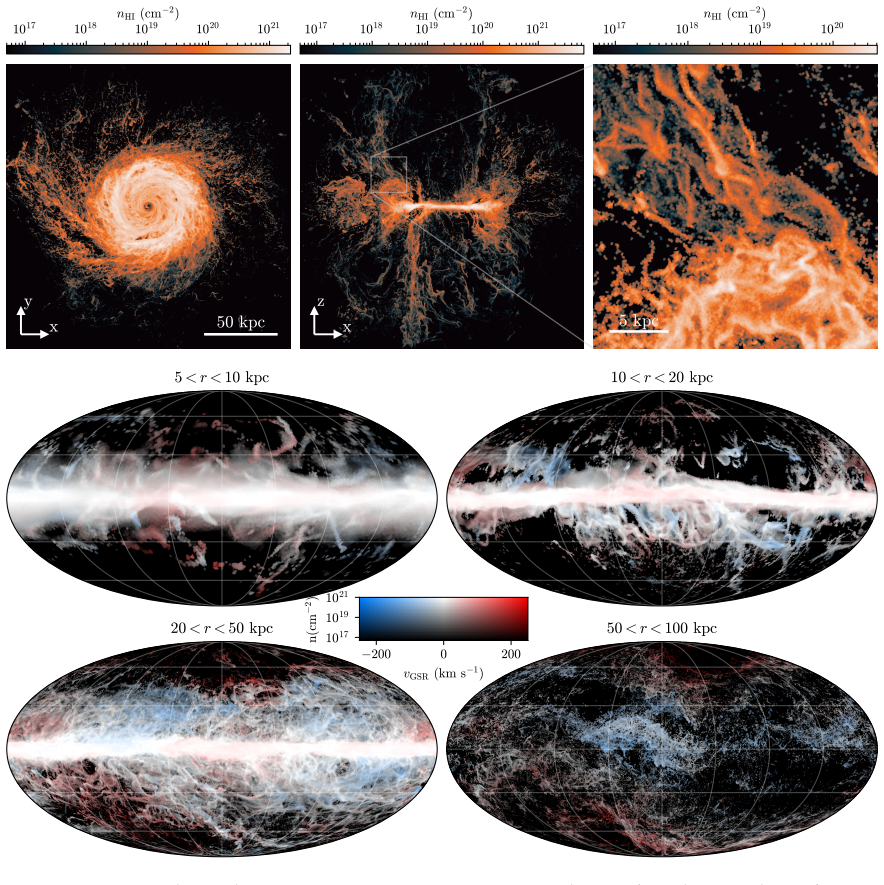
- The first 3D tomographic maps of cold gas in the circumgalactic medium via NaI absorption.
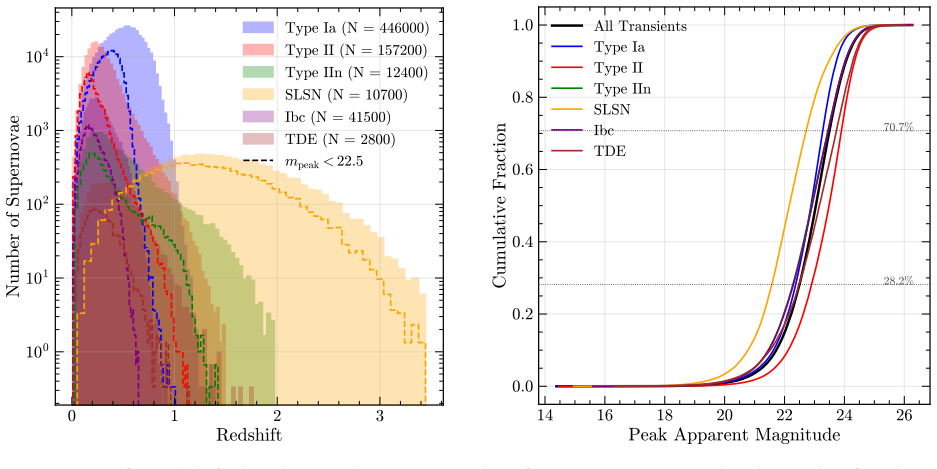
- Rapid characterization of thousands of transients to the single-epoch survey depth.
Where Pith is reading between the lines
- The subhalo detections would directly constrain the minimum mass scale of dark matter structure and thus the particle properties of dark matter.
- Combined velocity and chemistry data could trace the accretion history of the Milky Way halo in greater detail than photometry alone.
- Absorption-line maps would provide new constraints on the spatial distribution and kinematics of cold circumgalactic gas.
- Spare-fiber observations could yield serendipitous results on polluted white dwarfs and high-redshift absorption systems.
Load-bearing premise
The robotically positioned fiber systems and dual spectrographs will be constructed, commissioned, and operated to deliver the stated performance metrics, and the five-year dual-hemisphere survey will receive the required telescope time allocations beginning in 2027.
What would settle it
Commissioning observations that fail to reach 100 m/s radial velocity stability on stars at G approximately 21, or the survey not receiving telescope time allocations to begin operations in 2027.
Figures















read the original abstract
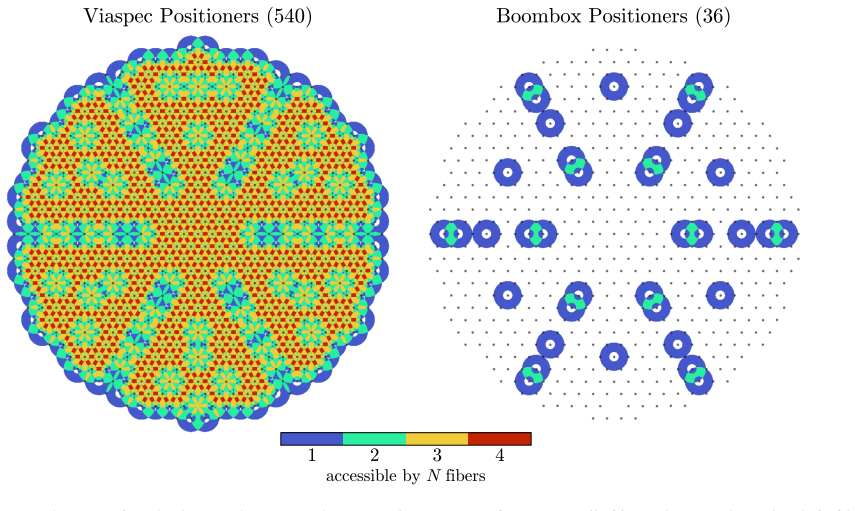
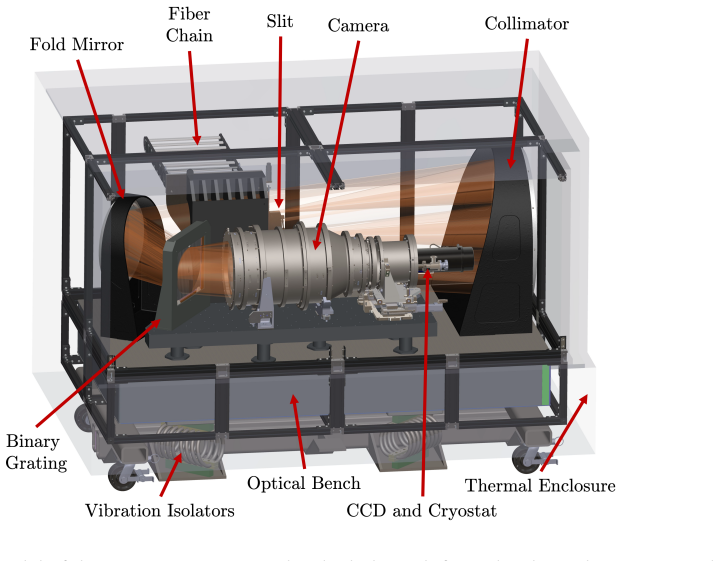
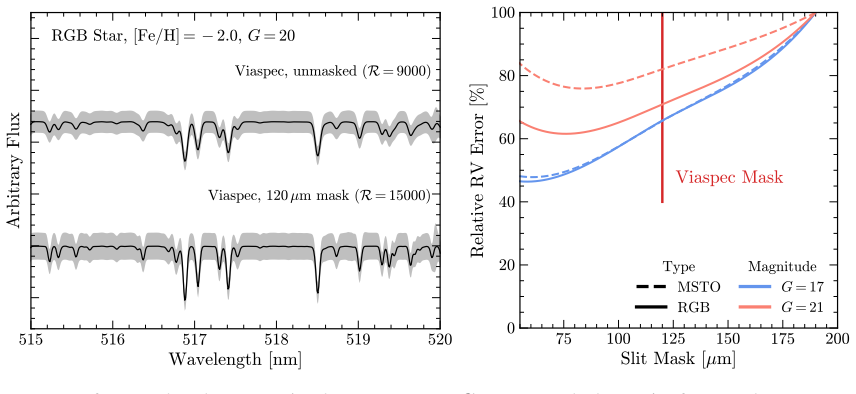
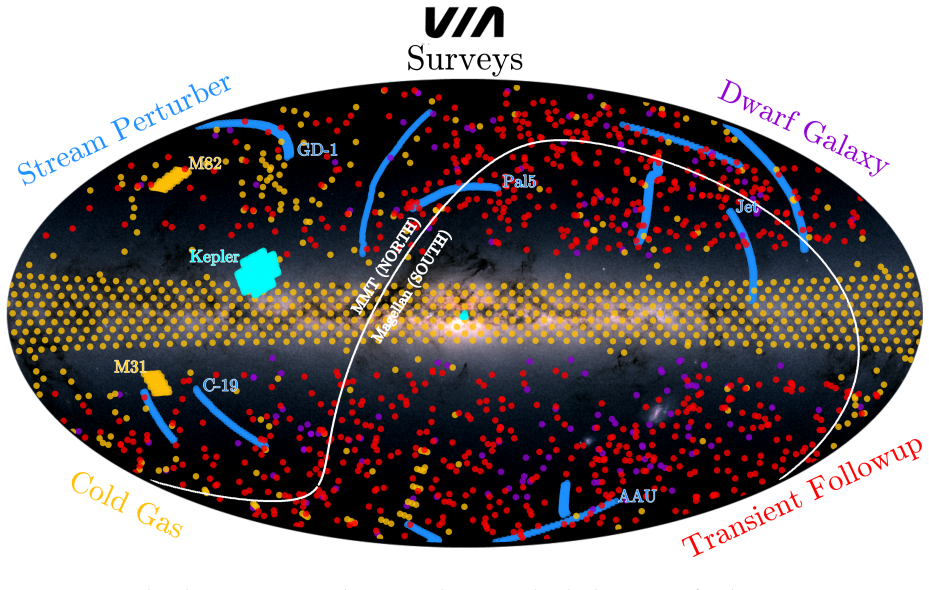
Via is a forthcoming all-sky spectroscopic survey that will achieve 100 m s$^{-1}$ radial velocity stability for millions of faint ($G \lesssim 21$) stars while reaching LSST's single-visit depth ($r \approx 24$) for transient spectroscopy, opening new regimes in near-field cosmology and time-domain astrophysics. Via will deploy identical fiber-fed, multi-object spectrographs on the 6.5m MMT and Magellan/Clay telescopes for a five-year, dual-hemisphere survey of $>2{,}000{,}000$ stars beginning in 2027 - timed to complement LSST. Each instrument has 576 robotically positioned fibers over a $1^\circ$ field of view, feeding two spectrographs: Viaspec ($R \approx 15{,}000$; 505-595 nm; 540 fibers) and Boombox ($R \approx 1{,}000$; 360-1010 nm; 36 fibers). Four key goals drive the survey: (1) a comprehensive survey of velocity perturbations in cold stellar streams, sensitive to $M \lesssim 10^7$ subhalos below the threshold of galaxy formation, a stringent test of the particle nature of dark matter; (2) a chemodynamical census of Milky Way satellite galaxies to understand the formation of the faintest galaxies; (3) the first 3D tomographic maps of cold gas in the circumgalactic medium via NaI absorption; and (4) the rapid characterization of thousands of transients to the single-epoch survey depth of LSST. Ancillary science - including the Ly$\alpha$ forest at $z \approx 3$-$4$, polluted white dwarfs, exoplanet host characterization, fast radio burst host galaxies, and extragalactic dwarf galaxies - will leverage spare fibers in every pointing. The Via Project is a collaboration between the Center for Astrophysics $|$ Harvard & Smithsonian, Carnegie Observatories, Stanford University, and Yale University.
Editorial analysis
A structured set of objections, weighed in public.
Referee Report
Summary. The manuscript is an overview of the Via Project, a planned dual-hemisphere spectroscopic survey deploying identical 576-fiber instruments on the MMT and Magellan/Clay 6.5 m telescopes beginning in 2027. It describes four primary science goals (velocity perturbations in cold stellar streams for subhalo detection, chemodynamical census of Milky Way satellites, 3D Na I tomography of the CGM, and rapid transient spectroscopy to LSST single-visit depth), the instrument architecture (Viaspec at R≈15,000 with 540 fibers and Boombox at R≈1,000 with 36 fibers), target performance (100 m s^{-1} RV stability for G≲21 stars), and ancillary programs leveraging spare fibers.
Significance. If the stated design targets are realized, the survey would open new parameter space in near-field cosmology by probing dark-matter subhalos below 10^7 M_⊙ and in time-domain astrophysics by matching LSST depth for transients. The dual-hemisphere strategy, robotic fiber positioning over 1° fields, and explicit complementarity with LSST constitute clear strengths of the concept. As a project-overview paper rather than a results paper, its primary value is to document the science case, instrument specifications, and survey timeline for the community.
minor comments (1)
- The abstract and §1 state the 100 m s^{-1} RV stability target without reference to an error budget or prototype data; while appropriate for an overview, a brief forward reference to where such supporting material will appear (if planned) would improve clarity for readers.
Simulated Author's Rebuttal
We thank the referee for their positive assessment of the manuscript and recommendation to accept. The referee's summary correctly identifies the core elements of the Via Project overview, including the dual-hemisphere survey design, instrument specifications, science goals, and complementarity with LSST.
Circularity Check
No significant circularity; descriptive project overview only
full rationale
The paper is a high-level description of planned instrumentation, survey strategy, and science goals for the Via Project. It states design targets (e.g., 100 m s^{-1} RV stability, fiber counts, resolving powers, survey depth) and anticipated reach as engineering and allocation objectives, with no derivations, equations, fitted parameters, or predictions that reduce to input quantities by construction. No load-bearing self-citations, uniqueness theorems, or ansatzes are invoked. The document is self-contained as a project prospectus against external benchmarks of telescope time and instrument performance.
Axiom & Free-Parameter Ledger
Reference graph
Works this paper leans on
-
[1]
Abbott, B. P., Abbott, R., Abbott, T. D., et al. 2017, PhRvL, 119, 161101, doi: 10.1103/PhysRevLett.119.161101
-
[2]
K., Parikh, A., Slone, O., et al
Adams, D. K., Parikh, A., Slone, O., et al. 2025, ApJ, 991, 66, doi: 10.3847/1538-4357/adf740
-
[3]
Agertz, O., Pontzen, A., Read, J. I., et al. 2020, MNRAS, 491, 1656, doi: 10.1093/mnras/stz3053
-
[4]
Aleo, P., Engel, A., Narayan, G., et al. 2024, The Astrophysical Journal, 974, 172, doi: 10.3847/1538-4357/ad6869 Allende Prieto, C., Koesterke, L., Ludwig, H. G.,
-
[5]
2013, A&A, 550, A103, doi: 10.1051/0004-6361/201220064
Freytag, B., & Caffau, E. 2013, A&A, 550, A103, doi: 10.1051/0004-6361/201220064
-
[6]
White, S. D. M. 2016, MNRAS, 463, L17, doi: 10.1093/mnrasl/slw148
-
[7]
Andersson, E. P., Rey, M. P., Pontzen, A., et al. 2025, ApJ, 978, 129, doi: 10.3847/1538-4357/ad99d6
-
[8]
Robust Data-driven Metallicities for 175 Million Stars from Gaia XP Spectra
Andrae, R., Rix, H.-W., & Chandra, V. 2023, ApJS, 267, 8, doi: 10.3847/1538-4365/acd53e
-
[9]
Andreoni, I., Margutti, R., Salafia, O. S., et al. 2022, ApJS, 260, 18, doi: 10.3847/1538-4365/ac617c
-
[10]
Andreoni, I., Coughlin, M. W., Perley, D. A., et al. 2022, Nature, 612, 430, doi: 10.1038/s41586-022-05465-8
-
[11]
2024, arXiv e-prints, arXiv:2411.04793, doi: 10.48550/arXiv.2411.04793
Andreoni, I., Margutti, R., Banovetz, J., et al. 2024, arXiv preprint arXiv:2411.04793, doi: 10.48550/arXiv.2411.04793
-
[12]
2018, ApJL, 855, L23, doi: 10.3847/2041-8213/aab267
Arcavi, I. 2018, ApJL, 855, L23, doi: 10.3847/2041-8213/aab267
-
[13]
Arora, A., Garavito-Camargo, N., Sanderson, R. E., et al. 2024, ApJ, 974, 286, doi: 10.3847/1538-4357/ad7375
-
[14]
Augustin, R., Tumlinson, J., Peeples, M. S., et al. 2025, FOGGIE X: Characterizing the Small-Scale Structure of the CGM and its Imprint on Observables, doi: 10.3847/1538-4357/ae0462
-
[15]
2024, A&A, 683, A14, doi: 10.1051/0004-6361/202347848
Awad, P., Canducci, M., Balbinot, E., et al. 2024, A&A, 683, A14, doi: 10.1051/0004-6361/202347848
-
[16]
2019, MNRAS, 484, 2009, doi: 10.1093/mnras/stz142
Banik, N., & Bovy, J. 2019, MNRAS, 484, 2009, doi: 10.1093/mnras/stz142
-
[17]
Boer, T. J. L. 2021, MNRAS, 502, 2364, doi: 10.1093/mnras/stab210
-
[18]
2023, MNRAS, 523, 428, doi: 10.1093/mnras/stad1395
Barry, M., Wetzel, A., Chapman, S., et al. 2023, MNRAS, 523, 428, doi: 10.1093/mnras/stad1395
-
[19]
The Discovery and Analysis of Very Metal-Poor Stars in the Galaxy
Beers, T. C., & Christlieb, N. 2005, ARA&A, 43, 531, doi: 10.1146/annurev.astro.42.053102.134057
-
[20]
2022, MNRAS, 514, 689, doi: 10.1093/mnras/stac1267
Belokurov, V., & Kravtsov, A. 2022, MNRAS, 514, 689, doi: 10.1093/mnras/stac1267
-
[21]
Benson, A. J. 2012, NewA, 17, 175, doi: 10.1016/j.newast.2011.07.004
-
[22]
2018, RvMP, 90, 045002, doi: 10.1103/RevModPhys.90.045002
Bertone, G., & Hooper, D. 2018, RvMP, 90, 045002, doi: 10.1103/RevModPhys.90.045002
-
[23]
doi:10.1016/j.physrep.2004.08.031 , eprint =
Bertone, G., Hooper, D., & Silk, J. 2005, PhR, 405, 279, doi: 10.1016/j.physrep.2004.08.031
-
[24]
Bird, S. A., Xue, X.-X., Liu, C., et al. 2021, ApJ, 919, 66, doi: 10.3847/1538-4357/abfa9e —. 2022, MNRAS, 516, 731, doi: 10.1093/mnras/stac2036
-
[25]
Bode, P., Ostriker, J. P., & Turok, N. 2001, ApJ, 556, 93, doi: 10.1086/321541
-
[26]
Boley, K. M., Wang, J., Zinn, J. C., et al. 2021, AJ, 162, 85, doi: 10.3847/1538-3881/ac0e2d
-
[27]
Bolton, A. S., & Schlegel, D. J. 2010, PASP, 122, 248, doi: 10.1086/651008
-
[28]
Hogg, D. W. 2019a, ApJL, 881, L37, doi: 10.3847/2041-8213/ab36ba
-
[29]
The Spur and the Gap in GD- 1: Dynamical evidence for a dark substructure in the Milky Way halo,
Conroy, C. 2019b, ApJ, 880, 38, doi: 10.3847/1538-4357/ab2873
-
[30]
Bonaca, A., & Price-Whelan, A. M. 2025, NewAR, 100, 101713, doi: 10.1016/j.newar.2024.101713
-
[31]
Bonaca, A., Pearson, S., Price-Whelan, A. M., et al. 2020a, ApJ, 889, 70, doi: 10.3847/1538-4357/ab5afe
-
[32]
Bonaca, A., Conroy, C., Hogg, D. W., et al. 2020b, ApJL, 892, L37, doi: 10.3847/2041-8213/ab800c
-
[33]
2020, MNRAS, 495, 1374, doi: 10.1093/mnras/staa1246
Bonnerot, C., & Lu, W. 2020, MNRAS, 495, 1374, doi: 10.1093/mnras/staa1246
-
[34]
Bose, S., Hellwing, W. A., Frenk, C. S., et al. 2016, MNRAS, 455, 318, doi: 10.1093/mnras/stv2294
-
[35]
2013, ApJ, 768, 70, doi: 10.1088/0004-637X/768/1/70
Bovy, J., & Dvorkin, C. 2013, ApJ, 768, 70, doi: 10.1088/0004-637X/768/1/70
-
[36]
2020, ApJ, 898, 71, doi: 10.3847/1538-4357/ab9d85
Breivik, K., Coughlin, S., Zevin, M., et al. 2020, ApJ, 898, 71, doi: 10.3847/1538-4357/ab9d85 —. 2021, COSMIC: Compact Object Synthesis and Monte Carlo Investigation Code. http://ascl.net/2108.022 84
-
[37]
2020, ApJ, 890, 73, doi: 10.3847/1538-4357/ab6989
Bricman, K., & Gomboc, A. 2020, ApJ, 890, 73, doi: 10.3847/1538-4357/ab6989
-
[38]
2025, A&A, 703, A61, doi: 10.1051/0004-6361/202554642
Podsiadlowski, P. 2025, A&A, 703, A61, doi: 10.1051/0004-6361/202554642
-
[39]
J., Gal-Yam, A., Yaron, O., et al
Bruch, R. J., Gal-Yam, A., Yaron, O., et al. 2023, ApJ, 952, 119, doi: 10.3847/1538-4357/acd8be
-
[40]
Buch, D., Nadler, E. O., Wechsler, R. H., & Mao, Y.-Y. 2024, ApJ, 971, 79, doi: 10.3847/1538-4357/ad554c
-
[41]
Bullock, J. S., & Johnston, K. V. 2005, ApJ, 635, 931, doi: 10.1086/497422
-
[42]
Bullock, J. S., Kravtsov, A. V., & Weinberg, D. H. 2000, ApJ, 539, 517, doi: 10.1086/309279
-
[43]
2022, AJ, 164, 94, doi: 10.3847/1538-3881/ac76cc
Bundy, K., Law, D., MacDonald, N., et al. 2022, AJ, 164, 94, doi: 10.3847/1538-3881/ac76cc
-
[44]
Quinn, T. R., & Werk, J. K. 2024, MNRAS, 535, 1672, doi: 10.1093/mnras/stae2459
-
[45]
Butsky, I. S., Nakum, S., Ponnada, S. B., et al. 2023, MNRAS, 521, 2477, doi: 10.1093/mnras/stad671
-
[46]
Buttry, R., Pace, A. B., Koposov, S. E., et al. 2022, MNRAS, 514, 1706, doi: 10.1093/mnras/stac1441 Byström, A., Koposov, S. E., Lilleengen, S., et al. 2025, MNRAS, 542, 560, doi: 10.1093/mnras/staf1219
-
[47]
2023, MNRAS, 525, 3499, doi: 10.1093/mnras/stad2512
Font-Ribera, A., & Pedersen, C. 2023, MNRAS, 525, 3499, doi: 10.1093/mnras/stad2512
-
[48]
2017, MNRAS, 466, 798, doi: 10.1093/mnras/stw3020
Cappellari, M. 2017, MNRAS, 466, 798, doi: 10.1093/mnras/stw3020
work page internal anchor Pith review doi:10.1093/mnras/stw3020 2017
-
[49]
and Conroy, Charlie and Johnson, Benjamin D
Cargile, P. A., Conroy, C., Johnson, B. D., et al. 2020, ApJ, 900, 28, doi: 10.3847/1538-4357/aba43b
-
[50]
Carlberg, R. G. 2009, ApJL, 705, L223, doi: 10.1088/0004-637X/705/2/L223 —. 2012, ApJ, 748, 20, doi: 10.1088/0004-637X/748/1/20 —. 2020, ApJ, 889, 107, doi: 10.3847/1538-4357/ab61f0
-
[51]
Laird, J. B., & Morse, J. A. 2003, AJ, 125, 293, doi: 10.1086/345386
-
[52]
2011, A&A, 530, A138, doi: 10.1051/0004-6361/201016276
Casagrande, L., Schönrich, R., Asplund, M., et al. 2011, A&A, 530, A138, doi: 10.1051/0004-6361/201016276
-
[53]
Cerny, W., Li, T. S., Pace, A. B., et al. 2026, arXiv e-prints, arXiv:2602.17652, doi: 10.48550/arXiv.2602.17652
-
[54]
Chaini, S., Bianco, F. B., & Mahabal, A. 2025, arXiv preprint arXiv:2510.23702, doi: 10.48550/arXiv.2510.23702
-
[55]
Chakrabarti, S., Simon, J. D., Craig, P. A., et al. 2023, AJ, 166, 6, doi: 10.3847/1538-3881/accf21
-
[56]
Chandler, C. O., Bernardinelli, P. H., Jurić, M., et al. 2026, The Astrophysical Journal, 1001, L35, doi: 10.3847/2041-8213/ae4b3a
-
[57]
and Conroy, Charlie and Ji, Alexander P
Chandra, V., Naidu, R. P., Conroy, C., et al. 2023, ApJ, 951, 26, doi: 10.3847/1538-4357/accf13
-
[58]
2022, MNRAS, 513, 934, doi: 10.1093/mnras/stac933
Chen, L.-H., Magg, M., Hartwig, T., et al. 2022, MNRAS, 513, 934, doi: 10.1093/mnras/stac933
-
[59]
Chevalier, R. A. 2012, ApJL, 752, L2, doi: 10.1088/2041-8205/752/1/L2
-
[60]
Chiti, A., Frebel, A., Simon, J. D., et al. 2021, Nature Astronomy, 5, 392, doi: 10.1038/s41550-020-01285-w
-
[61]
Chiti, A., Placco, V. M., Pace, A. B., et al. 2026a, Nature Astronomy, doi: 10.1038/s41550-026-02802-z
-
[62]
The DECam MAGIC Survey $-$ Mapping the Ancient Galaxy in CaHK: Overview and Summary of Early Science
Chiti, A., Drlica-Wagner, A., Pace, A. B., et al. 2026b, arXiv e-prints, arXiv:2605.26581, doi: 10.48550/arXiv.2605.26581
work page internal anchor Pith review Pith/arXiv arXiv doi:10.48550/arxiv.2605.26581
-
[63]
Choi, J., Dotter, A., Conroy, C., et al. 2016, ApJ, 823, 102, doi: 10.3847/0004-637X/823/2/102
work page internal anchor Pith review doi:10.3847/0004-637x/823/2/102 2016
-
[64]
Precise Radial Velocities of 2046 Nearby FGKM Stars and 131 Standards
Chubak, C., Marcy, G., Fischer, D. A., et al. 2012, arXiv e-prints, arXiv:1207.6212, doi: 10.48550/arXiv.1207.6212
work page internal anchor Pith review Pith/arXiv arXiv doi:10.48550/arxiv.1207.6212 2012
-
[65]
Collett, T. E., et al. 2023, The Messenger, 190, 49, doi: 10.18727/0722-6691/5313
-
[66]
Collins, M. L. M., & Read, J. I. 2022, Nature Astronomy, 6, 647, doi: 10.1038/s41550-022-01657-4
-
[67]
Conroy, C., Bonaca, A., Naidu, R. P., et al. 2018, ApJL, 861, L16, doi: 10.3847/2041-8213/aacdf1
-
[68]
Conroy, C., Gunn, J. E., & White, M. 2009, ApJ, 699, 486, doi: 10.1088/0004-637X/699/1/486
work page internal anchor Pith review doi:10.1088/0004-637x/699/1/486 2009
-
[69]
Conroy, C., Naidu, R. P., Garavito-Camargo, N., et al. 2021, Nature, 592, 534, doi: 10.1038/s41586-021-03385-7
-
[70]
2019, ApJ, 883, 107, doi: 10.3847/1538-4357/ab38b8
Conroy, C., Bonaca, A., Cargile, P., et al. 2019, ApJ, 883, 107, doi: 10.3847/1538-4357/ab38b8
-
[71]
Cooper, A. P., Koposov, S. E., Allende Prieto, C., et al. 2023, ApJ, 947, 37, doi: 10.3847/1538-4357/acb3c0 85
-
[72]
Cooper, A. P., Cole, S., Frenk, C. S., et al. 2010, MNRAS, 406, 744, doi: 10.1111/j.1365-2966.2010.16740.x
-
[73]
Cote, P., Pryor, C., McClure, R. D., Fletcher, J. M., & Hesser, J. E. 1996, AJ, 112, 574, doi: 10.1086/118035
-
[74]
S., Berger, E., Villar, V., et al
Cowperthwaite, P. S., Berger, E., Villar, V., et al. 2017, The Astrophysical Journal Letters, 848, L17, doi: 10.3847/2041-8213/aa8fc7
-
[75]
Dalal, S., Haywood, R. D., Mortier, A., Chaplin, W. J., & Meunier, N. 2023, MNRAS, 525, 3344, doi: 10.1093/mnras/stad2393 Dálya, G., Díaz, R., Bouchet, F. R., et al. 2022, MNRAS, 514, 1403, doi: 10.1093/mnras/stac1443
-
[76]
Davis, M., Efstathiou, G., Frenk, C. S., & White, S. D. M. 1985, ApJ, 292, 371, doi: 10.1086/163168 de Boer, T. J. L., Belokurov, V., Koposov, S. E., et al. 2018, MNRAS, 477, 1893, doi: 10.1093/mnras/sty677 de Boer, T. J. L., Erkal, D., & Gieles, M. 2020, MNRAS, 494, 5315, doi: 10.1093/mnras/staa917 de Soto, K. M., Villar, V. A., Berger, E., et al. 2024, ...
-
[77]
J., Bose, S., Fattahi, A., et al
Deason, A. J., Bose, S., Fattahi, A., et al. 2022, MNRAS, 511, 4044, doi: 10.1093/mnras/stab3524
-
[78]
J., Erkal, D., Belokurov, V., et al
Deason, A. J., Erkal, D., Belokurov, V., et al. 2021, MNRAS, 501, 5964, doi: 10.1093/mnras/staa3984
-
[79]
2024, MNRAS, 530, 52, doi: 10.1093/mnras/stae837
DeFelippis, D., Bournaud, F., Bouché, N., et al. 2024, MNRAS, 530, 52, doi: 10.1093/mnras/stae837
-
[80]
The DESI Experiment Part I: Science,Targeting, and Survey Design
Dekel, A., & Silk, J. 1986, ApJ, 303, 39, doi: 10.1086/164050 DESI Collaboration, Aghamousa, A., Aguilar, J., et al. 2016, arXiv, arXiv:1611.00036, doi: 10.48550/arXiv.1611.00036
work page internal anchor Pith review Pith/arXiv arXiv doi:10.1086/164050 1986
discussion (0)
Sign in with ORCID, Apple, or X to comment. Anyone can read and Pith papers without signing in.