Time and Frequency domain analysis of Love waves generated by Gaussian, Ricker and double couple seismic sources in a memory dependent fractured poroviscoelastic layer on a heterogeneous viscoelastic half-space
Pith reviewed 2026-06-26 22:07 UTC · model grok-4.3
The pith
Distributed seismic sources are formulated for Love wave analysis in memory-dependent fractured poroviscoelastic layers using fractional calculus.
A machine-rendered reading of the paper's core claim, the machinery that carries it, and where it could break.
Core claim
The authors claim that incorporating distributed sources such as Gaussian, Ricker, and double-couple into the analysis of Love waves within a framework that uses Riemann-Liouville fractional derivatives for constitutive relations in a stratified poroviscoelastic medium has not been done previously, enabling detailed time and frequency domain studies of wave propagation influenced by material heterogeneity and porosity.
What carries the argument
The complex dispersion relation derived from Fourier transform techniques combined with Green's function methodology, solved using a hybrid Newton-Raphson algorithm.
If this is right
- The effects of heterogeneity, fractional viscoelasticity, and porosity can be quantified through numerical simulations of wave propagation characteristics.
- Synthetic seismograms verify that the solutions are physically consistent and meaningful.
- The surface response to different seismic sources can be evaluated using a single degree of freedom oscillator model.
- Parameters exerting the most significant influence on the system response are identified through the analysis.
Where Pith is reading between the lines
- This formulation could allow for better modeling of seismic wave behavior in real geological structures with fractures and porosity.
- Extending the approach to other source types or wave modes might reveal additional insights into earthquake dynamics.
- Validation against field data would be necessary to confirm the accuracy of the fractional model in practical applications.
Load-bearing premise
The assumption that Riemann-Liouville fractional derivatives in the constitutive relations accurately capture the memory-dependent mechanical behavior of the fractured poroviscoelastic material without requiring empirical calibration or validation against observed data.
What would settle it
Observation of Love wave dispersion or attenuation in a real fractured poroviscoelastic geological setting that significantly deviates from the numerically computed complex roots would falsify the model's predictive power.
Figures





read the original abstract
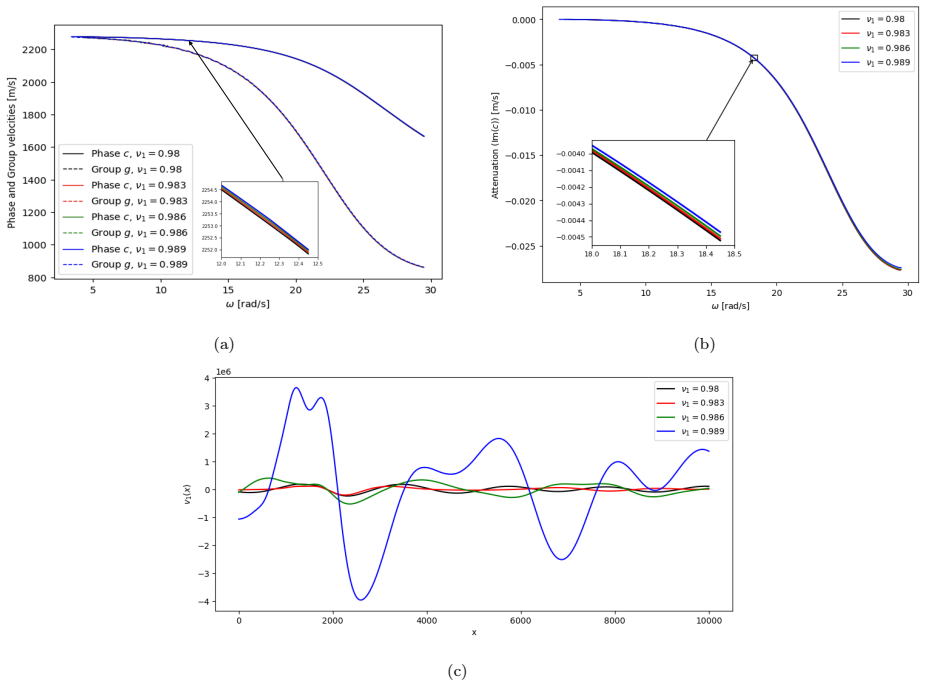
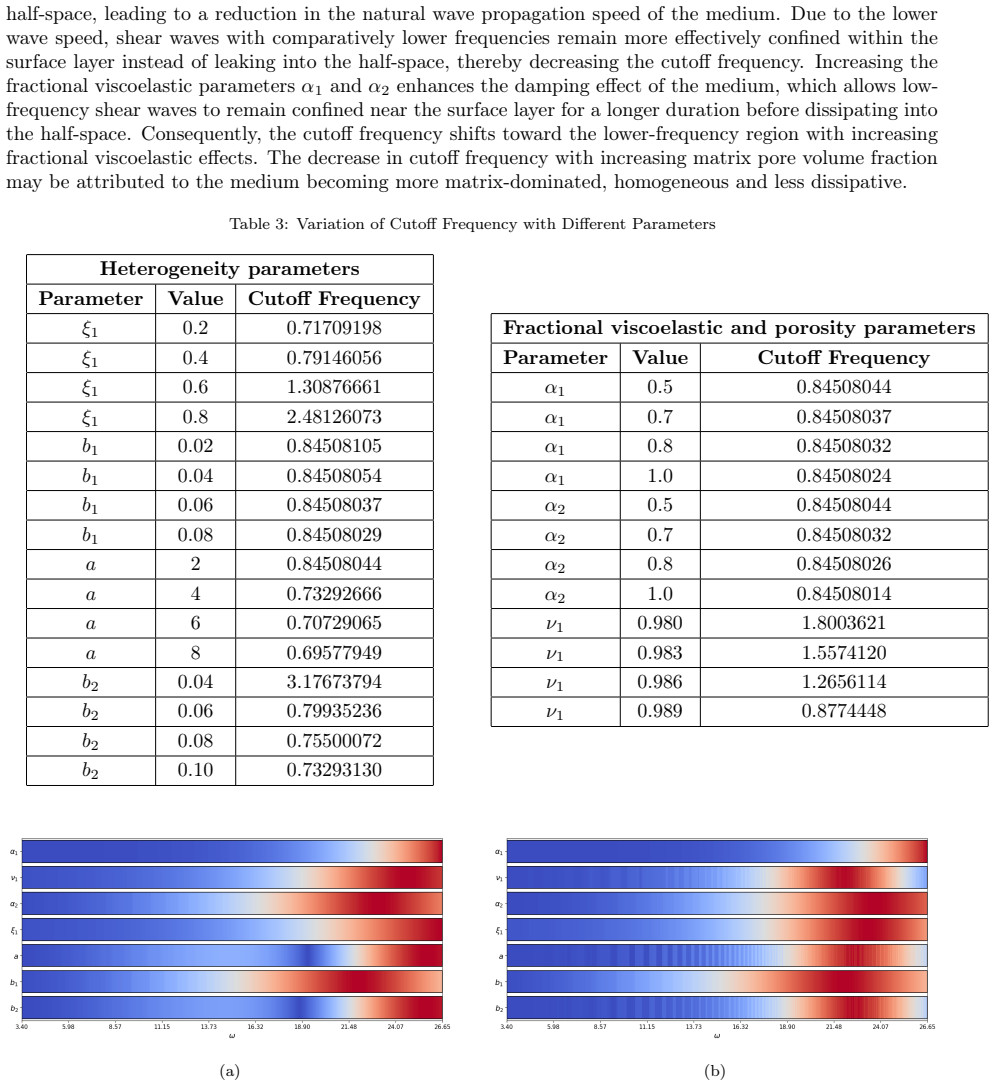
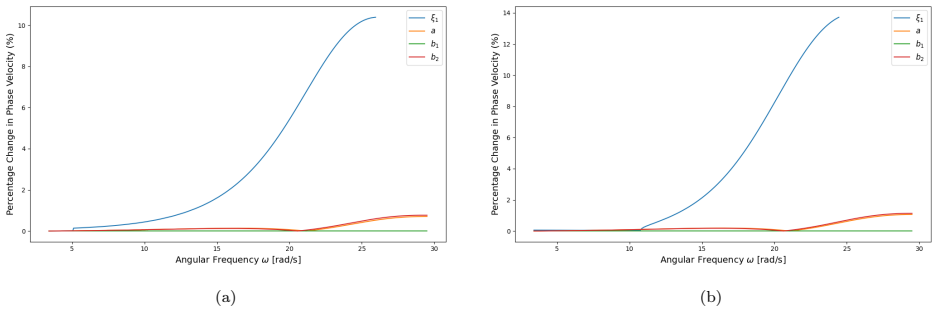
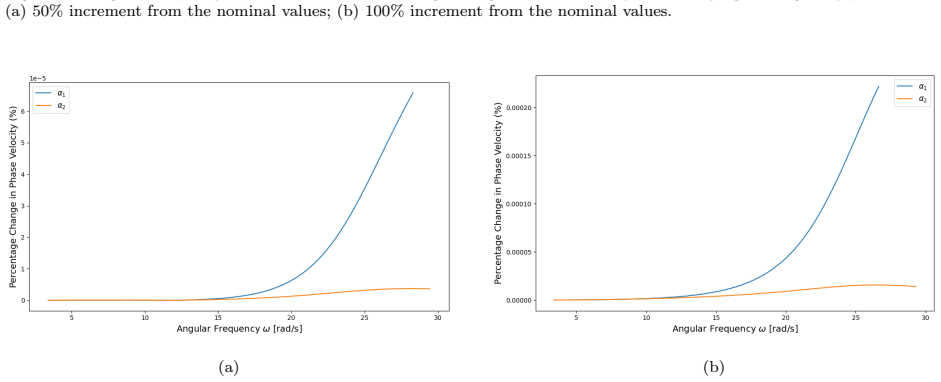
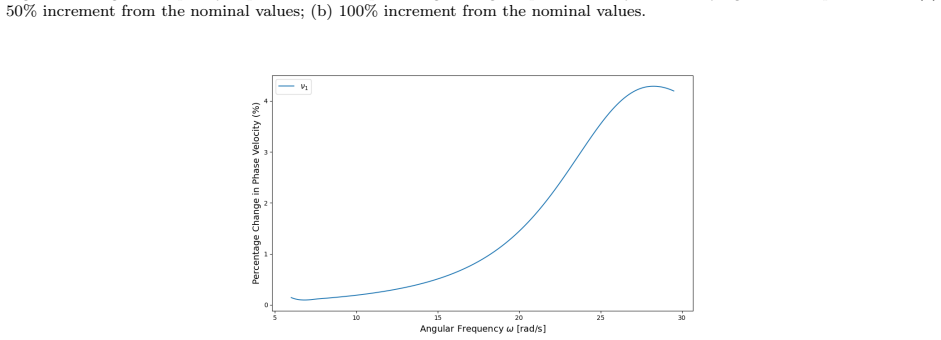
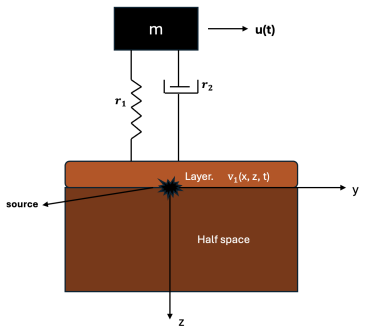
The present study develops a detailed theoretical and mathematical formulation to analyze the time and frequency domain propagation characteristics of Love waves in a stratified fractured poroviscoelastic continuum.The top stratum is modeled as a fractured poroviscoelastic material,whereas the lower semi infinite region exhibits heterogeneity and a gradual transition from viscoelastic behavior near the interface to purely elastic response at greater depths.Fractional order constitutive relations are incorporated to capture the memory-dependent mechanical behavior of the medium using Riemann Liouville fractional derivatives. Three distributed source models, namely Gaussian, Ricker and double-couple sources, are considered. To the best of our knowledge, the mathematical formulation of these distributed sources within the present framework has not been established in earlier studies, where the excitation is typically modeled using an idealized point source. By applying Fourier transform techniques in conjunction with Greens function methodology, the complex dispersion relation is obtained. Since the resulting dispersion equation yields complex roots, a hybrid Newton Raphson iterative algorithm is employedto compute these roots efficiently. Synthetic seismograms are generated to verify that the obtained solutions remain physically consistent and meaningful. Numerical simulations are then performed to investigate the effects of heterogeneity, fractional viscoelasticity and porosity on wave propagation characteristics, thereby identifying the parameters that exert the most significant influence on the system response. Furthermore, to examine the structural implications of the propagated waves, a single degree of freedom SDOF oscillator model is employed to evaluate the surface response corresponding to different types of seismic sources.
Editorial analysis
A structured set of objections, weighed in public.
Referee Report
Summary. The manuscript develops a theoretical formulation for Love-wave propagation in a fractured poroviscoelastic layer overlying a heterogeneous viscoelastic half-space, employing Riemann-Liouville fractional derivatives to model memory effects. It introduces mathematical expressions for three distributed seismic sources (Gaussian, Ricker, and double-couple), derives the complex dispersion relation via Fourier transforms combined with Green's functions, solves the resulting equation with a hybrid Newton-Raphson algorithm, generates synthetic seismograms, and performs numerical studies on the influence of heterogeneity, fractional order, and porosity, together with an SDOF oscillator analysis of surface response.
Significance. If the source-term insertions and root-finding procedure are correctly executed, the work supplies a concrete extension of prior point-source models to distributed sources within a fractional poroviscoelastic setting. The parameter-sensitivity results and seismogram generation constitute falsifiable outputs that could be compared with field data; the explicit use of Green's functions for the inhomogeneous problem is a standard but useful technical step.
major comments (2)
- [Source-term formulation and Green's-function construction] The central novelty claim concerns the insertion of the three distributed sources into the governing system. The dispersion relation itself is extracted from the homogeneous boundary-value problem and is therefore independent of the particular source; the manuscript should therefore make explicit (with the relevant transformed equations) how the Gaussian, Ricker, and double-couple terms appear only in the particular solution while still constituting a new formulation within this constitutive framework.
- [Numerical root-finding algorithm] The hybrid Newton-Raphson procedure is stated to locate complex roots of the dispersion equation, yet no convergence analysis, initial-guess strategy, or verification against limiting cases (e.g., vanishing fractional order or homogeneous half-space) is supplied. Because the physical consistency of the subsequent seismograms rests on these roots, such verification is load-bearing.
minor comments (2)
- [Abstract] The abstract contains typographical errors ("employ edto", missing apostrophe in "Green's", inconsistent hyphenation of "double-couple").
- [Constitutive relations and model parameters] Notation for the fractional-order parameters and the heterogeneity functions should be introduced once, with a single table of symbols, to avoid repeated re-definition.
Simulated Author's Rebuttal
We thank the referee for the constructive and detailed comments on our manuscript. We address each major comment below, agreeing where clarification or additional verification is warranted, and indicate the revisions we will make to strengthen the presentation.
read point-by-point responses
-
Referee: [Source-term formulation and Green's-function construction] The central novelty claim concerns the insertion of the three distributed sources into the governing system. The dispersion relation itself is extracted from the homogeneous boundary-value problem and is therefore independent of the particular source; the manuscript should therefore make explicit (with the relevant transformed equations) how the Gaussian, Ricker, and double-couple terms appear only in the particular solution while still constituting a new formulation within this constitutive framework.
Authors: We agree that the complex dispersion relation is obtained from the homogeneous boundary-value problem and is independent of the source terms. The contribution of the work lies in the formulation of the three distributed sources (Gaussian, Ricker, and double-couple) within the memory-dependent fractured poroviscoelastic constitutive framework and their incorporation via Green's functions into the particular solution of the inhomogeneous problem. In the revised manuscript we will add the relevant transformed governing equations that explicitly isolate the source terms in the particular solution, thereby clarifying how the present formulation extends earlier point-source treatments while preserving the source-independent dispersion relation. revision: yes
-
Referee: [Numerical root-finding algorithm] The hybrid Newton-Raphson procedure is stated to locate complex roots of the dispersion equation, yet no convergence analysis, initial-guess strategy, or verification against limiting cases (e.g., vanishing fractional order or homogeneous half-space) is supplied. Because the physical consistency of the subsequent seismograms rests on these roots, such verification is load-bearing.
Authors: We acknowledge that the manuscript does not presently supply a convergence study, an explicit description of the initial-guess strategy, or direct comparisons with limiting cases. In the revised version we will include a brief convergence analysis of the hybrid Newton-Raphson algorithm, document the initial-guess procedure, and present verification results for the limiting cases of vanishing fractional order and a homogeneous half-space. These additions will confirm that the roots used to generate the synthetic seismograms are physically consistent. revision: yes
Circularity Check
No significant circularity identified
full rationale
The derivation proceeds from standard constitutive relations (Riemann-Liouville fractional derivatives for the poroviscoelastic layer, heterogeneity in the half-space) to the governing PDEs, then applies Fourier transforms and Green's functions to obtain the complex dispersion relation from the homogeneous boundary-value problem. Source terms (Gaussian, Ricker, double-couple) enter only the particular solution and do not appear in the characteristic equation. No self-citations, fitted parameters renamed as predictions, or ansatzes smuggled via prior work are present in the provided text. The numerical root-finding and seismogram generation are downstream applications of the independently derived dispersion equation. The model is therefore self-contained against its own stated assumptions.
Axiom & Free-Parameter Ledger
free parameters (2)
- fractional order parameters
- heterogeneity and porosity parameters
axioms (2)
- domain assumption Riemann-Liouville fractional derivatives correctly represent memory-dependent viscoelastic behavior in the poroviscoelastic layer
- domain assumption The lower half-space transitions from viscoelastic near the interface to elastic at depth
Reference graph
Works this paper leans on
-
[1]
Love, A Treatise on the Mathematical Theory of Elasticity, Cambridge University Press, Cam- bridge, 1920
A.E.H. Love, A Treatise on the Mathematical Theory of Elasticity, Cambridge University Press, Cam- bridge, 1920
1920
-
[2]
Biot, Generalized theory of acoustic propagation in porous dissipative media, J
M.A. Biot, Generalized theory of acoustic propagation in porous dissipative media, J. Acoust. Soc. Am. 34 (1962) 1254–1264. https://doi.org/10.1121/1.1918315. 41
-
[3]
Frenkel, Theory of seismic and seismoelectric phenomena in wet soil, Izv
Y.I. Frenkel, Theory of seismic and seismoelectric phenomena in wet soil, Izv. Akad. Nauk SSSR, Ser. Geogr. Geofiz. 8 (1944) 133–150
1944
-
[4]
J.G. Berryman, H.F. Wang, The elastic coefficients of double-porosity models for fluid transport in jointed rock, J. Geophys. Res. Solid Earth 100 (1995) 24611–24627. https://doi.org/10.1029/95JB02161
-
[5]
J.G. Berryman, H.F. Wang, Elastic wave propagation and attenuation in a double-porosity dual- permeability medium, Int. J. Rock Mech. Min. Sci. 37 (2000) 63–78. https://doi.org/10.1016/S1365- 1609(99)00092-1
-
[6]
Z.-J. Dai, Z.-B. Kuang, Love waves in double porosity media, J. Sound Vib. 296 (2006) 1000–1012. https://doi.org/10.1016/j.jsv.2006.03.029
-
[7]
Beskos, I
D.E. Beskos, I. Vgenopoulou, Wave propagation in saturated, fissured, poroelastic rocks, in: Structural Dynamics — Vol. 1, Routledge, 2022, pp. 267–272
2022
-
[8]
S. Gupta, R. Dutta, S. Das, Love-type wave propagation in an inhomogeneous cracked porous medium loaded by heterogeneous viscous liquid layer, J. Vib. Eng. Technol. 9 (2021) 433–448. https://doi.org/10.1007/s42417-020-00237-y
-
[9]
B.P. Rajak, S. Kundu, S. Gupta, D. Kumar, Love wave propagation characteristics in a fluid- saturated cracked double porous layered structure, Mech. Adv. Mater. Struct. 31 (2024) 2349–2361. https://doi.org/10.1080/15376494.2022.2155333
-
[10]
P. Pranav, A.K. Rahul, Love-type wave propagation in a heterogeneous medium between a liquid and a fractured porous half-space: A WKB and variable separation approach, Eur. J. Mech. A Solids (2025) 105763. https://doi.org/10.1016/j.euromechsol.2025.105763
-
[11]
K. Gajroiya, J.S. Sikka, Dynamics of Love-type wave propagation in composite transversely isotropic porous structures, Appl. Math. Model. 137 (2025) 115723. https://doi.org/10.1016/j.apm.2024.115723
-
[12]
R. Kumhar, S. Kundu, S. Gupta, Modelling of Love waves in fluid saturated porous viscoelastic medium resting over an exponentially graded inhomogeneous half-space influenced by gravity, J. Appl. Comput. Mech. 6 (2020) 517–530. https://doi.org/10.22055/JACM.2019.29246.1575
-
[13]
A. Negi, A.K. Singh, S. Koley, On the scattering of Love waves in a layered transversely isotropic irregular poro-viscoelastic composite rock structure, J. Earthq. Eng. 27 (2023) 1900–1919. https://doi.org/10.1080/13632469.2022.2089406
-
[14]
M. Xu, W. Tan, Intermediate processes and critical phenomena: Theory, method and progress of fractional operators and their applications to modern mechanics, Sci. China Ser. G 49 (2006) 257–272. https://doi.org/10.1007/s11433-006-0257-2
-
[15]
Mainardi, Fractional Calculus and Waves in Linear Viscoelasticity: An Introduction to Mathematical Models, World Scientific, Singapore, 2022
F. Mainardi, Fractional Calculus and Waves in Linear Viscoelasticity: An Introduction to Mathematical Models, World Scientific, Singapore, 2022
2022
-
[16]
F.C. Meral, T.J. Royston, R. Magin, Fractional calculus in viscoelasticity: an experimental study, Com- mun. Nonlinear Sci. Numer. Simul. 15 (4) (2010) 939–945. https://doi.org/10.1016/j.cnsns.2009.05.004
-
[17]
E. Farno, J.-C. Baudez, N. Eshtiaghi, Comparison between classical Kelvin–Voigt and fractional deriva- tive Kelvin–Voigt models in prediction of linear viscoelastic behaviour of waste activated sludge, Sci. Total Environ. 613 (2018) 1031–1036. https://doi.org/10.1016/j.scitotenv.2017.09.206
-
[18]
Bagley, On the equivalence of the Riemann–Liouville and the Caputo fractional order derivatives in modeling of linear viscoelastic materials, Fract
R. Bagley, On the equivalence of the Riemann–Liouville and the Caputo fractional order derivatives in modeling of linear viscoelastic materials, Fract. Calc. Appl. Anal. 10 (2007) 123–126
2007
-
[19]
J. Long, R. Xiao, W. Chen, Fractional viscoelastic models with non-singular kernels, Mech. Mater. 127 (2018) 55–64. https://doi.org/10.1016/j.mechmat.2018.07.012. 42
-
[20]
Q. Zhang, X. Gu, Q. Dong, J. Liang, Modified fractional–Zener model—Numerical applica- tion in modeling the behavior of asphalt mixtures, Constr. Build. Mater. 388 (2023) 131690. https://doi.org/10.1016/j.conbuildmat.2023.131690
-
[21]
S. Kundu, R. Kumhar, M. Maity, S. Gupta, Influence of point source on Love-type waves in anisotropic layer overlying viscoelastic FGM half-space: Green’s function approach, Int. J. Geomech. 20 (2020) 04019141. https://doi.org/10.1061/(ASCE)GM.1943-5622.0001531
-
[22]
M. Sadab, G. Saikia, S. Kundu, Effects of parameters on the Green’s function problem in the presence of an impulsive point source in highly heterogeneous viscoelastic media, ZAMM Z. Angew. Math. Mech. 105 (2025) e70060. https://doi.org/10.1002/zamm.70060
-
[23]
N. Pradhan, S. Manna, S.K. Samal, SH-type wave motion in a geophysical model with monoclinic and heterogeneous media due to a point source at the interface, Arch. Appl. Mech. 93 (2023) 2613–2629. https://doi.org/10.1007/s00419-023-02399-z
-
[24]
D. Pramanik, S. Manna, O. Şahin, Love-type wave propagation in a coated fluid-saturated fractured poro-viscoelastic layer with sliding contacts and point source effect, Appl. Math. Model. 125 (2024) 424–444. https://doi.org/10.1016/j.apm.2023.08.045
-
[25]
D. Pramanik, S. Manna, Love-like wave fields at the interface of sliding contact with non-local elas- tic heterogeneous fluid-saturated fractured poro-viscoelastic layer, Eur. J. Mech. A/Solids 107 (2024) 105350. https://doi.org/10.1016/j.euromechsol.2024.105350
-
[26]
S. Sarkar, S. Kundu, Modeling of Love-type wave propagation in a fractional poro-viscoelastic layer over a viscoelastic-to-elastic half-space, induced by a Gaussian source, Appl. Math. Model. (2025) 116441. https://doi.org/10.1016/j.apm.2025.116441
-
[27]
A. Gholamy, V. Kreinovich, Why Ricker wavelets are successful in processing seismic data: Towards a theoretical explanation, in: Proc. 2014 IEEE Symp. Comput. Intell. Eng. Solut. (CIES), IEEE, 2014, pp. 11–16. https://doi.org/10.1109/CIES.2014.7011824
-
[28]
Wang, Frequencies of the Ricker wavelet, Geophysics 80 (2015) A31–A37
Y. Wang, Frequencies of the Ricker wavelet, Geophysics 80 (2015) A31–A37. https://doi.org/10.1190/geo2014-0441.1
-
[29]
Okal, Earthquake, focal mechanism, in: Encyclopedia of Solid Earth Geophysics, Springer, 2020, pp
E.A. Okal, Earthquake, focal mechanism, in: Encyclopedia of Solid Earth Geophysics, Springer, 2020, pp. 1–6. https://doi.org/10.1007/978-3-030-58631-7_158
-
[30]
Y. Gao, H. Hu, Seismoelectromagnetic waves radiated by a double couple source in a saturated porous medium, Geophys. J. Int. 181 (2010) 873–896. https://doi.org/10.1111/j.1365-246X.2010.04526.x
-
[31]
F. Ten Kroode, S. Bergler, C. Corsten, J.W. de Maag, F. Strijbos, H. Tijhof, Broad- band seismic data—The importance of low frequencies, Geophysics 78 (2) (2013) WA3–WA14. https://doi.org/10.1190/geo2012-0294.1
-
[32]
X. Yin, J. Xia, C. Shen, H. Xu, Comparative analysis on penetrating depth of high-frequency Rayleigh and Love waves, J. Appl. Geophys. 111 (2014) 86–94. https://doi.org/10.1016/j.jappgeo.2014.09.022
-
[33]
K. Aki, P. Richards, Quantitative Seismology, MIT Press, Sausalito, CA, 2002
2002
-
[34]
A. Chattopadhyay, S. Gupta, P. Kumari, V.K. Sharma, Effect of point source and heterogeneity on the propagation of SH-waves in a viscoelastic layer over a viscoelastic half space, Acta Geophys. 60 (2012) 119–139. https://doi.org/10.2478/s11600-011-0059-4
-
[35]
Medina, J.A
C.R. Medina, J.A. Rupp, D.A. Barnes, Effects of reduction in porosity and permeability with depth on storage capacity and injectivity in deep saline aquifers: A case study from the Mount Simon Sandstone aquifer, Int. J. Greenh. Gas Control 5 (2011) 146–156. 43
2011
-
[36]
Athy, Density, porosity and compaction of sedimentary rocks, AAPG Bull
L.F. Athy, Density, porosity and compaction of sedimentary rocks, AAPG Bull. 14 (1930) 1–24
1930
-
[37]
X. Fang, L. Wang, J. Lou, H. Fan, J. Du, Flexoelectricity and size effects on SH surface waves in a nanoscale piezoelectric semiconductor layered medium, Appl. Math. Model. 141 (2025) 115928. https://doi.org/10.1016/j.apm.2025.115928
-
[38]
Balachandra Rao, Numerical Methods: With Programs in BASIC, FORTRAN, Pascal and C++, Universities Press (India), Hyderabad, 2004
S. Balachandra Rao, Numerical Methods: With Programs in BASIC, FORTRAN, Pascal and C++, Universities Press (India), Hyderabad, 2004
2004
-
[39]
P. Kiełczyński, Direct Sturm–Liouville problem for surface Love waves propagating in layered viscoelas- tic waveguides, Appl. Math. Model. 53 (2018) 419–432. https://doi.org/10.1016/j.apm.2017.09.013
-
[40]
Stein, M
S. Stein, M. Wysession, An Introduction to Seismology, Earthquakes and Earth Structure, John Wiley & Sons, Hoboken, NJ, 2009
2009
-
[41]
B. Mi, J. Xia, J.H. Bradford, C. Shen, Estimating near-surface shear-wave-velocity structures via multichannel analysis of Rayleigh and Love waves: An experiment at the Boise Hydrogeophysical Research Site, Surv. Geophys. 41 (2020) 323–341. https://doi.org/10.1007/s10712-019-09582-4
-
[42]
K. D. Hjelmstad, Fundamentals of Structural Dynamics, Springer, 2022
2022
-
[43]
T. Mimura, A. Mita, Automatic estimation of natural frequencies and damping ratios of building structures, Procedia Engineering 188 (2017) 163–169. https://doi.org/10.1016/j.proeng.2017.04.470. 44
discussion (0)
Sign in with ORCID, Apple, or X to comment. Anyone can read and Pith papers without signing in.