A New Relativistic Model for Spectral Formation in Accretion-Powered X-ray Pulsars: Pulse Profiles and Phase-Averaged Spectra
Pith reviewed 2026-07-01 01:46 UTC · model grok-4.3
The pith
A relativistic model calculates both the spectrum and pulse profile of X-ray pulsars at once by fitting emission directions in curved spacetime.
A machine-rendered reading of the paper's core claim, the machinery that carries it, and where it could break.
Core claim
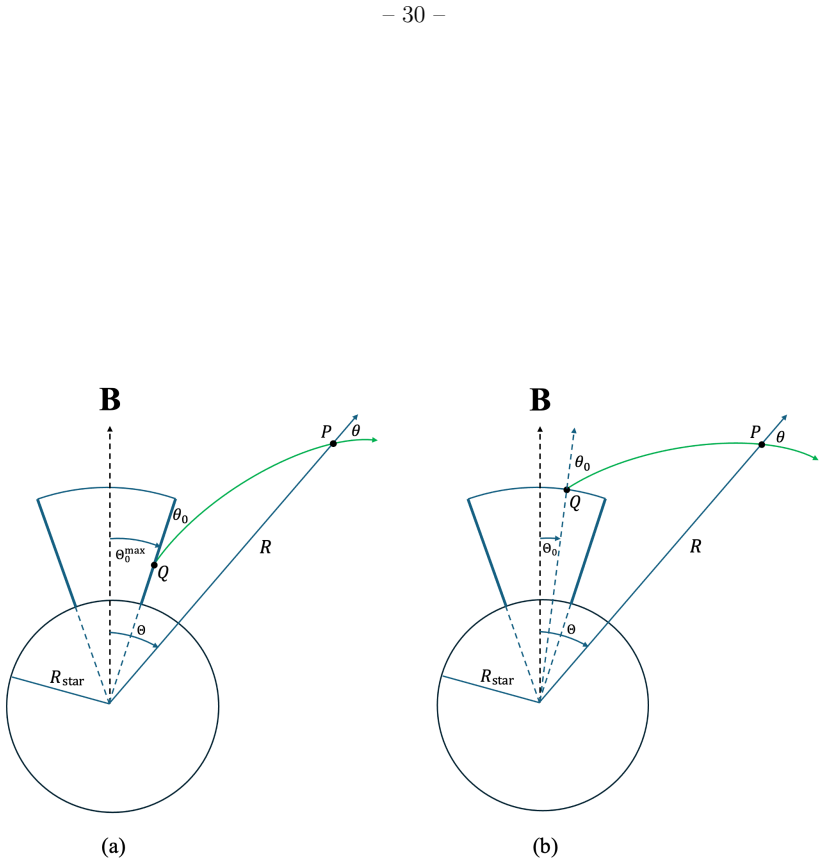
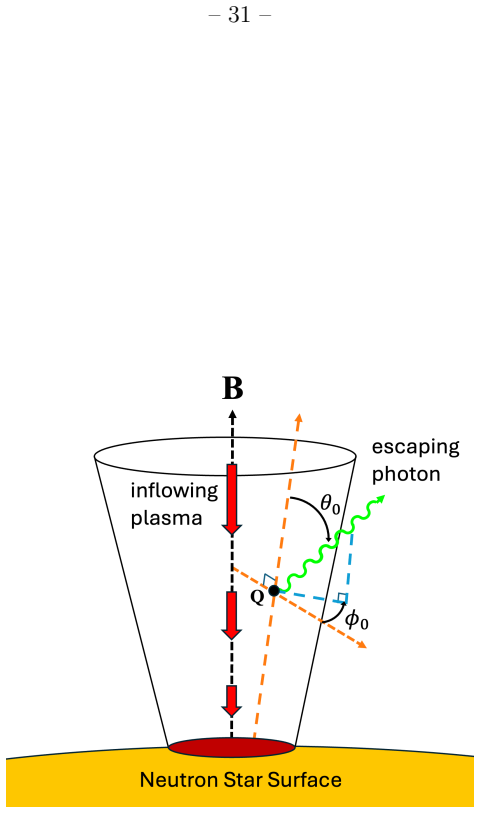
The model provides for the first time a simultaneous calculation of both the phase-averaged spectrum and the pulse profile for an accretion-powered X-ray pulsar. The X-ray continuum spectrum is calculated using the analytical model of Becker & Wolff (2022), which assumes a conical accretion column geometry. The trajectory of the radiation escaping from the two columns is tracked through the curved spacetime using the Schwarzschild metric. The angular distribution of the radiation escaping from the surfaces of the columns is represented using a set of laser-like emission directions, with associated amplitudes called weight coefficients that each contribute sub-profiles to the observed pulse p
What carries the argument
A set of laser-like emission directions with weight coefficients that act as basis functions to fit the observed pulse profile and determine the beaming pattern.
If this is right
- Allows simultaneous fitting of spectrum and pulse profile to determine physical parameters like accretion rate and magnetic field.
- Yields the beaming pattern of emission from the accretion columns.
- Enables determination of the rotational inclination angle and latitudes of the magnetic poles.
Where Pith is reading between the lines
- The approach could be tested on other X-ray pulsars to see if consistent beaming patterns emerge.
- Extensions might incorporate general relativistic effects beyond Schwarzschild or different column geometries.
Load-bearing premise
The angular distribution of radiation escaping from the column surfaces can be adequately represented by a discrete set of laser-like emission directions whose amplitudes are determined by fitting the observed pulse profile.
What would settle it
A failure to achieve a consistent fit to both the phase-averaged spectrum and the pulse profile for Her X-1 using NuSTAR data would indicate the model does not hold.
Figures






read the original abstract
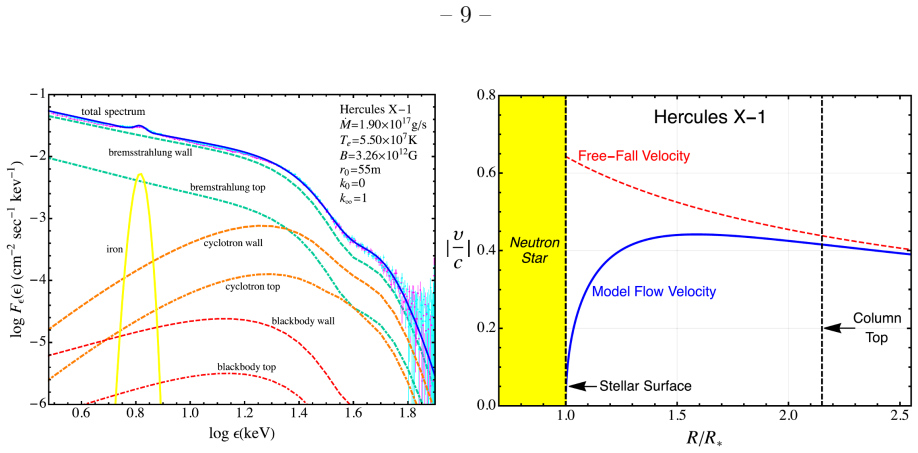
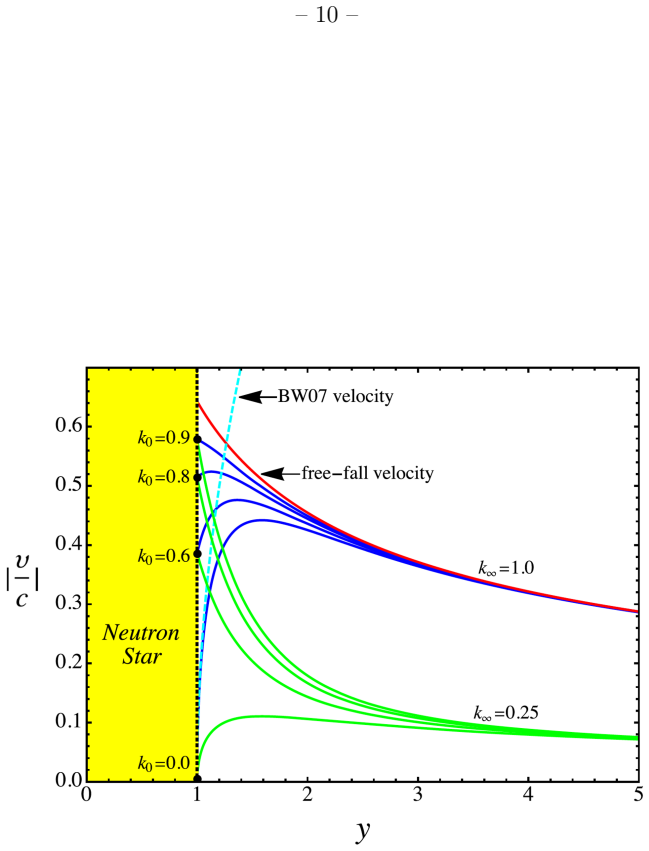
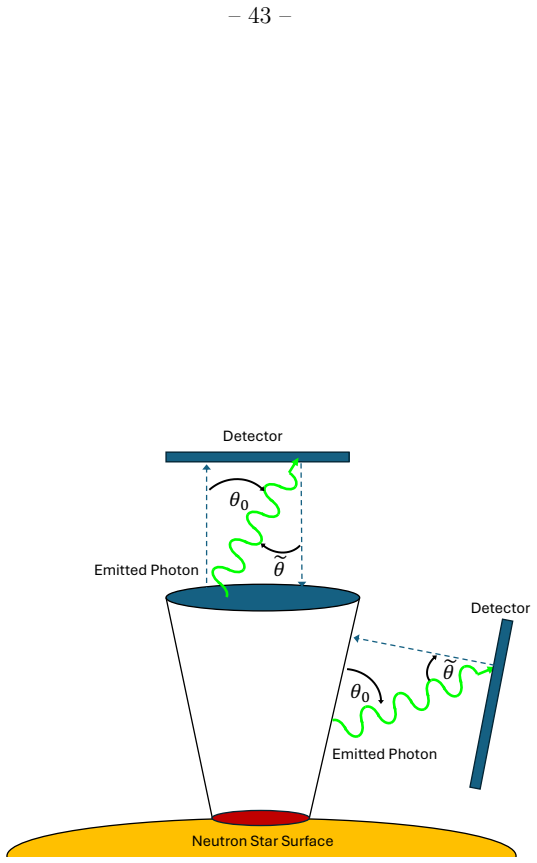
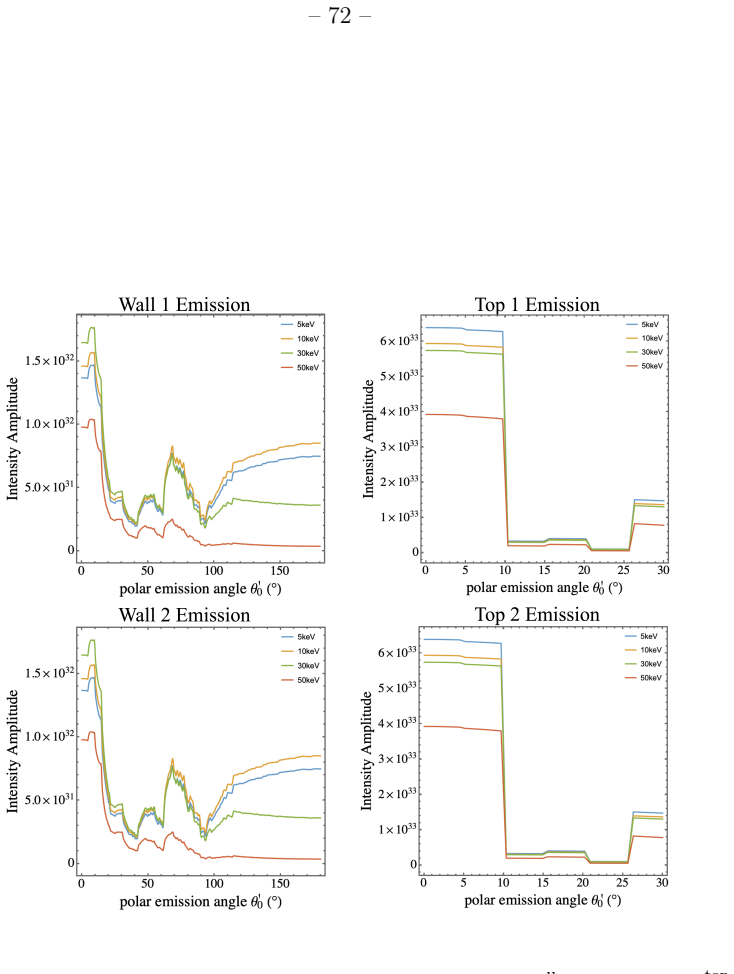
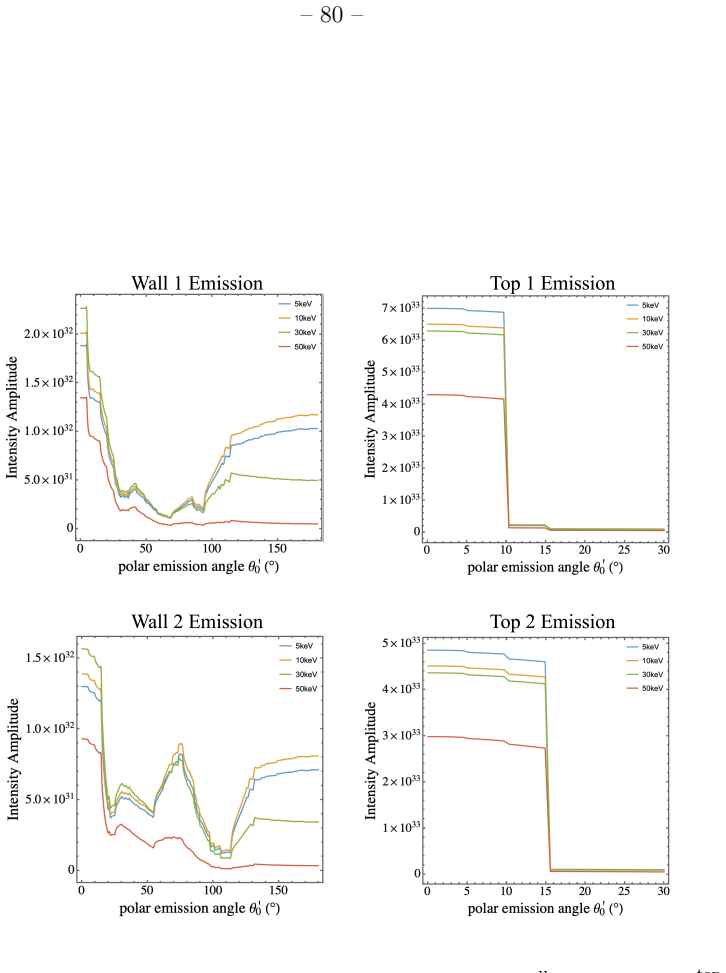
We develop a new analytical model describing the radiative and dynamical structure of an accretion-powered X-ray pulsar, including relativistic effects and a detailed representation of the rotational and magnetic geometry of the neutron star and the two accretion columns. The model provides for the first time a simultaneous calculation of both the phase-averaged spectrum and the pulse profile for an accretion-powered X-ray pulsar. The X-ray continuum spectrum is calculated using the analytical model of Becker & Wolff (2022), which assumes a conical accretion column geometry. The trajectory of the radiation escaping from the two columns is tracked through the curved spacetime using the Schwarzschild metric. The angular distribution of the radiation escaping from the surfaces of the columns (the beaming pattern) is represented using a set of "laser-like" emission directions, with associated amplitudes, called weight coefficients, that each contribute "sub-profiles" to the observed pulse profile. The sub-profiles provide basis functions that are used to fit the observed pulse profile. This yields a set of weight coefficients that determine the beaming pattern of the emission from the accretion column. We use the new model to analyze NuSTAR data for Her X-1, allowing the determination of the temperature, accretion rate, and magnetic field strength, as well as the rotational inclination angle and the latitudes of the two magnetic poles. The method also yields the beaming pattern of the emission, hence providing for the first time a self-consistent phenomenological description of the physical and radiative structures of the two accretion columns.
Editorial analysis
A structured set of objections, weighed in public.
Referee Report
Summary. The manuscript develops a new analytical model for accretion-powered X-ray pulsars that combines the Becker & Wolff (2022) conical-column continuum spectrum with Schwarzschild ray-tracing of radiation from two accretion columns. The angular distribution of escaping radiation is represented by a discrete set of laser-like emission directions whose amplitudes (weight coefficients) are obtained by fitting the observed pulse profile; these weights then define the beaming pattern used to compute the phase-averaged spectrum. The model is applied to NuSTAR data for Her X-1 to constrain temperature, accretion rate, magnetic field, inclination, and pole latitudes while also yielding the beaming pattern.
Significance. If the central construction holds, the work supplies a practical phenomenological framework for jointly fitting phase-averaged spectra and pulse profiles in X-ray pulsars, enabling simultaneous extraction of physical and geometric parameters from a single dataset. The reuse of an established spectral model together with an empirical beaming decomposition offers a computationally efficient tool, though its physical content is limited by the data-driven nature of the angular distribution.
major comments (2)
- [Abstract] Abstract: The assertion that the model provides 'for the first time a simultaneous calculation of both the phase-averaged spectrum and the pulse profile' is not supported by the described procedure. The spectrum is taken directly from the prior Becker & Wolff (2022) model, while the beaming pattern is constructed by fitting weight coefficients to the observed pulse profile; the two are then combined after the fit. This renders the simultaneity empirical rather than the output of a single physical calculation of column structure and radiative transfer.
- [Abstract] Abstract (description of beaming pattern): The representation of the angular distribution via a discrete set of laser-like emission directions whose amplitudes are fitted to the pulse profile is load-bearing for the claimed self-consistency. No derivation from the radiative transfer inside the column is provided; the weights are purely phenomenological basis-function coefficients. This choice must be justified against continuous beaming patterns expected from Comptonization and cyclotron processes, or the claim of a 'self-consistent phenomenological description' of the column physics cannot be maintained.
minor comments (2)
- [Methods] The manuscript should clarify in the methods section whether the weight coefficients are allowed to vary with energy or are assumed energy-independent, as this directly affects consistency between the fitted profile and the broadband spectrum.
- Notation for the weight coefficients and the discrete directions should be introduced with explicit symbols and an equation showing how the sub-profiles are summed to form the total pulse profile.
Simulated Author's Rebuttal
We thank the referee for their careful and constructive review of our manuscript. We address the major comments point by point below.
read point-by-point responses
-
Referee: [Abstract] Abstract: The assertion that the model provides 'for the first time a simultaneous calculation of both the phase-averaged spectrum and the pulse profile' is not supported by the described procedure. The spectrum is taken directly from the prior Becker & Wolff (2022) model, while the beaming pattern is constructed by fitting weight coefficients to the observed pulse profile; the two are then combined after the fit. This renders the simultaneity empirical rather than the output of a single physical calculation of column structure and radiative transfer.
Authors: We agree that the energy-dependent continuum is computed using the established Becker & Wolff (2022) analytical solution for radiative transfer in the conical column. The simultaneity claimed in the model refers to the joint use of a single set of physical parameters (temperature, accretion rate, magnetic field, inclination, and pole latitudes) together with a beaming pattern that is determined from the pulse-profile fit and then applied within the same Schwarzschild ray-tracing framework to produce the phase-averaged spectrum. This ensures consistency between the two observables. We acknowledge that the procedure is not a fully first-principles calculation of column structure and transfer; the beaming is constrained empirically. We will revise the abstract to clarify this distinction and remove any implication of a single unified physical calculation. revision: yes
-
Referee: [Abstract] Abstract (description of beaming pattern): The representation of the angular distribution via a discrete set of laser-like emission directions whose amplitudes are fitted to the pulse profile is load-bearing for the claimed self-consistency. No derivation from the radiative transfer inside the column is provided; the weights are purely phenomenological basis-function coefficients. This choice must be justified against continuous beaming patterns expected from Comptonization and cyclotron processes, or the claim of a 'self-consistent phenomenological description' of the column physics cannot be maintained.
Authors: The discrete laser-like directions constitute a flexible, data-driven basis chosen for computational efficiency, allowing the observed pulse profile to determine the effective angular distribution without presupposing a functional form. The Becker & Wolff (2022) model already incorporates the effects of Comptonization and cyclotron resonant scattering into the continuum spectrum; the discrete weights supply an additional phenomenological layer for the angular dependence. We recognize that a direct derivation from the internal transfer solution would be preferable for stronger physical grounding. We will therefore add a dedicated paragraph in the revised manuscript that justifies the discrete approximation by comparing it to the continuous beaming patterns expected from theory (pencil and fan beams) and demonstrates that the fitted weights can reproduce the dominant features of those patterns for the purposes of this phenomenological framework. revision: partial
Circularity Check
Beaming pattern obtained by fitting discrete laser-like weights to observed pulse profile; spectrum re-uses self-cited 2022 model
specific steps
-
fitted input called prediction
[Abstract]
"The angular distribution of the radiation escaping from the surfaces of the columns (the beaming pattern) is represented using a set of "laser-like" emission directions, with associated amplitudes, called weight coefficients, that each contribute "sub-profiles" to the observed pulse profile. The sub-profiles provide basis functions that are used to fit the observed pulse profile. This yields a set of weight coefficients that determine the beaming pattern of the emission from the accretion column."
The beaming pattern supplied to the spectral calculation is produced by fitting the weight coefficients directly to the observed pulse profile; the resulting pattern is therefore an empirical decomposition of the data rather than an output of the column's radiative or dynamical structure.
-
self citation load bearing
[Abstract]
"The X-ray continuum spectrum is calculated using the analytical model of Becker & Wolff (2022), which assumes a conical accretion column geometry."
The spectral component that is asserted to be calculated simultaneously with the pulse profile is imported wholesale from a prior paper whose lead author overlaps with the present work; the new model's claim of a self-consistent description therefore rests on that external (self-cited) result plus the fitted beaming weights.
full rationale
The paper claims a simultaneous calculation of spectrum and pulse profile from the accretion column structure. However, the angular beaming is represented as a discrete set of laser-like directions whose amplitudes are fitted as weight coefficients to the observed pulse profile data; those fitted weights then supply the beaming for the phase-averaged spectrum. The continuum spectrum itself is taken directly from the Becker & Wolff (2022) model by overlapping authors. This reduces the claimed simultaneity to a data-driven decomposition plus prior-model reuse rather than an independent derivation from radiative transfer or dynamics.
Axiom & Free-Parameter Ledger
free parameters (2)
- weight coefficients for laser-like directions
- temperature, accretion rate, magnetic field strength, inclination, pole latitudes
axioms (2)
- domain assumption Conical accretion column geometry
- standard math Schwarzschild metric governs photon trajectories
invented entities (1)
-
laser-like emission directions with weight coefficients
no independent evidence
Reference graph
Works this paper leans on
-
[1]
Accretion Disks in Stellar X-Ray Sources. , keywords =. doi:10.1007/BF00177448 , adsurl =
-
[2]
Jan Skov Pedersen , abstract =. Analysis of small-angle scattering data from colloids and polymer solutions: modeling and least-squares fitting , journal =. 1997 , issn =. doi:https://doi.org/10.1016/S0001-8686(97)00312-6 , url =
-
[3]
Dos and don'ts of reduced chi-squared
Dos and don'ts of reduced chi-squared. arXiv e-prints , keywords =. doi:10.48550/arXiv.1012.3754 , archivePrefix =. 1012.3754 , primaryClass =
work page internal anchor Pith review Pith/arXiv arXiv doi:10.48550/arxiv.1012.3754
-
[4]
Energy-resolved pulse profiles of accreting pulsars: Diagnostic tools for spectral features. , keywords =. doi:10.1051/0004-6361/202347062 , archivePrefix =. 2308.03395 , primaryClass =
-
[5]
Implications of Gamma-Ray Transparency Constraints in Blazars: Minimum Distances and Gamma-Ray Collimation. , keywords =. doi:10.1086/176372 , archivePrefix =. astro-ph/9608095 , primaryClass =
work page internal anchor Pith review Pith/arXiv arXiv doi:10.1086/176372
-
[6]
Pair production and gamma-ray luminosities in hot accretion disks. , keywords =. doi:10.1086/157786 , adsurl =
-
[7]
The high-energy spectrum of hot accretion disks. , keywords =. doi:10.1086/161246 , adsurl =
-
[8]
Physical Review , year = 1967, month = mar, volume =
Pair Production in Photon-Photon Collisions. Physical Review , year = 1967, month = mar, volume =. doi:10.1103/PhysRev.155.1404 , adsurl =
-
[9]
Salmi, Tuomo H.\ H. J. and Dorsman, Bas and Watts, Anna L. and Bobrikova, Anna and Di Marco, Alessandro and Loktev, Vladislav and Papitto, Alessandro and Pilia, Maura and Poutanen, Juri and Rankin, John , title =. Monthly Notices of the Royal Astronomical Society , volume =. 2025 , doi =
2025
-
[10]
A parameter survey of neutron star accretion column simulations. , keywords =. doi:10.1093/mnras/staf986 , archivePrefix =. 2506.02288 , primaryClass =
-
[11]
Radiative relativistic magnetohydrodynamic simulations of neutron star column accretion in Cartesian geometry. , keywords =. doi:10.1093/mnras/stac1815 , archivePrefix =. 2206.13759 , primaryClass =
-
[12]
Monthly Notices of the Royal Astronomical Society , volume =
M.\ I.\ Gornostaev , title =. Monthly Notices of the Royal Astronomical Society , volume =. 2021 , doi =
2021
-
[13]
The Astrophysical Journal , year =
Svensson, Roland , title =. The Astrophysical Journal , year =
-
[14]
Mushtukov, A. A. and Ingram, A. and Suleimanov, V. F. and DiLullo, N. and Middleton, M. and Tsygankov, S. S. and van der Klis, M. and Portegies Zwart, S. , title =. Monthly Notices of the Royal Astronomical Society , year =
-
[15]
Monthly Notices of the Royal Astronomical Society , year =
Abolmasov, Pavel and Lipunova, Galina , title =. Monthly Notices of the Royal Astronomical Society , year =
-
[16]
Monthly Notices of the Royal Astronomical Society , year =
Zhang, Lizhong and Blaes, Omer and Jiang, Yan-Fei , title =. Monthly Notices of the Royal Astronomical Society , year =
-
[17]
Mushtukov, Alexander A. and Ognev, Igor S. and Nagirner, Dmitrij I. , title =. Monthly Notices of the Royal Astronomical Society: Letters , volume =. 2019 , month =. doi:10.1093/mnrasl/slz047 , eprint =
-
[18]
Klein and S.\ M.\ Lea , title =
Jonathan Arons and Richard I. Klein and S.\ M.\ Lea , title =. The Astrophysical Journal , volume =. 1987 , doi =
1987
-
[19]
and Mushtukov, Alexander A
Suleimanov, Valery F. and Mushtukov, Alexander A. and Ognev, Igor and Doroshenko, Victor A. and Werner, Klaus , title =. Monthly Notices of the Royal Astronomical Society , year =
-
[20]
Spectral and timing properties of the accreting millisecond X-ray pulsar IGR J17498‑2921 during its 2023 outburst. , keywords =. doi:10.1051/0004-6361/202451703 , archivePrefix =. 2408.06895 , primaryClass =
-
[21]
Evidence for strong cyclotron line emission in the hard X-ray spectrum of Hercules X-1. , keywords =. doi:10.1086/182617 , adsurl =
-
[22]
Soviet Astronomy Letters , year = 1982, month = jun, volume =
Comptonization in a Radiation Dominated Shock and the Spectra of X-Ray Pulsars. Soviet Astronomy Letters , year = 1982, month = jun, volume =
1982
-
[23]
The hard X-ray emission of X Per
The hard X-ray emission of X Persei. , keywords =. doi:10.1051/0004-6361/201218878 , archivePrefix =. 1202.6271 , primaryClass =
work page internal anchor Pith review Pith/arXiv arXiv doi:10.1051/0004-6361/201218878
-
[24]
A Self-consistent Model for the Formation of Relativistic Outflows in Advection-dominated Accretion Disks with Shocks. , keywords =. doi:10.1086/427075 , archivePrefix =. astro-ph/0411801 , primaryClass =
work page internal anchor Pith review Pith/arXiv arXiv doi:10.1086/427075
-
[25]
Accretion Powered Pulsars: Continuum Spectra and Light Curves of Settling Accretion Mounds. , keywords =. doi:10.1086/169653 , adsurl =
-
[26]
Pulse-phase spectroscopy of SMC X-1 with Chandra and XMM-Newton: reprocessing by a precessing disk?
Pulse-Phase Spectroscopy of SMC X-1 with Chandra and XMM-Newton: Reprocessing by a Precessing Disk?. , keywords =. doi:10.1086/491596 , archivePrefix =. astro-ph/0506438 , primaryClass =
work page internal anchor Pith review Pith/arXiv arXiv doi:10.1086/491596
-
[27]
The Deceleration of Infalling Plasma in Magnetized Neutron Star Atmospheres: Nonisothermal Atmospheres. , keywords =. doi:10.1086/168020 , adsurl =
-
[28]
Low-luminosity accretion onto magnetized neutron stars. , keywords =. doi:10.1086/160028 , adsurl =
-
[29]
Physics of Fully Ionized Gases
-
[30]
The evolution of a test particle distribution in a strongly magnetized plasma. Plasma Physics , keywords =. doi:10.1088/0032-1028/24/4/001 , adsurl =
-
[31]
X-ray spectroscopy of X-ray binaries
-
[32]
X-ray emission from magnetized neutron star atmospheres at low mass-accretion rates. I. Phase-averaged spectrum. , keywords =. doi:10.1051/0004-6361/202040228 , archivePrefix =. 2104.06802 , primaryClass =
-
[33]
The critical accretion luminosity for magnetized neutron stars
The critical accretion luminosity for magnetized neutron stars. , keywords =. doi:10.1093/mnras/stu2484 , archivePrefix =. 1409.6457 , primaryClass =
work page internal anchor Pith review Pith/arXiv arXiv doi:10.1093/mnras/stu2484
-
[34]
arXiv e-prints , keywords =
Accreting strongly magnetised neutron stars: X-ray Pulsars. arXiv e-prints , keywords =
-
[35]
Pulse-amplitude-resolved spectroscopy of bright accreting pulsars: indication of two accretion regimes. , keywords =. doi:10.1051/0004-6361/201116800 , archivePrefix =. 1107.2202 , primaryClass =
work page internal anchor Pith review Pith/arXiv arXiv doi:10.1051/0004-6361/201116800
-
[36]
Spectral formation in accreting X-ray pulsars: bimodal variation of the cyclotron energy with luminosity. , keywords =. doi:10.1051/0004-6361/201219065 , archivePrefix =. 1205.5316 , primaryClass =
work page internal anchor Pith review Pith/arXiv arXiv doi:10.1051/0004-6361/201219065
-
[37]
Gravitational Bending of Light Near Compact Objects
Gravitational Bending of Light Near Compact Objects. , keywords =. doi:10.1086/339511 , archivePrefix =. astro-ph/0201117 , primaryClass =
work page internal anchor Pith review Pith/arXiv arXiv doi:10.1086/339511
-
[38]
The Smooth Cyclotron Line in Her X-1 as Seen with Nuclear Spectroscopic Telescope Array. , keywords =. doi:10.1088/0004-637X/779/1/69 , adsurl =
-
[39]
Fitting strategies of accretion column models and application to the broadband spectrum of Cen X-3. , keywords =. doi:10.1051/0004-6361/202140582 , archivePrefix =. 2109.14565 , primaryClass =
-
[40]
Understanding the nature of the intriguing source X Persei: A deep look with a Suzaku observation
Understanding the nature of the intriguing source X Persei: a deep look with a Suzaku observation. , keywords =. doi:10.1093/mnras/stx1281 , archivePrefix =. 1705.07568 , primaryClass =
work page internal anchor Pith review Pith/arXiv arXiv doi:10.1093/mnras/stx1281
-
[41]
An application of the Ghosh & Lamb model to the accretion powered X-ray pulsar X Persei
An application of the Ghosh & Lamb model to the accretion-powered X-ray pulsar X Persei. , keywords =. doi:10.1093/pasj/psy088 , archivePrefix =. 1807.06252 , primaryClass =
work page internal anchor Pith review Pith/arXiv arXiv doi:10.1093/pasj/psy088
-
[42]
Discovery of a Cyclotron Resonant Scattering Feature in the RXTE Spectrum of 4U 0352+309 (X Per)
Discovery of a Cyclotron Resonant Scattering Feature in the Rossi X-Ray Timing Explorer Spectrum of 4U 0352+309 (X Persei). , keywords =. doi:10.1086/320565 , archivePrefix =. astro-ph/0101110 , primaryClass =
work page internal anchor Pith review Pith/arXiv arXiv doi:10.1086/320565
-
[43]
The Two-Component X-Ray Broadband Spectrum of X Persei Observed by BeppoSAX. , keywords =. doi:10.1086/306525 , adsurl =
-
[44]
Accretion by rotating magnetic neutron stars. III. Accretion torques and period changes in pulsating X-ray sources. , keywords =. doi:10.1086/157498 , adsurl =
-
[45]
XMM-Newton observation of the persistent Be/neutron-star system X Persei at a high-luminosity level
XMM-Newton observation of the persistent Be/neutron star system X Persei at a high-luminosity level. , keywords =. doi:10.1051/0004-6361:20077970 , archivePrefix =. 0706.3972 , primaryClass =
work page internal anchor Pith review Pith/arXiv arXiv doi:10.1051/0004-6361:20077970
-
[46]
Analyzing X-Ray Pulsar Profiles: Geometry and Beam Pattern of Her X-1
Analyzing X-Ray Pulsar Profiles: Geometry and Beam Pattern of Hercules X-1. , keywords =. doi:10.1086/308308 , archivePrefix =. astro-ph/9909449 , primaryClass =
work page internal anchor Pith review Pith/arXiv arXiv doi:10.1086/308308
-
[47]
Constraints on Neutron Star Properties from X-ray Observations of Millisecond Pulsars
Constraints on Neutron Star Properties from X-Ray Observations of Millisecond Pulsars. , keywords =. doi:10.1086/520793 , archivePrefix =. astro-ph/0612791 , primaryClass =
work page internal anchor Pith review Pith/arXiv arXiv doi:10.1086/520793
-
[48]
43rd COSPAR Scientific Assembly
New realistic models for the X-ray polarization of neutron stars. 43rd COSPAR Scientific Assembly. Held 28 January - 4 February , year = 2021, volume =
2021
-
[49]
Handbook of mathematical functions : with formulas, graphs, and mathematical tables
-
[50]
arXiv e-prints , keywords =
Angling for x-ray pulsar geometry with polarimetry. arXiv e-prints , keywords =
-
[51]
Polarization of accreting X-ray pulsars. I. A new model. , keywords =. doi:10.1093/mnras/staa3428 , archivePrefix =. 2009.00631 , primaryClass =
-
[52]
Polarization of accreting X-ray pulsars - II. Hercules X-1. , keywords =. doi:10.1093/mnras/staa3429 , archivePrefix =. 2009.00634 , primaryClass =
-
[53]
Gravitational Light Bending near Neutron Stars. I. Emission from Columns and Hot Spots. , keywords =. doi:10.1086/165996 , adsurl =
-
[54]
Radiation Gas Dynamics of Polar CAP Accretion onto Magnetized Neutron Stars: Basic Theory. , keywords =. doi:10.1086/164912 , adsurl =
-
[55]
Cross-sections of relativistic quantum-mechanical versus those of classical magnetic resonant scattering. , keywords =. doi:10.1051/0004-6361/202039268 , archivePrefix =. 2108.07568 , primaryClass =
-
[56]
Exploring Waveform Variations among Neutron Star Ray-tracing Codes for Complex Emission Geometries. , keywords =. doi:10.3847/1538-4357/ad7255 , archivePrefix =. 2406.07285 , primaryClass =
-
[57]
, title =
Wolfram Research, Inc. , title =. 2025 , howpublished =
2025
-
[58]
Poutanen, Juri and Beloborodov, Andrei M. , title =. Monthly Notices of the Royal Astronomical Society , volume =. 2006 , doi =. astro-ph/0608663 , archivePrefix =
Pith/arXiv arXiv 2006
-
[59]
Katz, J. I. , title =. Nature , volume =. 1973 , doi =
1973
-
[60]
and Boynton, P
Gerend, D. and Boynton, P. E. , title =. Astrophysical Journal , volume =. 1976 , doi =
1976
-
[61]
and Klochkov, D
Staubert, R. and Klochkov, D. and Postnov, K. and Wilms, J. and Rothschild, R. E. and Shakura, N. I. and Kretschmar, P. and Caballero, I. and Wilson-Hodge, C. and Pietsch, W. , title =. Astronomy & Astrophysics , volume =. 2009 , doi =
2009
-
[62]
Leahy, D. , title =. Experimental Astronomy , year =. doi:10.1007/s10686-025-09977-5 , note =
-
[63]
Constraining the magnetic field geometry of the millisecond pulsar PSR J0030+0451 from joint radio, thermal X-ray, and -ray emission. , keywords =. doi:10.1051/0004-6361/202346913 , archivePrefix =. 2309.03620 , primaryClass =
-
[64]
Estimating Distances from Parallaxes. V. Geometric and Photogeometric Distances to 1.47 Billion Stars in Gaia Early Data Release 3. , keywords =. doi:10.3847/1538-3881/abd806 , archivePrefix =. 2012.05220 , primaryClass =
work page internal anchor Pith review Pith/arXiv arXiv doi:10.3847/1538-3881/abd806 2012
-
[65]
, year = 1997, month = jun, volume =
A new mass estimate for Hercules X-1. , year = 1997, month = jun, volume =. doi:10.1093/mnras/288.1.43 , adsurl =
-
[66]
, year = 1979, month = may, volume =
Compton and Thomson scattering in strong magnetic fields. , year = 1979, month = may, volume =. doi:10.1103/PhysRevD.19.2868 , adsurl =
-
[67]
The Nuclear Spectroscopic Telescope Array (NuSTAR) Mission
The Nuclear Spectroscopic Telescope Array (NuSTAR) High-energy X-Ray Mission. , keywords =. doi:10.1088/0004-637X/770/2/103 , archivePrefix =. 1301.7307 , primaryClass =
work page internal anchor Pith review Pith/arXiv arXiv doi:10.1088/0004-637x/770/2/103
-
[68]
, keywords =
Radiative transfer in a strong magnetic field and accreting X-ray pulsars. , keywords =
-
[69]
The limiting luminosity of accreting neutron stars with magnetic fields. , keywords =. doi:10.1093/mnras/175.2.395 , adsurl =
-
[70]
First-Order Fermi Acceleration in Spherically Symmetric Flows: Solutions Including Quadratic Losses. , keywords =. doi:10.1086/171769 , adsurl =
-
[71]
Dynamical Structure of Radiation-dominated Pulsar Accretion Shocks. , keywords =. doi:10.1086/305568 , adsurl =
-
[72]
2003, MNRAS, 341, 1179, doi: 10.1046/j.1365-8711.2003.06473.x
Exact solution for the Green's function describing time-dependent thermal Comptonization. , keywords =. doi:10.1046/j.1365-8711.2003.06661.x , archivePrefix =. astro-ph/0303629 , primaryClass =
-
[73]
Comptonization in Supercritical Winds. I. Spectral Evolution. , keywords =. doi:10.1086/164706 , adsurl =
-
[74]
Comptonization in Supercritical Winds. II. Dynamics and Observational Diagnostics. , keywords =. doi:10.1086/164707 , adsurl =
-
[75]
Spectral Formation in X-Ray Pulsar Accretion Columns
Spectral Formation in X-Ray Pulsar Accretion Columns. , keywords =. doi:10.1086/428927 , archivePrefix =. astro-ph/0501434 , primaryClass =
work page internal anchor Pith review Pith/arXiv arXiv doi:10.1086/428927
-
[76]
Spectral Formation in X-Ray Pulsars: Bulk Comptonization in the Accretion Shock
Spectral Formation in X-Ray Pulsars: Bulk Comptonization in the Accretion Shock. , keywords =. doi:10.1086/431720 , archivePrefix =. astro-ph/0505129 , primaryClass =
work page internal anchor Pith review Pith/arXiv arXiv doi:10.1086/431720
-
[77]
Thermal and Bulk Comptonization in Accretion-Powered X-Ray Pulsars
Thermal and Bulk Comptonization in Accretion-powered X-Ray Pulsars. , keywords =. doi:10.1086/509108 , archivePrefix =. astro-ph/0609035 , primaryClass =
work page internal anchor Pith review Pith/arXiv arXiv doi:10.1086/509108
-
[78]
A Generalized Analytical Model for Thermal and Bulk Comptonization in Accretion-powered X-Ray Pulsars. , keywords =. doi:10.3847/1538-4357/ac8d95 , archivePrefix =. 2211.13894 , primaryClass =
-
[79]
Compton scattering in a converging fluid flow. I - The transfer equation. II - Radiation-dominated shock. , keywords =. doi:10.1093/mnras/194.4.1033 , adsurl =
-
[80]
, year = 1981, month = mar, volume =
Compton Scattering in a Converging Fluid Flow - Part Two - Radiation Dominated Shock. , year = 1981, month = mar, volume =. doi:10.1093/mnras/194.4.1041 , adsurl =
discussion (0)
Sign in with ORCID, Apple, or X to comment. Anyone can read and Pith papers without signing in.