pith.machine review for the scientific record.sign in
astro-ph.HE
High Energy Astrophysical Phenomena
Cosmic ray production, acceleration, propagation, detection. Gamma ray astronomy and bursts, X-rays, charged particles, supernovae and other explosive phenomena, stellar remnants and accretion systems, jets, microquasars, neutron stars, pulsars, black holes
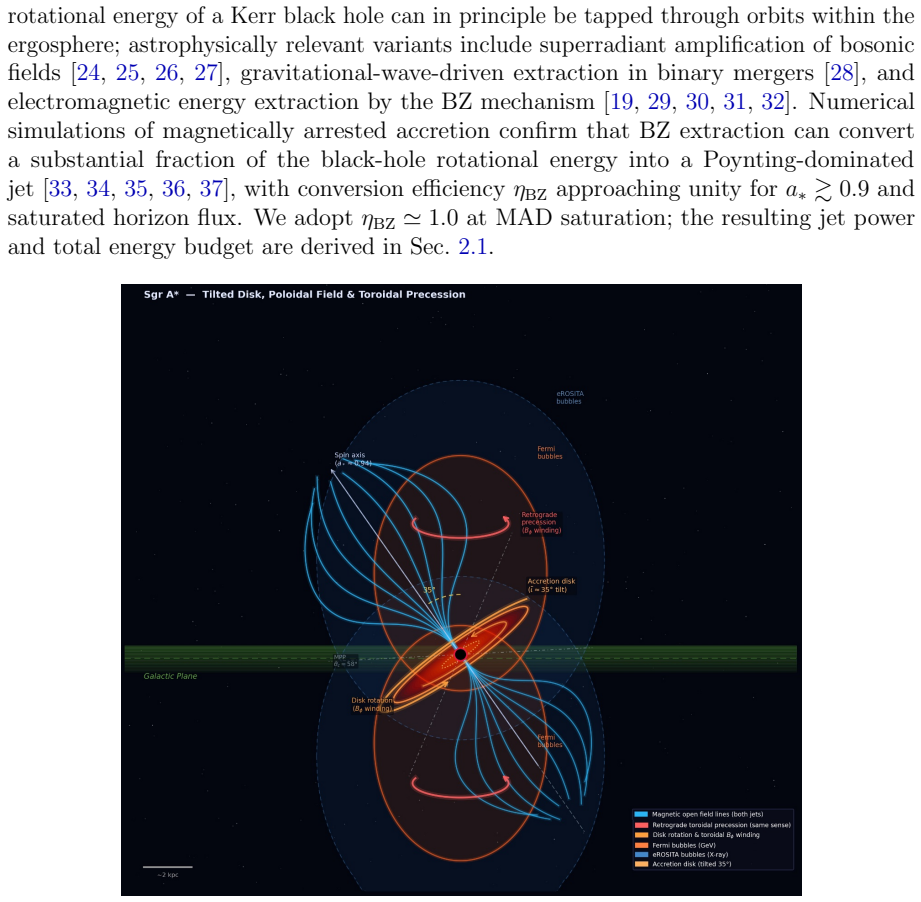
The Galactic Centre gamma-ray excess (GCE) - an anomalous ~ 2-5 GeV Fermi-LAT signal around SgrA$^{\star}$ - has remained without a consensus interpretation for more than fifteen years. Dark-matter annihilation and unresolved millisecond-pulsar populations remain the leading candidates, yet neither incorporates the past activity of SgrA$^{\star}$ recorded by the Fermi and eROSITA bubbles (FEB). We propose a unified scenario in which both the GCE and the FEB are fossil imprints of a single past episode of SgrA$^{\star}$ activity: a precessing parabolic Blandford-Znajek jet launched from a tilted, magnetically arrested disc during a ~7.5 Myr active phase ending ~ 2.6 Myr ago. The jet both inflated the kpc-scale FEB and injected hadronic cosmic rays contributing to the GCE flux. The model rests on three independently motivated inputs: the EHT-proposed ~ $35^{\circ}$ tilt of the SgrA$^{\star}$ spin axis from the Galactic rotation axis, Lense-Thirring precession of the disc through ~5 azimuthal cycles during the active phase, and a two-zone cosmic-ray transport prescription through the CMZ and bulge with standard inner-Galaxy diffusion coefficients. Internal consistency is verified by checking that the proton Larmor radius confines cosmic rays to the jet column and that the gamma-ray optical depth toward the Galactic Centre is negligible. Comparison with current GCE observations yields a spin-dependent hadronic contribution: for the EHT-favoured SgrA$^{\star}$ spin a$^{\star}$ = 0.9, we find an irreducible hadronic floor of ~ 3-14% of the observed GCE surface brightness across the inner ten degrees, highlighting a previously unexplored component relevant for comprehensive models of the GCE.
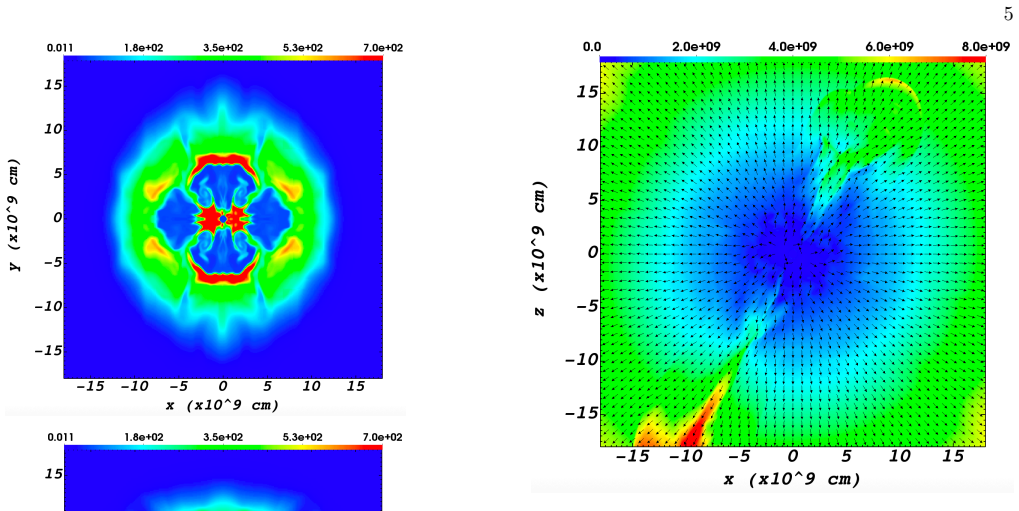
We hydrodynamically simulate a core-collapse supernova (CCSN) explosion by launching three pairs of jets in the framework of the jittering-jets explosion mechanism (JJEM), and reproduce a morphology of two opposite circum-jet rings and a bar of dense gas perpendicular to the rings' axis, resembling these morphological features in the CCSN remnant SNR G11.2-0.3. The first pair of wide jets is very energetic; it triggers the explosion and inflates two bubbles that compress the material in an expanding shell. The bubbles also compress material in a plane perpendicular to the jet axis. The second pair of wide jets removes material from this plane, beside along a bar that is on an axis perpendicular to the two pairs' axes. The jets of the third pair, now of narrow jets, penetrate the expanding shell and compress material to their sides to form two opposite rings. These morphological features are qualitatively similar to those observed in the point-symmetric CCSNN remnant G11.2-0.3. As competing theoretical CCSN explosion mechanisms cannot explain point-symmetric CCSN remnants, our study provides support for the claim that the JJEM is the primary explosion mechanism of CCSNe.
Fast radio bursts (FRBs) are intense, short-duration radio transients of mysterious origin. They have been detected across a wide range of frequencies from 110 MHz to 8 GHz. Their spectral properties, remaining poorly understood, are essential for understanding the intrinsic radiation mechanism and propagation effects. Here, we report the discovery of a periodic modulation in the central emission frequency of FRB 20240114A, based on more than one thousand bursts collected by an ultra-wideband receiving system. The burst central frequencies reveals a significant modulation with a period of $\sim 112$ days. The statistical significance of this detected periodicity exceeds $6\sigma$ for both the Lomb-Scargle and phase-folding methods. Within a single period, the central emission frequency exhibits a systematic drift from lower to higher values. We evaluate several physical mechanisms for this unique spectral evolution. The free-free absorption together with cyclotron resonant absorption in a binary system or free precession models could potentially explain such behavior. The discovery of this periodic frequency modulation unveils a new layer of complexity in the underlying radiation mechanism and propagation effect of FRBs.
HERON places phased arrays at high elevation for large horizon coverage of transient events such as gamma-ray bursts.
abstractclick to expand
The Hybrid Elevated Radio Observatory for Neutrinos, or HERON, is a newly proposed ultrahigh energy Earth-skimming tau neutrino detector. Ultrahigh energy tau neutrinos which skim the Earth may produce $\tau$-leptons which escape into the atmosphere and initiate up-going extensive air showers. The HERON concept consists of 24 compact phased radio arrays, embedded within a larger sparse array of 360 standalone antennas, distributed along a mountain range and designed to capture the radio emission of these up-going extensive air showers. Due to the high elevation observation sites and the long propagation length of radio, HERON achieves a very large instantaneous effective area towards the horizon, and thus excels at the detection of astrophysical transient events such as gamma-ray bursts. With the excellent pointing resolution offered by the sparse array, HERON would be capable of conducting UHE neutrino astronomy and could be incorporated into the broader network of multi-messenger instruments. Here, we detail the HERON concept and describe the science which can be accomplished with it.
Robust age measurements for isolated neutron stars (NSs) are not easily available. That is why, often the characteristic age $\tau_\mathrm{ch}=P/2\dot P$ is used as a proxy. Here $P$ is the spin period of the NS and $\dot P$ is the time derivative of $P$. Additional assumptions related to the initial properties and spin-down evolution are made to derive $\tau_\mathrm{ch}$. As a result, it is expected that $\tau_\mathrm{ch}$ is an upper limit for the real age $\tau_\mathrm{real}$. Recently, Chrimes et al. presented measurements of kinematic ages $\tau_\mathrm{kin}$ for several magnetars. Surprisingly, for the majority of these sources $\tau_\mathrm{kin}>\tau_\mathrm{ch}$. We present a simple model including a realistic approximation for the magnetic field decay in magnetars and a simple phenomenological description of the field re-emergence after an episode of fallback after the birth of a NS. We demonstrate that this simple model can explain the observed relation $\tau_\mathrm{kin}>\tau_\mathrm{ch}$ for realistic sets of parameters.
We carry out a search for high energy muon neutrino emission from the galaxy cluster Abell 119, motivated by a recent detection of GeV gamma rays from this cluster using the Fermi-LAT telescope, which hinted at a hadronic origin. For this purpose, we used the 10-year muon track data from 2008-2018, provided by the IceCube Collaboration and implement the unbinned maximum likelihood emission. We do not find any statistically significant excess and the test statistics is consistent with a null result. We then obtain upper limits (at 95\% confidence level) on the differential muon neutrino energy flux from this cluster, whose value is equal to $2.42 \times 10^{-10}~\mathrm{GeV}~\mathrm{cm}^{-2}~\mathrm{s}^{-1}~\mathrm{sr}^{-1}$ at 100 TeV. This limit is about 1.2 times lower than the predicted neutrino flux required to explain the hadronic origin of the galaxy cluster emission, thus marginally ruling it out. Therefore, additional data from future neutrino detectors should be able to definitively rule out a hadronic origin for the observed gamma-ray emission in Abell 119.
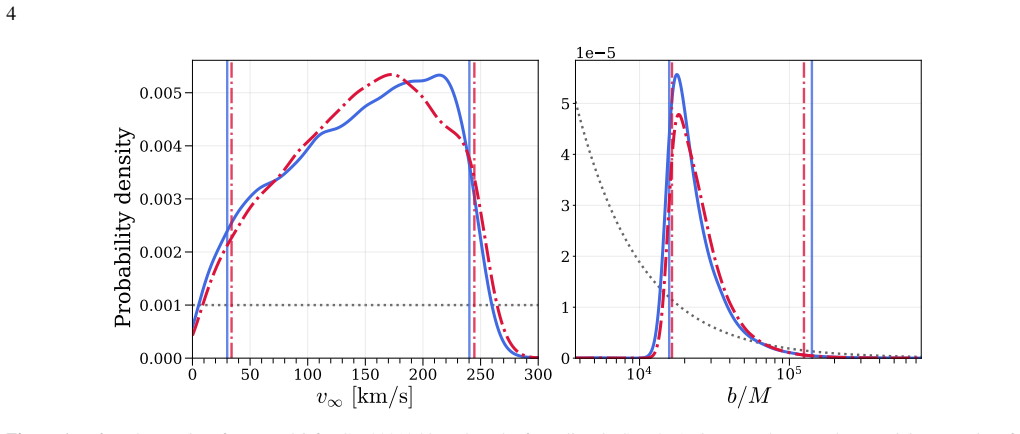
Dynamical capture in dense stellar environments is a promising channel for producing eccentric compact binary mergers. Although there have been no confident detections of eccentric mergers to date, a few candidates show indications of non-negligible in-band eccentricity upon re-analysis of the data. By assuming an observed eccentric event originates from a dynamical gravitational wave (GW) capture, we show that it is possible to identify the host environment using the eccentricity and mass posteriors. In particular, the eccentricity posterior can be mapped to posteriors on key capture parameters, such as the relative velocity at infinity and the impact parameter. By comparing these with the expected velocity distributions of different astrophysical environments, we can place constraints on the likely host. Assuming that it originated from a GW capture, we applied this framework to the neutron star-black hole merger GW200105. By comparing with the velocity dispersion distributions of neutron stars in the cores of globular clusters (GCs) and nuclear star clusters (NSCs), we find the probability that GW200105 merged in a GC (NSC) to be 29% (71%). As we anticipate detecting several eccentric mergers in the future, this method can provide a valuable astrophysical diagnostic of their host environments on a single-event basis; this can be straightforwardly generalized to a population of eccentric binaries. The formalism we develop is also applied to GW190521, but is less constraining for that event. Lastly, we infer a GW decay time from capture to merger of 11-156 days for GW200105.
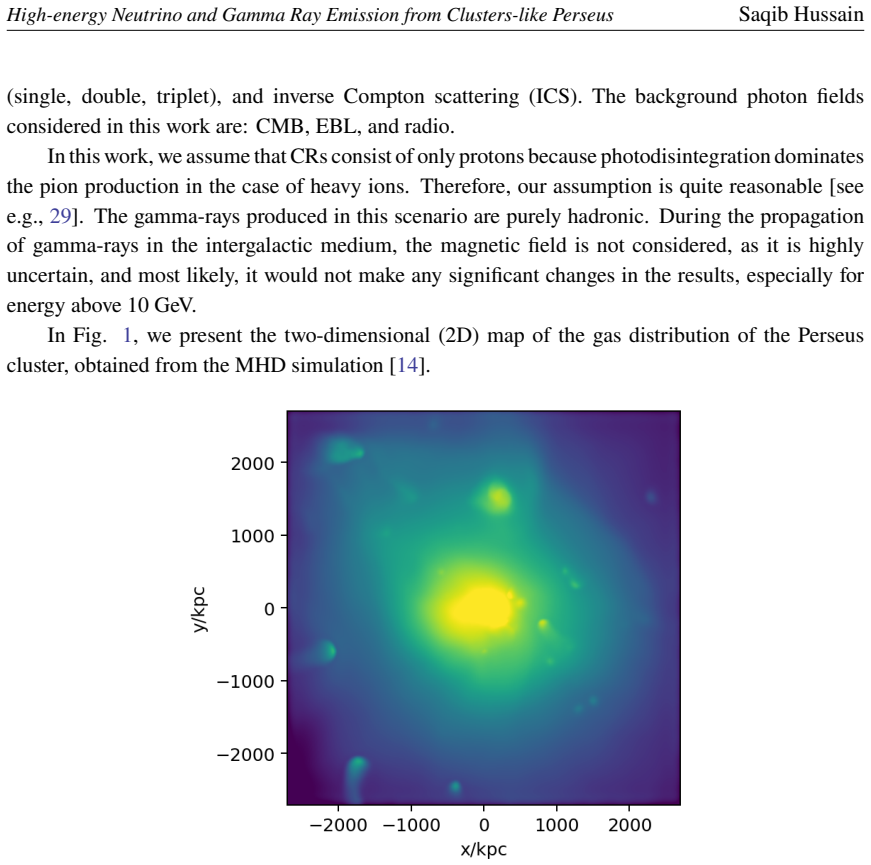
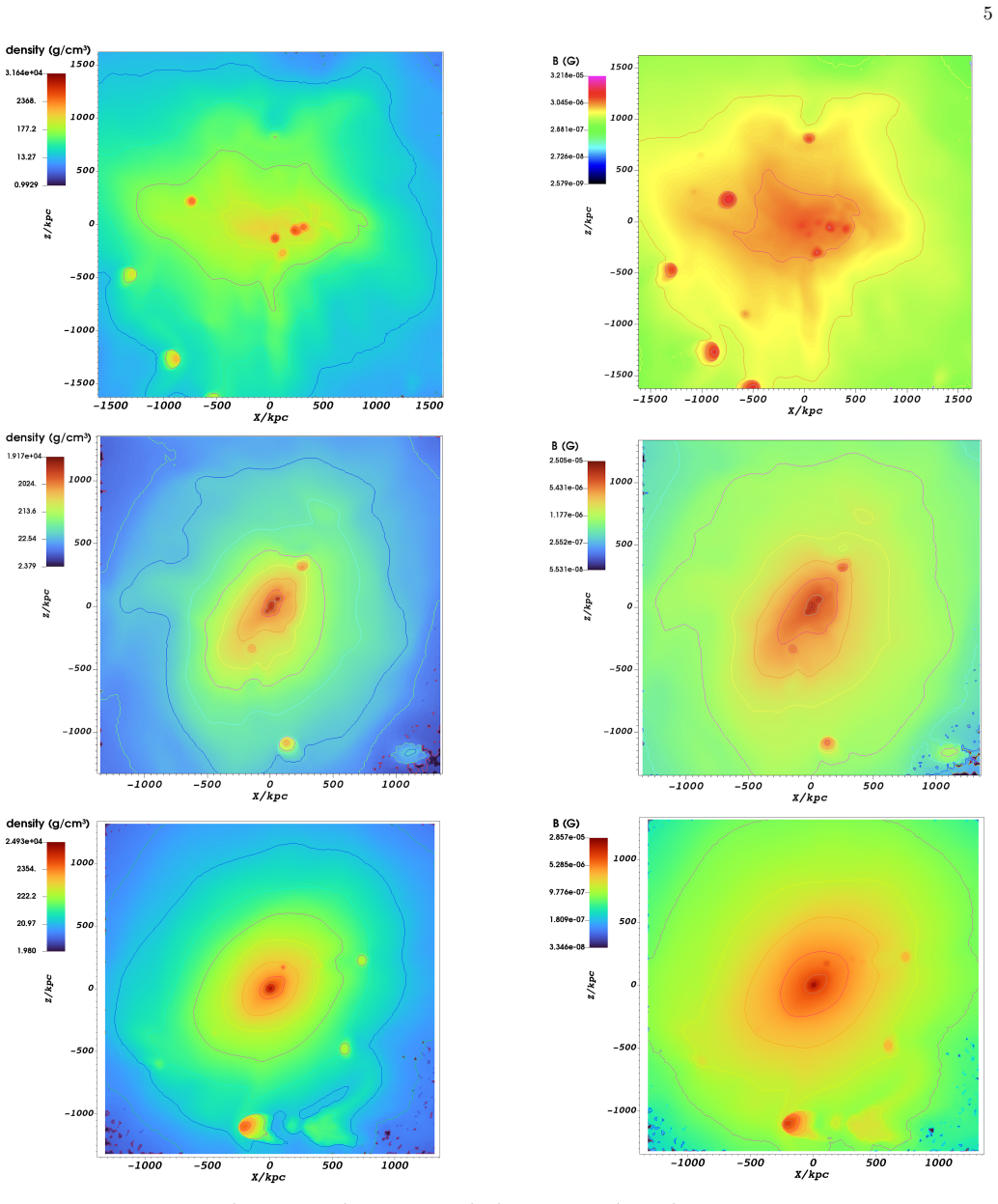
We calculate the high-energy gamma-ray and neutrino emissions from galaxy clusters like Perseus that host active galactic nuclei (AGNs). Our primary objective is to distinguish the emission from the central source, such as NGC$1275$, from the diffuse emission originating in the outskirts of the Perseus cluster. Due to a unique magnetic-field configuration, CRs with energy $\leq 10^{17}$ eV can be confined within these structures over cosmological time scales, and generate secondary particles, including neutrinos and gamma-rays, through interactions with the background gas and photons. We employ three-dimensional cosmological magnetohydrodynamical simulations of structure formation to model the turbulent intracluster medium (ICM). We propagate CRs in intracluster medium (ICM) and intergalactic medium using multi-dimensional Monte Carlo simulations, considering all relevant photohadronic, photonuclear, and hadronuclear interactions. We also include the cosmological evolution of sources like Perseus. By comparing our results with the existing upper limits from IceCube for galaxy clusters and the sensitivity of CTA, we predict that these observatories could potentially establish a new class of astrophysical sources capable of emitting high-energy multi-messenger signals. We also compute the contribution from clusters like Perseus to the diffuse neutrino and gamma-ray background.
The origin of diffuse neutrinos and $\gamma$-rays is unknown, and galaxy clusters hosting AGN and starburst galaxies are the most probable sources of these cosmic messengers. In this work, we investigate the diffuse $\gamma$-ray and neutrino emission from the Virgo, Perseus, and Coma clusters using a detailed numerical method, combining MHD simulations with Monte Carlo methods. The MHD simulation provides the distributions of temperature, gas, and magnetic field in clusters. The Monte Carlo simulations are used to investigate the cosmic-ray (CR) propagation in ICM and subsequently the secondaries stemming from CRs. Our primary assumption is that CR injection scales with the gas density of clusters, providing a physically motivated approximation. High-density regions in clusters are associated with strong turbulence and prominent shock structures, making them natural sites for efficient CR acceleration. Our predicted $\gamma$-ray flux from the individual clusters lies well below the present LHAASO upper limits. The MAGIC observations of the central source NGC $1275$ of the Perseus cluster are significantly higher than our results. Further, we estimated the cumulative $\gamma$-ray and neutrino fluxes from clusters with masses $\gtrsim 5\times 10^{13}, M_{\odot}$ in the local Universe (within $500$ Mpc). The diffuse $\gamma$-ray flux reported by the Fermi-LAT collaboration is significantly higher than our results. Our predictions are consistent with IceCube's existing upper limits on the unresolved neutrino flux from galaxy clusters ($M > 10^{14}, M_{\odot}$) up to $z = 2$.
We introduce a new general-relativistic timing observable that measures the breaking of reflection symmetry in photon arrival times caused by black hole spin. Using backward ray tracing in the Kerr spacetime, we construct time-delay maps across the observer image plane and define a mirror-paired asymmetry based on photons arriving from opposite sides of the projected spin axis. In the Schwarzschild limit ($a=0$), the asymmetry vanishes to numerical precision, providing a stringent validation test of the method. For rotating black holes, Kerr rotation breaks the left-right propagation symmetry of null geodesics, producing systematic differences between prograde and retrograde photon trajectories and resulting in a nonzero mirror-paired timing asymmetry, $A_t$. We find that $A_t$ increases with spin and depends strongly on observer inclination and emission radius, with the largest signals arising from emission close to the black hole and from intermediate to high inclinations. Converting the dimensionless asymmetry into physical units yields timing offsets ranging from seconds to hours for representative supermassive black hole systems. Unlike traditional timing analyses based on spatially integrated signals, the observable introduced here isolates directional information encoded in Kerr photon propagation and provides a physically motivated timing signature of black hole rotation. We discuss the implications of this effect for strong-gravity timing studies and X-ray reverberation mapping.
Alert brokers that select variable extragalactic targets let the two observatories jointly hunt the origins of high-energy particles.
abstractclick to expand
The Cherenkov Telescope Array Observatory (CTAO) and the Vera C. Rubin Observatory are set to transform our understanding of the universe over the next decade. These two observatories have multiple areas of complementarity in their scientific applications, ranging from constraints on cosmological parameters to studies of asteroid occultations. The most opportune area of synergy probably lies in the field of time-domain astronomy. Due to their sensitivity and saturation limits, it will be difficult for the two observatories to conduct joint studies of variable and transient sources in the Milky Way. However, they could offer a fresh and rich perspective on non-thermal extragalactic sources, in particular gamma-ray bursts, active galactic nuclei and jetted tidal disruption events. Among these sources lie the best candidates for multi-messenger research into the origin of TeV-PeV neutrinos and multi-EeV cosmic rays. Thus, combined with multi-wavelength observations by X-ray satellites and wide-field gamma-ray instruments, the synergy between Rubin and the CTAO could provide answers to some of the most important questions in astroparticle physics. This scientific potential comes with a challenge: selecting a few alerts from the ten million issued by Rubin each night to repoint the CTAO telescopes. We use the variability of blazars over timescales ranging from a few days to several years as a case study to demonstrate how to address this challenge using the Fink broker of Rubin.
We analyzed 11 epochs of archival Atacama Large Millimeter/submillimeter Array (ALMA) data to investigate flux density variability of Sgr A* at 340 GHz. In one epoch, the light curve exhibits two short-timescale components with characteristic periods of ~30 min and ~50 min. While the corresponding peaks in the periodogram are highly significant under a white-noise assumption, their significance decreases below 3 \sigma when red-noise variability is taken into account, and we therefore do not regard them as statistically significant periodic detections. Nevertheless, the observed timescales are comparable to the orbital period near the innermost stable circular orbit of Sgr A*, and the light curve shows phase-dependent structure and amplitude evolution consistent with orbital modulation. We find that the variability is well described by a model involving multiple orbiting hotspots with decaying emission. This interpretation suggests that both periodic and non-periodic variability in Sgr A* may arise from a common physical origin in orbiting structures within the accretion flow, providing a unified framework for its millimeter variability.
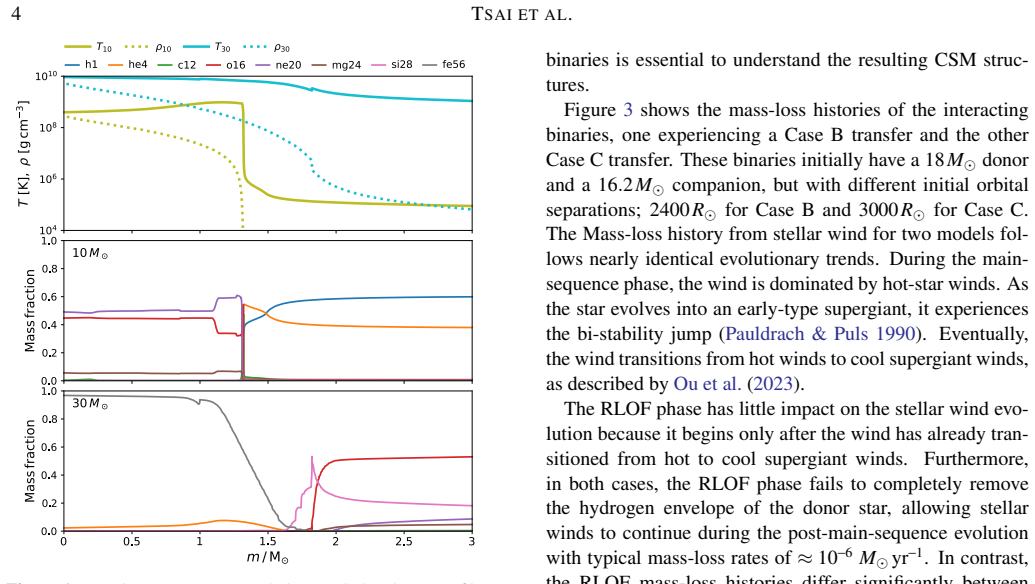
Dense, compact circumstellar media (CSM) are required to power strongly interacting supernovae, yet their physical origin remains uncertain. We present a systematic study of binary stellar evolution models computed with MESA, demonstrating that Case C mass transfer, initiated after core helium ignition, can naturally produces the dense, nearby CSM inferred in interacting events. Across a grid of binary models, we find that donors of 10--20 solar masses in binaries with separations of approximately 1000--2700 solar radius undergo late-stage Roche-lobe overflow within ~10^3 yr prior to core collapse, ejecting ~0.01--0.2 solar masses and forming CSM extending to ~10^16--10^18 cm. Our results suggest that the Case C mass transfer may account for ~13% of all core-collapse supernova (CCSN) progenitors, rather than representing a rare channel. A subset of these Case C binaries produces CSM properties that are quantitatively in agreement with those inferred for interacting supernovae such as SN 2014C. In contrast to earlier binary interactions or single-star mass loss, Case C transfer operates at the right time and scale to shape the immediate pre-supernova environment without requiring ad hoc eruptive mechanisms. Our results identify late-stage binary interaction as a robust and physically motivated channel for producing the dense CSM that powers interacting supernovae.
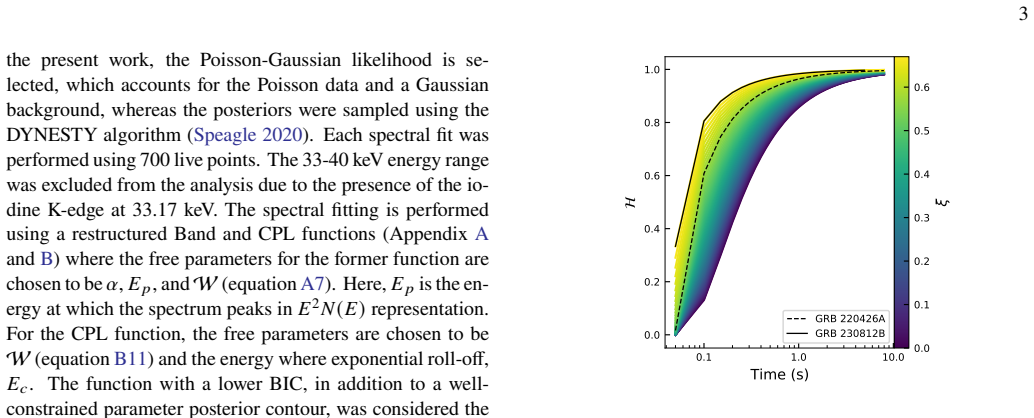
Gamma-ray bursts (GRBs) are the universe's most energetic phenomena (isotropic luminosity $\sim 10^{51} - 10^{54}$ ergs/s) lasting for a very short duration ($\sim$ milliseconds - a few seconds). Even after an average of one GRB detected per day, their emission mechanism remains contentious. Inferences drawn from the empirical modelling of the GRB spectrum are often inconclusive. Some studies favor the emission from a thermal blast of hot plasma, while others suggest a synchrotron emission originating from a rapid acceleration of particles at the expense of the burst energy. Under these scenarios, the spectral width of the burst ($\mathcal{W}$), which is measured at half maxima, is expected to decrease with time. We show that for the GRB 220426A and GRB 230812B, $\mathcal{W}$ increases with time, raising serious concerns regarding the validity of these emission models. The results instead offer strong evidence that the GRB prompt phase involves the development of multiple emission zones, whose relative contributions change over time.
Light propagating through a perturbed spacetime could imprint the underlying gravitational waveform directly onto electromagnetic observables. In this Letter, we develop a covariant perturbative framework for polarized photon propagation in generic curved spacetimes, and derive a compact expression for the observable polarization-angle (PA) swing during Kerr ringdown, explicitly demonstrating its time-domain locking to the quasi-normal modes. We confirm this behavior using dynamical ray-tracing calculations for a broad class of photon trajectories. Photons grazing the strong-field region exhibit an achromatic, damped PA oscillation that tracks the ringdown, with a phase set by the mode's angular structure. The swing amplitude can reach $\sim 10^{\circ}$ and leaves distinctive signatures in spatially resolved autocorrelations. These results open a new polarimetric window onto black hole mergers and ringdown.
The thermal state of active galactic nucleus (AGN) coronae is commonly characterized by the electron temperature $kT_{\rm e}$, the Thomson optical depth $\tau$, and the geometry of the Comptonizing medium. We compile a literature sample of Seyfert galaxies with broadband X-ray constraints obtained under slab geometry and with directly reported $kT_{\rm e}$ and $\tau$. To interpret these data, we develop a Monte Carlo radiative transfer calculation for bottom-illuminated slab coronae and show that the appropriate effective Compton parameter for slab geometry is $y=(4\theta+16\theta^2)\tau$, where $\theta = kT_{\rm e}/m_{\rm e}c^2$. We find that the cleaned AGN sample lies along a narrow anti-correlated ridge in the $kT_{\rm e}-\tau$ plane, corresponding to a nearly constant $y$ with mean $\langle y \rangle=0.414$ and logarithmic dispersion of only 0.10 dex. Radiative-equilibrium boundaries computed for slab disk-corona systems further show that reproducing this ridge requires a predominantly coronal dissipation fraction $f$. We therefore suggest that luminous AGN slab coronae occupy a stable Comptonization branch broadly governed by slab radiative balance, and that the observed $kT_{\rm e}-\tau$ locus provides a new constraint on how accretion power is partitioned between the disk and the corona.
The historic detection of gravitational waves from the electromagnetically bright binary neutron star merger GW170817 enabled the first standard siren measurement of Hubble's constant ($H_0$). The accuracy and precision of this measurement depends crucially on how well the merger inclination angle is constrained, given its strong covariance with luminosity distance ($D_L$). Modeling the light-curve of the jet's afterglow provides constraints on inclination, but is highly dependent on the similarly uncertain jet opening angle. Past studies have improved on this by invoking high-resolution radio observations, obtained through very long baseline interferometry (VLBI). We present a Bayesian visibility-plane model-fitting framework that provides a more informed and robust measurement of the viewing geometry of GW170817 and of $H_0$, by including all relevant VLBI data, robustly handling systematic uncertainties and rigorously sampling model parameter space. By fitting new hydrodynamical afterglow models with a continuum of jet geometries, we obtain a viewing angle of $18.^{\circ}3-20.^{\circ}3$ (for a fixed cosmology with $D_L=40.7$ Mpc, as used in most previous analyses). We extend our framework to fit for $D_L$ and $H_0$ directly, and marginalize over an ensemble of plausible peculiar velocity corrections to obtain viewing angle $16.^{\circ}8-19.^{\circ}2$, $D_L=44.0\pm1.6$ Mpc and $H_0=65.5\pm4.4$ km s$^{-1}$ Mpc$^{-1}$. Notably, the peak of our $H_0$ posterior is within $0.5\sigma$ of the early-Universe Planck $H_0$ value, but $1.7\sigma$ from the late-Universe SH0ES measurement. We discuss potential caveats and the implications of this result in the context of the current discrepancy between early and late-Universe measurements of the Hubble constant.
The well-observed Crab pulsar helps one to uncover the underlying knowledge about pulsar evolution. The routine evolution model simultaneously describes the spin-down caused by the magnetic dipole radiation (MDR) and gravitational wave radiation (GWR), damping of the free-body precession owing to the bulk viscosity, and GWR-induced quenching of the magnetic inclination angle $\chi$. We explore the pulsar evolution based on this routine model supplemented with the effects of shear viscosity, r-mode, electromagnetic torque, and accretion, respectively, with the stellar thermal evolution as an important input. The impact of shear viscosity on radio-pulsar evolution is negligible, as it only slightly increases the magnetic inclination angle and promotes spin-down in magnetars. Under the observational limit for its saturation amplitude, the r-mode also turns out to be completely negligible. Yet, the electromagnetic torque (under certain conditions), along with the accretion based on our three-dimensional fallback disk accretion model, are all shown to suppress the growth of the magnetic inclination angle. When applied to the Crab pulsar, the routine model best reproduces the magnetic inclination angle $\chi$, the spin period $P$, and the spin period derivative $\Dot{P}$ simultaneously, indicating the important role of bulk viscosity. The inclusion of the electromagnetic torque and accretion works even worse, suggesting these two factors perhaps are overestimated for Crab pulsar. Intriguingly, the calculated magnetic inclination angle derivative $\Dot{\chi}$ is $(6.3\times 10^{-3} - 0.3)\, {\rm degree/century}$ with the routine model, also in agreement with the observed tiny $\Dot{\chi} = 0.62\, {\rm degree/century}$.
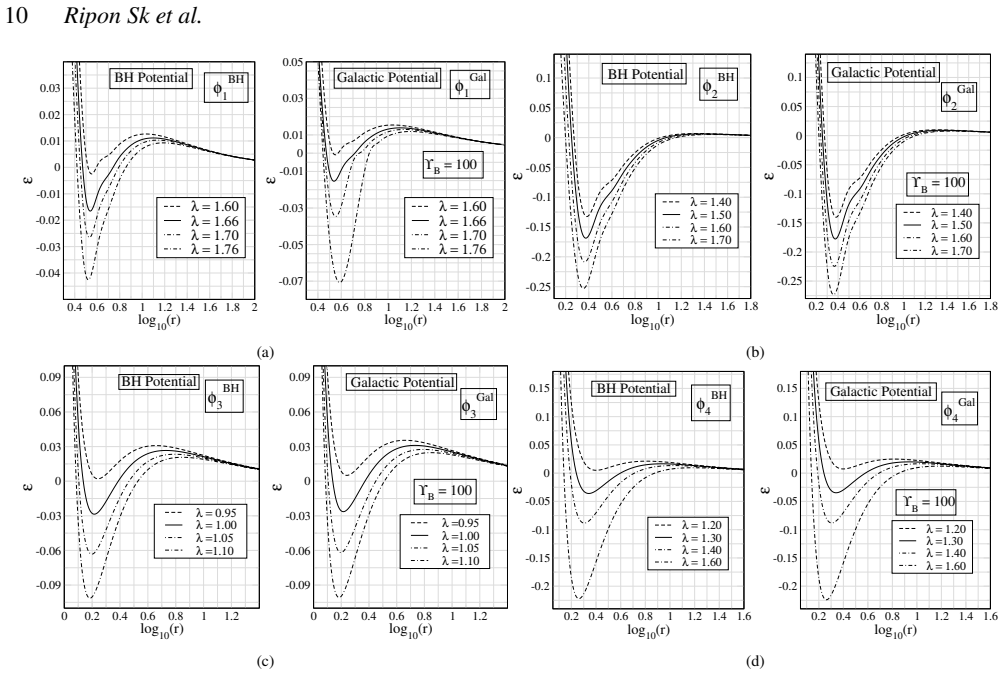
Low-angular-momentum, axisymmetric, inviscid accretion flows onto a black hole have been studied using the vertical equilibrium disc model, considering multiple pseudo-Schwarzschild potentials and two thermodynamic equations of state. A multi-component galactic potential-representing stellar, dark matter, and hot-gas contributions-is incorporated to assess environmental effects on the accretion dynamics. In our earlier work, it is found that the effect of multi-component galactic potential on the accretion flow onto a rotating black hole under similar framework of analysis, significantly varies over different standard disc models, being most pronounced in the vertical equilibrium (VE) disc model. Thus it may be interesting to find whether such variation occur for different choices of pseudo potentials too. To begin with, in this work we consider accretion flow onto a non-rotating blackhole with VE geometry. Through the analysis of transonic behaviour and eigenvalue-based critical point classification, we demonstrate that, for all selected black hole potentials, the galactic potential profoundly influences the locations of critical points, the shock-allowed parameter space, shock-location, shock-driven flow variables, and acoustic surface gravity.
The Laser Interferometer Lunar Antenna (LILA) is a proposed gravitational-wave project aiming to take full advantage of the Moon's environment to access the deci-Hz band and detect intermediate-mass black hole (IMBH) binaries of mass $\sim 10^2-10^6 \, M_{\odot}$ (arXiv:2508.11631). With an observational period of 4 years, LILA can extend its IMBH detection horizon to the very early Universe, directly probing the first population of massive black holes ($z \sim 20-30$). LILA could also detect intermediate-mass-ratio inspiral systems with a total mass of $\sim 10^4 - 10^6 \, M_{\odot}$ and a mass ratio of $\sim 10^{-4} - 10^{-2}$. LILA can discover IMBH binaries months to years before merger with measurable eccentricity residuals retained from their formation, providing crucial early warning for multi-messenger and multi-band follow-up. The high SNR ($\gtrsim 100$) events detectable with LILA would enable strong-field tests of gravity. With these capabilities, LILA will provide important insights into the formation and evolution of massive black holes, as well as the astrophysical environments and evolutionary pathways of black hole binaries. LILA will also complement current LIGO/Virgo/KAGRA detections of pair-instability mass gap events, hierarchical merger candidates, and light IMBH mergers, while expanding the upper envelope of discovered black holes with stellar origin to masses of $\gtrsim 250 \, M_{\odot}$.
In this study, we report partly simultaneous XMM-Newton and NuSTAR observations of the bursting, dipping low mass X-ray binary, 4U 1323-62 obtained in 2024. 4U 1323-62 is one of the well-known persistent bursters, with bursts occurring roughly every three hours. It is also one of the few sources for which the orbital period is known, and shows dips in X-rays. In this paper, we report the detection of 12 unique bursts with XMM-Newton and NuSTAR, 6 of them observed jointly. We detected two double burst events, one with the NuSTAR and another one observed with both missions. Based on the long-term behavior of 4U 1323-62, we unveil a cyclic trend in its burst rate, with a period of about 10 years. During our observations we detected 10 X-ray dips with a periodicity of 2.942 hours, in line with previous measurements. We also present the results of the time resolved X-ray spectral analysis of the bursts and show the limits on the cooling of the corona heated by the burst emission. We also found a 0.898 +/- 0.017 Hz quasi-periodic oscillation (QPO) during the non-bursting and non-dipping times confirming previous detections.
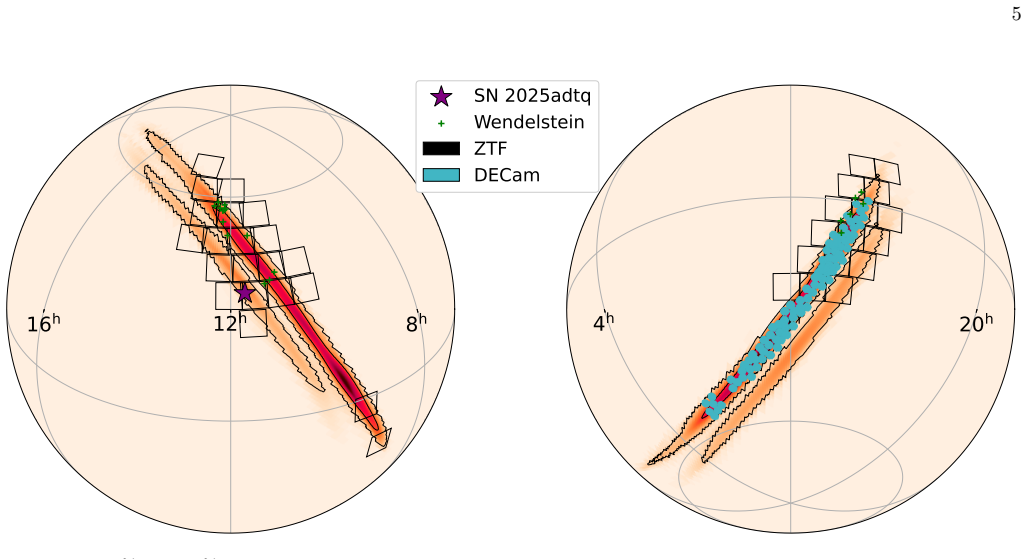
On November 12th, 2025 the LIGO--Virgo--KAGRA (LVK) collaboration reported gravitational waves (GWs) from a compact object merger candidate (S251112cm) with at least one sub-solar mass component. Using the Dark Energy Camera (DECam), the Fraunhofer Telescope at Wendelstein Observatory (FTW), and the Zwicky Transient Facility (ZTF), we surveyed $56\%$ of the GW localization region beginning $2.4$~hours after the GW alert. We find no kilonova (KN) counterpart, and use radiative-transfer models to rule out $42\%$ (ZTF), $68\%$ (DECam), and $92\%$ (FTW) of the KN models as possible emission from this GW candidate. Within the recently proposed disk-fragmentation (``superkilonova'') model for generating sub-solar mass neutron star mergers from stellar core-collapse, the delay between the supernova explosion time and the GW merger time is estimated to be less than a few days. Searching this time window prior to the GW event, we identify and spectroscopically classify a IIb supernova (SN~2025adtq), with a spatial association odds ratio of $\log_{10}\mathcal{I} \approx 4.8$, a chance coincidence probability of ${\sim}2$--$9\%$, and an estimated explosion time ${\sim}2$ days prior to S251112cm. SN~2025adtq is the second Type~IIb supernova found in spatial and temporal coincidence with a sub-solar mass GW candidate, following the previously reported S250818k/SN~2025ulz association; jointly, we measure an odds ratio that favors the association hypothesis over the null, however, when conditioned on finding a coincident supernova by chance, the odds ratio disfavors association. Together, these results provide suggestive but inconclusive evidence for the superkilonova formation channel.
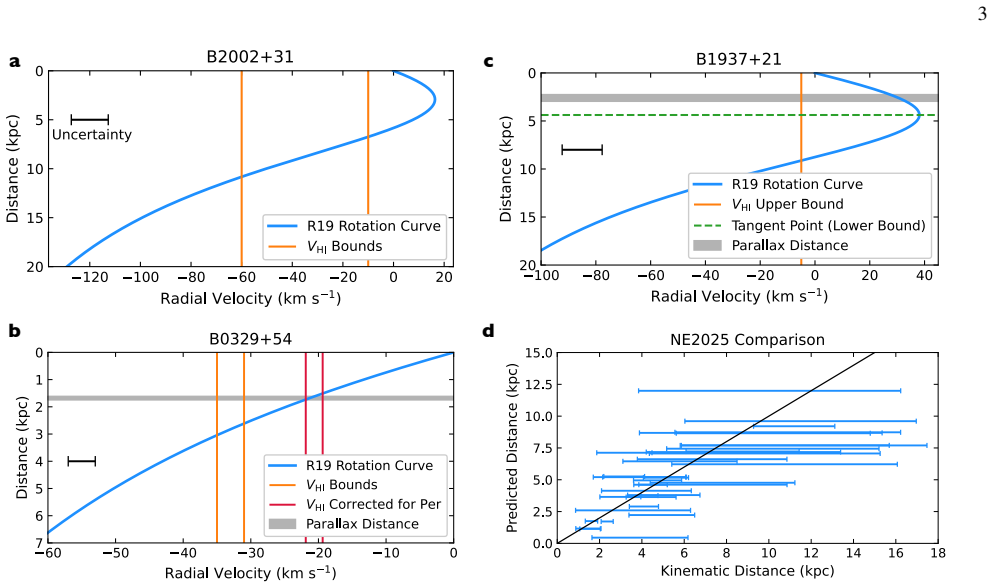
Distance measurements are fundamental to radio pulsars' use as astrophysical probes of General Relativity and the interstellar medium. One of the primary methods for determining pulsar distances is HI kinematics, which leverages the radial velocities of HI absorption and emission features detected along pulsar lines-of-sight. This method necessarily assumes a model for Galactic rotation, our knowledge of which continues to evolve in both accuracy and precision. In this research note, we derive kinematic distances for 66 pulsars with archival HI radial velocity measurements using a state-of-the-art Galactic rotation curve. The results and software are provided in an online repository. Our kinematic distances differ by $<1\sigma$ from published parallaxes for nearly all pulsars in the sample that have both types of distance measurement available. Comparison to the NE2025 Galactic electron density model shows general consistency between measured and predicted distances.
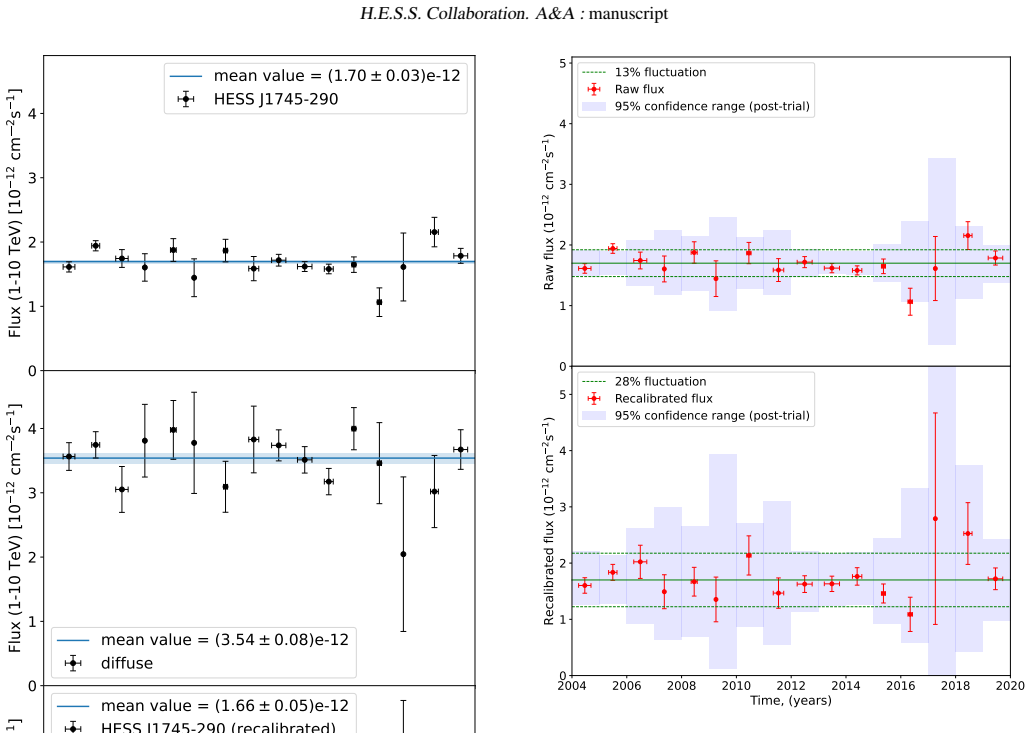
At the center of our Galaxy lies the bright {\gamma}-ray point-like source HESS J1745-290, which is compatible in position with Sgr A star, although an association between the two remains uncertain. Using data obtained between 2004 and 2019 with the High Energy Stereoscopic System (H.E.S.S.) on the Galactic center region, we studied the variability of HESS J1745-290 over 353 hours of observations collected over 16 years, representing the largest dataset gathered yet on this region at TeV energies. We performed a 3D maximum-likelihood analysis of the central source and the diffuse {\gamma}-ray emission in the Galactic center region. This analysis allowed us to extract the spectral and morphological intrinsic behavior of the two components. By performing this analysis on an annual basis, we derived the light curve of HESS J1745-290 and the diffuse emission over the past 16 years. The 3D maximum-likelihood analysis method allowed us to separate the central source from the overlapping diffuse emission, enabling a recalibration of the former by the latter and alleviating some of the systematic effects. We find no long-term or yearly variability. We also provide an estimate of the sensitivity of H.E.S.S. to variation of this specific source over 16 years. We rule out any yearly gamma-ray flux variation of this source larger than 30 percent, as well as any linear flux variation exceeding 30% over this time period.
We summarize a set of constraints on a proposed population of primordial, ultra-massive, electrically charged compact objects, which we call astrons. The analysis combines charge generation, charge saturation, persistence of the charge in an ionized medium, screening by the intergalactic plasma, the Reissner--Nordstr\"om geometry of highly charged compact objects, lensing, and the cosmological implications of a sparse charged population. We also discuss the possible relation to the early structures revealed by the James Webb Space Telescope: if astrons are relevant there, they would be primordial dark seeds rather than luminous objects directly observed at high redshift. The resulting scenario is sharply constrained. Ordinary accretion saturation gives charges far below the large-charge phenomenological benchmark, screening is a serious plasma-physics issue, and a large charge can place the exterior geometry deep in the super-extremal regime. As expected at the level of a homogeneous Friedmann--Lema\^{\i}tre--Robertson--Walker (FLRW) description, the interaction energy of a population of charged objects scales as \(a^{-4}\), so the simplest perfect-fluid reduction does not generate asymptotically late-time acceleration; any acceleration era tied to that homogeneous component can only be transitory. The astron scenario should be regarded as a constrained framework whose viability depends on plasma physics and on a cosmological treatment beyond the homogeneous approximation.
We investigate whether reconnection of small-scale current sheets in transrelativistic supermassive black hole (SMBH) coronae can supply the nonthermal protons needed for high-energy neutrino emission, using NGC 1068 as a test case. We model the corona as a strongly turbulent, low-$\beta$, collisionless hydrogen plasma with characteristic size $r_{\rm co}$, magnetic field strength $B$, proton density $n_p$, and radiation energy density $u_{\rm rad}$. Combining the observed IceCube-band neutrino luminosity with the X-ray luminosity and Thomson optical depth reduces these coronal quantities to a one-parameter family. Across this family, the proton magnetization $\sigma_p \equiv B^2/(4\pi n_p m_p c^2)$ is transrelativistic with $\sigma_p \sim 0.3$. In this regime, we show that repeated encounters with intermittent reconnecting current sheets can energize suprathermal protons up to tens of PeV before photomeson cooling limits further acceleration. These injected particles may then be further processed by stochastic interactions with the turbulent cascade. Motivated by PIC simulations of strong turbulence at comparable magnetization, we adopt a nonthermal proton spectrum with an independently specified index and find that the predicted TeV spectral shape is broadly consistent with NGC~1068 without fitting the proton spectral slope.
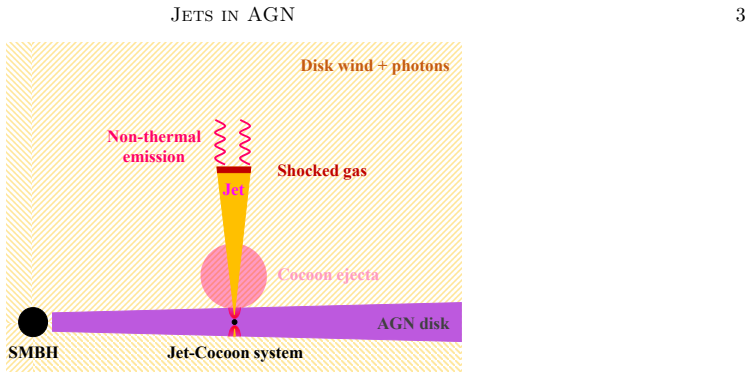
Relativistic jets launched from stellar-mass compact objects embedded in the accretion disk of an active galactic nucleus (AGN) can produce nonthermal emission upon successfully breaking out of the disk. In this paper, we present a comprehensive study of the long-term propagation dynamics and broadband nonthermal radiation signatures of such jets in a realistic AGN environment, explicitly modeled as wind outflows. Our modeling reveals two distinct features imprinted by the high-density AGN medium: rapid deceleration of the jet ejecta, accompanied by a prompt downshift of the emission spectral energy distribution, and persistently strong synchrotron self-absorption, giving rise to a prominent quasi-thermal hump in the emission spectrum. Crucially, both gamma-ray burst jets and jets powered by accreting binary black hole merger remnants can produce detectable multi-wavelength emissions that substantially outshine the AGN background. Moreover, the short time delays between gravitational wave triggers and these electromagnetic counterparts--typically less than 106 s--greatly facilitate secure multi-messenger associations. Besides, our findings highlight that interaction-induced radiation from AGN-embedded jet systems offers a powerful diagnostic probe of the spatial distribution,density structure, and physical properties of the AGN medium.
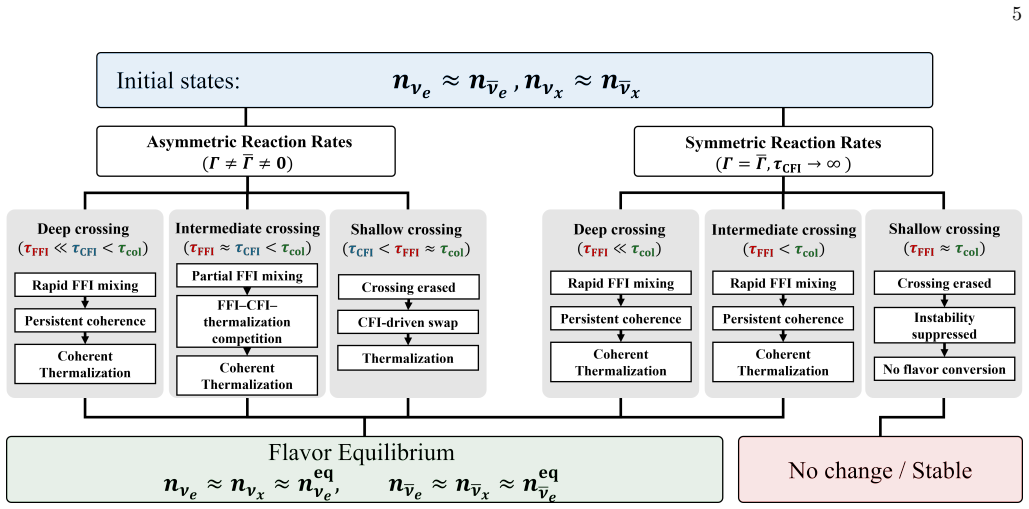
Neutrino flavor evolution in dense astrophysical environments such as core-collapse supernova (CCSN) is influenced by collective effects. While the Fast Flavor Instability (FFI) and the Collisional Flavor Instability (CFI) are recognized as key drivers of rapid flavor conversion, their non-linear competition with collisional damping in spatially varying environments remains poorly understood. Motivated by recent findings that FFI and resonance-like CFI co-occur in the post-bounce phase in CCSN, we scrutinize their dynamic competitions and asymptotic states. To this end, we perform numerical simulations of the quantum kinetic neutrino transport, incorporating both spatial advection and the collision terms. We demonstrate that the interplay between these coexisting neutrino flavor instabilities and collisions leads to rich dynamics. Rather than merely inducing simple decoherence, collisional damping can substantially alter the overall dynamics of collective flavor oscillations, driving the system through complex evolutionary pathways. In all cases where flavor instability develops, we find that the system converges to the same flavor-equilibrated asymptotic state, despite the diversity of intermediate dynamics. Our results suggest that this dynamic competition could alter the widely accepted picture of collisionless FFI, highlighting the need to incorporate realistic collisional effects into studies of flavor conversions in CCSN models.
Pulse profiles probe the emission geometry of accreting X-ray pulsars, but their observed shapes may depend on instrumental response and observational setup. The pulsed fraction spectrum provides a compact spectro-timing observable that can both trace localized spectral features and serve as a quantitative cross-calibration diagnostic. We assess the consistency of energy-resolved pulse profiles obtained with simultaneous XMM-Newton/EPIC-pn and NuSTAR/FPM observations of Vela X-1, and investigate the broadband pulsed fraction spectrum as a diagnostic of spectral features from 1 to 70 keV. We construct energy-phase matrices for both instruments and derive pulsed fraction spectra after carefully accounting for instrumental and observational effects. We quantify the residual systematics in the overlapping 3-10 keV band. We then model the broadband pulsed fraction spectra phenomenologically and search for timing signatures of spectral features. After correcting for instrumental effects, the pulsed fraction spectra derived strictly over the common exposure intervals of the two instruments agree within 5% in their overlapping 3-10 keV range. Remaining discrepancies larger than 5% are confined to the iron-line region and can be attributed to the different energy resolutions of the two instruments. The broadband pulsed fraction spectrum reveals significant localized features corresponding to known emission lines in the soft band and to cyclotron resonant scattering features. Orbital-phase-resolved modeling of the EPIC-pn pulsed fraction spectrum shows that the soft-band features depend strongly on the equivalent absorption column, with emission-line signatures becoming progressively suppressed during highly absorbed intervals. The pulsed fraction spectrum serves both as a quantitative cross-calibration diagnostic and as a powerful spectro-timing diagnostic.
Context: Recent gamma-ray observations of young star clusters revealed that stellar wind termination shocks accelerate particles, with the energy reservoir provided by the mechanical power of massive-star winds. Aims: Our goal is to identify promising targets for future gamma-ray studies of stellar clusters and associations powered by massive stars. As the wind power of a single Wolf-Rayet (WR) star can rival the cumulative wind power of the most massive clusters, we also investigate isolated WR stars, many of which are indeed isolated. Methods: We ranked a large sample of stellar clusters and associations according to the number of member WR stars divided by the distance squared, a quantity proportional to the expected gamma-ray signal, and searched for spatial correlations with known gamma-ray sources. We repeated the same procedure for individual WR stars with known wind mechanical powers and distances. Results: We found a hint ($\lesssim 3 \sigma$ confidence) for a correlation between WR-hosting clusters and unidentified GeV gamma-ray sources, and identified new spatial associations for 11 clusters. We also found spatial coincidences between 4 isolated WR stars (WR110, WR114, WR111, and WR14) and unidentified gamma-ray sources. Although no significant correlation is found for isolated WR stars as a population, these 4 objects exhibit particularly large wind-power-to-distance-squared ratios, a necessary condition for detectability with current instruments. Assuming the gamma-ray emission is powered by WR winds, it can be interpreted as arising from interactions between particles accelerated at the wind termination shock and ambient matter or radiation fields. Conclusions: Since the wind power of an individual WR star can rival that of an entire stellar cluster, we provide a ranking of stellar clusters and isolated WR stars that may constitute potential gamma-ray emitters.
We study test-particle dynamics in the equatorial plane of a Kerr-Bertotti-Robinson black hole (BH) immersed in a cloud of strings (CS), with mass M , rotation a, magnetic parameter B, and string parameter {\alpha}. Using the Hamilton formalism we recover the effective potential Ueff and the conditions for circular motion, and we compute the specific energy E and specific angular momentum L together with the radial, vertical, and azimuthal epicyclic frequencies {\nu}r , {\nu}{\theta} , {\nu}{\phi}. Going beyond the analytic setup, we provide the first numerical mapping of the innermost stable circular orbit (ISCO) for this background and tabulate rISCO, EISCO, LISCO, and the accretion efficiency {\eta} = 1 - EISCO for both co- and counter-rotating motion across a wide (a, B, {\alpha}) grid. The CS parameter pushes the ISCO outward and raises {\eta} from 0.057 in Schwarzschild to above 0.25 for {\alpha} = 0.30 at a = 0.9. We then connect the model with observed twin-peak high-frequency quasi-periodic oscillations (QPOs) in three microquasars (GRO J1655-40, XTE J1550-564, GRS 1915+105) using the relativistic-precession (RP) model and find \{chi}^2-minimum fits with {\alpha} < 0.13. A general-relativistic hydrodynamical (GRH) study of Bondi-Hoyle-Lyttleton (BHL) accretion completes the picture: the CS contribution sustains shock-cone instabilities, redistributes power-spectral-density (PSD) peaks, and produces low-frequency QPO-like components that distinguish KBR+CS from pure Kerr or KBR.
We present a comprehensive analysis of Vela X-1 using two new NuSTAR observations, placed in the context of four earlier datasets obtained between 2012 and 2020. The energy-resolved pulse profiles demonstrate a significant transformation from an asymmetric structure at low energies to distinct double peaks above 12 keV, whereas the pulse fraction escalates with photon energy but decreases with flux. Broadband spectra validate the Fe K alpha emission line and disclose both fundamental and harmonic cyclotron resonant scattering characteristics (CRSF). We observe no substantial link between CRSF energies and luminosity, contrary to previous findings; rather, the photon index and folding energy demonstrate distinct anti-correlations with flux, aligning with sub-critical accretion and increased Comptonization in the accretion column. Our results provide the first clear evidence that the harmonic CRSF in Vela X-1 does not follow the long-term decay previously claimed. The fundamental line energy also displays an irregular evolution, without a clear monotonic trend. Notably, the harmonic-to-fundamental energy ratio departs from the canonical value of two, suggesting that the line-forming regions are located at different heights within the accretion column. These results provide new constraints on the accretion geometry and magnetic field topology of Vela X-1, highlighting the importance of continued monitoring with current and future X-ray observatories.
Wind is a key mechanism for supermassive black hole (SMBH) feedback to their host galaxies. In tidal disruption events (TDEs), black holes spend most of their time accreting at highly sub-Eddington rates, implying that feedback from persistent sub-Eddington winds could be significant. We investigate the effects of black hole mass, viscosity parameter and stellar debris temperature on the properties of winds from hot accretion flows in TDEs. We find that more massive black holes yield a higher accreted fraction and launch faster winds, while the debris temperature has a negligible influence on the accretion flow. For $\alpha=0.1$, the mildly-relativistic unbound winds ($\sim 0.1c$) are launched predominantly from the outside of the accretion flows along the equatorial plane, with a kinetic energy of $\sim10^{-4}L_\mathrm{Edd}$. In contrast, convective bound outflows dominate for $\alpha=0.01$, which differs from the true winds typically seen in active galactic nuclei and X-ray binaries. Potential applications for explaining delayed radio brightening in TDEs at $\sim10^3$ days and for searching for intermediate-mass black holes through radio and X-ray surveys are also discussed.
We investigate the thermal evolution of isolated neutron stars containing hyperon--mixed kaon--condensed matter, focusing on the role of proton superconductivity. The equation of state utilized for cooling calculation is based upon the minimal relativistic mean--field framework supplemented by chiral SU(3) dynamics for kaon condensation with an additional component on the three-baryon force, which ensures stiffness at high densities enough to meet astrophysical constraints on neutron-star masses and radii. We show that the nucleonic direct Urca processes operate at relatively low stellar masses ($M \gtrsim 1.3\,M_\odot$), erasing any observable signature of strangeness in the absence of superfluidity. However, if the proton $^1{\rm S}_0$ superconductivity works, because of suppression of fast neutrino cooling processes, the cooling scenario could become relevant with the strangeness, depending on the density regions of the pairing gap. In particular, if the proton superconductivity is so strong in high-density regions ($T_{c,p}\sim10^{10}~{\rm K}$), the nucleon and hyperon direct Urca processes shut down, which makes the kaon-induced Urca processes dominant in massive neutron stars. This scenario is in good agreement with several cold isolated neutron stars identified recently. Hence, we suggest that strong proton superconductivity can render kaon condensation observationally visible through cold neutron-star observations, providing a potential signature of strangeness in dense matter.
Neutron star (NS) low-mass X-ray binary (LMXB) systems depict a variety of X-ray spectral and timing features, which can be useful to probe the accretion-ejection mechanism in the strong gravity regime. Here, we study the relatively unexplored and faint NS LMXB 1A 1246-588, which is also an ultra-compact X-ray binary (UCXB) with a white dwarf donor. We investigate its temporal and spectral behavior using pointed NICER and AstroSat observations, supported by long-term MAXI/GSC monitoring. The MAXI light curve shows modest, recurrent outburst-like enhancements, providing the long-term flux context for interpreting the pointed observations. During the AstroSat observations in 2017, the source exhibits an absorbed 0.4-20 keV flux of $(1.18 \pm 0.02)$ x $10^{-10}$ $erg$ $cm^{-2}$ $s^{-1}$, while during the NICER observations in 2019, it spans an absorbed 0.5-10 keV flux range of $(0.7-3.7)$ x $10^{-10}$ $erg$ $cm^{-2}$ $s^{-1}$ and traces an atoll-like pattern in the hardness-intensity diagram. Broadband spectral modeling shows that the emission is well described by a soft blackbody and a hard Comptonized component, with no statistically required multicolor disk contribution. The blackbody temperature increases from 0.28 to 0.39 keV, with an emitting radius consistent within 6.9-13.8 km, while the Comptonization photon index varies from 1.8 to 2.3. We find that the observed spectral-state evolution is driven by a redistribution of accretion power between thermal emission from the NS boundary layer and Comptonized emission, consistent with atoll-type behavior. These results provide the first quantitative, multi-epoch view of accretion-state evolution in 1A 1246-588, revealing systematic changes in the thermal boundary-layer emission and the Comptonizing region in this UCXB system.
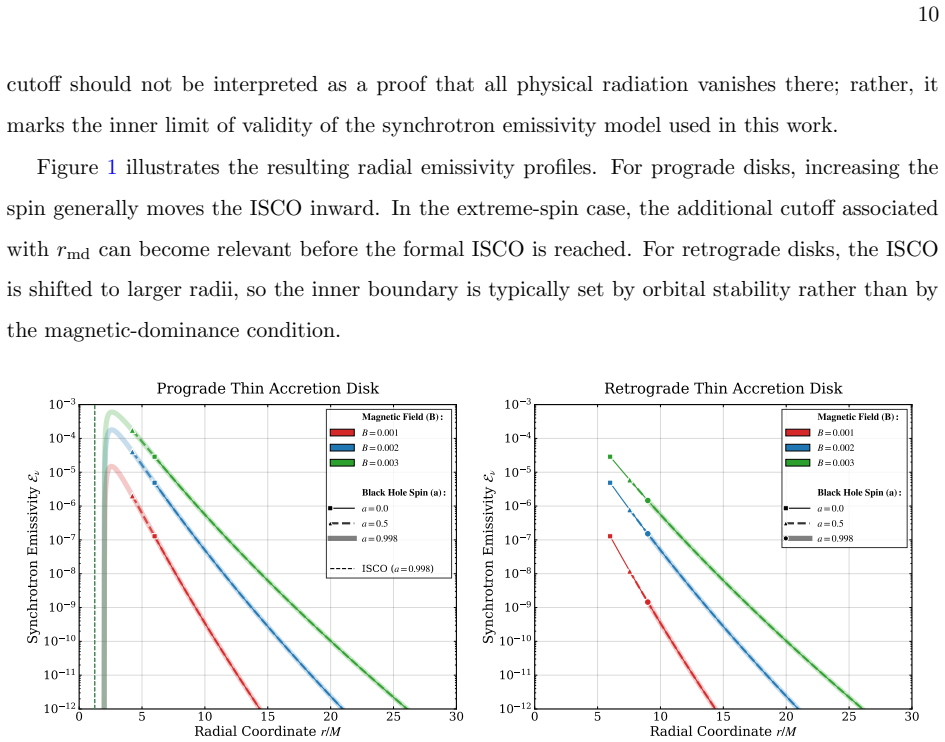
We investigate the optical appearance of a Kerr-Bertotti-Robinson (Kerr-BR) black hole illuminated by a geometrically and optically thin accretion disk. Instead of using a phenomenological power-law emissivity, we adopt a magnetically driven synchrotron emissivity proxy coupled to the local electromagnetic environment. With a backward ray-tracing framework, we examine the effects of the spin $a$, magnetic parameter $B$, and observer inclination $\theta_O$ on the ray-classification maps, redshift distributions, and specific-intensity images. We show that the ISCO position is modified by both $a$ and $B$, and that rapidly rotating prograde configurations can develop an additional model-dependent inner cutoff when the magnetically dominated approximation underlying the emissivity prescription ceases to be applicable. High-resolution one-dimensional intensity profiles further separate the direct image, the $n=1$ lensing-ring contribution, and the higher-order $n\geq 2$ photon-ring subimages, while quantifying the Doppler-induced brightness asymmetry. Retrograde disks exhibit a wider emission-depleted central region because of the outwardly shifted ISCO, making the higher-order lensed components more clearly distinguishable from the direct emission. These results show that the disk inner boundary and the magnetic-field-dependent emissivity can substantially influence the observable appearance of Kerr-BR black holes.
The origin of the highly ionized iron emission (Fe XXV at $6.7\,\mathrm{keV}$) characterizing the Galactic ridge X-ray emission (GRXE) remains a fundamental puzzle in high-energy astrophysics. Although the GRXE continuum is largely resolved into discrete populations of cataclysmic variables and coronally active stars, these sources exhibit Fe XXV equivalent widths significantly lower than that of the total GRXE, leaving the intense iron line emission unexplained. In this work, we cross-correlated the XMM-Newton survey of the inner Galactic disk with Gaia DR3 astrometry to identify and characterize hard X-ray sources ($>2\,\mathrm{keV}$) with reliable stellar counterparts. We selected 107 X-ray sources located within the red giant branch of the color-magnitude diagram, many of which are verified long-period variables. These sources exhibit high X-ray luminosities ($L_{\mathrm{X}} \approx 10^{31}$--$10^{33}\,\mathrm{erg~s^{-1}}$), significantly exceeding the typical coronal saturation levels of single giants. Their X-ray spectra are notably harder than those of quiescent stellar coronae, with plasma temperatures reaching up to $kT \approx 6\,\mathrm{keV}$ and a prominent emission feature at $\sim 6.7\,\mathrm{keV}$. The combination of high $L_{\mathrm{X}}$, hard spectra, and intense Fe XXV emission identifies this population as accretion-powered binaries associated with late-type giants. Our analysis demonstrates that this population contributes $\sim 20\%$ of the total GRXE continuum and $\sim 40\%$ of its iron line emission, providing a key component to resolving the Galactic X-ray background puzzle.
Assuming that the compact source at the Galactic center, Sagittarius A*, is a massive boson star, we fit the near-infrared flare astrometry data. We consider 12 discrete boson star configurations and model the flare as a hotspot on a circular equatorial orbit. The analysis is performed in a Bayesian framework using nested sampling, yielding the marginal posterior distributions of all parameters as well as the Bayesian evidence for each model. For comparison, the same procedure is applied to a Schwarzschild black hole. The resulting Bayesian evidence values differ only marginally between the boson star and black hole cases, and the well-determined mass of Sgr~A* (${\sim}4.296\times 10^6\,M_\odot$) falls within the 68\% highest density interval in every configuration. We conclude that, under current near-infrared astrometric constraints and within the considered parameter ranges, a massive boson star and a Schwarzschild black hole remain statistically indistinguishable as the compact object at the Galactic center.
In this Paper we consider twisted accretion disks in supermassive binary black hole by analytical and numerical means. It is assumed that the disk orbiting around the more massive rotating component and that the disk rings are inclined with respect to the orbital plane. We use orbital parameters of the binary often employed in the precessing massive (PM) model of the well-known blazar OJ 287.
Unlike our previous investigation of a similar problem, here we consider disks with both small and relatively large relative thicknesses $\delta=h/r$, where $h$ is the disk's height at a typical radius $r$, as well as a range of values of the viscosity parameter, $\alpha$, including the cases when $\alpha \lesssim \delta$. Similar to our previous results, we find that the twisted disk relaxes to a quasi-stationary state in the frame precessing with the Lense-Thirring frequency of the orbit. However, its shape is qualitatively different from that corresponding to the case of $\delta=10^{-3}$ and $\alpha=0.1$ considered in our previous work. In a disk with $\delta=10^{-3}$ but $\alpha \le 2\cdot 10^{-2}$, we find the new effect of generation of a twisting spiral wave near the resonance between a forcing frequency associated with the presence of the secondary and the Lense-Thirring frequency of a particular disk ring defined in the precessing frame. We propose an analytic theory of it, which is in a good agreement with our numerical results. This effect leads to multiple crossings of the orbit with the disk per one orbital period, which contradicts the PM model. When $\delta \gtrsim 0.1$, a typical disk's inclination within the orbit of the binary is smaller than that of the orbit which results in only two crossings of the orbit with the disk per one orbital period. We suggest that the additional heating of the disk gas by the secondary-disk collisions may result in $\delta \sim 0.1$.
The formation environments of merging binary black holes remain uncertain. While hierarchical assembly in dense stellar clusters has been widely explored as an explanation for black holes exceeding the stellar-mass limit, growth through gas accretion in active galactic nucleus (AGN) disks is an alternative that has received less observational scrutiny. Here we search for an accretion-origin subpopulation using only spin magnitudes, fitting a three-component mixture model to 166 binary black hole mergers from LIGO--Virgo--KAGRA with component shapes fixed from theoretical predictions and only the mixing fractions inferred from the data. We find strong evidence ($ln B = 5.7$) that $\sim 10\%$ (90% credible interval $[1\%, 14\%]$) of detected mergers belong to a subpopulation with primary spins clustered near $a_1 \approx 0.9$, consistent with the theoretical prediction for accretion spin-up. The hierarchical-merger prediction of $a_1 \approx 0.7$ is decisively disfavored as the location of the high-spin subpopulation ($ln B = 5.7$). Post hoc validation reveals that the accretion candidates have systematically higher masses (median $m_1 = 58\,M_\odot$) and aligned spins (median $\chi_{\rm eff} = 0.33$, vs. $0.04$ for standard-dominated events). The accretion subpopulation is not limited to systems above the pair-instability mass gap: GW190517 ($m_1 \approx 39 M_\odot$) is among the top candidates, demonstrating that accretion spin-up operates across a range of masses. GW190521, previously interpreted as a hierarchical merger, shows comparable support for an accretion origin. These results provide the first population-level observational evidence for an accretion-origin subpopulation in black hole mergers.
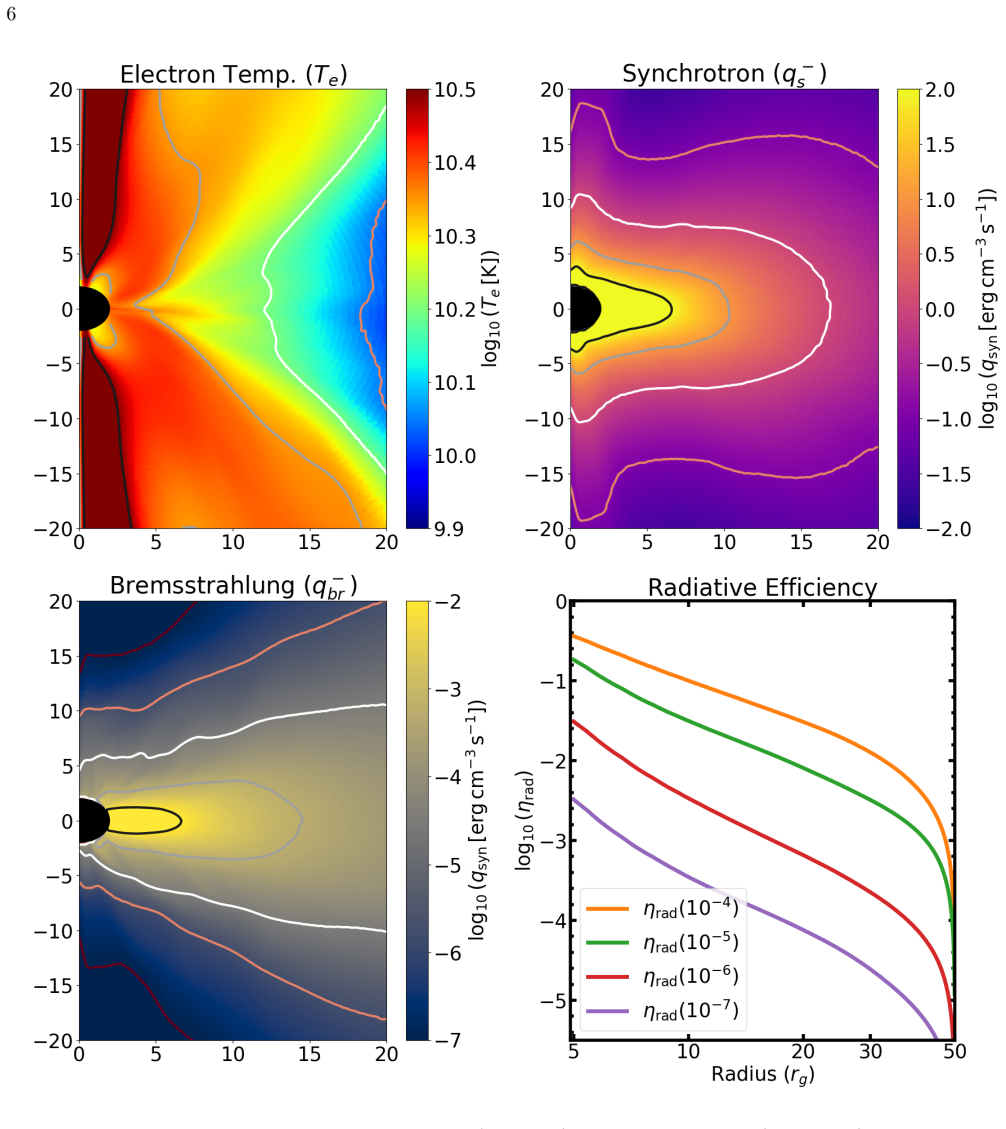
Radiative cooling can strongly influence the structure and dynamics of black hole accretion disks. Here, we perform general relativistic magnetohydrodynamic (GR-MHD) simulations of magnetically arrested disks (MADs) around a non-spinning black hole. Radiative cooling is consistently included in the simulations and its intensity is scaled by the mass accretion rate ranging from $10^{-7}$ to $10^{-4} \dot{M}_{\mathrm{Edd}}$. Considering synchrotron and bremsstrahlung emission, we quantify how radiative losses modify the disk structure and the accretion dynamics. In the inner MAD disk regions, accumulation of magnetic field regulates gas accretion, enforcing the gas into a discrete interchange-driven filamentary structure. We identify, both analytically and numerically, a transition mass accretion rate above which radiative cooling becomes faster than the heating, which is assumed to occur via local coupling to the magnetic field. Above this mass accretion rate, cooling substantially reduces the gas thermal pressure, leading to considerably thinner and denser accretion filaments, and a substantial increase in radiative efficiency, relative to lower accretion rates. We show that under these conditions, conventional measures of the disk scale height become misleading in MAD flows. We therefore introduce an alternative definition based on the polar position of the density maximum, which more robustly characterizes the filamentary structure of the disks in the presence of strong magnetic fields and cooling.
Blazars are promising candidates for high energy neutrino sources, yet the physical origin of their neutrino emission remains uncertain. In this work, we extend our previous study by modeling the broadband spectral energy distributions (SEDs) of 103 neutrino blazar candidates (NBCs) within a hadronic framework. To estimate the maximum possible neutrino output, we adopt an assumption in which the high energy emission is dominated by p gamma interactions and the contribution from leptonic inverse Compton scattering is strongly suppressed. From the SED modeling, we constrain nine key parameters describing the emission region and particle energy distributions. We perform a partial correlation analysis to investigate the relationship between neutrino luminosity and electromagnetic emission, and we found a weak or moderate correlation between optical R band and neutrino emission. Our model predicts prominent proton synchrotron emission peaking in the MeV band for most sources, with 99 out of 103 NBCs exhibiting proton synchrotron peaks within 0.1 to 100 MeV, highlighting the MeV band as a key window for distinguishing between leptonic and hadronic scenarios. Based on the model-predicted maximum neutrino fluxes, we find that three NBCs are potentially detectable by IceCube, while up to 22, 45, and 62 sources may be detectable by KM3NeT, NEON, and TRIDENT, respectively. These results provide testable predictions for future multi-messenger observations and offer new insights into the composition and radiation mechanisms of blazar jets.
We propose a non-parametric approach to construct the statistical equation of state (EOS) continuously from the nuclear crust to the asymptotic-freedom regime. Driven by the observationally required stiffening to support two-solar-mass neutron stars (NSs) with relatively small radii for low-mass NSs, this global thermodynamic constraint suggests a clear peak of squared sound speed ($c_s^2$) in massive NSs. To prevent overshooting perturbative QCD (pQCD) energy-density bounds, this early stiffening must be actively compensated by an extended density range of softening, with $c_s^2$ not approaching $1/3$ until $\sim\!30\,n_{\rm sat}$. Consistently, the trace anomaly $\Delta \equiv 1/3 - p/\epsilon$ becomes positive beyond NS densities and approaches the pQCD limit from above. This natural emergence of $\Delta > 0$ organically aligns with some anticipated microphysics, likely arising from the pressure dilution in a quark-hadron mixed phase, non-conformal pQCD corrections to quark-gluon interactions, or the symmetry-breaking effects of finite strange quark mass. By measuring the degree of this non-monotonic behavior in the posterior, we find evidence for a hadron-quark phase transition in the cores of the most massive neutron stars. This indicates that the non-perturbative quark matter is intrinsically soft, fundamentally distinguishing it from the stiff scenarios associated with the quark-star picture.
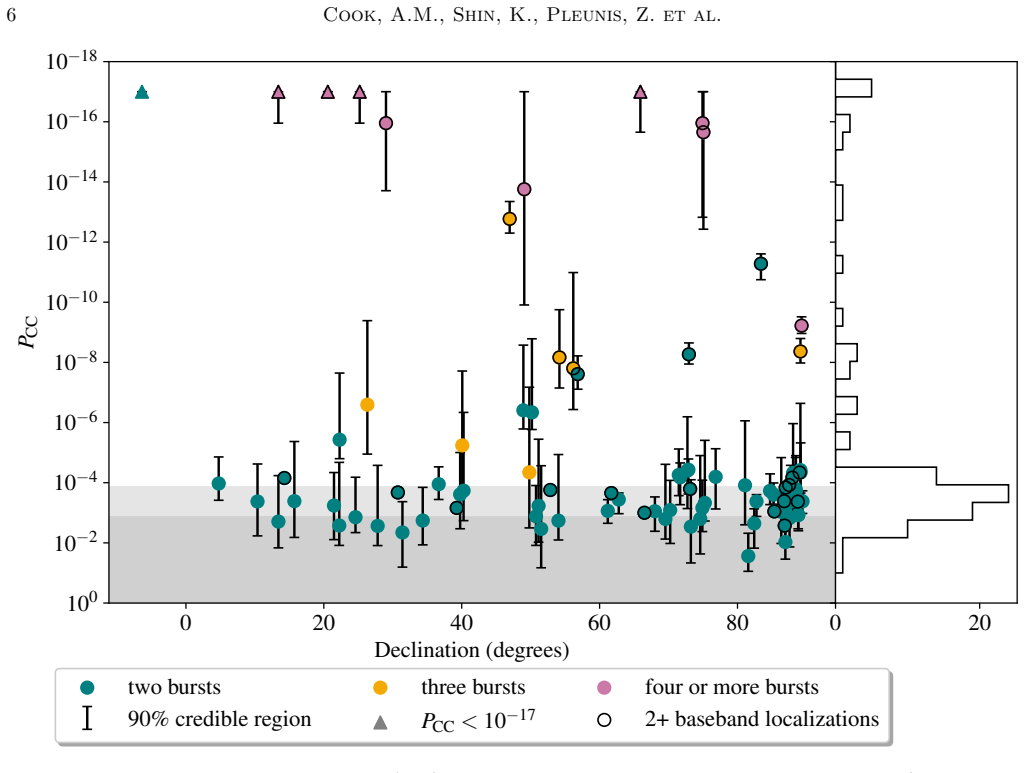
We present 30 newly discovered repeating fast radio burst (FRB) sources from the second catalog of bursts detected by the FRB backend on the Canadian Hydrogen Intensity Mapping Experiment (CHIME/FRB). These repeaters have extragalactic dispersion measures (DMs) spanning $99.4-1446.0\ \text{pc cm}^{-3}$ and burst rates between $10^{-5.7}$ and $10^{-0.5}$ hr$^{-1}$ scaled to a fluence threshold of 5 Jy ms. We report evidence of monotonic, linear DM variations in four repeaters on years-long timescales. The newly discovered sources bring CHIME/FRB's total number of observed repeating FRBs to 80, 79 of which were discovered by CHIME/FRB, between 2018 July 25 and 2023 September 15. In the full CHIME/FRB sample, only 2.4$\pm 0.4\%$ of sources have been observed to repeat, and we do not find evidence for significant evolution of this value over the duration of the experiment. We find no substantial evidence for bimodal populations of one-off and repeating FRBs in their burst rate distributions; the distribution of upper limits on repeat rates implied from observations of as-yet one-offs is entirely contained within the observed range of repeater burst rates and the distributions do not appear inconsistent. Similarly, using the population analysis framework of C. W. James (2023), we find that our observations of repeating and yet-one-off FRBs are equally well fit assuming a power-law distribution of repeat rates with 50$-$100% of the population repeating.
Perseus is the brightest X-ray strong cool-core (SCC) cluster, with a bright central radio and $\gamma$-ray source plus low-frequency radio mini and giant halos. It is the archetype of the cooling flow (CF) problem, with X-rays implying mass cooling rates orders-of-magnitude larger than observed in other channels. Recent work suggested that ancient ($\gtrsim$\,Gyr-old) cosmic ray (CR) halos (ACRHs), injected by the central source, would produce thermal-like soft X-ray inverse-Compton (CR-IC) emission 'boosting' the CC and alleviating the CF problem. We examine Perseus and show that a simple model of CRs injected by NGC 1275 (+satellites) simultaneously accounts for the excess CF luminosity and minihalo. The models reproduce Perseus's soft X-ray surface brightness and X-ray inferred density/temperature/pressure/metallicity/cooling time/mass deposition rates; $\gamma$-ray spectra; extended hard X-rays; and radio surface brightness and spectral index data, from kpc-Mpc. These also reproduce independent constraints on magnetic field strengths and mass/potential models. The evolution of the minihalo spectral index and surface brightness are predicted by an aging population of CRs boosting the apparent SCC luminosity via CR-IC, and match well the observed hard X-ray slopes. The 'giant' low-frequency halo can be predicted by the sum of ACRHs around satellites distributed throughout the cluster, dominating diffuse synchrotron at $\gtrsim 100\,$kpc. Re-acceleration is neither needed nor important in these models, and implied CR transport speeds are consistent with buoyant advection. Previous claims of upper limits to non-thermal X-rays and CR pressure relied on strong assumptions which are not valid at the CR energies of interest, e.g. a power-law spectrum of CRs. This could resolve many historical puzzles about Perseus, and makes new predictions for future observations.
The chiral magnetic effect (CME), arising from the chiral anomaly and enabling a mutual conversion between magnetic topology and fermionic chirality, is a key mechanism in magnetar field evolution. Previous work by Dehman & Pons (2025) demonstrated that the CME can efficiently generate dipolar fields ($B_{\rm dip} \gtrsim 10^{14}~\mathrm{G}$), consistent with magnetar timing measurements, provided that the initial magnetic field carries net helicity. However, whether neutron stars are born with magnetic helicity remains uncertain. In this work, we investigate the CME across a range of initial helicity configurations, including non-helical initial conditions. We find that the CME efficiently generates magnetar-strength dipoles on timescales of decades, independently of the initial helicity content. The instability is driven by localized helical structures that induce a residual chiral asymmetry and is primarily governed by the maximum chiral chemical potential, requiring $\mu_5^{\rm max} \gtrsim \mathrm{few}\times10^{-11}~\mathrm{MeV}$ for onset in the magnetar regime. Our results further show that these dipoles may either remain stable and subsequently evolve through standard Ohmic decay, or become unstable if they acquire sufficient helicity, in which case they decay through the chiral anomaly, transferring energy to less helical modes. This outcome depends sensitively on the initial helicity distribution. These findings extend the applicability of the CME to more realistic magnetic-field configurations and underscore the importance of the helicity distribution at birth, a quantity that remains poorly constrained in neutron star formation, yet is crucial for determining neutron star magnetic evolution and magnetar formation.
We present optical and near-infrared observations of the fast-declining Type Ia supernova (SN Ia) 2022an. The photometric and spectroscopic properties identify it as a standard 91bg-like event; however, our data reveal a relatively narrow absorption feature with a full width at half maximum (FWHM) of 75 angstroms near $1.037\,\mu$m in the rest frame of the observed spectra that persists from around 30 days to nearly 90 days after maximum light. We attribute this feature to He I $1.083\,\mu$m line with a blueshifted velocity of $1.3\times10^{4}$ km s$^{-1}$ and a FWHM of $2.1\times10^{3}$ km s$^{-1}$, supported by the detection of multiple optical He I transitions in earlier epochs at a higher velocity around $1.5\times10^{4}$ km s$^{-1}$. The high velocity of the helium could not be explained by helium external to the progenitor at the explosion, such as the stripped surface helium from a companion star. The properties of the helium absorption in SN 2022an spectra instead point to unburnt material in the outer ejecta, thus providing the most compelling evidence to date for helium-bearing ejecta in a 91bg-like SN Ia. Such helium has been predicted for sub-Chandrasekhar-mass double-detonation explosions involving a surface helium shell. No theoretical calculations of modern helium-shell double detonation have been performed at epochs similar to those observed for SN 2022an to study the effect of helium on their spectra, revealing a gap between observations and theoretical calculations in understanding the manifestation of helium in SNe Ia. Nevertheless, the discovery of persistent helium absorption in SN 2022an demonstrates the diagnostic power of NIR spectroscopy for understanding thermonuclear supernova explosions by probing the abundance and structure of their ejecta.
Young massive star clusters (YMSCs) have been proposed as excellent candidates for the main sources of Galactic cosmic rays (CRs) up to the PeV range. The detection and study of gamma rays in the very-high-energy (E>100GeV) range has brought arguments in favour of this hypothesis. Current instruments have detected only a few YMSCs. Future observatories are expected to increase this number, providing a larger sample improving our ability to constrain the role of YMSCs in the origin of CRs. We study the population of TeV YMSCs detected and their properties, confronting simulations of the YMSC population to the observed sample, to address the fundamental questions concerning the spectrum of accelerated particles, the efficiency of CR production, and the fraction of the wind luminosity converted into turbulent magnetic fields. Using Monte Carlo methods, we simulate the Galactic population of YMSCs in the gamma-ray domain and confront our simulations to the catalogue of sources of the systematic survey of the Galactic plane performed by H.E.S.S. (HGPS) and the First LHAASO Catalogue of Gamma-Ray Sources. We systematically explore the parameter space of our model, including the slope of accelerated particles $\alpha$, the CR efficiency $\eta_{\rm CR}$, the fraction of the wind luminosity converted into turbulent magnetic field $\eta_{\rm b}$, and the diffusion regime. We found 5 possible sets of parameters for which >75% of realisations agree with the combined data from the HGPS and LHAASO 1st catalogue. Certain regions of the parameter space are strongly disfavoured, such as Bohm diffusion. Our model successfully reproduces the YMSC population observed in both catalogues. With future systematic surveys, e.g. the Cherenkov Telescope Array Observatory (CTAO), this approach will help break degeneracies and improve our understanding of particle acceleration at YMSC shocks in the Galaxy.
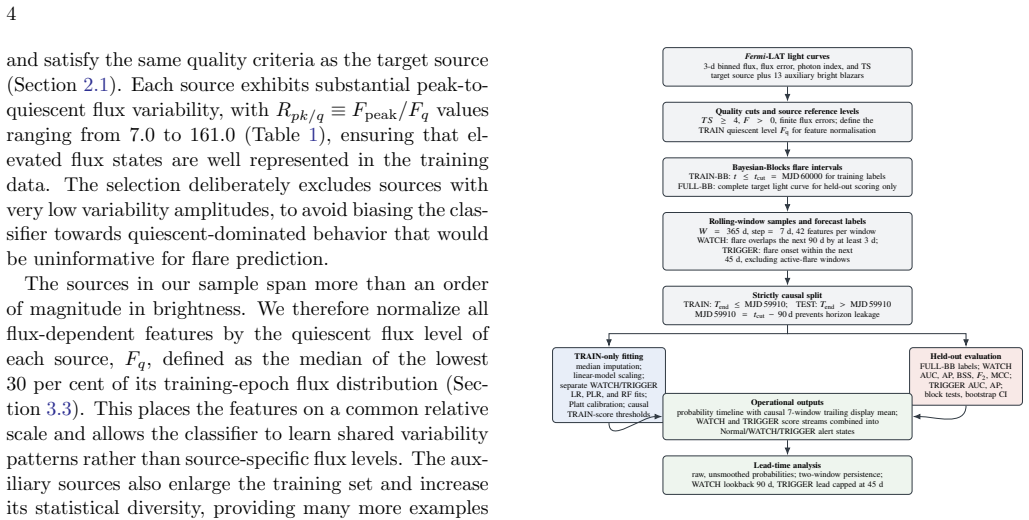
Long-term \textit{Fermi}-LAT monitoring makes it possible to ask whether a blazar light curve shows signs of an upcoming flare before the flare becomes obvious in the $\gamma$-ray emission. We present a strictly causal machine-learning framework for forecasting $\gamma$-ray blazar flares from 3-d binned LAT light curves. Flare intervals are identified with Bayesian Blocks, and each light curve is sampled with 365-d trailing windows from which 42 variability features are measured. We train separate WATCH and TRIGGER models: WATCH predicts whether flare activity will appear within the next 90 d, while TRIGGER predicts whether a new flare onset will occur within the next 45 d. To avoid temporal leakage, all scaling, calibration, threshold selection, and validation use only the pre-cutoff data before MJD 60000. We apply the method to the FSRQ 4FGL\,J1048.4$+$7143, using 13 bright blazars as auxiliary training sources. Among logistic regression, polynomial logistic regression, and random forest classifiers, polynomial logistic regression gives the strongest held-out WATCH performance, with ROC AUC $=0.891$, average precision $=0.396$, and a block-permutation probability $p_{\rm perm}=0.006$. At the selected WATCH threshold, it recovers 18 of the 21 positive windows in the held-out WATCH set, corresponding to a recall of 0.86. The same model also gives the best held-out TRIGGER ranking, with TRIGGER AUC $=0.770$ and TRIGGER AP $=0.123$, although no reliable pre-onset TRIGGER alert is obtained. The WATCH state appears before both held-out flare episodes, with final alerts 4.5 and 2.5 d before onset. The corresponding broader WATCH-active periods begin 88.5 and 72.5 d before flare onset. These results suggest that long-term {\fermi} light curves contain useful predictive information about the build-up to blazar flares.
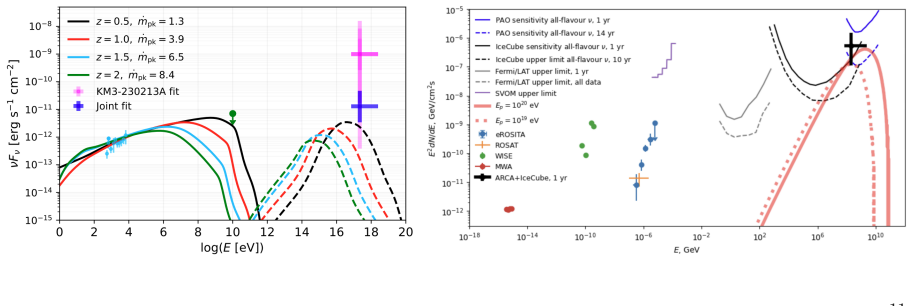
The recent detection of the ultra-high energy neutrino KM3-230213A by KM3NeT/ARCA marks the first observation of an astrophysical neutrino with energy above 100 PeV, opening a new window to the ultra-high energy Universe. In this contribution, the current global ultra-high energy neutrino landscape in light of this event is reviewed, including tension of this observation with existing limits set by the IceCube and the Pierre Auger Observatories. Different scenarios are discussed to explain its origin. Recent efforts to constrain features of potential source populations using the inferred diffuse ultra-high energy neutrino flux are also presented.
We report a detailed analysis on the young stellar cluster Berkeley 59 using Fermi-LAT. Using up-to-date source catalog and background models, we found significant extended GeV emission around Berkeley 59, which can be modeled by a radial disk of 1.02 degree radius with a significance of the extension of 10.6 sigma. We investigated the molecular, neutral and ionized gas content and the hadronic origin. The gamma-ray spectrum of Berkeley 59 has a photon index of 2.88. The derived gas mass from H2 and HII around Berkeley 59 is about 289 solar mass. We derived the relationship between cosmic ray acceleration efficiency and diffusion coefficient. Our results suggest that the extended gamma-ray emission originates from cosmic rays accelerated by cluster winds interacting with surrounding gas.
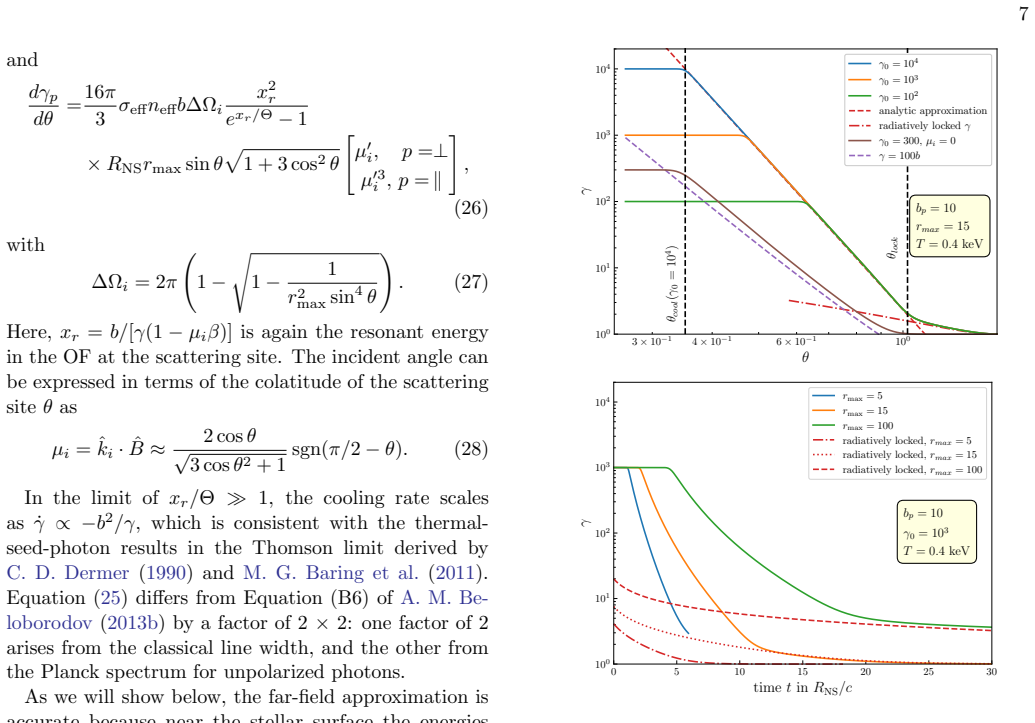
Magnetars are a subclass of neutron stars with ultra-strong surface magnetic fields. Some magnetars exhibit persistent hard X-ray emission, characterized by power-law tails with photon indices around 1--1.5, extending from ${\sim}$10 keV to several hundred keV. The leading explanation for this hard X-ray component is resonant Compton scattering, in which the thermal seed photons are upscattered by relativistic electron-positron pairs flowing along magnetic field lines in the magnetosphere. In this work, we adopt the pair outflow framework of the magnetar magnetosphere and calculate the resonant Compton scattering opacity, as well as the spectrum and polarization of the upscattered emission. We find that resonant cooling can substantially modify the magnetospheric plasma density and impose strong optical depth constraints on the hard X-ray emission regions. Under the viewing geometry inferred from IXPE, an equatorial twist near the stellar surface provides a viable configuration for the NuSTAR hard X-ray spectrum of 4U 0142+61, while a polar-twist geometry is disfavored. Joint spectral, timing, and polarimetric modeling will be essential for distinguishing between the magnetospheric scattering geometries and understanding the physical properties of the pair plasma.
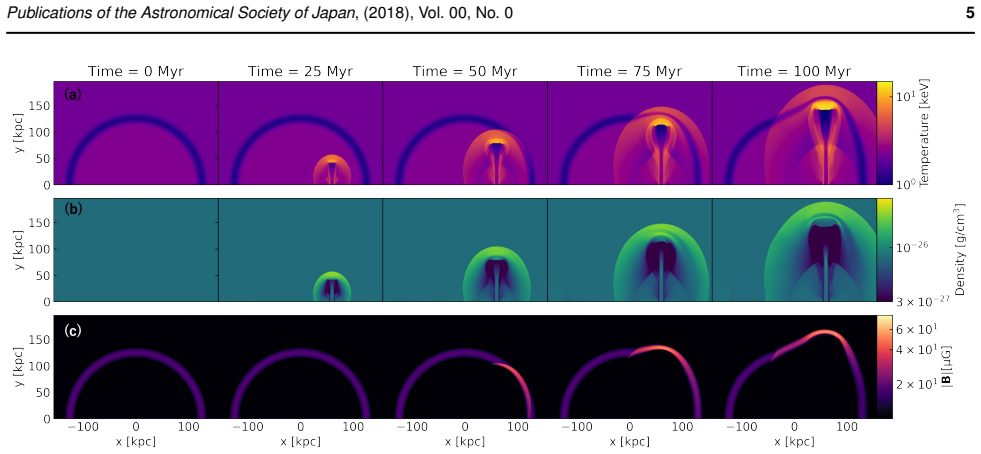
Galaxy clusters contain a hot, diffuse, and weakly magnetized plasma known as the intracluster medium (ICM). In this environment, how thermal conduction influences plasma dynamics and the conditions under which it operates efficiently remain open questions in cluster physics. Systems in which active galactic nuclei (AGN) jets interact with cold fronts produced by cluster mergers provide a unique setting to examine the interplay between conduction, jet dynamics, and ordered magnetic fields. To interpret the detailed structures revealed by recent observations, it is therefore important, as a first theoretical step, to quantify how thermal conduction modifies AGN jet morphology and the surrounding magnetic-field configuration. We perform two-dimensional magnetohydrodynamic (MHD) simulations of an AGN jet in an ICM environment, incorporating anisotropic thermal conduction with varying efficiency. The simulations show that thermal conduction transports heat from the jet head backward along magnetic field lines into the inner cocoon. This process increases the inner cocoon pressure, enhancing jet collimation by a factor of $\sim 4$ compared to models without conduction. This stronger collimation stretches the magnetic fields along the cold-front surface, resulting in a maximum field strength up to a factor of $\sim 1.5$ larger. Jet collimation increases as the conduction efficiency increases, which is interpreted as a conductive collimation mechanism. These results suggest that anisotropic thermal conduction can operate effectively on jet scales in galaxy clusters, and that accounting for conduction may be important when interpreting jet morphology and magnetic field structure in merging cluster environments.
Gravitational-wave observations have renewed interest in the black-hole mass gap and in the maximum mass of first-generation black holes below its lower edge. The \(^{12}{\rm C}(\alpha,\gamma)^{16}{\rm O}\) reaction plays a central role in this problem because it determines the carbon-to-oxygen ratio after core-helium burning and thereby affects the later evolution of massive stars toward pulsational pair instability and pair-instability supernovae.
Recent attempts to constrain \(S(300~{\rm keV})\) from gravitational-wave population inferences face important limitations, because the lower edge of the black-hole mass gap is not directly measured. It is inferred model dependently from assumptions about stellar evolution, metallicity, mass loss, rotation, binary evolution, hierarchical mergers, selection effects, priors, and the adopted population model. Therefore, values of \(S(300~{\rm keV})\) inferred from black-hole populations must remain consistent with independent nuclear-physics constraints.
In this work we reanalyze the low-energy \(^{12}{\rm C}(\alpha,\gamma)^{16}{\rm O}\) \(S\) factor using updated information on the subthreshold \(1^{-}\) and \(2^{+}\) ANCs and on the ground-state ANC of \(^{16}{\rm O}\), together with direct capture data. These constraints favor a lower \(S(300~{\rm keV})\) than the older central evaluation and disfavor very large values required by some black-hole-population interpretations. Using the resulting ANC-constrained \(S(300~{\rm keV})\) range and the transformed relation between this quantity and the lower edge of the pair-instability mass gap, we estimate \[ \frac{M_{\rm BH}}{M_\odot}\simeq 61\text{--}75 . \] Thus, the present nuclear-physics constraints favor a relatively high lower edge of the first-generation black-hole mass gap.
V1674 Her (Nova Her 2021) is the fastest classical nova ever recorded, with an optical decline time of $t_2 \sim 1$ day, typically interpreted as evidence for a white dwarf mass close to the Chandrasekhar limit. We present a broadband X-ray study of V1674 Her combining contemporaneous XMM-Newton and NuSTAR observations in quiescence to directly constrain the white dwarf mass and magnetic field strength. The hard X-ray emission is modeled using a physically motivated post-shock accretion column model that accounts for the temperature gradient in the flow and reflection from the white dwarf surface. Under the assumption that the accretion disk is truncated at the co-rotation radius, we obtain a white dwarf mass of $M = 1.09^{+0.07}_{-0.06}\,M_\odot$. An independent constraint derived from timing analysis of the X-ray power spectrum yields a consistent value of $M = 1.12 \pm 0.06\,M_\odot$. These values are significantly lower than those inferred from empirical decline-time relations, suggesting that such relations may overestimate white dwarf masses in extreme fast novae. From the inferred accretion rate and magnetospheric radius, we estimate a surface magnetic field strength of $B = 21.3^{+6.6}_{-5.7}\,(\mathrm{stat})^{+12.9}_{-8.1}\,(\mathrm{sys})\,\mathrm{MG}$, placing V1674 Her at the high end of the magnetic field distribution for intermediate polars. Our results demonstrate that even the fastest novae do not necessarily host near-Chandrasekhar white dwarfs, highlighting the importance of direct X-ray constraints and suggesting that additional parameters beyond white dwarf mass play a key role in setting nova timescales.
X-ray spectral modeling is a powerful tool for studying the immediate environment of accreting objects, including supermassive black holes. Several models, either phenomenological or physically driven, have been developed over the past decade to study X-ray spectra, delivering important insights into the properties of circumnuclear material of active galactic nuclei (AGN). Despite the fact that these models are able to reproduce the data well, they often lack realistic geometries, and most of them consist of simplified configurations such as a slab or a torus. We use the ray-tracing code \textsc{RefleX} to generate new spectral models that cover a wide energy range in the X-ray band, adopting a realistic configuration for the surrounding material. We introduce two new table models that are publicly available: 1) the RXToPo model, which features an X-ray source along with a dusty torus and a polar hollow cone; 2) the RXagn1 model, which includes, besides the torus and polar cone, also the accretion disk and the broad line region. Both models were applied to the X-ray spectrum of NGC 424, demonstrating their potential to study sources whose X-ray emission is dominated by reprocessed radiation.
47 Tucanae is one of the largest, brightest, and closest globular clusters to Earth. It hosts an exotic stellar population with stellar dynamics that indicate a complex evolution history. The cluster contains a large number of X-ray binaries and millisecond pulsars. However, given its large distance relative to the known pulsar population, previous surveys have found only the very brightest sources. Therefore, surveys with increased sensitivity should find many additional pulsars. Increasing the number of pulsars is crucial to investigate the dynamics of this globular cluster and could also lead to the discovery of unusual types of system. With a significantly increased sensitivity compared to earlier telescopes, MeerKAT is the natural choice to perform new surveys. We carried out two campaigns with different observational cadences to account for the high scintillation along the line of sight to this cluster. Here we report the discovery of fifteen new pulsars in 47 Tucanae with MeerKAT. These discoveries bring the total number of known pulsars in this globular cluster to 42, and the MeerKAT discoveries in this cluster to 17. We discuss some of their characteristics, which include preliminary localisations and estimates of orbits for most systems. Highlights include the discovery of 47 Tuc af, a 'black widow' pulsar with a short orbital period that was identified optically in 2002 as a candidate binary pulsar, and 47 Tuc ai, an eccentric binary pulsar with a massive companion, a unique system in 47 Tuc to date. Apart from the new systems, we also re-detect and localise 47 Tuc P and V, two elusive, seldom-detected systems that had no precise localisation from a phase-connected timing solution. The localisation of 47 Tuc V places it in a position consistent with a continuum source detected earlier in MeerKAT imaging data.
Gravitational waves (GWs) from distant sources such as inspiralling and merging stellar-mass compact binaries, intermediate-mass and supermassive-binary-black-hole can be gravitationally lensed by intervening objects, ranging from stars and primordial black holes to galaxies and clusters. Depending on the GW wavelength relative to the lens scale, lensing occurs in two regimes: geometric optics, producing multiple images with time delays and magnifications, and wave optics, resulting in frequency-dependent waveform modulations. Lensed signals are identified via parameter overlap between event pairs or characteristic frequency-dependent modulations that distinguish them from unlensed signals. Detection rates depend on the redshift and mass distributions of sources and lenses, with promising prospects for future observatories. Once confirmed, lensed GWs will be powerful probes of fundamental physics and cosmology: they can constrain dark matter, lensing structures, the Hubble constant, and other cosmological parameters. In this review, we provide a concise overview of GW lensing, covering the theoretical framework, predicted detection rates, search strategies, and applications. We conclude with prospects and future directions for observing and exploiting lensed astrophysical GW events.
We present a photometric and spectroscopic analysis of the fast-declining Type II SN 2020aze, observed in optical bands from 2.2 to 137.4 days after explosion. The V-band light curve reaches a peak absolute magnitude of about minus 16.97$\pm$0.20 mag by 15 days, followed by a recombination phase with a decline rate of 2.04$\pm$0.13 mag per 100 days, lasting about 120 days. Early spectra (younger than 6 days) show a transient weak narrow emission line at 4687 Angstroms and a feature spanning 4400-4800 Angstroms, attributed to narrow and broad blue-shifted He II 4686, indicating interaction between the ejecta and dense circumstellar material. Comparison with spectral models suggests a red supergiant progenitor with a weak wind and a mass-loss rate of about 1e-3 solar masses per year. Semi-analytical light-curve modeling gives an initial radius of about 1100 solar radii, an ejecta mass of about 12 solar masses, an explosion energy of about 1.5e51 erg, and a progenitor mass of about 14 solar masses. These early interaction signatures, the steep decline, and the extended photospheric phase highlight the role of pre-supernova mass loss and circumstellar interaction in shaping the diversity of Type II supernovae.
We investigate the spectrum and polarization of radiation emerging from a subcritical X-ray pulsar using self-consistent radiation-hydrodynamic simulations of an accretion channel in a strong magnetic field. The polarized radiative transfer in the channel above the hot spot is simulated for the two normal modes, taking into account resonant Compton scattering in a strongly magnetized plasma and the effects of vacuum polarization. We show that the deceleration of the accreting matter in the subcritical regime is mainly governed by resonant scattering. Our simulations provide the velocity profiles of the plasma flow and demonstrate that vacuum polarization dominates over plasma birefringence, enhancing both the cyclotron spectral feature and the radiative deceleration of the plasma. The linear polarization degree changes sign at photon energies above the cyclotron resonance when vacuum polarization is included. We also find that the centroid energy of the cyclotron scattering feature increases with accretion luminosity, indicating a positive correlation consistent with previous observational results and theoretical interpretation.
Ultraluminous X-ray sources (ULXs) are mostly extragalactic non-nuclear point sources having X-ray luminosity exceeding the Eddington luminosity of 10 $M_\odot$ black hole i.e., $L_X \geq $ 10$^{39}$ erg ~s$^{-1}$. They are observed in all types of galaxies; spirals, ellipticals and dwarf irregulars. But the rate of occurrence of ULXs per galaxy varies, some might host a single ULX, whereas some host a large number. In this work we attempt to identify possible differences in ULX properties between two extreme categories in spirals and ellipticals, i.e. ULXs occurring at a rate of one per galaxy ($N=1$) and those occurring at larger rate. We adopt an effective scheme to generate flux limited, credible samples corresponding to the two groups in spirals and ellipticals. From this study, we infer the presence of a separate population of ULXs in the $N=1$ spiral group which contains a reasonable fraction of both soft and hard sources, while the remaining categories contain mostly harder sources. We also find six ULXs in $N=1$ ellipticals with globular cluster association. In addition, we identify few luminous candidates likely hosting massive accretors. This study provides crucial hints of a potential link between ULX types and their occurrence rates and host morphology, a finding that warrants validation via targeted observations and detailed spectral analysis of these sources.
Astrophysical current layers, e.g., in pulsar winds, can be electrically charged, while the plasma is charge-symmetric, $e^\pm$. Using PIC simulations, we investigate dynamics and plasmoid formation (tearing instability) in charged Harris-type and rotational current layers. Electrically charged current layers, initially in global force-balance, are electrostatically unstable: the resulting dynamics is an intricate interplay between electrostatic Bernstein waves (BWs) and the current tearing mode. Besides overall density and magnetic field, plasma temperature is an important factor. In the charged Harris sheet set-up, the quickly generated BW are trapped within the layers (internally reflected at the upper hybrid resonance). BWs quickly redistribute the charge modifying the initial stage of tearing, but without strongly affecting overall plasmoid growth; resulting plasmoids are mildly charged. In rotational current layers: (i) even initially overall uncharged configurations develop large fluctuations of charge density; (ii) overall dynamics depends on the initial overall temperature; (iii) for certain combination of parameters tearing rate is greatly increased in the charged case.
We present a detailed analysis of the evolution of type-C quasiperiodic oscillations (QPOs) observed during the flaring state of the recently discovered black hole X-ray binary Swift J1727.8-1613, utilizing data from the Insight Hard X-ray Modulation Telescope. By examining the relation between the QPO fractional rms amplitude and QPO frequency across various energy bands, we discover that the behavior significantly differs between these energy bands. Below 10 keV, the QPO fractional rms generally decreases with increasing QPO frequency, whereas above 10 keV, the QPO fractional rms remains relatively stable with frequency. Additionally, we report, for the first time, the detection of a common break at around 4 Hz in the relation between QPO fractional rms and frequency in both the 2-4 and 50-100 keV energy bands. We also find that the evolution of all the spectral parameters alters its behavior at around 4 Hz, with the changes in all parameters becoming flatter. This suggests a significant change in the geometry of the accretion flow. We attribute the observed break to the overall changes in the spectrum.
We investigate the population properties of binary black holes (BBHs) from the LIGO-Virgo-KAGRA collaboration, focusing especially on those in the high-mass range, using the newly released GWTC-4 catalog. For the first time, we search for a subpopulation of low-spin intermediate-mass black holes (IMBHs) that would indicate formation via stellar core collapse. With the currently available catalog, we find no evidence for such a subpopulation, and set a 90\% upper limit on the merger rate of collapse-formed IMBHs at $0.077~\mathrm{Gpc}^{-3}\,\mathrm{yr}^{-1}$. The mass distribution of low-spin (stellar-origin) black holes truncates at $65^{+23}_{-22}\,M_\odot$, consistent with the lower edge of the pair-instability mass gap (PIMG), although we cannot directly determine its upper boundary from current data. Informed by stellar evolution theory, we estimate the upper edge of the PIMG to be $150\pm24\,M_\odot$. We find that the observed IMBHs belong to a high-spin subpopulation, consistent with formation through successive hierarchical mergers.
Recent observations of metal-poor, star-forming dwarf galaxies reveal He III regions, traced by nebular He II 4686 emission that require a strong source of extreme-ultraviolet (EUV) radiation. The origin of this hard ionizing radiation remains poorly understood, as standard stellar populations fail to account for it, posing key implications for the understanding of early galaxy formation. We present a systematic Chandra X-ray study of 21 nearby star-forming galaxies with He II emission but lacking Wolf-Rayet spectral signatures. Using 7 new and 36 archival Chandra X-ray observations combined with optical stellar population synthesis modelling, we constrain the ionizing continuum required to sustain the observed He II line, the ionizing continuum available from X-ray objects, and the properties of the host H II regions. We find that the inferred EUV output from accreting X-ray sources in our sample is systematically lower than what is required to produce the observed He II emission. Our sample is consistent with established empirical scaling relations for X-ray luminosity, indicating that this discrepancy cannot be attributed to an anomalously low number or luminosity of X-ray sources. These results indicate that accreting X-ray sources alone cannot account for the observed He II-ionizing photon budget, pointing to additional or alternative sources of hard EUV radiation in metal-poor star-forming environments. Potential alternative or additional contributors are discussed.
We report on a gravitational wave search for compact binary coalescences involving at least one component with mass between $0.2 M_\odot$ to $1 M_\odot$, and ratio of component masses between 0.1 and 1. The analysis uses data collected by the LIGO detectors between May 24 2023 15:00 UTC and January 16 2024 16:00 UTC. No statistically significant sub-solar mass candidates were identified by the participating search algorithms. We report the detection sensitivity of the current searches to the target sub-solar mass black hole population, while also reporting the sensitivity of the search to low-mass neutron star binaries for the first time. With the absence of detections, we place upper limits on the merger rate of sub-solar mass black holes, ranging from $110$ $\mathrm{Gpc^{-3}yr^{-1}}$ to $10000$ $\mathrm{Gpc^{-3}yr^{-1}}$ at 90% confidence. We use the merger rate limits to constrain two illustrative dark matter scenarios that can form sub-solar mass compact objects: primordial black holes, and dark black holes forming in a dissipative dark matter model. For late-forming primordial black hole binaries, our search excludes the fraction of dark matter in primordial black holes to be 1 for masses above $0.9 M_\odot$. In the early-formation scenario, we limit this fraction to be $\leq$ 7% at $1 M_\odot$, and $\leq$ 40% at $0.35 M_\odot$. For the dissipative model, the excluded region in the parameter space of dark matter fraction in dark black holes and their minimum possible mass extends down to (1.2 to 1.3) $\times10^{-5}$ when the minimum mass is $1 M_\odot$. For binary neutron stars that include sub-solar mass components, we estimate the sensitive space-time hypervolume to be $10^{-3}$ $\mathrm{Gpc^3yr}$, and report the upper limit on their merger rate for a simple, fixed population as ~86 $\mathrm{Gpc^{-3}yr^{-1}}$.
We present a multi-wavelength analysis of the nearby millisecond pulsar PSR J0437--4715, combining Hubble Space Telescope (HST) far-ultraviolet, ROSAT soft X-ray, and XMM-Newton X-ray data, to model its broadband emission and energy-resolved pulse profiles, and infer key stellar parameters via Bayesian inference. The broadband emission includes cold thermal, hot thermal, and non-thermal components: cold bulk surface emission is modeled with a non-magnetized partially-ionized hydrogen atmosphere; hot-spot emission adopts the pulse profile modeling technique with a non-magnetized fully-ionized hydrogen atmosphere model; and non-thermal emission is included as a phase-invariant power-law component. By adopting an informative prior on the hot-spot geometry informed by radio polarization position angle measurements, the joint multi-instrument analysis yields a statistically viable and radio-consistent solution with a gravitational mass of 1.38$\pm$0.03~M$_\odot$ and an equatorial circumferential radius of 13.25$_{-0.35}^{+0.34}$~km (68\% confidence intervals). The hot-spot geometry consists of two spherical caps with uniform temperature distributions: the primary hot spot is situated at a colatitude of $\approx$130$^{\circ}$, and the secondary hot spot lies at a colatitude of $\approx$9$^{\circ}$, close to the north pole. It yields tighter radius constraints than HST+ROSAT fits and shifts the radius posterior distribution to larger values relative to NICER-only fits. This work demonstrates the importance of multi-wavelength data in refining neutron star mass-radius measurements and resolving geometric degeneracies.
X-ray polarimetry is now providing a new way to look at the high energy sky. The addition of two observables, polarization fraction and angle, reveals crucial new information on the structure of accretion flows and magnetic fields in astrophysical systems. Here, we review the basic physical processes that produce polarized X-rays in astrophysical contexts. Then, we briefly describe the physical processes used to measure X-ray polarization and the detectors that have been flown or are under construction.
We present the results for the dynamics and emission profiles of axi-symmetric numerical simulations of structured gamma-ray burst afterglow jets, computed using the relativistic moving-mesh hydrodynamics code GAMMA. We find that the spreading of jets of average opening angle is moderately impacted by the initial steepness of the angular structure, although the effect disappears once the working surface of the jet substantially exceeds its initial width, and that the travel time of a sound wave across the front surface remains the best indicator of the onset of spreading also for structured jets. When computing the afterglow spectrum using a local cooling approach that traces the electron population following shock-acceleration, we observe a significant impact on the synchrotron cooling break. Similar to earlier results for top-hat jets, the cooling break is found to shift upward in frequency by well over a factor of ten relative to approaches that assume a global cooling timescale across the jet. The cooling break transition in the spectrum also becomes substantially smoother. For both local and global cooling, jet breaks become sharper with increasing frequency. Local cooling is found to initially lead to a steeper slope post jet-break. The local-cooling emission is shown to originate from a narrow frequency-dependent sized region behind the shock front, as expected, but in strong contrast to a global cooling approach.
The degree of black-hole spin-orbit misalignment ("tilts") in the astrophysical population could be a powerful diagnostic to distinguish between binary formation in isolation, in dynamical environments, or in hierarchical triples. However, robust population-level spin tilt measurements are complicated by model misspecification as well as numerical and Poisson variance, ultimately owing to poor single-event constraints on tilts. Motivated by reports of a possible peak in the spin tilt distribution, we analyze the fourth LIGO-Virgo-KAGRA gravitational-wave transient catalog to test for preferred spin orientations at different black hole masses. We find that a peak in spin tilts is not statistically significant nor model independent. Since the data cannot be used to reliably identify subpopulations based on their spin tilt properties, we also consider a complementary approach: measuring the spin magnitude and tilt distributions at fixed mass scales. We find no confident correlation between mass and spin tilt, but we do confirm a confident correlation between spin magnitude and mass, corroborating recent analyses.
We report the discovery and multi-wavelength characterization of the Galactic transient EP J174942.2$-$384834, first detected by the Einstein Probe during a faint X-ray outburst in March 2025. Coordinated follow-up observations revealed two major outbursts and a rebrightening over a seven-month period. Broadband X-ray spectral modeling shows that the outburst emission was dominated by thermal Comptonization of very soft seed photons. The absence of a detected thermal disk component, together with the low inferred seed-photon temperature, is consistent with a cool and possibly truncated accretion disk. The X-ray spectrum remained consistently hard throughout the outburst activity, with a power-law photon index of $\Gamma \approx 1$-2, gradually softening as the flux declined. The optical/UV counterpart brightened in tandem with the X-ray emission and exhibited a blue continuum with broad Balmer absorption features. Together with the optical/UV - X-ray luminosity correlation, this supports a disk-dominated origin of the optical/UV outburst emission, with viscous heating likely playing a major role and irradiation possibly contributing, especially in the UV. No radio counterpart was detected, implying at most very faint jet activity. Taken together, the observed properties support the classification of EP J174942.2$-$384834 as a very faint X-ray transient black hole candidate. This study demonstrates the ability of Einstein Probe to uncover and characterize the faintest accreting compact objects in the Galaxy.
Active galactic nuclei (AGN) showing dramatic spectral and flux variations, either due to changes in the accretion rate (changing-state, CS-AGN) of the supermassive black hole or in the line-of-sight column density (changing-obscuration, CO-AGN), have been classified as changing-look (CL) AGN. Here we present a peculiar source, 2MASX J0413-0050, first identified as a narrow-line Seyfert 1 (NLS1s) galaxy in 2004. When re-observed twice in 2021, it showed a transition in the spectral type (towards a Seyfert 1.9) and the complete and mysterious disappearance of the Hbeta line while source was in a high accretion state. In the meantime, the X-ray flux decreased between observations taken in 2020 and 2022, and again in the most recent spectrum of 2023. Shortly after this, another optical spectrum revealed the re-emergence of both the narrow and broad Hbeta components (Seyfert 1.8). Despite the fact that it was not possible to retrieve the line-of-sight column density from the X-ray spectra, which would have helped in assessing whether this event could be attributed to a CO AGN scenario, the observational evidence does not necessarily support such an interpretation. J0413-0050 may have undergone several switch-on switch-off phases over the past 20 years, on an unknown timescale, which could have affected the accretion power and, consequently, the optical continuum and so the emission lines coming from the broad-line region (BLR). For these reasons, it is reasonable to classify this source as a CS-AGN. The case of J0413-0050 supports the hypothesis that NLS1s can indeed experience CL phenomena.
Some high-mass stars likely end their lives in underluminous implosions that leave behind a black hole, known as failed supernovae (FSNe). However, neutrinos radiated during proto-neutron star formation generate a weak (Mach $\gtrsim 1$) shockwave in the outer layers of the star, which produces a unique transient as it breaks out of the dying star and signals its imminent disappearance. It was recently shown that there are two self-similar solutions that describe the propagation of this weak shockwave, and these solutions simultaneously contain outward-moving ejecta and fallback accretion onto the black hole. Here we show that the larger Mach number solutions are unstable, such that the Mach number of the shock grows with time $t$ and deviates from the self-similar prediction as $\propto t^{\alpha}$, with $\alpha \lesssim 0.1$, whereas the smaller Mach number solutions are stable. We also show that, above a critical mass loss that is readily achievable in core-collapse supernovae, the shock asymptotically strengthens and approaches the strong limit. Our results imply that it is the mass lost to neutrinos \textit{relative} to the mass enclosed by the shockwave, as well as the stellar density gradient where the shock forms, that primarily dictate its strength and the amount of material it ejects. These criteria explain why red supergiants, which have relative mass losses well in excess of the critical value at the time of shock formation, more readily eject material and create more luminous explosions compared to more compact progenitors.
PSR J1905+0154A is a binary millisecond pulsar located in the globular cluster (GC) NGC 6749. It was discovered in 2004 in a search for pulsars in GCs carried out with the Arecibo 305-m radio telescope. The pulsar has a spin period of 3.2 ms, an orbital period of 0.81 days, and is in a low-eccentricity orbit with a low-mass WD companion. Combining early Arecibo and latter Five Hundred meter Aperture Spherical Telescope (FAST) data, we were able to derive a phase-coherent timing solution for this pulsar, which now spans 20 years. This includes a precise measurement of the astrometric, spin and orbital parameters of the system. The small range of predicted accelerations expected from the gravitational field of this GC allows an estimate of the intrinsic spin-down: the inferred magnetic field at the surface (2.2 - 2.4 * 10^8 G) and characteristic age (2.8 - 3.5 Gyr) are typical of what one finds among MSPs in the Galactic field. The position of this pulsar coincides with the position of one of the very few candidate white dwarfs (WDs) in the whole HST dataset on this GC. The position of the companion in the colour-magnitude diagram is consistent with a Helium WD with a mass of 0.17 - 0.19 M_sun, a cooling age of 0.4 - 0.7 Gyr, and a surface temperature of 11,600 - 14,800 K. A comparison with the characteristic age of the pulsar indicates that at the start of the WD cooling the latter had a spin period of ~2.7 ms. The velocity of the system relative to the GC, which is 4.5-sigma significant and an order of magnitude larger than the escape velocity, raises the possibility that, despite its location close to the centre of the GC, the pulsar might not be associated with it. Finally, our effort to confirm a second pulsar candidate in this GC did not yield a positive confirmation, nor the discovery of any additional pulsar in this GC.
Core-collapse supernovae (CCSNe) are powerful sources of gravitational waves (GWs). These signals propagate essentially unobstructed, providing a unique probe of the supernova central engine. In this work, we investigate parameter estimation from the bounce and early ring-down GW signal of rotating CCSNe using machine learning. We infer the peak frequency and peak amplitude of the signal as well as the rotation of the core. We extend previous studies in several directions. We consider a range of progenitor models and nuclear equations of state, and we assess the impact of key physical uncertainties, including bounce-time uncertainty and source inclination. We incorporate both current detector noise and the projected sensitivities of next-generation observatories. We find that uncertainty in the bounce time does not significantly affect parameter estimation when the analysis is performed in the Fourier domain. In contrast, orientations when the rotation axis is near the line of sight substantially degrade performance. For optimal orientations, next-generation detectors can constrain rotation out to distances exceeding 100 kpc.
Projected limits are competitive with galaxy clusters and stronger than dwarf spheroidals for velocity-dependent cases due to subhalos.
abstractclick to expand
Dwarf irregular galaxies (dIrrs) are rotationally supported galaxies with a low star formation rate. Thus, their gamma-ray astrophysical emission is expected to be low, making them interesting targets for WIMP dark matter (DM) indirect searches. In this work, we build upon previous work on these objects in this DM context, and identify the best four dIrrs to be observed by the forthcoming Cherenkov Telescope Array Observatory (CTAO). Since dIrrs have not been detected in gamma rays yet, we first explore the prospects for detecting their astrophysical emission with the CTAO. Secondly, we compute the CTAO sensitivity prospects to a DM annihilating signal from these objects, accounting for the presence of DM substructures in them. We do so for both cuspy and cored DM density profiles, as the cusp-core debate remains particularly open for dIrrs. Our best combined limits show the potential to exclude DM annihilation cross-section values around $2\times 10^{-24} \ \mathrm{cm^{3}}\mathrm{s^{-1}}$ for 100 GeV WIMP masses annihilating in the $\tau^+\tau^-$ channel. These prospective results are competitive with and complementary to benchmark targets such as galaxy clusters. We also analyze the case of the velocity-dependent annihilation cross-section (Sommerfeld enhancement), obtaining projected DM constraints that exceed those expected for dwarf spheroidal galaxies, thanks to the contribution of subhalos to the signal. We conclude that dIrrs are compelling targets for the CTAO, not only for DM indirect searches but also as possible astrophysical sources.
We present a novel methodology to estimate the ratio of kinetic to gravitational potential energy in core-collapse supernova progenitors and to assess the equation of state (EOS) using gravitational-wave signals from the core-bounce phase of rapidly rotating stars in real interferometric data. We extend a previous phenomenological model by introducing an additional parameter that captures the signal timescale. The agreement between our template and numerical waveform databases is evaluated through fitting factors and Bayesian model comparison, also assessing consistency across datasets. The improved model increases the median fitting factor from 88.88% to 90.83%. Parameter estimation is performed via Markov Chain Monte Carlo using real O3aL1 noise. For 452 simulated signals, the rotational parameter $\beta$ is recovered with a median relative error of 11.93% (95th percentile: 38.41%) and an uncertainty of $\sigma_\beta = 1.083 \times 10^{-3}$ at 10 kpc, improving over previous matched-filtering results. We further analyze the impact of prior choices and noise properties, finding that real interferometric noise introduces biases up to 11.9%, while optimized priors can reduce them to 0.6%.
Context. On April 14, 2009, the AGILE satellite detected a {\gamma}-ray flare from an unknown transient source. Subsequent X-ray follow-up observations with Swift and INTEGRAL identified the supergiant fast X-ray transient (SFXT) IGR J17354-3255 as the best candidate counterpart, based on positional coincidence and a similar temporal behaviour. Aside from this hint, no SFXT has been firmly detected at high energies to date. Overall, SFXTs comprise a subclass of high-mass X-ray binaries (HMXBs) that host a massive OB supergiant star as a companion donor. They tend to display the most extreme X-ray variability among HMXBs. These systems might be able to emit photons at MeV-TeV energies in the form of fast flares lasting from hours to a few days, with a low-duty cycle.
Aims. In this work, we analyse archival AGILE data to search for {\gamma}-ray flares consistent with IGR J17354-3255 and evaluate their possible physical origin.
Methods. We identified a transient source, AGL J1736-3250, which emitted 19 {\gamma}-ray flares and was seen to be positionally consistent with IGR J17354-3255. Most flares, detected on a 1 d timescale, concentrate most of their emission on two, four, and six hour timescales, resembling those observed in the X-ray band from IGR J17354-3255.
Results. An orbital phase analysis revealed that approximately half of the {\gamma}-ray activity occurs around the apastron passage of the compact object hosted in the binary system. We also incorporated archival Swift and INTEGRAL observations to provide phase-folded light curves at lower energies. Our collected results strongly support a physical association between IGR J17354-3255 and AGL J1736-3250, offering evidence that SFXTs could constitute a new class of Galactic high-energy transient emitters.
We investigate the relativistic generalization of the classical St\"{o}rmer problem, which describes the motion of charged particles in a purely magnetic dipole field. By incorporating special relativistic effects, the particle dynamics is governed by a strongly nonlinear system of second-order differential equations derived from the Lorentz force law. We present a rigorous and fully covariant derivation of the relativistic equations of motion, together with the associated conservation laws. An exact solution for planar motions is obtained in parametric form, providing analytical insight into the structure of the trajectories. In addition, we perform a detailed numerical analysis of the particle dynamics across both nonrelativistic and relativistic regimes, exploring a range of initial conditions and highlighting the impact of relativistic corrections. The electromagnetic radiation emitted by the accelerated charges is also examined. We compute the time dependence of the total radiated power and determine the corresponding frequency spectrum. Our results provide a comprehensive characterization of magnetic dipole--type radiation associated with St\"{o}rmer-like motion. In particular, the power spectral density consistently exhibits distinct peaks, indicating the presence of preferred frequency bands in the emitted radiation.