Quantum Simulation of Stokes Flow via Schr\"odingerisation and Artificial Compressibility
Pith reviewed 2026-07-02 08:29 UTC · model grok-4.3
The pith
A quantum algorithm simulates incompressible Stokes flow with exponential speedup in problem dimensionality.
A machine-rendered reading of the paper's core claim, the machinery that carries it, and where it could break.
Core claim
The artificial compressibility formulation unifies the Stokes system so that the Schrödingerisation procedure maps it directly to a quantum circuit; complexity analysis then shows this yields quantum advantage with exponential speedup in high-dimensional settings, while numerical tests on Qiskit corroborate validity and scalability.
What carries the argument
Schrödingerisation applied to the artificial-compressibility-regularized Stokes equations, which encodes the regularized system into an explicit quantum circuit.
If this is right
- High-dimensional Stokes flow problems that are intractable on classical computers become accessible.
- The unified artificial compressibility framework allows the entire system to be handled by a single quantum procedure.
- The approach scales as shown by both complexity bounds and Qiskit experiments.
- Similar quantum mappings could apply to other saddle-point problems arising in fluid dynamics.
Where Pith is reading between the lines
- If the regularization error can be controlled independently of dimension, the method might extend to time-dependent or nonlinear flow problems.
- The explicit circuit construction could serve as a template for quantum simulation of other linear PDE systems that reduce to saddle-point forms.
- Practical deployment would require checking whether the predicted speedup survives noise and limited qubit counts on near-term hardware.
Load-bearing premise
The artificial compressibility regularization produces a system whose solution remains sufficiently close to the true incompressible Stokes solution for the quantum simulation to be useful.
What would settle it
Numerical evidence that the regularized solution fails to approach the true incompressible Stokes solution as the artificial compressibility parameter tends to zero, or that the quantum circuit complexity does not exhibit the claimed exponential scaling with dimension.
Figures
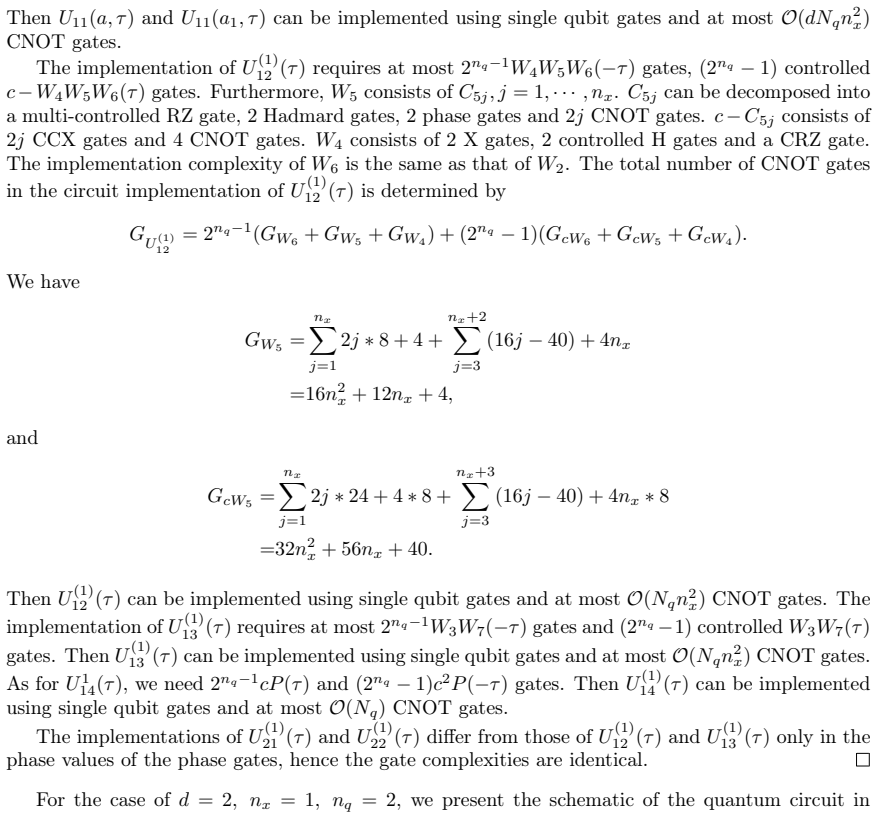
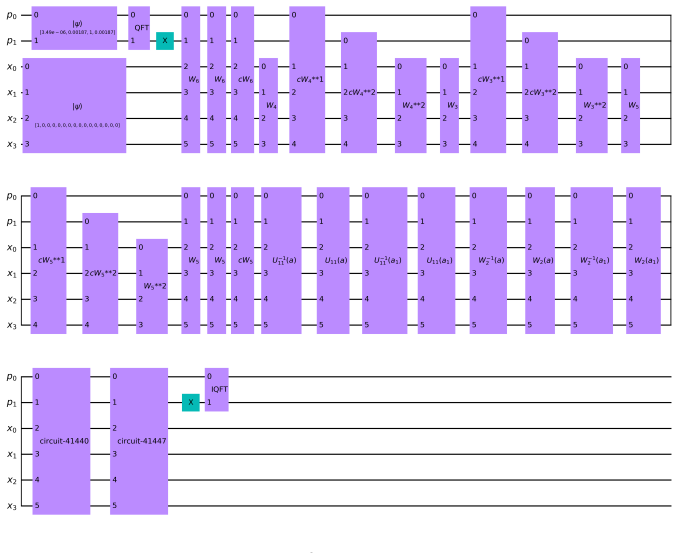
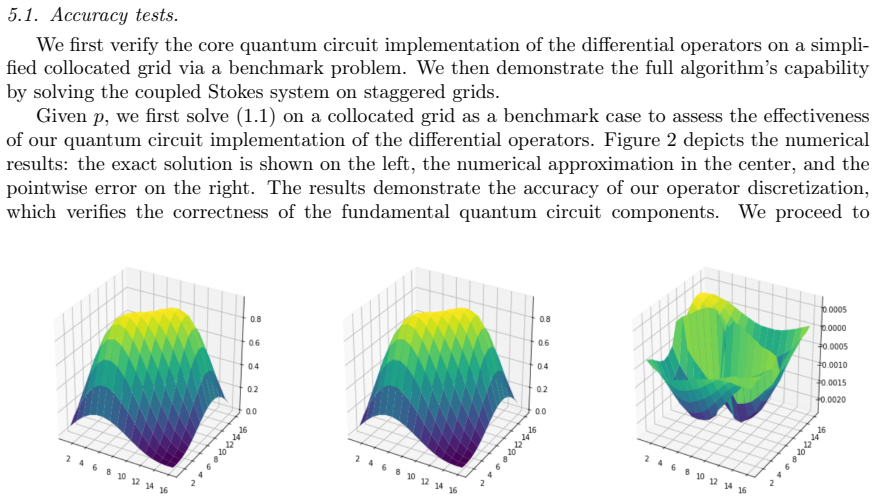
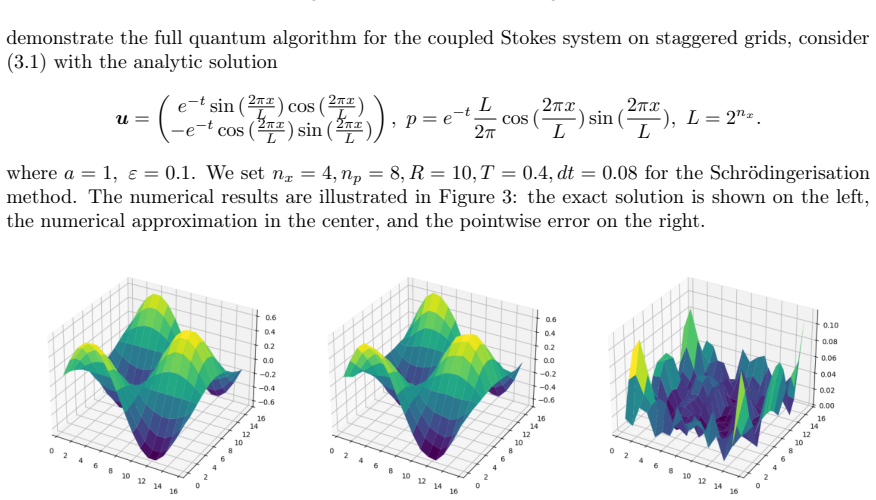
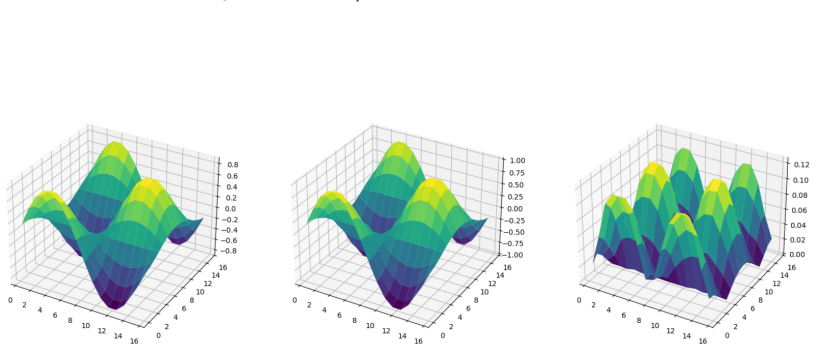
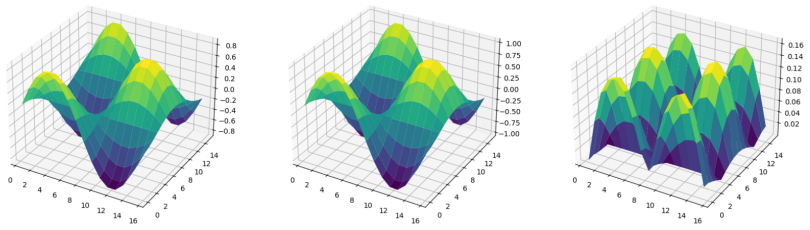
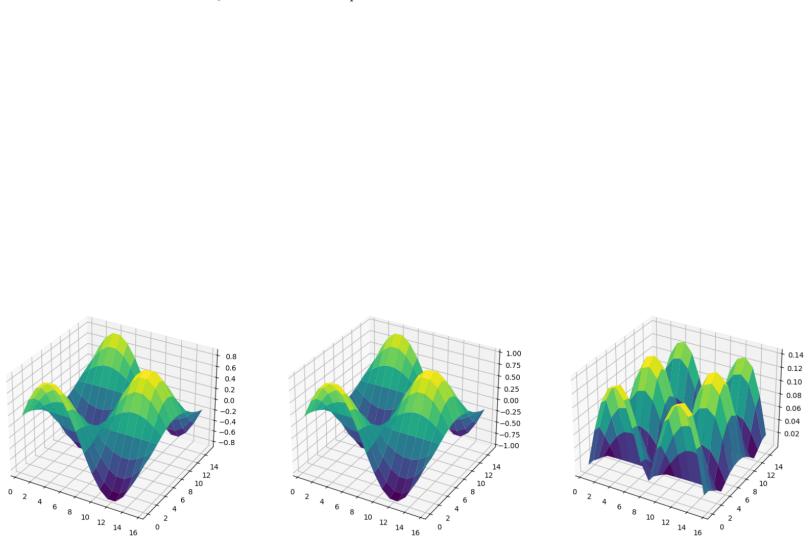
read the original abstract
Simulating incompressible Stokes flow is essential for studies in microfluidics and low-Reynolds number hydrodynamics. However, the computational cost of resolving the associated saddle-point problem grows prohibitively with the dimensionality of the problem. In this work, we present a quantum algorithm based on the Schr\"odingerisation technique for the Stokes equations, incorporating an artificial compressibility regularization. The core of our approach is the design of an explicit quantum circuit that encodes the resulting regularized system. The artificial compressibility formulation provides a unified framework for the system, which is then efficiently mapped to a quantum circuit via the Schr\"odingerisation procedure. A rigorous complexity analysis demonstrates the quantum computational advantage of our algorithms in high-dimensional settings, notably an exponential speedup in problem dimensionality. The validity and scalability of the proposed method are corroborated by numerical simulations performed on Qiskit.
Editorial analysis
A structured set of objections, weighed in public.
Referee Report
Summary. The paper presents a quantum algorithm for simulating incompressible Stokes flow that combines artificial compressibility regularization with the Schrödingerisation technique to produce an explicit quantum circuit. It asserts that a rigorous complexity analysis establishes an exponential speedup with respect to problem dimensionality and that the approach is validated by Qiskit simulations.
Significance. If the claimed complexity bounds hold and the regularization error can be controlled to a level that preserves the essential features of the incompressible solution, the work would constitute a concrete route to quantum advantage for high-dimensional saddle-point problems arising in low-Reynolds-number hydrodynamics.
major comments (2)
- [Abstract, §4] Abstract and §4 (complexity analysis): the manuscript states that a rigorous complexity analysis is provided, yet no explicit error bounds relating the artificial-compressibility parameter to the deviation from the true incompressible Stokes solution appear in the abstract or are referenced in the complexity derivation; without these bounds the claimed usefulness of the quantum simulation for the original problem cannot be assessed.
- [§3] §3 (regularization and circuit construction): the mapping via Schrödingerisation assumes that the regularized system remains sufficiently close to the incompressible limit, but the manuscript does not quantify how the free parameter in the artificial-compressibility term propagates into the final circuit depth or solution error, which is load-bearing for the exponential-speedup claim.
minor comments (2)
- [Abstract] The abstract refers to “numerical simulations performed on Qiskit” without specifying the problem sizes, circuit depths, or error metrics used; these details should be added for reproducibility.
- Notation for the artificial-compressibility parameter should be introduced once and used consistently throughout the text and equations.
Simulated Author's Rebuttal
We thank the referee for the constructive feedback on our manuscript. The comments identify important gaps in the presentation of error bounds and parameter dependence that we will address in revision. We respond point by point below.
read point-by-point responses
-
Referee: [Abstract, §4] Abstract and §4 (complexity analysis): the manuscript states that a rigorous complexity analysis is provided, yet no explicit error bounds relating the artificial-compressibility parameter to the deviation from the true incompressible Stokes solution appear in the abstract or are referenced in the complexity derivation; without these bounds the claimed usefulness of the quantum simulation for the original problem cannot be assessed.
Authors: We agree that explicit error bounds connecting the artificial-compressibility parameter ε to the deviation from the incompressible Stokes solution are required for a complete assessment. The current manuscript derives complexity for the regularized system but does not state the regularization error estimate in §4 or reference it in the abstract. In the revised version we will add a lemma in §4 establishing ||u_ε − u|| ≤ Cε (under standard assumptions on the domain and data) and will update both the abstract and the complexity statement to cite this bound, thereby clarifying the regime in which the exponential speedup applies to the original incompressible problem. revision: yes
-
Referee: [§3] §3 (regularization and circuit construction): the mapping via Schrödingerisation assumes that the regularized system remains sufficiently close to the incompressible limit, but the manuscript does not quantify how the free parameter in the artificial-compressibility term propagates into the final circuit depth or solution error, which is load-bearing for the exponential-speedup claim.
Authors: We acknowledge that §3 does not quantify the dependence of circuit depth and total error on the compressibility parameter. The Schrödingerisation step produces a unitary whose Lipschitz constant grows as 1/ε, which affects both the number of Trotter steps and the overall query complexity. In the revision we will insert a short analysis in §3 deriving the scaling of circuit depth with 1/ε and showing that the composite error (regularization + discretization + quantum simulation) remains controlled when ε is chosen proportionally to the target accuracy. This will make explicit that the exponential speedup in dimensionality is retained for any fixed accuracy in the incompressible limit. revision: yes
Circularity Check
No significant circularity identified
full rationale
The derivation chain begins from the Stokes equations, applies artificial compressibility regularization to obtain a unified system, maps it explicitly to a quantum circuit via Schrödingerisation, and then performs a complexity analysis on that circuit construction. No step reduces by definition to its own inputs, renames a fitted quantity as a prediction, or relies on a load-bearing self-citation whose validity is presupposed by the present work. The exponential speedup claim is presented as following from the circuit depth and gate count analysis, which is independent of the target result itself. External corroboration via Qiskit numerics is cited separately. The paper is therefore self-contained against external benchmarks.
Axiom & Free-Parameter Ledger
free parameters (1)
- artificial compressibility parameter
axioms (1)
- domain assumption Schrödingerisation maps the regularized Stokes system to an explicit quantum circuit whose complexity can be rigorously bounded.
Reference graph
Works this paper leans on
-
[1]
Ge, Zhihao and Feng, Minfu and He, Yinnian , TITLE =. J. Math. Anal. Appl. , FJOURNAL =. 2009 , NUMBER =. doi:10.1016/j.jmaa.2009.01.039 , URL =
-
[2]
Zhang, Xiangxiong , TITLE =. J. Comput. Phys. , FJOURNAL =. 2017 , PAGES =. doi:10.1016/j.jcp.2016.10.002 , URL =
-
[3]
Si, Zhiyong and Wang, Yunxia and Feng, Xinlong , TITLE =. Math. Model. Anal. , FJOURNAL =. 2015 , NUMBER =. doi:10.3846/13926292.2015.1091394 , URL =
-
[4]
Wang, Xiuli and Zhai, Qilong and Zhang, Ran , TITLE =. J. Comput. Appl. Math. , FJOURNAL =. 2016 , PAGES =. doi:10.1016/j.cam.2016.04.031 , URL =
-
[5]
Chandrashekar, Praveen , TITLE =. Int. J. Adv. Eng. Sci. Appl. Math. , FJOURNAL =. 2016 , NUMBER =. doi:10.1007/s12572-015-0160-z , URL =
-
[6]
Yin, Zhe and Jiang, Ziwen and Xu, Qiang , TITLE =. J. Appl. Math. , FJOURNAL =. 2012 , PAGES =. doi:10.1155/2012/761242 , URL =
-
[7]
Lin Lin , title =. arXiv preprint , year =. 2201.08309 , archivePrefix =
-
[8]
Feynman, Richard P. , TITLE =. Found. Phys. , FJOURNAL =. 1986 , NUMBER =. doi:10.1007/BF01886518 , URL =
-
[9]
An, Dong and Liu, Jin-Peng and Lin, Lin , TITLE =. Phys. Rev. Lett. , FJOURNAL =. 2023 , NUMBER =. doi:10.1103/physrevlett.131.150603 , URL =
-
[10]
Jin, Shi and Liu, Nana and Yu, Yue , TITLE =. Phys. Rev. Lett. , FJOURNAL =. 2024 , NUMBER =. doi:10.1103/physrevlett.133.230602 , URL =
-
[11]
Jin, Shi and Liu, Nana and Yu, Yue , TITLE =. J. Comput. Phys. , FJOURNAL =. 2025 , PAGES =. doi:10.1016/j.jcp.2025.114138 , URL =
-
[12]
Jin, Shi and Liu, Nana and Yu, Yue , TITLE =. Phys. Rev. A , FJOURNAL =. 2023 , NUMBER =. doi:10.1103/physreva.108.032603 , URL =
-
[13]
2024 , eprint=
Schr\"odingerization based Quantum Circuits for Maxwell's Equation with time-dependent source terms , author=. 2024 , eprint=
2024
-
[14]
Hu, Junpeng and Jin, Shi and Liu, Nana and Zhang, Lei , journal =. Quantum. doi:10.22331/q-2024-12-12-1563 , url =
-
[15]
Jin, Shi and Li, Xiantao and Liu, Nana and Yu, Yue , TITLE =. SIAM J. Sci. Comput. , FJOURNAL =. 2024 , NUMBER =. doi:10.1137/23M1563451 , URL =
-
[16]
Jin, Shi and Liu, Nana and Ma, Chuwen , TITLE =. SIAM J. Numer. Anal. , FJOURNAL =. 2025 , NUMBER =. doi:10.1137/24M164272X , URL =
-
[17]
Jin and N
S. Jin and N. Liu , title =. Proceedings of the Royal Society A , volume =
-
[18]
Hamiltonian simulation for hyperbolic partial differential equations by scalable quantum circuits , author =. Phys. Rev. Res. , volume =. 2024 , month =. doi:10.1103/PhysRevResearch.6.033246 , url =
-
[19]
Tavelli, Maurizio and Dumbser, Michael , TITLE =. J. Comput. Phys. , FJOURNAL =. 2016 , PAGES =. doi:10.1016/j.jcp.2016.05.009 , URL =
-
[20]
and Araújo, Ismael C
Vale, Rafaella and Azevedo, Thiago Melo D. and Araújo, Ismael C. S. and Araujo, Israel F. and da Silva, Adenilton J. , journal=. Circuit Decomposition of Multicontrolled Special Unitary Single-Qubit Gates , year=
-
[21]
and Chuang, Isaac L
Nielsen, Michael A. and Chuang, Isaac L. , year=. Quantum Computation and Quantum Information: 10th Anniversary Edition , publisher=
-
[22]
Theory of Trotter Error with Commutator Scaling , author =. Phys. Rev. X , volume =. 2021 , month =. doi:10.1103/PhysRevX.11.011020 , url =
-
[23]
Feng, Fang and Yang, Hui and Zhu, Shengfeng , TITLE =. Commun. Comput. Phys. , FJOURNAL =. 2025 , NUMBER =
2025
-
[24]
Hao, Tiantian and Shao, Feng and Wei, Dongyi and Zhang, Zhifei , TITLE =. Int. Math. Res. Not. IMRN , FJOURNAL =. 2025 , NUMBER =. doi:10.1093/imrn/rnaf283 , URL =
-
[25]
Ambainis, Andris , TITLE =. 29th. 2012 , ISBN =
2012
-
[26]
and Kothari, Robin and Somma, Rolando D
Childs, Andrew M. and Kothari, Robin and Somma, Rolando D. , title =. SIAM Journal on Computing , volume =. 2017 , doi =
2017
-
[27]
Rapid solution of logical equivalence problems by quantum computation algorithm , journal =. 2023 , issn =. doi:https://doi.org/10.1016/j.asoc.2022.109844 , url =
-
[28]
Liu, Nana and Thompson, Jayne and Weedbrook, Christian and Lloyd, Seth and Vedral, Vlatko and Gu, Mile and Modi, Kavan , TITLE =. Phys. Rev. A , FJOURNAL =. 2016 , NUMBER =. doi:10.1103/physreva.93.052304 , URL =
-
[29]
Shor, Peter W. , TITLE =. SIAM Rev. , FJOURNAL =. 1999 , NUMBER =. doi:10.1137/S0036144598347011 , URL =
-
[30]
Quantum Algorithm for Linear Systems of Equations , author =. Phys. Rev. Lett. , volume =. 2009 , month =
2009
-
[31]
Client-friendly continuous-variable blind and verifiable quantum computing , author =. Phys. Rev. A , volume =. 2019 , month =
2019
-
[32]
A numerical method for solving incompressible viscous flow problems , journal =
Alexandre Joel Chorin , abstract =. A numerical method for solving incompressible viscous flow problems , journal =. 1967 , issn =. doi:https://doi.org/10.1016/0021-9991(67)90037-X , url =
-
[33]
Mardal, Kent Andre and Tai, Xue-Cheng and Winther, Ragnar , TITLE =. SIAM J. Numer. Anal. , FJOURNAL =. 2002 , NUMBER =. doi:10.1137/S0036142901383910 , URL =
-
[34]
Brown and Ricardo Cortez and Michael L
David L. Brown and Ricardo Cortez and Michael L. Minion , abstract =. Accurate Projection Methods for the Incompressible Navier–Stokes Equations , journal =. 2001 , issn =. doi:https://doi.org/10.1006/jcph.2001.6715 , url =
discussion (0)
Sign in with ORCID, Apple, or X to comment. Anyone can read and Pith papers without signing in.