REVIEW 5 major objections 5 minor 1 cited by
CSBrain: A Cross-scale Spatiotemporal Brain Foundation Model for EEG Decoding
T0 review · 5 major / 5 minor · reviewed 2026-08-06 · deepseek-v4-flash
Pith's one-line read CSBrain claims that modeling EEG across multiple temporal and spatial scales, rather than with fixed tokens and dense attention, yields a foundation model that beats existing task-specific and foundation baselines on 11 decoding tasks…
desk verdict A genuinely new cross-scale EEG architecture with an unusually broad benchmark, but the results are unverified until pretraining/test overlap and channel harmonization are addressed. read the letter →
The pith
A machine-rendered reading of the paper's core claim, the machinery that carries it, and where it could break.
The reading
What carries the argument
The central objects are two interleaved modules. Cross-scale Spatiotemporal Tokenization (CST) applies multi-scale temporal convolution kernels (sizes 1, 3, 5) over local time windows and multi-scale spatial convolutions over electrode neighborhoods inside anatomically defined brain regions, concatenating the scales into compact tokens with embedding dimensions allocated by an exponentially decaying scheme $d_k \propto 1/2^k$. Structured Sparse Attention (SSA) replaces dense attention with inter-window attention, which groups tokens by their relative position across time windows, and inter-region attention, which forms a descriptor per brain region from a sampled token plus the mean-pooled regional feature and attends across regions; this yields roughly linear complexity $O(N \cdot k)$. CST and SSA are alternately stacked for 12 layers, so the model progressively integrates local multi-scale patterns into global structured dependencies.
What would settle it
Retrain and evaluate CSBrain on a held-out dataset such as CHB-MIT or HMC using the original electrode montage and channel count without projecting onto the 19-channel template, while keeping the baselines under the same protocol; if the cross-scale spatial grouping no longer yields a gain, or if a baseline retrained on the projected data closes the 3.35-7.73% macro-average gap, the paper's central claim would be refuted.
Extended reading notes
Core claim
The paper's central claim is that generalized EEG decoding requires modeling the cross-scale spatiotemporal structure of neural activity, and that a foundation model built on this principle outperforms both task-specific models and existing EEG foundation models that use fixed-scale tokenization with dense attention. On the paper's own terms, CSBrain's Cross-scale Spatiotemporal Tokenization and Structured Sparse Attention produce scale-aware tokens and structured long-range dependencies, and the reported macro-average across 11 tasks and 16 datasets is the highest, surpassing CBraMod, LaBraM, and BIOT by 3.35%, 3.98%, and 7.73%, respectively.
Load-bearing premise
The load-bearing premise is that every downstream dataset can be mapped onto the same fixed 19-channel 10-20 electrode template used in pretraining, even though the evaluated datasets have 4 to 64 channels and a mix of bipolar and referential montages; if that mapping is not coherent, the CST spatial regions and SSA inter-region attention are ill-defined for most datasets.
Editorial extensions
If this is right
- If CSBrain is right, future EEG foundation models should replace fixed-scale tokenization with multi-scale, region-aware token construction.
- Structure-aware sparse attention can match or beat dense attention on noisy EEG while reducing computational cost, making large-scale EEG modeling more practical.
- Large-scale self-supervised pretraining is consistently beneficial across 16 datasets, and the gains are largest when downstream labeled data is scarce.
- Cross-scale modeling becomes a reusable architectural template for other neurophysiological modalities, as the paper itself suggests for MEG and fMRI.
Reading between the lines
- I infer that the strongest test of whether cross-scale structure matters is a controlled ablation that removes CST while keeping everything else identical; the paper's ablations vary tokenization together with attention, so the individual contribution of spatial grouping remains partly entangled.
- The fixed 19-channel template means datasets with 64 channels or bipolar derivations must be down-projected or re-referenced before the CST spatial regions exist, so the montage-mapping step is the first place where gains could vanish across institutions.
- If the architecture generalizes as claimed, the same CST and SSA recipe should transfer to MEG and high-density EEG without retraining the spatial grouping, because the anatomical region prior is montage-independent; this is a testable extension the paper does not run.
- The scaling analysis suggests EEG foundation models follow neural scaling laws, but the plateau after about 5,000 hours of pretraining data implies that adding more unlabeled EEG alone will not keep improving accuracy; model capacity and data must grow together.
Editorial analysis
A structured set of objections, weighed in public.
Referee Report
Summary. The paper proposes CSBrain, an EEG foundation model built on two new components: Cross-scale Spatiotemporal Tokenization (CST), which aggregates multi-scale features over local temporal windows and anatomically defined brain regions, and Structured Sparse Attention (SSA), which restricts attention to structured temporal and spatial groups. The model is pretrained by masked autoencoding on 1,109,545 segments from the Temple University Hospital EEG corpus (TUEG) and then fine-tuned on 11 tasks across 16 public datasets. The central claim is that explicitly modeling cross-scale spatiotemporal structure, as opposed to the scale-agnostic dense modeling of prior EEG foundation models, yields consistently better downstream decoding performance. The paper reports a macro-average gain of 3.35% over CBraMod, 3.98% over LaBraM, and 7.73% over BIOT, along with ablations on tokenization scale, attention mechanism, pretraining data volume, model capacity, and regional descriptor design.
Significance. If the results hold, CSBrain provides a genuinely useful architectural hypothesis for EEG foundation models: replacing fixed-scale, dense tokenization/attention with cross-scale, anatomically structured sparse operations is a principled inductive bias. The strengths of the paper are its unusually broad evaluation (16 datasets, 10 baselines), the inclusion of scaling analyses and ablations, and the stated intention to release code and models. The cross-scale tokenization and structured sparse attention are computationally plausible and offer a clear qualitative improvement over dense attention. However, the current manuscript leaves two load-bearing verification gaps: the absence of any stated protocol for excluding TUEG pretraining data from the TUEG-derived downstream test sets, and the absence of any description of how the fixed 19-channel pretrained model is adapted to datasets with 4 to 64 channels. Until these are resolved, the reported quantitative advantages cannot be treated as established.
major comments (5)
- [Section 3.1, Appendix D.9-D.11] The pretraining set and three downstream datasets are not shown to be disjoint. Section 3.1 states that CSBrain is pretrained on 1,109,545 EEG segments from TUEG, while Table 1 and Appendix D.9-D.11 evaluate on TUEV, TUAB, and TUSL, which are derived from the same Temple University Hospital EEG corpus (reference [71]). The paper never states that these datasets, or at least their test partitions, were excluded from pretraining. Because pretraining is unsupervised masked reconstruction, overlapping recordings could be memorized at the segment level, inflating exactly the tasks where CSBrain shows its largest margins (e.g., TUSL B-Acc of 0.8571 vs 0.7625 for LaBraM). Please state the exclusion protocol explicitly, and if overlap cannot be ruled out, rerun the affected downstream experiments with a disjoint pretraining set or report the overlap-adjusted results.
- [Section 2.2, Table 1, Table 3] The channel adaptation from the pretrained model to downstream datasets is unspecified. The pretraining configuration in Table 3 fixes the input to 19 channels, yet Table 1 lists datasets with 4, 6, 16, 17, 20, 22, 23, 29, 32, 62, and 64 channels, with mixed bipolar and referential montages. The paper does not state whether channels are selected, re-referenced, interpolated, or projected to the 19-channel 10-20 template, nor whether the input embedding layer is reinitialized for each dataset. Without this information, the 'anatomically defined brain regions' R used in Eq. (2) and the regional descriptors in Eq. (4) are not well defined for most downstream datasets, and the spatial tokenization cannot be reproduced. Please specify the exact per-dataset channel mapping and confirm that the pretrained weights used are compatible with that mapping.
- [Section 3.3, Table 2] The claim that CSBrain 'consistently achieves state-of-the-art performance across nearly all tasks and metrics' is not supported by Table 2. On the metrics shown, CSBrain is not the best on CHB-MIT B-Acc (0.7262 vs CBraMod 0.7398), SEED-VIG Corr (0.6314 vs LaBraM 0.6347), TUAB AUROC (0.8957 vs LaBraM 0.9022), TUEV F1-W (0.8333 vs CBraMod 0.8342), and ISRUC F1-W (0.7990 vs CBraMod 0.8011). Please either correct the wording to acknowledge these exceptions or present a more nuanced comparison. In addition, the macro-average in Table 2 is reported without standard deviations or significance tests; the paper should report whether the headline differences are statistically significant across the five seeds.
- [Section 2.3, Eq. (3)] The SSA inter-window grouping is under-specified. The text says that for each relative index g in {1,...,w}, the model collects 'all tokens that occupy the same position g in each window,' but the windows W(k)_t(i) are defined per location i with kernel size s(k)_t, and the paper does not define the window layout over the sequence, the membership of tokens in windows, or how w is chosen. Without a formal definition of the window partition, the claimed linear complexity O(N·k) and the exact attention pattern are not reproducible. Please provide a precise algorithmic description of the grouping, including how overlapping windows are handled.
- [Appendix C.2, Appendix D] The provenance of the baseline results is not fully specified. Appendix C.2 states that when baselines are 'unavailable or incompatible' they are re-implemented and re-trained, and it describes a channel projection for BIOT, but it does not state whether the foundation baselines (BIOT, LaBraM, CBraMod) were used with their official pretrained checkpoints or were retrained from scratch, nor does it give the per-dataset fine-tuning hyperparameters for each baseline. Because the main claim is superiority over these foundation models, the paper should state the source of every baseline result and the exact fine-tuning protocol used for each dataset.
minor comments (5)
- [Section 2.2, Eq. (2)] Equation (2) reuses the symbol Conv(k)_t for the spatial convolution kernels even though the temporal kernels in Eq. (1) use the same symbol; this should be Conv(k)_s or a distinct notation for the spatial kernels.
- [Section 2.4] The masking description says masked segments are 'represented by learnable embeddings and integrated alongside visible tokens during encoding,' but standard masked autoencoding omits masked tokens from the encoder. The text should clarify whether masked embeddings are added to the encoder input or only used at the reconstruction head, since this affects the meaning of the reconstruction loss in Eq. (7).
- [Appendix E.1, Figure 8] The comparison between CSBrain with and without pretraining is informative, but the figure does not state whether the non-pretrained model uses identical hyperparameters, initialization, or training epochs; please add these details.
- [Appendix E.2, Figures 9 and 10] The scaling analysis figures lack axis labels and error bars in the current version; please add them so the claims about plateauing and scaling trends can be evaluated.
- [General] The abstract and Section 3.3 use the phrases 'consistently outperforms' and 'consistently achieves state-of-the-art,' which are stronger than the results in Table 2 justify; please soften these to 'typically outperforms' or 'achieves the best macro-average' where appropriate.
Circularity Check
No significant circularity: CSBrain's architecture and benchmark claims are self-contained, with only peripheral self-citations.
full rationale
CSBrain's derivation chain is constructive rather than definitional: CST tokenization (Eqs. 1-2) and SSA attention (Eqs. 3-5) are defined from raw EEG features and standard 10-20 spatial groupings, and the pretraining objective (Eq. 7) is a masked MSE reconstruction over those same segments. No fitted parameter is fed back as a prediction: hyperparameters (Table 3, Table 4) are fixed settings, and ablations (Fig. 4, Fig. 5) vary architectural choices without optimizing the reported benchmarks. The cited self-work ([4], [95], [97]) appears in general motivation and related-work context and is not load-bearing for the architecture or the headline numbers. The paper does not invoke a uniqueness theorem or smuggle an ansatz through a self-citation. The main substantive risk is experimental rather than circular: pretraining on TUEG (Section 3.1) with downstream TUEV/TUAB/TUSL (Section D.9-D.11) from the same TUH corpus [71] could inflate gains if subject/recording overlap is not excluded, but the paper provides no equation or definition that makes any reported result equivalent to its input by construction, so per the hard rules this is a correctness risk, not circularity.
Assumptions & free parameters
free parameters (6)
- CST kernel sizes {1, 3, 5} =
{1, 3, 5}
- Number of CST/SSA layers L =
12
- Hidden dimension d =
200
- Mask ratio r =
0.5
- Segment length t =
not stated
- Brain region partition =
Frontal/Central/Parietal/Temporal/Occipital
assumptions (5)
- domain assumption Standardized preprocessing (band-pass, notch, resample to 200 Hz, scaling to 100 µV) preserves task-relevant EEG information across all datasets.
- domain assumption The 10-20 electrode labels are valid proxies for anatomical brain regions, and the same region grouping is meaningful for every downstream dataset.
- domain assumption Pretraining on 1.1M TUEG segments transfers to all downstream tasks.
- domain assumption Masked autoencoding learns representations useful for arbitrary downstream classification and regression tasks.
- ad hoc to paper The structured sparse attention grouping rules (same relative position within each window; one representative token per region) capture the dependencies needed for EEG decoding.
Cite this review
Pith. "Pith review of CSBrain: A Cross-scale Spatiotemporal Brain Foundation Model for EEG Decoding." pith.science (2026). https://pith.science/paper/QEJZQYP2
@misc{pith2026250623075,
  author       = {Pith},
  title        = {Pith review of: CSBrain: A Cross-scale Spatiotemporal Brain Foundation Model for EEG Decoding},
  year         = {2026},
  howpublished = {\url{https://pith.science/paper/QEJZQYP2}},
  note         = {Machine review of arXiv:2506.23075}
}
read the original abstract
Understanding and decoding brain activity from electroencephalography (EEG) signals is a fundamental challenge in neuroscience and AI, with applications in cognition, emotion recognition, diagnosis, and brain-computer interfaces. While recent EEG foundation models advance generalized decoding via unified architectures and large-scale pretraining, they adopt a scale-agnostic dense modeling paradigm inherited from NLP and vision. This design neglects a core property of neural activity: cross-scale spatiotemporal structure. EEG task patterns span a wide range of temporal and spatial scales, from short bursts to slow rhythms, and from localized cortical responses to distributed interactions. Ignoring this diversity leads to suboptimal representations and weak generalization. We propose CSBrain, a Cross-scale Spatiotemporal Brain foundation model for generalized EEG decoding. CSBrain introduces: (i) Cross-scale Spatiotemporal Tokenization (CST), which aggregates multi-scale features from localized temporal windows and anatomical brain regions into compact scale-aware tokens; and (ii) Structured Sparse Attention (SSA), which captures cross-window and cross-region dependencies, enhancing scale diversity while removing spurious correlations. CST and SSA are alternately stacked to progressively integrate multi-scale dependencies. Experiments on 11 EEG tasks across 16 datasets show that CSBrain consistently outperforms task-specific and foundation model baselines. These results establish cross-scale modeling as a key inductive bias and position CSBrain as a robust backbone for future brain-AI research.
Figures


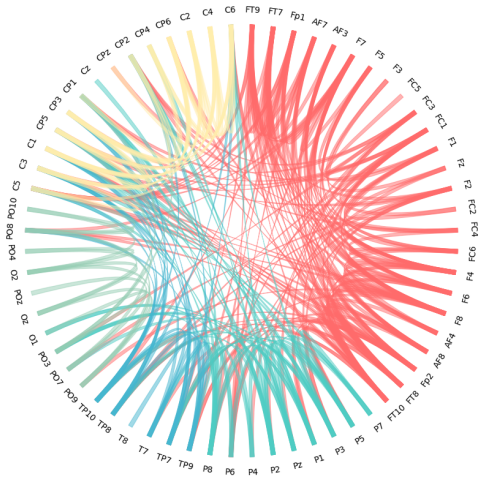
Figures from the paper (16 more)


Forward citations
Cited by 1 Pith paper
-
Large-Scale AI and Foundation Models for Neuroscience: A Comprehensive Review
This paper is a survey: it organizes existing foundation-model work in neuroscience into five application domains and lists public datasets, without presenting new experiments.
Reference graph
Works this paper leans on
-
[71]
The temple university hospital eeg data corpus
Iyad Obeid and Joseph Picone. The temple university hospital eeg data corpus. Frontiers in neuroscience, 10:196, 2016
work page 2016
-
[1]
Motor imagery and direct brain-computer communication
Gert Pfurtscheller and Christa Neuper. Motor imagery and direct brain-computer communication. Proceedings of the IEEE, 89(7):1123–1134, 2001
2001
-
[2]
Decoding mental states from brain activity in humans
John-Dylan Haynes and Geraint Rees. Decoding mental states from brain activity in humans. Nature reviews neuroscience, 7(7):523–534, 2006
2006
-
[3]
Beyond the brain-computer interface: Decoding brain activity as a tool to understand neuronal mechanisms subtending cognition and behavior
Célia Loriette, Julian L Amengual, and Suliann Ben Hamed. Beyond the brain-computer interface: Decoding brain activity as a tool to understand neuronal mechanisms subtending cognition and behavior. Frontiers in Neuroscience, 16:811736, 2022
2022
-
[4]
Yuqin Dai, Zhouheng Yao, Chunfeng Song, Qihao Zheng, Weijian Mai, Kunyu Peng, Shuai Lu, Wanli Ouyang, Jian Yang, and Jiamin Wu. Mindaligner: Explicit brain functional alignment for cross-subject visual decoding from limited fmri data. arXiv preprint arXiv:2502.05034, 2025
arXiv 2025
-
[5]
Electroencephalography
Gernot R Müller-Putz. Electroencephalography. Handbook of clinical neurology, 168:249–262, 2020
2020
-
[6]
A brain- computer interface that evokes tactile sensations improves robotic arm control
Sharlene N Flesher, John E Downey, Jeffrey M Weiss, Christopher L Hughes, Angelica J Herrera, Elizabeth C Tyler-Kabara, Michael L Boninger, Jennifer L Collinger, and Robert A Gaunt. A brain- computer interface that evokes tactile sensations improves robotic arm control. Science, 372(6544):831– 836, 2021
2021
-
[7]
Combining vr with electroencephalography as a frontier of brain-computer interfaces
Hongbian Li, Hyonyoung Shin, Luis Sentis, Ka-Chun Siu, José del R Millán, and Nanshu Lu. Combining vr with electroencephalography as a frontier of brain-computer interfaces. Device, 2(6), 2024
2024
Show all 109 references
-
[8]
Chrononet: A deep recurrent neural network for abnormal eeg identification
Subhrajit Roy, Isabell Kiral-Kornek, and Stefan Harrer. Chrononet: A deep recurrent neural network for abnormal eeg identification. In Artificial Intelligence in Medicine: Conference on Artificial Intelligence in Medicine, pages 47–56. Springer, 2019
2019
-
[9]
Automatic signal abnormality detection using time-frequency features and machine learning: A newborn eeg seizure case study
Boualem Boashash and Samir Ouelha. Automatic signal abnormality detection using time-frequency features and machine learning: A newborn eeg seizure case study. Knowledge-Based Systems, 106:38–50, 2016
2016
-
[10]
Deep learning for motor imagery eeg-based classification: A review
Ali Al-Saegh, Shefa A Dawwd, and Jassim M Abdul-Jabbar. Deep learning for motor imagery eeg-based classification: A review. Biomedical Signal Processing and Control, 63:102172, 2021
2021
-
[11]
A spatial filter temporal graph convolutional network for decoding motor imagery eeg signals
Xianlun Tang, Jing Zhang, Yidan Qi, Ke Liu, Rui Li, and Huiming Wang. A spatial filter temporal graph convolutional network for decoding motor imagery eeg signals. Expert Systems with Applications, 238:121915, 2024
2024
-
[12]
Eeg-based emotion recognition: a state- of-the-art review of current trends and opportunities
Nazmi Sofian Suhaimi, James Mountstephens, and Jason Teo. Eeg-based emotion recognition: a state- of-the-art review of current trends and opportunities. Computational intelligence and neuroscience , 2020(1):8875426, 2020
2020
-
[13]
Contrastive learning of eeg representation of brain area for emotion recognition
Sheng Dai, Ming Li, Xu Wu, Xiangyu Ju, Xinyu Li, Jun Yang, and Dewen Hu. Contrastive learning of eeg representation of brain area for emotion recognition. IEEE Transactions on Instrumentation and Measurement, 2025. 10
2025
-
[14]
Self-supervised eeg representation learning for automatic sleep staging
Chaoqi Yang, Danica Xiao, M Brandon Westover, and Jimeng Sun. Self-supervised eeg representation learning for automatic sleep staging. JMIR AI, 2023
2023
-
[15]
Generalizable sleep staging via multi-level domain alignment
Jiquan Wang, Sha Zhao, Haiteng Jiang, Shijian Li, Tao Li, and Gang Pan. Generalizable sleep staging via multi-level domain alignment. In Proceedings of the AAAI Conference on Artificial Intelligence , volume 38, pages 265–273, 2024
2024
-
[16]
A hybrid deep learning approach for epileptic seizure detection in eeg signals
Ijaz Ahmad, Xin Wang, Danish Javeed, Prabhat Kumar, Oluwarotimi Williams Samuel, and Shixiong Chen. A hybrid deep learning approach for epileptic seizure detection in eeg signals. IEEE Journal of Biomedical and Health Informatics, 2023
2023
-
[17]
Eeg datasets for seizure detection and prediction—a review
Sheng Wong, Anj Simmons, Jessica Rivera-Villicana, Scott Barnett, Shobi Sivathamboo, Piero Perucca, Zongyuan Ge, Patrick Kwan, Levin Kuhlmann, Rajesh Vasa, et al. Eeg datasets for seizure detection and prediction—a review. Epilepsia Open, 8(2):252–267, 2023
2023
-
[18]
Automatic and efficient framework for identifying multiple neurological disorders from eeg signals
Md Nurul Ahad Tawhid, Siuly Siuly, Kate Wang, and Hua Wang. Automatic and efficient framework for identifying multiple neurological disorders from eeg signals. IEEE Transactions on Technology and Society, 4(1):76–86, 2023
2023
-
[19]
A review of graph theory-based diagnosis of neurological disorders based on eeg and mri
Ying Yan, Guanting Liu, Haoyang Cai, Edmond Qi Wu, Jun Cai, Adrian David Cheok, Na Liu, Tao Li, and Zhiyong Fan. A review of graph theory-based diagnosis of neurological disorders based on eeg and mri. Neurocomputing, page 128098, 2024
2024
-
[20]
Medformer: A multi-granularity patching transformer for medical time-series classification
Yihe Wang, Nan Huang, Taida Li, Yujun Yan, and Xiang Zhang. Medformer: A multi-granularity patching transformer for medical time-series classification. In The Annual Conference on Neural Information Processing Systems, 2024
2024
-
[21]
Eegnet: a compact convolutional neural network for eeg-based brain–computer interfaces
Vernon J Lawhern, Amelia J Solon, Nicholas R Waytowich, Stephen M Gordon, Chou P Hung, and Brent J Lance. Eegnet: a compact convolutional neural network for eeg-based brain–computer interfaces. Journal of neural engineering, 15(5):056013, 2018
2018
-
[22]
Development of expert-level classification of seizures and rhythmic and periodic patterns during eeg interpretation
Jin Jing, Wendong Ge, Shenda Hong, Marta Bento Fernandes, Zhen Lin, Chaoqi Yang, Sungtae An, Aaron F Struck, Aline Herlopian, Ioannis Karakis, et al. Development of expert-level classification of seizures and rhythmic and periodic patterns during eeg interpretation. Neurology,...
2023
-
[23]
Self-supervised electroencephalogram representation learning for automatic sleep staging: Model development and evaluation study
Chaoqi Yang, Cao Xiao, M Brandon Westover, and Jimeng Sun. Self-supervised electroencephalogram representation learning for automatic sleep staging: Model development and evaluation study. JMIR AI, 2, 2023
2023
-
[24]
Motor imagery eeg classification algorithm based on cnn-lstm feature fusion network
Hongli Li, Man Ding, Ronghua Zhang, and Chunbo Xiu. Motor imagery eeg classification algorithm based on cnn-lstm feature fusion network. Biomedical signal processing and control, 72:103342, 2022
2022
-
[25]
Emotion recognition based on eeg using lstm recurrent neural network
Salma Alhagry, Aly Aly Fahmy, and Reda A El-Khoribi. Emotion recognition based on eeg using lstm recurrent neural network. International Journal of Advanced Computer Science and Applications, 8(10), 2017
2017
-
[26]
An efficient lstm network for emotion recognition from multichannel eeg signals
Xiaobing Du, Cuixia Ma, Guanhua Zhang, Jinyao Li, Yu-Kun Lai, Guozhen Zhao, Xiaoming Deng, Yong-Jin Liu, and Hongan Wang. An efficient lstm network for emotion recognition from multichannel eeg signals. IEEE Transactions on Affective Computing, 13(3):1528–1540, 2020
2020
-
[27]
Graph neural network-based eeg classification: A survey
Dominik Klepl, Min Wu, and Fei He. Graph neural network-based eeg classification: A survey. IEEE Transactions on Neural Systems and Rehabilitation Engineering, 32:493–503, 2024
2024
-
[28]
Eeg-gnn: Graph neural networks for classification of electroencephalogram (eeg) signals
Andac Demir, Toshiaki Koike-Akino, Ye Wang, Masaki Haruna, and Deniz Erdogmus. Eeg-gnn: Graph neural networks for classification of electroencephalogram (eeg) signals. In Annual International Conference of the IEEE Engineering in Medicine & Biology Society (EMBC), pages 1061–1...
2021
-
[29]
Eeg-based emotion recognition using regularized graph neural networks
Peixiang Zhong, Di Wang, and Chunyan Miao. Eeg-based emotion recognition using regularized graph neural networks. IEEE Transactions on Affective Computing, 13(3):1290–1301, 2020
2020
-
[30]
Eeg conformer: Convolutional transformer for eeg decoding and visualization
Yonghao Song, Qingqing Zheng, Bingchuan Liu, and Xiaorong Gao. Eeg conformer: Convolutional transformer for eeg decoding and visualization. IEEE Transactions on Neural Systems and Rehabilitation Engineering, 31:710–719, 2022
2022
-
[31]
Transformer-based spatial-temporal feature learning for eeg decoding
Yonghao Song, Xueyu Jia, Lie Yang, and Longhan Xie. Transformer-based spatial-temporal feature learning for eeg decoding. arXiv preprint arXiv:2106.11170, 2021. 11
2021 arXiv
-
[32]
Transformer convolutional neural networks for automated artifact detection in scalp eeg
Wei Yan Peh, Yuanyuan Yao, and Justin Dauwels. Transformer convolutional neural networks for automated artifact detection in scalp eeg. In Annual International Conference of the IEEE Engineering in Medicine & Biology Society (EMBC), pages 3599–3602. IEEE, 2022
2022
-
[33]
Toward reliable signals decoding for electroencephalogram: A benchmark study to eegnex
Xia Chen, Xiangbin Teng, Han Chen, Yafeng Pan, and Philipp Geyer. Toward reliable signals decoding for electroencephalogram: A benchmark study to eegnex. Biomedical Signal Processing and Control, 87:105475, 2024
2024
-
[34]
Biot: Biosignal transformer for cross-data learning in the wild
Chaoqi Yang, M Westover, and Jimeng Sun. Biot: Biosignal transformer for cross-data learning in the wild. Advances in Neural Information Processing Systems, 36:78240–78260, 2023
2023
-
[35]
Large brain model for learning generic representations with tremendous eeg data in bci
Wei-Bang Jiang, Li-Ming Zhao, and Bao-Liang Lu. Large brain model for learning generic representations with tremendous eeg data in bci. In The International Conference on Learning Representations, 2024
2024
-
[36]
Eegpt: Pretrained transformer for universal and reliable representation of eeg signals
Guangyu Wang, Wenchao Liu, Yuhong He, Cong Xu, Lin Ma, and Haifeng Li. Eegpt: Pretrained transformer for universal and reliable representation of eeg signals. In Advances in Neural Information Processing Systems, volume 37, pages 39249–39280, 2024
2024
-
[37]
Neuro-gpt: Towards a foundation model for eeg
Wenhui Cui, Woojae Jeong, Philipp Thölke, Takfarinas Medani, Karim Jerbi, Anand A Joshi, and Richard M Leahy. Neuro-gpt: Towards a foundation model for eeg. In IEEE International Symposium on Biomedical Imaging (ISBI), pages 1–5. IEEE, 2024
2024
-
[38]
Brainwave: A brain signal foundation model for clinical applications
Zhizhang Yuan, Fanqi Shen, Meng Li, Yuguo Yu, Chenhao Tan, and Yang Yang. Brainwave: A brain signal foundation model for clinical applications. arXiv preprint arXiv:2402.10251, 2024
2024 arXiv
-
[39]
A simple review of eeg foundation models: Datasets, advancements and future perspectives
Junhong Lai, Jiyu Wei, Lin Yao, and Yueming Wang. A simple review of eeg foundation models: Datasets, advancements and future perspectives. arXiv preprint arXiv:2504.20069, 2025
2025
-
[40]
CBramod: A criss-cross brain foundation model for EEG decoding
Jiquan Wang, Sha Zhao, Zhiling Luo, Yangxuan Zhou, Haiteng Jiang, Shijian Li, Tao Li, and Gang Pan. CBramod: A criss-cross brain foundation model for EEG decoding. In The International Conference on Learning Representations, 2025
2025
-
[41]
Attention is all you need
Ashish Vaswani, Noam Shazeer, Niki Parmar, Jakob Uszkoreit, Llion Jones, Aidan N Gomez, Łukasz Kaiser, and Illia Polosukhin. Attention is all you need. Advances in neural information processing systems, 30, 2017
2017
-
[42]
An image is worth 16x16 words: Transformers for image recognition at scale
Alexey Dosovitskiy, Lucas Beyer, Alexander Kolesnikov, Dirk Weissenborn, Xiaohua Zhai, Thomas Unterthiner, Mostafa Dehghani, Matthias Minderer, Georg Heigold, Sylvain Gelly, Jakob Uszkoreit, and Neil Houlsby. An image is worth 16x16 words: Transformers for image recognition at...
2021
-
[43]
Self-supervised learning: Generative or contrastive
Xiao Liu, Fanjin Zhang, Zhenyu Hou, Li Mian, Zhaoyu Wang, Jing Zhang, and Jie Tang. Self-supervised learning: Generative or contrastive. IEEE transactions on knowledge and data engineering, 35(1):857– 876, 2021
2021
-
[44]
Bendr: Using transformers and a contrastive self-supervised learning task to learn from massive amounts of eeg data
Demetres Kostas, Stephane Aroca-Ouellette, and Frank Rudzicz. Bendr: Using transformers and a contrastive self-supervised learning task to learn from massive amounts of eeg data. Frontiers in Human Neuroscience, 15:653659, 2021
2021
-
[45]
Masked autoencoders are scalable vision learners
Kaiming He, Xinlei Chen, Saining Xie, Yanghao Li, Piotr Dollár, and Ross Girshick. Masked autoencoders are scalable vision learners. In Proceedings of the IEEE/CVF conference on computer vision and pattern recognition, pages 16000–16009, 2022
2022
-
[46]
Cswin transformer: A general vision transformer backbone with cross-shaped windows
Xiaoyi Dong, Jianmin Bao, Dongdong Chen, Weiming Zhang, Nenghai Yu, Lu Yuan, Dong Chen, and Baining Guo. Cswin transformer: A general vision transformer backbone with cross-shaped windows. In Proceedings of the IEEE/CVF conference on computer vision and pattern recognition, pa...
2022
-
[47]
Principles of neural science, volume 4
Eric R Kandel, James H Schwartz, Thomas M Jessell, Steven Siegelbaum, A James Hudspeth, Sarah Mack, et al. Principles of neural science, volume 4. McGraw-hill New York, 2000
2000
-
[48]
Rhythms of the Brain
György Buzsáki. Rhythms of the Brain. Oxford university press, 2006
2006
-
[49]
A weighted and directed interareal connectivity matrix for macaque cerebral cortex
Nikola T Markov, Maria M Ercsey-Ravasz, AR Ribeiro Gomes, Camille Lamy, Loic Magrou, Julien Vezoli, Pierre Misery, Arnaud Falchier, Rene Quilodran, Marie-Alice Gariel, et al. A weighted and directed interareal connectivity matrix for macaque cerebral cortex. Cerebral cortex, 2...
2014
-
[50]
2020 international brain–computer interface competition: A review
Ji-Hoon Jeong, Jeong-Hyun Cho, Young-Eun Lee, Seo-Hyun Lee, Gi-Hwan Shin, Young-Seok Kweon, José del R Millán, Klaus-Robert Müller, and Seong-Whan Lee. 2020 international brain–computer interface competition: A review. Frontiers in human neuroscience, 16:898300, 2022. 12
2020
-
[51]
The sleep slow oscillation as a traveling wave
Marcello Massimini, Reto Huber, Fabio Ferrarelli, Sean Hill, and Giulio Tononi. The sleep slow oscillation as a traveling wave. Journal of Neuroscience, 24(31):6862–6870, 2004
2004
-
[52]
The wu-minn human connectome project: an overview
David C Van Essen, Stephen M Smith, Deanna M Barch, Timothy EJ Behrens, Essa Yacoub, Kamil Ugurbil, Wu-Minn HCP Consortium, et al. The wu-minn human connectome project: an overview. Neuroimage, 80:62–79, 2013
2013
-
[53]
Cognitive motor processes: the role of motor imagery in the study of motor representations
Jörn Munzert, Britta Lorey, and Karen Zentgraf. Cognitive motor processes: the role of motor imagery in the study of motor representations. Brain research reviews, 60(2):306–326, 2009
2009
-
[54]
Eeg based emotion recognition: A tutorial and review
Xiang Li, Yazhou Zhang, Prayag Tiwari, Dawei Song, Bin Hu, Meihong Yang, Zhigang Zhao, Neeraj Kumar, and Pekka Marttinen. Eeg based emotion recognition: A tutorial and review. ACM Computing Surveys, 55(4):1–57, 2022
2022
-
[55]
Eeg artifact removal—state-of-the-art and guidelines
Jose Antonio Urigüen and Begoña Garcia-Zapirain. Eeg artifact removal—state-of-the-art and guidelines. Journal of neural engineering, 12(3):031001, 2015
2015
-
[56]
Simmim: A simple framework for masked image modeling
Zhenda Xie, Zheng Zhang, Yue Cao, Yutong Lin, Jianmin Bao, Zhuliang Yao, Qi Dai, and Han Hu. Simmim: A simple framework for masked image modeling. In Proceedings of the IEEE/CVF conference on computer vision and pattern recognition, pages 9653–9663, 2022
2022
-
[58]
Bci competi- tion 2008–graz data set a
Clemens Brunner, Robert Leeb, Gernot Müller-Putz, Alois Schlögl, and Gert Pfurtscheller. Bci competi- tion 2008–graz data set a. Institute for knowledge discovery (laboratory of brain-computer interfaces), Graz University of Technology, 16(1-6):1, 2008
2008
-
[59]
Bci2000: a general-purpose brain-computer interface (bci) system
Gerwin Schalk, Dennis J McFarland, Thilo Hinterberger, Niels Birbaumer, and Jonathan R Wolpaw. Bci2000: a general-purpose brain-computer interface (bci) system. IEEE Transactions on biomedical engineering, 51(6):1034–1043, 2004
2004
-
[60]
A large eeg dataset for studying cross-session variability in motor imagery brain-computer interface.Scientific Data, 9(1):531, 2022
Jun Ma, Banghua Yang, Wenzheng Qiu, Yunzhe Li, Shouwei Gao, and Xinxing Xia. A large eeg dataset for studying cross-session variability in motor imagery brain-computer interface.Scientific Data, 9(1):531, 2022
2022
-
[61]
Gnn4eeg: A benchmark and toolkit for electroencephalography classification with graph neural network
Kaiyuan Zhang, Ziyi Ye, Qingyao Ai, Xiaohui Xie, and Yiqun Liu. Gnn4eeg: A benchmark and toolkit for electroencephalography classification with graph neural network. In Companion of the ACM International Joint Conference on Pervasive and Ubiquitous Computing, pages 612–617, 2024
2024
-
[62]
Comparing recognition performance and robustness of multimodal deep learning models for multimodal emotion recognition
Wei Liu, Jie-Lin Qiu, Wei-Long Zheng, and Bao-Liang Lu. Comparing recognition performance and robustness of multimodal deep learning models for multimodal emotion recognition. IEEE Transactions on Cognitive and Developmental Systems, 2021
2021
-
[63]
Physiobank, physiotoolkit, and physionet: components of a new research resource for complex physiologic signals
Ary L Goldberger, Luis AN Amaral, Leon Glass, Jeffrey M Hausdorff, Plamen Ch Ivanov, Roger G Mark, Joseph E Mietus, George B Moody, Chung-Kang Peng, and H Eugene Stanley. Physiobank, physiotoolkit, and physionet: components of a new research resource for complex physiologic si...
2000
-
[64]
Application of machine learning to epileptic seizure onset detection and treatment
Ali Hossam Shoeb. Application of machine learning to epileptic seizure onset detection and treatment. PhD thesis, Massachusetts Institute of Technology, 2009
2009
-
[65]
Eeg synchronization analysis for seizure prediction: A study on data of noninvasive recordings
Paolo Detti, Giampaolo Vatti, and Garazi Zabalo Manrique de Lara. Eeg synchronization analysis for seizure prediction: A study on data of noninvasive recordings. Processes, 8(7), 2020
2020
-
[66]
Isruc-sleep: A comprehensive public dataset for sleep researchers
Sirvan Khalighi, Teresa Sousa, José Moutinho Santos, and Urbano Nunes. Isruc-sleep: A comprehensive public dataset for sleep researchers. Computer methods and programs in biomedicine , 124:180–192, 2016
2016
-
[67]
Inter-database validation of a deep learning approach for automatic sleep scoring
Diego Alvarez-Estevez and Roselyne M Rijsman. Inter-database validation of a deep learning approach for automatic sleep scoring. PloS one, 16(8):e0256111, 2021
2021
-
[68]
A multimodal approach to estimating vigilance using eeg and forehead eog
Wei-Long Zheng and Bao-Liang Lu. A multimodal approach to estimating vigilance using eeg and forehead eog. Journal of Neural Engineering, 14(2):026017, 2017
2017
-
[69]
Electroencephalograms during mental arithmetic task performance
Igor Zyma, Sergii Tukaev, Ivan Seleznov, Ken Kiyono, Anton Popov, Mariia Chernykh, and Oleksii Shpenkov. Electroencephalograms during mental arithmetic task performance. Data, 4(1):14, 2019. 13
2019
-
[70]
MDD Patients and Healthy Controls EEG Data (New)
Wajid Mumtaz. MDD Patients and Healthy Controls EEG Data (New). https://figshare.com/ articles/dataset/EEG_Data_New/4244171, 2016. Figshare
2016
-
[72]
Grad-cam: Visual explanations from deep networks via gradient-based localization
Ramprasaath R Selvaraju, Michael Cogswell, Abhishek Das, Ramakrishna Vedantam, Devi Parikh, and Dhruv Batra. Grad-cam: Visual explanations from deep networks via gradient-based localization. In Proceedings of the IEEE international conference on computer vision, pages 618–626, 2017
2017
-
[73]
Event-related cortical desynchronization detected by power measure- ments of scalp eeg
Gert Pfurtscheller and A Aranibar. Event-related cortical desynchronization detected by power measure- ments of scalp eeg. Electroencephalography and clinical neurophysiology, 42(6):817–826, 1977
1977
-
[74]
Speech production: Wernicke, broca and beyond
S Catrin Blank, Sophie K Scott, Kevin Murphy, Elizabeth Warburton, and Richard JS Wise. Speech production: Wernicke, broca and beyond. Brain, 125(8):1829–1838, 2002
2002
-
[75]
Revealing the spatiotemporal brain dynamics of covert speech compared with overt speech: A simultaneous eeg-fmri study
Wei Zhang, Muyun Jiang, Kok Ann Colin Teo, Raghavan Bhuvanakantham, LaiGuan Fong, Wei Khang Jeremy Sim, Zhiwei Guo, Chuan Huat Vince Foo, Rong Hui Jonathan Chua, Parasuraman Padmanabhan, et al. Revealing the spatiotemporal brain dynamics of covert speech compared with overt sp...
2024
-
[76]
Fft-based deep feature learning method for eeg classification
Mingyang Li and Wanzhong Chen. Fft-based deep feature learning method for eeg classification. Biomedical Signal Processing and Control, 66:102492, 2021
2021
-
[77]
Epileptic seizure classification of eeg time-series using rational discrete short-time fourier transform
Kaveh Samiee, Peter Kovacs, and Moncef Gabbouj. Epileptic seizure classification of eeg time-series using rational discrete short-time fourier transform. IEEE transactions on Biomedical Engineering , 62(2):541–552, 2014
2014
-
[78]
An eeg based real-time epilepsy seizure detection approach using discrete wavelet transform and machine learning methods
Mingkan Shen, Peng Wen, Bo Song, and Yan Li. An eeg based real-time epilepsy seizure detection approach using discrete wavelet transform and machine learning methods. Biomedical Signal Processing and Control, 77:103820, 2022
2022
-
[79]
Optimizing spatial filters for robust eeg single-trial analysis
Benjamin Blankertz, Ryota Tomioka, Steven Lemm, Motoaki Kawanabe, and Klaus-Robert Muller. Optimizing spatial filters for robust eeg single-trial analysis. IEEE Signal processing magazine, 25(1):41– 56, 2007
2007
-
[80]
Multiclass brain– computer interface classification by riemannian geometry
Alexandre Barachant, Stéphane Bonnet, Marco Congedo, and Christian Jutten. Multiclass brain– computer interface classification by riemannian geometry. IEEE Transactions on Biomedical Engineering, 59(4):920–928, 2011
2011
-
[81]
Differential evolution algorithm as a tool for optimal feature subset selection in motor imagery eeg
Muhammad Zeeshan Baig, Nauman Aslam, Hubert PH Shum, and Li Zhang. Differential evolution algorithm as a tool for optimal feature subset selection in motor imagery eeg. Expert Systems with Applications, 90:184–195, 2017
2017
-
[82]
Multiclass support vector machines for eeg-signals classification
Inan Guler and Elif Derya Ubeyli. Multiclass support vector machines for eeg-signals classification. IEEE transactions on information technology in biomedicine, 11(2):117–126, 2007
2007
-
[83]
Comparison of signal decomposition methods in classification of eeg signals for motor-imagery bci system
Jasmin Kevric and Abdulhamit Subasi. Comparison of signal decomposition methods in classification of eeg signals for motor-imagery bci system. Biomedical Signal Processing and Control, 31:398–406, 2017
2017
-
[84]
Logistic regression for single trial eeg classification
Ryota Tomioka, Kazuyuki Aihara, and Klaus-Robert Müller. Logistic regression for single trial eeg classification. Advances in neural information processing systems, 19, 2006
2006
-
[85]
Deep learning with convolutional neural networks for eeg decoding and visualization
Robin Tibor Schirrmeister, Jost Tobias Springenberg, Lukas Dominique Josef Fiederer, Martin Glasstetter, Katharina Eggensperger, Michael Tangermann, Frank Hutter, Wolfram Burgard, and Tonio Ball. Deep learning with convolutional neural networks for eeg decoding and visualizati...
2017
-
[86]
Lmda-net: A lightweight multi-dimensional attention network for general eeg-based brain-computer interfaces and interpretability
Zhengqing Miao, Meirong Zhao, Xin Zhang, and Dong Ming. Lmda-net: A lightweight multi-dimensional attention network for general eeg-based brain-computer interfaces and interpretability. NeuroImage, page 120209, 2023
2023
-
[87]
Lstm-based eeg classification in motor imagery tasks
Ping Wang, Aimin Jiang, Xiaofeng Liu, Jing Shang, and Li Zhang. Lstm-based eeg classification in motor imagery tasks. IEEE transactions on neural systems and rehabilitation engineering, 26(11):2086–2095, 2018
2018
-
[88]
An efficient lstm network for emotion recognition from multichannel eeg signals
Xiaobing Du, Cuixia Ma, Guanhua Zhang, Jinyao Li, Yu-Kun Lai, Guozhen Zhao, Xiaoming Deng, Yong-Jin Liu, and Hongan Wang. An efficient lstm network for emotion recognition from multichannel eeg signals. IEEE Transactions on Affective Computing, 13(3):1528–1540, 2020. 14
2020
-
[89]
Sleeptransformer: Automatic sleep staging with interpretability and uncertainty quantification
Huy Phan, Kaare Mikkelsen, Oliver Y Chén, Philipp Koch, Alfred Mertins, and Maarten De V os. Sleeptransformer: Automatic sleep staging with interpretability and uncertainty quantification. IEEE Transactions on Biomedical Engineering, 69(8):2456–2467, 2022
2022
-
[90]
Graphsleepnet: Adaptive spatial-temporal graph convolutional networks for sleep stage classification
Ziyu Jia, Youfang Lin, Jing Wang, Ronghao Zhou, Xiaojun Ning, Yuanlai He, and Yaoshuai Zhao. Graphsleepnet: Adaptive spatial-temporal graph convolutional networks for sleep stage classification. In Ijcai, volume 2021, pages 1324–1330, 2020
2021
-
[91]
Bert: Pre-training of deep bidirectional transformers for language understanding
Jacob Devlin, Ming-Wei Chang, Kenton Lee, and Kristina Toutanova. Bert: Pre-training of deep bidirectional transformers for language understanding. In Proceedings of the 2019 conference of the North American chapter of the association for computational linguistics: human langu...
2019
-
[92]
Language models are few-shot learners
Tom Brown, Benjamin Mann, Nick Ryder, Melanie Subbiah, Jared D Kaplan, Prafulla Dhariwal, Arvind Neelakantan, Pranav Shyam, Girish Sastry, Amanda Askell, et al. Language models are few-shot learners. Advances in neural information processing systems, 33:1877–1901, 2020
1901
-
[93]
Learning transferable visual models from natural language supervision
Alec Radford, Jong Wook Kim, Chris Hallacy, Aditya Ramesh, Gabriel Goh, Sandhini Agarwal, Girish Sastry, Amanda Askell, Pamela Mishkin, Jack Clark, et al. Learning transferable visual models from natural language supervision. In International conference on machine learning, pa...
2021
-
[94]
FlexCAD: Unified and versatile controllable CAD generation with fine-tuned large language models
Zhanwei Zhang, Shizhao Sun, Wenxiao Wang, Deng Cai, and Jiang Bian. FlexCAD: Unified and versatile controllable CAD generation with fine-tuned large language models. In The Thirteenth International Conference on Learning Representations, 2025
2025
-
[95]
Learning from observer gaze: Zero-shot attention prediction oriented by human-object interaction recognition
Yuchen Zhou, Linkai Liu, and Chao Gou. Learning from observer gaze: Zero-shot attention prediction oriented by human-object interaction recognition. In Proceedings of the IEEE/CVF Conference on Computer Vision and Pattern Recognition, pages 28390–28400, 2024
2024
-
[96]
Skeleton-in- context: Unified skeleton sequence modeling with in-context learning
Xinshun Wang, Zhongbin Fang, Xia Li, Xiangtai Li, Chen Chen, and Mengyuan Liu. Skeleton-in- context: Unified skeleton sequence modeling with in-context learning. In Proceedings of the IEEE/CVF Conference on Computer Vision and Pattern Recognition, pages 2436–2446, 2024
2024
-
[97]
Drivinggen: Efficient safety-critical driving video generation with latent diffusion models
Zipeng Guo, Yuchen Zhou, and Chao Gou. Drivinggen: Efficient safety-critical driving video generation with latent diffusion models. In 2024 IEEE International Conference on Multimedia and Expo (ICME), pages 1–6. IEEE, 2024
2024
-
[98]
Brainbert: Self-supervised representation learning for intracranial recordings
Christopher Wang, Vighnesh Subramaniam, Adam Uri Yaari, Gabriel Kreiman, Boris Katz, Ignacio Cases, and Andrei Barbu. Brainbert: Self-supervised representation learning for intracranial recordings. arXiv preprint arXiv:2302.14367, 2023
2023 arXiv
-
[99]
Brant: Foundation model for intracranial neural signal
Daoze Zhang, Zhizhang Yuan, Yang Yang, Junru Chen, Jingjing Wang, and Yafeng Li. Brant: Foundation model for intracranial neural signal. Advances in Neural Information Processing Systems, 36:26304– 26321, 2023
2023
-
[100]
Eeg2rep: enhancing self-supervised eeg representation through informative masked inputs
Navid Mohammadi Foumani, Geoffrey Mackellar, Soheila Ghane, Saad Irtza, Nam Nguyen, and Mahsa Salehi. Eeg2rep: enhancing self-supervised eeg representation through informative masked inputs. In Proceedings of the 30th ACM SIGKDD Conference on Knowledge Discovery and Data Minin...
2024
-
[101]
Ten-twenty electrode system of the international federation
Herbert H Jasper. Ten-twenty electrode system of the international federation. Electroencephalogr Clin Neurophysiol, 10:371–375, 1958
1958
-
[102]
Ten percent electrode system for topographic studies of spontaneous and evoked eeg activities
Gian Emilio Chatrian, Ettore Lettich, and Paula L Nelson. Ten percent electrode system for topographic studies of spontaneous and evoked eeg activities. American Journal of EEG technology, 25(2):83–92, 1985
1985
-
[103]
Guideline thirteen: guidelines for standard electrode position nomenclature
American Electroencephalographic Society. Guideline thirteen: guidelines for standard electrode position nomenclature. J Clin Neurophysiol, 11(1):111–113, 1994
1994
-
[104]
Three-dimensional probabilistic anatomical cranio-cerebral correlation via the international 10–20 system oriented for transcranial functional brain mapping
Masako Okamoto, Haruka Dan, Kuniko Sakamoto, Kazuhiro Takeo, Koji Shimizu, Satoru Kohno, Ichiro Oda, Seiichiro Isobe, Tateo Suzuki, Kaoru Kohyama, et al. Three-dimensional probabilistic anatomical cranio-cerebral correlation via the international 10–20 system oriented for tran...
2004
-
[105]
Electroencephalography: basic principles, clinical applications, and related fields
J Craig Henry. Electroencephalography: basic principles, clinical applications, and related fields. Neurol- ogy, 67(11):2092–2092, 2006. 15
2006
-
[106]
The american academy of sleep medicine manual for the scoring of sleep and associated events
C Iber, S Ancoli-Israel, C Chesson, and S Quan. The american academy of sleep medicine manual for the scoring of sleep and associated events. Westchester, IL: American Academy of Sleep Medicine, 2007
2007
-
[107]
Automatic sleep staging of eeg signals: recent development, challenges, and future directions
Huy Phan and Kaare Mikkelsen. Automatic sleep staging of eeg signals: recent development, challenges, and future directions. Physiological Measurement, 43(4):04TR01, 2022
2022
-
[108]
NeuroLM: A universal multi-task foun- dation model for bridging the gap between language and EEG signals
Weibang Jiang, Yansen Wang, Bao liang Lu, and Dongsheng Li. NeuroLM: A universal multi-task foun- dation model for bridging the gap between language and EEG signals. In The International Conference on Learning Representations, 2025
2025
-
[109]
Scaling laws for neural language models
Jared Kaplan, Sam McCandlish, Tom Henighan, Tom B Brown, Benjamin Chess, Rewon Child, Scott Gray, Alec Radford, Jeffrey Wu, and Dario Amodei. Scaling laws for neural language models. arXiv preprint arXiv:2001.08361, 2020
2001 arXiv
-
[110]
hello,” “help me,
Laurens Van der Maaten and Geoffrey Hinton. Visualizing data using t-sne. Journal of machine learning research, 9(11), 2008. 16 A Related Work Electroencephalography (EEG) provides a direct, non-invasive window into human brain activity, and plays a pivotal role in cognitive s...
2008
Reviewed August 6, 2026 · model on record in the stance chip above.
Discussion (0). Continue with ORCID to comment.