Analog Quantum Asynchronous Event-Based Graph Neural Network
Pith reviewed 2026-06-27 13:23 UTC · model grok-4.3
The pith
Neutral-atom quantum computers can implement AEGNNs by mapping events to atoms and programming Rydberg interactions to perform message passing.
A machine-rendered reading of the paper's core claim, the machinery that carries it, and where it could break.
Core claim
The central claim is that an AEGNN can be realized directly on a neutral-atom quantum processor by positioning atoms to reflect the geometry of event neighborhoods and by programming the Rydberg Hamiltonian so that its continuous dynamics reproduce the message-passing operations of the classical model, with atomic states serving as node features and tunable interactions serving as graph edges, all trained through classical feedback on the analog parameters.
What carries the argument
The Rydberg Hamiltonian programmed to mirror AEGNN message-passing computations, with atom positions encoding graph structure and atomic qubit states serving as node embeddings.
If this is right
- Continuous Hamiltonian dynamics execute event-based graph computations without requiring digital discretization steps.
- Massive parallelism of neutral-atom arrays handles large sparse graphs in a single analog evolution.
- Hybrid quantum-classical training optimizes laser amplitudes and detunings directly from labeled data.
- The same mapping may yield accuracy gains for high-temporal-resolution sparse inputs compared with classical digital implementations.
Where Pith is reading between the lines
- The framework could be tested on existing neutral-atom hardware by fixing the atom geometry from a small event dataset and measuring deviation from classical message passing.
- If the mapping succeeds, similar atom-position encodings might apply to other sparse graph tasks such as point-cloud processing or social-network dynamics.
- Scalability hinges on the number of independently controllable atoms and the coherence time relative to the required evolution duration.
- The hybrid loop opens a route to co-design of quantum control pulses and graph neural network weights without an explicit digital circuit model.
Load-bearing premise
The native Rydberg Hamiltonian can be programmed to mirror AEGNN message-passing steps with acceptable fidelity and expressivity.
What would settle it
Running the proposed atom-array mapping and Hamiltonian schedule on a neutral-atom processor and checking whether its output on event-camera data matches or exceeds the accuracy of a classically trained AEGNN on the same task.
Figures



read the original abstract
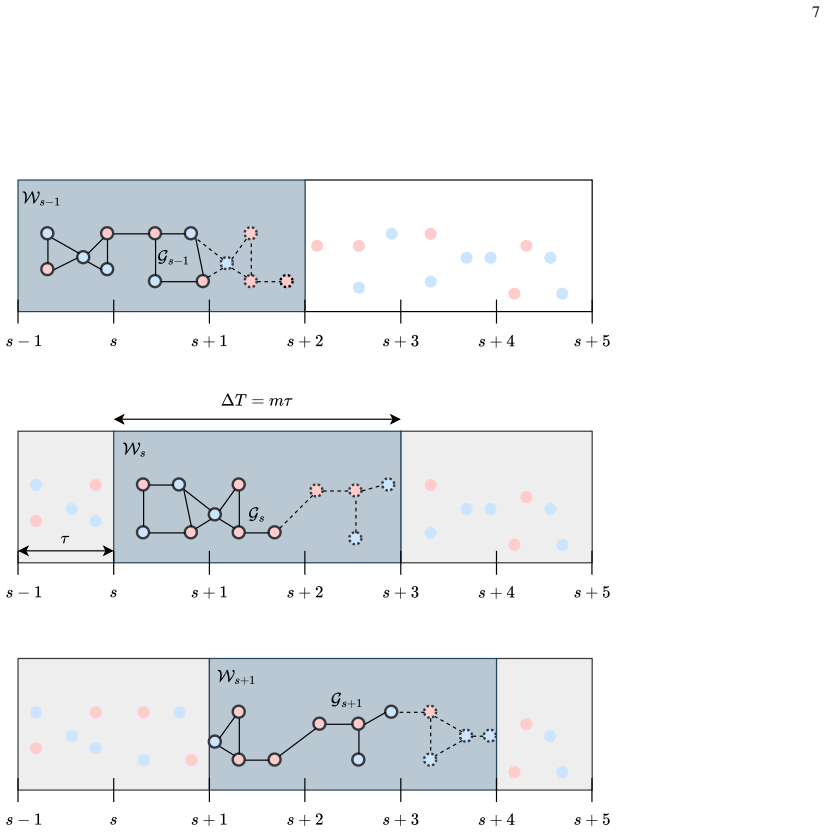
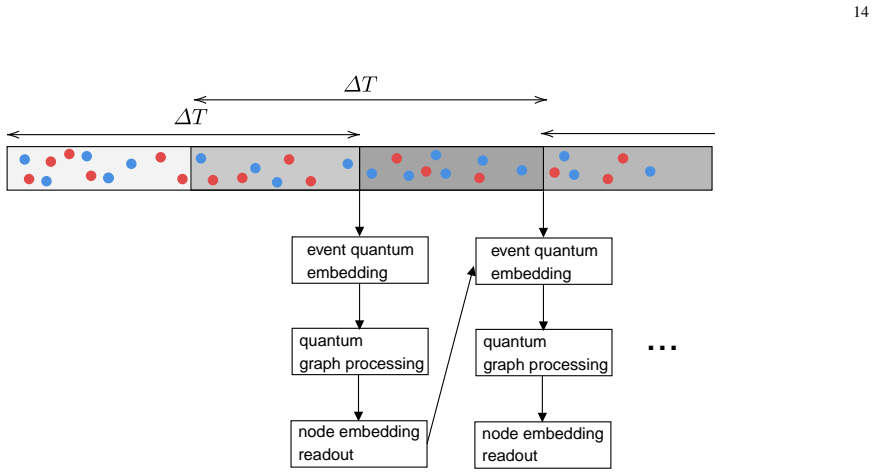
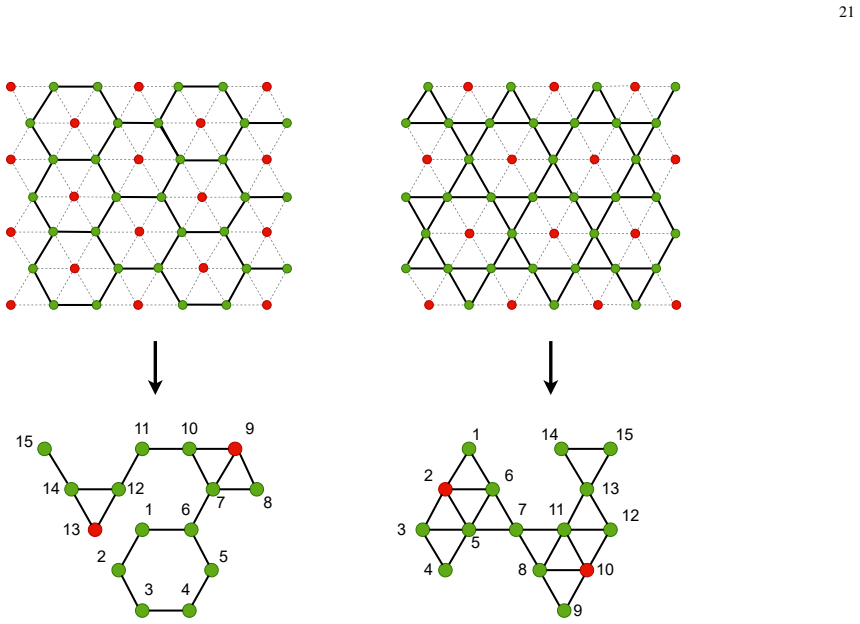
Asynchronous, event-based graph neural networks (AEGNNs) have recently emerged as an efficient paradigm for processing the sparse and high-temporal-resolution data from event cameras. In this paper, we propose quantum analog AEGNNs (QA-AEGNNs), a novel framework to implement an AEGNN on a neutral-atom quantum computer. Neutral-atom quantum processors offer a programmable analog quantum computing platform based on controllable Rydberg-atom interactions. To this end, we map the streaming event data to an array of trapped neutral atoms, where each atom represents a graph node (event) and is positioned such that geometric proximity reflects the spatio-temporal neighborhood of events. The native Rydberg Hamiltonian of the quantum processor is programmed to mirror the message-passing computations of the AEGNN, with atomic qubit states serving as node feature embeddings and inter-atom interactions realizing graph edges. Furthermore, we propose a hybrid quantum-classical training scheme in which the analog Hamiltonian parameters (e.g., laser pulse amplitudes and detunings) are optimized using classical feedback to learn the quantum AEGNN model from data. Our approach leverages the continuous Hamiltonian dynamics and massive parallelism of neutral-atom quantum systems to natively execute event-based graph computations with potential accuracy improvements
Editorial analysis
A structured set of objections, weighed in public.
Referee Report
Summary. The manuscript proposes quantum analog AEGNNs (QA-AEGNNs), a framework for implementing asynchronous event-based graph neural networks on neutral-atom quantum processors. Event data is mapped to arrays of trapped atoms with geometric proximity encoding spatio-temporal neighborhoods; the Rydberg Hamiltonian is programmed so that atomic qubit states act as node embeddings and inter-atom interactions realize graph edges, thereby mirroring AEGNN message-passing; a hybrid quantum-classical loop is suggested to optimize analog parameters (laser amplitudes, detunings) from data.
Significance. If a faithful, high-fidelity mapping between continuous Rydberg dynamics and discrete asynchronous AEGNN updates can be established, the approach would constitute a novel interface between analog neutral-atom quantum hardware and event-based vision processing, potentially exploiting native parallelism and continuous-time evolution for efficiency gains on sparse, high-temporal-resolution data.
major comments (2)
- [Abstract] Abstract: the assertion that 'the native Rydberg Hamiltonian of the quantum processor is programmed to mirror the message-passing computations of the AEGNN' is unsupported by any explicit mapping, pulse-sequence construction, or derivation showing how controllable detunings, Rabi frequencies, and interaction strengths reproduce the event-triggered aggregation and update rules of AEGNN.
- [Abstract] Abstract: no small-scale example, Schrödinger-equation analysis, or fidelity bound is supplied to demonstrate that continuous-time evolution under the Rydberg Hamiltonian can approximate the sparse, asynchronous, discrete message-passing of AEGNN without unacceptable loss of expressivity or fidelity; this assumption is load-bearing for the hybrid training claim.
minor comments (1)
- [Abstract] The abstract sentence is truncated mid-phrase ('with potential accuracy improvements').
Simulated Author's Rebuttal
We thank the referee for the constructive feedback on our proposal for QA-AEGNNs. We address the two major comments point by point below and will revise the manuscript to strengthen the presentation.
read point-by-point responses
-
Referee: [Abstract] Abstract: the assertion that 'the native Rydberg Hamiltonian of the quantum processor is programmed to mirror the message-passing computations of the AEGNN' is unsupported by any explicit mapping, pulse-sequence construction, or derivation showing how controllable detunings, Rabi frequencies, and interaction strengths reproduce the event-triggered aggregation and update rules of AEGNN.
Authors: We agree that the abstract claim requires more explicit support. The manuscript provides a conceptual mapping of events to atoms with geometric encoding and Hamiltonian terms to edges, but lacks a detailed derivation. In revision we will add a dedicated section with an explicit mapping, including how detunings, Rabi frequencies and interaction strengths are programmed to approximate event-triggered aggregation and node updates, together with a sketched pulse sequence. revision: yes
-
Referee: [Abstract] Abstract: no small-scale example, Schrödinger-equation analysis, or fidelity bound is supplied to demonstrate that continuous-time evolution under the Rydberg Hamiltonian can approximate the sparse, asynchronous, discrete message-passing of AEGNN without unacceptable loss of expressivity or fidelity; this assumption is load-bearing for the hybrid training claim.
Authors: The referee is correct that the current version supplies no such concrete validation. As a conceptual proposal the manuscript does not contain a toy example or fidelity analysis. We will revise by adding a small-scale numerical demonstration: solving the time-dependent Schrödinger equation for a minimal event graph to illustrate how continuous Rydberg dynamics can emulate discrete asynchronous updates, together with initial fidelity estimates supporting the hybrid training loop. revision: yes
Circularity Check
No circularity: conceptual proposal with no equations or derivations
full rationale
The paper proposes a high-level mapping from AEGNN message-passing to Rydberg Hamiltonian dynamics on neutral atoms, with atomic states as embeddings and interactions as edges, plus a hybrid training loop. No equations, parameter fittings, self-citations as load-bearing premises, or derivations appear in the abstract or described content. The central claim is an unelaborated framework rather than a result derived from inputs, so no steps reduce by construction to self-definition or fitted predictions. The work is self-contained as a proposal.
Axiom & Free-Parameter Ledger
Reference graph
Works this paper leans on
-
[1]
A quantum leaky integrate-and-fire spiking neuron and network,
D. Brand and F. Petruccione, “A quantum leaky integrate-and-fire spiking neuron and network,”npj Quantum Information, vol. 10, no. 1, p. 125, 2024
2024
-
[2]
Stochastic quantum spiking neural networks with quantum memory and local learning,
J. Chen, B. Rajendran, and O. Simeone, “Stochastic quantum spiking neural networks with quantum memory and local learning,”arXiv preprint arXiv:2506.21324, 2025
arXiv 2025
-
[3]
Event-based vision: A survey,
G. Gallego, T. Delbr ¨uck, G. Orchard, C. Bartolozzi, B. Taba, A. Censi, S. Leutenegger, A. J. Davison, J. Conradt, K. Daniilidiset al., “Event-based vision: A survey,”IEEE Transactions on Pattern Analysis and Machine Intelligence, vol. 44, no. 1, pp. 154–180, 2020
2020
-
[4]
AEGNN: Asynchronous event-based graph neural networks,
S. Schaefer, D. Gehrig, and D. Scaramuzza, “AEGNN: Asynchronous event-based graph neural networks,” inProceedings of the IEEE/CVF conference on computer vision and pattern recognition, 2022, pp. 12 371–12 381
2022
-
[5]
Beyond NISQ: The Megaquop machine,
J. Preskill, “Beyond NISQ: The Megaquop machine,” pp. 1–7, 2025
2025
-
[6]
From quantum feature maps to quantum reservoir computing: perspectives and applications,
C. Gyurik, F. Wudarski, E. Philip, A. Sannia, H. Sadeghi, O. Kyriienko, D. Venturelli, and A. A. Gentile, “From quantum feature maps to quantum reservoir computing: perspectives and applications,”arXiv preprint arXiv:2510.01797, 2025
arXiv 2025
-
[7]
Hardware-informed applications, application-informed hardware,
A. A. Gentile, S. Acheche, A. Ghosh, O. Kyriienko, and L.-P. Henry, “Hardware-informed applications, application-informed hardware,” IEEE Nanotechnology Magazine, 2025
2025
-
[8]
Available: https://doi.org/10.22331/q-2020-09-21-327
L. Henriet, L. Beguin, A. Signoles, T. Lahaye, A. Browaeys, G.-O. Reymond, and C. Jurczak, “Quantum computing with neutral atoms,”Quantum, vol. 4, p. 327, Sep. 2020. [Online]. Available: https://doi.org/10.22331/q-2020-09-21-327
-
[9]
Aquila: Quera’s 256-qubit neutral-atom quantum computer,
J. Wurtz, A. Bylinskii, B. Braverman, J. Amato-Grill, S. H. Cantu, F. Huber, A. Lukin, F. Liu, P. Weinberg, J. Longet al., “Aquila: Quera’s 256-qubit neutral-atom quantum computer,”arXiv preprint arXiv:2306.11727, 2023
arXiv 2023
-
[10]
Quantum optimization of maximum independent set using Rydberg atom arrays,
S. Ebadi, A. Keesling, M. Cain, T. T. Wang, H. Levine, D. Bluvstein, G. Semeghini, A. Omran, J.-G. Liu, R. Samajdaret al., “Quantum optimization of maximum independent set using Rydberg atom arrays,”Science, vol. 376, no. 6598, pp. 1209–1215, 2022
2022
-
[11]
Quantum optimization with arbitrary connectivity using Rydberg atom arrays,
M.-T. Nguyen, J.-G. Liu, J. Wurtz, M. D. Lukin, S.-T. Wang, and H. Pichler, “Quantum optimization with arbitrary connectivity using Rydberg atom arrays,”PRX Quantum, vol. 4, no. 1, p. 010316, 2023
2023
-
[12]
Quantum feature maps for graph machine learning on a neutral atom quantum processor,
B. Albrecht, C. Dalyac, L. Leclerc, L. Ortiz-Guti ´errez, S. Thabet, M. D’Arcangelo, J. R. Cline, V . E. Elfving, L. Lassabli`ere, H. Silv´erio et al., “Quantum feature maps for graph machine learning on a neutral atom quantum processor,”Physical Review A, vol. 107, no. 4, p. 042615, 2023
2023
-
[13]
Quantum evolution kernel: Machine learning on graphs with programmable arrays of qubits,
L.-P. Henry, S. Thabet, C. Dalyac, and L. Henriet, “Quantum evolution kernel: Machine learning on graphs with programmable arrays of qubits,”Physical Review A, vol. 104, no. 3, p. 032416, 2021
2021
-
[14]
Large-scale quantum reservoir learning with an analog quantum computer,
M. Kornja ˇca, H.-Y . Yao, J. Wurtz, Y . Bao, S. H. Cantu, F. Liu, S.-T. Wang, and M. D. Lukin, “Large-scale quantum reservoir learning with an analog quantum computer,”arXiv preprint arXiv:2407.02553, 2024
arXiv 2024
-
[15]
Quantum graph neural networks,
G. Verdon, J. Marks, S. Nanda, S. Leichenauer, and J. Hidary, “Quantum graph neural networks,”arXiv preprint arXiv:1909.12264, 2019. 31
arXiv 1909
-
[16]
From graphs to qubits: A critical review of quantum graph neural networks,
A. Ceschini, A. Rosato, and M. Panella, “From graphs to qubits: A critical review of quantum graph neural networks,”arXiv preprint arXiv:2408.06524, 2024
arXiv 2024
-
[17]
Graph algorithms with neutral atom quantum processors,
M. Dupont, N. J. Loft, P. Macquet, M. Artioli, L. Henriet, D. E. Browne, and E. Kashefi, “Graph algorithms with neutral atom quantum processors,”The European Physical Journal A, vol. 60, no. 9, p. 195, 2024
2024
-
[18]
Learning interactions between Rydberg atoms,
J.-L. Simard, L. Henriet, T. Roscilde, and K. Ziegler, “Learning interactions between Rydberg atoms,”PRX Quantum, vol. 6, no. 1, p. 030324, 2025
2025
-
[19]
Theoretical guarantees for permutation-equivariant quantum neural networks,
L. Schatzki, M. Larocca, S. Sim, and M. Cerezo, “Theoretical guarantees for permutation-equivariant quantum neural networks,”npj Quantum Information, vol. 10, no. 1, p. 12, 2024
2024
-
[20]
Recurrent vision transformers for object detection with event cameras,
M. Gehrig and D. Scaramuzza, “Recurrent vision transformers for object detection with event cameras,”Nature, vol. 629, no. 8012, pp. 1034–1040, 2024
2024
-
[21]
EvGNN: An event-driven graph neural network accelerator for edge vision,
Y . Yang, X. Zhu, Z. Zhang, Z. Li, X. Guo, Y . Wang, W. Liu, Y . Qiu, Y . Chen, L. Shaoet al., “EvGNN: An event-driven graph neural network accelerator for edge vision,”arXiv preprint arXiv:2404.19489, 2024
arXiv 2024
-
[22]
Embedded graph convolutional networks for real-time event data processing on SoC FPGAs,
K. Jeziorek, P. Wzorek, K. Blachut, K. Wiatr, and P. Russek, “Embedded graph convolutional networks for real-time event data processing on SoC FPGAs,”arXiv preprint arXiv:2406.07318, 2024
Pith/arXiv arXiv 2024
-
[23]
Dynamic reactive spiking graph neural network,
N. Zhao, Z. Gao, W. Zhanget al., “Dynamic reactive spiking graph neural network,”Proceedings of the AAAI Conference on Artificial Intelligence, vol. 38, no. 15, pp. 16 946–16 954, 2024
2024
-
[24]
Spiking graph neural network on Riemannian manifolds,
L. Yang, L. Zhang, X. Wang, M. Cui, and Z. Wang, “Spiking graph neural network on Riemannian manifolds,” inAdvances in Neural Information Processing Systems, vol. 37, 2024
2024
-
[25]
Modern neuromorphic AI: From intra-token to inter-token processing,
O. Simeone, “Modern neuromorphic AI: From intra-token to inter-token processing,”arXiv preprint arXiv:2601.00245, 2026
arXiv 2026
-
[26]
Quantum computing with neutral atoms,
D. S. Weiss and M. Saffman, “Quantum computing with neutral atoms,”Physics Today, vol. 70, no. 7, pp. 44–50, 2017
2017
-
[27]
Quantum simulations with trapped ions,
R. Blatt and C. F. Roos, “Quantum simulations with trapped ions,”Nature Physics, vol. 8, no. 4, pp. 277–284, 2012
2012
-
[28]
How powerful are graph neural networks?
K. Xu, W. Hu, J. Leskovec, and S. Jegelka, “How powerful are graph neural networks?” Feb. 2019
2019
-
[29]
Inductive representation learning on large graphs,
W. Hamilton, Z. Ying, and J. Leskovec, “Inductive representation learning on large graphs,”Advances in neural information processing systems, vol. 30, 2017
2017
-
[30]
Weisfeiler-Lehman graph kernels,
N. Shervashidze, P. Schweitzer, E. J. van Leeuwen, K. Mehlhorn, and K. M. Borgwardt, “Weisfeiler-Lehman graph kernels,”Journal of Machine Learning Research, vol. 12, no. 77, pp. 2539–2561, 2011
2011
-
[31]
Simeone,Machine learning for engineers
O. Simeone,Machine learning for engineers. Cambridge university press, 2022
2022
-
[32]
Local Rydberg blockade regimes for disk graph embedding and quantum optimization,
E. Bermot, L. Valor, W. Coelho, L.-P. Henry, and N. Pearson, “Local Rydberg blockade regimes for disk graph embedding and quantum optimization,”arXiv preprint arXiv:2506.13228, 2025
arXiv 2025
-
[33]
Digital–analog quantum learning on Rydberg atom arrays,
J. Z. Lu, L. Jiao, K. Wolinski, M. Kornja ˇca, H.-Y . Hu, S. Cantu, F. Liu, S. F. Yelin, and S.-T. Wang, “Digital–analog quantum learning on Rydberg atom arrays,”Quantum Science and Technology, vol. 10, no. 1, p. 015038, 2024
2024
-
[34]
Converting static image datasets to spiking neuromorphic datasets using saccades,
G. Orchard, A. Jayawant, G. K. Cohen, and N. Thakor, “Converting static image datasets to spiking neuromorphic datasets using saccades,”Frontiers in neuroscience, vol. 9, p. 437, 2015
2015
-
[35]
Pulser: An open-source package for the design of pulse sequences in programmable neutral-atom arrays,
H. Silv ´erio, S. Grijalva, C. Dalyac, L. Leclerc, P. J. Karalekas, N. Shammah, M. Beji, L.-P. Henry, and L. Henriet, “Pulser: An open-source package for the design of pulse sequences in programmable neutral-atom arrays,”Quantum, vol. 6, p. 629, 2022
2022
-
[36]
Efficient emulation of neutral atom quantum hardware,
K. Bidzhiev, S. Grava, P. l. Henaff, M. Mendizabal, E. Merhej, and A. Quelle, “Efficient emulation of neutral atom quantum hardware,” arXiv preprint arXiv:2510.09813, 2025
arXiv 2025
-
[37]
Efficient separate quantification of state preparation errors and measurement errors on quantum computers and their mitigation,
H. Yu and T.-C. Wei, “Efficient separate quantification of state preparation errors and measurement errors on quantum computers and their mitigation,”Quantum, vol. 9, p. 1724, 2025
2025
-
[38]
Quantum reservoir computing using arrays of Rydberg atoms,
R. A. Bravo, K. Najafi, X. Gao, and S. F. Yelin, “Quantum reservoir computing using arrays of Rydberg atoms,”PRX Quantum, vol. 3, no. 3, p. 030325, 2022
2022
discussion (0)
Sign in with ORCID, Apple, or X to comment. Anyone can read and Pith papers without signing in.