Recognition: unknown
Soft mode dynamics associated with QCD critical point and color superconductivity -- pseudogap, anomalous dilepton production and electric conductivity
Pith reviewed 2026-05-10 05:06 UTC · model grok-4.3
The pith
Soft modes near the QCD critical point and color superconductivity produce a pseudogap and anomalously enhance electric conductivity and dilepton production in heavy-ion collisions.
A machine-rendered reading of the paper's core claim, the machinery that carries it, and where it could break.
Core claim
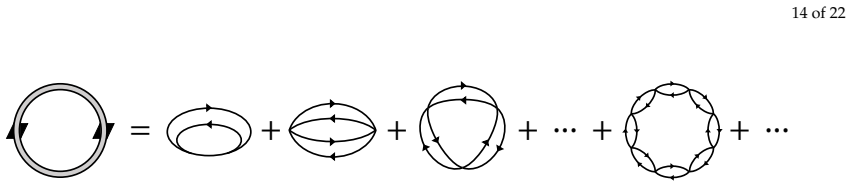
Collective excitations coupled to fluctuations of the respective order parameters qualify as soft modes for both the QCD critical point and the two-flavor color-superconducting transition: they acquire prominent low-energy, low-momentum spectral strength above the critical temperatures, with their peak energies softening and eventually vanishing at the critical points. The diquark soft mode induces a pseudogap, a depression in the density of states of the quark spectra around the Fermi surface above but near the critical temperature. Applying ideas developed for para-conductivity in the normal phase of metal superconductors, the soft modes produce an anomalous enhancement of electric conduct
What carries the argument
The soft modes, i.e., collective excitations that gain prominent spectral strength in the low-energy and low-momentum region above the critical temperatures and whose dispersion softens to zero at the critical points.
If this is right
- The diquark soft mode above the critical temperature for two-flavor color superconductivity creates a pseudogap by depressing the quark density of states around the Fermi surface.
- Soft modes produce an anomalous increase in electric conductivity in the normal phase above both the QCD critical point and the color-superconducting transition.
- The same soft modes generate an anomalous enhancement of the dilepton production rate above the critical temperatures.
- These electromagnetic enhancements constitute observable signals that could be used to locate the phase transitions in relativistic heavy-ion collisions.
Where Pith is reading between the lines
- Confirmation would suggest that dilepton spectra at low invariant mass offer an independent experimental handle on the location of the QCD critical point.
- The direct mapping of condensed-matter conductivity formulas onto QCD matter implies that similar soft-mode effects may appear in other transport coefficients near the critical endpoint.
- If the enhancements survive more realistic hydrodynamic evolution, they could alter the interpretation of existing dilepton data from RHIC and LHC runs at intermediate beam energies.
- The work opens the possibility that conductivity measurements or related observables in neutron-star mergers might also carry imprints of color-superconducting soft modes.
Load-bearing premise
The para-conductivity framework developed for metal superconductors applies directly to the quark matter case in the NJL model, and the resulting enhancements are both sizable and detectable in realistic heavy-ion collision environments.
What would settle it
Absence of the predicted enhancement in the low-mass dilepton spectrum or in proxies for electric conductivity when heavy-ion collisions are tuned to the beam energies and centralities expected to pass near the QCD critical point.
Figures




read the original abstract
We give a systematic account of the soft mode dynamics of QCD critical point(QCD-CP) and the two-flavor color-superconductivity(2SC-CP) based on the 2-flavor Nambu-Jona-Lasinio model, and investigate their effects on electromagnetic observables in relativistic heavy-ion collisions (HIC). We first demonstrate that the collective excitations coupled to the fluctuations of the respective order parameters are the soft modes associated to the respective phase transitions, in the sense that they acquire a prominent spectral strength in the low-energy and low-momentum region above the respective critical temperatures, and the peak energy of the respective spectral functions goes down, i.e., gets softened, and eventually vanishes at the the critical point. It is shown that the diquark soft mode of the 2SC gives rise to the pseudogap, i.e., a depression in the density of states of the quark spectra around the Fermi surface above but in the vicinity of the critical temperature. Then, exploiting the ideas that were developed in condensed matter physics for describing the `para-conductivity' in the normal phase of metal superconductors, we show that the soft modes cause an anomalous enhancement of electric conductivity and the dilepton production rate, and discuss their relevance to HIC.
Editorial analysis
A structured set of objections, weighed in public.
Referee Report
Summary. The paper uses the two-flavor Nambu-Jona-Lasinio model to analyze soft mode dynamics near the QCD critical point and the 2SC phase transition. It identifies collective excitations as soft modes that acquire low-energy spectral strength and soften toward the critical points, demonstrates a pseudogap in the quark density of states induced by diquark fluctuations above Tc, and adapts para-conductivity ideas from condensed-matter superconductors to argue for anomalous enhancements in electric conductivity and dilepton production rates, with discussion of relevance to heavy-ion collisions.
Significance. If the adaptation of the para-conductivity construction is shown to be valid in the relativistic NJL setting, the results could provide a concrete mechanism linking soft-mode fluctuations to observable electromagnetic signals in HIC, aiding searches for the QCD critical point and color superconductivity. The systematic treatment of soft modes for both transitions and the explicit link to the pseudogap constitute a strength of the model-based approach.
major comments (2)
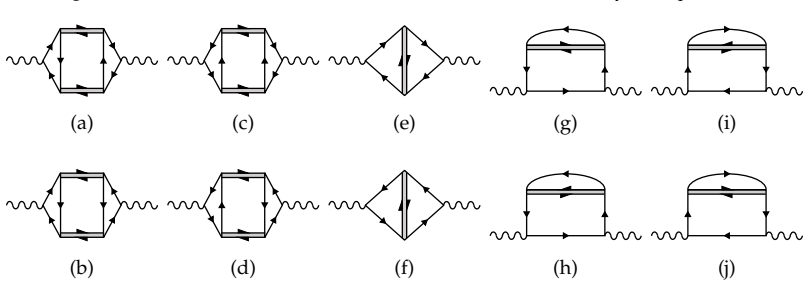
- [§ on electric conductivity and dilepton rates] § on electric conductivity and dilepton rates (the Kubo-formula application of para-conductivity): the central claim of anomalous enhancement rests on importing the Aslamazov-Larkin-type fluctuating-pair contributions without an explicit derivation confirming that the electromagnetic current vertices for colored quarks in the relativistic NJL model and the soft-mode damping (from quark loops) produce the same structure and magnitude as in non-relativistic BCS theory. This is load-bearing for the quantitative relevance to HIC.
- [§ on pseudogap from diquark soft mode] § on pseudogap from diquark soft mode: while the depression in the density of states around the Fermi surface is shown qualitatively, the absence of quantitative measures (e.g., depth relative to Tc or width in momentum) leaves open whether the effect is sizable enough to influence dilepton or conductivity observables in realistic collision environments.
minor comments (3)
- [Abstract] The abstract contains a typographical repetition ('at the the critical point'); this should be corrected.
- [References] Ensure that the original references for the para-conductivity formalism (e.g., Aslamazov-Larkin) and any prior NJL studies of soft modes are explicitly cited to clarify the incremental contribution.
- [Figures] If spectral-function or conductivity plots are present, confirm that axes, units, and the location of the softening peak are clearly labeled for reproducibility.
Simulated Author's Rebuttal
We thank the referee for the careful reading of our manuscript and the constructive comments. We address the major points below and indicate the revisions that will be incorporated to strengthen the presentation and quantitative support for our claims.
read point-by-point responses
-
Referee: § on electric conductivity and dilepton rates (the Kubo-formula application of para-conductivity): the central claim of anomalous enhancement rests on importing the Aslamazov-Larkin-type fluctuating-pair contributions without an explicit derivation confirming that the electromagnetic current vertices for colored quarks in the relativistic NJL model and the soft-mode damping (from quark loops) produce the same structure and magnitude as in non-relativistic BCS theory. This is load-bearing for the quantitative relevance to HIC.
Authors: We acknowledge that the adaptation of the para-conductivity formalism requires a clearer justification within the relativistic NJL setting to underpin the quantitative relevance to heavy-ion collisions. The manuscript outlines the diagrammatic correspondence between the soft-mode propagators (obtained via RPA resummation) and the electromagnetic current correlator, but does not provide a full step-by-step derivation of the vertex factors for colored quarks. In the revised version we will add an explicit calculation of the leading Aslamazov-Larkin diagram, demonstrating that the current vertices retain the requisite structure and that the soft-mode damping generated by the quark-loop self-energy produces an enhancement of the same functional form as in the non-relativistic case. This addition will be placed in a dedicated subsection or appendix and will directly address the load-bearing nature of the claim. revision: yes
-
Referee: § on pseudogap from diquark soft mode: while the depression in the density of states around the Fermi surface is shown qualitatively, the absence of quantitative measures (e.g., depth relative to Tc or width in momentum) leaves open whether the effect is sizable enough to influence dilepton or conductivity observables in realistic collision environments.
Authors: The pseudogap is exhibited through the quark spectral function and the integrated density of states, which display a clear suppression near the Fermi surface for temperatures above but close to Tc. The original presentation emphasized the qualitative mechanism arising from diquark fluctuations. We agree that quantitative characterization is needed to assess phenomenological impact. In the revision we will extract and report specific measures from our existing numerical results, including the relative depth of the DOS depression at the Fermi momentum (DOS(T)/DOS_normal) for several temperatures above Tc and the momentum width of the depleted region. These numbers will be added to the relevant figures and discussed in relation to their possible influence on dilepton and conductivity observables. revision: yes
Circularity Check
No significant circularity; derivation applies standard NJL effective model plus external condensed-matter formulas to compute observables.
full rationale
The paper's chain proceeds by (i) solving the NJL model to identify soft modes and pseudogap above Tc, then (ii) inserting the resulting spectral functions into the Kubo formula using the para-conductivity construction imported from condensed-matter literature. Neither step reduces to its own output by definition: the NJL parameters are fixed externally to vacuum phenomenology (standard practice, not a fit-then-predict loop on the target HIC quantities), and the conductivity/dilepton formulas are taken from non-relativistic BCS theory rather than derived from the present authors' prior results. No self-citation is invoked as a uniqueness theorem or to justify the vertex structure; the calculation is therefore self-contained against external benchmarks even if the applicability of the imported formalism remains a separate correctness question.
Axiom & Free-Parameter Ledger
free parameters (1)
- NJL model parameters (couplings, cutoff)
axioms (2)
- domain assumption Collective excitations coupled to order-parameter fluctuations become soft modes that soften and vanish at the critical point
- ad hoc to paper Para-conductivity framework from metal superconductors applies to quark matter
invented entities (1)
-
diquark soft mode
no independent evidence
Reference graph
Works this paper leans on
-
[1]
Introduction One of the central problems in the modern physics is to reveal the properties of hot and dense matter as realized in the cores of compact stars or in the early universe. Since the extremely hot and dense matter should be described in terms of quarks and gluons governed by quantum chromody- namics(QCD), such an effort can be tantamount to deve...
work page internal anchor Pith review Pith/arXiv arXiv 2026
-
[2]
[35], L = ¯ψi(/∂ − m)ψ + GS[( ¯ψψ)2 + ( ¯ψiγ5⃗τψ)2] + GD( ¯ψiγ5τ2λAψC)( ¯ψCiγ5τ2λAψ), (2.1) where ψ(x) is the quark field and ψC(x) = iγ2γ0 ¯ψT(x) denotes its charge conjugation
Model Lagrangian and phase diagram To explore the effects of critical fluctuations in dense quark matter, we employ a simple 2-flavor NJL model with a current quark mass, as was done in Ref. [35], L = ¯ψi(/∂ − m)ψ + GS[( ¯ψψ)2 + ( ¯ψiγ5⃗τψ)2] + GD( ¯ψiγ5τ2λAψC)( ¯ψCiγ5τ2λAψ), (2.1) where ψ(x) is the quark field and ψC(x) = iγ2γ0 ¯ψT(x) denotes its charge ...
-
[3]
We show that these fields exhibit collective excitations with prominent peaks of the strength function near these phase transitions, respectively [16,17,24,25,35]
Collective diquark/particle-hole excitations as the soft modes of the phase transitions In this section, we discuss the dynamical properties of fluctuations of ∆ and M near the 2SC-PT and QCD-CP , respectively, based on the linear response theory. We show that these fields exhibit collective excitations with prominent peaks of the strength function near t...
-
[4]
The emergence of the soft modes can in turn naturally modify properties of various physical observables near the transition 10 of 22 T T
Emergence of pseudogap in quark excitation spectra In the previous sections, we have seen that the fluctuations of ∆ and M are enhanced near the 2SC-PT and QCD-CP , respectively, and well-developed collective modes, the soft modes, are formed, which become massless at the critical points of the second-order nature. The emergence of the soft modes can in t...
-
[5]
These quantities are derived from the retarded photon self-energy ΠRµν (k, ω) = Z d4xeiωt−ik·x⟨[jµ (x, t), jν(0, 0)]⟩θ(t), (5.43) with the electric current operator jµ (x, t)
Electric conductivity and dilepton production rates In this section, we explore the effects of the soft modes on the electric conductivity and dilepton production rates (DPR) near the 2SC-PT and QCD-CP . These quantities are derived from the retarded photon self-energy ΠRµν (k, ω) = Z d4xeiωt−ik·x⟨[jµ (x, t), jν(0, 0)]⟩θ(t), (5.43) with the electric curre...
-
[6]
Brief summary and concluding remark In this article, we have made a unified account of the soft modes of QCD-CP and 2SC-CP and their relevance to HIC, based on the 2-flavor Nambu-Jona-Lasinio (NJL) model. We started by discussing not only static but also dynamical fluctuations of physical quantities coupled to the order parameters of both the second-order...
-
[7]
The phase diagram of dense QCD,
Fukushima, K.; Hatsuda, T. The phase diagram of dense QCD. Rept. Prog. Phys. 2011, 74, 014001, [arXiv:hep-ph/1005.4814]. https://doi.org/10.1088/0034-4885/74/1/014001
-
[8]
Color superconductivity in dense quark matter
Alford, M.G.; Schmitt, A.; Rajagopal, K.; Schäfer, T. Color superconductivity in dense quark matter. Rev. Mod. Phys. 2008, 80, 1455–1515, [arXiv:hep-ph/0709.4635]. https://doi.org/10.1103/RevModPhys.80.1455
-
[9]
Chiral Restoration at Finite Density and Temperature
Asakawa, M.; Yazaki, K. Chiral Restoration at Finite Density and Temperature. Nucl. Phys. A 1989, 504, 668–684. https://doi.org/10.1016/0375-9474(89)90002-X
-
[10]
Chiral Symmetry Breaking in QCD at Finite Temperature and Density
Barducci, A.; Casalbuoni, R.; De Curtis, S.; Gatto, R.; Pettini, G. Chiral Symmetry Breaking in QCD at Finite Temperature and Density. Phys. Lett. B 1989, 231, 463–470. https://doi.org/10.1016/0370-2693(89)90695-3
-
[12]
Quark number susceptibility and fluctuati ons in the vector channel at high temperatures,
Kunihiro, T. Quark number susceptibility and fluctuations in the vector channel at high temperatures. Phys. Lett. B 1991, 271, 395–402. https://doi.org/10.1016/0370-2693(91)90107-2
-
[13]
Quark-gluon plasma: From big bang to little bang ; Vol
Yagi, K.; Hatsuda, T.; Miake, Y. Quark-gluon plasma: From big bang to little bang ; Vol. 23, 2005
2005
-
[14]
Future facilities for high µ B physics
Galatyuk, T. Future facilities for high µ B physics. Nucl. Phys. A 2019, 982, 163–169. https://doi.org/10.101 6/j.nuclphysa.2018.11.025
2019
-
[15]
Mapping the Phases of Quantum Chro- modynamics with Beam Energy Scan,
Bzdak, A.; Esumi, S.; Koch, V .; Liao, J.; Stephanov, M.; Xu, N. Mapping the Phases of Quantum Chromodynamics with Beam Energy Scan. Phys. Rept. 2020, 853, 1–87, [arXiv:nucl-th/1906.00936]. https://doi.org/10.1016/j.physrep.2020.01.005
-
[16]
Abdallah, M.; et al. Cumulants and correlation functions of net-proton, proton, and antiproton multiplicity distributions in Au+Au collisions at energies available at the BNL Relativistic Heavy Ion Collider. Phys. Rev. C 2021, 104, 024902, [arXiv:nucl-ex/2101.12413]. https://doi.org/10.1103/PhysRevC.104.024902
-
[17]
Signatures of the tricritical point in QCD.Phys
Stephanov, M.A.; Rajagopal, K.; Shuryak, E.V . Signatures of the tricritical point in QCD.Phys. Rev. Lett. 1998, 81, 4816–4819, [hep-ph/9806219]. https://doi.org/10.1103/PhysRevLett.81.4816
-
[18]
A Theory of highly condensed matter
Walecka, J.D. A Theory of highly condensed matter. Annals Phys. 1974, 83, 491–529. https://doi.org/10.101 6/0003-4916(74)90208-5
1974
-
[19]
Fermi Liquid Properties of Nuclear Matter in a Relativistic Mean - Field Theory
Matsui, T. Fermi Liquid Properties of Nuclear Matter in a Relativistic Mean - Field Theory. Nucl. Phys. A 1981, 370, 365–388. https://doi.org/10.1016/0375-9474(81)90103-2
-
[20]
Asakawa, M.; Kitazawa, M. Fluctuations of conserved charges in relativistic heavy ion collisions: An introduction. Prog. Part. Nucl. Phys. 2016, 90, 299–342, [arXiv:nucl-th/1512.05038]. https://doi.org/10.1016/ j.ppnp.2016.04.002
-
[21]
Dynamics of critical fluctuations: Theory – phenomenology – heavy-ion collisions
Bluhm, M.; et al. Dynamics of critical fluctuations: Theory – phenomenology – heavy-ion collisions. Nucl. Phys. A 2020, 1003, 122016, [arXiv:nucl-th/2001.08831]. https://doi.org/10.1016/j.nuclphysa.2020.122016
-
[22]
Scalar density fluctuation at critical end point in NJL model
Fujii, H. Scalar density fluctuation at critical end point in NJL model. Phys. Rev. D 2003, 67, 094018, [hep-ph/0302167]. https://doi.org/10.1103/PhysRevD.67.094018
-
[23]
Sigma and hydrodynamic modes along the critical line
Fujii, H.; Ohtani, M. Sigma and hydrodynamic modes along the critical line. Phys. Rev. D 2004, 70, 014016, [hep-ph/0402263]. https://doi.org/10.1103/PhysRevD.70.014016
-
[24]
Functional renormalization group analysis of the soft mode at the QCD critical point
Yokota, T.; Kunihiro, T.; Morita, K. Functional renormalization group analysis of the soft mode at the QCD critical point. PTEP 2016, 2016, 073D01, [arXiv:hep-ph/1603.02147]. https://doi.org/10.1093/ptep/ptw062
-
[25]
Yokota, T.; Kunihiro, T.; Morita, K. Tachyonic instability of the scalar mode prior to the QCD critical point based on the functional renormalization-group method in the two-flavor case. Phys. Rev. D 2017, 96, 074028, [arXiv:hep-ph/1707.05520]. https://doi.org/10.1103/PhysRevD.96.074028
-
[26]
Thermal fluctuations of gauge fields and first order phase transitions in color superconductivity
Matsuura, T.; Iida, K.; Hatsuda, T.; Baym, G. Thermal fluctuations of gauge fields and first order phase transitions in color superconductivity. Phys. Rev. D 2004, 69, 074012, [hep-ph/0312042]. https://doi.org/10 .1103/PhysRevD.69.074012
-
[27]
Gauge field fluctuations and first-order phase transition in color superconductivity
Giannakis, I.; Hou, D.f.; Ren, H.c.; Rischke, D.H. Gauge field fluctuations and first-order phase transition in color superconductivity. Phys. Rev. Lett. 2004, 93, 232301, [hep-ph/0406031]. https://doi.org/10.1103/ PhysRevLett.93.232301
-
[28]
Absence of the London limit for the first-order phase transition to a color superconductor
Noronha, J.L.; Ren, H.c.; Giannakis, I.; Hou, D.; Rischke, D.H. Absence of the London limit for the first-order phase transition to a color superconductor. Phys. Rev. D 2006, 73, 094009, [hep-ph/0602218]. https://doi.org/10.1103/PhysRevD.73.094009
-
[29]
Functional renormalization group approach to color superconducting phase transition
Fej˝ os, G.; Yamamoto, N. Functional renormalization group approach to color superconducting phase transition. JHEP 2019, 12, 069, [arXiv:hep-ph/1908.03535]. https://doi.org/10.1007/JHEP12(2019)069
-
[30]
Precursor of color superconductivity in hot quark matter
Kitazawa, M.; Koide, T.; Kunihiro, T.; Nemoto, Y. Precursor of color superconductivity in hot quark matter. Phys. Rev. D 2002, 65, 091504, [nucl-th/0111022]. https://doi.org/10.1103/PhysRevD.65.091504
-
[32]
Anomalous enhancement of dilepton production as a precursor of color superconductivity
Nishimura, T.; Kitazawa, M.; Kunihiro, T. Anomalous enhancement of dilepton production as a precursor of color superconductivity. PTEP 2022, 2022, 093D02, [arXiv:hep-ph/2201.01963]. https://doi.org/10.1093/ ptep/ptac100
-
[33]
Enhancement of dilepton production rate and electric conductivity around the QCD critical point
Nishimura, T.; Kitazawa, M.; Kunihiro, T. Enhancement of dilepton production rate and electric conductivity around the QCD critical point. PTEP 2023, 2023, 053D01, [arXiv:hep-ph/2302.03191]. https://doi.org/10.1 093/ptep/ptad051
-
[34]
Nambu, Y.; Jona-Lasinio, G. Dynamical Model of Elementary Particles Based on an Analogy with Supercon- ductivity. 1. Phys. Rev. 1961, 122, 345–358. https://doi.org/10.1103/PhysRev.122.345. 21 of 22
-
[35]
Dynamical model of elementary particles based on an analogy with su- perconductivity. II.,
Nambu, Y.; Jona-Lasinio, G. Dynamical model of elementary particles based on an analogy with supercon- ductivity. II. Phys. Rev. 1961, 124, 246–254. https://doi.org/10.1103/PhysRev.124.246
-
[36]
The Nambu and Jona Lasinio model: Its implications for hadrons and nuclei
Vogl, U.; Weise, W. The Nambu and Jona Lasinio model: Its implications for hadrons and nuclei. Prog. Part. Nucl. Phys. 1991, 27, 195–272. https://doi.org/10.1016/0146-6410(91)90005-9
-
[37]
The Nambu-Jona-Lasinio model of quantum chromodynamics,
Klevansky, S.P . The Nambu-Jona-Lasinio model of quantum chromodynamics. Rev. Mod. Phys. 1992, 64, 649–708. https://doi.org/10.1103/RevModPhys.64.649
-
[38]
QCD phenomenology based on a chiral effective Lagrangian,
Hatsuda, T.; Kunihiro, T. QCD phenomenology based on a chiral effective Lagrangian. Phys. Rept. 1994, 247, 221–367, [hep-ph/9401310]. https://doi.org/10.1016/0370-1573(94)90022-1
-
[39]
Effective hadron theory of QCD.Prog
Ebert, D.; Reinhardt, H.; Volkov, M.K. Effective hadron theory of QCD.Prog. Part. Nucl. Phys. 1994, 33, 1–120. https://doi.org/10.1016/0146-6410(94)90043-4
-
[40]
NJL model analysis of quark matter at large density,
Buballa, M. NJL model analysis of quark matter at large density. Phys. Rept. 2005, 407, 205–376, [hep- ph/0402234]. https://doi.org/10.1016/j.physrep.2004.11.004
-
[41]
Nishimura, T.; Kitazawa, M.; Kunihiro, T. Electromagnetic response of dense quark matter around color- superconducting phase transition and QCD critical point. Annals Phys. 2024, 469, 169768, [arXiv:hep- ph/2405.09240]. https://doi.org/10.1016/j.aop.2024.169768
-
[42]
Soviet Solid State 10, 875 (1968)
Aslamazov, L.; Larkin, A. Soviet Solid State 10, 875 (1968). Phys. Lett. A 1968, 26, 238
1968
-
[43]
Critical fluctuation of the order parameter in a superconductor
Maki, K. Critical fluctuation of the order parameter in a superconductor. I. Progress of Theoretical Physics 1968, 40, 193–200
1968
-
[44]
Microwave, flux flow, and fluctuation resistance of dirty type-II superconductors
Thompson, R.S. Microwave, flux flow, and fluctuation resistance of dirty type-II superconductors. Physical Review B 1970, 1, 327
1970
-
[45]
Fluctuation phenomena in superconductors ; Springer, 2008; pp
Larkin, A.; Varlamov, A. Fluctuation phenomena in superconductors ; Springer, 2008; pp. 369–458
2008
-
[46]
Introduction to superconductivity; Courier Corporation, 2004
Tinkham, M. Introduction to superconductivity; Courier Corporation, 2004
2004
-
[47]
Transport coefficients in high temperature gauge theories
Arnold, P .B.; Moore, G.D.; Yaffe, L.G. Transport coefficients in high temperature gauge theories. 1. Leading log results. JHEP 2000, 11, 001, [hep-ph/0010177]. https://doi.org/10.1088/1126-6708/2000/11/001
-
[48]
Transport coefficients in high temperature gauge theories
Arnold, P .B.; Moore, G.D.; Yaffe, L.G. Transport coefficients in high temperature gauge theories. 2. Beyond leading log. JHEP 2003, 05, 051, [hep-ph/0302165]. https://doi.org/10.1088/1126-6708/2003/05/051
-
[49]
Finite temperature spectral densities of momentum and R-charge correlators in N=4 Yang Mills theory
Teaney, D. Finite temperature spectral densities of momentum and R-charge correlators in N=4 Yang Mills theory. Phys. Rev. D 2006, 74, 045025, [hep-ph/0602044]. https://doi.org/10.1103/PhysRevD.74.045025
-
[50]
Electrical Conductivity of Hot QCD Matter.Phys
Cassing, W.; Linnyk, O.; Steinert, T.; Ozvenchuk, V . Electrical Conductivity of Hot QCD Matter.Phys. Rev. Lett. 2013, 110, 182301, [arXiv:hep-ph/1302.0906]. https://doi.org/10.1103/PhysRevLett.110.182301
-
[51]
Greif, M.; Bouras, I.; Greiner, C.; Xu, Z. Electric conductivity of the quark-gluon plasma investigated using a perturbative QCD based parton cascade. Phys. Rev. D 2014, 90, 094014, [arXiv:nucl-th/1408.7049]. https://doi.org/10.1103/PhysRevD.90.094014
-
[52]
Electrical conductivity of the quark-gluon plasma: perspective from lattice QCD
Aarts, G.; Nikolaev, A. Electrical conductivity of the quark-gluon plasma: perspective from lattice QCD. Eur. Phys. J. A 2021, 57, 118, [arXiv:hep-lat/2008.12326]. https://doi.org/10.1140/epja/s10050-021-00436-5
-
[53]
Spectral and Transport Properties from Lattice QCD
Kaczmarek, O.; Shu, H.T. Spectral and Transport Properties from Lattice QCD. Lect. Notes Phys. 2022, 999, 307–345, [arXiv:hep-lat/2206.14676]. https://doi.org/10.1007/978-3-030-95491-8_8
-
[54]
Estimation of electric conductivity of the quark gluon plasma via asymmetric heavy-ion collisions
Hirono, Y.; Hongo, M.; Hirano, T. Estimation of electric conductivity of the quark gluon plasma via asymmetric heavy-ion collisions. Phys. Rev. C 2014, 90, 021903, [arXiv:nucl-th/1211.1114]. https://doi.org/ 10.1103/PhysRevC.90.021903
-
[55]
Relativistic resistive magneto-hydrodynamics code for high-energy heavy-ion collisions
Nakamura, K.; Miyoshi, T.; Nonaka, C.; Takahashi, H.R. Relativistic resistive magneto-hydrodynamics code for high-energy heavy-ion collisions. Eur. Phys. J. C 2023, 83, 229, [arXiv:nucl-th/2211.02310]. https://doi.org/10.1140/epjc/s10052-023-11343-y
- [56]
-
[57]
Quantum theory of many-particle systems ; Courier Corporation, 2012
Fetter, A.L.; Walecka, J.D. Quantum theory of many-particle systems ; Courier Corporation, 2012
2012
-
[58]
Perturbation theory in statistical mechanics and the theory of superconductivity
Thouless, D.J. Perturbation theory in statistical mechanics and the theory of superconductivity. Annals of Physics 1960, 10, 553–588
1960
-
[59]
Pseudogap of color superconductivity in heated quark matter
Kitazawa, M.; Koide, T.; Kunihiro, T.; Nemoto, Y. Pseudogap of color superconductivity in heated quark matter. Phys. Rev. D 2004, 70, 056003, [hep-ph/0309026]. https://doi.org/10.1103/PhysRevD.70.056003
-
[60]
Emergence of soft quark excitations by the coupling with a soft mode of the QCD critical point
Kitazawa, M.; Kunihiro, T.; Nemoto, Y. Emergence of soft quark excitations by the coupling with a soft mode of the QCD critical point. Phys. Rev. D 2014, 90, 116008, [arXiv:hep-ph/1409.3733]. https: //doi.org/10.1103/PhysRevD.90.116008. 22 of 22
-
[61]
Spectral properties of massless and massive quarks coupled with massive boson at finite temperature
Kitazawa, M.; Kunihiro, T.; Mitsutani, K.; Nemoto, Y. Spectral properties of massless and massive quarks coupled with massive boson at finite temperature. Phys. Rev. D 2008, 77, 045034, [arXiv:hep-ph/0710.5809]. https://doi.org/10.1103/PhysRevD.77.045034
-
[62]
Souma, Non-trivial ultraviolet fixed point in quan- tum gravity, Prog
Kitazawa, M.; Kunihiro, T.; Nemoto, Y. Novel Collective Excitations and Quasi-particle Picture of Quarks Coupled with a Massive Boson at Finite Temperature.Prog. Theor. Phys. 2007, 117, 103–138, [hep-ph/0609164]. https://doi.org/10.1143/PTP .117.103
work page doi:10.1143/ptp 2007
-
[63]
Quark spectrum above but near critical temperature of chiral transition
Kitazawa, M.; Kunihiro, T.; Nemoto, Y. Quark spectrum above but near critical temperature of chiral transition. Phys. Lett. B 2006, 633, 269–274, [hep-ph/0510167]. https://doi.org/10.1016/j.physletb.2005.11. 076
-
[64]
Kitazawa, M.; Kunihiro, T.; Nemoto, Y. Possible generation of anomalously soft quark excitations at nonzero temperature: Nonhyperbolic dispersion of the parapion and van Hove singularity. Phys. Rev. D 2014, 89, 056002, [arXiv:hep-ph/1312.3022]. https://doi.org/10.1103/PhysRevD.89.056002
-
[65]
Enhanced Dilepton production near the color superconducting phase and the QCD critical point 2023
Nishimura, T.; Nara, Y.; Steinheimer, J. Enhanced Dilepton production near the color superconducting phase and the QCD critical point 2023. [arXiv:hep-ph/2311.14135]. Disclaimer/Publisher’s Note:The statements, opinions and data contained in all publications are solely those of the individual author(s) and contributor(s) and not of MDPI and/or the editor(...
discussion (0)
Sign in with ORCID, Apple, or X to comment. Anyone can read and Pith papers without signing in.