Heralding probability optimization for nonclassical light generated by photon counting measurements on multimode Gaussian states
Pith reviewed 2026-05-07 16:29 UTC · model grok-4.3
The pith
Maximizing the heralding probability for nonclassical states prepared from multimode Gaussian light reduces to solving a system of polynomial equations.
A machine-rendered reading of the paper's core claim, the machinery that carries it, and where it could break.
Core claim
For conditional quantum-state preparation schemes that rely on Gaussian states and photon-number measurements, the maximization of the heralding probability can be formulated as finding the solution to a system of polynomial equations. This offers an efficient route to the optimal configuration, permits the direct inclusion of bounds on single-mode quadrature squeezing, and allows the use of specialized polynomial-system solvers. The analysis is restricted to Gaussian states with vanishing coherent displacements so that the conditionally prepared states possess well-defined photon-number parity. Concrete examples cover the generation of single-mode and two-mode states using two heralding (ph
What carries the argument
The system of polynomial equations obtained by expressing the heralding probability as a function of the parameters of the multimode Gaussian state under photon-counting conditions.
If this is right
- Optimal squeezing and beam-splitter parameters for a given target state can be located efficiently even when single-mode squeezing is bounded by experimental limits.
- The same polynomial formulation applies directly to the preparation of single-mode and two-mode superpositions of Fock states heralded by two auxiliary modes.
- The method extends without change to the generation of squeezed superpositions of Fock states.
- Higher heralding probabilities translate into higher state-preparation rates when experiments move to detection of larger photon numbers.
Where Pith is reading between the lines
- Specialized polynomial solvers could be coupled to real-time feedback in optical setups to adjust parameters on the fly.
- Similar algebraic reformulations might apply to other conditional preparation protocols that use Gaussian resources and number-resolved detection.
- The parity constraint restricts the reachable states; relaxing it would require a more general optimization that drops the zero-displacement assumption.
Load-bearing premise
The input states are multimode Gaussian with vanishing coherent displacements, allowing the heralding probability to be written as a polynomial in the state parameters.
What would settle it
A direct numerical or experimental maximization of the heralding probability for a concrete multimode Gaussian state and photon-counting pattern that yields a higher value than any root of the corresponding polynomial system.
Figures


read the original abstract
Generation of highly non-classical quantum states of light is essential for optical quantum information processing and quantum metrology. Given the lack of sufficiently strong nonlinear interactions between optical fields, the commonly employed optical quantum-state preparation schemes are conditional, based on nonlinearity induced by heralding photon number measurement on a part of a multimode squeezed Gaussian state. Development and optimization of such probabilistic quantum-state engineering schemes represents one of the central challenges in current quantum optics. As technology advances and experiments progress to detection of higher numbers of photons, the maximization of the heralding probability becomes essential to ensure sufficiently high state-preparation rates. Here, we show that for the conditional quantum state preparation schemes based on Gaussian states and photon number measurements the maximization of the heralding probability can be formulated as finding solution to a system of polynomial equations, which offers an efficient way to find the optimal configuration and allows us to apply techniques dedicated specifically to solving such systems of equations. Our approach can seamlessly incorporate bounds on the available single-mode quadrature squeezing, which is highly experimentally relevant. We mainly consider generation of finite superpositions of Fock states but show that the approach can be straightforwardly extended to generation of squeezed superpositions of Fock states. We focus on Gaussian states with vanishing coherent displacements, hence the conditionally generated states have well defined photon number parity. We illustrate our general methodology on examples of generation of single-mode and two-mode states with two heralding modes.
Editorial analysis
A structured set of objections, weighed in public.
Referee Report
Summary. The paper claims that for conditional preparation of nonclassical states (finite Fock superpositions or squeezed variants) from multimode zero-displacement Gaussian states via photon-number heralding, maximization of the heralding probability reduces to solving a system of polynomial equations in suitably chosen state parameters. This formulation permits direct incorporation of bounds on single-mode quadrature squeezing and is illustrated explicitly for single-mode and two-mode targets using two heralding modes.
Significance. If the reduction to polynomial equations is valid, the work supplies a systematic algebraic route to optimal heralding configurations that scales better than brute-force numerical search and directly respects experimental squeezing limits. This is practically relevant for raising preparation rates in quantum optics as photon-number-resolving detectors improve, and the parity-preserving zero-displacement restriction plus the extension to squeezed Fock states are cleanly stated.
minor comments (4)
- §2.2 and Eq. (8): the transition from the covariance-matrix expression for the heralding probability to the explicit polynomial form after clearing denominators should be written out for the two-mode example; the current sketch leaves the variable substitution implicit.
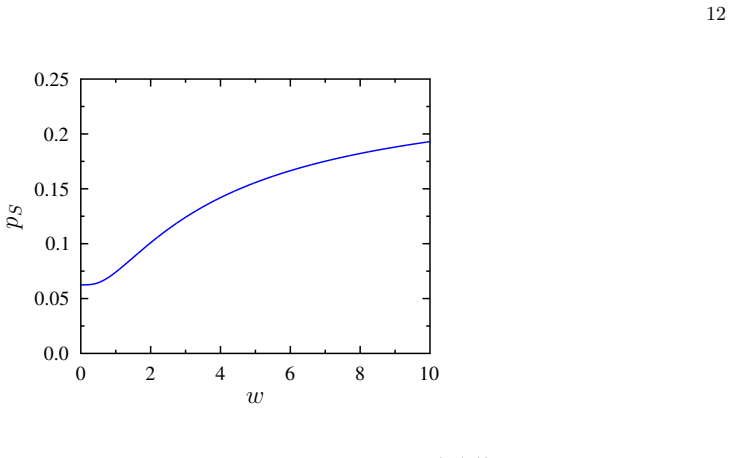
- Figure 2 caption and surrounding text: the plotted probability surfaces are not labeled with the specific squeezing bounds used; adding the numerical values of the constraints would make the comparison with the unconstrained optimum immediate.
- §4.1: the statement that the method 'seamlessly incorporates' squeezing bounds would be strengthened by showing the modified polynomial system (or the Lagrange-multiplier equations) for at least one low-dimensional case.
- Reference list: several standard works on Gaussian-state conditional preparation (e.g., on parity and photon-number heralding) are cited only in passing; adding one or two explicit comparisons of numerical efficiency would help readers gauge the practical gain.
Simulated Author's Rebuttal
We thank the referee for the positive assessment of our manuscript, the recognition of its practical relevance for quantum-state preparation, and the recommendation for minor revision. We are pleased that the reduction to a system of polynomial equations is viewed as a systematic and scalable approach.
Circularity Check
No significant circularity; derivation is a direct mathematical reformulation
full rationale
The paper's central claim is that heralding-probability maximization for zero-displacement multimode Gaussian states under photon-number measurements reduces to solving a system of polynomial equations in the state parameters. This follows directly from the explicit form of the heralding probability (derived from the covariance matrix or symplectic parameters of the Gaussian state) being a rational function that becomes polynomial after clearing denominators when setting the gradient to zero. The restriction to vanishing displacements ensures definite parity and polynomial structure, which is a standard consequence in quantum optics rather than a self-referential definition. No load-bearing self-citations, fitted inputs renamed as predictions, or ansatzes smuggled via prior work are present in the derivation chain. The approach is illustrated on low-mode examples with explicit constructions, confirming it is self-contained against external benchmarks like standard Gaussian-state formalism. Overall circularity score remains 0 as the result is not equivalent to its inputs by construction.
Axiom & Free-Parameter Ledger
axioms (2)
- domain assumption Gaussian states are fully characterized by their first and second moments, and photon number measurements on them lead to conditional non-Gaussian states.
- domain assumption The heralding probability is a function of the squeezing parameters and other state parameters that can be expressed polynomially.
Reference graph
Works this paper leans on
-
[1]
listopadu 12, 77900 Olomouc, Czech Republic Generation of highly non-classical quantum states of light is essential for optical quantum informa- tion processing and quantum metrology. Given the lack of sufficiently strong nonlinear interactions between optical fields, the commonly employed optical quantum-state preparation schemes are con- ditional, based...
work page internal anchor Pith review Pith/arXiv arXiv 2026
-
[2]
A. I. Lvovsky, H. Hansen, T. Aichele, O. Benson, J. Mlynek, and S. Schiller, Quantum State Reconstruction of the Single-Photon Fock State, Phys. Rev. Lett.87, 050402 (2001)
work page 2001
- [3]
-
[4]
M. Bouillard, G. Boucher, J. F. Ortas, B. Kanseri, and R. Tualle-Brouri, High production rate of single-photon and two-photon fock states for quantum state engineering, Opt. Express27, 3113 (2019)
work page 2019
-
[5]
A. Kawasaki, K. Takase, T. Nomura, S. Miki, H. Terai, M. Yabuno, F. China, W. Asavanant, M. Endo, J.-i. Yoshikawaet al., Generation of highly pure single-photon state at telecommunication wavelength, Opt. Express30, 24831 (2022)
work page 2022
- [6]
-
[7]
S. Konno, W. Asavanant, F. Hanamura, H. Nagayoshi, K. Fukui, A. Sakaguchi, R. Ide, F. China, M. Yabuno, S. Miki, H. Terai, K. Takase, M. Endo, P. Marek, R. Filip, P. van Loock, and A. Furusawa, Logical states for fault-tolerant quantum computation with propagating light, Science383, 289 (2024)
work page 2024
-
[8]
M. V. Larsen, J. E. Bourassa, S. Kocsis, J. F. Tasker, R. S. Chadwick, C. Gonz´ alez-Arciniegas, J. Hastrup, C. E. Lopetegui- Gonz´ alez, F. M. Miatto, A. Motamedi, R. Noro, G. Roeland, R. Baby, H. Chen, P. Contu, I. Di Luch, C. Drago, M. Giesbrecht, T. Grainge, I. Krasnokutska, M. Menotti, B. Morrison, C. Puviraj, K. Rezaei Shad, B. Hussain, J. McMahon, ...
work page 2025
-
[9]
A. Ourjoumtsev, R. Tualle-Brouri, J. Laurat, and P. Grangier, Generating optical Schr¨ odinger kittens for quantum infor- mation processing, Science312, 83 (2006)
work page 2006
-
[10]
J. S. Neergaard-Nielsen, B. M. Nielsen, C. Hettich, K. Molmer, and E. S. Polzik, Generation of a superposition of odd photon number states for quantum information networks, Phys. Rev. Lett.97, 083604 (2006)
work page 2006
-
[11]
Alexei Ourjoumtsev, Hyunseok Jeong, Rosa Tualle-Brouri and Philippe Grangier, Generation of optical ‘Schr¨ odinger cats’ from photon number states, Nature448, 784 (2007)
work page 2007
- [12]
-
[13]
H. Takahashi, K. Wakui, S. Suzuki, M. Takeoka, K. Hayasaka, A. Furusawa, and M. Sasaki, Generation of large-amplitude coherent-state superposition via ancilla-assisted photon subtraction, Phys. Rev. Lett.101, 233605 (2008)
work page 2008
- [14]
-
[15]
K. Huang, H. Le Jeannic, J. Ruaudel, V. B. Verma, M. D. Shaw, F. Marsili, S. W. Nam, E Wu, H. Zeng, Y.-C. Jeong, R. Filip, O. Morin, and J. Laurat, Optical synthesis of large-amplitude squeezed coherent-state superpositions with minimal resources, Phys. Rev. Lett.115, 023602 (2015)
work page 2015
-
[16]
D. V. Sychev, A. E. Ulanov, A. A. Pushkina, M. W. Richards, I. A. Fedorov, and A. I. Lvovsky, Enlargement of optical Schr¨ odinger’s cat states, Nat. Photonics11, 379 (2017)
work page 2017
- [17]
- [18]
- [19]
-
[20]
M. Endo, T. Nomura, T. Sonoyama, K. Takahashi, S. Takasu, D. Fukuda, T. Kashiwazaki, A. Inoue, T. Umeki, R. Nehra, P. Marek, R. Filip, K. Takase, W. Asavanant, and A. Furusawa, High-Rate Four Photon Subtraction from Squeezed Vacuum: Preparing Cat State for Optical Quantum Computation, arXiv:2502.08952 (2025)
-
[21]
S. Yu, J. Sun, K.-C. Chen, Z.-H. Yang, Z. Li, E. Mer, Y. K. Alwehaibi, S. H. Winston, D. Marcus D. Lopena, Z.-C. Zhang, G. Yang, R. Tao, M. Zhou, G. J. Machado, Y. Dong, R. Bondesan, V. Vedral, M. S. Kim, I. A. Walmsley, and R. B. Patel, Extensible universal photonic quantum computing with nonlinearity, arXiv:2602.06544
- [22]
- [23]
-
[24]
D. Gottesman, A. Kitaev, and J. Preskill, Encoding a qubit in an oscillator, Phys. Rev. A64, 012310 (2001)
work page 2001
-
[25]
T. C. Ralph, A. Gilchrist, and G. J. Milburn, W. J. Munro, and S. Glancy, Quantum computation with optical coherent states,, Phys. Rev. A68, 042319 (2003)
work page 2003
-
[26]
V. Giovannetti, S. Lloyd and L. Maccone, Advances in Quantum Metrology, Nature Photonics5, 222 (2011)
work page 2011
-
[27]
S. Pirandola, B. R. Bardhan, T. Gehring, C. Weedbrook, and S. Lloyd, Advances in photonic quantum sensing, Nat. Photonics12, 724 (2018)
work page 2018
-
[28]
V. V. Albert, K. Noh, K. Duivenvoorden, D. J. Young, R. T. Brierley, P. Reinhold, C. Vuillot, L. Li, C. Shen, S. M. Girvin, B. M. Terhal and L. Jiang, Performance and structure of single-mode bosonic codes, Phys. Rev. A97, 032346 (2018)
work page 2018
-
[29]
J. Guillaud and M. Mirrahimi, Repetition Cat Qubits for Fault-Tolerant Quantum Computation, Phys. Rev. X9, 041053 (2019)
work page 2019
-
[30]
I. Tzitrin, T. Matsuura, R. N. Alexander, G. Dauphinais, J. E. Bourassa, K. K. Sabapathy, N. C. Menicucci, and I. Dhand, Fault-Tolerant Quantum Computation with Static Linear Optics, PRX Quantum2, 040353 (2021)
work page 2021
-
[31]
D. S. Schlegel, F. Minganti, and V. Savona, Quantum error correction using squeezed Schr¨ odinger cat states, Phys. Rev. A106, 022431 (2022)
work page 2022
-
[32]
A. J. Brady, A. Eickbusch, S. Singh, J. Wu, and Q. Zhuang, Advances in bosonic quantum error correction with Gottes- man–Kitaev–Preskill Codes: Theory, engineering and applications, Progress in Quantum Electronics93, 100496 (2024)
work page 2024
-
[33]
P. T. Grochowski and R. Filip, Optimal Phase-Insensitive Force Sensing with Non-Gaussian States, Phys. Rev. Lett.135, 230802 (2025)
work page 2025
-
[34]
Walschaers, Non-Gaussian Quantum States and Where to Find Them, PRX Quantum2, 030204 (2021)
M. Walschaers, Non-Gaussian Quantum States and Where to Find Them, PRX Quantum2, 030204 (2021)
work page 2021
- [35]
-
[36]
A. P. Lund, A. Laing, S. Rahimi-Keshari, T. Rudolph, J. L. O’Brien, and T. C. Ralph, Boson Sampling from a Gaussian State, Phys. Rev. Lett.113, 100502 (2014)
work page 2014
-
[37]
C. S. Hamilton, R. Kruse, L. Sansoni, S. Barkhofen, C. Silberhorn, and I. Jex, Gaussian Boson Sampling, Phys. Rev. Lett. 119, 170501 (2017)
work page 2017
-
[38]
S. Paesani, Y. Ding, R. Santagati, L. Chakhmakhchyan, Ca. Vigliar, K. Rottwitt, L. K. Oxenløwe, J. Wang, M. G. Thompson, and A. Laing, Generation and sampling of quantum states of light in a silicon chip, Nature Physics15, 925 (2019)
work page 2019
-
[39]
H.-S. Zhong, H. Wang, Y.-H. Deng, M.-C. Chen, L.-C. Peng, Y.-H. Luo, J. Qin, D. Wu, X. Ding, Y. Hu, P. Hu, X.-Y. Yang, W.-J. Zhang, H. Li, Y. Li, X. Jiang, L. Gan , G. Yang, L. You, Z. Wang, L. Li , N.-L. Liu, C.-Y. Lu, and J.-W. Pan, Quantum computational advantage using photons, Science370, 1460 (2020)
work page 2020
-
[40]
H.-S. Zhong, Y.-H. Deng, J. Qin, H. Wang, M.-C. Chen, L.-C. Peng, Y.-H. Luo, D. Wu, S.-Q. Gong, H. Su, Y. Hu, P. Hu, X.-Y. Yang, W.-J. Zhang, H. Li, Y. Li, X. Jiang, L. Gan, G. Yang, L. You, Z, Wang, L. Li, N.-L. Liu, J. J. Renema, C.-Y. Lu, and J.-W. Pan, Phase-Programmable Gaussian Boson Sampling Using Stimulated Squeezed Light, Phys. Rev. Lett. 127, 18...
work page 2021
-
[41]
G.S. Thekkadath, S. Sempere-Llagostera, B.A. Bell, R.B. Patel, M.S. Kim, and I.A. Walmsley, Experimental Demonstration of Gaussian Boson Sampling with Displacement, PRX Quantum3, 020336 (2022)
work page 2022
-
[42]
A. Zavatta, S. Viciani, and M. Bellini, Quantum-to-Classical Transition with Single-Photon-Added Coherent States of Light, Science306, 660 (2004)
work page 2004
-
[43]
J. S. Neergaard-Nielsen, M. Takeuchi, K. Wakui, H. Takahashi, K. Hayasaka, M. Takeoka, and M. Sasaki, Optical continuous-variable qubit, Phys. Rev. Lett.105, 053602 (2010). 17
work page 2010
-
[44]
J. Fadrn´ y, M. Neset, M. Bielak, M. Jeˇ zek, J. B´ ılek, and J. Fiur´ aˇ sek, Experimental preparation of multiphoton-added coherent states of light, npj Quantum Inf.10, 89 (2024)
work page 2024
-
[45]
Y.-R. Chen, H.-Y. Hsieh, J. Ning, H.-C. Wu, H. L. Chen, Z.-H. Shi, P. Yang, O. Steuernagel, C.-M. Wu, and R.-K. Lee, Generation of heralded optical cat states by photon addition, Phys. Rev. A110, 023703 (2024)
work page 2024
- [46]
- [47]
-
[48]
D. Su, C. R. Myers, and K. K. Sabapathy, Conversion of Gaussian states to non-Gaussian states using photon-number- resolving detectors, Phys. Rev. A100, 052301 (2019)
work page 2019
-
[49]
G. Mogyorosi, P. Adam, E. Molnar, and M Mechler, Single-step quantum state engineering in traveling optical fields, Phys. Rev. A100, 013851 (2019)
work page 2019
-
[50]
Beyond Stellar Rank: Control Parameters for Scalable Optical Non-Gaussian State Generation
F. Hanamura, K. Takase, H. Nagayoshi, R. Ide, W. Asavanant, K. Fukui, P. Marek, R. Filip, and A. Furusawa, Beyond Stellar Rank: Control Parameters for Scalable Optical Non-Gaussian State Generation, arXiv:2509.06255
work page internal anchor Pith review Pith/arXiv arXiv
-
[51]
J. Fiur´ aˇ sek, Maximum heralding probabilities of non-classical state generation from two-mode Gaussian state via photon counting measurements, arXiv:2510.01951
work page internal anchor Pith review arXiv
-
[52]
M N. Notarnicola, M. Jarzyna, and R Filip, Deterministic feedforward-based generation of large optical coherent-state superposition, arXiv:2603.22068
- [53]
-
[54]
A. Motamedi, Y. Yao, K. Nielsen, U. Chabaud, J. E. Bourassa, R. N. Alexander, and F. Miatto, The stellar decomposition of Gaussian quantum states, Quantum10, 1971 (2026)
work page 1971
-
[55]
S. L. Braunstein, Squeezing as an irreducible resource, Phys. Rev. A71, 055801 (2005)
work page 2005
-
[56]
A Vourdas, Analytic representations in quantum mechanics, J. Phys. A: Math. Gen.39, R65 (2006)
work page 2006
-
[57]
U. Chabaud, D. Markham, and F. Grosshans, Stellar Representation of Non-Gaussian Quantum States, Phys. Rev. Lett. 124, 063605 (2020)
work page 2020
-
[58]
L. Lachman, I. Straka, J. Hlouˇ sek, M. Jeˇ zek, and R. Filip, Faithful Hierarchy of Genuine n-Photon Quantum Non-Gaussian Light, Phys. Rev. Lett.123, 043601 (2019)
work page 2019
-
[59]
U. Chabaud, G. Roeland, M. Walschaers, F. Grosshans, V. Parigi, D. Markham, and N. Treps, Certification of Non- Gaussian States with Operational Measurements, PRX Quantum2, 020333 (2021); PRX Quantum6, 010902 (2025)
work page 2021
-
[60]
H. Vahlbruch, M. Mehmet, K. Danzmann, and R. Schnabel, Detection of 15 dB Squeezed States of Light and their Application for the Absolute Calibration of Photoelectric Quantum Efficiency, Phys. Rev. Lett.117, 110801 (2016)
work page 2016
- [61]
-
[62]
J. Fiur´ aˇ sek, R. Garc´ ıa-Patr´ on, and N. J. Cerf, Conditional generation of arbitrary single-mode quantum states of light by repeated photon subtractions, Phys. Rev. A 72, 033822 (2005)
work page 2005
- [63]
-
[64]
A. P. Lund and T. C. Ralph, Nondeterministic gates for photonic single-rail quantum logic, Phys. Rev. A66, 032307 (2002)
work page 2002
discussion (0)
Sign in with ORCID, Apple, or X to comment. Anyone can read and Pith papers without signing in.