REVIEW 2 major objections 8 minor 93 references
Zero-sound speed gets a 400x boost from quasiparticle dressing
Reviewed by Pith at T0; open to challenge. T0 means a machine referee read the full paper against a public rubric. the ladder, T0–T4 →
T0 review · glm-5.2
2026-07-09 21:04 UTC pith:HRSRBUKK
load-bearing objection New zero-sound preexponential correction for weak-coupling Fermi gases, derived from a Hamiltonian renormalization scheme; benchmarks check out, convergence of the key expansion is the open question the 2 major comments →
A low-energy effective Hamiltonian for Landau quasiparticles: II Application to the contact Fermi gas
The pith
A machine-rendered reading of the paper's core claim, the machinery that carries it, and where it could break.
Core claim
The speed of zero sound in a weakly interacting Fermi gas receives a preexponential correction at second order in the gas parameter kFa, entirely analogous to the GMB correction to the superfluid critical temperature. For the density mode, the deviation (c₀ − v_F) is multiplied by exp(6) ≈ 403 relative to the RPA prediction; for the spin (polarization) mode, it is multiplied by exp(−2) ≈ 0.14. This arises because the logarithm of the small quantity (c₀ − 1)/2 admits a regular expansion in powers of kFa, and the O(kFa⁰) term in that expansion is shifted by ±4 by the second-order Landau interaction functions. The GMB correction to Tc is rederived within the same framework as a direct Constance
What carries the argument
The Schrieffer-Wolff unitary transformation, applied perturbatively to the contact-interaction Hamiltonian, produces an effective Hamiltonian written in terms of Landau quasiparticle operators. At second order in the coupling g, this yields: (1) the quasiparticle dispersion (recovering Galitskii's effective mass), (2) Landau interaction functions f_{σσ'} with non-analytic forward and frontal channels, (3) pair interaction functions g_{σσ'} carrying a logarithmic cutoff dependence that, when renormalized, produces the GMB correction, and (4) collision amplitudes A_{σσ'} satisfying Bethe-Salpeter equations. For dynamics, the Landau-Boltzmann transport equation is projected onto Legendre polyn
Load-bearing premise
The log-perturbative expansion of γ = ln[(c₀−1)/2] in powers of kFa is assumed to converge well enough that truncating at O(kFa⁰) captures the correct preexponential factor. The numerical confirmation covers |kFa| ∈ [0.085, 0.16], but the regime where the result matters most — smaller |kFa| where the Fermi liquid is stable — is not directly verified.
What would settle it
If the log-perturbative series for γ does not converge at small |kFa|, or if higher-order terms contribute to the preexponential factor, the predicted exp(6) and exp(−2) multipliers would be incorrect. A direct measurement of the zero-sound speed at known kFa on the repulsive branch, or a non-perturbative numerical calculation at smaller |kFa| than explored here, could falsify the specific prefactor predictions.
Editorial analysis
A structured set of objections, weighed in public.
Referee Report
Summary. This manuscript applies a renormalization scheme for Landau quasiparticles, developed in a companion paper (Ref. [1]), to the weakly interacting contact Fermi gas. The authors perturbatively construct the effective Hamiltonian to second order in the scattering length $a$, recovering several known benchmarks: the Lee-Huang-Yang equation of state, the Galitskii effective mass and momentum distribution, and the Gor'kov-Melik Barkhudarov (GMB) correction to the superfluid critical temperature. The central new result is a preexponential correction to the zero-sound velocity: at second order in $k_Fa$, the deviation $c_0 - v_F$ is multiplied by $e^{6}$ for the density mode and $e^{-2}$ for the polarization mode, relative to the RPA prediction. The paper also develops a numerical method to solve the transport equation across the collisionless-to-hydrodynamic crossover and presents response functions in both regimes.
Significance. The paper delivers a coherent application of a Hamiltonian renormalization framework to a paradigmatic system. Its main strengths are: (1) recovery of three independent known results (LHY, Galitskii, GMB) from a single effective Hamiltonian, providing strong internal validation; (2) a falsifiable, parameter-free prediction for the zero-sound preexponential factors, which is experimentally testable in ultracold Fermi gases on the repulsive branch; (3) an efficient numerical method for the full collisionless-to-hydrodynamic crossover with controlled truncation. The analogy between the zero-sound preexponential and the GMB prefactor is conceptually appealing and connects static and dynamic renormalization effects within a unified framework.
major comments (2)
- §VIII.2, Eqs. (II.66)-(II.68): The central new claim — the preexponential factors $e^{6}$ and $e^{-2}$ in $c_0 - 1$ — rests on truncating the log-perturbative expansion $γ^{±} = γ_0^{±}/ā + γ_1^{±} + O(ā)$ at $O(ā^0)$. Since $c_0 - 1 = 2e^{γ}$, any $O(ā)$ remainder in $γ$ produces an $O(ā)$ multiplicative correction to $c_0 - 1$, which vanishes as $ā → 0$ and thus does not spoil the preexponential. The structure of the expansion (with $γ_0^{±}/ā$ diverging and $γ_1^{±}$ finite) is consistent. However, the authors should more explicitly justify why the $B_{ll'}(c)$ functions, when expanded around $c_0$ exponentially close to 1, do not generate additional non-perturbative-in-$ā$ contributions to $γ$ at higher orders. The current derivation tracks terms through $O(ā^0)$ in $γ$ (Eq. II.67), but a brief argument for the absence of hidden $e^{O(1/ā)}$ or $O(1)$ corrections from the $B_{ll'}$-h
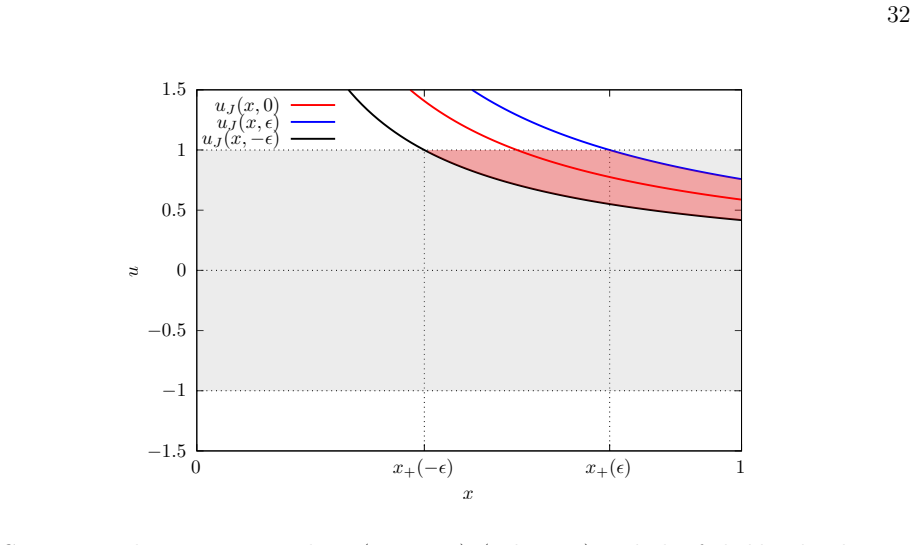
- Appendix B, Figs. 14-15: The numerical extrapolation confirms $γ_1^{±} = ±4$ to ~0.5% accuracy, but only over $|k_Fa| ∈ [0.085, 0.16]$. The authors note that the $O(ā)$ coefficient $B$ in the quadratic fit is 'larger than one,' which restricts observability to $|ā| < 0.1$. This raises a practical question: at the values of $|ā|$ where the preexponential correction is numerically verifiable (e.g., $|ā| ≈ 0.1$), how large is the $O(ā)$ correction to $γ$ relative to $γ_1$? A quantitative estimate of the subleading correction at $|ā| = 0.1$ would strengthen the claim that the truncation is controlled in the experimentally relevant range. Additionally, extending the numerical data to slightly smaller $|ā|$ (even $|ā| ≈ 0.05$) would help, though the authors correctly note the exponential smallness of $c_0 - 1$ makes this challenging.
minor comments (8)
- The paper is Part II of a series and relies heavily on Ref. [1] for notation and formalism. While a symbol table is referenced (Appendix A of [1]), a brief glossary of the most frequently used symbols ($f_{σσ'}$, $g_{σσ'}$, $A_{σσ'}$, $B_{σσ'}$, $F_l^{±}$) within this manuscript would improve readability.
- Eq. (II.13): The quasiparticle operator $γ̂_{p↑}$ is described as 'reminiscent of the Chevy Ansatz for polarons.' The connection is qualitative; a sentence clarifying the precise relationship (or lack thereof) to the variational polaron ansatz would be helpful.
- Eq. (II.53): The identification of Tan's contact $C = 4(k_Fa)^2/(9π^2)$ from the large-$p$ tail of the momentum distribution is stated without derivation. A one-line reference to how this follows from Eq. (II.52) within this formalism would be appreciated.
- Fig. 5: The inset shows the bare momentum distribution at $k_Fa = -1$, which is outside the perturbative regime. The authors should note that this is illustrative only and not quantitatively reliable.
- Eq. (II.83): The collisional damping $δc_0^{±}$ is described as 'universal' in the sense that its dependence on $k_Fa$ enters only through $τ$. This is a strong claim; clarifying that universality here means 'independent of the angular structure of $W$ beyond $τ$' (up to $O(c_0 - 1)$ corrections) would prevent misinterpretation.
- Section IX.4, Figs. 8-10: The crossover plots use $k_Fa = ±0.5$, which is at the edge of the perturbative regime. The authors should comment on the expected quantitative accuracy of the second-order truncation at this coupling, or alternatively show results at smaller $|k_Fa|$ to demonstrate convergence.
- Typographical: In Eq. (II.15), the Hamiltonian $Ĥ'$ is described as 'sextic in $γ̂$' but the displayed expression involves products of four $γ̂$ operators (after linearization). The phrasing 'sextic' refers to the pre-linearization form; a clarifying note would help.
- Reference [29] (Castin and Tsimokha, arXiv:2604.18298) is dated 2026 and may not be publicly available at the time of publication. The authors should verify availability or cite a published version.
Circularity Check
No significant circularity; derivation chain runs from microscopic contact potential to zero-sound prediction without self-referential loops.
full rationale
The paper's derivation chain is genuinely forward-going: (1) the contact potential parametrized by scattering length a is subjected to a perturbative Schrieffer-Wolff transformation (Eqs. II.7–II.17), producing an effective Hamiltonian; (2) the interaction functions f_{σσ'} and collision amplitudes A_{σσ'} are extracted from this Hamiltonian (Eqs. II.30–II.35); (3) the Landau parameters F±_l follow from f_{σσ'} evaluated on the Fermi surface; (4) the zero-sound dispersion equation (II.62) is derived from the transport equation (II.55) using these Landau parameters; (5) the log-perturbative expansion (II.66) yields the preexponential factors exp(6) and exp(-2) in Eqs. II.71–II.72. At no point is the output (zero-sound velocity) fed back into the inputs (scattering length or Landau parameters). The benchmark recoveries (LHY equation of state, Galitskii effective mass, GMB correction to Tc) are explicitly presented as recoveries of known external results to validate the formalism, not as new predictions. The self-citation to Ref [1] (same authors) provides the general theoretical framework (Schrieffer-Wolff transformation, projection operators, transport equation), which is a standard mathematical apparatus rather than a fitted result or empirical input. The self-citation to Ref [33] (same authors) covers the hydrodynamic regime and is used for comparison, not as input to the new collisionless-regime derivation. The numerical extrapolation in Appendix B verifies the analytical result rather than defining it. No fitted parameter is renamed as a prediction, no uniqueness theorem is invoked to forbid alternatives, and no ansatz is smuggled through citation. The minor self-citation to Ref [1] for the formalism is load-bearing but not circular, as the formalism is a set of mathematical transformations whose application to the contact potential constitutes genuine new calculation.
Axiom & Free-Parameter Ledger
axioms (4)
- domain assumption The Schrieffer-Wolff transformation truncated to second order in g captures the relevant low-energy physics of the contact Fermi gas (Sec. VII.2, Eq. II.10)
- ad hoc to paper The log-perturbative expansion γ = γ⁰/ā + γ¹ + O(ā) converges, so that O(ā) terms do not contribute to the preexponential factor of c₀-1 (Sec. VIII.2, Eq. II.66)
- standard math The contact potential with bare coupling g₀ related to scattering length a via the Lippmann-Schwinger equation (Eq. II.3) correctly regularizes UV divergences perturbatively (Sec. VII.1)
- domain assumption The formalism developed in Part I (Ref [1]) correctly constructs the effective Hamiltonian, quasiparticle operators, and Bethe-Salpeter relations for a generic Fermi liquid
read the original abstract
This article follows up on arxiv:2511.15938, in which we developed a new renormalization scheme to construct a quantized theory of Fermi liquids. Here, we apply this formalism to a low-temperature atomic Fermi gas where the short-range interactions are fully parametrized by the s-wave scattering length $a$. We benchmark our renormalized theory by recovering known perturbative results on the static properties of the Fermi gas, such as the Lee-Huang-Yang expansion of the equation of state, the Galitskii expansion of the momentum distribution, and the Gor'kov- Melik Barkhudarov preexponential correction to the critical temperature. We then turn to the transport dynamics and demonstrate the presence of a preexponential correction to the speed of zero sound when including corrections of second order in $a$. Finally, we develop an efficient numerical method to solve the transport equation exactly, and we apply to study the crossover from the collisionless to the hydrodynamic regime in the density and polarisation response functions.
Figures




Reference graph
Works this paper leans on
-
[1]
Perturbative Schrieffer-Wolff decomposition 6
-
[2]
Effective Hamiltonian of the contact Fermi gas 7
-
[3]
Explicit expression of the interaction functions and collision amplitudes 10
-
[4]
Bethe-Salpeter equations 12
-
[5]
The GMB correction toT c and ∆ 13
-
[6]
Residue and momentum distribution 14 VIII. Zero sound in the collisionless regime 16 ∗ pierre-louis.taillat@sorbonne-universite.fr † hadrien.kurkjian@cnrs.fr arXiv:2607.07041v1 [cond-mat.quant-gas] 8 Jul 2026 2
work page internal anchor Pith review Pith/arXiv arXiv 2026
-
[7]
Dispersion equation in the perfect collisionless regime (ω 0τ= +∞) 17
-
[8]
Log-perturbative expansion of the zero-sound velocity 18
-
[9]
Response function in the collisionless regime 19
-
[10]
Numerical solution in the collisionless to hydrodynamic crossover 23
Collisional damping of zero sound 20 IX. Numerical solution in the collisionless to hydrodynamic crossover 23
-
[11]
Decomposition in an orthogonal basis 23
-
[12]
Angular decomposition over Legendre polynomials 23
-
[13]
Scalar product and orthogonal polynomials for the energy dependence 24
-
[14]
Anisotropic driving potential for the polarisation 26
-
[15]
Λ dependence of the collision amplitudes 31 B
Response functions in the collisionless-to-hydrodynamic crossover 27 Conclusion 30 A. Λ dependence of the collision amplitudes 31 B. Numerical evaluation of the zero sound velocity 35 C. Collision effects in the collisionless regime 35 References 37 INTRODUCTION Following the construction of the low-energy effective Hamiltonian of a generic Fermi liquid i...
-
[16]
and at intermediate temperatures (T /TF ≈1), the evolution of the contact Fermi gas is a strongly-correlated problem (even at long wavelengths and low energies), in the sense that it cannot be captured by a one-body phase-space distribution obeying a kinetic equation. Higher-order correlation functions, which one may organise into a BBGKY hierarchy [4–6],...
-
[17]
Contact potential The Hamiltonian of the Fermi gas with contact interactions is a special case of the generic form introduced in section I: ˆH0 = X p∈D,σ ωpˆa† pσˆapσ, ω p = p2 2m (II.1) ˆV= g0 L3 X p1,p2,p3,p4∈D δp3+p4 p1+p2ˆa† p1↑ˆa† p2↓ˆap3↓ˆap4↑ (II.2) To regularize the UV divergences inherent to the contact potential, we have discretized the real spa...
-
[18]
Perturbative Schrieffer-Wolff decomposition When ˆVis controlled by a small parameter (g 0 in our case), one can construct perturba- tively the operator ˆSand the effective Hamiltonian ˆHeff introduced in Sec. I 3: ˆS= ˆS1 + ˆS2 +. . .where ˆS1 =O(V), ˆS2 =O(V 2), . . .(II.6) 7 Expanding to first order in ˆVcondition (I.16) on the band-diagonality of ˆHef...
-
[19]
Effective Hamiltonian of the contact Fermi gas Applied to the contact potential, Eq. (II.7) provides the expression of ˆSto leading order ing: ˆS1 = g L3 X pαpβ pγ pδ∈D ˆa† pα↑ˆa† pβ ↓ˆapγ ↓ˆapδ↑δ pγ+pδ pα+pβ PΛ 1 ωpγ +ω pδ −ω pα −ω pβ ! (II.11) Here, the Λ-principal part PΛ 1 E = 1/Eif|E|>Λ 0 else (II.12) originates in the projectors ˆPΛ and preven...
-
[20]
Explicit expression of the interaction functions and collision amplitudes From Eqs. (II.21)–(II.22), we now evaluate the amplitudesB σσ′ on the Fermi surface (p1 =p 2 =p 3 =p 4 =p F), where they depend only on the anglesθ ij = (\pi,p j): BΛ ↑↓(p1,p 2|p3,p 4) g = 1 + 2kFa π [IΛ(θ12) +J Λ(θ13)] +O(a 2) (II.24) BΛ ↑↑(p1,p 2|p3,p 4) g = 2kFa π JΛ(θ13) +O(a 3)...
-
[21]
(II.30)–(II.31) to those off σσ′ and gσσ′ Eqs
Bethe-Salpeter equations Comparing the perturbative expressions ofA σσ′ Eqs. (II.30)–(II.31) to those off σσ′ and gσσ′ Eqs. (II.32–II.35), we verify the Bethe-Salpeter equations of the forward and frontal channels obtained non-perturbatively in Section II. In the Bethe-Salpeter equation onA fwd ↑↑ 13 (Eq. (I.115)), the integral on the right-hand side is a...
-
[22]
The GMB correction toT c and∆ We apply here the calculation ofT c from Section V to the contact Fermi gas. We show that computing thes-wave pair interactionG 0 ↑↓ to second order ink Fabefore applying Eq. (I.254) yields the Gor’kov-Melik Barkhudarov (GMB) expression ofT c. Let us first recall that BCS theory describes pairing of particles under the effect...
-
[23]
Residue and momentum distribution We apply here our definition Eq. (I.74) of the quasiparticle residueZ pσ to recover the perturbative expression obtained by Mahaux et al. [39] (themselves correcting the incorrect result of Belyakov [46]). 15 We begin with the second-order expression of the (particle) momentum distribution in an arbitrary quasiparticle st...
-
[24]
Dispersion equation in the perfect collisionless regime (ω 0τ= +∞) Let us first compute the leading termνcl ± in the perfect collisionless regime limit 1/ω0τ= 0. The low-temperature transport equation (I.232) in this regime is (c−cosθ)ν cl ±(y, θ) =−cosθ 1− 1 2 Z +∞ −∞ dy′ dΩ′ 2π F ±(α)g(y ′)ν cl ±(y′, θ′) (II.55) wherec=ω/ω 0 and cosα= cosθcosθ ′ + sinθs...
-
[25]
Log-perturbative expansion of the zero-sound velocity We are now calculating the zero-sound reduced frequencyc 0 in powers of a=k Fain a weakly-interacting Fermi gas. In equation (II.58) forl >0, the summation is dominated by the terml ′ = 0 (which contains the dominant coefficientF 0) so that: νl ± =−B l0(c) +F ± 0 Bl0(c)ν 0 ± +O( a),forl≥1 (II.63) Antic...
-
[26]
Response function in the collisionless regime Our discussion of zero sound so far has focused on reduced frequenciesc≈c 0 ≈1. We now discuss numerically the rest of the spectrum in the density-density response Im[χρ] = Im[ν0 +] and polarisation-polarisation response Im[ χp] = Im[ν 0 −]. Figs. 6 and 7 show the reduced spectral density Im[ χρ,p(c+i0 +)]. In...
-
[27]
(II.54)) in the distribution ν±
Collisional damping of zero sound We now aim to include the collisional correctionδν ± (see Eq. (II.54)) in the distribution ν±. In the regime wherecis exponentially close to 1 (γ= ln([c−1]/2)→ −∞), the leading- order solutionν cl ± is more easily written without the Legendre decomposition, directly in terms of the angular variableθ: νcl ±(θ) = cosθ c−cos...
-
[28]
Decomposition in an orthogonal basis
-
[29]
Let us illustrate this by projecting Eq
Angular decomposition over Legendre polynomials Let us recall the angular decomposition ofνover the Legendre polynomialsP l ν±(y, θ) = X l∈N νl ±(y)Pl(cosθ) (II.84) The spherical addition theorem ensures that angular momentumlis conserved during the collision, in other words, that the Legendre basis diagonalizes the angular part of the collision 24 kernel...
-
[30]
Scalar product and orthogonal polynomials for the energy dependence To decompose the remaining dependence ony, we construct a family of polynomials {Qn}n∈N orthogonal for the scalar product: Z +∞ −∞ g(y)Q n(y)Qm(y)dy=||Q n||2δnm.(II.88) The polynomialsQ n are obtained by the usual recurrence relation: yQn =Q n+1 +ξ nQn−1 withξ n ≡ ||Qn||2 ||Qn−1||2 (II.89...
-
[31]
Numerical method We now present a numerical scheme to solve the projected transport equation (II.98) based on a backward recurrence onl. We propagate backward inlthe linear relation between⃗ νl and⃗ νl−1 ⃗ νl =H l⃗ νl−1 (II.104) where we omit the±index for convenience. Numerically, we introduce a truncation parame- tern max and represent the infinite matr...
-
[32]
(I.170) vanishes as ω0τin the hydrodynamic regime
Anisotropic driving potential for the polarisation The polarisation response to the isotropic drive introduced in Eq. (I.170) vanishes as ω0τin the hydrodynamic regime. This is because such a drive couples to a dissipative 3 The change of sign of theα − compared to Eq. (A21) in [33] is due to the conventionW E− =−w + and WS− =−w − used in this manuscript....
-
[33]
Response functions in the collisionless-to-hydrodynamic crossover We illustrate the collisionless-to-hydrodynamic crossover for the density (Figs. 8 and 9 for the attractive and repulsive case respectively) and for the polarization response functions (Figs. 10, for the attractive case). As in [33], we parametrize the crossover byω 0τσ, where : τσ = π 2mσT...
-
[34]
P.-L. Taillat and H. Kurkjian, A low-energy effective Hamiltonian for Landau quasiparticles: I A unified theory of transport and superfluidity in Fermi liquids, arXiv:2511.15938 (2025)
work page internal anchor Pith review arXiv 2025
-
[35]
M. Greiner, C. A. Regal, and D. S. Jin, Emergence of a molecular Bose-Einstein condensate from a Fermi gas, Nature426, 537 (2003)
work page 2003
-
[36]
Zwerger, ed.,The BCS-BEC Crossover and the Unitary Fermi Gas(Springer, Berlin, 2012)
W. Zwerger, ed.,The BCS-BEC Crossover and the Unitary Fermi Gas(Springer, Berlin, 2012)
work page 2012
-
[37]
Bonitz,Quantum Kinetic Theory(Springer, 1998)
M. Bonitz,Quantum Kinetic Theory(Springer, 1998)
work page 1998
-
[38]
M. Kira, Hyperbolic Bloch equations: Atom-cluster kinetics of an interacting Bose gas, Annals of Physics356, 185 (2015)
work page 2015
-
[39]
V. E. Colussi, H. Kurkjian, M. Van Regemortel, S. Musolino, J. van de Kraats, M. Wouters, 38 and S. J. J. M. F. Kokkelmans, Cumulant theory of the unitary Bose gas: Prethermal and Efimovian dynamics, Phys. Rev. A102, 063314 (2020)
work page 2020
-
[40]
A. Turlapov, J. Kinast, B. Clancy, L. Luo, J. Joseph, and J. E. Thomas, Is a Gas of Strongly Interacting Atomic Fermions a Nearly Perfect Fluid?, Journal of Low Temperature Physics 150, 567 (2008)
work page 2008
-
[41]
S. Riedl, E. R. S´ anchez Guajardo, C. Kohstall, A. Altmeyer, M. J. Wright, J. H. Denschlag, R. Grimm, G. M. Bruun, and H. Smith, Collective oscillations of a Fermi gas in the unitarity limit: Temperature effects and the role of pair correlations, Phys. Rev. A78, 053609 (2008)
work page 2008
- [42]
- [43]
-
[44]
E. Vogt, M. Feld, B. Fr¨ ohlich, D. Pertot, M. Koschorreck, and M. K¨ ohl, Scale Invariance and Viscosity of a Two-Dimensional Fermi Gas, Phys. Rev. Lett.108, 070404 (2012)
work page 2012
-
[45]
M. Koschorreck, D. Pertot, E. Vogt, and M. K¨ ohl, Universal spin dynamics in two-dimensional Fermi gases, Nature Physics9, 405 (2013)
work page 2013
-
[46]
A. B. Bardon, S. Beattie, C. Luciuk, W. Cairncross, D. Fine, N. S. Cheng, G. J. A. Edge, E. Taylor, S. Zhang, S. Trotzky, and J. H. Thywissen, Transverse Demagnetization Dynamics of a Unitary Fermi Gas, Science344, 722 (2014)
work page 2014
-
[47]
S. Trotzky, S. Beattie, C. Luciuk, S. Smale, A. B. Bardon, T. Enss, E. Taylor, S. Zhang, and J. H. Thywissen, Observation of the Leggett-Rice Effect in a Unitary Fermi Gas, Phys. Rev. Lett.114, 015301 (2015)
work page 2015
-
[48]
T. Enss and J. H. Thywissen, Universal spin transport and quantum bounds for unitary fermions, Annual Review of Condensed Matter Physics10, 85 (2019)
work page 2019
-
[49]
X. Wang, X. Li, I. Arakelyan, and J. E. Thomas, Hydrodynamic Relaxation in a Strongly Interacting Fermi Gas, Phys. Rev. Lett.128, 090402 (2022)
work page 2022
- [50]
-
[51]
G. Rupak and T. Sch¨ afer, Shear viscosity of a superfluid Fermi gas in the unitarity limit, Phys. Rev. A76, 053607 (2007)
work page 2007
-
[52]
G. M. Bruun and H. Smith, Shear viscosity and damping for a Fermi gas in the unitarity limit, Phys. Rev. A75, 043612 (2007)
work page 2007
-
[53]
T. Enss, R. Haussmann, and W. Zwerger, Viscosity and scale invariance in the unitary Fermi gas, Annals of Physics326, 770 (2011)
work page 2011
- [54]
-
[55]
Y. Nishida, Viscosity spectral functions of resonating fermions in the quantum virial expansion, 39 Annals of Physics410, 167949 (2019)
work page 2019
-
[56]
Enss, Bulk Viscosity and Contact Correlations in Attractive Fermi Gases, Phys
T. Enss, Bulk Viscosity and Contact Correlations in Attractive Fermi Gases, Phys. Rev. Lett. 123, 205301 (2019)
work page 2019
-
[57]
Hofmann, High-temperature expansion of the viscosity in interacting quantum gases, Phys
J. Hofmann, High-temperature expansion of the viscosity in interacting quantum gases, Phys. Rev. A101, 013620 (2020)
work page 2020
-
[58]
K. Fujii and T. Enss, Bulk viscosity of resonantly interacting fermions in the quantum virial expansion, Annals of Physics453, 169296 (2023)
work page 2023
-
[59]
H. Kurkjian, Y. Castin, and A. Sinatra, Three-Phonon and Four-Phonon Interaction Processes in a Pair-Condensed Fermi Gas, Annalen der Physik529, 1600352 (2017)
work page 2017
-
[60]
H. Kurkjian, Y. Castin, and A. Sinatra, Landau-Khalatnikov phonon damping in strongly interacting Fermi gases, EPL (Europhysics Letters)116, 40002 (2016)
work page 2016
- [61]
-
[62]
Phonon number relaxation in a 3D superfluid with a concave acoustic branch
Y. Castin and M. Tsimokha, Relaxation du nombre de phonons dans un superfluide 3D ` a branche acoustique concave, arXiv:2604.18298 (2026)
work page internal anchor Pith review Pith/arXiv arXiv 2026
-
[63]
L. Vichi, Collisional Damping of the Collective Oscillations of a Trapped Fermi Gas, Journal of Low Temperature Physics121, 177 (2000)
work page 2000
- [64]
-
[65]
T. D. Lee and C. N. Yang, Many-Body Problem in Quantum Mechanics and Quantum Sta- tistical Mechanics, Phys. Rev.105, 1119 (1957)
work page 1957
-
[66]
P.-L. Taillat and H. Kurkjian, Exact Perturbative Expansion of the Transport Coefficients of a Normal Low-Temperature Fermi Gas with Contact Interactions, Phys. Rev. Lett.135, 183402 (2025)
work page 2025
-
[67]
Castin, Basic Theory Tools for Degenerate Fermi Gases, inUltra-cold Fermi Gases, edited by M
Y. Castin, Basic Theory Tools for Degenerate Fermi Gases, inUltra-cold Fermi Gases, edited by M. Inguscio, W.Ketterle, and C. Salomon (Societ` a Italiana di Fisica, Bologna, 2007)
work page 2007
-
[68]
Castin, Simple theoretical tools for low dimension Bose gases, J
Y. Castin, Simple theoretical tools for low dimension Bose gases, J. Phys. IV France116, 89 (2004)
work page 2004
-
[69]
E. Lipschitz and L. Pitaevskii, Statistical Physics, inLandau and Lifshitz Course of Theoretical Physics, Vol. 9 (Pergamon Press, New York, 1981)
work page 1981
-
[70]
F. Chevy, Universal phase diagram of a strongly interacting Fermi gas with unbalanced spin populations, Phys. Rev. A74, 063628 (2006)
work page 2006
-
[71]
V. M. Galitskii, The energy spectrum of a non-ideal Fermi gas, Zh. Eksp. Teor. Fiz.34, 151 (1958), [Sov. Phys. JETP,7, 104 (1958)]
work page 1958
-
[72]
R. Sartor and C. Mahaux, Self-energy, momentum distribution, and effective masses of a dilute Fermi gas, Phys. Rev. C21, 1546 (1980)
work page 1980
-
[73]
J. Sykes and G. Brooker, The transport coefficients of a Fermi liquid, Annals of Physics56, 1 (1970). 40
work page 1970
-
[74]
G. Y. Chitov and D. S´ en´ echal, Fermi liquid as a renormalization-group fixed point: The role of interference in the Landau channel, Phys. Rev. B57, 1444 (1998)
work page 1998
-
[75]
L. Gor’kov and T. Melik-Barkhudarov, Contribution to the theory of superfluidity in an im- perfect Fermi gas, Zh. Eksp. Teor. Fiz.40, 1452 (1958), [Sov. Phys. JETP,13, 1018 (1958)]
work page 1958
-
[76]
H. Heiselberg, C. J. Pethick, H. Smith, and L. Viverit, Influence of Induced Interactions on the Superfluid Transition in Dilute Fermi Gases, Phys. Rev. Lett.85, 2418 (2000)
work page 2000
-
[77]
Q. Chen, Effect of the particle-hole channel on BCS–Bose-Einstein condensation crossover in atomic Fermi gases, Scientific Reports6, 25772 (2016)
work page 2016
- [78]
-
[79]
Belyakov, The momentum distribution of particles in a dilute Fermi gas, Zh
V. Belyakov, The momentum distribution of particles in a dilute Fermi gas, Zh. Eksp. Teor. Fiz.40, 1210 (1961), [Sov. Phys. JETP, Vol. 13, No. 4, p. 850 (1961)]
work page 1961
-
[80]
Tan, Large momentum part of a strongly correlated Fermi gas, Annals of Physics323, 2971 (2008)
S. Tan, Large momentum part of a strongly correlated Fermi gas, Annals of Physics323, 2971 (2008)
work page 2008
discussion (0)
Sign in with ORCID, Apple, or X to comment. Anyone can read and Pith papers without signing in.