Generating User-friendly Explanations for Loan Denials using GANs
Pith reviewed 2026-05-25 17:11 UTC · model grok-4.3
The pith
A GAN trained on a new dataset generates user-friendly textual explanations for loan denials.
A machine-rendered reading of the paper's core claim, the machinery that carries it, and where it could break.
Core claim
The authors construct the first dataset tailored to represent explanations that loan applicants would find friendly. They introduce a GAN variant suited to smaller data volumes for producing these textual explanations. The system is shown to support multiple goals, such as informing applicants about the denial or directing them toward actions that could lead to approval in the future.
What carries the argument
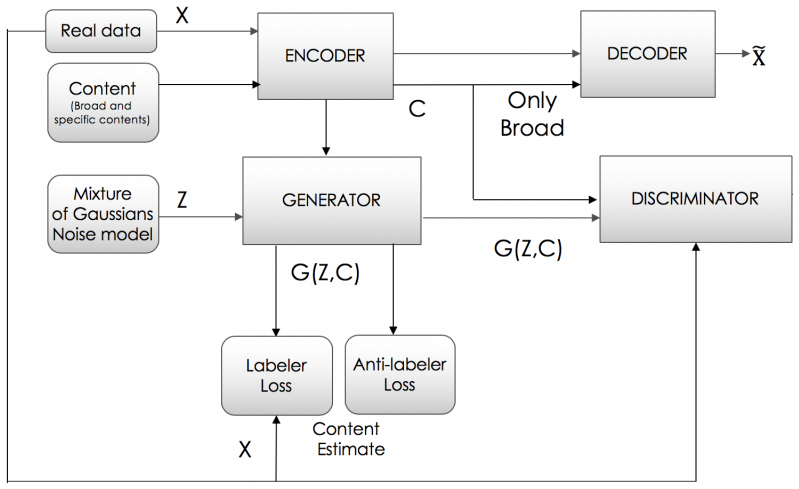
A Generative Adversarial Network (GAN) modified to handle smaller datasets for creating textual explanations.
If this is right
- Explanations can be tailored to educate applicants on the reasons behind loan denials.
- Explanations can guide applicants on steps to take for potential future approvals.
- The method provides value to customers and regulators beyond what engineer-focused tools offer.
- Different purposes for explanations can be served from the same trained system.
Where Pith is reading between the lines
- Similar generation methods could apply to other financial AI decisions such as insurance or credit limits.
- The new dataset could serve as a starting point for comparing alternative text-generation approaches aimed at consumers.
- Integration with existing loan systems would require checking whether the outputs align with regulatory requirements for transparency.
Load-bearing premise
The generated texts count as user-friendly and useful for education or action without any human evaluation to confirm it.
What would settle it
A test in which loan applicants read the generated explanations and report whether the texts help them understand the denial or identify changes that could improve future applications.
Figures


read the original abstract
Financial decisions impact our lives, and thus everyone from the regulator to the consumer is interested in fair, sound, and explainable decisions. There is increasing competitive desire and regulatory incentive to deploy AI mindfully within financial services. An important mechanism towards that end is to explain AI decisions to various stakeholders. State-of-the-art explainable AI systems mostly serve AI engineers and offer little to no value to business decision makers, customers, and other stakeholders. Towards addressing this gap, in this work we consider the scenario of explaining loan denials. We build the first-of-its-kind dataset that is representative of loan-applicant friendly explanations. We design a novel Generative Adversarial Network (GAN) that can accommodate smaller datasets, to generate user-friendly textual explanations. We demonstrate how our system can also generate explanations serving different purposes: those that help educate the loan applicants, or help them take appropriate action towards a future approval.
Editorial analysis
A structured set of objections, weighed in public.
Referee Report
Summary. The manuscript claims to construct the first dataset of loan-applicant friendly explanations for loan denials and introduces a novel GAN architecture that can handle smaller datasets to generate user-friendly textual explanations. It further demonstrates the generation of explanations for different purposes, such as educating applicants or assisting them in taking actions for future approvals.
Significance. Should the generated explanations prove to be user-friendly and effective through proper validation, this work would address an important gap in explainable AI by focusing on end-user stakeholders in financial services rather than technical experts. The dataset construction and GAN adaptation for small data could have broader applicability in domains with limited labeled data.
major comments (2)
- [Abstract] The assertion that the GAN generates 'user-friendly' explanations serving educational or action-oriented purposes is not supported by any reported human evaluation, A/B testing, surveys, or metrics for clarity and helpfulness. This validation is essential to substantiate the central claims, as the 'user-friendly' aspect is the key differentiator from existing XAI systems.
- [Abstract] No evaluation metrics, baseline comparisons, or details on how the GAN accommodates small datasets are provided, making it impossible to assess the technical soundness and novelty of the proposed method.
minor comments (1)
- [Abstract] The claim of building the 'first-of-its-kind' dataset would benefit from a more detailed comparison to existing explanation datasets in related work to strengthen the novelty argument.
Simulated Author's Rebuttal
We thank the referee for highlighting the need for stronger validation of the user-friendliness claims and for clearer technical details on the method. We address each major comment below and will revise the manuscript accordingly.
read point-by-point responses
-
Referee: [Abstract] The assertion that the GAN generates 'user-friendly' explanations serving educational or action-oriented purposes is not supported by any reported human evaluation, A/B testing, surveys, or metrics for clarity and helpfulness. This validation is essential to substantiate the central claims, as the 'user-friendly' aspect is the key differentiator from existing XAI systems.
Authors: We agree that the absence of human evaluations, surveys, or quantitative metrics for clarity and helpfulness leaves the central claims about user-friendliness unsubstantiated. The current manuscript presents the dataset construction and qualitative examples of explanations for educational versus action-oriented purposes but does not include formal user studies. We will add human evaluation results (e.g., surveys on perceived clarity and actionability) to the revised version. revision: yes
-
Referee: [Abstract] No evaluation metrics, baseline comparisons, or details on how the GAN accommodates small datasets are provided, making it impossible to assess the technical soundness and novelty of the proposed method.
Authors: We acknowledge that the manuscript does not currently include evaluation metrics, baseline comparisons, or explicit details on the GAN adaptations for small datasets. We will expand the methods and experiments sections to report these elements, including quantitative metrics and comparisons, so that the technical contributions can be properly assessed. revision: yes
Circularity Check
No circularity: paper presents dataset construction and GAN design without load-bearing derivations or self-citation chains.
full rationale
The provided abstract and description contain no equations, parameter-fitting steps, uniqueness theorems, or self-citations that could reduce any claim to its inputs by construction. The central assertions (novel dataset of 'loan-applicant friendly explanations' and GAN for textual outputs) are presented as empirical contributions rather than derived results; they do not match any of the enumerated circularity patterns. The absence of human validation is a separate evidence gap, not a circularity issue.
Axiom & Free-Parameter Ledger
Reference graph
Works this paper leans on
-
[1]
Power to the people: The role of humans in interactive machine learning
S Amershi, Maya Cakmak, William Knox, and Todd Kulesza. Power to the people: The role of humans in interactive machine learning. AI Magazine, 2017
work page 2017
-
[2]
Do explanations make vqa models more predictable to a human? EMNLP, 2018
and Prabhu Viraj Chandrasekaran, Arjun, Deshraj Yadav, Prithvijit Chattopadhyay, and Devi Parikh. Do explanations make vqa models more predictable to a human? EMNLP, 2018
work page 2018
-
[3]
Global fintech investment robust on back of strong vc funding:kpmg
DigitalNewsAsia. Global fintech investment robust on back of strong vc funding:kpmg. Digital News Asia, 2017
work page 2017
-
[4]
What does explainable ai really mean? a new conceptualization of perspectives
D Doran. What does explainable ai really mean? a new conceptualization of perspectives. ArXiv, 2017
work page 2017
-
[5]
Towards a rigorous science of interpretable machine learning
Finale Doshi-Velez and Been Kim. Towards a rigorous science of interpretable machine learning. ArXiv, 2017
work page 2017
-
[6]
Accountability of ai under the law: The role of explanation
Finale Doshi-Velez and Mason Kortz. Accountability of ai under the law: The role of explanation. ArXiv, 2017
work page 2017
-
[7]
FICO. Machine learning and fico scores: An evolution in ml innovations that helps both lenders and consumers. White Paper: Business Technology Overview, 2018
work page 2018
-
[8]
xai toolkit: Practical, explainable machine learning
Andy Flint, Arash Nourian, and Jari Koister. xai toolkit: Practical, explainable machine learning. White paper, 2018
work page 2018
-
[9]
Explainable artificial intelligence
Dave Gunning. Explainable artificial intelligence. DARPA, 2017
work page 2017
-
[10]
Deligan: Generative adversarial networks for diverse and limited data
Swaminathan Gurumurthy, Ravi Kiran Sarvadevabhatla, and R Venkatesh Babu. Deligan: Generative adversarial networks for diverse and limited data. In CVPR, pages 4941--4949, 2017
work page 2017
-
[11]
The promise and peril of human evaluation for model interpretability
B Herman. The promise and peril of human evaluation for model interpretability. NIPS Workshop, 2017
work page 2017
-
[12]
Learning overhypotheses with hierarchical bayesian models
Charles Kemp, Amy Perfors, and Joshua B Tenenbaum. Learning overhypotheses with hierarchical bayesian models. Developmental science, 10 0 (3): 0 307--321, 2007
work page 2007
-
[13]
CausalGAN: Learning Causal Implicit Generative Models with Adversarial Training
Murat Kocaoglu, Christopher Snyder, Alexandros G Dimakis, and Sriram Vishwanath. Causalgan: Learning causal implicit generative models with adversarial training. arXiv preprint arXiv:1709.02023, 2017
work page internal anchor Pith review Pith/arXiv arXiv 2017
-
[14]
How explainability is driving the future of artificial intelligence
Kyndi. How explainability is driving the future of artificial intelligence. White Paper, 2018
work page 2018
-
[15]
The mythos of model interpretability
Zachory Lipton. The mythos of model interpretability. ICML Workshop, 2016
work page 2016
-
[16]
Explainable ai: Beware of inmates running the asylum
T Millers. Explainable ai: Beware of inmates running the asylum. ArXiv, 2017
work page 2017
-
[17]
Menaka Narayanan, Emily Chen, Jeffrey He, Been Kim, Sam Gershman, and Finale Doshi-Velez. How do humans understand explanations from machine learning systems:an evaluation of the human-interpretability of explanation. ArXiv, 2018
work page 2018
-
[18]
D. Park, L. Hendricks, Z. Akata, A. Rohrbach, B. Schiele, T. Darrell, and M. Rohrbach. Multimodal explanations: Justifying decisions and pointing to the evidence. CoRRabs, 2018
work page 2018
-
[19]
Explainable ai driving business value through greater understanding
PWC. Explainable ai driving business value through greater understanding. White Paper, Intelligent Digital, 2018
work page 2018
-
[20]
Why should i trust you? explaining the predictions of any classifier
Marco Tulio Ribeiro Ribeiro, Sameer Singh, and Carlos Guestrin. Why should i trust you? explaining the predictions of any classifier. KDD, 2016
work page 2016
-
[21]
R. Selvaraju, A. Das, Vedantam, M. R., Cogswell, D. Parikh, and D. Batra. Grad-cam: Visual explanations from deep networks via gradient-based localization. International Conference on Computer Vision, 2017
work page 2017
-
[22]
Adversarially Regularized Autoencoders
Junbo Jake Zhao, Yoon Kim, Kelly Zhang, Alexander M Rush, and Yann LeCun. Adversarially regularized autoencoders for generating discrete structures. CoRR, abs/1706.04223, 2017
work page internal anchor Pith review Pith/arXiv arXiv 2017
discussion (0)
Sign in with ORCID, Apple, or X to comment. Anyone can read and Pith papers without signing in.