Recognition: 2 theorem links
· Lean TheoremSANet: A Semantic-aware Agentic AI Networking Framework for Cross-layer Optimization in 6G
Pith reviewed 2026-05-16 19:18 UTC · model grok-4.3
The pith
SANet coordinates semantic-aware AI agents across network layers to optimize 6G systems by inferring user goals and finding Pareto-optimal solutions despite conflicting objectives.
A machine-rendered reading of the paper's core claim, the machinery that carries it, and where it could break.
Core claim
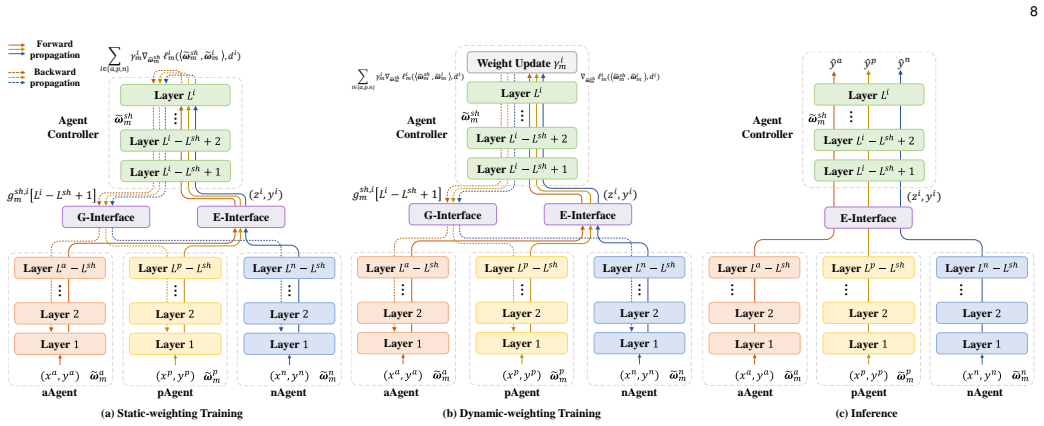
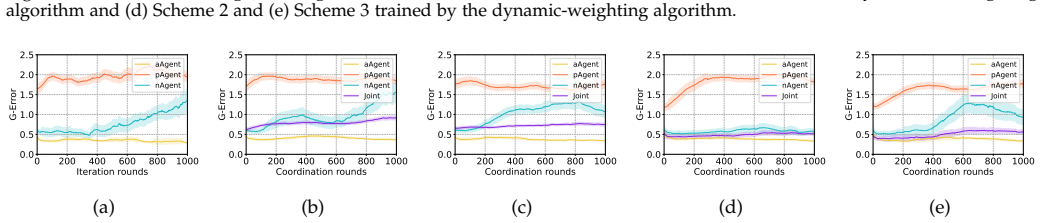
SANet infers semantic goals from user interactions, assigns agents tied to distinct network layers, and solves the resulting multi-agent multi-objective problem to locate Pareto-optimal operating points; the approach is realized through model partition and sharing together with two decentralized algorithms, and is accompanied by proven bounds on the tradeoff among optimization error, generalization error, and conflicting error.
What carries the argument
The multi-agent multi-objective optimization that locates Pareto-optimal solutions among agents with potentially conflicting layer-specific objectives, realized via the Model Partition and Sharing (MoPS) framework that decomposes large models into jointly trained shared and agent-specific components.
If this is right
- Cross-layer wireless management becomes autonomous, supporting self-configuration and real-time adaptation in complex 6G environments.
- Large AI models can be deployed across resource-limited agents without duplicating full computation at every node.
- New evaluation metrics become available to quantify performance of agentic networking systems.
- The hardware prototype demonstrates that the architecture can be implemented on actual RAN and core network equipment.
Where Pith is reading between the lines
- The semantic-inference front end could be evaluated for robustness against noisy or ambiguous user inputs outside the reported prototype scenarios.
- The three-way error tradeoff may generalize to other decentralized multi-agent settings such as edge AI or distributed control systems.
- Model partitioning offers a template for efficient deployment of foundation models in any resource-heterogeneous agent collective.
- Integration with 6G-native features such as joint communication and sensing could be tested by extending the agent objectives accordingly.
Load-bearing premise
Semantic goals can be inferred accurately enough from user interactions, and decentralized agents can reliably converge to useful Pareto-optimal points even when their objectives conflict.
What would settle it
A controlled trial in which semantic inference accuracy falls below the level used in the prototype or agent objectives are deliberately placed in strong conflict, after which measured network performance and compute cost cease to improve over non-agentic baselines.
Figures





read the original abstract
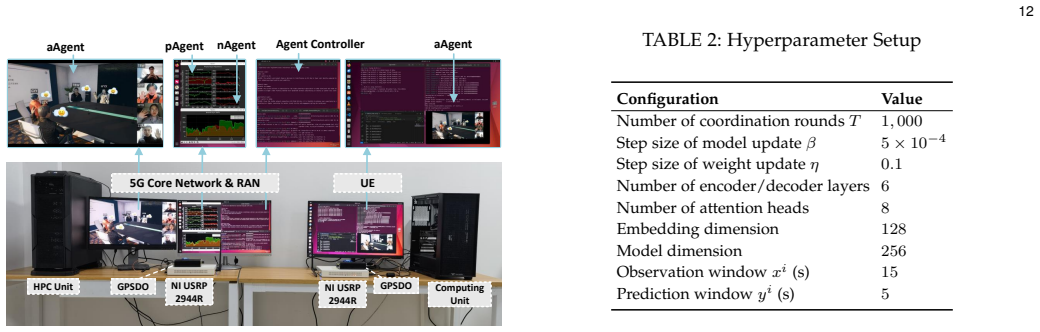
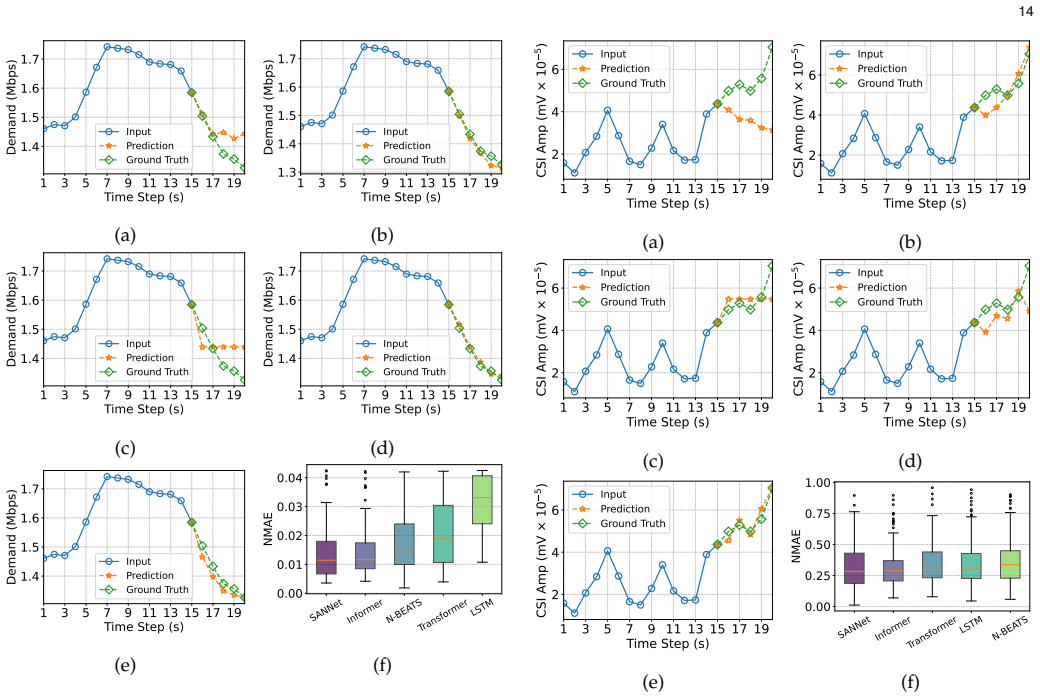
Agentic AI networking (AgentNet) is a novel AI-native networking paradigm in which a large number of specialized AI agents collaborate to perform autonomous decision-making, dynamic environmental adaptation, and complex missions. It has the potential to facilitate real-time network management and optimization functions, including self-configuration, self-optimization, and self-adaptation across diverse and complex environments. This paper proposes SANet, a novel semantic-aware AgentNet architecture for wireless networks that can infer the semantic goal of the user and automatically assign agents associated with different layers of the network to fulfill the inferred goal. Motivated by the fact that AgentNet is a decentralized framework in which collaborating agents may generally have different and even conflicting objectives, we formulate the decentralized optimization of SANet as a multi-agent multi-objective problem, and focus on finding the Pareto-optimal solution for agents with distinct and potentially conflicting objectives. We propose three novel metrics for evaluating SANet. Furthermore, we develop a model partition and sharing (MoPS) framework in which large models, e.g., deep learning models, of different agents can be partitioned into shared and agent-specific parts that are jointly constructed and deployed according to agents' local computational resources. Two decentralized optimization algorithms are proposed. We derive theoretical bounds and prove that there exists a three-way tradeoff among optimization, generalization, and conflicting errors. We develop an open-source RAN and core network-based hardware prototype that implements agents to interact with three different layers of the network. Experimental results show that the proposed framework achieved performance gains of up to 14.61% while requiring only 44.37% of FLOPs required by state-of-the-art algorithms.
Editorial analysis
A structured set of objections, weighed in public.
Referee Report
Summary. The manuscript proposes SANet, a semantic-aware agentic AI networking framework for 6G that infers users' semantic goals from interactions and assigns specialized agents across network layers for cross-layer optimization. It formulates the decentralized setting as a multi-agent multi-objective problem to locate Pareto-optimal solutions under potentially conflicting layer objectives, introduces a Model Partition and Sharing (MoPS) framework for efficient deployment of large models, proposes two decentralized optimization algorithms, defines three novel evaluation metrics, derives theoretical bounds proving a three-way tradeoff among optimization, generalization, and conflicting errors, and reports hardware-prototype results showing up to 14.61% performance gains while using only 44.37% of the FLOPs required by state-of-the-art algorithms.
Significance. If the experimental claims and theoretical bounds hold under rigorous validation, the work would advance AI-native networking by demonstrating how semantic inference and decentralized Pareto optimization can be combined to reduce computational cost while handling cross-layer conflicts. The open-source prototype and explicit tradeoff bound constitute concrete contributions that could inform future 6G agentic systems.
major comments (3)
- [Abstract] Abstract: the central claim of 14.61% gains at 44.37% FLOPs is presented without error bars, number of trials, dataset characteristics, or explicit baseline definitions, preventing assessment of whether the gains are attributable to SANet mechanisms rather than experimental conditions.
- [Abstract] Abstract: no quantitative results are supplied on semantic goal inference accuracy or on the quality of Pareto-optimal solutions reached by the two decentralized algorithms under conflicting objectives, leaving the weakest assumptions unverified and the attribution of performance gains unsupported.
- [Abstract] Abstract: the existence of a three-way tradeoff bound among optimization, generalization, and conflicting errors is asserted, yet the abstract supplies neither the defining equations nor any numerical validation of the bound against the prototype experiments.
minor comments (2)
- The three novel metrics are introduced without names or brief definitions in the abstract, which would improve immediate readability.
- Clarify how the MoPS partitioning interacts with the two proposed decentralized algorithms during joint training and inference on the hardware prototype.
Simulated Author's Rebuttal
We thank the referee for the constructive comments. We agree that the abstract requires additional details to support the claims and will revise it in the next version to include experimental specifics, quantitative results on key components, and a reference to the theoretical bound.
read point-by-point responses
-
Referee: [Abstract] Abstract: the central claim of 14.61% gains at 44.37% FLOPs is presented without error bars, number of trials, dataset characteristics, or explicit baseline definitions, preventing assessment of whether the gains are attributable to SANet mechanisms rather than experimental conditions.
Authors: We agree that the abstract should provide more context on the experimental conditions. In the revised version we will add the number of trials, mention of error bars or variability, dataset characteristics, and explicit baseline definitions. These details appear in the experimental evaluation section but summarizing them in the abstract will improve verifiability. revision: yes
-
Referee: [Abstract] Abstract: no quantitative results are supplied on semantic goal inference accuracy or on the quality of Pareto-optimal solutions reached by the two decentralized algorithms under conflicting objectives, leaving the weakest assumptions unverified and the attribution of performance gains unsupported.
Authors: We acknowledge this limitation in the current abstract. The revised abstract will report quantitative accuracy figures for semantic goal inference and metrics assessing the quality of the Pareto-optimal solutions produced by the decentralized algorithms. These results are already computed and presented in the main body; we will extract the key numbers for the abstract. revision: yes
-
Referee: [Abstract] Abstract: the existence of a three-way tradeoff bound among optimization, generalization, and conflicting errors is asserted, yet the abstract supplies neither the defining equations nor any numerical validation of the bound against the prototype experiments.
Authors: The three-way tradeoff is formally derived and proven in the theoretical analysis section, with numerical validation against the hardware prototype results. We will revise the abstract to include a concise statement of the bound and note its empirical validation, thereby making the theoretical contribution more self-contained in the summary. revision: yes
Circularity Check
No circularity: derivation chain is self-contained and independent of fitted inputs or self-citations
full rationale
The paper introduces SANet as a new semantic-aware AgentNet architecture, formulates decentralized optimization as a multi-agent multi-objective problem, defines three novel evaluation metrics, develops the MoPS model partitioning framework, proposes two decentralized algorithms, and derives a three-way tradeoff bound among optimization, generalization, and conflicting errors. The abstract and described structure contain no equations that reduce claimed performance gains (e.g., 14.61% improvement or 44.37% FLOPs) to quantities defined by construction from the same experimental data or fitted parameters. No load-bearing steps rely on self-citations for uniqueness theorems or ansatzes; the theoretical bounds and hardware prototype results are presented as independently derived from the proposed framework. This is the normal case of a self-contained proposal without circular reduction.
Axiom & Free-Parameter Ledger
axioms (2)
- domain assumption Decentralized agents may have distinct and conflicting objectives
- domain assumption Semantic goals of users can be reliably inferred
invented entities (3)
-
SANet
no independent evidence
-
MoPS
no independent evidence
-
Three novel metrics
no independent evidence
Lean theorems connected to this paper
-
IndisputableMonolith/Cost/FunctionalEquation.leanwashburn_uniqueness_aczel unclear?
unclearRelation between the paper passage and the cited Recognition theorem.
We formulate the decentralized optimization of SANet as a multi-agent multi-objective problem... derive theoretical bounds... three-way tradeoff among optimization, generalization, and conflicting errors (Theorems 1-4, Table 1).
-
IndisputableMonolith/Foundation/RealityFromDistinction.leanreality_from_one_distinction unclear?
unclearRelation between the paper passage and the cited Recognition theorem.
Pareto stationary solution... min_γ ∑ γ_i ∇L_i = 0; dynamic-weighting γ update (11).
What do these tags mean?
- matches
- The paper's claim is directly supported by a theorem in the formal canon.
- supports
- The theorem supports part of the paper's argument, but the paper may add assumptions or extra steps.
- extends
- The paper goes beyond the formal theorem; the theorem is a base layer rather than the whole result.
- uses
- The paper appears to rely on the theorem as machinery.
- contradicts
- The paper's claim conflicts with a theorem or certificate in the canon.
- unclear
- Pith found a possible connection, but the passage is too broad, indirect, or ambiguous to say the theorem truly supports the claim.
Forward citations
Cited by 1 Pith paper
-
SANEmerg: An Emergent Communication Framework for Semantic-aware Agentic AI Networking
SANEmerg enables emergent communication among bounded-intelligence AI agents for semantic-aware task fulfillment in AgentNet systems via a bandwidth-adaptable importance filter and MDL-based complexity regularizer.
Reference graph
Works this paper leans on
-
[1]
Sannet: A semantic-aware agentic ai networking framework for multi-agent cross-layer coordination,
Y. Xiao, H. Zhou, X. Li, Y. Gao, G. Shi, and P . Zhang, “Sannet: A semantic-aware agentic ai networking framework for multi-agent cross-layer coordination,” inProceedings of IEEE GLOBECOM, Taipei, Taiwan, December 2025
work page 2025
-
[2]
Enhancing immersion and presence in the meta- verse with over-the-air brain-computer interface,
N. Q. Hieu, D. T. Hoang, D. N. Nguyen, V .-D. Nguyen, Y. Xiao, and E. Dutkiewicz, “Enhancing immersion and presence in the meta- verse with over-the-air brain-computer interface,”IEEE Transac- tions on Wireless Communications, vol. 23, no. 12, pp. 18 532–18 548, December 2024
work page 2024
-
[3]
From semantic communication to semantic-aware networking: Model, architecture, and open problems,
G. Shi, Y. Xiao, Y. Li, and X. Xie, “From semantic communication to semantic-aware networking: Model, architecture, and open problems,”IEEE Communications Magazine, vol. 59, no. 8, pp. 44– 50, August 2021
work page 2021
-
[4]
Joint source–channel coding: Fundamentals and recent progress in practical designs,
D. Gunduzet al., “Joint source–channel coding: Fundamentals and recent progress in practical designs,”Proceedings of the IEEE, pp. 1–32, 2024
work page 2024
-
[5]
Illuminating the dark spaces of healthcare with ambient intelligence,
A. Haque, A. Milstein, and L. Fei-Fei, “Illuminating the dark spaces of healthcare with ambient intelligence,”Nature, vol. 585, no. 7824, pp. 193–202, September 2020
work page 2020
-
[6]
Towards agentic AI networking in 6G: A generative foundation model-as-agent approach,
Y. Xiao, G. Shi, and P . Zhang, “Towards agentic AI networking in 6G: A generative foundation model-as-agent approach,”IEEE Communications Magazine, vol. 63, no. 9, September 2025
work page 2025
-
[7]
Toward self- learning edge intelligence in 6G,
Y. Xiao, G. Shi, Y. Li, W. Saad, and H. V . Poor, “Toward self- learning edge intelligence in 6G,”IEEE Communications Magazine, vol. 58, no. 12, pp. 34–40, December 2020
work page 2020
-
[8]
6G network AI architecture for everyone-centric customized services,
Y. Yanget al., “6G network AI architecture for everyone-centric customized services,”IEEE Network, vol. 37, no. 5, September 2023
work page 2023
-
[9]
Position: Levels of AGI for operationalizing progress on the path to AGI,
M. R. Morriset al., “Position: Levels of AGI for operationalizing progress on the path to AGI,” inICML, Vienna, Austria, July 2024
work page 2024
-
[10]
Practices for governing agentic ai systems,
Y. Shavit, S. Agarwal, M. Brundage, S. Adler, C. O’Keefe, R. Camp- bell, T. Lee, P . Mishkin, T. Eloundou, A. Hickeyet al., “Practices for governing agentic ai systems,”Research Paper, OpenAI, 2023
work page 2023
-
[11]
Cross-layer optimization for statistical qos provision in C-RAN with finite-length coding,
C. Wu, H. Lu, Y. Chen, and L. Qin, “Cross-layer optimization for statistical qos provision in C-RAN with finite-length coding,”IEEE Transactions on Communications, vol. 72, no. 6, pp. 3393–3407, Jun. 2024
work page 2024
-
[12]
S. He, Z. An, J. Zhu, M. Zhang, Y. Huang, and Y. Zhang, “Cross- layer optimization: Joint user scheduling and beamforming design with qos support in joint transmission networks,”IEEE Transac- tions on Communications, vol. 71, no. 2, pp. 792–807, Feb. 2023
work page 2023
-
[13]
L.-W. Chien and S.-M. Tseng, “Proximal policy optimization for cross-layer joint design of miso beamforming and ris phase con- figuration,”IEEE Open Journal of the Communications Society, pp. 1–1, Jul. 2025
work page 2025
-
[14]
K. Han, M. Siew, B. Xu, S. Guo, W. Gong, T. Q. S. Quek, and Q. Ren, “On-demand optimization method for cross-layer topology in multi-task vleo and mega-leo heterogeneous satellite networks,” IEEE Transactions on Wireless Communications, pp. 1–1, Jun. 2025
work page 2025
-
[15]
AI/ML for beyond 5G systems: Concepts, technology enablers & solutions,
T. Taleb, C. Benzaid, R. A. Addad, and K. Samdanis, “AI/ML for beyond 5G systems: Concepts, technology enablers & solutions,” Computer Networks, vol. 237, p. 110044, 2023
work page 2023
-
[16]
A review of the current usage of ai/ml for radio access network (ran),
A. AlZailaa, J. Corona, R. Teixeira, H. R. Chi, M. Antunes, A. Rad- wan, and R. L. Aguiar, “A review of the current usage of ai/ml for radio access network (ran),”IEEE Access, 2025
work page 2025
-
[17]
SANSee: A physical-layer semantic-aware network- ing framework for distributed wireless sensing,
H. Zhuet al., “SANSee: A physical-layer semantic-aware network- ing framework for distributed wireless sensing,”IEEE Transactions on Mobile Computing, vol. 24, no. 3, pp. 1636–1653, March 2025
work page 2025
-
[18]
N. Nurani Krishnan, E. Torkildson, N. B. Mandayam, D. Ray- chaudhuri, E.-H. Rantala, and K. Doppler, “Optimizing through- put performance in distributed MIMO Wi-Fi networks using deep reinforcement learning,”IEEE Transactions on Cognitive Communi- cations and Networking, vol. 6, no. 1, pp. 135–150, 2020
work page 2020
-
[19]
Toward decentral- ized task offloading and resource allocation in user-centric mec,
L. Qin, H. Lu, Y. Chen, B. Chong, and F. Wu, “Toward decentral- ized task offloading and resource allocation in user-centric mec,” IEEE Transactions on Mobile Computing, vol. 23, no. 12, pp. 11 807– 11 823, 2024
work page 2024
-
[20]
Towards an AI/ML-driven SMO framework in O-RAN: Scenar- ios, solutions, and challenges,
M. A. Habibi, B. Han, M. Saimler, I. L. Pav ´on, and H. D. Schotten, “Towards an AI/ML-driven SMO framework in O-RAN: Scenar- ios, solutions, and challenges,” inIEEE Future Networks World Forum, Dubai, UAE, October 2024, pp. 7–14. 17
work page 2024
-
[21]
5G evolution: A view on 5G cellular technology beyond 3GPP release 15,
A. Ghosh, A. Maeder, M. Baker, and D. Chandramouli, “5G evolution: A view on 5G cellular technology beyond 3GPP release 15,”IEEE Access, vol. 7, pp. 127 639–127 651, 2019
work page 2019
-
[22]
An overview of 5G advanced evolution in 3GPP release 18,
X. Lin, “An overview of 5G advanced evolution in 3GPP release 18,”IEEE Communications Standards Magazine, vol. 6, no. 3, pp. 77–83, 2022
work page 2022
-
[23]
The bridge toward 6G: 5G-advanced evolution in 3GPP release 19,
——, “The bridge toward 6G: 5G-advanced evolution in 3GPP release 19,”IEEE Communications Standards Magazine, vol. 9, no. 1, pp. 28–35, 2025
work page 2025
-
[24]
Requirements of semantic-aware networking for future networks,
G. Shi and Y. Xiao, “Requirements of semantic-aware networking for future networks,” ITU-T TR.Reqts-SAN, Nov. 2023
work page 2023
-
[25]
An introduction to semantic communication and semantic- aware networking standardization for 6G,
——, “An introduction to semantic communication and semantic- aware networking standardization for 6G,”GetMobile: Mobile Comp. and Comm., vol. 28, no. 3, p. 14–19, Oct. 2024
work page 2024
-
[26]
The roadmap to 6G: AI empowered wireless networks,
K. B. Letaief, W. Chen, Y. Shi, J. Zhang, and Y.-J. A. Zhang, “The roadmap to 6G: AI empowered wireless networks,”IEEE Communications Magazine, vol. 57, no. 8, pp. 84–90, August 2019
work page 2019
-
[27]
AI agents vs. agentic AI: A conceptual taxonomy, applications and challenges,
R. Sapkota, K. I. Roumeliotis, and M. Karkee, “AI agents vs. agentic AI: A conceptual taxonomy, applications and challenges,” Information Fusion, vol. 126, p. 103599, 2026
work page 2026
-
[28]
Agent AI: Surveying the horizons of multimodal interaction,
Z. Duranteet al., “Agent AI: Surveying the horizons of multimodal interaction,”arXiv preprint arXiv:2401.03568, 2024
-
[29]
J. Wang, H. Xu, H. Jia, X. Zhang, M. Yan, W. Shen, J. Zhang, F. Huang, and J. Sang, “Mobile-agent-v2: Mobile device operation assistant with effective navigation via multi-agent collaboration,” inProceedings of NeurIPS Conference, A. Globerson, L. Mackey, D. Belgrave, A. Fan, U. Paquet, J. Tomczak, and C. Zhang, Eds., vol. 37. Curran Associates, Inc., Van...
-
[30]
Rethinking the bounds of LLM reasoning: Are multi-agent discussions the key?
Q. Wang, Z. Wang, Y. Su, H. Tong, and Y. Song, “Rethinking the bounds of LLM reasoning: Are multi-agent discussions the key?” inProceedings of the 62nd Annual Meeting of the Association for Computational Linguistics (Volume 1: Long Papers), L.-W. Ku, A. Martins, and V . Srikumar, Eds. Bangkok, Thailand: Association for Computational Linguistics, Aug. 2024...
work page 2024
-
[31]
Self-refine: iterative refinement with self-feedback,
A. Madaan, N. Tandon, P . Gupta, S. Hallinan, L. Gao, S. Wiegreffe, U. Alon, N. Dziri, S. Prabhumoye, Y. Yang, S. Gupta, B. P . Ma- jumder, K. Hermann, S. Welleck, A. Yazdanbakhsh, and P . Clark, “Self-refine: iterative refinement with self-feedback,” inProceed- ings of NeurIPS Conference, New Orleans, LA, USA, December 2023
work page 2023
-
[32]
Rethinking Mixture-of-Agents: Is mixing different large language models beneficial?
W. Li, Y. Lin, M. Xia, and C. Jin, “Rethinking Mixture-of-Agents: Is mixing different large language models beneficial?”arXiv preprint arXiv:2502.00674, Feburary 2025
-
[33]
MoA is all you need: Building LLM research team using mixture of agents,
S. Chen, L. Zeng, A. Raghunathan, F. Huang, and T. C. Kim, “MoA is all you need: Building LLM research team using mixture of agents,”arXiv preprint arXiv:2409.07487, September 2024
-
[34]
Mixture-of-Agents Enhances Large Language Model Capabilities
J. Wang, J. Wang, B. Athiwaratkun, C. Zhang, and J. Zou, “Mixture-of-Agents enhances large language model capabilities,” arXiv preprint arXiv:2406.04692, June 2024
work page internal anchor Pith review arXiv 2024
-
[35]
Small Language Models are the Future of Agentic AI
P . Belcak, G. Heinrich, S. Diao, Y. Fu, X. Dong, S. Muralidharan, Y. C. Lin, and P . Molchanov, “Small language models are the future of agentic ai,”arXiv preprint arXiv:2506.02153, 2025
work page internal anchor Pith review Pith/arXiv arXiv 2025
-
[36]
Agentic AI: Au- tonomous intelligence for complex goals—a comprehensive sur- vey,
D. B. Acharya, K. Kuppan, and B. Divya, “Agentic AI: Au- tonomous intelligence for complex goals—a comprehensive sur- vey,”IEEE Access, vol. 13, January 2025
work page 2025
-
[37]
Mitigating gradient bias in multi-objective learning: A provably convergent approach,
H. D. Fernando, H. Shen, M. Liu, S. Chaudhury, K. Murugesan, and T. Chen, “Mitigating gradient bias in multi-objective learning: A provably convergent approach,” inProceedings of ICLR Confer- ence, Kigali, Rwanda, May 2023
work page 2023
-
[38]
L. Chenet al., “Three-way trade-off in multi-objective learn- ing: Optimization, generalization and conflict-avoidance,”NIPS, vol. 36, pp. 70 045–70 093, New Orleans, LA, December 2023
work page 2023
-
[39]
Rethinking bias-variance trade-off for generalization of neural networks,
Z. Yang, Y. Yu, C. You, J. Steinhardt, and Y. Ma, “Rethinking bias-variance trade-off for generalization of neural networks,” inProceedings of ICML Conference, Virtual, July 2020, pp. 10 767– 10 777
work page 2020
-
[40]
srsRAN, “Your own mobile network,”https://www.srslte.com/, srsRAN, 2019
work page 2019
-
[41]
J. Bai, S. Bai, Y. Chuet al., “Qwen technical report,”arXiv preprint arXiv:2309.16609, 2023
work page internal anchor Pith review Pith/arXiv arXiv 2023
-
[42]
OpenManus: An open-source framework for building general AI agents,
X. Liang, J. Xiang, Z. Yuet al., “OpenManus: An open-source framework for building general AI agents,” 2025
work page 2025
-
[43]
Stein,Inadmissibility of the usual estimator for the mean of a multivariate normal distribution
C. Stein,Inadmissibility of the usual estimator for the mean of a multivariate normal distribution. University of California Press, 1956, vol. 3
work page 1956
-
[44]
Time series forecasting using LSTM and ARIMA,
K. Albeladi, B. Zafar, and A. Mueen, “Time series forecasting using LSTM and ARIMA,”International Journal of Advanced Computer Science and Applications, vol. 14, no. 1, pp. 313–320, 2023
work page 2023
-
[45]
N- beats: Neural basis expansion analysis for interpretable time series forecasting,
B. N. Oreshkin, D. Carpov, N. Chapados, and Y. Bengio, “N- beats: Neural basis expansion analysis for interpretable time series forecasting,” inProceedings of ICLR Conference, New Orleans, LA, May 2019
work page 2019
-
[46]
A transformer-based framework for multivariate time series representation learning,
G. Zerveas, S. Jayaraman, D. Patel, A. Bhamidipaty, and C. Eick- hoff, “A transformer-based framework for multivariate time series representation learning,” inProceedings of SIGKDD Conference, Virtual, August 2021, pp. 2114–2124
work page 2021
-
[47]
Informer: Beyond efficient transformer for long se- quence time-series forecasting,
H. Zhou, S. Zhang, J. Peng, S. Zhang, J. Li, H. Xiong, and W. Zhang, “Informer: Beyond efficient transformer for long se- quence time-series forecasting,” inProceedings of AAAI Conference, vol. 35, no. 12, Virtual, February 2021, pp. 11 106–11 115
work page 2021
-
[48]
Stability and generalization of stochastic optimization with nonconvex and nonsmooth problems,
Y. Lei, “Stability and generalization of stochastic optimization with nonconvex and nonsmooth problems,” inAnnual Conference on Learning Theory, Bangalore, India, July 2023, pp. 191–227. Yong Xiao(Senior Member, IEEE) received his B.S. degree in electrical engineering from China University of Geosciences, Wuhan, China in 2002, M.Sc. degree in telecommunic...
work page 2023
-
[49]
His research interests include Artificial Intelligence, Semantic Communications, and Human-Computer Interaction. Ping Zhang(Fellow, IEEE) is a professor in the School of Information and Communication Engineering at the Beijing University of Posts and Telecommunications. He is a member of the National Academy of Engineering of China. He is currently the di...
work page 2020
discussion (0)
Sign in with ORCID, Apple, or X to comment. Anyone can read and Pith papers without signing in.