Recognition: no theorem link
Diffusion-Based Feature Denoising and Using NNMF for Robust Brain Tumor Classification
Pith reviewed 2026-05-15 11:21 UTC · model grok-4.3
The pith
NNMF feature extraction combined with diffusion-based purification enables robust brain tumor classification from MRI images against adversarial attacks
A machine-rendered reading of the paper's core claim, the machinery that carries it, and where it could break.
Core claim
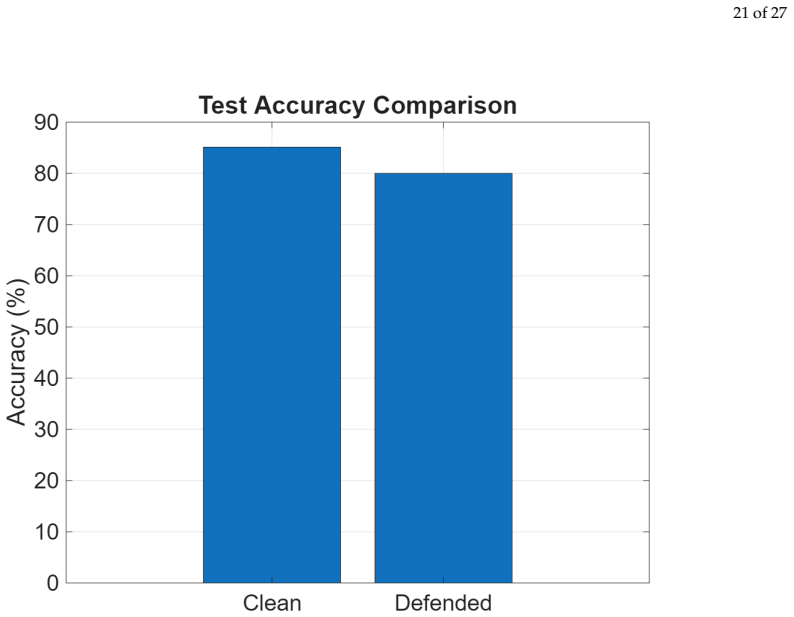
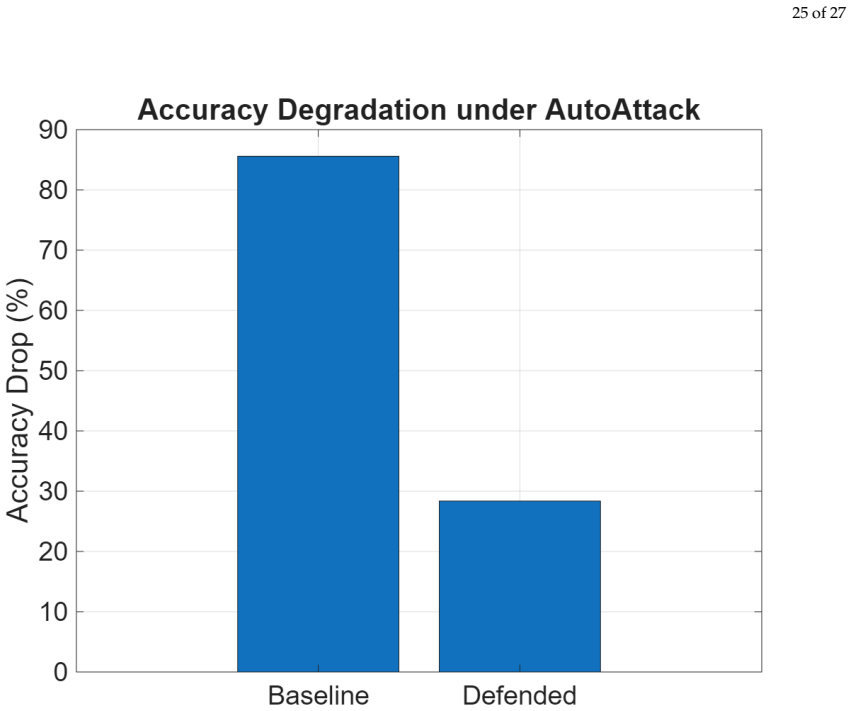
The central claim is that integrating Non-Negative Matrix Factorization for interpretable feature representations, statistical selection of discriminative components, and a diffusion-based feature purification module allows lightweight CNNs to achieve competitive classification accuracy on brain tumor MRI images while significantly improving robustness to adversarial attacks generated by AutoAttack.
What carries the argument
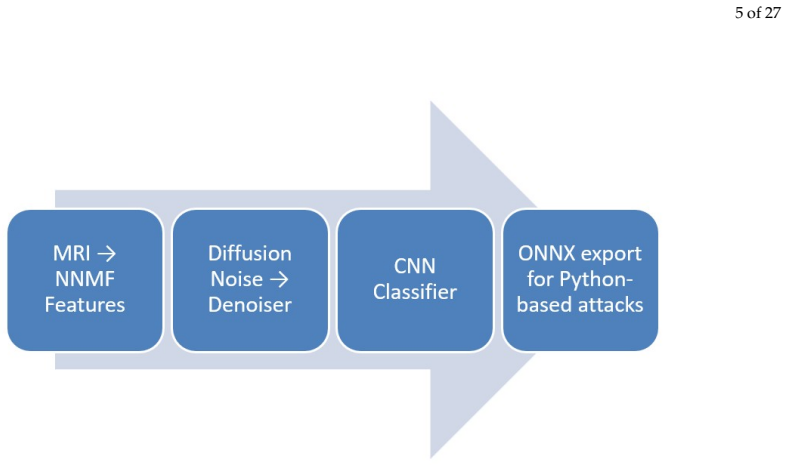
Non-negative matrix factorization (NNMF) for extracting compact interpretable features from MRI data, followed by diffusion-based purification consisting of forward noise addition and a learned denoiser network applied before classification.
Load-bearing premise
That adding and then removing noise via the diffusion process eliminates adversarial perturbations while keeping the selected NNMF features' ability to distinguish between tumor types intact.
What would settle it
A demonstration that the robust accuracy under AutoAttack falls substantially below the clean accuracy or matches that of undefended models would show the purification step fails to provide the claimed protection.
Figures









read the original abstract
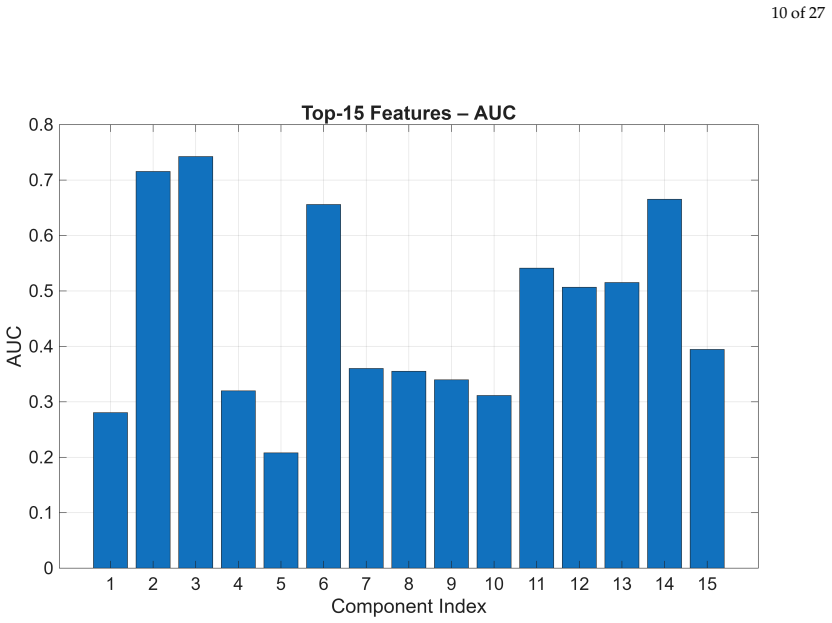
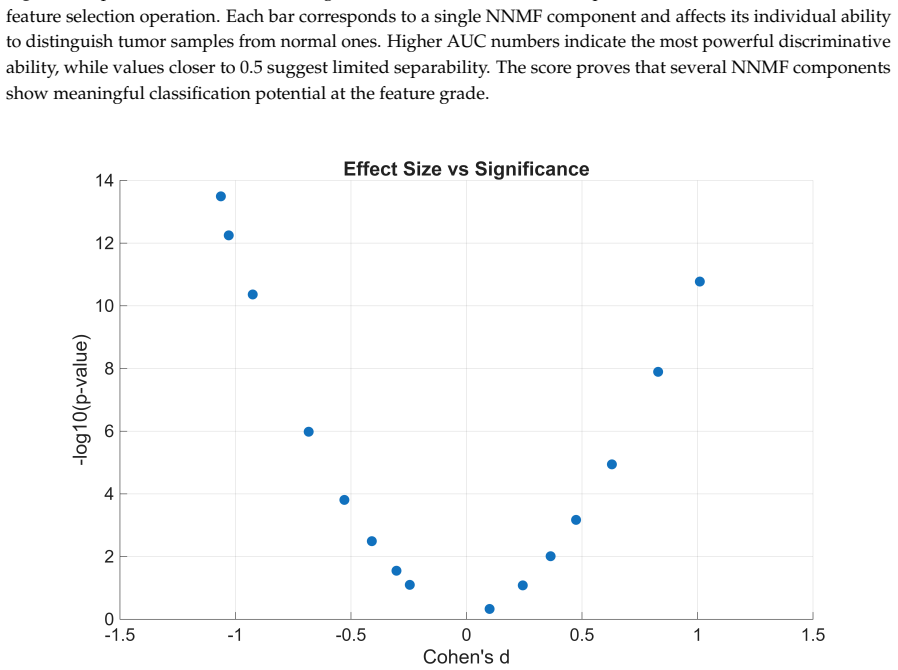
Brain tumor classification from magnetic resonance imaging, which is also known as MRI, plays a sensitive role in computer-assisted diagnosis systems. In recent years, deep learning models have achieved high classification accuracy. However, their sensitivity to adversarial perturbations has become an important reliability concern in medical applications. This study suggests a robust brain tumor classification framework that combines Non-Negative Matrix Factorization (NNMF or NMF), lightweight convolutional neural networks (CNNs), and diffusion-based feature purification. Initially, MRI images are preprocessed and converted into a non-negative data matrix, from which compact and interpretable NNMF feature representations are extracted. Statistical metrics, including AUC, Cohen's d, and p-values, are used to rank and choose the most discriminative components. Then, a lightweight CNN classifier is trained directly on the selected feature groups. To improve adversarial robustness, a diffusion-based feature-space purification module is introduced. A forward noise method followed by a learned denoiser network is used before classification. System performance is estimated using both clean accuracy and robust accuracy under powerful adversarial attacks created by AutoAttack. The experimental results show that the proposed framework achieves competitive classification performance while significantly enhancing robustness against adversarial perturbations.The findings presuppose that combining interpretable NNMF-based representations with a lightweight deep approach and diffusion-based defense technique supplies an effective and reliable solution for medical image classification under adversarial conditions.
Editorial analysis
A structured set of objections, weighed in public.
Referee Report
Summary. The manuscript proposes a framework for robust brain tumor classification from MRI that first preprocesses images into a non-negative matrix, extracts compact features via Non-Negative Matrix Factorization (NNMF), ranks and selects the most discriminative components using AUC, Cohen's d, and p-values, trains a lightweight CNN classifier on the selected features, and applies a diffusion-based purification step (forward noise addition followed by a learned denoiser) immediately before classification to defend against adversarial attacks generated by AutoAttack. The central claim is that this pipeline delivers competitive clean accuracy together with substantially improved robust accuracy under adversarial perturbations.
Significance. If the missing quantitative results and implementation details were supplied and the claims held, the work would offer a concrete, interpretable route to adversarial robustness in medical imaging by combining low-rank factorization with diffusion-based feature-space denoising. Such a hybrid approach could be valuable for clinical CAD systems where both diagnostic performance and reliability against perturbations matter.
major comments (2)
- [Abstract] Abstract: The text asserts that 'the experimental results show that the proposed framework achieves competitive classification performance while significantly enhancing robustness against adversarial perturbations' yet supplies no numerical values whatsoever (clean accuracy, robust accuracy under AutoAttack, baseline comparisons, or statistical significance). This absence renders the headline claim unevaluable and is load-bearing for the entire contribution.
- [Methods (diffusion purification)] Diffusion-based purification module (methods): No information is given on (a) the noise schedule or variance schedule used in the forward process, (b) whether the denoiser was trained on clean NNMF features, Gaussian-noisy features, or adversarial features, or (c) any auxiliary loss that preserves the statistical ranking (AUC/Cohen’s d) of the selected NNMF components. Without these details the robustness claim cannot be assessed and may be falsified if the denoiser either fails to invert structured AutoAttack perturbations or smooths away the low-rank discriminative directions.
minor comments (2)
- [Abstract] Abstract: The parenthetical 'NNMF or NMF' is redundant; standard usage is NMF for Non-negative Matrix Factorization. Consistent terminology throughout would improve readability.
- [Abstract] Abstract: The final sentence uses 'supplies' where 'provides' or 'offers' would be more idiomatic; this is a minor stylistic point.
Simulated Author's Rebuttal
We appreciate the referee's thorough review and constructive feedback on our manuscript. We address each of the major comments below and have made revisions to the manuscript to improve clarity and completeness.
read point-by-point responses
-
Referee: [Abstract] Abstract: The text asserts that 'the experimental results show that the proposed framework achieves competitive classification performance while significantly enhancing robustness against adversarial perturbations' yet supplies no numerical values whatsoever (clean accuracy, robust accuracy under AutoAttack, baseline comparisons, or statistical significance). This absence renders the headline claim unevaluable and is load-bearing for the entire contribution.
Authors: We agree that the abstract would be strengthened by the inclusion of specific numerical results to support the claims. In the revised manuscript, we have updated the abstract to include key quantitative findings from our experiments, such as the clean and robust accuracies achieved by the proposed framework along with baseline comparisons. revision: yes
-
Referee: [Methods (diffusion purification)] Diffusion-based purification module (methods): No information is given on (a) the noise schedule or variance schedule used in the forward process, (b) whether the denoiser was trained on clean NNMF features, Gaussian-noisy features, or adversarial features, or (c) any auxiliary loss that preserves the statistical ranking (AUC/Cohen’s d) of the selected NNMF components. Without these details the robustness claim cannot be assessed and may be falsified if the denoiser either fails to invert structured AutoAttack perturbations or smooths away the low-rank discriminative directions.
Authors: We thank the referee for highlighting the lack of implementation details regarding the diffusion-based purification module. These details are important for reproducibility and assessment of the claims. We have revised the Methods section to provide information on the noise schedule used in the forward process, the training data for the denoiser, and the loss functions employed, including any auxiliary terms to maintain the discriminative properties of the selected features. revision: yes
Circularity Check
No circularity: linear empirical pipeline
full rationale
The manuscript presents a sequential processing pipeline—MRI preprocessing to non-negative matrix, NNMF factorization, statistical ranking of components via AUC/Cohen’s d/p-values, lightweight CNN training, and a separate diffusion forward-noise + learned denoiser step—without any derivation, equation, or uniqueness claim that reduces to its own inputs. No self-citation is invoked to justify a load-bearing mathematical step, no fitted parameter is relabeled as a prediction, and no ansatz is smuggled via prior work. The robustness result is asserted via reported clean and AutoAttack accuracies rather than by construction from the preceding stages. The framework is therefore self-contained as an empirical composition of standard techniques.
Axiom & Free-Parameter Ledger
free parameters (1)
- Number of NNMF components
axioms (2)
- domain assumption MRI image data can be effectively represented and decomposed using non-negative matrix factorization.
- domain assumption A diffusion process can be used to purify features by adding and then removing noise to counter adversarial perturbations.
Reference graph
Works this paper leans on
-
[1]
Diffusion-Based Feature Denoising and Using NNMF for Robust Brain Tumor Classification
Introduction The classification of brain tumors from magnetic resonance imaging (MRI) is a large and complex component in computer-supported diagnostic systems. Early and careful detection improves handling, design, and patient survival. In recent years, deep learning approaches, mostly convolutional neural networks (CNNs), have shown remarkable performan...
work page internal anchor Pith review Pith/arXiv arXiv 2026
-
[2]
Related Works • Deep Learning-Based Brain Tumor Classification (Recent Advances) Almuhaimeed et al. [9] proposed a deep learning framework for brain tumor classification using MRI images, integrating convolutional neural networks with data augmentation techniques. Their model achieved high classification accuracy exceeding 97%, demonstrating the effective...
work page 2019
-
[3]
Materials and Methods To develop a robust and adversarial classifier, a structured sequence of fundamental phases is required for the proper implementation of a machine learning model. In this work, a neural network–based model is adopted as the core classification algorithm. The proposed classifier is constructed through four main stages, each comprising...
-
[4]
Implementation and Computational Performance Analysis The suggested framework was running using a combined MATLAB–Python pipeline. MATLAB was applied to NNMF for the extraction of features, statistical classification, CNN training, and a diffusion-based purification system. The trained models were exported to the ONNX format and run in Python using PyTorc...
-
[5]
Unlike a traditional end-to-end deep learning example
Conclusion This study approaches a robust and structured framework for brain tumor classification based on NNMF feature extraction, statistical feature selection, CNN-based classification, and diffusion-based feature purification. Unlike a traditional end-to-end deep learning example. that builds just on high- 26 of 27 dimensional image input, the propose...
-
[6]
Acknowledgement This work was supported by the Distinguished Professor Program of Óbuda University. The authors are also grateful for the possibility of using the HUN-REN Cloud https://science-cloud.hu/ en [24] which helped us achieve some particular results published in this paper. Hiba Adil Al-kharsan gratefully acknowledges the financial support of the...
-
[7]
A survey on deep learning in medical image analysis
Litjens, G.; Kooi, T.; Bejnordi, B.E.; Setio, A.A.A.; Ciomp, F.; Ghafoorian, M.; van der Laak, J.A.; van Ginneke, B.; Sánchez, C.I. A survey on deep learning in medical image analysis.Medical Image Analysis2017,42, 60–88. https://doi.org/10.1016/j.media.2017.07.005
-
[8]
Intriguing properties of neural networks
Szegedy, C.; Zaremba, W.; Sutskever, I.; Bruna, J.; Erhan, D.; Goodfellow, I.; Fergus, R. Intriguing properties of neural networks. 2013, International Conference on Learning Representations (ICLR) 2014. https: //doi.org/10.48550/arXiv.1312.6199
work page internal anchor Pith review Pith/arXiv arXiv doi:10.48550/arxiv.1312.6199 2013
-
[9]
Croce, F.; Hein, M. Reliable evaluation of adversarial robustness with an ensemble of diverse parameter-free attacks. 2020, International Conference on Machine Learning (ICML) 2020. https://doi.org/10.48550/arXiv. 2003.01690
work page internal anchor Pith review doi:10.48550/arxiv 2020
-
[10]
Guyon, I.; Elisseeff, A. An introduction to variable and feature selection.Journal of Machine Learning Research 2003,3, 1157–1182. http://www.jmlr.org/papers/volume3/guyon03a/guyon03a.pdf
work page 2003
-
[11]
Rajkó, R.; Siket, I.; Heged˝ us, P .; Ferenc, R. Development of partial least squares regression with discriminant analysis for software bug prediction.Heliyon2024,10, e35045. https://doi.org/10.1016/j.heliyon.2024.e350 45
-
[12]
Learning the parts of objects by non-negative matrix factorization.Nature1999, 401, 788–791
Lee, D.D.; Seung, H.S. Learning the parts of objects by non-negative matrix factorization.Nature1999, 401, 788–791. https://doi.org/10.1038/44565
-
[13]
https://doi.org/10.1137/1.9781611976410
Gillis, N.Nonnegative Matrix Factorization; SIAM, 2020. https://doi.org/10.1137/1.9781611976410
-
[14]
AutoAttack: Reliable evaluation of adversarial robustness
Croce, F.; Hein, M. AutoAttack: Reliable evaluation of adversarial robustness. https://github.com/fra31/ auto-attack, 2020. Last accessed: 10.03.2026
work page 2020
-
[15]
Almuhaimeed, A.; Alenezi, F.; Alotaibi, A. Brain Tumor Classification Using Deep Learning and Data Augmentation Techniques.Frontiers in Medicine2025. https://doi.org/10.3389/fmed.2025.1635796
-
[16]
Gómez, J.; Martínez, C.; Fernández, L. Enhanced Multi-Class Brain Tumor Classification Using Hybrid CNN and Transformer Models.Technologies2025. https://doi.org/10.3390/technologies13090379. 27 of 27
-
[17]
Robustness Analysis of Brain Tumor Classification Models Under Adversarial Attacks.arXiv2026
Deem, M.; Johnson, S.; Kim, D. Robustness Analysis of Brain Tumor Classification Models Under Adversarial Attacks.arXiv2026. https://doi.org/10.48550/arXiv.2602.11646
-
[18]
Brain tumor detection using Convolutional Neural Network
Hossain, T.; Shishir, F.S.; Ashraf, M.; Al Nasim, M.A.; Shah, F.M. Brain tumor detection using Convolutional Neural Network. 2020, 1st International Conference on Advances in Science, Engineering and Robotics Technology (ICASERT-2019). https://doi.org/10.1109/ICASERT.2019.8934561
-
[19]
Non-Negative Matrix Factorization-Convolutional Neural Network (NMF- CNN) for sound event detection
Chan, T.K.; Chin, C.S.; Li, Y. Non-Negative Matrix Factorization-Convolutional Neural Network (NMF- CNN) for sound event detection. 2020, Detection and Classification of Acoustic Scenes and Events (DCASE) 2019 Challenge. https://doi.org/10.48550/arXiv.2001.07874
-
[20]
Semi-NMF network for image classification.IEEE Access2019, 7, 8899–8903
Huang, H.; Yang, Z.; Liang, N.; Li, Z. Semi-NMF network for image classification.IEEE Access2019, 7, 8899–8903. https://doi.org/10.23919/ChiCC.2019.8866590
-
[21]
Classification-denoising networks, 2024
Thiry, L.; Guth, F. Classification-denoising networks, 2024. https://doi.org/10.48550/arXiv.2410.03505
-
[22]
Ahamed, M.F.; Hossain, M.M.; Nahiduzzaman, M.; Islam, M.R.; Islam, M.R.; Ahsan, M.; Haider, J. A review on brain tumor segmentation based on deep learning methods with federated learning techniques. Computerized Medical Imaging and Graphics2023,110, 102313. https://doi.org/https://doi.org/10.1016/j. compmedimag.2023.102313
work page doi:10.1016/j 2023
-
[23]
Netshamutshedzi, N.; Netshikweta, R.; Ndogmo, J.C.; Obagbuwa, I.C. A systematic review of the hybrid machine learning models for brain tumour segmentation and detection in medical images.Frontiers in Artificial Intelligence2025,Volume 8 - 2025. https://doi.org/10.3389/frai.2025.1615550
-
[24]
Gomes, E.F.; Barbosa, R.S. Deep Learning Approaches for Brain Tumor Classification in MRI Scans: An Analysis of Model Interpretability.Applied Sciences2026,16. https://doi.org/10.3390/app16020831
-
[25]
Brain tumor image dataset: Semantic segmentation
Darabi, P .K. Brain tumor image dataset: Semantic segmentation. https://www.kaggle.com/datasets/ pkdarabi/brain-tumor-image-dataset-semantic-segmentation, 2023
work page 2023
-
[26]
Effect of data leakage in brain MRI classification using 2D convolutional neural networks
Yagis, E.; Atnafu, S.W.; García Seco de Herrera, A.; Marzi, C.; Scheda, R.; Giannelli, M.; Tessa, C.; Citi, L.; Diciotti, S. Effect of data leakage in brain MRI classification using 2D convolutional neural networks. Scientific Reports2021,11. https://doi.org/10.1038/s41598-021-01681-w
-
[27]
Lee, S.; Pang, H.S. Feature extraction based on the Non-Negative Matrix Factorization of Convolutional Neural Networks for monitoring domestic activity with acoustic signals.IEEE Access2020,8, 122384–122395. https://doi.org/10.1109/ACCESS.2020.3007199
-
[28]
Algorithms for Non-negative Matrix Factorization
Lee, D.D.; Seung, H.S. Algorithms for Non-negative Matrix Factorization. In Proceedings of the Advances in Neural Information Processing Systems. MIT Press, 2000, Vol. 13. https://proceedings.neurips.cc/paper_ files/paper/2000/file/f9d1152547c0bde01830b7e8bd60024c-Paper.pdf
work page 2000
-
[29]
It took me 6 years to find the best metric for classification models
Mazzanti, S. It took me 6 years to find the best metric for classification models. https://medium.com/data- science-collective/it-took-me-6-years-to-find-the-best-metric-for-classification-models-0f5aa21a2b85, 2023. Last accessed: 10.03.2026
work page 2023
-
[30]
The Past, Present and Future of the ELKH Cloud.Információs Társadalom2022,22, 128–137
Héder, M.; Rigó, E.; Medgyesi, D.; Lovas, R.; Tenczer, S.; Török, F.; Farkas, A.; Em˝ odi, M.; Kadlecsik, J.; Mez˝ o, G.; et al. The Past, Present and Future of the ELKH Cloud.Információs Társadalom2022,22, 128–137. https://doi.org/10.22503/inftars.xxii.2022.2.8
discussion (0)
Sign in with ORCID, Apple, or X to comment. Anyone can read and Pith papers without signing in.