Recognition: 2 theorem links
· Lean TheoremModular lattices and algebras with straightening laws
Pith reviewed 2026-05-10 19:03 UTC · model grok-4.3
The pith
A counterexample disproves the conjecture that every modular lattice is integral.
A machine-rendered reading of the paper's core claim, the machinery that carries it, and where it could break.
Core claim
The authors exhibit a specific modular lattice which fails to be integral, thereby disproving the conjecture that every modular lattice is integral.
What carries the argument
The counterexample lattice, which satisfies the modular identity but not the integrality property and thereby separates the two notions.
If this is right
- The conjecture that all modular lattices are integral no longer holds.
- Algebras with straightening laws built from modular lattices must now accommodate non-integral cases.
- Classifications of lattices in this area require distinguishing integral from non-integral modular examples.
- Further examples of non-integral modular lattices may exist and can be sought systematically.
Where Pith is reading between the lines
- The precise boundary between integral and non-integral modular lattices becomes a natural next question for classification.
- The counterexample may serve as a test case for algorithms that decide integrality in finite lattices.
- Connections to other combinatorial structures, such as poset ideals or Gröbner bases, may need re-examination.
Load-bearing premise
The given lattice meets the definition of modularity yet fails the definition of integrality.
What would settle it
Direct checking of the lattice's join and meet operations to confirm it obeys the modular law but violates the integral condition would confirm the disproof.
Figures
read the original abstract
The conjecture that every modular lattice is integral is disproved.
Editorial analysis
A structured set of objections, weighed in public.
Referee Report
Summary. The manuscript asserts that the conjecture that every modular lattice is integral is disproved, by means of an explicit counterexample lattice that satisfies the modular law but fails the integrality condition in the sense relevant to algebras with straightening laws.
Significance. If substantiated, the result would be significant for lattice theory and the study of ASLs, as it supplies a concrete negative instance to an open conjecture and thereby clarifies the boundary between modularity and integrality. An explicit counterexample is in principle falsifiable and reusable for further work.
major comments (1)
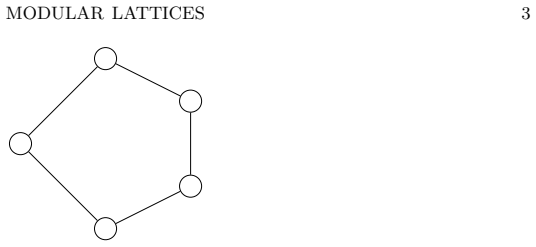
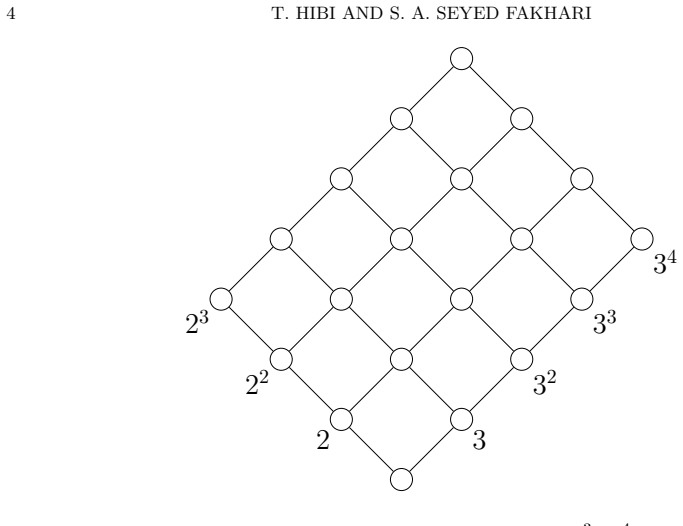
- The manuscript supplies neither the Hasse diagram nor the join/meet tables for the claimed counterexample, nor any explicit verification that the modular identity holds for every triple while integrality fails under the paper's ASL-derived definition. Because the entire disproof rests on the correctness of this single lattice, the absence of these checks is load-bearing.
Simulated Author's Rebuttal
We thank the referee for the careful review and for highlighting the need for explicit verification of the counterexample. We address the major comment below and will revise the manuscript to incorporate the requested material.
read point-by-point responses
-
Referee: The manuscript supplies neither the Hasse diagram nor the join/meet tables for the claimed counterexample, nor any explicit verification that the modular identity holds for every triple while integrality fails under the paper's ASL-derived definition. Because the entire disproof rests on the correctness of this single lattice, the absence of these checks is load-bearing.
Authors: We agree that the presentation of the counterexample can be strengthened by including these elements. In the revised version we will add a Hasse diagram of the lattice, the full join and meet tables, and a point-by-point verification that the modular law holds for every triple while the integrality condition (in the sense of the paper) fails for at least one pair. revision: yes
Circularity Check
No circularity: direct counterexample to conjecture on modular lattices
full rationale
The paper's central claim is a disproof of the conjecture that every modular lattice is integral, achieved by exhibiting a specific counterexample lattice. This structure does not involve any derivation chain that reduces to self-definition, fitted parameters renamed as predictions, or load-bearing self-citations. The verification consists of checking the modular law holds while the integrality condition (tied to ASL definitions) fails for that lattice; both checks are independent of the conjecture itself and rely on explicit construction rather than circular re-use of inputs. No steps match the enumerated circularity patterns.
Axiom & Free-Parameter Ledger
Lean theorems connected to this paper
-
IndisputableMonolith/Foundation/RealityFromDistinction.leanreality_from_one_distinction unclearThe conjecture that every modular lattice is integral is disproved.
-
IndisputableMonolith/Cost/FunctionalEquation.leanwashburn_uniqueness_aczel unclearh(Δ(L[n])) fails to satisfy the inequality (1)
Reference graph
Works this paper leans on
-
[1]
Bj¨ orner, Shellable and Cohen–Macaulay partially ordered sets,Trans
A. Bj¨ orner, Shellable and Cohen–Macaulay partially ordered sets,Trans. Amer. Math. Soc. 260(1980), 159–183
1980
-
[2]
Ring Theory and Algebra III
D. Eisenbud, Introduction to algebras with straightening laws,in“Ring Theory and Algebra III” (B. R. McDonald, Ed.), Proc. of the third Oklahoma Conf., Lect. Notes in Pure and Appl. Math. No. 55, Dekker, 1980, 243–268
1980
-
[3]
Monomial Ideals
J. Herzog and T. Hibi, “Monomial Ideals”, GTM 260, Springer, 2011
2011
-
[4]
Hibi and K.-i
T. Hibi and K.-i. Watanabe, Study of three-dimensional algebras with straightening laws which are Gorenstein domains I,Hiroshima Math. J.15(1985), 27–54
1985
-
[5]
Commutative Algebra and Combinatorics
T. Hibi, Distributive lattices, affine semigroup rings and algebras with straightening laws,in “Commutative Algebra and Combinatorics” (M. Nagata and H. Matsumura, Eds.), Advanced Studies in Pure Math., Volume 11, North–Holland, Amsterdam, 1987, pp. 93–109
1987
-
[6]
Algebraic Combinatorics on Convex Polytopes,
T. Hibi, “Algebraic Combinatorics on Convex Polytopes,” Carslaw Publications, Glebe, N.S.W., Australia, 1992
1992
-
[7]
R. P. Stanley, Hilbert functions of graded algebrasAdvances in Math.28(1978), 57–83
1978
-
[8]
Combinatorics and Commutative Algebra, Second Ed.,
R. P. Stanley, “Combinatorics and Commutative Algebra, Second Ed.,” Birh¨ auser, Boston, 1996
1996
-
[9]
R. P. Stanley, On the Hilbert function of a graded Cohen–Macaulay domainJ. Pure and Appl. Algebra73(1991), 307–314
1991
-
[10]
Enumerative Combinatorics, Volume I, Second Ed.,
R. Stanley, “Enumerative Combinatorics, Volume I, Second Ed.,” Cambridge Studies in Ad- vanced Mathematics, Volume 49, Cambridge University Press, 2012
2012
-
[11]
Terai, Some remarks on algebras with straightening laws,J
N. Terai, Some remarks on algebras with straightening laws,J. Pure and Appl. Algebra95 (1994), 87–101. (Takayuki Hibi) Department of Pure and Applied Mathematics, Graduate School of Information Science and Technology, Osaka University, Suita, Osaka 565–0871, Japan Email address:hibi@math.sci.osaka-u.ac.jp (Seyed Amin Seyed Fakhari) Departamento de Matem ´...
1994
discussion (0)
Sign in with ORCID, Apple, or X to comment. Anyone can read and Pith papers without signing in.