Recognition: no theorem link
Improving Semantic Proximity in Information Retrieval through Cross-Lingual Alignment
Pith reviewed 2026-05-10 19:02 UTC · model grok-4.3
The pith
A novel training strategy on 2.8k samples fixes English favoritism in multilingual retrieval models.
A machine-rendered reading of the paper's core claim, the machinery that carries it, and where it could break.
Core claim
The authors show that their proposed training strategy applied to a 2.8k-sample dataset substantially strengthens cross-lingual alignment in multilingual embedding models, yielding better retrieval results in mixed-language settings and reducing the tendency to prioritize English documents over same-language relevant ones.
What carries the argument
A novel training strategy that targets cross-lingual alignment using a small set of 2.8k samples.
If this is right
- Cross-lingual retrieval performance rises significantly on the tested conditions.
- The English inclination problem is reduced in the same settings.
- Most multilingual embedding models gain stronger alignment capabilities.
- Effective gains appear even when training data remains very small.
Where Pith is reading between the lines
- The approach may extend to other tasks that require balancing language preferences in embeddings.
- It points to targeted small-data fine-tuning as a practical way to correct biases in pre-trained multilingual systems.
- The introduced metrics could serve as a standard test for alignment quality in future model evaluations.
Load-bearing premise
The new scenarios and metrics capture real cross-lingual failures and the gains from the small training set will hold for other models and languages.
What would settle it
Apply the 2.8k-sample training to a fresh collection of languages and mixed document pools; check whether English prioritization still occurs on queries in non-English languages.
Figures


read the original abstract
With the increasing accessibility and utilization of multilingual documents, Cross-Lingual Information Retrieval (CLIR) has emerged as an important research area. Conventionally, CLIR tasks have been conducted under settings where the language of documents differs from that of queries, and typically, the documents are composed in a single coherent language. In this paper, we highlight that in such a setting, the cross-lingual alignment capability may not be evaluated adequately. Specifically, we observe that, in a document pool where English documents coexist with another language, most multilingual retrievers tend to prioritize unrelated English documents over the related document written in the same language as the query. To rigorously analyze and quantify this phenomenon, we introduce various scenarios and metrics designed to evaluate the cross-lingual alignment performance of multilingual retrieval models. Furthermore, to improve cross-lingual performance under these challenging conditions, we propose a novel training strategy aimed at enhancing cross-lingual alignment. Using only a small dataset consisting of 2.8k samples, our method significantly improves the cross-lingual retrieval performance while simultaneously mitigating the English inclination problem. Extensive analyses demonstrate that the proposed method substantially enhances the cross-lingual alignment capabilities of most multilingual embedding models.
Editorial analysis
A structured set of objections, weighed in public.
Referee Report
Summary. The paper identifies an 'English inclination' bias in multilingual retrievers for CLIR: when English documents coexist with documents in the query language, models often rank unrelated English documents higher than relevant same-language documents. It introduces new scenarios and metrics to quantify cross-lingual alignment failures, proposes a lightweight training strategy using only 2.8k samples to improve alignment and reduce the bias, and reports that extensive analyses show the method enhances performance across most multilingual embedding models.
Significance. If the gains are robust and generalize, the work could be significant for practical CLIR systems operating on mixed-language corpora, as it offers an efficient intervention that avoids large-scale retraining. The observation of English inclination is a useful diagnostic contribution. However, the reliance on custom scenarios/metrics and a small training set limits immediate impact without further validation against standard benchmarks.
major comments (2)
- [Abstract] Abstract: the central claim of 'significant' improvement and bias mitigation with a 2.8k-sample training set is presented without any reported baselines, statistical significance tests, error analysis, or controls for the sample construction; this makes the empirical result impossible to assess for robustness or effect size.
- [Evaluation] Evaluation (implied by the abstract's description of 'various scenarios and metrics' and 'extensive analyses'): because the scenarios and metrics are newly introduced and the training set is small and custom, it is unclear whether reported gains reflect genuine cross-lingual alignment improvement or scenario-specific tuning; results on established CLIR benchmarks (e.g., CLEF, TREC) or held-out languages/models are required to support the generalization claim.
minor comments (1)
- [Abstract] The abstract refers to '2.8k samples' without specifying the source languages, query-document construction, or how the set was curated; this detail belongs in the methods or data section for reproducibility.
Simulated Author's Rebuttal
We thank the referee for the constructive feedback on our work identifying English inclination in multilingual retrievers and proposing an efficient alignment strategy. We respond to each major comment below and indicate planned revisions.
read point-by-point responses
-
Referee: [Abstract] Abstract: the central claim of 'significant' improvement and bias mitigation with a 2.8k-sample training set is presented without any reported baselines, statistical significance tests, error analysis, or controls for the sample construction; this makes the empirical result impossible to assess for robustness or effect size.
Authors: The abstract is a concise summary of contributions. Full details on baselines, statistical significance tests, error analyses, and controls for constructing the 2.8k-sample set appear in Sections 4 and 5 of the manuscript. We will revise the abstract to reference key baseline comparisons and observed effect sizes. revision: yes
-
Referee: [Evaluation] Evaluation (implied by the abstract's description of 'various scenarios and metrics' and 'extensive analyses'): because the scenarios and metrics are newly introduced and the training set is small and custom, it is unclear whether reported gains reflect genuine cross-lingual alignment improvement or scenario-specific tuning; results on established CLIR benchmarks (e.g., CLEF, TREC) or held-out languages/models are required to support the generalization claim.
Authors: The custom scenarios and metrics were introduced specifically to isolate and measure English inclination in mixed-language document pools, a setting absent from standard CLIR benchmarks such as CLEF and TREC (which use monolingual collections). Our evaluations already span multiple models and languages with extensive analyses. We will add results on held-out languages and models to further support generalization. revision: partial
Circularity Check
No circularity: purely empirical intervention with independent metrics and training
full rationale
The paper identifies an observed English-inclination bias in multilingual retrievers, introduces new evaluation scenarios and metrics to quantify cross-lingual alignment failures, and applies a training strategy on an independent 2.8k-sample dataset. No equations, first-principles derivations, fitted parameters renamed as predictions, or self-citation chains are present in the described chain. The central claims rest on experimental outcomes measured against the newly defined (but externally motivated) metrics rather than any quantity defined in terms of its own outputs or prior self-referential results. The derivation is therefore self-contained.
Axiom & Free-Parameter Ledger
Forward citations
Cited by 1 Pith paper
-
MLAIRE: Multilingual Language-Aware Information Retrieval Evaluation Protocal
MLAIRE is a protocol that evaluates multilingual retrievers on both semantic accuracy and query-language preference using parallel passages and new metrics like LPR and Lang-nDCG, showing that standard metrics hide di...
Reference graph
Works this paper leans on
-
[1]
write newline
" write newline "" before.all 'output.state := FUNCTION n.dashify 't := "" t empty not t #1 #1 substring "-" = t #1 #2 substring "--" = not "--" * t #2 global.max substring 't := t #1 #1 substring "-" = "-" * t #2 global.max substring 't := while if t #1 #1 substring * t #2 global.max substring 't := if while FUNCTION format.date year duplicate empty "emp...
-
[2]
@esa (Ref
\@ifxundefined[1] #1\@undefined \@firstoftwo \@secondoftwo \@ifnum[1] #1 \@firstoftwo \@secondoftwo \@ifx[1] #1 \@firstoftwo \@secondoftwo [2] @ #1 \@temptokena #2 #1 @ \@temptokena \@ifclassloaded agu2001 natbib The agu2001 class already includes natbib coding, so you should not add it explicitly Type <Return> for now, but then later remove the command n...
-
[3]
\@lbibitem[] @bibitem@first@sw\@secondoftwo \@lbibitem[#1]#2 \@extra@b@citeb \@ifundefined br@#2\@extra@b@citeb \@namedef br@#2 \@nameuse br@#2\@extra@b@citeb \@ifundefined b@#2\@extra@b@citeb @num @parse #2 @tmp #1 NAT@b@open@#2 NAT@b@shut@#2 \@ifnum @merge>\@ne @bibitem@first@sw \@firstoftwo \@ifundefined NAT@b*@#2 \@firstoftwo @num @NAT@ctr \@secondoft...
-
[4]
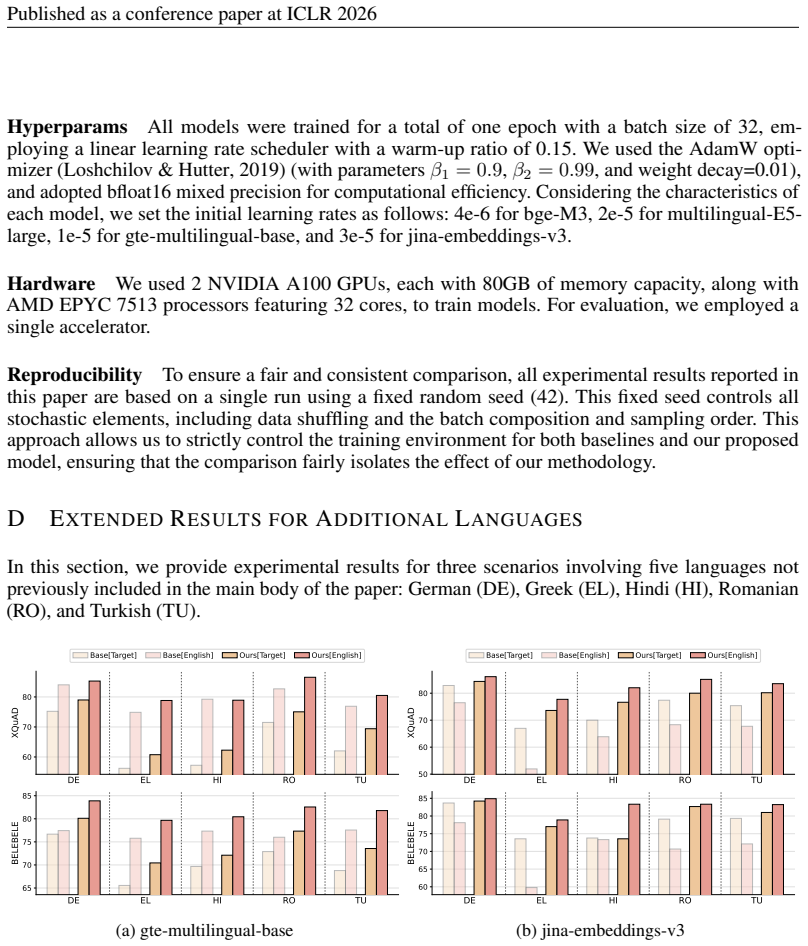
The results are reported in Max@R _ norm for both English and target language queries
@open @close @open @close and [1] URL: #1 \@ifundefined chapter * \@mkboth \@ifxundefined @sectionbib * \@mkboth * \@mkboth\@gobbletwo \@ifclassloaded amsart * \@ifclassloaded amsbook * \@ifxundefined @heading @heading NAT@ctr thebibliography [1] @ \@biblabel @NAT@ctr \@bibsetup #1 @NAT@ctr @ @openbib .11em \@plus.33em \@minus.07em 4000 4000 `\.\@m @bibit...
discussion (0)
Sign in with ORCID, Apple, or X to comment. Anyone can read and Pith papers without signing in.