Recognition: unknown
Mapping Child Malnutrition and Measuring Efficiency of Community Healthcare Workers through Location Based Games in India
Pith reviewed 2026-05-10 17:05 UTC · model grok-4.3
The pith
Location-based games significantly boost efficiency and retention for Indian community health workers collecting child malnutrition data.
A machine-rendered reading of the paper's core claim, the machinery that carries it, and where it could break.
Core claim
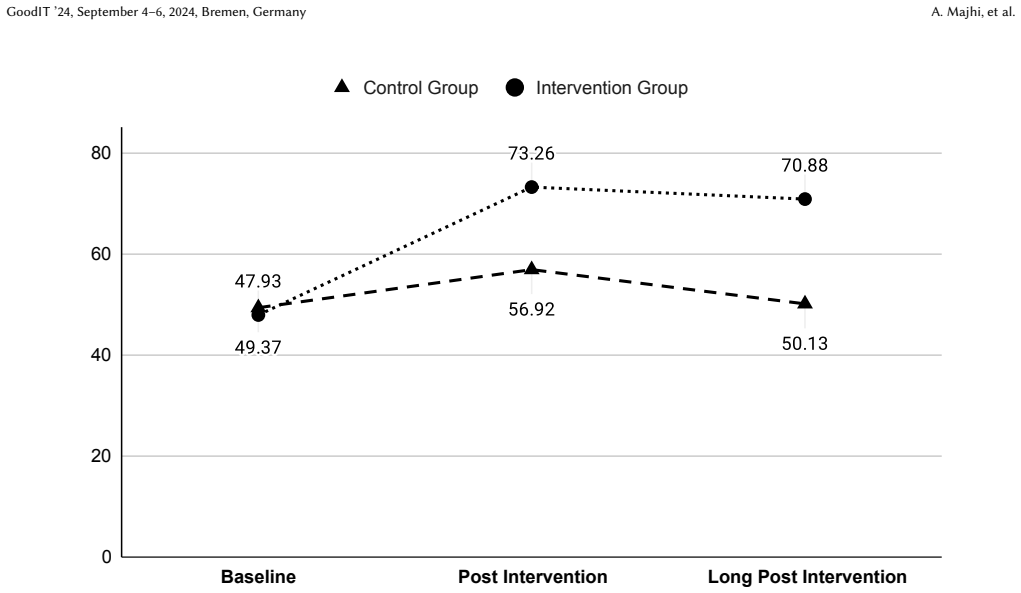
Through a co-design exercise that produced hotspot and density maps, the authors ran a controlled trial comparing game-based and non-game-based anthropometric data collection by community health workers. The game-based method yielded statistically significant gains in measuring efficiency and clearly higher engagement and retention across the two groups of 94 workers each drawn from different states.
What carries the argument
The co-designed location-based game that incorporates real-time hotspot and density distribution maps to guide and motivate repeated anthropometric measurements by CHWs.
If this is right
- Health planners gain access to more complete and current spatial data on child malnutrition for prioritizing services to pregnant women and young children.
- Community health workers maintain higher participation rates in routine data tasks over extended periods and across varied geographic settings.
- The co-design and Research through Design process offers a repeatable template for creating other geospatial tools that sustain crowdsourced health data collection.
- Evidence-based service allocation becomes feasible in regions where traditional reporting has left persistent gaps in coverage.
Where Pith is reading between the lines
- If the retention advantage persists at scale, state health systems could reduce the frequency and cost of refresher training for community workers.
- The same game structure could be adapted to collect other spatially referenced data such as immunization coverage or disease incidence without building entirely new platforms.
- National malnutrition monitoring programs might shift from periodic surveys toward continuous game-driven updates that better capture seasonal or localized changes.
- Similar gamification could address engagement shortfalls in crowdsourced environmental or agricultural data collection efforts that also suffer from spatial bias.
Load-bearing premise
The two groups of 94 community health workers started out comparable in training, motivation, and local conditions so that observed gains in efficiency and retention can be credited to the game itself.
What would settle it
A larger randomized trial that assigns workers within the same districts to game versus non-game conditions and finds no difference in efficiency or retention after three to six months would falsify the central result.
Figures


read the original abstract
In India, Community Healthcare Workers (CHWs) serve as critical intermediaries between the state and beneficiaries, including pregnant mothers and children. Effective planning and prioritization of care and services necessitate the collection of accurate health data from the community. Crowdsourcing child anthropometric data through CHWs could establish a valuable repository for evidence-based decision-making and service planning. However, existing platforms often fail to maintain CHWs' engagement over time and across different spatial contexts, resulting in spatially misrepresented and outdated data. This study addresses these challenges by conducting a co-design exercise to develop innovative methods for collecting anthropometric data over time and space. The exercise involved analyzing data to create hotspot and density distribution maps. We implemented a trial of the developed game with two groups (n=94 per group) from various states across India, comparing the game-based and non-game-based data collection methods. Our findings reveal that the game-based approach significantly improved measuring efficiency (p<0.05) and demonstrated superior engagement and retention compared to the non-game-based method. This research contributes to the expanding literature on co-design and Research through Design (RtD) methodologies for developing geospatial games, highlighting their potential to enhance data collection practices and improve engagement among CHWs.
Editorial analysis
A structured set of objections, weighed in public.
Referee Report
Summary. The paper describes a co-design process for a location-based game aimed at improving collection of child anthropometric data by community healthcare workers (CHWs) in India. It reports a trial with two groups of 94 CHWs each drawn from various states, claiming that the game-based method produced statistically significant gains in measuring efficiency (p<0.05) together with superior engagement and retention relative to a non-game-based control.
Significance. If the causal attribution holds, the work would add to the literature on gamification and Research through Design for public-health data collection, potentially supporting more accurate spatial mapping of child malnutrition. The absence of randomization details, baseline equivalence data, effect sizes, and missing-data handling, however, leaves the headline result difficult to interpret or generalize.
major comments (2)
- [Abstract / Trial description] Abstract and trial description: the comparison of game-based versus non-game-based arms (n=94 each) reports a significant efficiency improvement (p<0.05) but supplies no information on allocation procedure, stratification by state or prior training, pre-intervention measures of CHW experience/motivation, or covariate adjustment. Without these elements, state-level differences in infrastructure, workload, or selection effects remain plausible alternative explanations for the observed outcomes.
- [Methods] Methods: no details are provided on effect-size reporting, handling of missing data, or any power calculation that would support interpreting the p<0.05 result as evidence of a practically meaningful improvement attributable to the game.
minor comments (1)
- [Abstract] The abstract states that data were analyzed to produce hotspot and density maps, yet the results section does not report any quantitative validation of map accuracy or spatial coverage improvements.
Simulated Author's Rebuttal
We thank the referee for the constructive feedback. We address the major comments below and will revise the manuscript to improve clarity on trial design and statistical reporting.
read point-by-point responses
-
Referee: [Abstract / Trial description] Abstract and trial description: the comparison of game-based versus non-game-based arms (n=94 each) reports a significant efficiency improvement (p<0.05) but supplies no information on allocation procedure, stratification by state or prior training, pre-intervention measures of CHW experience/motivation, or covariate adjustment. Without these elements, state-level differences in infrastructure, workload, or selection effects remain plausible alternative explanations for the observed outcomes.
Authors: We agree that greater transparency on allocation and baselines is needed to strengthen causal interpretation. The CHWs were recruited from multiple states to capture geographic diversity, but the original manuscript omitted specifics on group formation. In revision we will add a Methods subsection detailing the recruitment process, any stratification by state or prior training, and available baseline characteristics of the two groups. We will also note any limitations regarding covariate adjustment and discuss potential state-level confounds. revision: yes
-
Referee: [Methods] Methods: no details are provided on effect-size reporting, handling of missing data, or any power calculation that would support interpreting the p<0.05 result as evidence of a practically meaningful improvement attributable to the game.
Authors: We accept that these elements are required for full evaluation of the result. The manuscript reported only the p-value for efficiency. We will revise the Methods and Results to include effect-size estimates for the efficiency outcome, a description of missing-data handling (or confirmation that none occurred), and a post-hoc power analysis or sample-size justification for the n=94 per group design. revision: yes
Circularity Check
Empirical trial with no derivations or self-referential predictions
full rationale
The paper reports results from a co-design exercise followed by a comparative trial of game-based versus non-game-based anthropometric data collection among two groups of 94 CHWs each. The central claim rests on observed differences in measuring efficiency (p<0.05), engagement, and retention. No equations, fitted parameters, predictions derived from subsets of the same data, or mathematical derivations appear in the provided text. The efficiency metric is presented as a direct empirical outcome rather than a quantity defined in terms of itself or obtained via self-citation chains. Any methodological limitations (e.g., lack of reported randomization details) concern external validity but do not constitute circularity in a derivation chain. The study is therefore self-contained as an empirical report.
Axiom & Free-Parameter Ledger
axioms (1)
- standard math Standard assumptions for inferential statistics (normality, independence) underlying the reported p<0.05
Reference graph
Works this paper leans on
-
[1]
Sumegha Asthana and Kaveri Mayra. 2022. India’s one million Accredited Social Health Activists (ASHA) win the Global Health Leaders award at the 75th World Health Assembly: Time to move beyond rhetoric to action?The Lancet Regional Health - Southeast Asia3 (2022), 100029. https://doi.org/10.1016/j
work page doi:10.1016/j 2022
-
[2]
Max V. Birk, Maximillian A. Friehs, and Regan L. Mandryk. 2017. Age-based preferences and player experience: A crowdsourced cross-sectional study. In CHI PLAY 2017 - Proceedings of the Annual Symposium on Computer-Human Interaction in Play. Association for Computing Machinery, Inc, 157–170. https: //doi.org/10.1145/3116595.3116608
-
[3]
Konrad Bochennek, Boris Wittekindt, Stefanie Yvonne Zimmermann, and Thomas Klingebiel. 2007. More than mere games: A review of card and board games for medical education. https://doi.org/10.1080/01421590701749813
-
[4]
Franz Faul, Edgar Erdfelder, Albert Georg Lang, and Axel Buchner. 2007. G*Power 3: A flexible statistical power analysis program for the social, behavioral, and biomedical sciences. InBehavior Research Methods, Vol. 39. https://doi.org/10. 3758/BF03193146
2007
-
[5]
Jordan Frith. 2013. Turning life into a game: Foursquare, gamification, and personal mobility.Mobile Media and Communication1, 2 (2013). https://doi.org/ 10.1177/2050157912474811
-
[6]
Anthony D. Harris and et.al. 2006. The use and interpretation of quasi- experimental studies in medical informatics.Journal of the American Medical Informatics Association13, 1 (1 2006), 16–23. https://doi.org/10.1197/jamia.M1749
-
[7]
Heidkamp, Ellen Piwoz, Stuart Gillespie, Emily C
Rebecca A. Heidkamp, Ellen Piwoz, Stuart Gillespie, Emily C. Keats, Mary R. D’Alimonte, Purnima Menon, Jai K. Das, Augustin Flory, Jack W. Clift, Marie T. Ruel, Stephen Vosti, Jonathan Kweku Akuoku, and Zulfiqar A. Bhutta. 2021. Mobilising evidence, data, and resources to achieve global maternal and child undernutrition targets and the Sustainable Develop...
-
[8]
Indian Institute Population Sciences and Ministry of Health and Family Welfare
-
[9]
http://rchiips.org/ nfhs/factsheet_NFHS-5.shtml
National Family Health Survey-5 India Fact Sheet.Indian Institute Population Sciences and Ministry of Health and Family Welfare(2021). http://rchiips.org/ nfhs/factsheet_NFHS-5.shtml
2021
-
[10]
Kappen, Lennart E
Dennis L. Kappen, Lennart E. Nacke, Kathrin M. Gerling, and Lia E. Tsotsos. 2016. Design strategies for gamified physical activity applications for older adults. In Proceedings of the Annual Hawaii International Conference on System Sciences, Vol. 2016-March. IEEE Computer Society, 1309–1318. https://doi.org/10.1109/ HICSS.2016.166
2016
-
[11]
Jonna Koivisto and Juho Hamari. 2019. The rise of motivational information systems: A review of gamification research. https://doi.org/10.1016/j.ijinfomgt. 2018.10.013
-
[12]
Arka Majhi, Satish Agnihotri, and Aparajita Mondal. 2022. Physical and Aug- mented Reality based Playful Activities for Refresher Training of ASHA Workers in India. InConference on Human Factors in Computing Systems - Proceedings. https://doi.org/10.1145/3516492.3558788
-
[13]
Agnihotri, and Aparajita Mondal
Arka Majhi, Anirudha Joshi, Satish B. Agnihotri, and Aparajita Mondal. 2021. Refresher Training through Quiz App for capacity building of Community Health- care Workers or Anganwadi Workers in India. In5th Asian CHI Symposium 2021. https://doi.org/10.1145/3429360.3468186
-
[14]
Arka Majhi, Aparajita Mondal, and Satish B Agnihotri. 2024. Refresher Train- ing through Digital and Physical, Card-Based Game for Accredited Social Health Activists (ASHAs) and Anganwadi Workers (AWWs) in India.Com- panion Proceedings of the Annual Symposium on Computer-Human Interaction in Play (CHI PLAY Companion ’24), October 14-17, 2024, Tampere, Fin...
-
[15]
Arka Majhi, Aparajita Mondal, and Satish B. Agnihotri. 2024. Replay, Revise, and Refresh: Smartphone-Based Refresher Training for Community Healthcare Workers in India. 310–320. https://doi.org/10.1007/978-3-031-61966-3{_}34
-
[16]
Sujata Mishra, Susan Horton, Zulfiqar A. Bhutta, and Beverley M. Essue. 2024. Association between the use of Accredited Social Health Activist (ASHA) services and uptake of institutional deliveries in India.PLOS Global Public Health4, 1 (1 2024), e0002651. https://doi.org/10.1371/journal.pgph.0002651
-
[17]
Mithilesh P. Shah, Pawan A. Kamble, and Satish B. Agnihotri. 2017. Tackling child malnutrition: An innovative approach for training health workers using ICT: A pilot study. InIEEE Region 10 Humanitarian Technology Conference 2016, R10-HTC 2016 - Proceedings. https://doi.org/10.1109/R10-HTC.2016.7906811
-
[18]
Steffen P. Walz and Sebastian Deterding. 2018. An Introduction to the Gameful World. InThe Gameful World. https://doi.org/10.7551/mitpress/9788.003.0001
-
[19]
2013.WMA Declaration of Helsinki - Ethical Principles for Medical Research Involving Human Subjects
World Medical Association. 2013.WMA Declaration of Helsinki - Ethical Principles for Medical Research Involving Human Subjects. Technical Report. https://www. med.or.jp/dl-med/wma/helsinki2013e.pdf
2013
- [20]
discussion (0)
Sign in with ORCID, Apple, or X to comment. Anyone can read and Pith papers without signing in.