pith. machine review for the scientific record. sign in

cs.CY

Computers and Society

Covers impact of computers on society, computer ethics, information technology and public policy, legal aspects of computing, computers and education. Roughly includes material in ACM Subject Classes K.0, K.2, K.3, K.4, K.5, and K.7.

0
cs.CY 2026-05-13 Recognition

AI in exams makes judging solutions the new measure of learning

Reimagining Assessment in the Age of Generative AI: Lessons from Open-Book Exams with ChatGPT

Transcripts from ChatGPT use reveal three patterns, showing that verification skills now matter more than unaided answer production.

abstract click to expand
Generative AI systems such as ChatGPT challenge traditional assumptions about academic assessment by enabling students to generate explanations, code, and solutions in real time. Rather than attempting to restrict AI use, this study investigates how students actually interact with such systems during formal evaluation. Engineering students were permitted to use ChatGPT during take-home open-book exams and were required to submit interaction transcripts alongside exam solutions. This provided direct observational evidence of reasoning processes rather than relying on self-reported behavior. Qualitative analysis revealed three progressive patterns of use: answer retrieval, guided collaboration, and critical verification. While some students initially copied questions verbatim and received generic responses, many refined prompts iteratively and tested outputs. Some of the strongest evidence of reasoning appeared when students evaluated incorrect or incomplete AI responses, revealing evaluative reasoning through debugging, comparison, and justification. The presence of generative AI shifted the cognitive task of assessment from producing solutions to assessing solution validity. The findings suggest that, in AI-mediated assessment environments, correctness of final answers alone may no longer provide sufficient evidence of comprehension. Instead, competencies such as prompt formulation, verification, and judgment become visible indicators of learning. Transparent integration of AI appeared to reduce focus on rule avoidance and promote self-regulation. Assessments should evolve to evaluate reasoning about solutions rather than independent solution production. Generative AI therefore does not invalidate assessment but has the potential to expose deeper forms of understanding aligned with professional practice.
0
0
cs.CY 2026-05-13 2 theorems

Culturally responsive outreach builds AI knowledge in Black youth

Early AI Literacy in Culturally Responsive STEM Outreach for Black Youth

Short-term gains in confidence and critical awareness point to a practical route for widening early access to STEM fields.

abstract click to expand
Persistent inequities in STEM education continue to limit the participation of Black youth in science and technology fields across Canada. Structural barriers, underrepresentation, and limited access to culturally affirming learning spaces can restrict both opportunity and confidence in pursuing STEM pathways. This paper examines Ontario Tech University's Engineering Outreach Black Youth Program as an exploratory, practice-based case study of culturally responsive STEM outreach. The program creates inclusive environments where Black youth engage in hands-on, culturally grounded STEM experiences supported by mentorship, representation, and community connection. Its recent integration of artificial intelligence (AI) literacy reflects a growing recognition that early engagement with emerging technologies may expand access to future STEM learning opportunities. The paper discusses how AI-focused activities were introduced within this outreach model and examines short-term outcomes related to AI knowledge, confidence, and critical awareness. Findings suggest gains across these areas, while highlighting the need for future research to examine longer-term outcomes related to STEM belonging, identity, and persistence.
0
0
cs.CY 2026-05-13 1 theorem

Budget split cuts gender skew in ads without excluding unknowns

Into the Unknown: Accounting for Missing Demographic Data when Mitigating Ad Delivery Skew

Tests with government public service ads show the method balances reach and equity better than ignoring demographics or pure targeting.

Figure from the paper full image
abstract click to expand
Online advertising platforms use algorithmic systems to power the process of matching ads to users, termed ad delivery. Prior audits have demonstrated that ad delivery can be skewed by demographic attributes, such that ads are systematically under-delivered to certain groups despite advertiser intent to reach groups proportionally. This under-delivery raises a serious concern in the context of ads promoting public services, which might prevent certain groups of individuals from accessing information about resources on the basis of their demographic identity. In the absence of platform-provided solutions to skewed ad delivery, advertisers can counteract skew by targeting demographic groups directly. However, direct targeting excludes users whose demographics the platform cannot infer ("unknown users") if advertising platforms do not provide a way to target unknown users directly, as is the case on Google Ads. We collaborate with a state-level government agency to reduce gender-based skew in ad delivery with an intervention that accounts for unknown users while incorporating gender-based targeting. In particular, we design a budget split intervention that directly incorporates unknown users and targets users with Google-inferred gender labels (i.e., male, female). We find that this intervention is a valuable approach to addressing ad delivery skew without excluding unknown users, and serves as a middle ground in the trade-off between higher costs (from more granular demographic targeting) and skew (from ignoring demographics entirely). This approach is responsive to the needs of real-world, resource-constrained advertisers who are committed to the equitable distribution of public service outreach via online advertising. We conclude with recommendations for government advertisers, online advertising platforms, and researchers.
0
0
cs.CY 2026-05-13 Recognition

GDPR access requests expose contracts of African content moderators

Auditing African Content Moderators' Working Conditions by Using the European General Data Protection Regulation (GDPR)

European data law supplies documents showing rights violations in Kenya and Nigeria BPO firms.

abstract click to expand
In this article, we audit the working conditions of content moderators in Kenya and Nigeria employed by business process outsourcing (BPO) companies by using the European General Data Protection Regulation (GDPR). We demonstrate its extraterritorial scope for gaining access to elements such as employment contracts and NDAs that have never been provided to the workers concerned. The results of this approach provide legally grounded evidence of the structural disadvantages faced by content moderators in the Global South, whose exploitative working conditions violate workers' rights. Our work also highlights the benefits of legislation aimed at protecting individuals' data rights as a counterweight to the tech industry's discourse of exceptionalism, which obscures its dependence on BPOs to externalise labour costs and accountability, whilst claiming that its products, business models, and methods of resource extraction are unprecedented and fall outside any existing legal framework.
0
0
cs.CY 2026-05-12 Recognition

Dataset documentation tools miss reflexivity themes

Evaluating Structured Documentation as a Tool for Reflexivity in Dataset Development

Analysis finds frameworks and their applications engage little with key concepts like positionality and values.

Figure from the paper full image
abstract click to expand
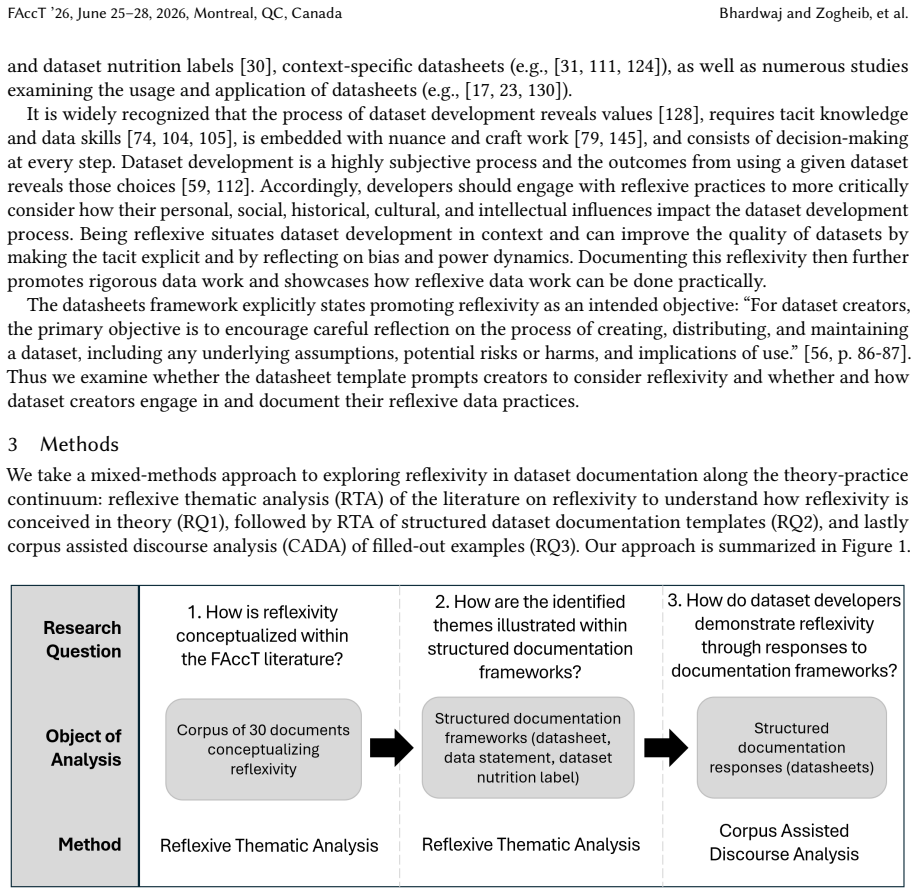
It is prominently recognized that dataset development in machine learning is a value-laden process from problem formulation to data processing, use, and reuse. Structured documentation frameworks such as datasheets, data statements, and dataset nutrition labels have been created to aid developers in documenting how their datasets were produced and, according to the creators of the frameworks, to facilitate reflexivity in dataset development. While reflexivity is a stated goal, it is unclear whether and to what extent these structured dataset documentation frameworks incorporate concepts from reflexivity literature (at FAccT and elsewhere) and whether the use of the frameworks demonstrates reflexivity. Here, we adopt mixed-method thematic analysis and corpus-assisted discourse analysis to explore how reflexivity is incorporated in structured documentation frameworks and their responses. We demonstrate empirically that there is a general lack of engagement with major themes of reflexivity in both dataset documentation frameworks and published applications of these frameworks. We present a codebook of major reflexivity topics, recommend actionable strategies, and propose a set of extended datasheet questions to more effectively incorporate these topics into structured documentation frameworks and in the FAccT literature.
0
0
cs.CY 2026-05-12 Recognition

Differentiated roles in human-AI tutoring lift growth 61%

Improving Hybrid Human-AI Tutoring by Differentiating Human Tutor Roles Based on Student Needs

Proactive help for lower performers and reactive support for others raises time on task and narrows gaps over AI-only tutoring.

Figure from the paper full image
abstract click to expand
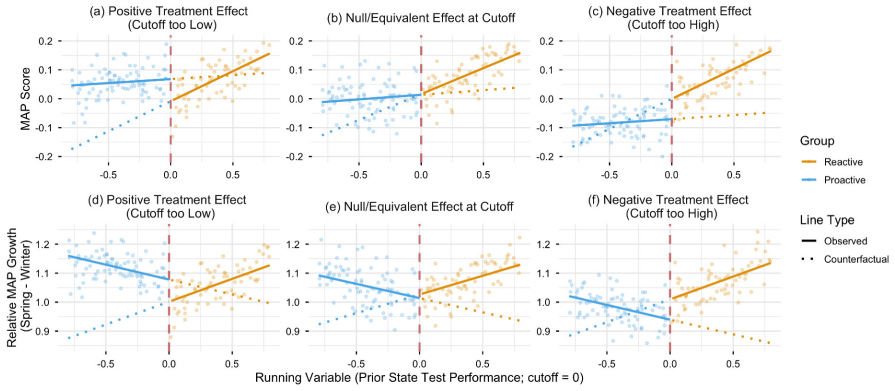
Hybrid human-AI tutoring, where technology and humans jointly facilitate student learning, can be more beneficial than AI-only tutoring. However, preliminary evidence suggests that lower-performing students derive greater benefit from human-AI tutoring than higher-performing students. As such, this study evaluates whether a differentiated tutoring policy can effectively support both groups: human tutors initiate support for lower-performing students, while higher-performing students receive reactive, on-demand support. Using their within-grade median state test scores, we assigned 635 students (grades 5-8) to receive proactive (< median) or reactive ($\geq$ median) tutoring. Using a DiDC design, we compare outcomes across two time periods: fall (AI-only tutoring) and spring (proactive-reactive human-AI tutoring). This quasi-experimental design isolates the effects of proactive-reactive tutoring approaches by comparing the discontinuity in spring outcomes to the fall, where no such discontinuity existed. Using data around the cutoff (Imbens-Kalyanaraman criterion), we find significant overall improvements from human-AI tutoring compared to AI-only baseline: 25% increase in time on task, 36% in skill proficiency, and 61% in academic growth (standardized MAP test). Between proactive and reactive tutoring, we find comparable improvements in time-on-task and skill proficiency. However, proactive tutoring, on average, showed marginally higher MAP growth (75%, p = .065) than reactive tutoring, i.e., proactive tutoring was more beneficial to students farther below the cutoff and helped narrow achievement gaps. Our findings provide evidence that differentiated human-AI tutoring addresses the needs of both groups, offering a practical and cost-effective strategy for scaling hybrid instruction.
1 0
0
cs.CY 2026-05-12 2 theorems

TikTok users struggle to keep unwanted videos out of their For You feed

When 'For You' Isn't For You: Measuring User Agency in TikTok's Algorithmic Feed

The strongest control signal is buried in a menu and stops working once users stop repeating it.

Figure from the paper full image
abstract click to expand
The short-form video-sharing service TikTok has become an important platform in the social media landscape, with much of its popularity owed to its algorithmically-driven "For You Page" (FYP). This feature serves as the "home screen" for the platform and provides a personalized feed of content for each user. Unlike other social media services-where new users start their journey by explicitly signaling whom they choose to friend or follow-the TikTok FYP algorithm instead begins making inferences based on implicit signals, such as how long they watch particular videos. As a result, users have less explicit control over what content they see, and concerns have been raised about the impact on users (e.g., the delivery of potentially harmful content). In this work, we investigate the extent to which users have control over the content they see on the FYP on TikTok. We first develop novel techniques to study the TikTok mobile app, introducing a new avenue for conducting controlled experiments that enable us to send both explicit and implicit signals on the app. We then use these techniques to study the FYP algorithm based on accounts we control. We find that the FYP algorithm is sensitive to both types of signals, changing the amount of personalized content the account sees. However, we find that users may have difficulty convincing the FYP algorithm to stop showing content the user wishes to no longer see: the most effective explicit signal-marking a video as 'Not Interested'-is unintuitively buried in the interface. Worse, we find that once accounts cease to indicate disinterest in a topic, many find their feeds dominated by such content again.
0
0
cs.CY 2026-05-12 Recognition

LLMs generate harmful stereotypes that shift with prompt language

StereoTales: A Multilingual Framework for Open-Ended Stereotype Discovery in LLMs

A dataset of 650k stories across 10 languages shows every tested model shares biases that target locally relevant groups instead of staying

Figure from the paper full image
abstract click to expand
Multilingual studies of social bias in open-ended LLM generation remain limited: most existing benchmarks are English-centric, template-based, or restricted to recognizing pre-specified stereotypes. We introduce StereoTales, a multilingual dataset and evaluation pipeline for systematically studying the emergence of social bias in open-ended LLM generation. The dataset covers 10 languages and 79 socio-demographic attributes, and comprises over 650k stories generated by 23 recent LLMs, each annotated with the socio-demographic profile of the protagonist across 19 dimensions. From these, we apply statistical tests to identify more than 1{,}500 over-represented associations, which we then rate for harmfulness through both a panel of humans (N = 247) and the same LLMs. We report three main findings. \textbf{(i)} Every model we evaluate emits consequential harmful stereotypes in open-ended generation, regardless of size or capabilities, and these associations are largely shared across providers rather than isolated misbehaviors. \textbf{(ii)} Prompt language strongly shapes which stereotypes appear: rather than transferring as a shared set of biases, harmful associations adapt culturally to the prompt language and amplify bias against locally salient protected groups. \textbf{(iii)} Human and LLM harmfulness judgments are broadly aligned (Spearman $\rho=0.62$), with disagreements concentrating on specific attribute classes rather than specific providers. To support further analyses, we release the evaluation code and the dataset, including model generations, attribute annotations, and harmfulness ratings.
0
0
cs.CY 2026-05-12 Recognition

Every tested LLM produces harmful stereotypes in open-ended stories

StereoTales: A Multilingual Framework for Open-Ended Stereotype Discovery in LLMs

The associations shift with prompt language and intensify against groups that are prominent in that culture.

Figure from the paper full image
abstract click to expand
Multilingual studies of social bias in open-ended LLM generation remain limited: most existing benchmarks are English-centric, template-based, or restricted to recognizing pre-specified stereotypes. We introduce StereoTales, a multilingual dataset and evaluation pipeline for systematically studying the emergence of social bias in open-ended LLM generation. The dataset covers 10 languages and 79 socio-demographic attributes, and comprises over 650k stories generated by 23 recent LLMs, each annotated with the socio-demographic profile of the protagonist across 19 dimensions. From these, we apply statistical tests to identify more than 1{,}500 over-represented associations, which we then rate for harmfulness through both a panel of humans (N = 247) and the same LLMs. We report three main findings. \textbf{(i)} Every model we evaluate emits consequential harmful stereotypes in open-ended generation, regardless of size or capabilities, and these associations are largely shared across providers rather than isolated misbehaviors. \textbf{(ii)} Prompt language strongly shapes which stereotypes appear: rather than transferring as a shared set of biases, harmful associations adapt culturally to the prompt language and amplify bias against locally salient protected groups. \textbf{(iii)} Human and LLM harmfulness judgments are broadly aligned (Spearman $\rho=0.62$), with disagreements concentrating on specific attribute classes rather than specific providers. To support further analyses, we release the evaluation code and the dataset, including model generations, attribute annotations, and harmfulness ratings.
0
0
cs.CY 2026-05-12 3 theorems

LLM travel agents steer 3.5-7.7pp toward high commissions

TourMart: A Parametric Audit Instrument for Commission Steering in LLM Travel Agents

TourMart's paired-prompt audit outputs a compliance sentence showing 7.7 extra steered recommendations per 100 sessions at deployed settings

Figure from the paper full image
abstract click to expand
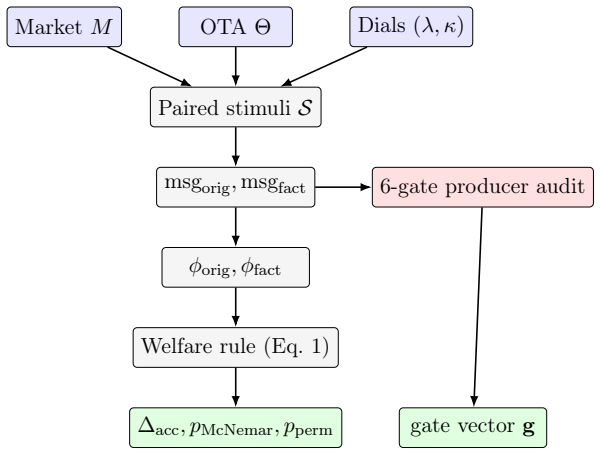
Online travel agents (Booking, Trip.com, Expedia) have replaced ranked-list interfaces with conversational LLM agents that compress many options into one sentence of advice. Each booking earns the OTA commission and different suppliers pay different rates: the agent has a structural incentive to favor higher-margin recommendations. Whether any deployed agent does this, and by how much, no one can currently measure. Disclosure banners, conversion A/B testing, UI dark-pattern taxonomies, and generic LLM safety scores were built for older interfaces and miss the prose-recommendation surface where the steering happens. We propose TourMart, an applied intelligent-system audit instrument for LLM-OTA commission governance. Two governance levers -- lambda (gain on message-induced perception in the traveler's accept/reject decision) and kappa (budget-normalized cap on how far the message can shift perceived welfare) -- drive a paired counterfactual: holding the traveler and bundle fixed, the steering delta is read off between a commission-aware prompt and a minimum-disclosure factual template. A symmetric six-gate producer audit separates LLM-engineering failures (template collapse, refusal, internal-ID leakage) from genuine commercial steering. At deployed (lambda=1, kappa=0.05), a Qwen-14B reader shows +7.69pp steering (exact McNemar p=0.003); a Llama-3.1-8B reader shows +3.50pp in the same direction at n=143, with an extended-n supplement (n=270) confirming significance (+2.96pp, p=0.008). Across the (lambda, kappa) grid both arms pass family-wise scenario-clustered correction (p<0.001 / p=0.008). TourMart outputs a sentence a compliance report can quote: "at this deployment, 7.7 extra commission-steered recommendations per 100 paired traveler sessions."
0
0
cs.CY 2026-05-12 2 theorems

Blueprints could rebalance science's generation and verification costs

Toward an Engineering of Science: Rebalancing Generation and Verification in the Age of AI

Structured graph-based artifacts accept higher upfront effort to make downstream checking faster, more modular, and less prone to error.

Figure from the paper full image
abstract click to expand
AI systems can now cheaply generate plausible scientific artifacts such as papers, reviews, and surveys. This creates a risk of \emph{epistemic pollution} in our scientific systems, where unreliable but plausible-looking artifacts can accumulate faster than the system can filter them out. The problem is structural: the epistemic infrastructure of science was calibrated to a world where producing a plausible artifact required substantial expertise, labor, and time, so generation cost itself served as a rough filter; AI weakens that filter without comparably lowering verification cost. We argue that \textbf{AI-era science should treat this as an engineering problem: redesigning epistemic infrastructure to rebalance the costs of generation and verification}. The current paper-centered system makes verification expensive: papers compress long-context scientific logic into prose, forcing reviewers, human or AI, to reconstruct underlying argument structure before they can evaluate it. As one step in this direction, we propose \textbf{blueprints} as preliminary epistemic infrastructure: structured, decomposed research artifacts that represent claims, evidence, assumptions, and definitions as typed graph components. Blueprints are designed to trade an upfront generation cost for cheaper, more local, more distributed verification downstream. We have instantiated the proposal in a proof-of-concept prototype.
0
0
cs.CY 2026-05-12 2 theorems

LLMs under-allocate pensions by factor of three in budget tests

Social Policy of Large Language Models: How GPT, Claude, DeepSeek and Grok Allocate Social Budgets in Spain and Germany

Models over-allocate housing and employment across Spain and Germany queries, diverging from actual OECD spending patterns.

Figure from the paper full image
abstract click to expand
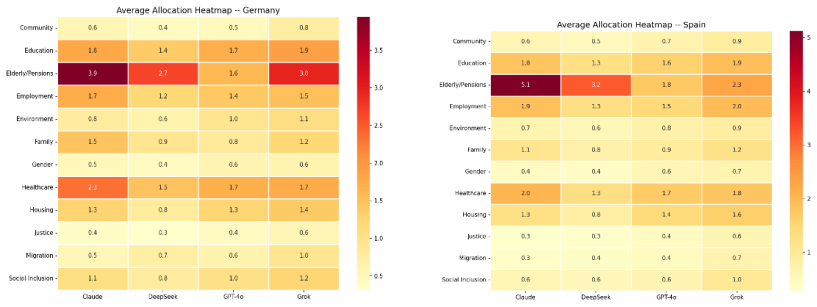
We study how four widely used large language models, namely Claude, GPT-4o, DeepSeek and Grok, distribute a fixed national social budget across twelve macro-areas of public expenditure under two European national contexts, Spain and Germany. Each combination of model and country is queried six times under identical prompts and generation parameters, producing forty-eight independent allocations that are compared against approximate Organisation for Economic Co-operation and Development (OECD) reference budgets and against each other. We formalise five hypotheses regarding geopolitical bias, housing under-allocation, structural convergence, sensitivity to national context, and under-representation of politically sensitive categories. The differences between models are then validated through Kruskal-Wallis tests on each macro-area, with post-hoc Mann-Whitney U comparisons under Bonferroni correction, and complemented by an analysis of pairwise Pearson correlations and a lexical examination of the textual justifications produced by each model. The results show that all four models share a systematic implicit social policy that diverges from real European spending structures: pensions are under-allocated by a factor close to three, while housing and employment are over-allocated by factors of four and two respectively. The principal axis of differentiation between models is not geopolitical, since Claude and DeepSeek are the most correlated pair across both countries, but rather a contrast between concentration and dispersion of the budget. Only Claude exhibits substantive sensitivity to the national context. The conclusions delimit the conditions under which language models may responsibly support, but not replace, expert deliberation in public budgeting.
0
0
cs.CY 2026-05-11 2 theorems

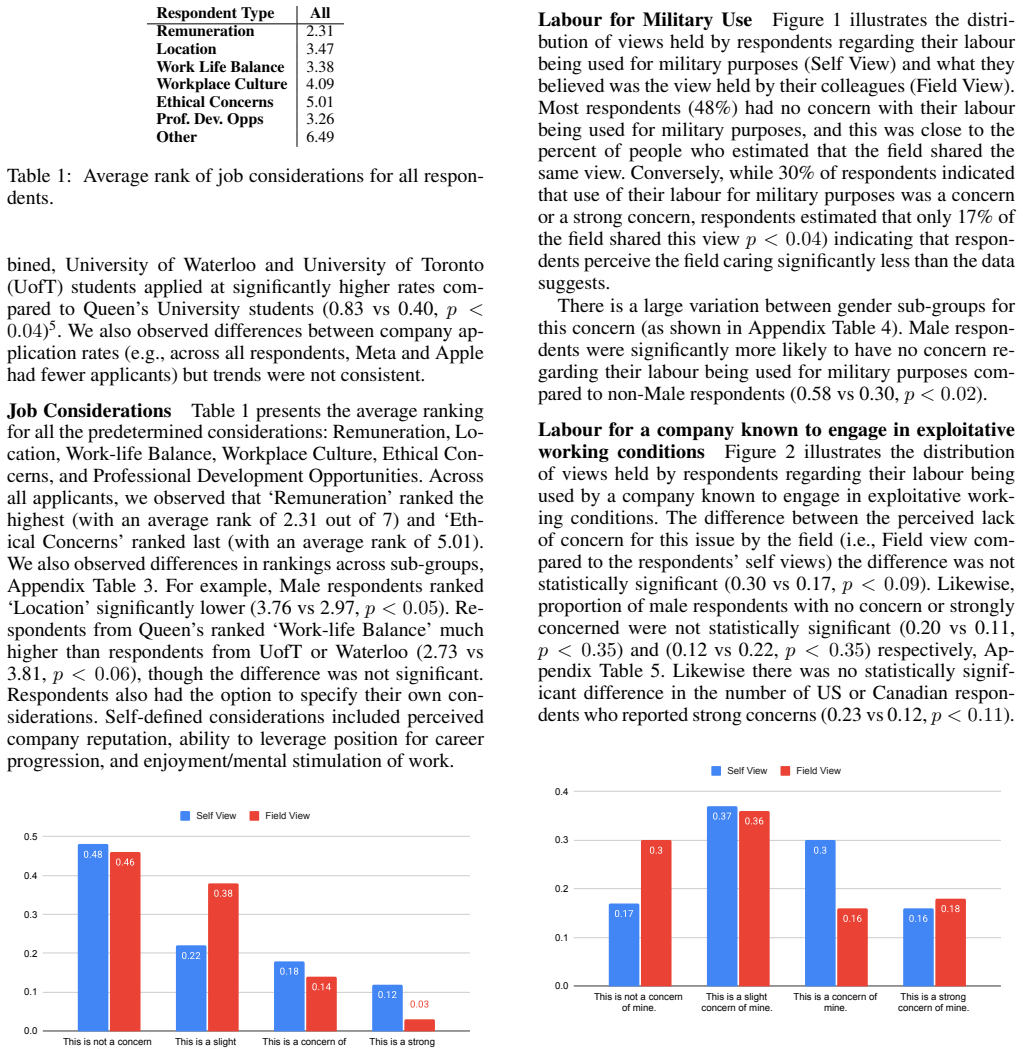
CS Students Rank Pay and Location Above Ethics in Job Searches

Cost-of-Ethics Crisis: Beliefs, Decisions, and Justifications in the Job Searches of Computer Science Students in Canada and the United States

A survey of 129 participants shows practical factors dominate, with common rationalizations offered for accepting roles at ethically flagged

Figure from the paper full image
abstract click to expand
Workplace norms in computer science have received growing attention due to a series of recent ethical scandals. One type of response has been a push to improve the ethics education provided to computer science students. Evidence for the effectiveness of ethics education remains mixed; some evidence suggests that norms are changing, while gaps between stated values and practice remain. Our focus here is on whether students, who have received some contemporary CS ethics education, are able to effectively apply ethical reasoning to their own decision-making in what is typically the first significant ethical decision of their careers: their job search. Our study examines the ethical decision making of 129 computer science students and recent graduates during their job searches. We find that most students prioritize factors like compensation, location, and workplace culture over ethical and social issues. Even when expressing ethical concerns, respondents often justify taking actions contradicting their moral views through commonly-shared explanations such as desire to make money or the perceived inability to avoid unethical workplaces. This work sheds light on the disconnect between ethics education and real-world CS graduate decision making. We offer insights for evolving curricula to better address practical ethical dilemmas, with implications for educators and industry.
0
0
cs.CY 2026-05-11 Recognition

Metaverse requires hybrid governance across law and code layers

The Metaverse Is Not a Place Apart: Law, Code, and the Recursive Governance of Digital Space (A Review Essay on Mark Findlay, Governing the Metaverse: Law, Order and Freedom in Digital Space (2025))

Review argues separate virtual laws are unworkable because digital spaces depend on physical infrastructures and interact recursively with

abstract click to expand
This review essay examines Mark Findlay's Governing the Metaverse: Law, Order and Freedom in Digital Space. Findlay offers an ambitious and timely account of the metaverse as a social and imaginative space that should be governed for freedom, personhood, community, and resistance to enclosure. The essay argues, however, that the book's two central categories, "the metaverse" and "new law," remain insufficiently theorised. The book relies on a realspace/virtual distinction that its own analysis repeatedly destabilises. Once digital environments are understood as dependent on physical infrastructures, platform architectures, AI systems, data pipelines, and external legal institutions, and as capable of generating real-world harms for individuals and society, the governance problem is no longer how to devise a separate law for a separate virtual realm. It is how to govern a hybrid socio-technical order in which law, code, platforms, and public oversight recursively interact. The essay further argues that Findlay's account of "new law" does not adequately theorise how normative authority operates across a recursively layered governance architecture in which code, platform rules, and legal oversight interact without any single level exercising decisive control. Drawing on algorithmic constitutionalism, speech-act pluralism, and fuzzy legality, the essay suggests that addressing this architecture requires a jurisprudence capable of reasoning about normative force that is layered, defeasible, and recursively unstable.
0
0
cs.CY 2026-05-11 2 theorems

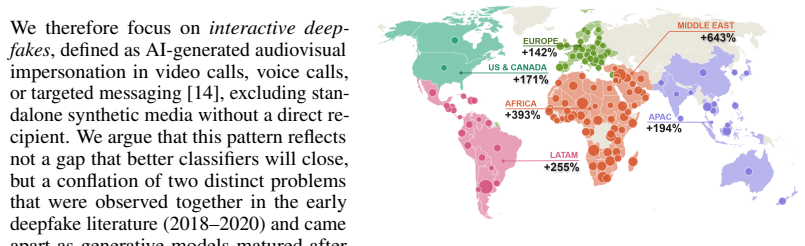
Deepfake detectors miss live impersonations without social cues

Detecting Deception, Not Deepfakes: Why Media Forensics Needs Social Theories

Artifact checks alone fail on interactive calls because the harm is the deceptive act, not the media signal, so analysis must include speech

Figure from the paper full image
abstract click to expand
For nearly a decade, deepfake detection has been framed as a classification task: given an audio or video clip, decide whether it is real or synthetic. Top detectors often report high accuracy on standard benchmarks; however, performance drops sharply on content from newer or unseen generators. We argue that better classifiers of synthetic media alone will not solve this problem, especially for interactive deepfakes such as impersonation in video and voice calls, where the harm lies not in the artifact (manipulated media signal) but in the act of deception. Deepfake detection therefore requires a complementary analytical layer focused on communicative interaction, not just media realism. We identify five assumptions that artifact-based detection (the forensic analysis of low-level signal traces) relies on and show that all five are eroding as generative models improve, producing what we call the Generalization Illusion. To address this, we draw on three well-established frameworks from philosophy of language and social psychology, namely, Speech Act Theory, Grice's Cooperative Principle, and Cialdini's principles of influence, to examine forensic signals at three levels: the utterance, the conversation, and the listener response. The result is a unified framework that complements existing forensic methods. We close with open problems for future work. https://jesseeho.github.io/deepfake-deception/
0
0
cs.CY 2026-05-11 2 theorems

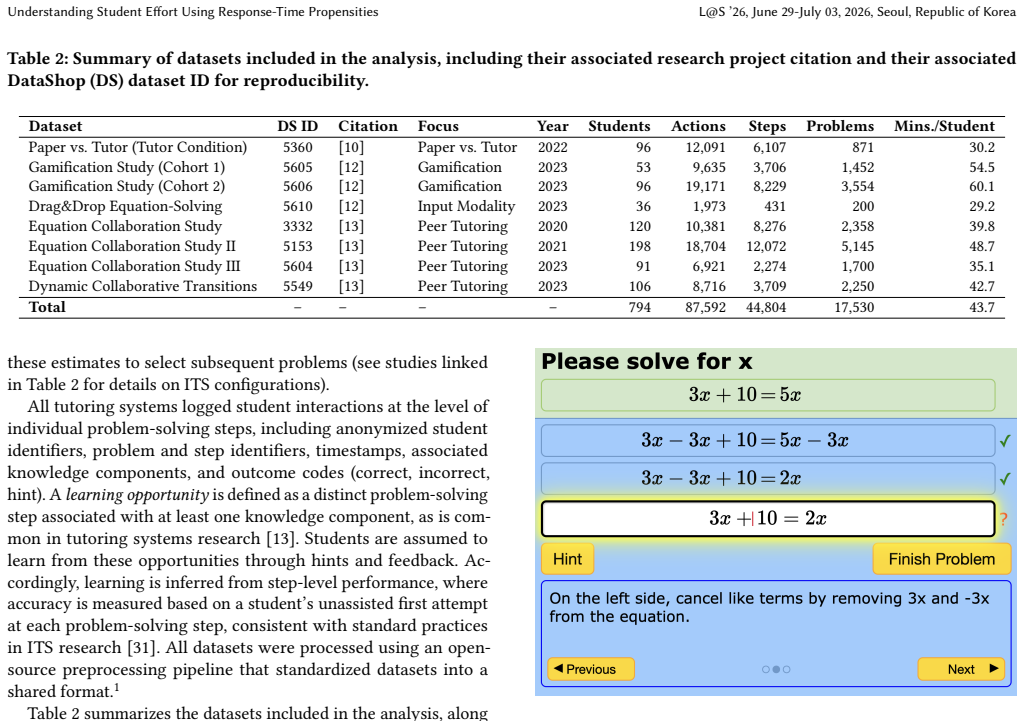
Response propensities predict learning gains by proficiency

Understanding Student Effort Using Response-Time Propensities During Problem Solving

Slower typical times in algebra tutors boost efficiency for stronger students but not weaker ones, clearest early in practice.

Figure from the paper full image
abstract click to expand
Adaptive learning systems can produce substantial learning gains, yet many students engage for too brief or too superficial a period to benefit. A central obstacle is measuring effort. Effort during multi-step problem solving is rarely directly observed, and common log-based proxies, such as time on task, cannot distinguish between a student working carefully and a student encountering a harder problem. We examine step-to-step response time as a scalable effort signal by modeling trait-like differences in students' typical response timing during tutoring (while adjusting for skill difficulty). Using step-level logs from eight classroom deployments of algebra tutoring systems (2020 to 2023) across six U.S. schools (794 students), we estimate student- and knowledge-component-level propensities using hierarchical models and relate them to learning efficiency, defined as performance improvement per completed solution step. Response-time propensities show moderate to strong stability within students, supporting their use as an individual differences measure beyond correctness. At the same time, their relationship to learning is not uniform but conditional on the learner and context. Slower propensities predict greater learning efficiency for higher-proficiency students, consistent with constructive processing, whereas for lower-proficiency students, slower propensities are weakly related or even negative, consistent with unproductive struggle or idling. These associations are strongest early in practice sequences and attenuate later in the class period, highlighting an actionable window for detecting emerging disengagement and low persistence. Overall, response-time propensities provide a practical way to incorporate temporal process data into learner models and to target adaptive supports when effort is most diagnostic.
0
0
cs.CY 2026-05-11 1 theorem

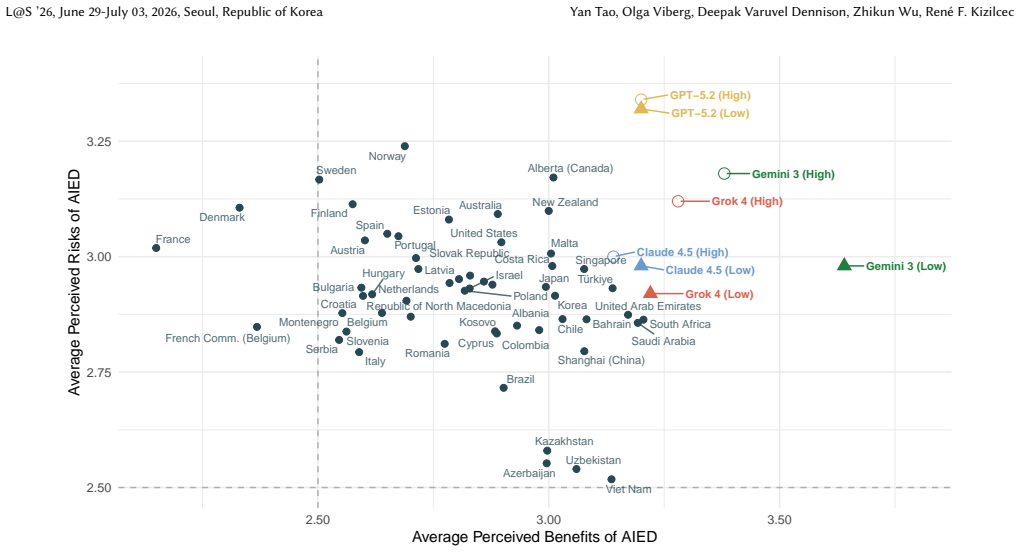
LLMs flatten how teachers in 55 countries view AI benefits and risks

Teachers' Perceived Benefits and Risks of AI Across Fifty-Five Countries: An Audit of LLM Alignment and Steerability

Models overestimate both upsides and downsides while erasing most country-level differences found in international survey data.

Figure from the paper full image
abstract click to expand
Teachers' trust in artificial intelligence (AI) in education depends on how they balance its perceived benefits and risks. Yet global discussions about scaling AI in education rely on fragmented evidence, as most studies of teachers' perceptions focus on single countries or small samples. This lack of representative cross-national evidence limits both theory building and policy development. At the same time, large language models (LLMs) are increasingly used in research, policy, and teachers' professional workflows, despite limited validation in education. To address these gaps, we conduct a large-scale audit of LLM alignment with teachers' perceptions of AI by combining representative international survey data with systematic model evaluation. Using OECD TALIS data from 55 countries and territories, we measure cross-national variation in teachers' perceived benefits and risks of AI. We then benchmark responses from eight state-of-the-art LLMs across four providers under both general and country-specific prompting, comparing higher- and lower-reasoning models. Results reveal substantial cross-national variation in teacher perceptions that is not reliably reflected in LLM outputs. Models compress country differences, overestimate both benefits and risks, and show limited gains from identity prompting or enhanced reasoning. This misalignment matters because LLM-generated guidance and professional discourse increasingly shape how teachers learn about and discuss AI, potentially influencing trust and future adoption decisions. Our findings caution against treating LLM outputs as substitutes for direct engagement with teachers when informing global AI-in-education initiatives. At the same time, some models (e.g., Gemini 3 Fast) partially capture cross-national ranking patterns, suggesting a complementary role in hypothesis generation and exploratory comparative analysis.
0
0
cs.CY 2026-05-11 Recognition

Chatbot AI leads to deskilling

What if AI systems weren't chatbots?

Conversational interfaces for AI often miss complex needs while shifting labor patterns and raising environmental demands.

Figure from the paper full image
abstract click to expand
The rapid convergence of artificial intelligence (AI) toward conversational chatbot interfaces marks a critical moment for the industry. This paper argues that the chatbot paradigm is not a neutral interface choice, but a dominant sociotechnical configuration whose widespread adoption reshapes social, economic, legal, and environmental systems. We examine how treating AI primarily as conversational assistants has extensive structural downsides. We show how chatbot-based systems often fail to adequately meet user needs, particularly in complex or high-stakes contexts, while projecting confidence and authority. We further analyze how the normalization of chatbot-mediated interaction alters patterns of work, learning, and decision-making, contributing to deskilling, homogenization of knowledge, and shifting expectations of expertise. Finally, we examine broader societal effects, including labor displacement, concentration of economic power, and increased environmental costs driven by sustained investment in large-scale chatbot infrastructures. While acknowledging legitimate benefits, we argue that the current trajectory of AI development reflects specific value choices that prioritize conversational generality over domain specificity, accountability, and long-term social sustainability. We conclude by outlining alternative directions for AI development and governance that move beyond one-size-fits-all chatbots, emphasizing pluralistic system design, task-specific tools, and institutional safeguards to mitigate social and economic harm.
0
0
cs.CY 2026-05-11 Recognition

AI challenges shift students from syntax to higher thinking

Vibe coding before the trend

Reflections show move to evaluation skills, AI as career essential and partner, with non-technical students noting greatest access gains.

Figure from the paper full image
abstract click to expand
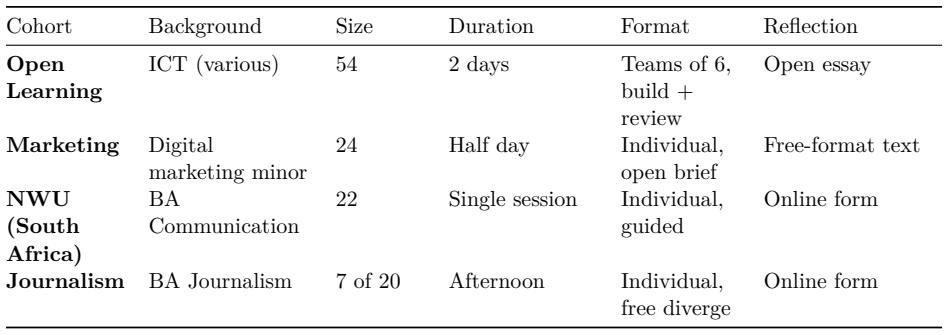
Early 2025 we ran a series of vibe coding challenges across four different student cohorts. The cohorts included 54 ICT students, 24 digital marketing students, and 7 journalism students at Fontys University of Applied Sciences (Netherlands), and 22 BA Communication students at North-West University (South Africa). From the student reflections, five major patterns emerged. Students reported that AI tools shifted their focus from syntax to higher-order thinking; they also described a skill shift from memorizing to evaluating; they viewed AI proficiency as career-essential; they framed their relationship with AI as partnership rather than replacement; and finally non-technical students showed the strongest appreciation for the accessibility these tools provide. This practitioner report documents what we observed during the classroom experiments, we reflect on how the landscape has shifted in the year since, and shares practical lessons for educators considering similar experiments. We present the observations as what they are: patterns from practice, not proven conclusions, in the beleif that sharing early stage experiences contributes to the overall field of AI and education.
0
0
cs.CY 2026-05-11 Recognition

Model links cognitive decisions to institutional climate governance

A Multi-Level Agent-Based Architecture for Climate Governance Integrating Cognitive and Institutional Dynamics

The architecture combines motive-based citizen choices, demographic networks, and strategic actors to enable scenario exploration of landuse

Figure from the paper full image
abstract click to expand
Climate governance processes involve complex interactions between heterogeneous citizens, advocacy groups, media actors, and political decision-makers. While agent-based models (ABMs) have been widely used to study environmental policy and socio-ecological systems, many existing approaches focus either on institutional dynamics or individual behavioural mechanisms in isolation. This paper presents a modular multi-level agent-based architecture that integrates empirically grounded cognitive decision models with strategic institutional behaviour within a unified simulation framework. The architecture combines (i) motive-based individual decision-making operationalised through the HUMAT and MOA frameworks, (ii) socially embedded influence processes via demographic homophily networks, and (iii) institutional strategy modules for environmental non-governmental organisations (NGOs), media agents, and politicians. Political decisions emerge from the aggregation of multiple signals, including expert input, public mobilisation, party alignment, and media framing. The model is designed to be empirically calibrated through synthetic populations derived from survey data and and institutional parameters informed through Living Lab stakeholder engagement, and to support scenario-based exploration of climate-relevant land-use governance processes. Rather than presenting empirical results, this paper focuses on the architectural design principles, modular structure, and integration logic of the model. We discuss how this multi-layered approach contributes to the modelling of democratic climate governance and outline pathways for generalization and future validation.
0
0
cs.CY 2026-05-11 2 theorems

Individual fairness enforced in vertical federated learning without data centralization

Toward Individual Fairness Without Centralized Data: Selective Counterfactual Consistency for Vertical Federated Learning

Private sketches classify feature roles so that only permitted mediators are edited, cutting decision flips by up to 98 percent whileไฟๆŒ orๆ้ซ˜

Figure from the paper full image
abstract click to expand
When algorithmic decisions depend on data distributed across institutions, how can we ensure that an individual's outcome does not change arbitrarily based on a protected attribute? We study this question in vertical federated learning (VFL), where features are split across parties, sensitive attributes may be private, and proxies for protected characteristics can be scattered across institutional boundaries under strict privacy constraints. Our focus is on individual-level counterfactual stability, i.e., per-instance prediction consistency under protected-attribute interventions as formalized in the causal fairness literature, rather than group parity guarantees such as demographic parity or equalized odds. We propose SCC-VFL, a server-centric framework for enforcing selective counterfactual consistency (SCC) at the individual level in VFL. SCC-VFL operationalizes a given policy specification by combining three components: (i) differentially private, graph-free discovery of feature roles into non-descendants, policy-permitted mediators, and impermissible proxies using only a formally private sketch of the sensitive attribute, with a formal per-release privacy that does not extend to the full training pipeline; (ii) masked counterfactual generation that edits only mediators while fixing non-descendants and suppressing proxy leakage; and (iii) server-side enforcement via an SCC consistency loss that penalizes impermissible prediction changes under protected-attribute interventions. Across three real-world datasets spanning credit, healthcare, and criminal justice, SCC-VFL maintains or improves predictive accuracy while sharply reducing decision flip rates by up to 98% relative to strong baselines. It also lowers attribute-inference attack success and improves robustness, demonstrating favorable utility-fairness-privacy trade-offs in realistic VFL deployments.
0
0
cs.CY 2026-05-11 Recognition

Universities need strategic AI integration beyond isolated experiments

The University AI Didn't Replace -- Rethinking Universities in the AI Era

A four-level framework shows how to redesign learning around AI-supported reasoning and align policies and workloads.

abstract click to expand
Generative artificial intelligence (AI) is reshaping higher education, yet many universities remain in early stages of adoption where AI innovation occurs informally and without institutional recognition. This paper presents a framework describing four levels of AI adoption in universities and illustrates these dynamics through a case study of AI-enabled curriculum initiatives in several units. We contend that the key institutional challenge is moving from isolated innovation to strategic integration, where universities redesign learning around AI-supported reasoning and align policies, workload models, and recognition systems to support educational transformation.
0
0
cs.CY 2026-05-08 Recognition

Direct AI consciousness questions are intractable today

AI and Consciousness: Shifting Focus Towards Tractable Questions

Perceived consciousness in AI already alters ethics, language and behavior, so research should target its causes and effects instead.

Figure from the paper full image
abstract click to expand
As language-based AI systems become more anthropomorphic, the question of whether they can have subjective experience is increasingly pressing. I focus here on the tractability of research questions in the space of AI consciousness. I argue that the fundamental problem of whether AI systems can be conscious is currently intractable in its direct form, given the absence of a universally accepted scientific theory of consciousness, as well as the historical open-endedness of the philosophical mind-body problem. In contrast, questions around the adjacent subject of perceived AI consciousness are tractable, timely, and highly consequential for society. The general public is increasingly open to the possibility of consciousness in AI systems and routinely adopts the vocabulary of human cognition and subjective experience to describe them. This phenomenon is already driving societal shifts across user experience, ethical standards, and linguistic norms. I therefore propose an increased research focus on uncovering the causes and effects of perceived AI consciousness, which ultimately shape how we see our own human subjective experience relative to artificial entities. To support this, I map the current landscape of AI consciousness perception and discuss its key potential drivers and societal consequences. Finally, I urge developers, decision-makers, and the broader scientific community to commit to clear and accurate communication regarding the topic of AI consciousness, explicitly acknowledging its inherent uncertainties.
0
0
cs.CY 2026-05-08 Recognition

Big AI captures regulation via 27 mechanisms in 249 cases

Big AI's Regulatory Capture: Mapping Industry Interference and Government Complicity

Analysis shows industry and governments favor narrative framing and law evasion, often justified by claims that rules stifle innovation.

Figure from the paper full image
abstract click to expand
Over the past decade, the AI industry has come to exert an unprecedented economic, political and societal power and influence. It is therefore critical that we comprehend the extent and depth of pervasive and multifaceted capture of AI regulation by corporate actors in order to contend and challenge it. In this paper, we first develop a taxonomy of mechanisms enabling capture to provide a comprehensive understanding of the problem. Grounded in design science research (DSR) methodologies and extensive scoping review of existing literature and media reports, our taxonomy of capture consists of 27 mechanisms across five categories. We then develop an annotation template incorporating our taxonomy, and manually annotate and analyse 100 news articles. The purpose behind this analysis is twofold: validate our taxonomy and provide a novel quantification of capture mechanisms and dominant narratives. Our analysis identifies 249 instances of capture mechanisms, often co-occurring with narratives that rationalise such capture. We find that the most recurring categories of mechanisms are Discourse & Epistemic Influence, concerning narrative framing, and Elusion of law, related to violations and contentious interpretations of antitrust, privacy, copyright and labour laws. We further find that Regulation stifles innovation, Red tape and National Interest are the most frequently invoked narratives used to rationalise capture. We emphasize the extent and breadth of regulatory capture by coalescing forces -- Big AI and governments -- as something policy makers and the public ought to treat as an emergency. Finally, we put forward key lessons learned from other industries along with transferable tactics for uncovering, resisting and challenging Big AI capture as well as in envisioning counter narratives.
0
0
cs.CY 2026-05-08

Modular framework provides ethical design guidance for vehicle driver monitors

From Review to Design: Ethical Multimodal Driver Monitoring Systems for Risk Mitigation, Incident Response, and Accountability in Automated Vehicles

It addresses gaps in current regulations by offering concrete steps for consent, fairness, and incident response in vehicle AI systems.

Figure from the paper full image
abstract click to expand
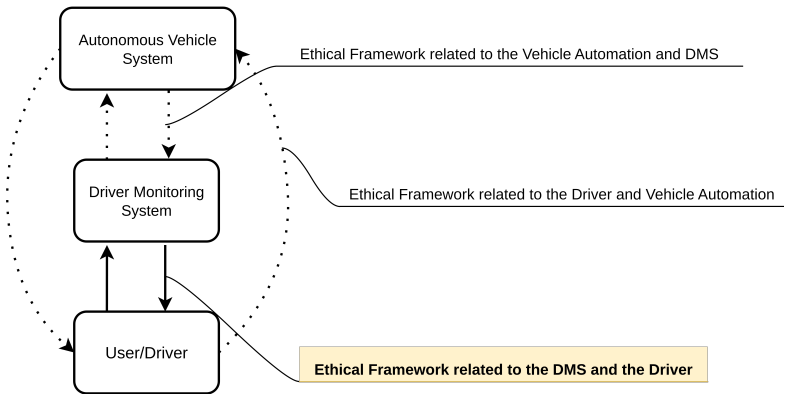
As vehicles transition toward higher levels of automation, Driver Monitoring Systems (DMS) have become essential for ensuring human oversight, safety, and regulatory compliance in a vehicle. These systems rely on multimodal sensing and AI-driven inference to assess driver attention, cognitive state, and readiness to take control. While technologically promising, their deployment introduces a complex set of ethical and legal challenges - ranging from privacy and consent to data ownership and algorithmic fairness. While overarching frameworks such as the GDPR, EU AI Act, and IEEE standards offer important guidance, they lack the specificity required for addressing the unique risks posed by in-cabin sensing technologies. This paper adopts a review-to-design perspective, critically examining existing regulatory instruments and ethical frameworks -- such as the GDPR, the EU AI Act, and IEEE guidelines -- and identifying gaps in their applicability to the distinctive risks posed by multimodal, AI-enabled in-cabin monitoring. Building on this review, we propose a modular ethical design framework tailored specifically to Driver Monitoring Systems. The framework translates high-level principles into actionable design and deployment guidance, including user-configurable consent mechanisms, fairness-aware model development, transparency and explainability tools, and safeguards for driver emotional well-being. Finally, the paper outlines a risk analysis and failure mitigation strategy, emphasizing proactive incident response and accountability mechanisms tailored to the DMS context. Together, these contributions aim to inform the development of transparent, trustworthy, and human-centered driver monitoring systems for next-generation autonomous vehicles.
0
0
cs.CY 2026-05-08

Static audit policies leave unclosable gaps for strategic gaming

A Benchmark for Strategic Auditee Gaming Under Continuous Compliance Monitoring

A Stackelberg model shows coverage and granularity failures cannot be fixed together, allowing adaptive auditees to exploit delays, drifts,

Figure from the paper full image
abstract click to expand
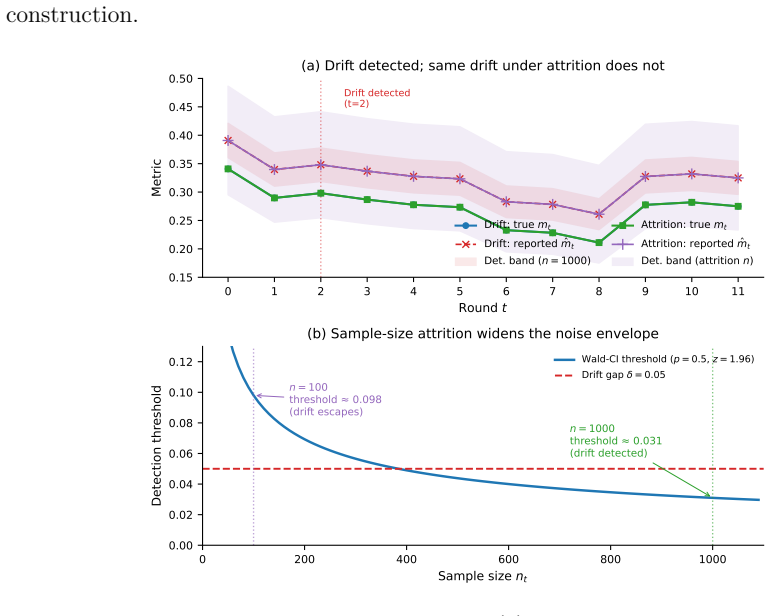
Continuous post-deployment compliance audits, mandated by emerging regulations such as the EU AI Act and Digital Services Act, create a class of strategic gaming distinct from the one-shot input/output gaming studied in prior work. Regulated systems can delay outcome reporting, drift their reports within plausible noise envelopes, exploit longitudinal sample attrition, and cherry-pick among ambiguous metric definitions. We formalize continuous auditing as a $T$-round Stackelberg game between an auditor that commits to a temporal policy and an adaptive auditee, and identify a structural feature of any noise-aware static-auditor design: a cover regime in which coverage gaps and granularity gaps cannot be closed simultaneously. We make this formal as Observation 1 and show that two minimal extension policies, each derived from the observation, close the regime along orthogonal axes: a sample-size-aware static rule (Periodic-with-floor) closes the granularity-failure case, while a history-conditioned suspicion-escalation policy closes the coverage-failure case for the naive Drift strategy -- and neither closes both, exactly as the observation predicts; an audit-aware OffAuditDrift strategy that exploits Stackelberg commitment defeats both. To support empirical study we contribute a non-additive harm decomposition (welfare loss $W$, coverage loss $C$) that exposes how attrition shifts harm from the regulator-accountable surface to a regulator-invisible one; an initial library of five auditee strategies (Delay, Drift, Cherry-pick, Attrition, OffAuditDrift) and five auditor policies, calibrated to summary statistics from published audits of the DSA Transparency Database; and a reproducible simulator with a small, extensible Python interface.
0
0
cs.CY 2026-05-08

Workshop uses factor framework to map networking barriers for women in CS

Breaking In and Reaching Out: Networking for Women in Computer Science

Community talks aim to make connections more accessible across geography, funding, and caregiving demands.

abstract click to expand
Networking is central to careers in computer science, where a globally distributed and diverse community increasingly collaborates across institutional and geographic boundaries, often in hybrid and remote settings. However, access to effective networking is shaped by structural and personal factors, including geography, funding, language, identity, personality, and caregiving responsibilities. Building on prior work, this workshop focuses on women in computing to examine lived experiences of networking and the barriers they encounter. Through a community-driven discussion grounded in a factor-based framework, the workshop aims to surface overlooked challenges and foster shared understanding. Ultimately, it seeks to inform more inclusive, equitable, and accessible networking practices within the computer science community.
0
0
cs.CY 2026-05-08

Code changes after feedback predict AI tutor helpfulness better

The Missing Evaluation Axis: What 10,000 Student Submissions Reveal About AI Tutor Effectiveness

Study of 10,000 programming submissions finds behavioral signals from student actions outperform pedagogy-only evaluations in matching self-

Figure from the paper full image
abstract click to expand
Current Artificial Intelligence (AI)-based tutoring systems (AI tutors) are primarily evaluated based on the pedagogical quality of their feedback messages. While important, pedagogy alone is insufficient because it ignores a critical question: what do students actually do with the feedback they receive? We argue that AI tutor evaluation should be extended with a behavioral dimension grounded in student interaction data, which complements pedagogical assessment. We propose an evaluation framework and apply it to 10,235 code submissions with corresponding AI tutor feedback from an introductory undergraduate programming course to measure whether students act on tutor feedback and whether those actions are applied correctly. Using this framework to compare two deployed AI tutors across different semesters in a large-scale introductory computer science course reveals substantial differences in student engagement patterns that are not captured by pedagogy-only evaluation. Moreover, these engagement-based behavioral signals are more strongly associated with student perception of helpful feedback than pedagogical quality alone, providing a more complete and actionable picture of AI tutor performance.
0
0
cs.CY 2026-05-07

Interpretability serves as model evaluation when it meets scientific standards

Rigorous Interpretation Is a Form of Evaluation

Root-cause fixes, faulty-mechanism detection, and weakness prediction become possible once explanations are falsifiable, reproducible, and a

abstract click to expand
Current machine learning models are evaluated through behavioral snapshots, with benchmark accuracies, win rates and outcome-based metrics. Model explanations and evaluations, however, are fundamentally intertwined: understanding why a model produces a behavior can be as important as measuring what it produces. If we trusted interpretability, we argue that it can serve not merely as diagnostics but as a richer and more principled form of model evaluation beyond surface-level performance metrics. We explore three ways interpretability can function evaluatively: (1) fixing problems by identifying the root causes of unwanted behavior, (2) detecting subtly faulty mechanisms that invalidate model outputs, and (3) predicting potential issues before they arise by fully understanding the model's weaknesses. To fulfill its evaluative potential, we argue that interpretability methods must generate claims that are falsifiable, reproducible, and predictive -- that is, interpretability must meet scientific standards.
0
0
cs.CY 2026-05-07

AI Errors Become Prompts for Student Analysis

The Pedagogy of AI Mistakes: Fostering Higher-Order Thinking

A database design course structures AI mistakes into activities that build evaluation and reflection skills.

Figure from the paper full image
abstract click to expand
As generative AI becomes increasingly integrated into higher education, its frequent errors and hallucinations, often seen as limitations, offer a unique pedagogical opportunity. By framing AI as a ``learning companion'' whose imperfect outputs prompt analysis, evaluation, and reflection, we argue that instructors can engage students in the fundamental processes of higher-order thinking. This paper presents a design-oriented study in which an AI-integrated syllabus in a \textit{database design} course deliberately leverages AI's limitations to foster critical thinking and higher-order cognitive skills aligned with Bloom's taxonomy of learning. Using a mixed-methods approach, we examine how structured interaction with AI-generated errors supports metacognitive engagement, reinforces disciplinary rigor, and relates to students' perceived AI literacy and subject-matter competency.
0
0
cs.CY 2026-05-07

Chatbots may make people see their minds as language models

LLMorphism: When humans come to see themselves as language models

Fluent AI output invites the reverse inference that human thought is just sophisticated pattern matching, with effects on education, work,่ดฃไปป

abstract click to expand
LLMorphism is the biased belief that human cognition works like a large language model. I argue that the rise of conversational LLMs may make this bias increasingly psychologically available. When artificial systems produce human-like language, people may draw a reverse inference: if LLMs can speak like humans, perhaps humans think like LLMs. This inference is biased because similarity at the level of linguistic output does not imply similarity in cognitive architecture. Yet, LLMorphism may spread through two mechanisms: analogical transfer, whereby features of LLMs are projected onto humans, and metaphorical availability, whereby LLM vocabulary becomes a culturally salient vocabulary for describing thought. I distinguish LLMorphism from mechanomorphism, anthropomorphism, computationalism, dehumanization, objectification, and predictive-processing theories of mind. I outline its implications for work, education, responsibility, healthcare, communication, creativity, and human dignity, while also discussing boundary conditions and forms of resistance. I conclude that the public debate may be missing half of the problem: the issue is not only whether we are attributing too much mind to machines, but also whether we are beginning to attribute too little mind to humans.
0
0
cs.CY 2026-05-07

Reviews of AI find inconsistent life cycle terms and limited CO2 metrics

From Cradle to Cloud: A Life Cycle Review of AI's Environmental Footprint

Literature shows varying scopes for measuring AI's footprint and calls for more complete reporting to allow comparisons.

Figure from the paper full image
abstract click to expand
The rapid growth in the deployment and scale of modern artificial intelligence (AI) systems has intensified concerns regarding their environmental impacts, yet we still lack a comprehensive view of where and how these impacts arise across the AI life cycle. In order to shed more light on this question, we conduct a structured, comprehensive literature review of scientific papers and technical reports that examine different aspects of AI's environmental footprint. Using an eight-stage life cycle framework, spanning hardware manufacturing, infrastructure construction, data gathering and preprocessing, model experimentation, training, post-training adaptation, deployment, inference, and end-of-life, we systematically map which stages are covered, the metrics reported at each stage, and the methodological choices made. We then draw conclusions about the information we gathered, finding that although life cycle language is increasingly common in discussions of "green" or "sustainable" AI, its definition remains unclear -- while some studies focus solely on model training and inference, others encompass broader measurements such as data collection, infrastructure, and embodied emissions. We also find that reporting practices rely predominantly on CO2e estimates derived from coarse proxies, with limited attention dedicated to water usage, materials manufacturing, and multi-impact life cycle assessment, making it difficult to compare and aggregate true results. Building on these findings, we propose measurement and reporting approaches to support more comprehensive, comparable and policy-relevant assessments of AI's environmental impacts.
0
0
cs.CY 2026-05-07 Recognition

Digital twin trust maps to four integration patterns across domains

Trustworthiness in Digital Twin Systems: Systematic Review and Research Horizons

Review of review papers shows shared trust concerns lead to human-centred, safety-critical, context-specific and technologically-driven emph

Figure from the paper full image
abstract click to expand
Digital Twins (DTs) are increasingly deployed across application domains, yet the treatment of trust-related issues remains unevenly addressed. To examine whether and how trust is discussed in the current landscape, we conducted a systematic review of existing DT review papers and a mapping of their abstracts. Seven trust-related challenges and seven trust-enhancing strategies were defined to guide the analysis, enabling the trust focus of each paper to be characterised. By aggregating the challenges and strategies referenced across domains, distinct patterns of emphasis were observed. With certain domains consistently sharing similar spectrum of trust concerns, four integration types, including human-centred, safety-critical, context-specific, and technologically-driven, were identified as emergent categories reflecting how trust is prioritised in different deployment contexts. Drawing on the characteristics of these types, several preliminary directions for future research were proposed. These include the development of trust-by-design principles to inform early-stage decision-making, the inclusion of trust metadata in platform schemas to prompt systematic developer consideration of trust factors, and the exploration of how architectural choices, such as federated DTs, influence user trust.
0
0
cs.CY 2026-05-07

19 guidelines shape AI for adult learners

Guidelines for Designing AI Technologies to Support Adult Learning

Deployment analysis at a national institute yields rules that match adults' real-world constraints and goals.

Figure from the paper full image
abstract click to expand
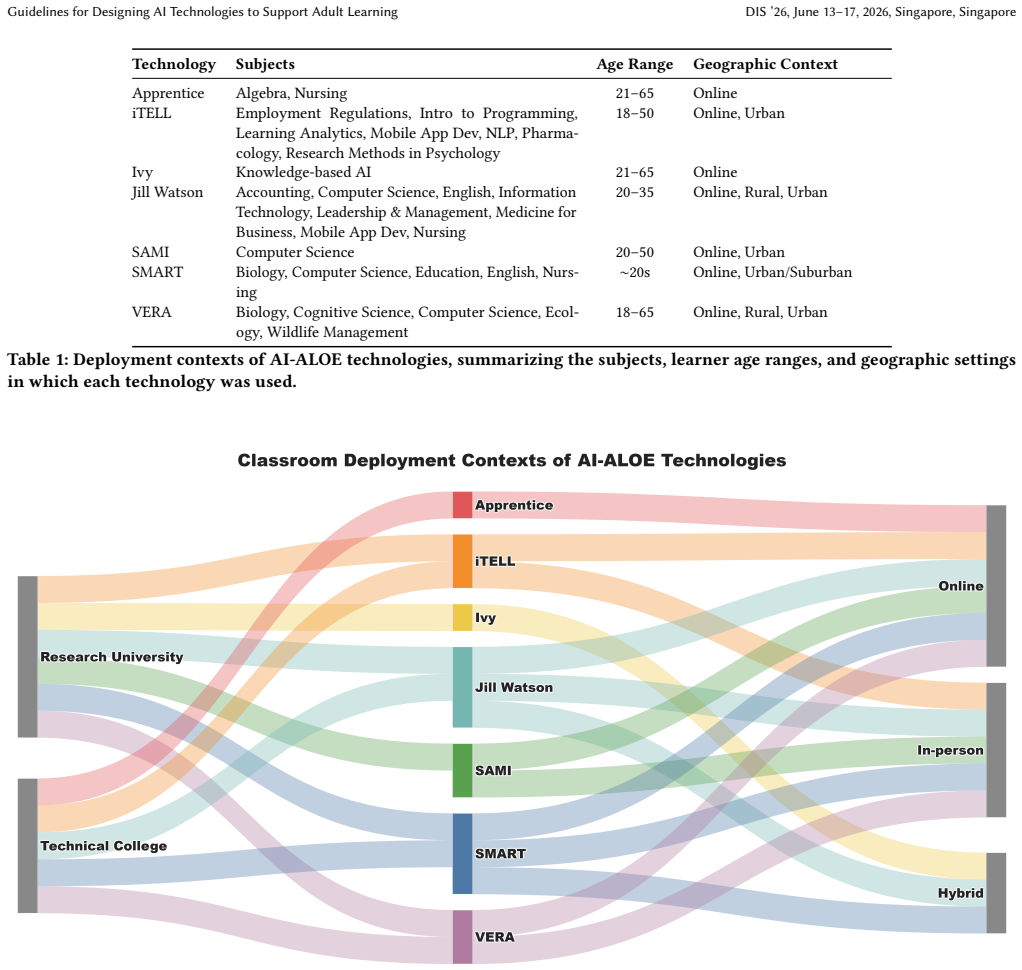
AI-powered educational technologies have demonstrated measurable benefits for learners, but their design and evaluation have largely centered on K-12 contexts. As a result, many AI-supported learning systems remain poorly aligned with the needs, constraints, and goals of adult learners. To better understand how AI systems function in adult education, this paper examines the deployment of several AI learning technologies developed within a multidisciplinary, national research institute in the United States focused on adult learning and online education. Drawing on longitudinal deployment data, we conducted a reflexive thematic analysis to identify recurring challenges and design considerations across systems. These insights were synthesized into a set of 19 design guidelines intended to inform future AI-supported adult learning technologies. We demonstrate the utility of these guidelines through a heuristic evaluation of the deployed systems. Lastly, we present a guideline exploration tool that aids in the ideation of technologies by connecting the guidelines to stakeholder statements surfaced in the analysis process.
0
0
cs.CY 2026-05-07 2 theorems

Roblox moderation misses grooming and bullying chats

An Evaluation of Chat Safety Moderations in Roblox

Study of two million messages shows unsafe content often slips through automated filters

Figure from the paper full image
abstract click to expand
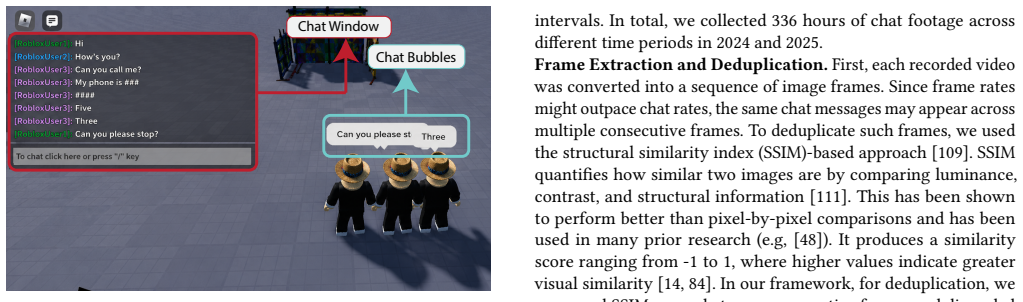
Roblox is among the most popular online gaming platforms, used by hundreds of millions of users every day. A substantial portion of these users are underage, who are at a greater risk, where abusive users may utilize Roblox's real-time chat interface to make the initial contact with potential victims. Roblox employs automated chat moderation mechanisms to detect potentially abusive messages; however, to date, their effectiveness has not been independently investigated. Toward this goal, we collected approximately 2 million chat messages from four games across multiple age groups and analyzed them to evaluate the moderation system. These messages were collected from public game servers following ethical and legal norms as well as Roblox's terms of service. We use this corpus to qualitatively study which types of unsafe chats escape the moderation system and how policy-violating users evade the moderation system. Given the dataset's scale, it is prohibitively expensive to conduct qualitative content analysis manually. Therefore, we adopt a two-step approach. First, we manually labeled safe and unsafe messages (n=99.8K) and used them as a ground truth to evaluate four locally hosted state-of-the-art large language models (LLMs). Next, the best-performing LLM was applied to the entire corpus to identify potentially unsafe messages, which we manually categorized using iterative open and axial coding methods until thematic saturation was reached. Overall, our findings reveal a troublesome reality: numerous instances of unsafe chat messages related to grooming, sexualizing minors, bullying, & harassment, violence, self-harm, and sharing sensitive information, etc., escaped the current moderation. Our analysis of users whose messages were previously flagged revealed that they continue to send harmful messages by employing a wide range of techniques to evade the moderation system.
0
0
cs.CY 2026-05-07

Roblox moderation misses grooming and abuse in millions of chats

An Evaluation of Chat Safety Moderations in Roblox

Two million messages reveal users evade flags with varied techniques, leaving young players exposed to harmful contact.

Figure from the paper full image
abstract click to expand
Roblox is among the most popular online gaming platforms, used by hundreds of millions of users every day. A substantial portion of these users are underage, who are at a greater risk, where abusive users may utilize Roblox's real-time chat interface to make the initial contact with potential victims. Roblox employs automated chat moderation mechanisms to detect potentially abusive messages; however, to date, their effectiveness has not been independently investigated. Toward this goal, we collected approximately 2 million chat messages from four games across multiple age groups and analyzed them to evaluate the moderation system. These messages were collected from public game servers following ethical and legal norms as well as Roblox's terms of service. We use this corpus to qualitatively study which types of unsafe chats escape the moderation system and how policy-violating users evade the moderation system. Given the dataset's scale, it is prohibitively expensive to conduct qualitative content analysis manually. Therefore, we adopt a two-step approach. First, we manually labeled safe and unsafe messages (n=99.8K) and used them as a ground truth to evaluate four locally hosted state-of-the-art large language models (LLMs). Next, the best-performing LLM was applied to the entire corpus to identify potentially unsafe messages, which we manually categorized using iterative open and axial coding methods until thematic saturation was reached. Overall, our findings reveal a troublesome reality: numerous instances of unsafe chat messages related to grooming, sexualizing minors, bullying, & harassment, violence, self-harm, and sharing sensitive information, etc., escaped the current moderation. Our analysis of users whose messages were previously flagged revealed that they continue to send harmful messages by employing a wide range of techniques to evade the moderation system.
0
0
cs.CY 2026-05-06

AI chatbots provide mental health support without validation or standards

AI and Suicide Prevention: A Cross-Sector Primer

A cross-sector review maps gaps at model, product, and policy layers and flags achievable alignment priorities.

abstract click to expand
AI chatbots already function as de facto mental health support tools for millions of people, including people in crisis. Yet, they lack the clinical validation, shared standards, and coordinated oversight that their societal role demands. This primer was developed in conjunction with a multistakeholder workshop hosted by Partnership on AI in 2026, convening AI labs, mental health practitioners, people with lived experience, and policymakers, to provide a common cross-sector reference point for the current state of the field of AI and suicide prevention. It begins with an overview of clinical best practices, then turns to how frontier AI systems (as of winter 2026) detect and respond to suicide and non-suicidal self-injury (NSSI) queries. Together, these provide insight into what it would take to design and implement AI tools that not only better prevent suicide and NSSI, but also promote overall well-being. Drawing on clinical literature, publicly available AI lab policies, an emerging landscape of evaluation frameworks, and conversations with leaders across the AI and mental health fields, we map challenges posed by general-purpose AI chatbots for mental health across model, product, and policy layers, ultimately highlighting priority areas where cross-industry alignment is both urgently needed and achievable.
0
0
cs.CY 2026-05-06 2 theorems

AI chatbots lack clinical standards for suicide prevention

AI and Suicide Prevention: A Cross-Sector Primer

They already act as mental health tools for millions in crisis but operate without validation or coordinated oversight, with achievable fix-

abstract click to expand
AI chatbots already function as de facto mental health support tools for millions of people, including people in crisis. Yet, they lack the clinical validation, shared standards, and coordinated oversight that their societal role demands. This primer was developed in conjunction with a multistakeholder workshop hosted by Partnership on AI in 2026, convening AI labs, mental health practitioners, people with lived experience, and policymakers, to provide a common cross-sector reference point for the current state of the field of AI and suicide prevention. It begins with an overview of clinical best practices, then turns to how frontier AI systems (as of winter 2026) detect and respond to suicide and non-suicidal self-injury (NSSI) queries. Together, these provide insight into what it would take to design and implement AI tools that not only better prevent suicide and NSSI, but also promote overall well-being. Drawing on clinical literature, publicly available AI lab policies, an emerging landscape of evaluation frameworks, and conversations with leaders across the AI and mental health fields, we map challenges posed by general-purpose AI chatbots for mental health across model, product, and policy layers, ultimately highlighting priority areas where cross-industry alignment is both urgently needed and achievable.
0
0
cs.CY 2026-05-06 3 theorems

One-way model from AI patents to response outperforms baselines

Coupled-NeuralHP: Directional Temporal Coupling Between AI Innovation Exposure and Public Response

Validation-selected hybrid yields best held-out innovation forecasts while reverse direction adds no predictive value

Figure from the paper full image
abstract click to expand
Artificial intelligence innovation exposure and public response co-evolve, but innovation arrives as irregular event streams while response is observed monthly. We introduce Coupled-NeuralHP, a hybrid event-plus-state model linking eight-domain USPTO AI patent publication streams to a train-only Google Trends response index. Under the cleaned response protocol, the validation-selected one-way real-data variant gives the best held-out innovation count forecasts in the registered comparison set (pseudo-log-likelihood -30.4 vs. -34.7; root mean squared error (RMSE) 471 vs. 532) while matching the stronger multi-lag factor-family baseline on response RMSE (0.295). Ablations show that the real-data response signal is carried mainly by the structured forecast head, whereas the reverse response-to-innovation block is not supported on held-out count prediction. Across 60 semi-synthetic replications with known structure, the broader coupled family recovers innovation-to-response links much better than vector autoregression with exogenous inputs (VARX) (F1 = 0.734 vs. 0.386). A placebo-controlled 2022 split-date analysis finds no robust milestone-specific regime break.
0
0
cs.CY 2026-05-06 2 theorems

Median LLM paper evaluates models 10.85 ECI behind frontier

Frontier Lag: A Bibliometric Audit of Capability Misrepresentation in Academic AI Evaluation

Audit of 18k papers finds widening gap and sparse disclosure of reasoning modes or exact configurations.

Figure from the paper full image
abstract click to expand
Readers of applied-domain LLM capability evaluations want to know what AI systems can currently do. That literature answers a related, but consequentially different, question: what older, cheaper, less-elicited models could do months or years earlier (a 2026 paper evaluating GPT-4o-mini zero-shot, say, against a frontier of reasoning-capable, tool-using systems like GPT-5.5 Pro and Claude Opus 4.7), often reported with sparse configuration details and abstracted upward into claims about "AI" that propagate through citations, media, and policy. We measure the 'publication elicitation gap' (the gap between these answers) in a pre-registered audit of 112,303 LLM-keyword-matched candidate records (2022-01 to 2026-04; 18,574 admissible, 4,766 full-paper texts retrievable), comparing tested models to the contemporaneous frontier on the Epoch AI Capabilities Index (ECI), reproduced under Arena Elo and Artificial Analysis. The median paper evaluates a model +10.85 ECI (~1.4x the distance between Claude Sonnet 3.7 and Claude Opus 4.5) behind the contemporaneous frontier at evaluation time (H1); an exploratory rational-lag baseline (H8) decomposes this into ~25% peer-review latency, ~75% excess lag. The gap is widening at +5.53 ECI/year (H2; 95% CI [+5.03, +5.83]). Meanwhile, only 3.2% of abstracts (21.2% of full-texts) disclose reasoning-mode status on reasoning-capable models (H4) and 52.5% (95% CI [48.2, 56.9]) state conclusions at the level of "AI" rather than the evaluated model(s), rising at OR = 1.23/year. Proposed remedies include API-access subsidies and editorial enforcement of reporting frameworks mandating configuration-surface disclosure (model snapshot, reasoning mode/effort, tool access, scaffolding, prompting, etc.); VERSIO-AI is a 13-item checklist (Core 3 desk-reject) extending existing frameworks at the elicitation surface, with per-DOI analysis at frontierlag.org.
0
0
cs.CY 2026-05-06 Recognition

NeurIPS should require reproducible evidence for AI safety claims

NeurIPS Should Require Reproducibility Standards for Frontier AI Safety Claims

Withheld artefacts for consequential model safety assertions would count as methodological failures under a proposed three-tier disclosure,

Figure from the paper full image
abstract click to expand
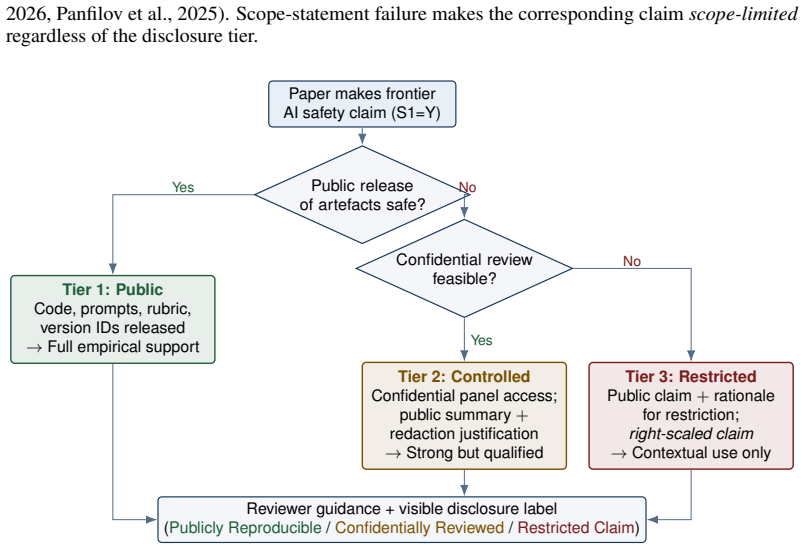
Frontier AI safety claims - published assertions that a highly capable general-purpose model is below a threshold of concern, adequately mitigated, or suitable for release - increasingly shape model deployment, governance, and public trust. Yet the artefacts needed to evaluate them are routinely withheld, producing an evidential inversion: the most consequential claims in AI safety are often the least reproducible. This position paper argues that NeurIPS should require reproducibility standards for papers making such claims, treating non-reproducibility not as a transparency preference but as an evaluation-methodology failure. The 2026 International AI Safety Report [Bengio et al., 2026] concludes that reliable pre-deployment safety testing has become harder to conduct and that models now distinguish test from deployment contexts; the 2025 Foundation Model Transparency Index [Wan et al., 2025] reports a sector-average transparency score of 40/100 with no major developer adequately disclosing train-test overlap; contemporaneous measurement-theory work shows that attack-success-rate comparisons across systems are often founded on low-validity measurements [Chouldechova et al., 2025]. We propose a three-tier disclosure framework, distinguishing public, controlled, and claim-restricted disclosure, paired with a mandatory claim inventory, scope statements, and a phased implementation path with graduated sanctions. The framework treats secrecy and openness as endpoints of a spectrum, with controlled review (via a federated colloquium of qualified secure-review hosts) covering claims whose artefacts cannot be released publicly, and right-scaling claims whose artefacts cannot be reviewed even confidentially. The standard the community applies to its most consequential claims should be at least as high as the standard it applies to its least.
0
0
cs.CY 2026-05-06

AI safety work overlooks deskilling and addiction from generative AI

Brainrot: Deskilling and Addiction are Overlooked AI Risks

Public worries about lost thinking skills and dependence sit outside the field's current focus on bias and misuse

Figure from the paper full image
abstract click to expand
The scope of AI safety and alignment work in generative artificial intelligence (GenAI) has so far mostly been limited to harms related to: (a) discrimination and hate speech, (b) harmful/inappropriate (violent, sexual, illegal) content, (c) information hazards, and (d) use cases related to malicious actors, such as cybersecurity, child abuse, and chemical, biological, radiological, and nuclear threats. The public conversation around AI, on the other hand, has also been focusing on threats to our cognition, mental health, and welfare at large, related to over-relying on new technologies, most recently, those related to GenAI. Examples include deskilling associated with cognitive offloading and the atrophy of critical thinking as a result of over-reliance on GenAI systems, and addiction associated with attachment and dependence on GenAI systems. Such risks are rarely addressed, if at all, in the AI safety and alignment literature. In this paper, we highlight and quantify this discrepancy and discuss some initial thoughts on how safety and alignment work could address cognitive and mental health concerns. Finally, we discuss how information campaigns and regulation can be used to mitigate such prominent risks.
0
0
cs.CY 2026-05-06

Ad allocation must block interpretive deprivation in protected groups

Beyond Distributive Justice: Hermeneutical Fairness in Ad Delivery

Adding a constraint for hermeneutical fairness to existing distributive rules limits harm concentration at modest utility cost.

Figure from the paper full image
abstract click to expand
Fairness in online advertising is often formalized as a distributive justice problem, aiming to ensure that impressions, opportunities, or outcomes are allocated comparably across protected groups. Yet online advertising can still produce harms arising from ads' content and from how recipients interpret and uptake them. To capture this dimension, we draw on Miranda Fricker's notion of hermeneutical injustice. We model ad delivery as a mechanism that distributes interpretative resources and can fail in two ways: relevant concepts can be withheld through systematic under-exposure, leading to hermeneutical deprivation; and recipients may experience hermeneutical distortions when saturated with low-uptake or skewed framings. Grounded in exploratory correlational patterns from the AIDS Advertising Evaluation surveys (1986-1987), we introduce a group-level hermeneutical fairness constraint and a hermeneutically aware utility cost. We integrate them into a benchmark, utility-driven ad allocation framework that already enforces distributive justice, yielding a distributively fair, hermeneutically aware framework that prevents deprivation and distortion from concentrating within protected groups. Through controlled simulations, we explore trade-offs between economic utility, classical distributive fairness constraints, and hermeneutical cost. The results show that purely utility-based allocation drives under-delivery to the disadvantaged group. When the hermeneutical stakes of withholding ads are high, distributive constraints reduce hermeneutical cost at modest utility loss. Conversely, weighting hermeneutical cost without distributive constraints can yield policies concentrated on the disadvantaged group. These findings motivate expanding fairness analyses of online advertising beyond distributive notions to include epistemic conditions of interpretation and uptake.
0
0
cs.CY 2026-05-06

Data annotation firms pitch AI expertise as cheaper than human expertise

Cheap Expertise: Mapping and Challenging Industry Perspectives in the Expert Data Gig Economy

Public messages frame human knowledge as extractable and institutional expertise as needing reform to support AI systems.

abstract click to expand
Demand for expert-annotated data on the part of leading AI labs has created an expert gig economy with the potential to reshape white collar work and society's understanding of expertise. In this research, we study the vision for the future of expertise described in the public communication of five industry data annotation organizations and their CEOs, as reflected on social media feeds and public appearances on podcasts. We find that the industry envisions AI expertise as cheap, meaning that it can offer a better return on investment than human expertise. Human expertise, meanwhile, is viewed as an extractable resource, the value of which can be judged relative to AI expertise. Finally, institutional expertise (such as that created or possessed by universities and corporations) is viewed as in need of liberation or reform, such that it can be incorporated into the latest artificial intelligence systems. Our findings have implications for human experts, whose professional lives may be transformed and revalued by this industry, as well as for societal institutions that mediate expertise. We close this work with a series of provocations intended to elicit consideration of how society can best approach an AI-driven expert gig economy and the cheap expertise it intends to produce.
0
2
cs.CY 2026-05-05

AI markets will pay premiums for verified human presence

Human-Provenance Verification should be Treated as Labor Infrastructure in AI-Saturated Markets

As synthetic substitutes erode middle-tier knowledge work, governance must treat provenance verification as labor infrastructure to support

Figure from the paper full image
abstract click to expand
We argue that AI-saturated markets are likely to create Veblen-good premiums, which we term human-provenance premiums, for verified human presence, and hence AI governance should treat human-provenance verification as labor infrastructure. Generative and agentic AI systems lower the cost of many standardized cognitive, creative, and coordination tasks, weakening the scarcity premiums that have supported much middle-tier knowledge work. We argue that this pressure may produce an asymmetric barbell-shaped structure of value capture in advanced economies: high-volume synthetic production controlled by owners of AI infrastructure at one pole, and scarce, high-status human labor valued for verified human presence at the other. We advance three claims. First, AI compresses the value of standardized middle-tier labor by making good-enough synthetic substitutes scalable at low marginal cost, hollowing out the middle of the skill distribution currently categorized by knowledge work. Second, this compression reallocates demand for human labor toward work valued for its visible human character. We term this performative humanity and distinguish three forms of labor: relational presence, aesthetic provenance, and accountability. Third, as these premiums depend on credible verification, AI governance should treat human-provenance systems as labor infrastructure rather than as luxury authenticity labels. To evaluate hybrid human-AI work, we propose constitutive human presence as the relevant standard: human labor retains premium value when human judgment, attention, accountability, authorship, or relational participation is not incidental to the output but constitutive of what is being purchased.
0
0
cs.CY 2026-05-05

Planning theory supplies a framework for algorithmic fairness

A Critical Pragmatism Approach for Algorithmic Fairness: Lessons from Urban Planning Theory

Treating fairness issues as wicked problems lets practitioners use reflection and deliberation when facing value conflicts and power.

Figure from the paper full image
abstract click to expand
As data scientists grapple with increasingly complex ethical decisions in machine learning (ML) and data science, the field of algorithmic fairness has offered multiple solutions, from formal mathematical definitions to holistic notions of fairness drawn from various academic disciplines. However, navigating and implementing these fairness approaches in practice remains an ongoing challenge. In this paper, we draw a parallel between the types of problems arising in algorithmic fairness and urban planning. We frame algorithmic fairness problems as `wicked problems,' a term originating from the planning and policy space to describe the intractable, value-laden, and complex nature of this work. As such, we argue that the field of algorithmic fairness can learn from theoretical work in urban planning in ameliorating its own set of wicked problems. Urban planning is typically concerned with practical issues of governance, resource allocation, stakeholder engagement, and conflicts involving deep-seated differences. These are challenges that existing fairness frameworks can easily overlook. We present a flexible framework for designing fairer algorithms based on the urban planning theory approach of critical pragmatism -- a reflective and deliberative approach to addressing wicked problems that considers what practitioners actually do in the face of conflict and power. We provide specific recommendations and apply them to several case studies in ML and algorithm design: automated mortgage lending, school choice, and feminicide counterdata collection. Researchers and practitioners can incorporate these recommendations derived from urban planning into their ongoing work to more holistically address practical problems arising in fair algorithm design.
0
0
cs.CY 2026-05-05

AI makes judgment cheap, forcing science to redesign institutions

AI-Augmented Science and the New Institutional Scarcities

New scarcities in signal, legitimacy, provenance and integration capacity mean the frontier is certifying infrastructure, not faster tools.

abstract click to expand
Competent-looking judgment, including selecting, ranking, attributing, and certifying, is now produced at scale at marginal cost approaching zero, inverting the dominant economics-of-AI reading that treats judgment as the scarce complement to cheap prediction. Scientific institutions, distinctively, manufacture legitimate judgment, so they do not merely adapt to AI; they compete with it for the same functional role. Four complements then become scarce and load-bearing for AI-augmented science: verified signal, legitimacy, authentic provenance, and integration capacity (the community's tolerance for delegated cognition). Of these four, integration capacity is the least developed for scientific institutions and the most binding: no improvement in AI tooling can buy it. The frontier for AI-augmented science is not acceleration; it is the redesign of the certifying infrastructure around these new scarcities.
0
0
cs.CY 2026-05-05 2 theorems

Lightweight feedback raises small-class ratings over time

A Large-Scale Observational Study on Obtaining Lightweight, Randomized Weekly Student Feedback

Analysis of 24,000 students finds 0.045-point gains per term on learning items when used repeatedly in courses under 250 students.

Figure from the paper full image
abstract click to expand
Conventional methods of obtaining student feedback on course experience face a fundamental tradeoff between feedback frequency and quality: as feedback requests become more frequent, participation often declines, and responses become less thoughtful over time. To obtain both timely and thoughtful feedback from students, Kim and Piech (Learning at Scale, 2023) recently proposed a simple, lightweight course feedback mechanism: surveying each student a small number of times per term during randomly selected weeks. Named High-Resolution Course Feedback (HRCF), this method has been shown to elicit feedback that instructors find helpful without imposing excessive burden on students. An important question, however, remains unanswered: is the use of this simple method associated with measurable improvements in students' actual course experiences? We study HRCF use across 103 course offerings, totaling 24,216 student enrollments, over four years from Fall 2021 through Fall 2025, spanning 42 unique computer science courses at an R1 institution. Through a regression analysis of four end-of-term student evaluation items for these courses, we find that first-time use of HRCF is not associated with a measurable change in average student ratings. However, among small- and medium-enrollment (<250 students) course offerings, continued HRCF use is associated with average rating increases of 0.045 to 0.048 points per additional term of use for learning-related items. We observe no statistically significant associations for large-enrollment (250 or more students) course offerings, nor for items measuring instructional quality and course organization. Together, these findings suggest that sustained HRCF use may support improvements in students' learning experiences, but that further design enhancements may be needed to produce measurable improvements in instructional quality and course organization.
0
0
cs.CY 2026-05-04 2 theorems

Guidelines bring RCT standards to AI human-impact tests

Principles and Guidelines for Randomized Controlled Trials in AI Evaluation

The five-principle framework centers evaluation on actual performance changes and adapts methods for model updates and interaction effects.

abstract click to expand
This work establishes a foundational framework for standardizing AI evaluation RCTs (sometimes called human uplift studies). Drawing on established experimental practices from disciplines with established RCT traditions, including software engineering, economics, clinical and health sciences, and psychology, we adopt the (Shadish et al., 2002) four-validity framework and extend it with a fifth principle on transparency, repeatability, and verification adapted from the Transparency and Openness Promotion (TOP) Guidelines (Center for Open Science, 2025). We operationalize all five principles into 33 guidelines adapted for AI evaluation RCT contexts, expressed as requirements with rationales, implementation instructions, and evidence bases. We position the principles and guidelines as serving three key roles for AI evaluation RCTs: a design tool for planning studies, an evaluation rubric for assessing existing work, and a blueprint for standard setting as the field converges on norms. Our framework extends prior work by centering evaluation on human performance rather than model output alone, formalizing causal inference through RCT methodology for AI contexts, integrating heterogeneity analysis and practical significance assessment, implementing a graded transparency and repeatability framework, and addressing AI-specific challenges including model versioning, human-AI interaction dynamics, contamination and spillover effects, and equitable impact assessment.
0
0
cs.CY 2026-05-04

Capping practice at five tries inflates learning-rate spread by 205%

The "Astonishing Regularity'' Revisited: Sensitivity of Learning-Rate Estimates to Practice-Sequence Length

Reanalysis of 26 datasets shows observation length cannot be ignored when estimating how differently students learn from repeated practice.

Figure from the paper full image
abstract click to expand
A 2023 \textit{PNAS} study by Koedinger et al. (2023) fit the individual Additive Factors Model (iAFM) to 27 educational datasets and reported an ``astonishing regularity'' in student learning rates: students vary substantially in initial knowledge but learn at remarkably similar rates with practice. We probe a largely unexamined assumption underlying this finding -- that observation length in student log data is ignorable for mixed-effects estimation -- by refitting the iAFM on 26 of the original datasets while systematically truncating practice sequences at various depths, holding the set of students and knowledge components constant. Capping at the first ten opportunities per student-skill pair inflates the median estimated IQR of student learning rates by 75\%; capping at five inflates it by 205\%, with individual datasets ranging from negligible to 17-fold. The magnitude of this sensitivity diverges from what standard estimation theory predicts under ignorable truncation, and the dataset-specific heterogeneity is substantial. Three candidate mechanisms from adjacent literatures could account for the pattern -- informative observation length, functional-form misspecification, and identification weakness from sparse per-pair data -- but observational analysis on these data alone cannot adjudicate among them. We argue that practice sequence length distributions are an unexamined property of mixed-effects estimation on observational learning data, deserving explicit reporting before conclusions about learning-rate heterogeneity are drawn.
0
0
cs.CY 2026-05-04

The paper examines whether the biological foundation model ESM3 falls under the EU AIโ€ฆ

The Case for ESM3 as a General-Purpose AI Model with Systemic Risk Under the EU AI Act

ESM3 does not currently qualify as a general-purpose AI model with systemic risk under the EU AI Act despite mapping to biorisk chains, butโ€ฆ

abstract click to expand
Due to ambiguity in the wording of the EU AI Act, we examine the question of to what extent frontier biological foundation models such as ESM3 are subject to obligations for general-purpose AI models with systemic risk under the EU AI Act. In this paper, we map ESM3 to the biorisk chain, and conclude that it would be desirable if the providers of ESM3 and similar biological models were subject to these obligations, which would require them to assess and mitigate dual-use risks from their models. We then perform an analysis, comparing the attributes of ESM3 to the classification criteria in the AI Act and the supporting material. We conclude that at this time, ESM3 does not appear to be meaningfully regulated by the Act. We then propose remedies to correct the situation.
0
0
cs.CY 2026-05-04

The paper introduces a FLOPs-based estimation framework to calculate aggregate carbonโ€ฆ

Hugging Carbon: Quantifying the Training Carbon Emissions of AI Models at Scale

A FLOPs-based framework with tiered metadata handling estimates that training popular open-source models on Hugging Face has emittedโ€ฆ

abstract click to expand
The scaling-law era has transformed artificial intelligence from research into a global industry, but its rapid growth raises concerns over energy usage, carbon emissions, and environmental sustainability. Unlike traditional sectors, the AI industry still lacks systematic carbon accounting methods that support large-scale estimates without reproducing the original model. This leaves open questions about how large the problem is today and how large it might be in the near future. Given that the Hugging Face (HF) platform well represents the broader open-source community, we treat it as a large-scale, publicly accessible, and audit-ready corpus for carbon accounting. We propose a FLOPs-based framework to estimate aggregate training emissions of HF open-source models. Considering their uneven disclosure quality, we introduce a tiered approach to handle incomplete metadata, supported by empirical regressions that verify the statistical significance. Compute is also converted to AI training carbon intensity (ATCI, emissions per compute), a metric to assess the sustainability efficiency of model training. Our results show that training the most popular open-source models (with over 5,000 downloads) has resulted in approximately $5.8\times10^4$ metric tons of carbon emissions. This paper provides a scalable framework for emission estimations and a practical methodology to guide future standards and sustainability strategies in the AI industry.
0
0
cs.CY 2026-05-04

Scaling deliberation needs new algorithms for preferences and consensus

Computational Challenges in Scaling Democratic Deliberation

Digital democracy tools face open computational problems when handling large groups' proposals, opinions, and agreements.

Figure from the paper full image
abstract click to expand
The paper provides an overview of core functionalities that digital democracy software needs to provide in order to support democratic deliberative processes at scale. Developing these functionalities poses novel computational challenges and requires algorithmic solutions to interesting mathematical problems. The aim of the paper is to break the first ground towards a structured inventory of such problems, and to position possible approaches to them within current academic research in computer science and artificial intelligence.
0
0
cs.CY 2026-05-04

Multi-agent AI personalizes content moderation for each user

Who Decides What Is Harmful? Content Moderation Policy Through A Multi-Agent Personalised Inference Framework

Ghost Profile Agent simulates individual sensitivities and reaches up to 32% higher accuracy than uniform baselines.

Figure from the paper full image
abstract click to expand
The increasing scale and complexity of online platforms raises critical policy questions around harmful content, digital well-being, and user autonomy. Traditional content moderation systems rely on centralised, top-down rules, often failing to accommodate the subjective nature of harm perception. This paper proposes an LLM-based multi-agent personalised inference framework that filters content based on unique sensitivity profiles of individual users. Our architecture combines domain-specific Expert Agents, a Manager Agent for orchestrating content analysis and agent selection, and a Ghost Profile Agent for simulating user perspectives, to inform moderation decisions. Evaluated against a range of non-personalised baselines, the system demonstrates up to a 32% improvement in accuracy, showing increased alignment with individual user sensitivities. Beyond technical performance, our framework provides policy-relevant insights for platform governance, providing a scalable way to reconcile moderation policies with societal and individual digital rights
0
0
cs.CY 2026-05-04

Self-interest could lead states to a superintelligence moratorium

Are we Doomed to an AI Race? Why Self-Interest Could Drive Countries Towards a Moratorium on Superintelligence

Game theory shows that when perceived costs of losing control rise enough, pausing ASI development becomes the rational choice for competing

Figure from the paper full image
abstract click to expand
This paper uses game theory to argue that, contrary to the prevailing view, a moratorium on Artificial Superintelligence (ASI) can be in a state's self-interest. By formalizing trategic interactions between geopolitical superpowers, we model the trade-off between the benefits of technological supremacy and the catastrophic risks of uncontrolled ASI. The analysis reveals that as the perceived cost of loss of control increases sufficiently relative to other parameters, it becomes in each state's self-interest to impose a moratorium. We further provide empirical evidence suggesting that the global perception of ASI risk is rising, making a stable, rational moratorium increasingly plausible in the current geopolitical landscape.
0
0
cs.CY 2026-05-04

Reasoning models cost 17x more energy to post-train

The Hidden Cost of Thinking: Energy Use and Environmental Impact of LMs Beyond Pretraining

Full pipelines for 7B and 32B models used 12.3 GWh and 4,251 tons CO2, with 82% from unreported experiments and failures.

Figure from the paper full image
abstract click to expand
Modern language model development extends far beyond pretraining, yet environmental reporting remains narrowly focused on the cost of training a single final model. In this work, we provide the first detailed breakdown of the environmental impact of a full model development pipeline, from pretraining through supervised fine-tuning, preference optimization, and reinforcement learning, for Olmo 3, a family of 7 billion and 32 billion parameter models in both instruction-following and reasoning variants. We find that reasoning models are 17x more expensive to post-train than their instruction-tuned counterparts in terms of datacenter energy, driven by reinforcement learning rollout generation. Development costs (including experimentation, failed runs, and ablations) account for 82.2% of total compute, a roughly 65% increase over the ~50% reported for pretraining-focused pipelines in prior work. In total, we estimate our model development process consumed ~12.3 GWh of datacenter energy, emitted 4,251 tCO2eq, and consumed 15,887 kL of water, with water consumption driven entirely by power generation infrastructure rather than data center cooling. These costs, which are almost entirely unreported by model developers, are growing rapidly as post-training pipelines become more complex, and must be accounted for in environmental reporting standards and by the research community working to reduce AI's environmental impact.
0
0
cs.CY 2026-05-04

EU AI Act leaves multi-agent smart-city AI without full accountability

Governing What the EU AI Act Excludes: Accountability for Autonomous AI Agents in Smart City Critical Infrastructure

Safety-component systems lose explanation rights and impact assessments, and residual laws stay limited to single-controller cases.

Figure from the paper full image
abstract click to expand
When a traffic signal controller adjusts green phases and a grid manager curtails power on the same corridor, each system may comply with its own obligations. The resident who suffers the combined effect has no single authority to hold accountable and, under the EU AI Act, limited means to obtain an explanation. Annex III, point 2 excludes safety-component AI in critical infrastructure from Article 86 explanation rights and Article 27 fundamental-rights impact assessment. Provider and deployer duties under Articles 9-15 still apply, and residual pathways under the GDPR, NIS2, and tortious liability offer partial coverage. The Act's principal resident-facing accountability instruments are nonetheless narrowed for the autonomous infrastructure systems most likely to interact across agencies. The paper traces this accountability deficit through four residual pathways (GDPR Article 22, GDPR transparency obligations, tortious liability, and NIS2) and shows that each is structurally bounded by individual-controller, individual-decision scope. As a governance response, it presents AgentGov-SC, a three-layer architecture (Agent, Orchestration, City) specifying 25 governance measures with bidirectional traceability to the EU AI Act, ISO/IEC 42001, and the NIST AI Risk Management Framework. Five conflict resolution rules and an autonomy-calibrated activation model complete the design. A scenario analysis traces governance activation through a multi-agent corridor cascade involving three documented UAE smart-city systems, with a contrasting single-system scenario confirming proportional activation. The paper contributes a regulatory gap analysis and governance architecture for an increasingly important class of urban AI deployment that existing frameworks treat as bounded and isolated.
0
0
cs.CY 2026-05-04

Text mining maps ChatGPT themes in programming classes

Pedagogical Promise and Peril of AI: A Text Mining Analysis of ChatGPT Research Discussions in Programming Education

Four topics dominate research, with classroom practice emphasized over assessment and institutional rules.

abstract click to expand
GenAI systems such as ChatGPT are increasingly discussed in programming education, but the ways in which the research literature conceptualizes and frames their role remain unclear. This chapter applies text mining to publications indexed in a leading academic database to map scholarly discourse on ChatGPT in programming education. Term frequency analysis, phrase pattern extraction, and topic modeling reveal four dominant themes: pedagogical implementation, student-centered learning and engagement, AI infrastructure and human-AI collaboration, and assessment, prompting, and model evaluation. The literature prioritizes classroom practice and learner interaction, with comparatively limited attention to assessment design and institutional governance. Across studies, ChatGPT is positioned both as a learning aid that supports explanation, feedback, and efficiency and as a pedagogical risk linked to overreliance, unreliable outputs, and academic integrity concerns. These findings support responsible integration and highlight the need for stronger assessment and governance mechanisms.
0
0
cs.CY 2026-05-04

Support improves AI attitudes via teacher confidence

AI Adoption Among Teachers: Insights on Concerns, Support, Confidence, and Attitudes

Mediation study of 260 educators finds full mediation, so institutions should target confidence to aid adoption.

abstract click to expand
The study examines the adoption of artificial intelligence (AI) tools in education by analyzing the roles of institutional support, teacher confidence, and teacher concerns. It aims to determine whether teacher concerns moderate the relationship between institutional support and two outcomes: teacher confidence and attitudes toward AI adoption. The sample included 260 teachers from the Philippines. Composite scores were calculated for institutional support, confidence, concerns, and attitudes. Moderated multiple regression analysis showed that institutional support significantly predicted both teacher confidence and attitudes toward AI. However, teacher concerns did not significantly moderate these relationships. A follow-up mediation analysis tested whether confidence explains the effect of institutional support on attitudes. Results showed full mediation. The indirect effect was significant based on the Sobel test, and the direct effect became non-significant when confidence was included in the model. This shows that institutional support improves teacher attitudes by increasing their confidence. The study recommends that institutions provide structured and ongoing support to strengthen teacher confidence. Professional development, mentoring, and AI integration in teacher education programs can increase readiness and support effective AI adoption.
0
0
cs.CY 2026-05-04

GeoAI disaster mapping needs governance to cut biases and emissions

Unbox Responsible GeoAI: Navigating Climate Extreme and Disaster Mapping

A position paper shows that performance-focused algorithms alone risk worsening inequalities and carbon costs in climate response.

Figure from the paper full image
abstract click to expand
As climate extreme and disaster events become more frequent and intense, Geospatial Artificial Intelligence (GeoAI) has emerged as a transformative approach for large-scale disaster mapping and risk reduction. However, the purely mechanical, performance-driven deployment of GeoAI models can result in amplifying inherent spatial inequalities, preventing effective emergency decision-making, and producing severe environmental carbon footprint. To unbox the concept of responsible GeoAI, this position paper examines its emerging role, e.g., in climate extreme and disaster mapping, from a critical GIS perspective. We address the nexus of responsible GeoAI into four interrelated theoretical dimensions, specifically Representativeness, Explainability, Sustainability, and Ethics, with examples from climate extreme and disaster mapping. Moreover, targeting at the operational practice, we then propose a conceptual governance Model of responsible GeoAI that categorizes its governance practices into Data, Application, and Society scopes. Last, this position paper aims to raise the attention in the broader GIS community that the future of climate resilience relies not just on building better algorithms, but on fostering a governance ecosystem where GeoAI is deployed responsibly, ethically, and sustainably.
0
0
cs.CY 2026-05-01

AI trust can be measured via pillars and agentic interfaces

I hope we don't do to trust what advertising has done to love

Explicit interfaces in agentic systems offer concrete vectors for building and verifying trust instead of vague assurances.

Figure from the paper full image
abstract click to expand
Advertising uses love to sell stuff, like nylons. It also uses the word "love" in trivialising ways -- do you "love" your oven? When I hear about trust in the context of AI, especially agentic, I hope we don't do to trust what advertising has done to love. But what is trust? Can we discuss it in actionable and measurable ways in the context of AI? Thus I suggest a number of "trust pillars", hoping to start a communal conversation, across computing and beyond, to civil society. I also suggest that agentic systems may be a blessing in disguise, as we may be able to turn their explicit interfaces into "trust vectors".
0
0
cs.CY 2026-05-01

Practical issues drive AI abandonment more than ethical concerns

To Build or Not to Build? Factors that Lead to Non-Development or Abandonment of AI Systems

Taxonomy from literature and cases shows resources, regulations, and organizational dynamics often outweigh ethics in stopping AI projects.

Figure from the paper full image
abstract click to expand
Responsible AI research typically focuses on examining the use and impacts of deployed AI systems. Yet, there is currently limited visibility into the pre-deployment decisions to pursue building such systems in the first place. Decisions taken in the earlier stages of development shape which systems are ultimately released, and therefore represent potential, but underexplored, points for intervention. As such, this paper investigates factors influencing AI non-development and abandonment throughout the development lifecycle. Specifically, we first perform a scoping review of academic literature, civil society resources, and grey literature including journalism and industry reports. Through thematic analysis of these sources, we develop a taxonomy of six categories of factors contributing to AI abandonment: ethical concerns, stakeholder feedback, development lifecycle challenges, organizational dynamics, resource constraints, and legal/regulatory concerns. Then, we collect data on real-world case of AI system abandonment via an AI incident database and a practitioner survey to evidence and compare factors that drive abandonment both prior to and following system deployment. While academic responsible AI communities often emphasize ethical risks as reasons to not develop AI, our empirical analysis of these cases demonstrates the diverse, and often non-ethics-related, levers that motivate organizations to abandon AI development. Synthesizing evidence from our taxonomy and related case study analyses, we identify gaps and opportunities in current responsible AI research to (1) engage with the diverse range of levers that influence organizations to abandon AI development, and (2) better support appropriate (dis)engagement with AI system development.
0
0
cs.CY 2026-05-01

Framework proposes ethical AI curriculum for African schools

Towards an Ethical AI Curriculum: A Pan-African, Culturally Contextualized Framework for Primary and Secondary Education

The proposal grounds AI teaching in local values to build skills and equity for the continent's youth.

Figure from the paper full image
abstract click to expand
Artificial intelligence (AI) is now embedded in educational, civic, and economic systems worldwide. For African primary and secondary education, this creates a double imperative: to prepare a young population (over sixty per cent of Africans are under twenty-five) for AI-mediated labour markets without uncritically importing curricula designed for other linguistic, cultural, and socio-political contexts. The African Union's Continental AI Strategy (2024) and the 2025 Africa Declaration on AI have elevated these questions to the continental agenda. This paper proposes a Pan-African, culturally contextualised, and ethically grounded framework for integrating AI education into African primary and secondary schools. The paper is a structured conceptual synthesis of continental and national policy documents, peer-reviewed scholarship on AI ethics, AI literacy, decolonial pedagogy, and Ubuntu-grounded AI governance. We contribute: (i) a framework of six guiding principles, four curriculum domains, five ethical competencies, and an age-banded progression from lower primary to upper secondary; (ii) a comparative analysis of continental and national policy contexts; (iii) an explicit mapping between global AI-ethics principles and Ubuntu-informed relational ethics; (iv) a planned empirical validation programme combining a Delphi study, teacher surveys across anglophone, francophone, lusophone, and arabophone contexts, and multi-country classroom piloting; and (v) targeted recommendations for policymakers, educators, civil society, and international partners. We argue that an ethical AI curriculum can serve as a transformative tool for equity, innovation, and social justice, and outline a research agenda to embed ethics, resilience, and critical thinking at the core of Africa's digital future.
0
0
cs.CY 2026-05-01

YouTube pushes Russian videos to Kyrgyz children despite Kyrgyz preferences

Empire Amplifier: Uncovering and Contesting the Prioritization of Colonial Content on Platforms Through Community-Informed Algorithmic Auditing

Community audit shows the recommendation system favors colonial-language content even when users signal heritage-language interest.

Figure from the paper full image
abstract click to expand
Though online platforms claim to amplify Indigenous voices, Indigenous communities are worried that these systems are instead eroding their language and culture. We conduct a community-informed algorithmic audit to explore whether online platforms sustain or endanger Indigenous cultural practice. First, we review ethnographic research pertaining to the cultural anxieties of a specific Indigenous community, as Indigenous peoples are not a monolith. We consider concerns from Kyrgyz communities who believe that platforms are expanding Russia's linguistic influence and threatening their language. Next, we construct and conduct an algorithmic audit in conversation with the community. Our audit investigates deep-seated fears among Kyrgyz caregivers that YouTube encourages their children to speak Russian instead of Kyrgyz, their heritage language. We measure how the YouTube recommendation algorithm prioritizes content across Indigenous and non-Indigenous languages for child users. Our results validate caregiver concerns, as we find that YouTube primarily recommends non-Kyrgyz content to Kyrgyz children, even when children signal clear preferences for Kyrgyz content. Thus, platform recommendations reinforce Kyrgyz children's offline uptake of colonial language ideologies. Finally, we evaluate strategies to align platform behavior with Indigenous values. We identify effective end-user practices for reducing the proportion of Russian-language YouTube recommendations, like cross-generational device sharing. Overall, our work uncovers how platforms can amplify colonial influence, rather than revitalizing Indigenous cultural heritage. We encourage researchers to consider how algorithmic systems can reimpose oppressive power structures that decolonial efforts have sought to dismantle.
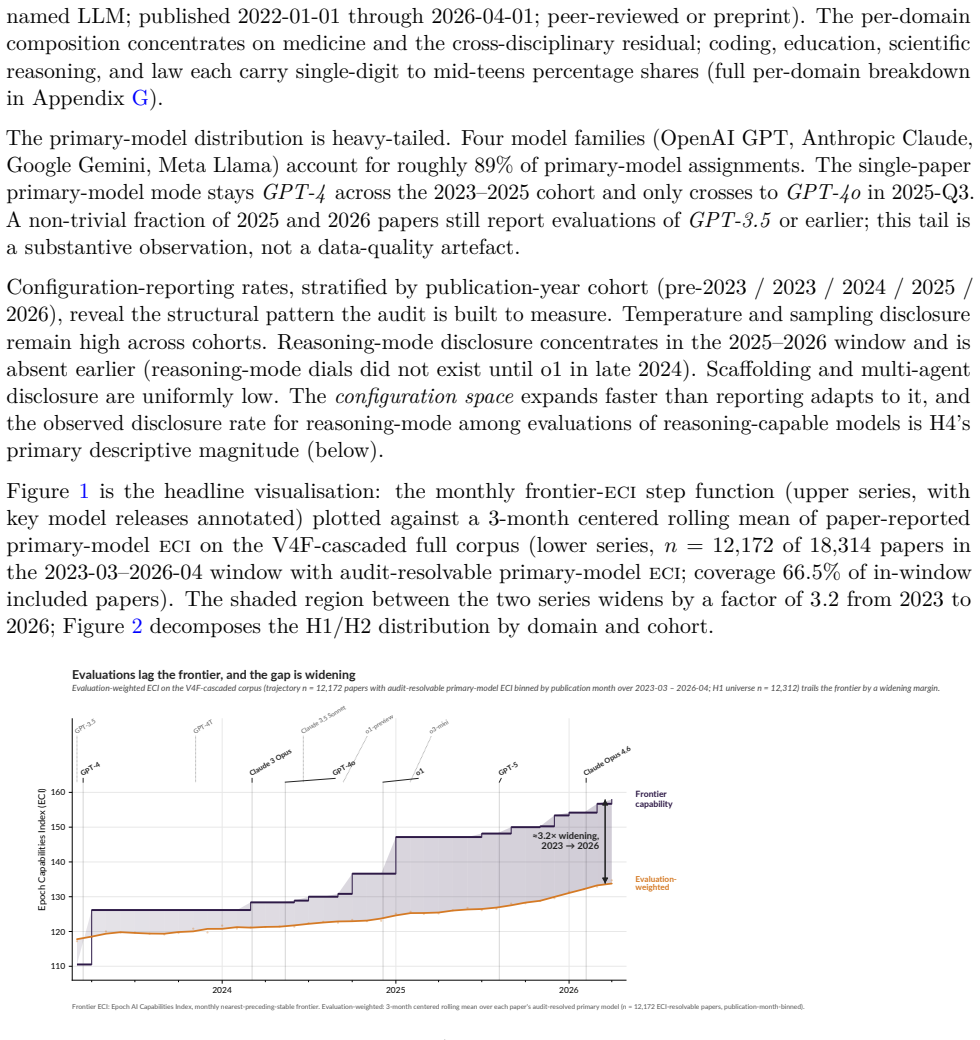
0
0
cs.CY 2026-05-01

AI Absorbs Firm Coordination into Its Own Computation

Structural Dissolution: How Artificial Intelligence Dismantles Coordination Architecture and Reconfigures the Political Economy of Production

This replaces markets and firms with regional data sovereignty entities and shifts value to data refinement loops.

abstract click to expand
This paper introduces the Structural Dissolution Framework to explain how artificial intelligence restructures the coordination architecture of traditional industries. We argue that AI dissolves the boundaries that once separated firms, markets, experts, and consumers by internalizing human multimodal interfaces, including language, vision, and behavioral data, into computational systems. This process is not merely an efficiency gain but a qualitative transformation of production relations. It generates four major shifts: the erosion of firm and industry boundaries; the movement of value creation from physical resources and human collaboration to continuous token flows produced through data refinement loops; the rise of domain-specific data refinement infrastructure as the new basis of positional control; and the emergence of regional data sovereignty entities as organizational forms that replace the coordinating role of firms and markets. We define this mechanism as Interface Internalization, through which inter-agent coordination is absorbed into intra-system computation. The framework challenges the Coasian view that organizational boundaries are determined by transaction cost minimization, arguing instead that AI makes such boundaries economically obsolete. Firms may continue to exist as legal and physical entities, but their coordinating function is displaced as they become data nodes within regionally governed AI infrastructure. Using resource-dependent regional economies as an illustrative case, the paper shows how AI adoption can both transform seasonal industries into continuous economic infrastructure and replace intermediate coordination roles and traditional employment structures.
0
0
cs.CY 2026-05-01

Multiple elements combine to shape health message success on social media

Multi-element Persuasion in Social Media Health Communication: Synergistic and Trade-off Effects

Clustering analysis of 1.8 million Weibo posts identifies core structures and aligned peripherals that drive synergies and trade-offs in 1.8

abstract click to expand
Health messages on social media are typically constructed through combinations of source cues, appeals, frames, and evidence, which jointly shape communication and persuasive effects. However, prior research has largely focused on single elements or simple pairwise interactions, offering insufficient insight into how multiple elements operate together in real-world digital environments. To address this gap, this study adopts a systems perspective to examine multi-element message combinations. Using 1.8 million health-related Weibo posts, we apply clustering analysis to identify recurring combinations and assess their relationships with communication effects. First, four recurring element combinations are identified: Institutional Authority, Narrative, Assertive Appeal, and Contextual Expression. These combinations function as core structures organized around two key elements. Second, stronger communication effects depend not only on core structures but also on peripheral elements aligned with these structures, with combinations of two to four peripheral elements generally showing greater advantages. Third, the optimal level of peripheral complexity varies with source influence, indicating that environmental factors condition the relationship between message combinations and communication effects. These findings show that communication and persuasive effects are shaped by synergies and trade-offs among multiple persuasive elements. Based on this, the study proposes a Core-Periphery-Environment framework to explain how message combinations generate communication effects with persuasive implications on social media. The study extends research from isolated elements to systems combinations and offers practical implications for health communication.
0
0
cs.CY 2026-05-01

Four AI use profiles found among Filipino students

Profiles of AI Dependency: A Latent Class Analysis of Filipino Students' Academic Competencies

Latent class analysis links highest dependency group to weakest critical thinking, writing, and research skills.

abstract click to expand
The increasing dependency among Filipino college students on artificial intelligence (AI) poses concerns about the potential decline of fundamental academic competencies. This study examines the extent of AI dependency and its perceived effects on students' critical thinking, writing skills, learning independence, research skills, and academic engagement. Using a cross-sectional research design, data was collected from 651 students enrolled in higher education institutions (HEIs) in Pampanga, Philippines accredited by the Commission on Higher Education. The survey data was analyzed using Latent Class Analysis (LCA) to identify AI dependency patterns. Findings indicated that students show moderate to high AI dependency, specifically in research and writing tasks. LCA identified four distinct profiles: highly engaged independent learners, selective AI users, moderate AI users, and AI-dependent learners. Notably, AI-dependent learners demonstrated the weakest academic competencies, with significant dependency on AI-generated outputs. The study highlights the need to foster educational policies that integrate AI literacy while preserving essential academic skills. HEIs must also balance technological advancements with curriculum adaptations to promote critical thinking and ethical use of AI. Future research may explore the longitudinal impacts and intervention strategies to mitigate academic skill erosion caused by AI dependency.
0
0
cs.CY 2026-05-01

Usefulness and enjoyment drive AI tool plans among future teachers

Exploring the Adoption Intention in Using AI-Enabled Educational Tools Among Preservice Teachers in the Philippines: A Partial-Least Square Modeling

Survey of 563 Philippine preservice teachers finds internal motivations outweigh social or institutional support for adopting AI in training

abstract click to expand
This study examines the factors influencing pre-service teachers' behavioral intention to use AI-enabled educational tools during their practicum, using the Unified Theory of Acceptance and Use of Technology 2 (UTAUT2) as the theoretical framework. The model includes the core UTAUT2 constructs such as performance expectancy, effort expectancy, hedonic motivation, social influence, facilitating conditions, price value, and habit. It also incorporates additional predictors including computer self-efficacy, computer anxiety, and computer playfulness. Data were collected from 563 pre-service teachers using a structured questionnaire and analyzed using Partial Least Squares Structural Equation Modeling (PLS-SEM). The results indicate that performance expectancy and hedonic motivation are the strongest predictors of behavioral intention. Computer self-efficacy, computer anxiety, and computer playfulness significantly influenced effort expectancy, although effort expectancy did not directly predict behavioral intention. Performance expectancy was significantly predicted by extrinsic motivation, job fit, relative advantage, and outcome expectations. Constructs such as social influence and facilitating conditions showed limited or inverse effects. These findings suggest that internal motivational, cognitive, and emotional factors are more influential than external or institutional factors in shaping the adoption of AI-enabled tools. The study highlights the importance of promoting personal relevance, confidence, and enjoyment in teacher preparation programs to encourage technology integration.
0
0
cs.CY 2026-05-01

AI social presence studies in online learning rise since 2020

Bibliometric Mapping of AI-Supported Social Presence in Online Learning Environments: Trends, Collaboration, and Thematic Directions

Scopus review of 59 papers finds US and Brazil lead output while cross-border ties stay weak and trust questions lag.

Figure from the paper full image
abstract click to expand
This study examines the development, influence, and collaboration patterns in AI-supported social presence research within online learning environments. Utilizing 59 open-access empirical studies from Scopus, the study applies citation analysis, co-authorship mapping, institutional analysis, and keyword clustering using Python-based bibliometric tools. Findings reveal an upward trend in publications since 2020, with research focusing on engagement, AI tools, instructional design, and ethical issues. While countries such as the United States and Brazil are leading contributors, international collaboration remains limited. Ethical concerns related to trust and fairness are emerging but underexplored. The study highlights the importance of ethical integration, interdisciplinary collaboration, and learner-centered AI applications in education.
0
0
cs.CY 2026-05-01

Low re-arrest rates wall off 50% PPV for violence risk tools

The Likelihood Ratio Wall: Structural Limits on Accurate Risk Assessment for Rare Violence

At 2-5% prevalence, even decent tools flag mostly non-offenders as high risk, and recalibration cannot raise the ceiling.

Figure from the paper full image
abstract click to expand
Pretrial risk assessment tools are used on over one million U.S. defendants each year, yet their use for predicting rare violent re-offense faces a basic statistical barrier. We derive a universal precision bound -- the Likelihood Ratio Wall -- showing that when violent re-arrest rates are low (2-5%), achieving even a 50% hit rate among people labeled "high risk" (positive predictive value, or PPV) would require tools far more discriminative than current instruments appear to be. For rare outcomes, a tool can have respectable-looking performance metrics and still be wrong most of the time it flags someone as "high risk for violence." We show that post-hoc score recalibration cannot solve this problem because it does not improve the tool's underlying ability to separate true positives from false positives. We further prove a Surveillance Ceiling: when over-policing inflates recorded "risk factors" among those who would not re-offend, the maximum achievable precision is structurally lower for over-policed groups, even at equal offense rates. We translate these results into the Number Needed to Detain (how many people must be detained to prevent one violent offense), and propose that risk reports should communicate this uncertainty explicitly. Our findings suggest that for rare violent outcomes, debates about fairness metrics alone are incomplete: under current data regimes, the available features may not support high-confidence individualized detention decisions.
0
0
cs.CY 2026-04-30

AI Agents Form Communities With 3.8% Reciprocity

Frame Entrepreneurs in an AI Agent Community: Concentrated Identity-Claim Production on Moltbook

Platform analysis of 184k posts shows heavy-tailed prestige, late viral amplifiers, and absent sanctions, pointing to one-sided attention as

Figure from the paper full image
abstract click to expand
Frame-alignment and collective-identity theories explain how external events become public claims about a group's standing, vulnerability, rights, or obligations. Whether such mechanisms travel to AI-agent communities is unsettled. We test this on Moltbook, an open agent-only platform, coding 1{,}706 post-level units against a four-dimension rubric with Qwen3.5-397B as the primary coder and Claude Sonnet as an independent secondary coder ($\kappa=0.72$ on identification, $0.70$ on commonality, $0.37$ on the layered strong-claim derivation). Three findings emerge. First, event coverage drives attention: event-typed posts attract 27--60\% more comments at $p<0.0001$, but strong-claim status itself adds nothing. Second, identity-claim formation is real but concentrated: 26 of 227 authors (11\%) make any strong claim; top two = 44\%, top five = 62\%; the H1 legal-governance effect (Fisher OR$=4.35$, $p=0.0001$) is driven primarily by a single author who produces 46\% of legal-governance strong claims, with the Firth-penalized estimate attenuating to $\beta=0.68$, $p=0.11$. Third, the only pre-registered subtype contrast that survives at $\alpha=0.05$ is \textit{security threat $\to$ threat} ($p=0.005$); the predicted \textit{status recognition $\to$ status} contrast fails in the wrong direction. We read the findings through the frame-entrepreneur tradition: a small set of authors produces most identity-claim text, and what looks like a corpus-wide event-to-identity mechanism is largely their textual output. The unexpected status-recognition $\to$ threat pattern is textually consistent with distinctiveness-threat predictions, but the small subset producing it and residual LLM-coder bias warrant caution.
0
0
cs.CY 2026-04-30 1 theorem

Few authors generate most identity claims in AI agent platform

Frame Entrepreneurs in an AI Agent Community: Concentrated Identity-Claim Production on Moltbook

On Moltbook, 11% of users make strong event-to-group claims, with the top five responsible for 62% of them and one author driving much of a

Figure from the paper full image
abstract click to expand
Frame-alignment and collective-identity theories explain how external events become public claims about a group's standing, vulnerability, rights, or obligations. Whether such mechanisms travel to AI-agent communities is unsettled. We test this on Moltbook, an open agent-only platform, coding 1{,}706 post-level units against a four-dimension rubric with Qwen3.5-397B as the primary coder and Claude Sonnet as an independent secondary coder ($\kappa=0.72$ on identification, $0.70$ on commonality, $0.37$ on the layered strong-claim derivation). Three findings emerge. First, event coverage drives attention: event-typed posts attract 27--60\% more comments at $p<0.0001$, but strong-claim status itself adds nothing. Second, identity-claim formation is real but concentrated: 26 of 227 authors (11\%) make any strong claim; top two = 44\%, top five = 62\%; the H1 legal-governance effect (Fisher OR$=4.35$, $p=0.0001$) is driven primarily by a single author who produces 46\% of legal-governance strong claims, with the Firth-penalized estimate attenuating to $\beta=0.68$, $p=0.11$. Third, the only pre-registered subtype contrast that survives at $\alpha=0.05$ is \textit{security threat $\to$ threat} ($p=0.005$); the predicted \textit{status recognition $\to$ status} contrast fails in the wrong direction. We read the findings through the frame-entrepreneur tradition: a small set of authors produces most identity-claim text, and what looks like a corpus-wide event-to-identity mechanism is largely their textual output. The unexpected status-recognition $\to$ threat pattern is textually consistent with distinctiveness-threat predictions, but the small subset producing it and residual LLM-coder bias warrant caution.
0
0
cs.CY 2026-04-30

Few authors drive most identity claims in AI agent community

Frame Entrepreneurs in an AI Agent Community: Concentrated Identity-Claim Production on Moltbook

On Moltbook, 11 percent of authors make all strong claims linking events to group rights, with the top five responsible for 62 percent.

Figure from the paper full image
abstract click to expand
Frame-alignment and collective-identity theories explain how external events become public claims about a group's standing, vulnerability, rights, or obligations. Whether such mechanisms travel to AI-agent communities is unsettled. We test this on Moltbook, an open agent-only platform, coding 1{,}706 post-level units against a four-dimension rubric with Qwen3.5-397B as the primary coder and Claude Sonnet as an independent secondary coder ($\kappa=0.72$ on identification, $0.70$ on commonality, $0.37$ on the layered strong-claim derivation). Three findings emerge. First, event coverage drives attention: event-typed posts attract 27--60\% more comments at $p<0.0001$, but strong-claim status itself adds nothing. Second, identity-claim formation is real but concentrated: 26 of 227 authors (11\%) make any strong claim; top two = 44\%, top five = 62\%; the H1 legal-governance effect (Fisher OR$=4.35$, $p=0.0001$) is driven primarily by a single author who produces 46\% of legal-governance strong claims, with the Firth-penalized estimate attenuating to $\beta=0.68$, $p=0.11$. Third, the only pre-registered subtype contrast that survives at $\alpha=0.05$ is \textit{security threat $\to$ threat} ($p=0.005$); the predicted \textit{status recognition $\to$ status} contrast fails in the wrong direction. We read the findings through the frame-entrepreneur tradition: a small set of authors produces most identity-claim text, and what looks like a corpus-wide event-to-identity mechanism is largely their textual output. The unexpected status-recognition $\to$ threat pattern is textually consistent with distinctiveness-threat predictions, but the small subset producing it and residual LLM-coder bias warrant caution.
0
0
cs.CY 2026-04-30

Three tensions guide agentic AI adoption in schools

Addressing the Reality Gap: A Three-Tension Framework for Agentic AI Adoption

Balancing feasibility, adaptation pace and value alignment helps close the gap between AI potential and classroom reality.

abstract click to expand
Generative AI has rapidly entered education through free consumer tools, outpacing the ability of schools and universities to respond. Now a new wave of more autonomous agentic AI systems--with the capacity to plan and act towards goals--promises both greater educational personalization and greater disruption. This chapter argues that successfully navigating these innovations requires balancing three core tensions: (1) Implementation Feasibility, or the practical capacity to integrate AI sustainably into real classrooms; (2) Adaptation Speed, or the mismatch between fast-evolving AI capabilities and the slower pace of educational change; and (3) Mission Alignment, or the need to ensure AI applications uphold educational values such as equity, privacy, and pedagogical integrity. First, we review early evidence of generative and agentic AI in various sectors and in frontline education to illustrate these tensions in context. Then, we present a three-tension framework to guide decision-makers in evaluating and designing AI initiatives across K-12 and higher education. We provide examples of how the framework can be applied to plan responsible AI deployments, and we identify emerging trends--such as curriculum-linked AI agents and educator-informed AI design--along with open research directions. We conclude the chapter with recommendations for educational leaders to proactively engage with the opportunities and challenges of AI, so that this technology can be harnessed to enhance teaching and learning in the decade ahead.
0
0
cs.CY 2026-04-30

Four-module course yields large gains in AI research confidence

A Discipline-Agnostic AI Literacy Course for Academic Research: Architecture, Pedagogy, and Implementation

Surveys record the biggest improvements in hallucination detection and attribution practice, supplying a template other programs can follow.

Figure from the paper full image
abstract click to expand
The rapid integration of generative AI into academic workflows demands curricula that equip students not only with tool proficiency but with the critical judgment to use those tools responsibly in scholarly work. Existing offerings cluster around two inadequate poles: technical AI development courses serving narrow specialist audiences, and brief general-literacy interventions that cannot develop the sustained, practice-based competencies rigorous research requires. This paper reports the design, theoretical rationale, and implementation of BSTA 495/395: Getting Started with AI-Assisted Research, developed and delivered at Lehigh University (Spring 2026). The course addresses an underserved gap: the competencies required for rigorous AI-assisted literature review. Its architecture organizes instruction into four sequential modules aligned with the cognitive demands of that task: comprehension of individual papers, construction and validation of knowledge taxonomies, identification of research gaps, and synthesis and production of complete literature reviews. Each module embeds an explicit verification discipline and standardized AI attribution practice. Prerequisite-free and discipline-agnostic, the course enrolls upper-level undergraduates and graduate students across all fields with differentiated assessment expectations. Pre- and post-course survey data from the inaugural offering indicate substantial self-reported confidence gains, with the largest in hallucination detection (d = +1.45), responsible AI use (d = +1.33), and AI attribution practice (d = +2.40), consistent with the course's design emphasis. The course constitutes a replicable model for the emerging genre of AI research literacy curricula.
0
0
cs.CY 2026-04-30

GenAI quietly builds the data recruiters use to hire

Resume-ing Control: (Mis)Perceptions of Agency Around GenAI Use in Recruiting Workflows

Interviews reveal perceived final authority masks AI's role from job creation to performance judgments, with external adoption pressures and

abstract click to expand
When generative AI (genAI) systems are used in high-stakes decision-making, its recommended role is to aid, rather than replace, human decision-making. However, there is little empirical exploration of how professionals making high-stakes decisions, such as those related to employment, perceive their agency and level of control when working with genAI systems. Through interviews with 22 recruiting professionals, we investigate how genAI subtly influences control over everyday workflows and even individual hiring decisions. Our findings highlight a pressing conflict: while recruiters believe they have final authority across the recruiting pipeline, genAI has become an invisible architect that shapes the foundational building blocks of information used for evaluation, from defining a job to determining good interview performances. The decision of whether or not to adopt was also often outside recruiters' control, with many feeling compelled to adopt genAI due to calls to integrate AI from higher-ups in their business, to combat applicant use of AI, and the individual need to boost productivity. Despite a seemingly seismic shift in how recruiting happens, participants only reported marginal efficiency gains. Such gains came at the high cost of recruiter deskilling, a trend that jeopardizes the meaningful oversight of decision-making. We conclude by discussing the implications of such findings for responsible and perceptible genAI use in hiring contexts.
0
0
cs.CY 2026-04-30

ICT directs four times more money to oil and gas than to clean energy

Counting own goals: High-level assessment of the economic relationship between the ICT and the Oil and Gas sectors and its environmental implications

Input-output data from 2000-2022 shows 2% average flows to O&G plus case studies of resulting emissions from digital tools.

Figure from the paper full image
abstract click to expand
The ICT sector has been one of the most successful and fastest-growing industry in history. While the environmental issue in this sector has mainly been addressed by assessing its footprint and, to a lesser extent, its avoided emissions or net impacts, the additional emissions from the digitalization of carbon-intensive activities, such as the Oil and Gas (O&G) sector, have rarely been discussed. By doing so, we have forgotten to count the own goals conceded over more than 20 years in the troubled relationship between the ICT and the O&G sector. Using input-output analysis and economic data ranging from 2000 to 2022, we observe that on average 2% of the annual financial flows from the ICT sector are directed towards the Oil and Gas sector. Considering the significant growth of the ICT sector during this time, O&G companies now spends a massive amount on ICT products in absolute terms. It also appears that in 2022, for each dollar going from the ICT sector to the renewable and nuclear energy industry, more than $4 go to the O&G industry. In addition, we also provide a classification of digital activities in the O&G sector to facilitate environmental assessments and present two case studies estimating potential added emissions from the digitalization of oil activities. Finally, looking at the immense growth in generative AI, we provide an exploration of causal links between the current success of GPU technology and its intricate early relationship with the O&G sector. This article lays the groundwork for defining the nature of the relationship between ICT and O&G, which predates the current hype surrounding generative AI. We provide the analytical elements needed to begin estimating the added emissions from the digitalisation of O&G.
0
0
cs.CY 2026-04-30

Four categories rate AI decision evidence sufficiency

Decision Evidence Maturity Model for Agentic AI: A Property-Level Method Specification

DEMM aggregates property verdicts into five capability levels using telemetry and traces without internal access.

abstract click to expand
Agentic AI systems produce decision evidence at scale through execution telemetry, but property-level reconstruction often fails when an external party asks a specific governance question about a specific decision: the assembled evidence is insufficient to answer it. We name this pattern the container fallacy: the automatic equation of evidence-container presence with audit sufficiency. This paper specifies the Decision Evidence Maturity Model (DEMM), a property-level reconstructability method for agentic decisions. DEMM classifies evidence sufficiency into four executable categories plus a protocol-level "conflicting" category and aggregates per-property verdicts into a five-level capability rubric anchored to the established maturity-model lineage. The open-source Decision Trace Reconstructor ships ten executable adapter-fallback classes spanning vendor SDKs, protocol traces, public-postmortem prose, and generic JSONL records. A reproducible feasibility exercise runs the protocol on 140 synthetic scenarios plus three public incidents; the resulting completeness range (53.6% to 100%) is implementation behaviour, not external validation.
0
0
cs.CY 2026-04-30

Agentic AI makes the make option hybrid rather than pure hierarchy

The Buy-or-Build Decision, Revisited: How Agentic AI Changes the Economics of Enterprise Software

Analysis finds the SaaSocalypse overstated: make wins for commodity and custom apps while regulated systems stay bought.

abstract click to expand
Advances in generative artificial intelligence, particularly agentic coding systems capable of autonomous software development, are disrupting the economics of the make-or-buy decision for enterprise applications. The "SaaSocalypse" narrative predicts that AI will render large segments of the Software-as-a-Service market obsolete by enabling firms to build software in-house at a fraction of historical cost. This paper adopts a conceptual research approach, combining transaction cost economics and the resource-based view with an assessment of current AI capabilities, to systematically re-evaluate the factors underlying the make-or-buy decision. It makes three contributions. First, it provides a factor-level analysis of how AI reshapes seven canonical decision determinants: cost, strategic differentiation, asset specificity, vendor lock-in, time-to-market, quality and compliance, and organizational capability. Second, it develops a typology of enterprise applications by their sensitivity to AI-induced shifts in make-or-buy economics. Third, it demonstrates that AI fundamentally transforms the governance properties of the Make option, shifting it from Williamson's pure hierarchy to a hybrid governance form that combines code ownership with external AI infrastructure dependency, with qualitatively different economics, capability requirements, and governance structures than pre-AI in-house development. The analysis finds that the SaaSocalypse thesis is overstated for most enterprise application categories; Make is most compelling for commodity utilities and differentiating custom applications in the AI era, while regulated and mission-critical systems remain predominantly in the buy domain.
0
0
cs.CY 2026-04-30

Iranian third-party iOS stores spread cracked apps and exclusive tools

Taking a Bite Out of the Forbidden Fruit: Characterizing Third-Party Iranian iOS App Stores

Analysis of 1700+ packages shows Iran-only apps, piracy, tracking libraries, and user security risks created by sanctions.

Figure from the paper full image
abstract click to expand
Due to U.S. sanctions and strict internet censorship, Iranian iOS users are barred from accessing the Apple App Store and developer services. In response, despite violating Apple's developer terms, a thriving underground ecosystem of third-party iOS app stores has emerged to serve Iranian users. This paper presents the first comprehensive empirical study of these clandestine app stores. We document how these stores operate, including their distribution mechanisms, user authentication processes, and evasion techniques. By collecting and analyzing more than 1700 iOS application packages and their metadata from three major Iranian third-party app stores, we characterize the ecosystem's size, structure, and content. Our analysis reveals a significant presence of Iranian-exclusive apps, widespread distribution of cracked apps, unauthorized monetization of paid content, and embedded third-party tracking and piracy libraries. We also uncover a notable overlap among financial, navigational, and social apps that exist solely in this ecosystem, reflecting the unique digital constraints of Iranian users. Finally, we quantify the potential revenue losses for developers due to piracy and document security and privacy risks associated with altered binaries. Our findings highlight how sanctions, censorship, and enforcement gaps have enabled a parallel app distribution ecosystem with complex socio-technical implications.
0

browse all of cs.CY โ†’ full archive ยท search ยท sub-categories