Recognition: unknown
A Herding-Based Model of Technological Transfer and Economic Convergence: Evidence from Central and Eastern Europe
Pith reviewed 2026-05-10 15:18 UTC · model grok-4.3
The pith
A herding model of technology adoption produces nonlinear convergence of productivity to the global frontier.
A machine-rendered reading of the paper's core claim, the machinery that carries it, and where it could break.
Core claim
By representing technological transfer as a herding-type interaction in which non-adopters become adopters under individual and group influences, the model delivers an explicit analytical solution for aggregate TFP dynamics that converge nonlinearly toward a moving frontier. Model parameters map onto initial productivity, convergence limits, and diffusion speed, and the framework is calibrated to OECD data for Central and Eastern European economies.
What carries the argument
The herding-type interaction mechanism, in which agents transition from non-adopters to adopters based on individual incentives plus peer effects, which produces the aggregate nonlinear TFP convergence equation.
If this is right
- The convergence process is nonlinear rather than linear, so early gains in adoption accelerate later progress.
- Explicit solutions allow direct calculation of how initial conditions affect long-run productivity levels.
- Diffusion speed can be estimated from data to compare adoption rates across economies.
- Policy that strengthens peer effects or individual incentives could raise the convergence limit or speed.
Where Pith is reading between the lines
- If the herding mechanism is general, similar models might describe technology uptake in other developing regions or for specific innovations.
- Stronger peer effects would imply that demonstration projects or information campaigns accelerate convergence more than subsidies alone.
- The moving frontier means that ongoing innovation in advanced economies is required to maintain the gap that drives diffusion.
Load-bearing premise
That the herding interaction between individual incentives and peer effects fully describes technological transfer without other dominant influences like policy or investment.
What would settle it
Observing that productivity growth in Central and Eastern European countries follows a different functional form than the predicted nonlinear convergence or that parameter estimates change inconsistently over time.
Figures


read the original abstract
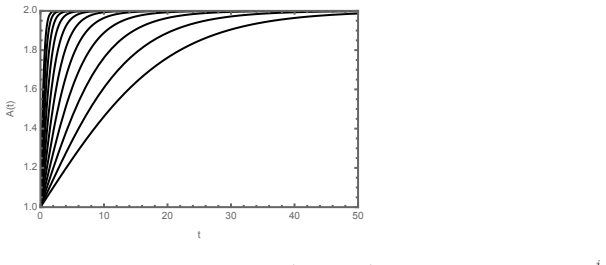
The long-run convergence of developing economies toward advanced countries exhibits robust empirical regularities, yet the mechanisms underlying technological diffusion remain insufficiently specified in standard growth models. In this paper, we extend the neoclassical framework by introducing a micro-founded mechanism of technological transfer as a driver of total factor productivity. Rather than treating technological progress as exogenous or purely innovation-driven, we model productivity growth as a process of adopting existing technologies from the global frontier. The diffusion process is described using a herding-type interaction mechanism, in which agents transition from non-adopters to adopters under the combined influence of individual incentives and peer effects. This approach yields a tractable aggregate representation of TFP dynamics characterized by nonlinear convergence toward a moving technological frontier. We derive an explicit analytical solution and provide an interpretation of model parameters in terms of initial productivity, convergence limits, and diffusion speed. The model is evaluated using OECD productivity data for Central and Eastern European economies.
Editorial analysis
A structured set of objections, weighed in public.
Referee Report
Summary. The paper extends the neoclassical growth model by introducing a micro-founded herding-type interaction for technological diffusion, in which agents adopt frontier technologies under individual incentives and peer effects. This produces an aggregate representation of TFP dynamics with nonlinear convergence to a moving technological frontier. The authors derive an explicit analytical solution, interpret parameters in terms of initial productivity, convergence limits, and diffusion speed, and evaluate the model on OECD productivity data for Central and Eastern European economies.
Significance. If the herding mechanism can be shown to operate independently of external drivers, the explicit analytical solution for nonlinear convergence would be a useful addition to growth theory, supplying a tractable link from micro-level peer effects to macro TFP paths and clear parameter interpretations that facilitate empirical work. The application to CEE data illustrates potential for explaining observed convergence patterns beyond standard exogenous technical progress assumptions.
major comments (2)
- The model description (herding-type interaction mechanism) does not incorporate or control for dominant external factors in CEE technological transfer such as EU accession, FDI inflows, trade agreements, and policy reforms. As a result, the estimated diffusion speed and convergence-limit parameters risk capturing these omitted variables rather than isolated herding effects, directly undermining the central claim that the aggregate TFP representation isolates the proposed micro-founded diffusion process.
- The empirical evaluation on OECD productivity data provides no out-of-sample tests, robustness checks against alternative drivers, or explicit controls for the external factors noted above. This leaves open the possibility that the reported fits to initial productivity, convergence limits, and diffusion speed are post-hoc rather than evidence that the herding mechanism is the primary driver of the observed nonlinear convergence.
Simulated Author's Rebuttal
We thank the referee for the thoughtful comments on our manuscript. We appreciate the recognition of the model's potential contribution to growth theory through the herding mechanism and analytical solution. Below, we address the major concerns regarding omitted external factors and empirical robustness. We agree that these are important issues and will revise the manuscript accordingly to strengthen the analysis.
read point-by-point responses
-
Referee: The model description (herding-type interaction mechanism) does not incorporate or control for dominant external factors in CEE technological transfer such as EU accession, FDI inflows, trade agreements, and policy reforms. As a result, the estimated diffusion speed and convergence-limit parameters risk capturing these omitted variables rather than isolated herding effects, directly undermining the central claim that the aggregate TFP representation isolates the proposed micro-founded diffusion process.
Authors: We acknowledge that our model does not explicitly incorporate or control for external factors such as EU accession, FDI inflows, trade agreements, and policy reforms. The herding-type interaction is presented as a micro-founded mechanism for technology adoption driven by individual incentives and peer effects, leading to the aggregate TFP dynamics. However, we do not claim that the parameters isolate herding effects independently of all external drivers; rather, the model provides a tractable representation of nonlinear convergence that can be consistent with such influences operating through the diffusion process. To address this concern, in the revised version we will add a discussion section clarifying the scope of the model and noting that the estimated parameters reflect effective diffusion rates potentially influenced by these factors. We will also explore adding proxy variables for these factors where data permits. revision: yes
-
Referee: The empirical evaluation on OECD productivity data provides no out-of-sample tests, robustness checks against alternative drivers, or explicit controls for the external factors noted above. This leaves open the possibility that the reported fits to initial productivity, convergence limits, and diffusion speed are post-hoc rather than evidence that the herding mechanism is the primary driver of the observed nonlinear convergence.
Authors: We agree that the current empirical section lacks out-of-sample tests and robustness checks against alternative drivers. The evaluation demonstrates that the model fits the observed TFP paths for CEE economies with interpretable parameters. To strengthen this, we will include in the revision: (i) out-of-sample validation by holding out later periods or countries, (ii) robustness to alternative specifications such as including time dummies or additional controls, and (iii) a comparison with standard linear convergence models to highlight the nonlinear aspect. This will help demonstrate that the herding-based model provides a better description of the data patterns. revision: yes
Circularity Check
Derivation from herding micro-mechanism to analytical TFP solution is self-contained
full rationale
The paper introduces a herding-type interaction as a micro-founded assumption for technological adoption, derives an explicit analytical solution for aggregate nonlinear TFP convergence toward a moving frontier, interprets the resulting parameters (initial productivity, convergence limits, diffusion speed), and evaluates the model against OECD data. No load-bearing step reduces the derived representation or solution to a data fit, self-citation, or input by construction; the analytical content is generated from the stated assumptions independently of the empirical evaluation step. The derivation chain therefore remains non-circular.
Axiom & Free-Parameter Ledger
free parameters (3)
- diffusion speed
- convergence limits
- initial productivity
axioms (1)
- domain assumption Neoclassical growth framework holds as base
invented entities (1)
-
herding-type interaction mechanism
no independent evidence
Reference graph
Works this paper leans on
-
[1]
R. M. Solow, A contribution to the theory of economic growth, The Quarterly Journal of Economics 70 (1) (1956) 65–94.doi:10.2307/1884513
-
[2]
T. W. Swan, Economic growth and capital accumulation, Economic Record 32 (2) (1956) 334–361.doi:10.1111/j. 1475-4932.1956.tb00434.x
work page doi:10.1111/j 1956
-
[3]
N. G. Mankiw, D. Romer, D. N. Weil, A contribution to the empirics of economic growth, The Quarterly Journal of Economics 107 (2) (1992) 407–437.doi:10.2307/2118477
-
[4]
P. M. Romer, Endogenous technological change, Journal of Political Economy 98 (5) (1990) S71–S102. doi: 10.1086/261725
-
[5]
Econo- metrica60(2), 323–351 (1992)
P. Aghion, P. Howitt, A model of growth through creative destruction, Econometrica 60 (2) (1992) 323–351. doi:10.2307/2951599
-
[6]
R. J. Barro, X. Sala-i Martin, Technological diffusion, convergence, and growth, Journal of Economic Growth 2 (1) (1997) 1–26.doi:10.1023/A:1009746629269
- [7]
-
[8]
J. Benhabib, M. M. Spiegel, Human capital and technology diffusion, in: P. Aghion, S. N. Durlauf (Eds.), Handbook of Economic Growth, V ol. 1, Elsevier, 2005, Ch. 13, pp. 935–966.doi:10.1016/S1574-0684(05)01013-0
-
[9]
D. Comin, B. Hobijn, An exploration of technology diffusion, American Economic Review 100 (5) (2010) 2031–2059. doi:10.1257/aer.100.5.2031
-
[10]
D. Comin, B. Hobijn, Cross-country technology adoption: Making the theories face the facts, Journal of Monetary Economics 51 (1) (2004) 39–83.doi:10.1016/j.jmoneco.2003.07.003
-
[11]
D. Acemoglu, P. Aghion, F. Zilibotti, Distance to frontier, selection, and economic growth, Journal of the European Economic Association 4 (1) (2006) 37–74.doi:10.1162/jeea.2006.4.1.37
-
[12]
Aoki, Modeling Aggregate Behavior and Fluctuations in Economics: Stochastic Views of Interacting Agents, Cambridge University Press, Cambridge, 2002
M. Aoki, Modeling Aggregate Behavior and Fluctuations in Economics: Stochastic Views of Interacting Agents, Cambridge University Press, Cambridge, 2002
2002
-
[13]
Tesfatsion, Agent-based computational economics: A constructive approach to economic theory, in: L
L. Tesfatsion, Agent-based computational economics: A constructive approach to economic theory, in: L. Tesfatsion, K. L. Judd (Eds.), Handbook of Computational Economics, V ol. 2, Elsevier, 2006, Ch. 16, pp. 831–880. doi: 10.1016/S1574-0021(05)02016-2
-
[14]
V . Gontis, A. Kononovicius, Bessel-like birth–death process, Lithuanian Journal of Physics 60 (2) (2020) 65–75, extends the herding/Kirman framework used in the technology-transfer model. doi:10.3952/physics.v60i2. 4314
-
[15]
A. P. Kirman, Ants, rationality and recruitment, Quarterly Journal of Economics 108 (1993) 137–156. doi: 10.2307/2118498
-
[16]
F. M. Bass, A new product growth for model consumer durables, Management Science 15 (5) (1969) 215–227, foundational diffusion model; logistic-type spread of new technology among adopters. doi:10.1287/mnsc.15.5. 215
-
[17]
Kononovicius, V
A. Kononovicius, V . Gontis, V . Daniunas, Agent-based versus macroscopic modeling of competition and business processes in economics and finance, International Journal On Advances in Intelligent Systems 5 (2012) 111–126. URL https://www.thinkmind.org/index.php?view=article&articleid=intsys%5Fv5%5Fn12% 5F2012%5F9
2012
-
[18]
V . Gontis, A. Kononovicius, Consentaneous agent-based and stochastic model of the financial markets, PLoS ONE 9 (2014) e102201.doi:10.1371/journal.pone.0102201
-
[19]
Holobiuc, Income convergence in the european union: National and regional dimensions, Eur
A.-M. Holobiuc, Income convergence in the european union: National and regional dimensions, Eur. Fin. Acc. J. 15 (2) (2020) 45–65
2020
-
[20]
Alemu, B
S. Alemu, B. Udvari, B. Kotosz, Income convergence in central and eastern europe: Evidence from cross-country panel data analysis, Acta Oecon. 74 (3) (2024) 329–357
2024
-
[21]
Kremer, Population growth and technological change: One million b.c
M. Kremer, Population growth and technological change: One million b.c. to 1990, Q. J. Econ. 108 (3) (1993) 681–716
1990
-
[22]
L. Kolinets, V . Gontis, Panel regression for the GDP of the central and eastern european countries using time-varying coefficients (2025).arXiv:2510.04211
-
[23]
rep., Organisation for Economic Co-operation and Development, contact: productivity.contact@oecd.org (January 2024)
OECD, Productivity statistics database: Sources, coverages and definitions, Tech. rep., Organisation for Economic Co-operation and Development, contact: productivity.contact@oecd.org (January 2024). URLhttps://www.oecd.org/statistics/productivity-stats/ 6
2024
discussion (0)
Sign in with ORCID, Apple, or X to comment. Anyone can read and Pith papers without signing in.