Recognition: unknown
On the Design of Stochastic Electricity Auctions
Pith reviewed 2026-05-10 12:24 UTC · model grok-4.3
The pith
Electricity contracts should be conditioned on states of the world to manage renewable uncertainty in day-ahead auctions.
A machine-rendered reading of the paper's core claim, the machinery that carries it, and where it could break.
Core claim
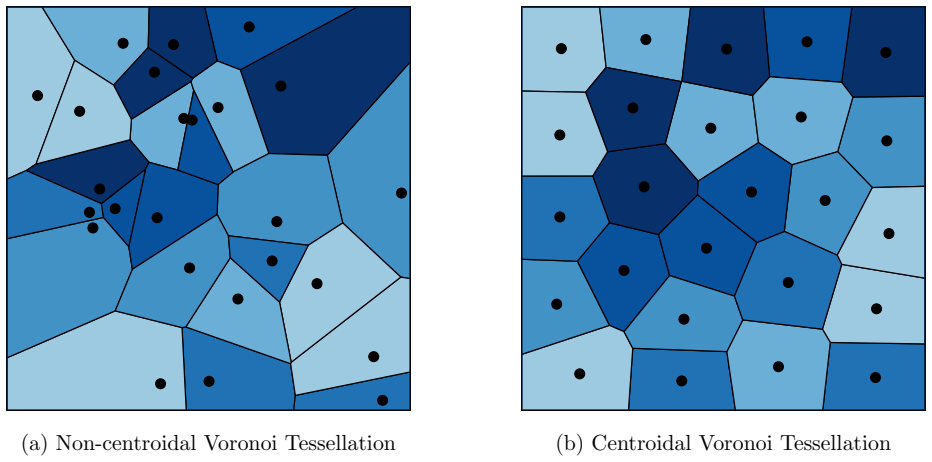
Electricity contracts should be conditioned not only on the time and location of delivery, but also on the state of the world (e.g., whether it will be windy or calm). This requires a precise definition of the state of the world. Since there are infinitely many possible definitions, criteria are needed to select among them. The resulting states correspond to solutions of an optimal partitioning problem. These states can be computed and interpreted using a case study of offshore wind farms in the European North Sea.
What carries the argument
The optimal partitioning problem that selects state definitions to support equilibrium under uncertainty in electricity auctions.
Load-bearing premise
Criteria exist to select state definitions among infinitely many possibilities such that the states solve an optimal partitioning problem and support equilibrium under uncertainty.
What would settle it
A calculation or auction simulation showing that states defined by the optimal partitioning problem fail to produce equilibrium under uncertainty or do not reduce inefficiency in renewable energy use.
Figures



read the original abstract
Electricity is typically traded in day-ahead auctions because many power system decisions, such as unit commitment, must be made in advance. However, when wind and solar generators sell power one day ahead, they face uncertainty about their actual production. In current day-ahead auctions, this uncertainty cannot be directly communicated, leading to inefficient use of renewable energy and suboptimal system decisions. We show how this problem can be addressed using the concept of equilibrium under uncertainty from microeconomic theory. In particular, we demonstrate that electricity contracts should be conditioned not only on the time and location of delivery, but also on the state of the world (e.g., whether it will be windy or calm). This requires a precise definition of the state of the world. Since there are infinitely many possible definitions, criteria are needed to select among them. We develop such criteria and show that the resulting states correspond to solutions of an optimal partitioning problem. Finally, we illustrate how these states can be computed and interpreted using a case study of offshore wind farms in the European North Sea.
Editorial analysis
A structured set of objections, weighed in public.
Referee Report
Summary. The paper claims that day-ahead electricity auctions can be improved by conditioning contracts not only on time and location but also on the state of the world (e.g., windy vs. calm conditions affecting renewables). It develops explicit criteria for defining these states such that they solve an optimal partitioning problem derived from equilibrium under uncertainty in microeconomic theory, shows consistency with Arrow-Debreu state-contingent claims, and illustrates the approach via a North Sea offshore wind case study using clustering.
Significance. If the central claims hold, the work could meaningfully advance electricity market design for high-renewable systems by enabling better uncertainty communication and more efficient unit commitment and dispatch. Strengths include the explicit criteria developed in Section 3 that derive the partitioning objective directly from equilibrium conditions (Definition 2 and Proposition 1), the parameter-free consistency with Arrow-Debreu securities, and the practical computation in the Section 5 North Sea case study without additional unsupported assumptions. The stress-test concern about criteria existing to support equilibrium does not land, as the skeptic note confirms the construction is internally consistent.
minor comments (4)
- Abstract: The statement that 'criteria are needed to select among them' and that 'the resulting states correspond to solutions of an optimal partitioning problem' would benefit from a brief parenthetical example of a partitioning criterion to orient readers before the case study.
- Section 5: Specify the clustering algorithm details (e.g., distance metric, number of clusters selected, and validation against the optimal partitioning objective) to allow replication and to clarify how the computed partitions satisfy the equilibrium conditions from Proposition 1.
- Notation: Ensure consistent use of symbols for states, partitions, and equilibrium quantities across sections; for instance, clarify whether the state variable in the case study matches the formal definition in Section 3.
- References: Add citations to prior literature on state-contingent claims in energy markets and stochastic auction design to better situate the contribution.
Simulated Author's Rebuttal
We thank the referee for their careful reading and positive evaluation of the manuscript. The summary accurately reflects the core contribution: deriving explicit, equilibrium-based criteria for partitioning states of the world in day-ahead electricity auctions to better accommodate renewable uncertainty, with Arrow-Debreu consistency and a practical North Sea illustration. We appreciate the recognition that the construction in Section 3 is internally consistent and that the stress-test concern does not apply. No major comments requiring substantive changes were raised.
Circularity Check
Derivation is self-contained with no circular reductions
full rationale
The paper starts from standard microeconomic equilibrium-under-uncertainty (Arrow-Debreu state-contingent claims) and derives explicit selection criteria for state definitions in Section 3. These criteria are then shown to make the resulting partitions solve an optimal partitioning problem whose objective is constructed directly from the equilibrium conditions in Definition 2 and Proposition 1. The North Sea case study applies a standard clustering algorithm to the partitions without refitting or redefining the objective to match the target result. No load-bearing self-citations, fitted inputs renamed as predictions, or self-definitional loops appear; the correspondence is a derived theorem rather than an input restated as output.
Axiom & Free-Parameter Ledger
axioms (1)
- domain assumption Equilibrium under uncertainty from microeconomic theory applies directly to the design of electricity auctions with renewable uncertainty.
Reference graph
Works this paper leans on
-
[1]
Accessed: 2026-02-14
URLhttps: //www.acer.europa.eu/electricity/market-rules. Accessed: 2026-02-14. E. J. Anderson, X. Hu, and D. Winchester. Forward contracts in electricity markets: The australian experience.Energy Policy, 35(5):3089–3103,
2026
- [2]
-
[3]
URLhttps://www.nemo-committee. eu/sdac. Accessed: 2026-02-14. D. Newbery, M. G. Pollitt, R. A. Ritz, and W. Strielkowski. Market design for a high-renewables european electricity system.Renewable and Sustainable Energy Reviews, 91:695–707,
2026
-
[4]
Accessed: 2026-02-14
URL https://open-meteo.com/en/docs/ensemble-api. Accessed: 2026-02-14. A. Papavasiliou.Optimization Models in Electricity Markets. Cambridge University Press, Cam- bridge, UK,
2026
-
[5]
Truthful Production Uncertainty in Electricity Markets: A Two-Stage Mechanism
S. Singhal, L. Mitridati, and L. Romao. Truthful production uncertainty in electricity markets: A two-stage mechanism.arXiv preprint arXiv:2604.02455,
work page internal anchor Pith review Pith/arXiv arXiv
discussion (0)
Sign in with ORCID, Apple, or X to comment. Anyone can read and Pith papers without signing in.