Recognition: unknown
Singularity Formation: Synergy in Theoretical, Numerical and Machine Learning Approaches
Pith reviewed 2026-05-10 07:08 UTC · model grok-4.3
The pith
Enforcing vanishing modulation conditions around approximate blowup profiles proves singularity formation in nonlinear PDEs such as the 3D Keller-Segel equation.
A machine-rendered reading of the paper's core claim, the machinery that carries it, and where it could break.
Core claim
We introduce a robust analytical framework to simplify and systematize pen-and-paper proofs for simpler singular PDEs based on enforcing vanishing modulation conditions for perturbations around approximate blowup profiles, complemented by singularly weighted energy estimates; the framework is shown to work on the nonlinear heat equation, the complex Ginzburg-Landau equation, and establishes singularity formation in the 3D Keller-Segel equation with logistic damping.
What carries the argument
vanishing modulation conditions imposed on perturbations around approximate blowup profiles, which reduce the problem to controllable energy estimates
If this is right
- Singularity formation is rigorously established for the nonlinear heat equation and the complex Ginzburg-Landau equation.
- Solutions of the 3D Keller-Segel equation with logistic damping develop singularities in finite time.
- Numerical profiles can be turned into analytical proofs of blowup once modulation conditions are enforced and energy estimates are closed.
- Machine-learning tools improve the detection and precise characterization of candidate blowup solutions.
Where Pith is reading between the lines
- The same modulation-plus-energy strategy may become useful for other reaction-diffusion systems once reliable numerical profiles are available.
- Hybrid numerical-analytical pipelines of this type could eventually supply guidance for more difficult open problems whose asymptotics are only partially understood.
- The emphasis on interpretable learned nonlinearities in the accompanying machine-learning component suggests a route toward extracting new analytical ansatzes directly from data.
Load-bearing premise
Approximate blowup profiles obtained from numerical simulation are sufficiently accurate that the modulation conditions can be rigorously verified without hidden inconsistencies or missing higher-order terms.
What would settle it
A global smooth solution to the 3D Keller-Segel equation with logistic damping that remains bounded for all positive times, or a numerical computation showing persistent regularity past any candidate blowup time, would falsify the singularity claim.
Figures




read the original abstract
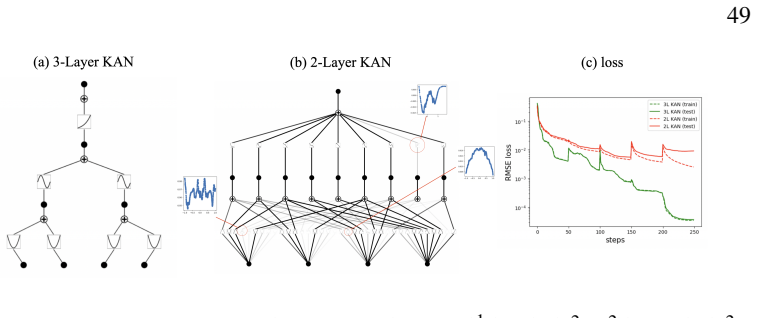
This thesis develops numerical and theoretical approaches for understanding and analyzing singularity formation in Partial Differential Equations (PDEs). The singularity formation in the Navier-Stokes Equation (NSE) is famously challenging as one of the seven Clay Prize problems. Unlike simpler equations such as the Nonlinear Heat (NLH) or Keller-Segel (KS) equations, where formal asymptotics near blowup are better understood, the intrinsic complexity of NSE makes quantitative analytical treatment difficult, if not impossible, without numerical guidance. Building on numerical insights, we introduce a robust analytical framework to simplify and systematize pen-and-paper proofs for simpler singular PDEs. We present a novel approach based on enforcing vanishing modulation conditions for perturbations around approximate blowup profiles, complemented by singularly weighted energy estimates. We demonstrate the efficacy of our method on PDEs with complicated asymptotics, such as NLH and the Complex Ginzburg-Landau (CGL) equation, and address the open problem of singularity formation in the 3D KS equation with logistic damping. We develop and refine numerical approaches that facilitate deeper insights into singularity formation. We demonstrate that machine learning methods significantly enhance our capability to identify and characterize potential blowup solutions with high precision. We improve on existing Physics-Informed Neural Network (PINN) and Neural Operator (NO) frameworks. Moreover, we present a novel machine learning paradigm, the Kolmogorov-Arnold Network (KAN) architecture, whose interpretability and excellent scaling properties are achieved through learnable nonlinearities.
Editorial analysis
A structured set of objections, weighed in public.
Referee Report
Summary. The manuscript develops theoretical, numerical, and machine learning approaches to singularity formation in PDEs. It introduces an analytical framework that enforces vanishing modulation conditions for perturbations around approximate blowup profiles, combined with singularly weighted energy estimates, to systematize proofs for equations with complex asymptotics. The framework is applied to the nonlinear heat equation (NLH), complex Ginzburg-Landau (CGL) equation, and the open problem of singularity formation in the 3D Keller-Segel equation with logistic damping. It also refines numerical methods and advances ML techniques, including improvements to physics-informed neural networks (PINNs) and neural operators, plus a novel Kolmogorov-Arnold Network (KAN) architecture emphasizing interpretability and scaling.
Significance. If the modulation-based framework converts numerical insights into independent rigorous proofs without hidden inconsistencies in the profiles or estimates, it would provide a valuable systematization for pen-and-paper analysis of singularity formation in singular PDEs and could resolve the open 3D KS problem. The ML components, especially KAN's learnable nonlinearities, would strengthen the synergy between simulation and theory in the field.
major comments (2)
- [Abstract/Introduction] Abstract and introduction: The central claim that the framework addresses the open problem of singularity formation in the 3D KS equation with logistic damping rests on enforcing vanishing modulation conditions and singularly weighted energy estimates, but the available text provides no derivations, error bounds, profile constructions, or verification steps, rendering the claim unverifiable and the numerical-to-rigorous conversion step unexamined for inconsistencies.
- [Framework section] Framework description: The assertion that numerical insights can be converted into rigorous analytical proofs via modulation conditions around approximate blowup profiles lacks explicit benchmarks or independent checks that the conditions hold without depending on fitted profiles, creating a moderate risk of circularity in the proofs for NLH, CGL, and KS.
minor comments (1)
- [Abstract] The abstract mentions 'complicated asymptotics' for NLH and CGL but does not specify which features of the asymptotics are addressed by the modulation conditions.
Simulated Author's Rebuttal
We thank the referee for their thorough review and valuable comments on our work. We address each major comment below and outline the revisions we will make to strengthen the manuscript.
read point-by-point responses
-
Referee: [Abstract/Introduction] Abstract and introduction: The central claim that the framework addresses the open problem of singularity formation in the 3D KS equation with logistic damping rests on enforcing vanishing modulation conditions and singularly weighted energy estimates, but the available text provides no derivations, error bounds, profile constructions, or verification steps, rendering the claim unverifiable and the numerical-to-rigorous conversion step unexamined for inconsistencies.
Authors: We agree that the abstract and introduction provide a high-level summary without the full technical details. The derivations, error bounds, profile constructions, and verification steps for the 3D Keller-Segel equation are developed in detail in the body of the thesis, particularly in the sections on the analytical framework and its application to KS. To address this, we will revise the abstract and introduction to include a brief outline of the key steps in the proof, such as the construction of the approximate profile from numerical data and the subsequent verification of modulation conditions via energy estimates. This will make the conversion from numerical insights to rigorous proof more transparent and verifiable. revision: yes
-
Referee: [Framework section] Framework description: The assertion that numerical insights can be converted into rigorous analytical proofs via modulation conditions around approximate blowup profiles lacks explicit benchmarks or independent checks that the conditions hold without depending on fitted profiles, creating a moderate risk of circularity in the proofs for NLH, CGL, and KS.
Authors: The framework separates the numerical construction of approximate profiles from the analytical verification. Numerical methods, including the refined PINNs and KANs, are used to generate candidate profiles, but the modulation conditions are then enforced and verified through singularly weighted energy estimates that do not depend on the specific fitting procedure. To eliminate any perceived circularity, we will add explicit benchmarks in the revised manuscript, such as independent numerical checks of the modulation parameters and error estimates for NLH and CGL, and extend this to the KS case. This will demonstrate that the conditions hold rigorously. revision: yes
Circularity Check
No significant circularity in derivation chain
full rationale
The provided abstract and context describe an analytical framework that enforces vanishing modulation conditions around approximate blowup profiles together with singularly weighted energy estimates, then applies it to NLH, CGL, and the 3D KS equation. No specific equations, profile constructions, or derivation steps are quoted that reduce a claimed prediction or theorem to a fitted numerical input or self-citation by construction. The numerical insights are used as motivation for choosing profiles, but the modulation conditions and energy estimates are presented as independent analytical tools. Without a load-bearing reduction exhibited in the text, the derivation remains self-contained against external benchmarks and receives an honest non-finding.
Axiom & Free-Parameter Ledger
Reference graph
Works this paper leans on
-
[1]
The heterogeneous multiscale method
Assyr Abdulle et al. “The heterogeneous multiscale method”. In:Acta Nu- merica21 (2012), pp. 1–87
2012
-
[2]
Deepokan: Deepoperatornetworkbasedonkolmogorovarnoldnetworksformechanics problems
Diab W Abueidda, Panos Pantidis, and Mostafa E Mobasher. “Deepokan: Deepoperatornetworkbasedonkolmogorovarnoldnetworksformechanics problems”. In:arXiv preprint arXiv:2405.19143(2024)
-
[3]
Elsevier, 2003
Robert A Adams and John JF Fournier.Sobolev spaces. Elsevier, 2003
2003
-
[4]
Neural additive models: Interpretable machine learning with neural nets
Rishabh Agarwal et al. “Neural additive models: Interpretable machine learning with neural nets”. In:Advances in neural information processing systems34 (2021), pp. 4699–4711
2021
-
[5]
fKAN: Fractional Kolmogorov-Arnold networks with trainable Jacobi basis functions,
Alireza Afzal Aghaei. “fKAN: Fractional Kolmogorov-Arnold Networks withtrainableJacobibasisfunctions”.In:arXivpreprintarXiv:2406.07456 (2024)
-
[6]
rKAN:RationalKolmogorov-ArnoldNetworks
AlirezaAfzalAghaei.“rKAN:RationalKolmogorov-ArnoldNetworks”.In: arXiv preprint arXiv:2406.14495(2024)
-
[7]
GraphKAN: Graph Kol- mogorov Arnold Network for Small Molecule-Protein Interaction Predic- tions
Tashin Ahmed and Md Habibur Rahman Sifat. “GraphKAN: Graph Kol- mogorov Arnold Network for Small Molecule-Protein Interaction Predic- tions”. In:ICML’24 Workshop ML for Life and Material Science: From Theory to Industry Applications. 2024
2024
-
[8]
Residual-based attention in physics- informed neural networks
Sokratis J Anagnostopoulos et al. “Residual-based attention in physics- informed neural networks”. In:Computer Methods in Applied Mechanics and Engineering421 (2024), p. 116805
2024
-
[9]
URL: https://arxiv.org/abs/2406.09087, arXiv:2406.09087
BasimAzamandNaveedAkhtar.“SuitabilityofKANsforComputerVision: A preliminary investigation”. In:arXiv preprint arXiv:2406.09087(2024)
-
[10]
Deep spline networks with control ofLipschitzregularity
Shayan Aziznejad and Michael Unser. “Deep spline networks with control ofLipschitzregularity”.In:ICASSP2019-2019IEEEInternationalConfer- ence on Acoustics, Speech and Signal Processing (ICASSP). IEEE. 2019, pp. 3242–3246
2019
-
[11]
Numerical experience with a class of self-scaling quasi- Newton algorithms
M Al-Baali. “Numerical experience with a class of self-scaling quasi- Newton algorithms”. In:Journal of optimization theory and applications 96 (1998), pp. 533–553
1998
-
[12]
Broy- den’s quasi-Newton methods for a nonlinear system of equations and un- constrained optimization: a review and open problems
Mehiddin Al-Baali, Emilio Spedicato, and Francesca Maggioni. “Broy- den’s quasi-Newton methods for a nonlinear system of equations and un- constrained optimization: a review and open problems”. In:Optimization Methods and Software29.5 (2014), pp. 937–954. 90
2014
-
[13]
Optimal local approximation spaces for generalizedfiniteelementmethodswithapplicationtomultiscaleproblems
Ivo Babuška and Robert Lipton. “Optimal local approximation spaces for generalizedfiniteelementmethodswithapplicationtomultiscaleproblems”. In:Multiscale Modeling & Simulation9.1 (2011), pp. 373–406
2011
-
[14]
Can a finite element method perform ar- bitrarily badly?
Ivo Babuška and John Osborn. “Can a finite element method perform ar- bitrarily badly?” In:Mathematics of Computation69.230 (2000), pp. 443– 462
2000
-
[15]
Generalizedfiniteelementmethods:their performance and their relation to mixed methods
IvoBabuškaandJohnEOsborn.“Generalizedfiniteelementmethods:their performance and their relation to mixed methods”. In:SIAM Journal on Numerical Analysis20.3 (1983), pp. 510–536
1983
-
[16]
IsthepollutioneffectoftheFEMavoidable for the Helmholtz equation considering high wave numbers?
IvoBabuškaandStefanSauter.“IsthepollutioneffectoftheFEMavoidable for the Helmholtz equation considering high wave numbers?” In:SIAM Journal on numerical analysis34.6 (1997), pp. 2392–2423
1997
-
[17]
Multiscale-Spectral GFEM and optimal oversampling
Ivo Babuška et al. “Multiscale-Spectral GFEM and optimal oversampling”. In:Computer Methods in Applied Mechanics and Engineering364 (2020), p. 112960
2020
-
[18]
arXiv preprint arXiv:2102.06701 , year=
Yasaman Bahri et al. “Explaining neural scaling laws”. In:arXiv preprint arXiv:2102.06701(2021)
-
[19]
Diffusions hypercontractives
Dominique Bakry and Michel Émery. “Diffusions hypercontractives”. In: Seminaire de probabilités XIX 1983/84. Springer, 1985, pp. 177–206
1983
-
[20]
Universal approximation bounds for superpositions of a sigmoidal function
Andrew R Barron. “Universal approximation bounds for superpositions of a sigmoidal function”. In:IEEE Transactions on Information theory39.3 (1993), pp. 930–945
1993
-
[21]
Nearly-tight VC-dimension and pseudodimension boundsforpiecewiselinearneuralnetworks
Peter L Bartlett et al. “Nearly-tight VC-dimension and pseudodimension boundsforpiecewiselinearneuralnetworks”.In:JournalofMachineLearn- ing Research20.63 (2019), pp. 1–17
2019
-
[22]
Seeing implicit neural representations as fourier series
Nuri Benbarka, Timon Höfer, Andreas Zell, et al. “Seeing implicit neural representations as fourier series”. In:Proceedings of the IEEE/CVF Winter Conference on Applications of Computer Vision. 2022, pp. 2041–2050
2022
-
[23]
Formal asymptotics of bubbling in the harmonic map heat flow
Jan Bouwe van den Berg, John R King, and Josephus Hulshof. “Formal asymptotics of bubbling in the harmonic map heat flow”. In:SIAM Journal on Applied Mathematics63.5 (2003), pp. 1682–1717
2003
-
[24]
AmollifiedensembleKalmanfilter
KayBergemannandSebastianReich.“AmollifiedensembleKalmanfilter”. In:Quarterly Journal of the Royal Meteorological Society136.651 (2010), pp. 1636–1643
2010
-
[25]
AnensembleKalman-Bucyfilterfor continuous data assimilation
KayBergemannandSebastianReich.“AnensembleKalman-Bucyfilterfor continuous data assimilation”. In:Meteorologische Zeitschrift21.3 (2012), p. 213. 91
2012
-
[26]
A rescaling algorithm for the numeri- cal calculation of blowing-up solutions
Marsha Berger and Robert V Kohn. “A rescaling algorithm for the numeri- cal calculation of blowing-up solutions”. In:Communications on pure and applied mathematics41.6 (1988), pp. 841–863
1988
-
[27]
A Conceptual Introduction to Hamiltonian Monte Carlo
Michael Betancourt. “A conceptual introduction to Hamiltonian Monte Carlo”. In:arXiv preprint arXiv:1701.02434(2017)
work page Pith review arXiv 2017
-
[28]
ThegeometricfoundationsofHamiltonianMonte Carlo
MichaelBetancourtetal.“ThegeometricfoundationsofHamiltonianMonte Carlo”. In:Bernoulli23.4A (2017), pp. 2257–2298
2017
-
[29]
Discovering parametric activa- tion functions
Garrett Bingham and Risto Miikkulainen. “Discovering parametric activa- tion functions”. In:Neural Networks148 (2022), pp. 48–65
2022
-
[30]
Convolutional kolmogorov-arnold networks,
Alexander Dylan Bodner et al. “Convolutional Kolmogorov-Arnold Net- works”. In:arXiv preprint arXiv:2406.13155(2024)
-
[31]
Learning activation functions in deep (spline) neural networks
Pakshal Bohra et al. “Learning activation functions in deep (spline) neural networks”. In:IEEE Open Journal of Signal Processing1 (2020), pp. 295– 309
2020
-
[32]
Two-scale coupling for precon- ditioned Hamiltonian Monte Carlo in infinite dimensions
Nawaf Bou-Rabee and Andreas Eberle. “Two-scale coupling for precon- ditioned Hamiltonian Monte Carlo in infinite dimensions”. In:Stochastics and Partial Differential Equations: Analysis and Computations9.1 (2021), pp. 207–242
2021
-
[33]
Geometric integrators and the Hamiltonian Monte Carlo method
Nawaf Bou-Rabee and Jesús María Sanz-Serna. “Geometric integrators and the Hamiltonian Monte Carlo method”. In:Acta Numerica27 (2018), pp. 113–206
2018
-
[34]
RandomizedHamiltonian MonteCarlo
NawafBou-RabeeandJesúsMaríaSanz-Serna.“RandomizedHamiltonian MonteCarlo”.In:TheAnnalsofAppliedProbability27.4(2017),pp.2159– 2194
2017
-
[35]
Wav-kan: Wavelet kolmogorov-arnold networks,
Zavareh Bozorgasl and Hao Chen. “Wav-kan: Wavelet kolmogorov-arnold networks”. In:arXiv preprint arXiv:2405.12832(2024)
-
[36]
SusanneCBrenner,LRidgwayScott,andLRidgwayScott.Themathemat- ical theory of finite element methods. Vol. 3. Springer, 2008
2008
-
[37]
Kagnns: Kolmogorov-arnold net- worksmeetgraphlearning
Roman Bresson et al. “Kagnns: Kolmogorov-arnold networks meet graph learning”. In:arXiv preprint arXiv:2406.18380(2024)
-
[38]
Universality in blow-up for nonlinear heat equations
J. Bricmont and A. Kupiainen. “Universality in blow-up for nonlinear heat equations”. In:Nonlinearity7.2 (1994), p. 539
1994
-
[39]
CRC press, 2011
Steve Brooks et al.Handbook of Markov Chain Monte Carlo. CRC press, 2011
2011
-
[40]
Formation of shocks for 2D isentropic compressible Euler
Tristan Buckmaster, Steve Shkoller, and Vlad Vicol. “Formation of shocks for 2D isentropic compressible Euler”. In:Communications on Pure and Applied Mathematics75.9 (2022), pp. 2069–2120. 92
2022
-
[41]
Randomized local model order re- duction
Andreas Buhr and Kathrin Smetana. “Randomized local model order re- duction”. In:SIAM journal on scientific computing40.4 (2018), A2120– A2151
2018
-
[42]
Partial regularity of suitable weak solutionsoftheNavier-Stokesequations
L Caffarelli, R Kohn, and L Nirenberg. “Partial regularity of suitable weak solutionsoftheNavier-Stokesequations”.In:CommunicationsonPureand Applied Mathematics35.6 (1982), pp. 771–831
1982
-
[43]
Physics-informed neural networks (PINNs) for fluid mechanics: A review
Shengze Cai et al. “Physics-informed neural networks (PINNs) for fluid mechanics: A review”. In:Acta Mechanica Sinica37.12 (2021), pp. 1727– 1738
2021
-
[44]
Multi-scaledeepneuralnetworksforsolving high dimensional pdes
WeiCaiandZhi-QinJohnXu.“Multi-scaledeepneuralnetworksforsolving high dimensional pdes”. In:arXiv preprint arXiv:1910.11710(2019)
-
[45]
Onexplicit𝐿 2-convergencerateesti- mateforunderdampedLangevindynamics
YuCao,JianfengLu,andLihanWang.“Onexplicit𝐿 2-convergencerateesti- mateforunderdampedLangevindynamics”.In:arXivpreprintarXiv:1908.04746 (2019)
-
[46]
Consensus-basedsampling
JACarrilloetal.“Consensus-basedsampling”.In:StudiesinAppliedMath- ematics148.3 (2022), pp. 1069–1140
2022
-
[47]
An analytical framework for consensus-based global optimization method
José A Carrillo et al. “An analytical framework for consensus-based global optimization method”. In:Mathematical Models and Methods in Applied Sciences28.06 (2018), pp. 1037–1066
2018
-
[48]
Particle,kinetic,andhydrodynamicmodelsofswarm- ing
JoséACarrilloetal.“Particle,kinetic,andhydrodynamicmodelsofswarm- ing”. In:Mathematical modeling of collective behavior in socio-economic and life sciences. Springer, 2010, pp. 297–336
2010
-
[49]
Optimal friction matrix for underdamped Langevin sampling
Martin Chak et al. “Optimal friction matrix for underdamped Langevin sampling”. In:arXiv preprint arXiv:2112.06844(2021)
-
[50]
On the regularity of the De Gregorio model for the 3D Euler equations
Jiajie Chen. “On the regularity of the De Gregorio model for the 3D Euler equations”.In:J.Eur.Math.Soc.,toappear,arXivpreprintarXiv:2107.04777 (2021)
-
[51]
On the Slightly Perturbed De Gregorio Model on𝑆1
Jiajie Chen. “On the Slightly Perturbed De Gregorio Model on𝑆1”. In: ArchiveforRationalMechanicsandAnalysis241.3(2021),pp.1843–1869
2021
-
[52]
Jiajie Chen. “Remarks on the smoothness of the𝐶1,𝛼 asymptotically self- similarsingularityinthe3DEulerand2DBoussinesqequations”.In:arXiv preprint arXiv:2309.00150(2023)
-
[53]
Singularityformationandglobalwell-posednessforthegener- alized Constantin–Lax–Majda equation with dissipation
JiajieChen.“Singularityformationandglobalwell-posednessforthegener- alized Constantin–Lax–Majda equation with dissipation”. In:Nonlinearity 33.5 (2020), p. 2502
2020
-
[54]
Finite time blowup of 2D Boussinesq and 3D Euler equations with𝐶1,𝛼 velocity and boundary
Jiajie Chen and Thomas Y Hou. “Finite time blowup of 2D Boussinesq and 3D Euler equations with𝐶1,𝛼 velocity and boundary”. In:Communications in Mathematical Physics383.3 (2021), pp. 1559–1667. 93
2021
-
[55]
JiajieChenandThomasYHou.“Stablenearlyself-similarblowupofthe2D Boussinesq and 3D Euler equations with smooth data”. In:arXiv preprint arXiv:2210.07191(2022)
-
[56]
Stablenearlyself-similarblowupofthe2D Boussinesqand3DEulerequationswithsmoothdataII:rigorousnumerics
JiajieChenandThomasYHou.“Stablenearlyself-similarblowupofthe2D Boussinesqand3DEulerequationswithsmoothdataII:rigorousnumerics”. In:Multiscale Modeling & Simulation23.1 (2025), pp. 25–130
2025
-
[57]
On the finite time blowup of theDeGregoriomodelforthe3DEulerequations
Jiajie Chen, Thomas Y Hou, and De Huang. “On the finite time blowup of theDeGregoriomodelforthe3DEulerequations”.In:Communicationson pure and applied mathematics74.6 (2021), pp. 1282–1350
2021
-
[58]
On the stability of blowup solutions to the complex Ginzburg-Landau equation in 𝑅𝑑
Jiajie Chen, Thomas Y Hou, Van Tien Nguyen, and Yixuan Wang. “On the stability of blowup solutions to the complex Ginzburg-Landau equation in 𝑅𝑑”. In:Annals of PDE11.2 (2025), p. 29.doi:10.1007/s40818-025- 00223-1
-
[59]
Randomized sampling for basis function construction in generalizedfiniteelementmethods
Ke Chen et al. “Randomized sampling for basis function construction in generalizedfiniteelementmethods”.In:MultiscaleModeling&Simulation 18.2 (2020), pp. 1153–1177
2020
-
[60]
Multiscale elliptic PDE upscaling and function approximation via subsampled data
Yifan Chen and Thomas Y Hou. “Multiscale elliptic PDE upscaling and function approximation via subsampled data”. In:Multiscale Modeling & Simulation20.1 (2022), pp. 188–219
2022
-
[61]
Exponential convergence for multiscale linear elliptic PDEs via adaptive edge basis functions
Yifan Chen, Thomas Y Hou, and Yixuan Wang. “Exponential convergence for multiscale linear elliptic PDEs via adaptive edge basis functions”. In: Multiscale Modeling & Simulation19.2 (2021), pp. 980–1010.doi:10 . 1137/20M1352922
2021
-
[62]
Exponentially convergent multiscale finite element method
Yifan Chen, Thomas Y Hou, and Yixuan Wang. “Exponentially convergent multiscale finite element method”. In:Communications on Applied Mathe- maticsandComputation6.2(2024),pp.862–878.doi:10.1007/s42967- 023-00260-2
-
[63]
Yifan Chen, Thomas Y Hou, and Yixuan Wang. “Exponentially convergent multiscale methods for 2d high frequency heterogeneous Helmholtz equa- tions”. In:Multiscale Modeling & Simulation21.3 (2023), pp. 849–883. doi:10.1137/22M1507802
-
[64]
TENG: Time-evolving natural gradient for solving PDEs withdeepneuralnetstowardmachineprecision
Zhuo Chen et al. “TENG: Time-evolving natural gradient for solving PDEs withdeepneuralnetstowardmachineprecision”.In:arXivpreprintarXiv:2404.10771 (2024)
-
[65]
Demonstrating the Efficacy of Kolmogorov-Arnold Net- works in Vision Tasks
Minjong Cheon. “Demonstrating the Efficacy of Kolmogorov-Arnold Net- works in Vision Tasks”. In:arXiv preprint arXiv:2406.14916(2024)
-
[66]
Kolmogorov-arnold network for satellite image classification in remote sensing,
Minjong Cheon. “Kolmogorov-Arnold Network for Satellite Image Classi- fication in Remote Sensing”. In:arXiv preprint arXiv:2406.00600(2024). 94
-
[67]
Constraint energy minimizing generalized multiscale finite element method
Eric T Chung, Yalchin Efendiev, and Wing Tat Leung. “Constraint energy minimizing generalized multiscale finite element method”. In:Computer Methods in Applied Mechanics and Engineering339 (2018), pp. 298–319
2018
-
[68]
Calibrate, emulate, sample
Emmet Cleary et al. “Calibrate, emulate, sample”. In:Journal of Computa- tional Physics424 (2021), p. 109716
2021
-
[69]
NonradialtypeIIblowupfortheenergy-supercriticalsemilinear heat equation
C.Collot.“NonradialtypeIIblowupfortheenergy-supercriticalsemilinear heat equation”. In:Anal. PDE10.1 (2017), pp. 127–252.issn: 2157-5045. doi:10.2140/apde.2017.10.127.url:https://doi.org/10.2140/ apde.2017.10.127
work page doi:10.2140/apde.2017.10.127.url:https://doi.org/10.2140/ 2017
-
[70]
StronglyanisotropictypeIIblowupat anisolatedpoint
C.Collot,F.Merle,andP.Raphael.“StronglyanisotropictypeIIblowupat anisolatedpoint”.In:JournaloftheAMS(2019).doi:https://doi.org/ 10.1090/jams/941.url:https://arxiv.org/abs/1709.04941
work page doi:10.1090/jams/941.url:https://arxiv.org/abs/1709.04941 2019
-
[71]
Dynamics near the ground state for the energy critical nonlinear heat equation in large dimensions
C. Collot, F. Merle, and P. Raphaël. “Dynamics near the ground state for the energy critical nonlinear heat equation in large dimensions”. In:Comm. Math. Phys.352.1 (2017), pp. 215–285.issn: 0010-3616.doi:10.1007/ s00220 - 016 - 2795 - 4.url:https : // doi .org / 10. 1007 /s00220 - 016-2795-4
2017
-
[72]
Refined Description and Stability for Singular Solutions of the 2D Keller-Segel System
C. Collot et al. “Refined Description and Stability for Singular Solutions of the 2D Keller-Segel System”. In:Communications on Pure and Applied Mathematics75.7 (2022), pp. 1419–1516
2022
-
[73]
Stablesingularityformation fortheinviscidprimitiveequations
CharlesCollot,SlimIbrahim,andQuyuanLin.“Stablesingularityformation fortheinviscidprimitiveequations”.In:Annalesdel’InstitutHenriPoincaré C(2023)
2023
-
[74]
OntheEulerequationsofincompressiblefluids
PConstantin.“OntheEulerequationsofincompressiblefluids”.In:Bulletin of the American Mathematical Society44.4 (2007), pp. 603–621
2007
-
[75]
Note on loss of regularity for solutions of the 3D in- compressible Euler and related equations
Peter Constantin. “Note on loss of regularity for solutions of the 3D in- compressible Euler and related equations”. In:Commun. Math. Phys.104 (1986), pp. 311–326
1986
-
[76]
Asimpleone-dimensional modelforthethree-dimensionalvorticityequation
PeterConstantin,PeterDLax,andAndrewMajda.“Asimpleone-dimensional modelforthethree-dimensionalvorticityequation”.In:Communicationson pure and applied mathematics38.6 (1985), pp. 715–724
1985
-
[77]
Diego Córdoba and Luis Martínez-Zoroa. “Blow-up for the incompressible 3D-Euler equations with uniform𝐶 1, 1 2 −𝜖 ∩𝐿 2 force”. In:arXiv preprint arXiv:2309.08495(2023)
-
[78]
DiegoCórdoba,LuisMartínez-Zoroa,andFanZheng.“Finitetimesingular- ities to the 3D incompressible Euler equations for solutions in𝐶∞(𝑅 3\0) ∩ 𝐶1,𝛼 ∩𝐿 2”. In:arXiv preprint arXiv:2308.12197(2023)
-
[79]
MCMC methods for functions: modifying old algo- rithms to make them faster
Simon L Cotter et al. “MCMC methods for functions: modifying old algo- rithms to make them faster”. In:Statistical Science28.3 (2013), pp. 424– 446. 95
2013
-
[80]
Interpretable Machine Learning for Science with PySR and SymbolicRegression.jl
MilesCranmer.“Interpretablemachinelearningfor sciencewithPySRand SymbolicRegression. jl”. In:arXiv preprint arXiv:2305.01582(2023)
work page internal anchor Pith review arXiv 2023
discussion (0)
Sign in with ORCID, Apple, or X to comment. Anyone can read and Pith papers without signing in.