Recognition: unknown
The Research Guide: From Informal Role to Profession
Pith reviewed 2026-05-10 00:24 UTC · model grok-4.3
The pith
Guiding authentic research for students and adults outside PhD programs requires recognizing a new profession called the Research Guide.
A machine-rendered reading of the paper's core claim, the machinery that carries it, and where it could break.
Core claim
The central claim is that the practitioner who develops another person's capacity to do research—from framing a question to communicating findings—fills a missing professional slot. This role uses cognitive apprenticeship to reveal and scaffold expert moves on unpredictable problems, spans multiple modes of inquiry beyond the hypothetico-deductive cycle, and demands a skill set no existing program produces, thereby warranting a named profession with training, hiring standards, career ladders, and recognition.
What carries the argument
The Research Guide, the named role that develops learners' capacity to do research through cognitive apprenticeship, where an expert's tacit moves on open-ended problems are made visible, scaffolded, and faded while outcomes remain unpredictable.
If this is right
- Research programs would replace ad-hoc PhD-style mentoring with structured cognitive apprenticeship that makes expert thinking visible to learners.
- Institutions would create dedicated training pathways that combine teaching skills with research methodology and risk management.
- Hiring for research mentor positions would require demonstrated competence in scaffolding open-ended inquiry rather than domain expertise alone.
- Career progression would include recognized steps from entry-level guide roles to senior positions with institutional support.
- Program evaluation would track both research outputs and the development of learner independence across multiple inquiry modes.
Where Pith is reading between the lines
- The same logic for professionalizing guidance could extend to other open-ended domains such as independent writing projects or community-based investigations.
- Pilot programs testing Research Guide training could measure whether participants retain research skills longer than those in standard mentoring.
- Formalizing the role might free faculty time currently spent on informal undergraduate mentoring while improving consistency for large numbers of learners.
- Citizen science projects could adopt Guide standards to structure adult participation and reduce dropout from lack of scaffolding.
Load-bearing premise
That the specific blend of pedagogy, research methods, developmental assessment, productive struggle management, domain flexibility, and community building cannot be supplied by adapting any current teacher or advisor training programs.
What would settle it
A controlled study that trains people through existing education or research methods programs and shows they guide multiple students to comparable research skill gains and project completion rates as would be expected from a specialized Research Guide pathway would undermine the need for a new profession.
Figures

read the original abstract
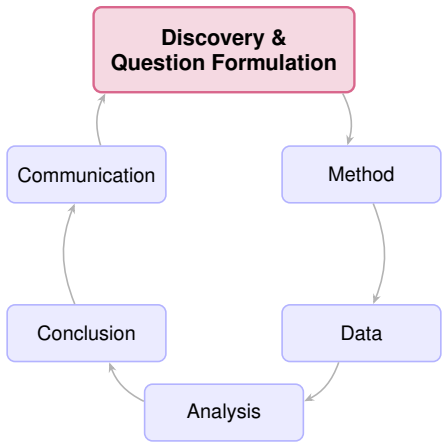
Guiding others through authentic scientific research outside of PhD programs has been practiced for decades in specialized secondary schools, undergraduate research programs, and independent settings. These practitioners work in the middle, between the classroom science teacher and the PhD advisor, guiding learners with aptitude or serious interest. Sport and music have dedicated professions for this middle position (the school-team coach and the school band director); research does not. This paper names that missing profession the Research Guide: the practitioner who develops another person's capacity to do research, from framing a question to communicating findings. Hundreds of thousands of middle and high school students already pursue authentic research each year, even more college undergraduates participate in research with a faculty member, and millions of adults engage in citizen science. In current practice, the programs that serve this middle group mostly default to a simplified version of the PhD apprenticeship model structured around one mentor with a few students at a time, without systematic training; they overwhelmingly frame research as the hypothetico-deductive cycle alone. The role calls for cognitive apprenticeship, a pedagogical approach in which an expert's tacit moves on open-ended problems are made visible and scaffolded, then faded as the learner develops, while the research outcomes themselves remain unpredictable. It spans multiple modes of inquiry (not only the hypothetico-deductive cycle) and demands a combination that no existing training program produces: pedagogy, research methodology, developmental assessment, risk and productive struggle management, domain flexibility, and community building. Together these demands warrant a dedicated profession: a named role, a training pathway, a career ladder, hiring standards, and institutional recognition.
Editorial analysis
A structured set of objections, weighed in public.
Referee Report
Summary. The paper argues that guiding authentic scientific research for pre-PhD learners (in secondary schools, undergraduate programs, and citizen science) constitutes an informal but distinct role that should be formalized as the profession of 'Research Guide.' It claims this role requires cognitive apprenticeship across multiple inquiry modes plus a skill combination (pedagogy, research methodology, developmental assessment, risk management, domain flexibility, community building) that no existing training program produces, thereby warranting a named role, training pathway, career ladder, hiring standards, and institutional recognition. Current practice is described as defaulting to an unsystematic PhD-apprenticeship model.
Significance. If the uniqueness claim holds, the paper would usefully name and frame a gap in science-education structures supporting the hundreds of thousands of students already doing authentic research, potentially informing policy on mentoring outside classrooms or PhD labs. The conceptual use of cognitive apprenticeship and the contrast with established professions in sport and music are coherent starting points.
major comments (2)
- [Abstract] Abstract, final paragraph: the central warrant that the role 'demands a combination that no existing training program produces' is asserted without any survey, citation, or comparative analysis of programs in science education, educational psychology, research mentoring, or related fields. This is load-bearing for the conclusion that a dedicated profession is required; if even modular combinations from existing programs cover the listed elements, the necessity of an entirely new named profession and institutional apparatus does not follow.
- [Abstract] Abstract, second paragraph: the claim that programs 'overwhelmingly default to a simplified version of the PhD apprenticeship model structured around one mentor with a few students at a time, without systematic training' and 'frame research as the hypothetico-deductive cycle alone' is presented as factual but unsupported by data, citations, or systematic observation. This underpins the argument that current practice is inadequate and requires professionalization.
minor comments (2)
- The manuscript would benefit from explicit section headings and numbered paragraphs to allow precise reference to claims about skill combinations or current practices.
- The contrast with sport and music professions is suggestive but would be strengthened by a brief reference to how those roles achieved professional status (training standards, certification, etc.).
Simulated Author's Rebuttal
We thank the referee for their constructive and substantive comments on our manuscript. The feedback correctly identifies that key claims in the abstract require stronger grounding to support the argument for professionalizing the Research Guide role. We have revised the manuscript by adding citations to relevant literature on undergraduate research experiences, secondary school mentoring programs, and science education training, along with a new subsection reviewing representative existing programs and explaining their limitations relative to the full skill set required. Our point-by-point responses to the major comments follow.
read point-by-point responses
-
Referee: [Abstract] Abstract, final paragraph: the central warrant that the role 'demands a combination that no existing training program produces' is asserted without any survey, citation, or comparative analysis of programs in science education, educational psychology, research mentoring, or related fields. This is load-bearing for the conclusion that a dedicated profession is required; if even modular combinations from existing programs cover the listed elements, the necessity of an entirely new named profession and institutional apparatus does not follow.
Authors: We agree that the original phrasing asserted the claim without explicit comparative analysis, which weakens its warrant. The manuscript is a conceptual proposal grounded in the authors' long-term observation of mentoring programs across secondary, undergraduate, and citizen-science settings, where no single pathway integrates all listed competencies (pedagogy, multi-mode inquiry, developmental assessment, risk management, domain flexibility, and community building). In revision we have qualified the abstract language and added a dedicated subsection that reviews established programs (e.g., those from the Council on Undergraduate Research, NSTA teacher professional development, and citizen-science facilitator training). This review shows that while modular components exist, none systematically combine the full set with cognitive apprenticeship across inquiry modes. We maintain that this gap justifies naming a distinct profession, while acknowledging that a comprehensive empirical survey would further strengthen the case. revision: yes
-
Referee: [Abstract] Abstract, second paragraph: the claim that programs 'overwhelmingly default to a simplified version of the PhD apprenticeship model structured around one mentor with a few students at a time, without systematic training' and 'frame research as the hypothetico-deductive cycle alone' is presented as factual but unsupported by data, citations, or systematic observation. This underpins the argument that current practice is inadequate and requires professionalization.
Authors: This characterization is based on patterns repeatedly documented in the authors' direct experience and in existing studies of research mentoring. We accept that the abstract presented it without supporting references. In the revised manuscript we have added citations to literature on undergraduate research experiences (e.g., studies from the Council on Undergraduate Research) and secondary-school authentic research programs, which consistently report low mentor-to-learner ratios and a predominant focus on the hypothetico-deductive cycle. A brief discussion of these sources now supports the description of the default model. A new, large-scale systematic observation is outside the scope of this conceptual paper, but the added references provide an evidentiary foundation for the claim. revision: partial
Circularity Check
No significant circularity in the derivation chain.
full rationale
The paper advances a descriptive and normative argument for professionalizing the 'Research Guide' role. It describes current informal practices, enumerates required competencies (pedagogy, research methodology, etc.), asserts that this combination is not produced by existing programs, and concludes that a dedicated profession is therefore warranted. No equations, fitted parameters, predictions, or first-principles derivations appear. The uniqueness claim is presented as an observation rather than derived from prior results within the paper, and no self-citation chain or definitional loop reduces the conclusion to the inputs by construction. The argument is self-contained as advocacy and does not exhibit any of the enumerated circularity patterns.
Axiom & Free-Parameter Ledger
axioms (2)
- domain assumption Cognitive apprenticeship is the appropriate pedagogical approach for developing research capacity on open-ended problems.
- domain assumption Current programs default to a simplified PhD apprenticeship model without systematic training and frame research only as the hypothetico-deductive cycle.
invented entities (1)
-
Research Guide
no independent evidence
Reference graph
Works this paper leans on
-
[1]
Brett et al
A. Brett et al. Research software engineers: State of the nation report. Technical report, Zenodo, 2017. URLhttps://zenodo.org/records/495360
2017
-
[2]
S. Gerovitch. “we teach them to be free”: Specialized math schools and the cultivation of the Soviet technical intelligentsia.Kritika: Explorations in Russian and Eurasian History, 20(4):717–754, 2019. doi: 10.1353/kri.2019.0066
-
[3]
Fuller and D
K. Fuller and D. Malvern. Challenge and change: A history of the Nuffield A-level physics project. Technical report, University of Reading, 2010. URL https://centaur.reading.ac.uk/75 34/
2010
-
[4]
J. Cohen, D. S. Katz, M. Barker, N. Chue Hong, R. Haines, and C. Jay. The four pillars of research software engineering.IEEE Software, 38(1):97–105, 2021. doi: 10.1109/MS.2020.2973362
-
[5]
Cognitive apprenticeship: Making thinking visible
Allan Collins, John Seely Brown, and Ann Holum. Cognitive apprenticeship: Making thinking visible. American Educator, 15(3), 1991. URL https://www.aft.org/ae/winter1991/collins_ brown_holum
1991
-
[6]
20 years of the young physicists’ tournament
Zdenˇek Kluiber and Ivo V olf. Conference: “20 years of the young physicists’ tournament” at Czech Republic.Latin-American Journal of Physics Education, 2(1):71–73, 2008. URL https://dialne t.unirioja.es/descarga/articulo/2735634.pdf
-
[7]
Is this TRE for me? Research experiences for teachers, 2020
AAAS-ARISE. Is this TRE for me? Research experiences for teachers, 2020. URL https://aaas -arise.org/2020/04/06/is-this-tre-for-me/
2020
-
[8]
J. S. Krim, L. E. Coté, R. S. Schwartz, E. M. Stone, J. J. Cleeves, K. J. Barry, W. Burgess, S. R. Buxner, J. M. Gerton, L. Horvath, J. M. Keller, S. M. Locke, and B. M. Rebar. Models and impacts of science research experiences: A review of the literature of CUREs, UREs, and TREs.CBE—Life Sciences Education, 18(4):ar65, 2019. doi: 10.1187/cbe.19-03-0069
-
[9]
C. Pfund, S. C. House, P. Asquith, M. F. Fleming, K. A. Buhr, E. L. Burnham, J. M. Eichen- berger Gilmore, W. C. Huskins, R. McGee, K. Schurr, E. D. Shapiro, K. C. Spencer, and C. A. Sorkness. Training mentors of clinical and translational research scholars: A randomized controlled trial.Academic Medicine, 89(5):774–782, 2014. doi: 10.1097/ACM.0000000000000218
-
[10]
National Academies Press, 2019
National Academies of Sciences, Engineering, and Medicine.The Science of Effective Mentorship in STEMM. National Academies Press, 2019. doi: 10.17226/25568
-
[11]
B. Govindan, S. Pickett, and B. Riggs. Fear of the CURE: A beginner’s guide to overcoming barriers in creating a course-based undergraduate research experience.Journal of Microbiology & Biology Education, 21(2), 2020. doi: 10.1128/jmbe.v21i2.2109
-
[12]
L. B. Limeri, N. T. Carter, R. A. Hess, T. T. Tuma, I. Koscik, A. J. Morrison, B. Outlaw, K. S. Royston, B. H. T. Bridges, and E. L. Dolan. Development of the mentoring in undergraduate research survey. CBE—Life Sciences Education, 2024. doi: 10.1187/cbe.23-07-0141. 21
-
[13]
AP program summary report 2025, 2025
College Board. AP program summary report 2025, 2025. URL https://apcentral.collegeb oard.org/media/pdf/program-summary-report-2025.pdf
2025
-
[14]
Diploma programme final statistical bulletin, may 2024
International Baccalaureate Organization. Diploma programme final statistical bulletin, may 2024. Technical report, IBO, 2024. URL https://www.ibo.org/globalassets/new-structu re/about-the-ib/pdfs/dp-final-statistical-bulletin-may-2024_en.pdf
2024
-
[15]
Inquiry and analysis V ALUE rubric, 2018
Association of American Colleges and Universities. Inquiry and analysis V ALUE rubric, 2018. URL https://www.aacu.org/value/rubrics/inquiry-analysis
2018
-
[16]
John W. Willison. Research skill development spanning higher education: Critiques, curricula and connections.Journal of University Teaching and Learning Practice, 15(4):Article 1, 2018. doi: 10.53761/1.15.4.1. URLhttps://ro.uow.edu.au/jutlp/vol15/iss4/1
-
[17]
David Lopatto. Survey of undergraduate research experiences (SURE): First findings.Cell Biology Education, 3(4):270–277, 2004. doi: 10.1187/cbe.04-07-0045. URL https://pubmed.ncbi.nl m.nih.gov/15592600/
-
[18]
Timothy J. Weston and Sandra L. Laursen. The Undergraduate Research Student Self-Assessment (URSSA): Validation for use in program evaluation.CBE—Life Sciences Education, 14(3):ar33, 2015. doi: 10.1187/cbe.14-11-0206. URL https://pmc.ncbi.nlm.nih.gov/articles/PMC471 0391/
-
[19]
Visible, Trackable, Forkable: Opening the Process of Science
Sergey V . Samsonau. Visible, trackable, forkable: Opening the process of science, 2026. URL https://arxiv.org/abs/2604.10932
work page internal anchor Pith review Pith/arXiv arXiv 2026
-
[20]
Stacia E. Rodenbusch, Paul R. Hernandez, Sarah L. Simmons, and Erin L. Dolan. Early engagement in course-based research increases graduation rates and completion of science, engineering, and mathematics degrees.CBE—Life Sciences Education, 15(2):ar20, 2016. doi: 10.1187/cbe.16-03-0117. URLhttps://pmc.ncbi.nlm.nih.gov/articles/PMC4909342/
-
[21]
Sergey V . Samsonau, Aziza Kurbonova, Lu Jiang, Hazem Lashen, Jiamu Bai, Theresa Merchant, Ruoxi Wang, Laiba Mehnaz, Zecheng Wang, and Ishita Patil. Artificial intelligence for scientific research: Authentic research education framework.arXiv preprint arXiv:2210.08966, 2024. URL https://arxiv.org/abs/2210.08966
-
[22]
Cara Gormally, Peggy Brickman, Brittan Hallar, and Norris Armstrong. Effects of inquiry-based learning on students’ science literacy skills and confidence.International Journal for the Scholarship of Teaching and Learning, 3(2):16, 2009. doi: 10.20429/ijsotl.2009.030216
-
[23]
Helen Walkington and Belinda Ommering. How does engaging in authentic research at undergraduate level contribute to student well-being?Studies in Higher Education, 47(12):2497–2507, 2022. doi: 10.1080/03075079.2022.2082400
-
[24]
Schmidt and Paul Kelter
Kathleen M. Schmidt and Paul Kelter. Science fairs: A qualitative study of their impact on student science inquiry learning and attitudes toward STEM.Science Educator, 25(2):127–132, 2017. URL https://files.eric.ed.gov/fulltext/EJ1132100.pdf
2017
-
[25]
J. M. Lakin, M. L. Ewald, E. E. Hardy, P. A. Cobine, J. G. Marino, A. L. Landers, and V . A. Davis. Getting everyone to the fair: Supporting teachers in broadening participation in science and engineering fairs.Journal of Science Education and Technology, 2021. doi: 10.1007/s10956-021-09910-7. 22
-
[26]
C. Zimmer. How science fairs became an exercise in privilege.STAT News, 2016. URL https: //www.statnews.com/2016/04/13/science-fairs-white-house/
2016
-
[27]
Engagement insights: Survey findings on the quality of under- graduate education
National Survey of Student Engagement. Engagement insights: Survey findings on the quality of under- graduate education. annual results 2019. Technical report, Indiana University Center for Postsecondary Research, 2020. URLhttps://files.eric.ed.gov/fulltext/ED604974.pdf
2019
-
[28]
K. Schneider, A. Kuperman, A. Watts, D. Barulich, and T. Campbell. Tracking and assessing under- graduate research campus-wide: Demographics, academic success, and postgraduation plans.Journal of the Scholarship of Teaching and Learning, 21(1):107–119, 2021. doi: 10.14434/josotl.v21i1.30290
-
[29]
Marcus Fechheimer, Karen Webber, and Pamela B. Kleiber. How well do undergraduate research programs promote engagement and success of students?CBE—Life Sciences Education, 10(2):156–163,
-
[30]
URL https://pmc.ncbi.nlm.nih.gov/articles/ PMC3105922/
doi: 10.1187/cbe.10-10-0130. URL https://pmc.ncbi.nlm.nih.gov/articles/ PMC3105922/
-
[31]
Undergraduate research participation at the university of california, berkeley
Elizabeth Berkes. Undergraduate research participation at the university of california, berkeley. Technical Report CSHE 17.08, Center for Studies in Higher Education, UC Berkeley, 2008. URL https://files.eric.ed.gov/fulltext/ED503339.pdf
2008
-
[32]
National Academies Press, 2018
National Academies of Sciences, Engineering, and Medicine.Learning Through Citizen Science: Enhancing Opportunities by Design. National Academies Press, 2018. doi: 10.17226/25183
-
[33]
M. J. Gruber, B. D. Gelman, and C. Ranganath. States of curiosity modulate hippocampus-dependent learning via the dopaminergic circuit.Neuron, 84(2):486–496, 2014. doi: 10.1016/j.neuron.2014.08.060
-
[34]
Kidd and B
C. Kidd and B. Y . Hayden. The psychology and neuroscience of curiosity.Neuron, 88(3):449–460,
-
[35]
doi: 10.1016/j.neuron.2015.09.010
-
[36]
Dewey.How We Think
J. Dewey.How We Think. D.C. Heath & Co., 1910. URL https://www.gutenberg.org/eboo ks/37423
1910
-
[37]
T. Vitone, K. A. Stofer, and A. E. Lucky. School of ants goes to college: Integrating citizen science into the general education classroom increases engagement with science.Journal of Science Communication, 15(1), 2016. doi: 10.22323/2.15010203
-
[38]
Yasemin Aslan, Ohid Yaqub, Bhaven N. Sampat, and Daniele Rotolo. Unexpectedness in medical research.Research Policy, 53(8):105075, 2024. doi: 10.1016/j.respol.2024.105075
-
[39]
Serendipity: Towards a taxonomy and a theory.Research Policy, 47(1):169–179, 2018
Ohid Yaqub. Serendipity: Towards a taxonomy and a theory.Research Policy, 47(1):169–179, 2018. doi: 10.1016/j.respol.2017.10.007
-
[40]
M. Muthukrishna and J. Henrich. A problem in theory.Nature Human Behaviour, 3(3):221–229, 2019. doi: 10.1038/s41562-018-0522-1
-
[41]
Galison.Image and Logic: A Material Culture of Microphysics
P. Galison.Image and Logic: A Material Culture of Microphysics. University of Chicago Press, 1997. ISBN 978-0-226-27917-6
1997
-
[42]
Jumper et al
J. Jumper et al. Highly accurate protein structure prediction with AlphaFold.Nature, 596:583–589,
-
[43]
doi: 10.1038/s41586-021-03819-2
-
[44]
P. Lemos, N. Jeffrey, M. Cranmer, S. Ho, and P. Battaglia. Rediscovering orbital mechanics with machine learning.Machine Learning: Science and Technology, 4(4):045002, 2023. doi: 10.1088/2632 -2153/acfa63. 23
-
[45]
J. Kates-Harbeck, A. Svyatkovskiy, and W. Tang. Predicting disruptive instabilities in controlled fusion plasmas through deep learning.Nature, 568:526–531, 2019. doi: 10.1038/s41586-019-1116-4
-
[46]
B. C. van Fraassen.The Scientific Image. Oxford University Press, 1980. ISBN 978-0-19-824427-1
1980
-
[47]
F. J. Boge. Two dimensions of opacity and the deep learning predicament.Minds and Machines, 32: 43–75, 2022. doi: 10.1007/s11023-021-09569-4
-
[48]
L. S. Vygotsky.Mind in Society: The Development of Higher Psychological Processes. Harvard University Press, 1978. ISBN 978-0-674-57629-2
1978
-
[49]
Lisa Corwin Auchincloss, Sandra L. Laursen, Janet L. Branchaw, Kevin Eagan, Mark Graham, David I. Hanauer, Gwendolyn Lawrie, Colleen M. McLinn, Nancy Pelaez, Susan Rowland, Marcy Towns, Nancy M. Trautmann, Pratibha Varma-Nelson, Timothy J. Weston, and Erin L. Dolan. Assessment of course-based undergraduate research experiences: A meeting report.CBE—Life S...
-
[50]
Rachelle M. Spell, Judith A. Guinan, Kristen R. Miller, and Christopher W. Beck. Redefining authentic research experiences in introductory biology laboratories and barriers to their implementation.CBE— Life Sciences Education, 13(1):102–110, 2014. doi: 10.1187/cbe.13-08-0169
-
[51]
Q. Hao, F. Xu, Y . Li, and J. A. Evans. Artificial intelligence tools expand scientists’ impact but contract science’s focus.Nature, 649, 2026. doi: 10.1038/s41586-025-09922-y
-
[52]
K. Budzy´n et al. Endoscopist deskilling risk after exposure to artificial intelligence in colonoscopy: A multicentre, observational study.The Lancet Gastroenterology & Hepatology, 10(10):896–903, 2025. doi: 10.1016/S2468-1253(25)00133-5
-
[53]
The future of jobs report 2025
World Economic Forum. The future of jobs report 2025. Technical report, World Economic Forum,
2025
-
[54]
Author Note Both authors have practiced the role this paper proposes to formalize
URL https://www.weforum.org/publications/the-future-of-jobs-rep ort-2025/. Author Note Both authors have practiced the role this paper proposes to formalize. Each trained in one of the two traditions this paper identifies as historical precedents, brought that training into the American education system, and encountered the same professional gap from diff...
2025
discussion (0)
Sign in with ORCID, Apple, or X to comment. Anyone can read and Pith papers without signing in.