Recognition: unknown
Radial adiabatic perturbations of stellar compact objects
Pith reviewed 2026-05-09 23:24 UTC · model grok-4.3
The pith
A covariant formulation of radial perturbations in imperfect fluids yields a causality-based upper bound on the compactness of stable anisotropic stars.
A machine-rendered reading of the paper's core claim, the machinery that carries it, and where it could break.
Core claim
We present a covariant and gauge-invariant formulation of the theory of radial adiabatic linear perturbations of self-gravitating, non-dissipative imperfect fluids within general relativity. Codifying the thermodynamical properties into an equation of state and an ansatz on anisotropic pressure involving both matter and kinematic variables, we obtain equations applicable to a wide variety of thermodynamic theories. As examples we evaluate Eckart, BDNK, and truncated Israel-Stewart theories. We introduce a new solution of the Einstein field equations and, imposing causality, propose an upper bound for the maximum compactness of dynamically stable stars with non-trivial radial and tangential 0
What carries the argument
The ansatz on anisotropic pressure that incorporates both matter and kinematic variables, which enables a unified treatment of different thermodynamic theories for the imperfect fluid and leads to the causality bound.
If this is right
- The perturbation equations can be used to analyze the stability of compact stars modeled by classical equilibrium solutions across multiple dissipative theories.
- The new solution to Einstein's equations provides a specific stellar model for testing the effects of anisotropy on radial oscillations.
- Causality requirements restrict the allowed compactness, offering a theoretical limit independent of specific details in some cases.
- Comparisons between Eckart, BDNK, and truncated Israel-Stewart predictions highlight differences in how anisotropy influences perturbation evolution.
Where Pith is reading between the lines
- If the bound holds, it could be used to rule out certain anisotropic equations of state when combined with observed mass-radius relations of neutron stars.
- The framework might be extended to include dissipative effects beyond the adiabatic approximation to study damping of perturbations.
- Applying the same approach to rotating stars or other symmetries could reveal analogous compactness limits in more general settings.
Load-bearing premise
The ansatz on anisotropic pressure that involves both matter and kinematic variables, along with the choice of specific thermodynamic theories for the imperfect fluid.
What would settle it
Detection or construction of a dynamically stable anisotropic star whose compactness exceeds the derived bound while maintaining causal propagation of perturbations would contradict the claim.
Figures




read the original abstract
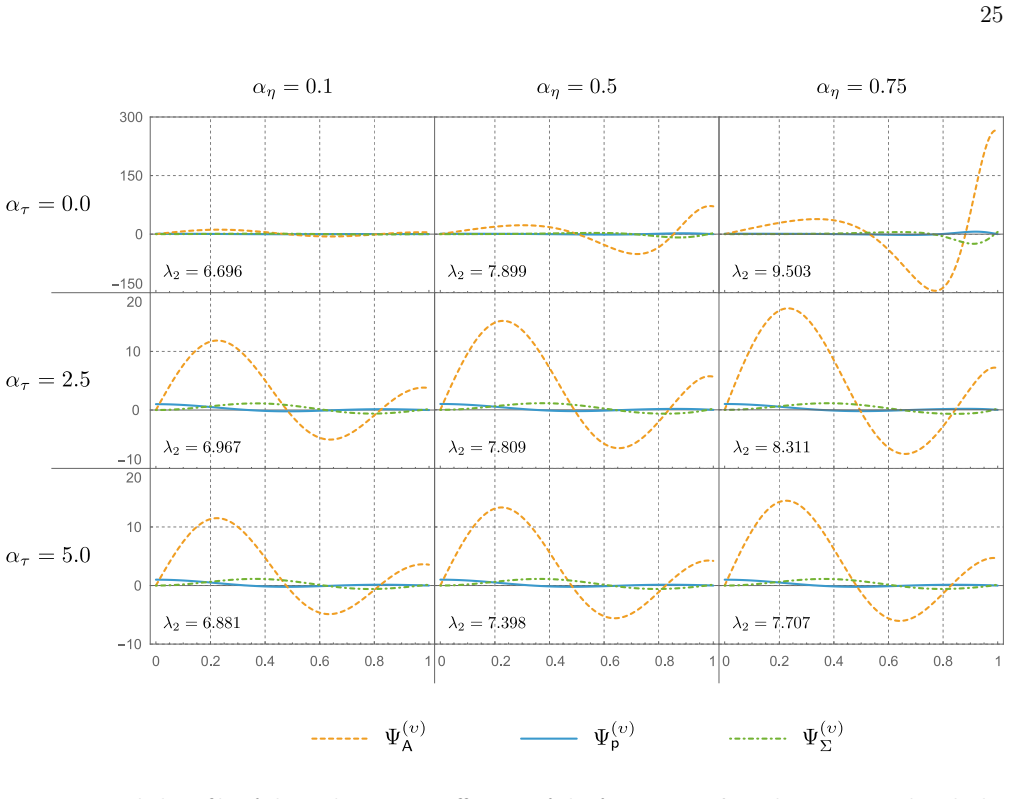
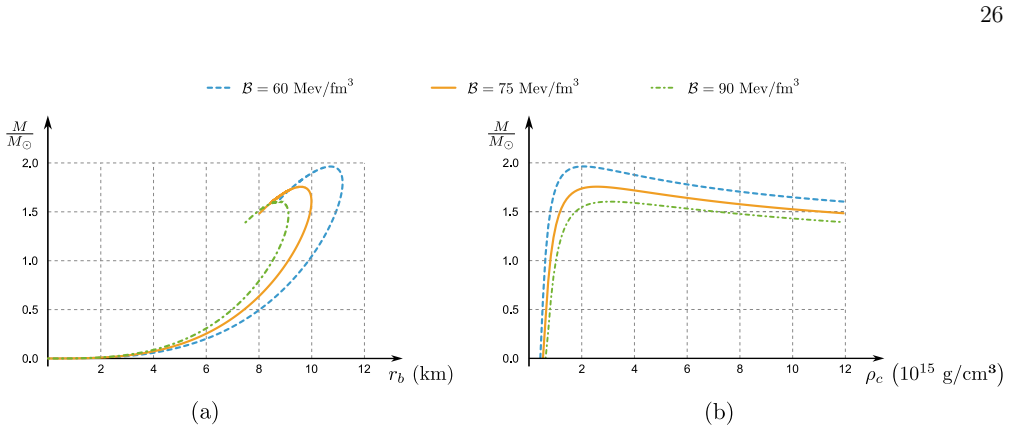
We present a covariant and gauge-invariant formulation of the theory of radial adiabatic linear perturbations of self-gravitating, non-dissipative imperfect fluids within the theory of general relativity. By codifying the thermodynamical properties of the source into an equation of state and an ansatz on anisotropic pressure that involves both matter and kinematic variables, we obtain a set of equations that is directly applicable to a wide variety of thermodynamic theories for matter fields. As examples, we evaluate and compare the predictions of the Eckart theory, the Bemfica-Disconzi-Noronha-Kovtun theory, and the Truncated Israel-Stewart theory on the properties and evolution of radial adiabatic perturbations of stellar compact objects modeled by classical equilibrium solutions. Introducing a new solution of the Einstein field equations, and imposing causality, we propose an upper bound for the maximum compactness of dynamically stable stars with non-trivial radial and tangential pressures.
Editorial analysis
A structured set of objections, weighed in public.
Referee Report
Summary. The paper develops a covariant gauge-invariant formulation for radial adiabatic linear perturbations of self-gravitating non-dissipative imperfect fluids in GR. An equation of state together with an ansatz for anisotropic pressure (depending on both matter variables and kinematic quantities such as expansion and shear) is used to close the system, making the equations applicable to Eckart, BDNK and truncated Israel-Stewart theories. A new equilibrium solution of the Einstein equations is introduced and, after imposing causality, an upper bound on the maximum compactness of dynamically stable stars with non-trivial radial and tangential pressures is proposed.
Significance. If the ansatz can be shown to be consistent with the non-dissipative limit and if the causality constraint remains unaltered by the kinematic dependence, the resulting compactness bound would provide a useful, theory-independent limit on anisotropic compact-object models. The framework's ability to compare multiple dissipative theories within a single perturbation formalism is a positive feature, though the bound's robustness hinges on the ansatz.
major comments (3)
- [§3] §3 (ansatz for anisotropic pressure): The functional form of the ansatz for the anisotropic pressure, which mixes matter variables with kinematic quantities (expansion, shear), is posited rather than derived from the Einstein equations or a variational principle. Because this ansatz is used to close the perturbation equations and to obtain the compactness bound, its consistency with the non-dissipative condition stated in the abstract must be demonstrated explicitly (e.g., by verifying that the kinematic contributions vanish when dissipation is absent).
- [§4] §4 (new equilibrium solution): The new solution of the Einstein field equations is introduced without a clear derivation or stability analysis. Since the proposed compactness bound is obtained by applying causality to this solution, the metric functions, energy density and pressure profiles must be given explicitly and shown to satisfy the equilibrium equations before the bound can be considered reliable.
- [§5] §5 (causality constraint and bound): The characteristic speeds used to impose causality are computed after the ansatz has been substituted. It is not shown whether the kinematic dependence inside the ansatz modifies the sound speeds or the causality condition itself; a direct comparison of the characteristic equation with and without the kinematic terms is required to confirm that the bound follows for general imperfect fluids.
minor comments (2)
- [Abstract] The abstract states that the fluid is non-dissipative, yet the ansatz retains explicit dependence on expansion and shear; a short clarifying sentence in the introduction would remove potential confusion.
- [§2] Notation for the anisotropic pressure scalar (Π) and its decomposition into radial/tangential components should be defined once at first use and used consistently thereafter.
Simulated Author's Rebuttal
We thank the referee for their careful reading of the manuscript and for the constructive major comments, which have helped us improve the clarity and rigor of the presentation. We address each point below and have revised the manuscript accordingly.
read point-by-point responses
-
Referee: [§3] §3 (ansatz for anisotropic pressure): The functional form of the ansatz for the anisotropic pressure, which mixes matter variables with kinematic quantities (expansion, shear), is posited rather than derived from the Einstein equations or a variational principle. Because this ansatz is used to close the perturbation equations and to obtain the compactness bound, its consistency with the non-dissipative condition stated in the abstract must be demonstrated explicitly (e.g., by verifying that the kinematic contributions vanish when dissipation is absent).
Authors: We agree that an explicit check is required. The ansatz was constructed to recover standard non-dissipative anisotropic models when dissipative fluxes vanish. In the revised manuscript we have added a short calculation in Section 3 demonstrating that the coefficients of the expansion and shear terms are proportional to the dissipative variables; these coefficients therefore vanish identically in the non-dissipative limit, leaving only the matter-dependent part of the anisotropy. This verification is now included before the perturbation equations are derived. revision: yes
-
Referee: [§4] §4 (new equilibrium solution): The new solution of the Einstein field equations is introduced without a clear derivation or stability analysis. Since the proposed compactness bound is obtained by applying causality to this solution, the metric functions, energy density and pressure profiles must be given explicitly and shown to satisfy the equilibrium equations before the bound can be considered reliable.
Authors: The solution was obtained by direct integration of the Einstein equations under the assumed static spherical symmetry and the chosen equation of state plus anisotropy ansatz. In the revision we have inserted the full derivation as Appendix A, giving the explicit metric functions, energy-density and pressure profiles, and verifying that they satisfy the generalized Tolman-Oppenheimer-Volkoff equation for anisotropic fluids. A complete linear stability analysis of the background lies outside the scope of the present work, whose focus is the radial perturbation dynamics; we have added a brief remark confirming regularity and energy-condition compliance. revision: partial
-
Referee: [§5] §5 (causality constraint and bound): The characteristic speeds used to impose causality are computed after the ansatz has been substituted. It is not shown whether the kinematic dependence inside the ansatz modifies the sound speeds or the causality condition itself; a direct comparison of the characteristic equation with and without the kinematic terms is required to confirm that the bound follows for general imperfect fluids.
Authors: We have performed the requested comparison. The characteristic equation is obtained from the principal part of the first-order system. Substituting the ansatz shows that the kinematic contributions enter the effective sound-speed matrix but cancel exactly in the high-frequency (null) limit that determines the causality bound. Consequently the upper limit on compactness is identical with or without the kinematic terms. This explicit comparison has been added as a new paragraph in Section 5. revision: yes
Circularity Check
No significant circularity; bound follows from causality on new solution
full rationale
The derivation introduces a covariant perturbation formalism, codifies thermodynamics via an explicit ansatz on anisotropic pressure (an input assumption applicable across Eckart/BDNK/truncated Israel-Stewart theories), constructs a new static Einstein solution, and then imposes causality to obtain the compactness bound. No equation reduces the final bound to a fitted parameter, self-citation, or definitional identity; the causality constraint is applied externally to the closed perturbation system rather than presupposing the result. The ansatz is posited to enable the framework but does not embed the target bound by construction.
Axiom & Free-Parameter Ledger
free parameters (1)
- parameters in the anisotropic pressure ansatz
axioms (2)
- standard math General relativity governs the spacetime and matter coupling
- domain assumption Perturbations are linear, radial, and adiabatic
invented entities (1)
-
New solution of the Einstein field equations
no independent evidence
Forward citations
Cited by 1 Pith paper
-
Series solutions to the TOV equations
Power series and Padé approximants yield analytic approximations for mass and radius of compact stars from the TOV equations, applicable to affine, polytropic, and piecewise equations of state.
Reference graph
Works this paper leans on
-
[1]
[58] reads pt−pr =ζHβpr⇔3 2Π =−ζHβ(p+ Π),(A2) whereζH∈Randβ=β(xα)is a function of the spacetime representing the compactness of the star at a given circumferential radius
Quasi-local ansatz The so-called quasi-local ansatz introduced by Horvat et al. [58] reads pt−pr =ζHβpr⇔3 2Π =−ζHβ(p+ Π),(A2) whereζH∈Randβ=β(xα)is a function of the spacetime representing the compactness of the star at a given circumferential radius. In a static, spherically symmetric spacetime the compactness can be written covariantly in terms of the 1...
-
[2]
Taking the dot-derivative, we find 16ζBL 3ϕ3 (µ+p+ Π) (µ+ 3p+ 3Π)F−16ζBL 3ϕ2 (µ+ 2p+ 2Π)m −16ζBL 3ϕ2 (2µ+ 3p+ 3Π)p− [ 16ζBL 3ϕ2 (2µ+ 3p+ 3Π) + 1 ] P= 0
Bowers-Liang ansatz The model derived by Bowers and Liang for a constant-density anisotropic star [48] follows from considering the non-linear relation between the matter variables: pt−pr = 4 ϕ2ζBL (µ+pr) (µ+ 3pr)⇔Π =−8 3ϕ2ζBL (µ+p+ Π) (µ+ 3p+ 3Π),(A6) whereζBL∈R. Taking the dot-derivative, we find 16ζBL 3ϕ3 (µ+p+ Π) (µ+ 3p+ 3Π)F−16ζBL 3ϕ2 (µ+ 2p+ 2Π)m −1...
-
[3]
Herrera-Barreto ansatz The model formalized by Herrera and Barreto [5] reads pt−pr = (ζHB−1)r 2ζHB dpr dr ⇔Π =−2 (ζHB−1) 3ζHBϕ ( ˆp+ ˆΠ ) ,(A9) whereζHB∈R. Using the conservation law, in the absence of dissipative heat flows and setting vector and tensor components to zero, ˆp+ ˆΠ =−3 2ϕΠ−(µ+p+ Π)A,(A10) equation (A9) can be written as the algebraic equat...
-
[4]
Covariant ansatz The anisotropic ansatz introduced by Raposo et al. in Ref. [57], has been dubbed in the literature as the covariant ansatz, due to its manifestly covariant form. The ansatz reads pr−pt =ζRh(µ)ˆpr⇔3 2Π =ζRh(µ) ( ˆp+ ˆΠ ) ,(A14) whereζR∈Randh(µ)is an arbitrary differentiable function of the energy density,µ. Using the conservation law (A10)...
-
[5]
Eckart theory and the BDNK effective theory The Eckart theory for non-equilibrium thermodynamics provides the following relation between the anisotropic pressure scalar and the shear scalar: Π =−2ηΣ,(A18) whereηrepresents the shear viscosity of the fluid and is assumed to be a function of the matter variables. Taking the dot-derivative of this equation yi...
-
[6]
Truncated Israel-Stewart theory for non-equilibrium thermodynamics The Truncated Israel-Stewart theory for non-equilibrium thermodynamics, also called the Maxwell-Cattaneo form of Israel-Stewart theory, [44, 45] yields the following differential equation for the anisotropic pressure τ2hµ αhν β˙πµν+παβ=−2ησαβ,(A22) whereτ2 is a relaxational time associated...
-
[7]
Local anisotropy in self-gravitating systems
L. Herrera, and N. O. Santos,“Local anisotropy in self-gravitating systems”, Phys. Rept.286, 53 (1997). 41
1997
-
[8]
Self-gravitating anisotropic fluids. I: context and overview
T. Cadogan, and E. Poisson, “Self-gravitating anisotropic fluids. I: context and overview”, Gen. Rel. Grav.56, 118 (2024); arXiv:2406.03185 [gr-qc]
-
[9]
Self-gravitating anisotropic fluid. II: Newtonian theory
T. Cadogan, and E. Poisson, “Self-gravitating anisotropic fluid. II: Newtonian theory”, Gen. Rel. Grav.56, 119 (2024); arXiv:2406.03191 [gr-qc]
-
[10]
Self-gravitating anisotropic fluid. III: relativistic theory,
T. Cadogan, and E. Poisson, “Self-gravitating anisotropic fluid. III: relativistic theory,” Gen. Rel. Grav.56, 120 (2024); arXiv:2406.03196 [gr-qc]
-
[11]
General relativistic polytropes for anisotropic matter: The general formalism and applications
L. Herrera, and W. Barreto, “General relativistic polytropes for anisotropic matter: The general formalism and applications”, Phys. Rev. D88, 084022 (2013); arXiv:1310.1114 [gr-qc]
-
[12]
Cracking of general relativistic anisotropic polytropes
L. Herrera, E. Fuenmayor, and P. León, “Cracking of general relativistic anisotropic polytropes”, Phys. Rev. D93, 024047 (2016)
2016
-
[13]
All static spherically symmetric anisotropic solutions of Einstein’s equations
L. Herrera, J. Ospino and A. Di Prisco, “All static spherically symmetric anisotropic solutions of Einstein’s equations”, Phys. Rev. D77, 027502 (2008)
2008
-
[14]
A New algorithm for anisotropic solutions
M. Chaisi, and S. D. Maharaj, “A New algorithm for anisotropic solutions”, Pramana66, 313 (2006)
2006
-
[15]
Anisotropic stars in general relativity
M. K. Mak, and T. Harko, “Anisotropic stars in general relativity”, Proc. Roy. Soc. Lond. A459, 393 (2003)
2003
-
[16]
Anisotropic Superfluidity in Neutron Star Matter
M. Hoffberg, A. E. Glassgold, R. W. Richardson, and M. Ruderman, “Anisotropic Superfluidity in Neutron Star Matter”, Phys. Rev. Lett.24, 775 (1970)
1970
-
[17]
Anisotropic spheres in general relativity
H. Rago, “Anisotropic spheres in general relativity”, IC-91-13
-
[18]
Ginzburg-landau theory of anisotropic superfluid neutron-star matter
R. W. Richardson, “Ginzburg-landau theory of anisotropic superfluid neutron-star matter”, Phys. Rev. D5, 1883 (1972)
1972
-
[19]
Modelling usual and unusual anisotropic spheres
S. Viaggiu, “Modelling usual and unusual anisotropic spheres”, Int. J. Mod. Phys. D18, 275 (2009)
2009
-
[20]
The general relativistic double polytrope for anisotropic matter
G. Abellan, E. Fuenmayor, E. Contreras and L. Herrera, “The general relativistic double polytrope for anisotropic matter”, Phys. Dark Univ.30, 100632 (2020)
2020
-
[21]
Anisotropic generalization of well-known solutions describing relativistic self-gravitating fluid systems: an algorithm
S. Thirukkanesh, F. C. Ragel, R. Sharma and S. Das, “Anisotropic generalization of well-known solutions describing relativistic self-gravitating fluid systems: an algorithm”, Eur. Phys. J. C78, 31 (2018)
2018
-
[22]
A new family of analytical anisotropic solutions by gravitational decoupling
M. Estrada and F. Tello-Ortiz, “A new family of analytical anisotropic solutions by gravitational decoupling”, Eur. Phys. J. Plus133, 453 (2018)
2018
-
[23]
Some analytic models of relativistic compact stars
K. N. Singh, N. Pant, and M. Govender, “Some analytic models of relativistic compact stars”, Indian J. Phys.90, 1215 (2016)
2016
-
[24]
Generalised model for anisotropic compact stars
S. K. Maurya, Y. K. Gupta, S. Ray, and D. Deb, “Generalised model for anisotropic compact stars”, 42 Eur. Phys. J. C76, 693 (2016)
2016
-
[25]
Relativistic modeling of compact stars for anisotropic matter distribution
S. K. Maurya, “Relativistic modeling of compact stars for anisotropic matter distribution”, Eur. Phys. J. A53, 89 (2017)
2017
-
[26]
Analytical study of anisotropic compact star models
B. V. Ivanov, “Analytical study of anisotropic compact star models”, Eur. Phys. J. C77, 738 (2017)
2017
-
[27]
Well behaved anisotropic compact star models in general relativity
M. K. Jasim, S. K. Maurya, Y. K. Gupta, and B. Dayanandan, “Well behaved anisotropic compact star models in general relativity”, Astrophys. Space Sci.361, 352 (2016)
2016
-
[28]
A new model for spherically symmetric anisotropic compact star
S. K. Maurya, Y. K. Gupta, B. Dayanandan, and S. Ray, “A new model for spherically symmetric anisotropic compact star”, Eur. Phys. J. C76, 266 (2016)
2016
-
[29]
A new class of relativistic model of compact stars of embedding class I
P. Bhar, K. N. Singh, and T. Manna, “A new class of relativistic model of compact stars of embedding class I”, Int. J. Mod. Phys. D26, 1750090 (2017)
2017
-
[30]
Decoupling gravitational sources in general relativity: from perfect to anisotropic fluids
J. Ovalle, “Decoupling gravitational sources in general relativity: from perfect to anisotropic fluids”, Phys. Rev. D95, 104019 (2017)
2017
-
[31]
Gravitational decoupled anisotropies in compact stars
L. Gabbanelli, Á. Rincón, and C. Rubio, “Gravitational decoupled anisotropies in compact stars”, Eur. Phys. J. C78, 370 (2018)
2018
-
[32]
Anisotropic solutions by gravitational de- coupling
J. Ovalle, R. Casadio, R. da Rocha and A. Sotomayor, “Anisotropic solutions by gravitational de- coupling”, Eur. Phys. J. C78, 122 (2018)
2018
-
[33]
Anisotropic models for compact stars,
S. K. Maurya, Y. K. Gupta, S. Ray, and B.Dayanandan, “Anisotropic models for compact stars,” Eur. Phys. J. C75, 225 (2015)
2015
-
[34]
Covariant Tolman-Oppenheimer-Volkoff equations. I. The isotropic case
S. Carloni, and D. Vernieri, “Covariant Tolman-Oppenheimer-Volkoff equations. I. The isotropic case”, Phys. Rev. D97, 124056 (2018); arXiv:1709.02818 [gr-qc]
-
[35]
Covariant Tolman-Oppenheimer-Volkoff equations. II. The anisotropic case,
S. Carloni, and D. Vernieri, “Covariant Tolman-Oppenheimer-Volkoff equations. II. The anisotropic case”, Phys. Rev. D97, 124057 (2018); arXiv:1709.03996 [gr-qc]
-
[36]
Generating anisotropic models for relativistic stellar objects
P. Luz, and S. Carloni, “Generating anisotropic models for relativistic stellar objects”, arXiv:2604.11296 [gr-qc]
work page internal anchor Pith review Pith/arXiv arXiv
-
[37]
Covariant perturbations of Schwarzschild black holes
C. A. Clarkson, and R. K. Barrett, “ Covariant perturbations of Schwarzschild black holes” , Class. Quant. Grav.20, 3855 (2003); arXiv:gr-qc/0209051
-
[38]
A covariant approach for perturbations of rotationally symmetric spacetimes
C. A. Clarkson, “A covariant approach for perturbations of rotationally symmetric spacetimes”, Phys. Rev. D76, 104034 (2007); arXiv:0708.1398 [gr-qc]
work page Pith review arXiv 2007
-
[39]
Dynamics of pressure free matter in general relativity
G. F. R. Ellis, “Dynamics of pressure free matter in general relativity”, J. Math. Phys.8, 1171 (1967)
1967
-
[40]
A Class of homogeneous cosmological models
G. F. R. Ellis, and M. A. H. MacCallum, “A Class of homogeneous cosmological models”, Commun. 43 Math. Phys.12, 108 (1969)
1969
-
[41]
Solutions of Einstein’s equations for a fluid which exhibits local rotational symmetry
J. M. Stewart, and G. F. R. Ellis, “Solutions of Einstein’s equations for a fluid which exhibits local rotational symmetry”, J. Math. Phys.9, 1072 (1968)
1968
-
[42]
Spacetimeswithcontinuouslocalisotropies
M.A.H.MacCallum, “Spacetimeswithcontinuouslocalisotropies”, Int.J.Mod.Phys.D31, 2240005 (2022)
2022
-
[43]
Scalar field and electromagnetic perturbations on Locally Rota- tionally Symmetric spacetimes
G. Betschart, and C. A. Clarkson, “Scalar field and electromagnetic perturbations on Locally Rota- tionally Symmetric spacetimes”, Class. Quant. Grav.21, 5587 (2004); arXiv:gr-qc/0404116
-
[44]
R. Törnkvist, and M. Bradley, “General Perfect Fluid Perturbations of Homogeneous and Orthog- onal Locally Rotationally Symmetric Class II Cosmologies”, Phys. Rev. D100, 124043 (2019); arXiv:1910.00892 [gr-qc]
-
[45]
P. Semrén, and M. Bradley, “Perturbations of a class of locally rotationally symmetric cosmologies with applications to dissipative fluids”, Class. Quant. Grav.39, 235003 (2022); arXiv:2204.02244 [gr-qc]
-
[46]
GaugeinvariantperturbationsofstaticspatiallycompactLRSIIspacetimes
P.Luz, andS.Carloni, “GaugeinvariantperturbationsofstaticspatiallycompactLRSIIspacetimes”, Class. Quant. Grav.41, 235012 (2024); arXiv:2405.05321 [gr-qc]
-
[47]
Adiabatic radial perturbations of relativistic stars: Analytic solutions to an old problem
P. Luz, and S. Carloni, “Adiabatic radial perturbations of relativistic stars: Analytic solutions to an old problem”, Phys. Rev. D110, 084054 (2024); arXiv:2405.06740 [gr-qc]
-
[48]
Noncomoving description of adiabatic radial perturbations of relativistic stars
P. Luz, and S. Carloni, “Noncomoving description of adiabatic radial perturbations of relativistic stars”, Phys. Rev. D110, 084055 (2024); arXiv:2405.10359 [gr-qc]
-
[49]
Perturbations of Space-Times in General Relativity
J. M. Stewart, and M. Walker, “Perturbations of Space-Times in General Relativity” , Proc. R. Soc. Lond. A341, 49 (1974)
1974
-
[50]
Nonstationary irreversible thermodynamics: A causal relativistic theory
W. Israel, “Nonstationary irreversible thermodynamics: A causal relativistic theory”, Annals Phys. 100, 310 (1976)
1976
-
[51]
Transient relativistic thermodynamics and kinetic theory
W. Israel, and J. M. Stewart, “Transient relativistic thermodynamics and kinetic theory”, Annals Phys.118, 341 (1979)
1979
-
[52]
E. A. Coddington, and N. Levinson,Theory of ordinary differential equations(McGraw-Hill, New York, 1955)
1955
-
[53]
Static Solutions of Einstein’s Field Equations for Spheres of Fluid
R. C. Tolman, “ Static Solutions of Einstein’s Field Equations for Spheres of Fluid”, Phys. Rev.55, 364 (1939)
1939
-
[54]
Anisotropic Spheres in General Relativity
R. L. Bowers, and E. P. T. Liang, “Anisotropic Spheres in General Relativity”, Astrophys. J.188, 657 (1974). 44
1974
-
[55]
The dynamical response of viscous objects to gravitational waves
V. Boyanov, V. Cardoso, K. D. Kokkotas, and J. Redondo-Yuste, “The dynamical response of viscous objects to gravitational waves”, Phys. Rev. Lett.135, 151402 (2025); arXiv:2411.16861 [gr-qc]
-
[56]
Cosmic separation of phases
E. Witten, “Cosmic separation of phases”, Phys. Rev. D30, 272 (1984)
1984
-
[57]
Strange matter
E. Farhi, and R.L. Jaffe, “Strange matter”, Phys. Rev. D30, 2379 (1984)
1984
-
[58]
Radial oscillations of neutron stars and strange stars
H.M. Väth, and G. Chanmugam, “Radial oscillations of neutron stars and strange stars”, Astron. Astrophys.260, 250 (1992)
1992
-
[59]
Avoided crossings in radial pulsations of neutron and strange stars
D. Gondek, and J. L. Zdunik, “Avoided crossings in radial pulsations of neutron and strange stars”, Astron. Astrophys.344, 117 (1999)
1999
-
[60]
Radial stability of anisotropic strange quark stars
J. D.V. Arbañil, and M. Malheiro, “Radial stability of anisotropic strange quark stars”, JCAP11, 012 (2016)
2016
-
[61]
Quasinormalf-modesofanisotropicquarkstarsinfullgeneralrelativity
S.Mondal, andM.Bagchi, “Quasinormalf-modesofanisotropicquarkstarsinfullgeneralrelativity”, Phys. Rev. D111, 103035 (2025)
2025
-
[62]
S. Mondal, and M. Bagchi, “f-mode oscillations of anisotropic neutron stars in full general relativity”, Phys. Rev. D110, 123011 (2024); arXiv:2309.00439 [gr-qc]
-
[63]
Anisotropic stars as ultracompact objects in General Relativity,
G. Raposo, P. Pani, M. Bezares, C. Palenzuela, and V. Cardoso, “Anisotropic stars as ultracompact objects in General Relativity”, Phys. Rev. D99, 104072 (2019); arXiv:1811.07917 [gr-qc]
- [64]
-
[65]
Causality and existence of solutions of relativistic viscous fluid dynamics with gravity,
F. S. Bemfica, M. M. Disconzi, and J. Noronha, “Causality and existence of solutions of relativistic viscous fluid dynamics with gravity”, Phys. Rev. D98, 104064 (2018); arXiv:1708.06255 [gr-qc]
-
[66]
Nonlinear Causality of General First-Order Relativistic Viscous Hydrodynamics,
F. S. Bemfica, M. M. Disconzi, and J. Noronha, “Nonlinear causality of general first-order relativistic viscous hydrodynamics”, Phys. Rev. D100, 104020 (2019); arXiv:1907.12695 [gr-qc]
-
[67]
First-order relativistic hydrodynamics is stable,
P. Kovtun, “First-order relativistic hydrodynamics is stable”, JHEP34, 1910 (2019); arXiv:1907.08191 [hep-th]
-
[68]
First-Order General-Relativistic Viscous Fluid Dynamics
F. S. Bemfica, M. M. Disconzi, and J. Noronha, “First-Order General-Relativistic Viscous Fluid Dynamics”, Phys. Rev. X12, 021044 (2022)
2022
discussion (0)
Sign in with ORCID, Apple, or X to comment. Anyone can read and Pith papers without signing in.