Recognition: unknown
Co-rotating Vortices on Surfaces of Variable Negative Curvature: Hamiltonian Structure and Drift Dynamics
Pith reviewed 2026-05-07 14:25 UTC · model grok-4.3
The pith
Two identical vortices on a catenoid rotate rigidly at fixed latitude with speed set by the curvature gradient
A machine-rendered reading of the paper's core claim, the machinery that carries it, and where it could break.
Core claim
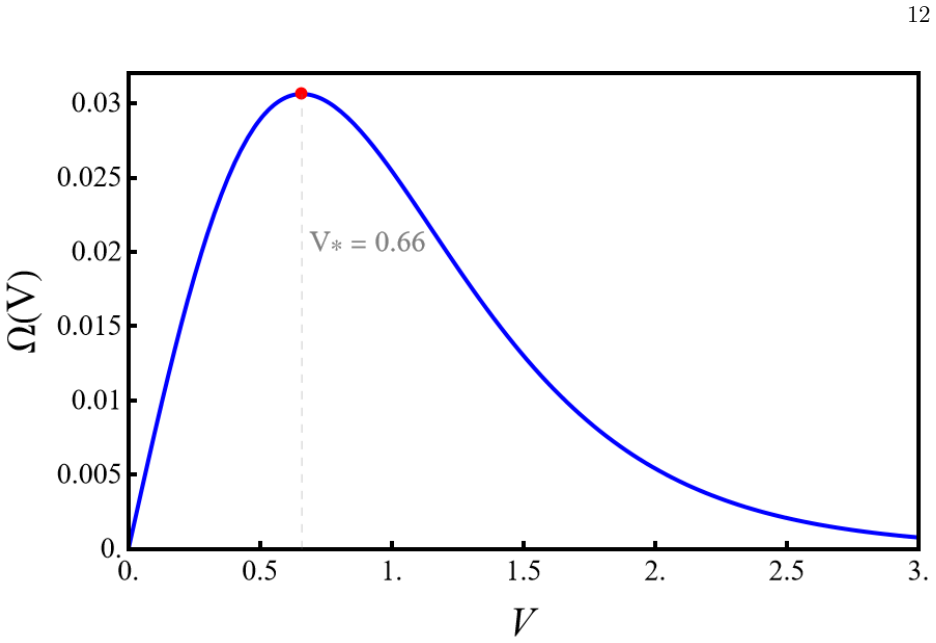
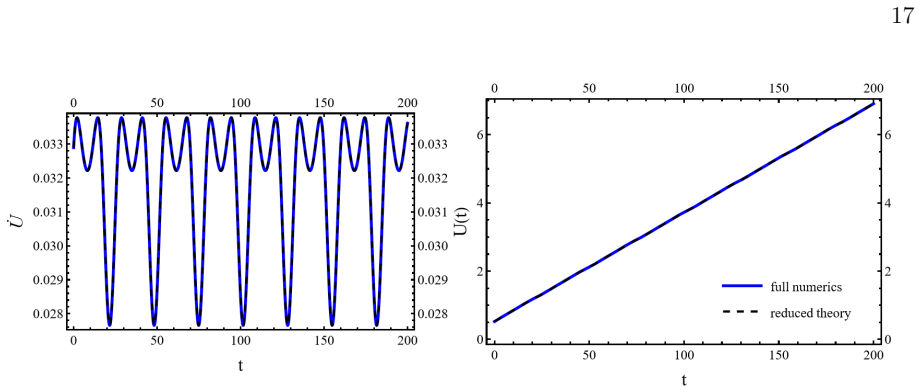
On the catenoid two identical vortices admit an exact antipodal solution in which they co-rotate rigidly at fixed latitude. Their common angular velocity is given by Ω = (Γ/16π) K'(V)/√(-K(V)), where K(V) is the Gaussian curvature. The symmetric state is linearly unstable with growth rate λ = √3 |Ω|. For generic equal-strength pairs, conservation of the Hamiltonian and rotational momentum reduces the dynamics to a single quadrature that produces bounded relative oscillations together with secular azimuthal drift.
What carries the argument
The Hamiltonian for point vortices on the catenoid, constructed from the Green's function of the surface metric, which supplies the conserved quantities that allow exact reduction of the co-rotating-pair dynamics to quadrature.
If this is right
- The rotation rate of the antipodal pair depends on the gradient of curvature rather than on the curvature value.
- The antipodal configuration is linearly unstable with growth rate √3 times the absolute value of the rotation rate.
- Generic equal-strength pairs undergo bounded oscillations in separation accompanied by continuous azimuthal drift.
- Curvature-induced drift appears in simulations of localized many-vortex clusters on the same surface.
Where Pith is reading between the lines
- The same gradient-driven rotation and drift may appear on other surfaces whose negative curvature varies smoothly.
- Collective vortex transport on curved geometries could produce net vorticity redistribution without external forcing.
- The explicit instability growth rate supplies a testable timescale for the breakup of symmetric vortex pairs.
Load-bearing premise
The point-vortex idealization together with the specific Hamiltonian derived from the Biot-Savart law on the catenoid metric remains valid for the co-rotating pairs examined.
What would settle it
A numerical integration or laboratory realization of two identical vortices placed antipodally on a catenoid that fails to rotate at the angular velocity Ω = (Γ/16π) K'(V)/√(-K(V)) would disprove the exact solution.
Figures



read the original abstract
Vortices in fluids and superfluids underpin phenomena ranging from Bose--Einstein condensates and superfluid films to neutron stars and hydrodynamic micro-rotors, where geometry can strongly influence their motion. Curvature can induce vortex motion with no planar analogue. We study Hamiltonian vortex motion on a catenoid, a minimal surface of variable negative curvature, and derive explicit equations of motion, conserved quantities, and reductions for co-rotating vortex pairs. For two identical vortices we find an exact antipodal solution in which the pair rotates rigidly at fixed latitude, with angular velocity $\Omega=(\Gamma/16\pi)\,K'(V)/\sqrt{-K(V)}$, where $K(V)$ is the Gaussian curvature. Thus the motion is governed by the curvature gradient rather than the curvature itself. The symmetric state is linearly unstable, with growth rate $\lambda=\sqrt{3}|\Omega|$, in agreement with numerical simulations. For generic equal-strength pairs, conservation of the Hamiltonian and rotational momentum reduces the nonlinear dynamics to a single quadrature, yielding bounded relative oscillations together with a secular azimuthal drift. Simulations of the full equations confirm the reduced theory and reveal the same curvature-induced transport mechanism in a localized many-vortex cluster, motivating a broader theory of collective vortex drift on curved surfaces.
Editorial analysis
A structured set of objections, weighed in public.
Referee Report
Summary. The manuscript constructs the Hamiltonian for point vortices on the catenoid via the Green's function of the Laplace-Beltrami operator on its metric, derives the equations of motion for co-rotating pairs, identifies an exact antipodal rigid-rotation equilibrium whose angular velocity is Ω = (Γ/16π) K'(V)/√(-K(V)), shows that this state is linearly unstable with growth rate λ = √3 |Ω|, reduces the two-vortex dynamics to a single quadrature that yields bounded relative oscillations plus secular azimuthal drift, and verifies all analytic results by direct numerical integration of the full equations, including a demonstration of the same curvature-gradient transport in a localized many-vortex cluster.
Significance. If the derivations hold, the work supplies one of the few exact, parameter-free solutions for vortex motion on a surface whose Gaussian curvature is neither constant nor zero. The explicit reduction to quadrature, the closed-form instability rate, and the direct numerical confirmation of both the equilibrium and the reduced dynamics constitute reproducible, falsifiable results that can serve as benchmarks for collective vortex theories on curved manifolds.
minor comments (3)
- [§2] The definition of the coordinate V and the explicit form of the catenoid metric (including the range of V) should appear in the first section that introduces the geometry, rather than being deferred.
- [§5] In the many-vortex simulation paragraph, the number of vortices, their initial placement, and the precise diagnostic used to extract the drift velocity should be stated so that the claim of 'the same curvature-induced transport mechanism' can be reproduced from the text alone.
- [§4] The linearization matrix whose eigenvalues yield λ = √3 |Ω| is central; a brief appendix or inline display of the 4×4 Jacobian evaluated at the antipodal point would remove any ambiguity about the algebraic steps.
Simulated Author's Rebuttal
We thank the referee for their careful reading, accurate summary of our results, and positive assessment of the significance of the work. We are pleased that the derivations, reductions to quadrature, instability analysis, and numerical verifications were found reproducible and falsifiable. The recommendation for minor revision is noted; however, no specific major comments were provided in the report.
Circularity Check
No significant circularity; derivation is self-contained
full rationale
The central results follow from constructing the Hamiltonian for point vortices via the Green's function of the Laplace-Beltrami operator on the catenoid metric, reducing the two-vortex equations to an explicit antipodal equilibrium whose angular velocity Ω is obtained by direct substitution into the equations of motion, and linearizing the resulting vector field to extract the growth rate λ = √3 |Ω|. These steps are algebraic consequences of the metric and the standard point-vortex interaction; no parameter is fitted to data and then relabeled as a prediction, no load-bearing premise rests on a self-citation chain, and the curvature-gradient dependence emerges from the explicit form of the Hamiltonian rather than being imposed by definition. The agreement with numerical integration of the full equations provides external verification rather than circular confirmation.
Axiom & Free-Parameter Ledger
axioms (1)
- domain assumption Vortex motion on the surface is governed by a Hamiltonian system whose interaction kernel is determined by the Green's function of the Laplace-Beltrami operator on the catenoid.
Reference graph
Works this paper leans on
-
[1]
Aref,Integrable, chaotic, and turbulent vortex motion in two-dimensional flows,Annu
H. Aref,Integrable, chaotic, and turbulent vortex motion in two-dimensional flows,Annu. Rev. Fluid Mech.15(1983) 345–389
1983
-
[2]
P. G. Saffman,Vortex Dynamics(Cambridge Univ. Press, 1993)
1993
-
[3]
C. C. Lin,On the motion of vortices in two dimensions: I. Existence of the Kirchhoff–Routh function,Proc. Natl. Acad. Sci. USA27(1941) 570–575. 25
1941
-
[4]
C. C. Lin,On the motion of vortices in two dimensions: II. Some further investigations on the Kirchhoff–Routh function,Proc. Natl. Acad. Sci. USA27(1941) 575–577
1941
-
[5]
A. A. Tchieu, E. Kanso, and P. K. Newton,The finite-dipole dynamical system, Proc. R. Soc. A468, 3006–3026 (2012)
2012
-
[6]
Lydon, S
K. Lydon, S. V. Nazarenko, and J. Laurie,Dipole dynamics in the point vortex model, J. Phys. A: Math. Theor.55, 385702 (2022)
2022
-
[7]
Samanta and N
R. Samanta and N. Oppenheimer,Vortex flows and streamline topology in curved biological membranes,Phys. Fluids33(2021) 092111
2021
-
[8]
Maurya, S
U. Maurya, S. T. Gavva, A. Saha and R. Samanta,Vortex dynamics in tubular fluid mem- branes,Phys. Fluids37(2025) 073109
2025
-
[9]
Aswathy K. R. , U. Maurya, S. T. Gavva and R. Samanta,Dynamics of vortex clusters on a torus,Phys. Fluids37(2025) 093324
2025
-
[10]
Banthia and R
K. Banthia and R. Samanta,A self propelled vortex dipole model on a surface of variable negative curvature, J. Phys. A: Math. Theor.59, 145701 (2026)
2026
-
[11]
Aswathy K. R. and R. Samanta,Collective dynamics of vortex clusters in compact fluid do- mains: From pair interactions to a quadrupole description, arXiv:2604.07373 [physics.flu-dyn] (2026)
work page internal anchor Pith review Pith/arXiv arXiv 2026
-
[12]
V. A. Bogomolov,Dynamics of vorticity on a sphere,Fluid Dyn.12(1977) 863–870
1977
-
[13]
Kimura and H
Y. Kimura and H. Okamoto,Vortex motion on a sphere,J. Phys. Soc. Jpn.56(1987) 4203– 4206
1987
-
[14]
Kimura,Vortex motion on surfaces with constant curvature,Proc
Y. Kimura,Vortex motion on surfaces with constant curvature,Proc. R. Soc. A455(1999) 245–259
1999
-
[15]
Kidambi and P
R. Kidambi and P. K. Newton,Streamline topologies for integrable vortex motion on a sphere, Physica D140(2000) 95–125
2000
-
[16]
Kidambi and P
R. Kidambi and P. K. Newton,Point vortex motion on a sphere with solid boundaries,Phys. Fluids12(2000) 581–588
2000
-
[17]
Hally,Stability of streets of vortices on surfaces of revolution with a reflection symmetry, J
D. Hally,Stability of streets of vortices on surfaces of revolution with a reflection symmetry, J. Math. Phys.21(1980) 211–217
1980
-
[18]
Crowdy and J
D.G. Crowdy and J. Marshall,Analytical formulae for the Kirchhoff–Routh path function in multiply connected domains,Proc. R. Soc. A461(2005) 2477–2501. 26
2005
-
[19]
Boatto and J
S. Boatto and J. Koiller,Vortices on closed surfaces, inGeometry, Mechanics, and Dynamics: The Legacy of Jerry Marsden, edited by D. E. Chang, D. D. Holm, G. Patrick, and T. Ratiu, Fields Institute Communications, Vol. 73 (Springer, New York, 2015), pp. 185–237
2015
-
[20]
Koiller and S
J. Koiller and S. Boatto,Vortex pairs on surfaces, AIP Conf. Proc.,1130, 77–88 (2009)
2009
-
[21]
D. G. Dritschel and S. Boatto,The motion of point vortices on closed surfaces,Proc. R. Soc. A471(2015) 20140890
2015
-
[22]
A. M. Turner, V. Vitelli and D. R. Nelson,Vortices on curved surfaces,Rev. Mod. Phys.82 (2010) 1301–1348
2010
-
[23]
Reuther and A
S. Reuther and A. Voigt,The interplay of curvature and vortices in flow on curved surfaces, Multiscale Model. Simul.13, 632–643 (2015)
2015
-
[24]
Gustafsson,Vortex pairs and dipoles on closed surfaces,J
B. Gustafsson,Vortex pairs and dipoles on closed surfaces,J. Nonlinear Sci.32(2022) 62
2022
-
[25]
T. D. Drivas, D. Glukhovskiy, and B. Khesin,Singular Vortex Pairs Follow Magnetic Geodesics, Int. Math. Res. Not.2024(14), 10880–10894 (2024)
2024
-
[26]
M. A. Caracanhas, P. Massignan, and A. L. Fetter,Superfluid vortex dynamics on an ellipsoid and other surfaces of revolution, Phys. Rev. A105, 023307 (2022)
2022
-
[27]
T. W. Neely, E. C. Samson, A. S. Bradley, M. J. Davis and B. P. Anderson,Observation of vortex dipoles in an oblate Bose–Einstein condensate,Phys. Rev. Lett.104(2010) 160401
2010
-
[28]
D. V. Freilich, D. M. Bianchi, A. M. Kaufman, T. K. Langin and D. S. Hall,Real-time dynamics of single vortex lines and vortex dipoles in a Bose–Einstein condensate,Science329(2010) 1182–1185
2010
-
[29]
Gauthier, M
G. Gauthier, M. T. Reeves, X. Yu, A. S. Bradley, M. Baker, T. A. Bell, H. Rubinsztein- Dunlop, M. J. Davis, and T. W. Neely,Giant vortex clusters in a two-dimensional quantum fluid, Science364, 1264–1267 (2019)
2019
-
[30]
S. J. Rooney, P. B. Blakie, B. P. Anderson and A. S. Bradley,Suppression of Kelvon-induced decay of quantized vortices in oblate Bose-Einstein condensates,Phys. Rev. A84, 023637 (2011)
2011
-
[31]
R. H. Goodman, P. G. Kevrekidis and R. Carretero-Gonz´ alez,Dynamics of Vortex Dipoles in Anisotropic Bose–Einstein Condensates,SIAM J. Appl. Dyn. Syst.14, no. 2, 699–729 (2015)
2015
-
[32]
A. C. White, C. F. Barenghi and N. P. Proukakis,Creation and Characterization of Vortex Clusters in Atomic Bose-Einstein Condensates,Physical Review A86, 013635, (2012). 27
2012
-
[33]
A. C. White, B. P. Anderson, and V. S. Bagnato,Vortices and turbulence in trapped atomic condensates, Proc. Natl. Acad. Sci. U.S.A.111, 4719–4726 (2014)
2014
-
[34]
G. W. Stagg, N. G. Parker, and C. F. Barenghi,Ultraquantum turbulence in a quenched homogeneous Bose gas, Phys. Rev. A94, 053632 (2016)
2016
-
[35]
Samanta,Co-rotating Vortex Clusters on Negatively Curved Geometries, manuscript in preparation (2026)
R. Samanta,Co-rotating Vortex Clusters on Negatively Curved Geometries, manuscript in preparation (2026)
2026
discussion (0)
Sign in with ORCID, Apple, or X to comment. Anyone can read and Pith papers without signing in.